Can a 1999-yuan AI ring replace your keyboard?
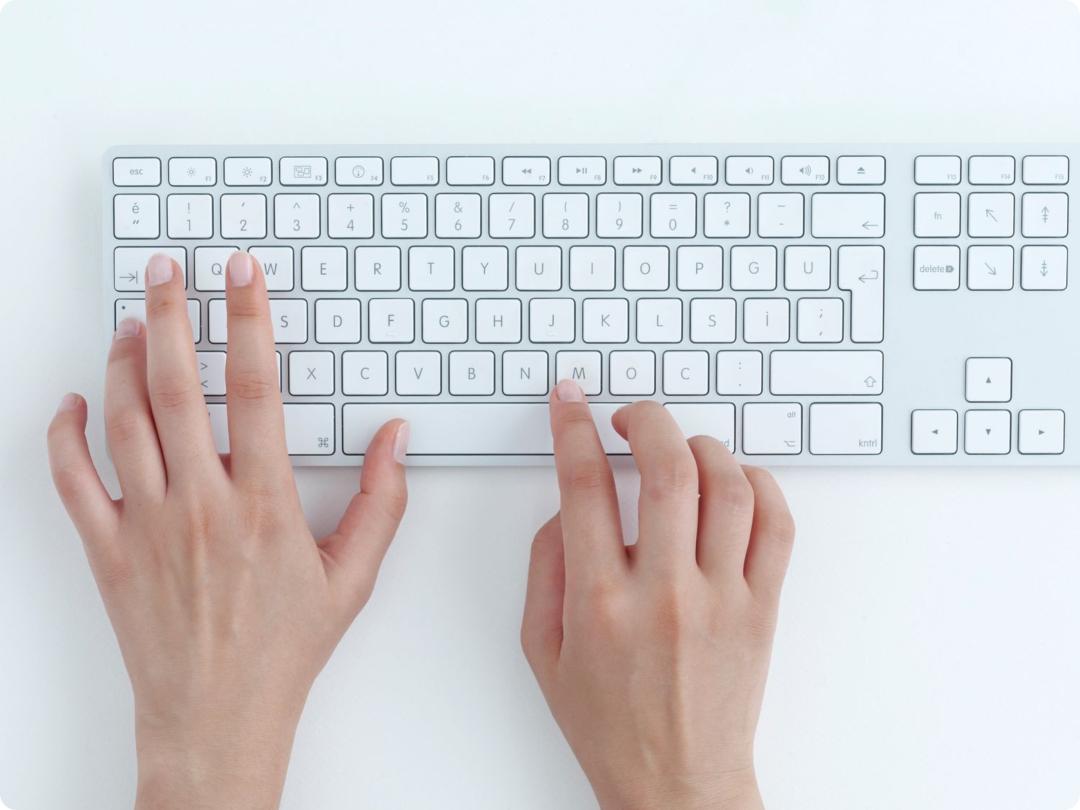
In the past, when a person worked at their desk, the most distinct sound was the clatter of the keyboard.
The situation has now changed.
Right here in the APPSO editorial office, some colleagues have started holding their phones close to their mouths or leaning their heads toward their laptops, whispering like secret agents exchanging signals. Once the device's microphone finishes capturing the audio, they send the content to AI for cross-app voice input.
This is being hailed as the new input posture in the AI era: on the subway or in meeting rooms, there are things you can't shout out in public, and typing on a keyboard isn't convenient either. Now you can complete input just by speaking softly.
Just a few days ago, a Miami-based startup called Oasis Devices released a new AI voice transcription hardware specifically designed for situations where typing or speaking loudly is impractical — the OASIS 1 Smart Ring.
The biggest selling point of this $289 titanium alloy ring is that it moves Wispr Flow's AI transcription technology from a mobile app to a carrier much closer to our mouths.
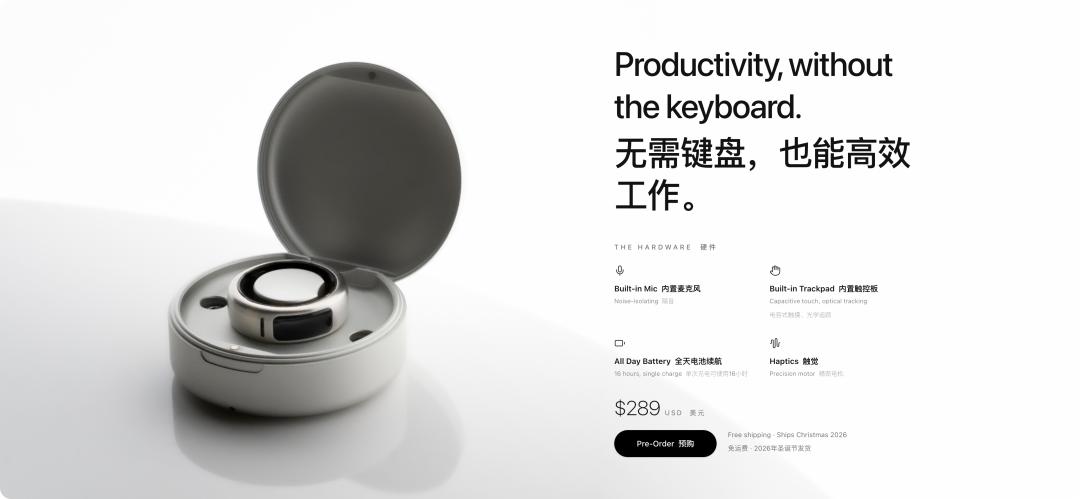
When we need to reply to a long email or edit a piece of code, we no longer have to whisper toward our computers or pull out our phones to open the input method. We just lift our finger to our mouth, finish a sentence, then gently swipe the surface of the ring with our thumb to correct any words the AI misheard.
The isolated microphone built into the ring captures our low-frequency voice, sends the speech data to Wispr Flow for processing, and converts it into text that can be directly entered into any other application.
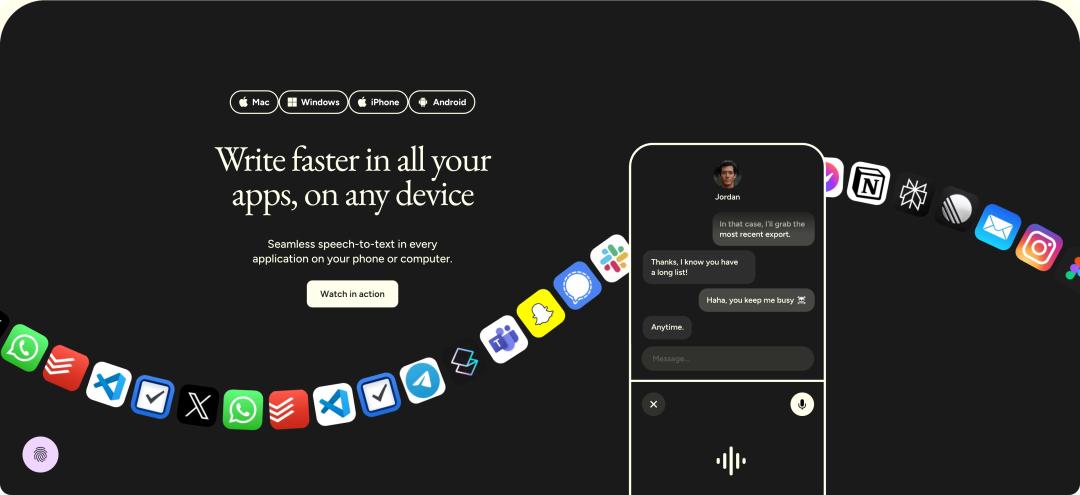
Wispr Flow Official Website
In addition to deep integration with the speech-to-text platform Wispr Flow, this ring features the world's first ring-mounted 2D trackpad. A tiny 2D trackpad is embedded on the surface of the ring, supporting motion controls and touch gestures.
We can perform actions like scrolling, selecting, page-turning, or controlling other smart devices through subtle, simple finger movements and swipes.
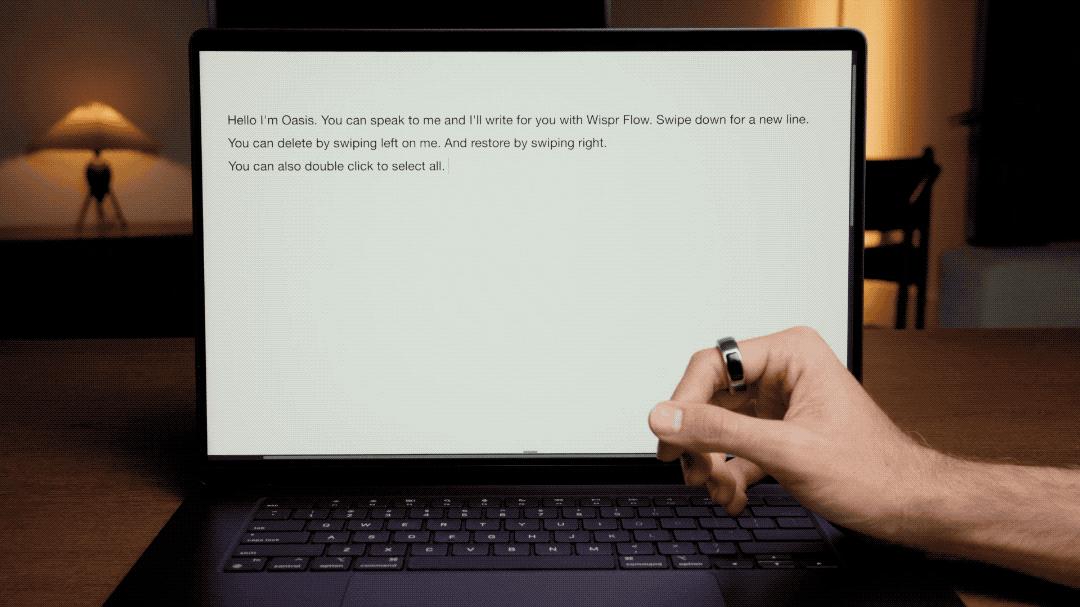
The OASIS team says that no matter how perfect AI voice transcription is, 100% accuracy can never be guaranteed. With past voice input devices, when there was a minor transcription error from AI, users still had to adjust using a keyboard or dictate more voice commands to fix it.
Now, with that 2D trackpad, we can make these adjustments directly on the ring using blind-operation gestures.
But if a user is already sitting at a computer, with a full-sized, high-precision mouse and a Mac trackpad right at hand, why would they lift their hand to perform delicate, difficult micro-movements on the surface of a ring less than 2 centimeters in diameter?
This feature, which was forcibly added to achieve a "full ring closed-loop," may actually be more counterintuitive in real use. Using difficult micro-movements and swipes to correct typos is far less efficient than simply pressing the backspace key twice on a keyboard.
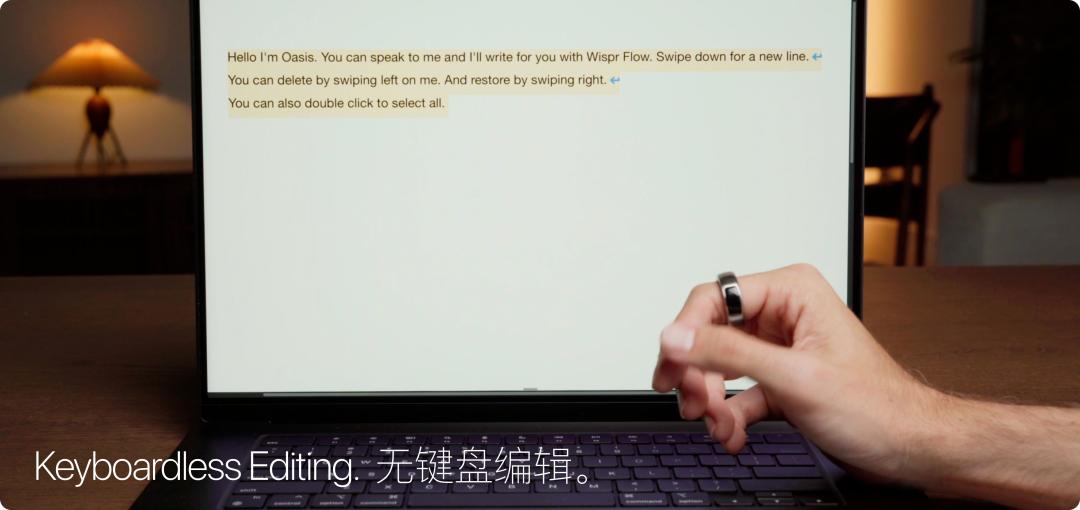
Keyboard-free editing is OASIS's flagship feature
Apart from its underwhelming interaction design, as a piece of hardware, the OASIS 1 has many other issues that can't be ignored.
Battery life is a major problem. The official website claims 16 hours of use on a single charge — which is shorter than an Apple Watch's battery life. Compared to other health rings that focus on unobtrusive wear, which often offer a full week of battery life, the OASIS 1 is far from hassle-free.
Another issue is social awkwardness and physical fatigue. Even though whispering into your finger might feel novel for a short time, repeating this action frequently over long periods can easily make your arm sore, and it also looks rather strange in a public workplace.
In fact, as early as last November, Sandbar — a company founded by ex-Meta employees — released the Stream smart ring, which also acts like a voice mouse. We raise our hand, whisper into our fist, and let AI organize our speech into structured text.

Sandbar even secured $23 million in Series A funding this spring.
It's worth noting that over the past few years, the most popular use cases for smart rings have almost all centered on health data, such as tracking sleep, heart rate, stress levels, and recovery metrics. The most famous example, the Oura Ring, costs $399 and has sold over 5.5 million units, firmly tying the entire product category to health monitoring.
There's no denying that AI has indeed spawned new interaction demands. The new direction represented by OASIS and Sandbar is to let rings start recording human intentions.
But there's a high barrier between recording physical data and recording intentions. Physical data can be collected passively and quietly, but intentions usually need to be expressed through speech, clicks, and confirmations.
OASIS founder Ricky Rosa says that human interaction intentions should no longer be confined to screens or keyboards. And those "future" VR interactions, which require you to wave your arms in the air for long periods, are tiring — that's what inspired him to create this AI ring.
Can a ring take on this task? It's clear that it definitely can't replace the keyboard right now.
At the moment, the OASIS 1 smart ring is priced at $289 and will start shipping this Christmas. According to updates from OASIS's official account, its first batch of products is almost sold out.
Getting ready for an office full of customer service reps?
These AI voice hardware devices may look similar in form factor, but philosophically, they all seem to agree that the operating system of the AI era is natural language (LUI) — and the best hardware carrier for natural language shouldn't be a keyboard.
The launch of the OASIS 1 is also a signal: AI is pushing input actions beyond the screen. In the past, we opened apps, clicked buttons, and typed; now many tasks can be done with a single sentence, one confirmation, or a subtle gesture.
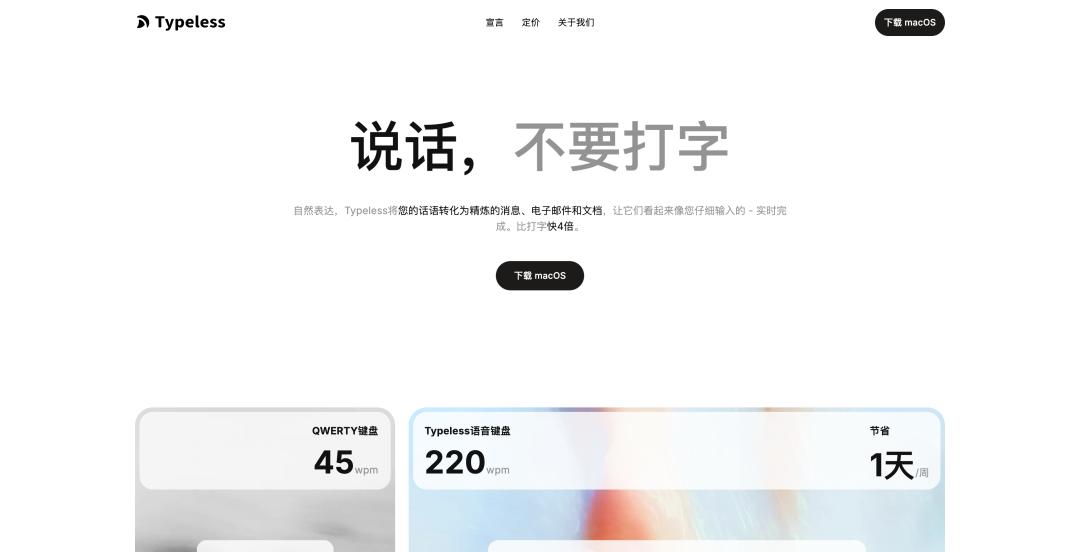
In our editorial office, dictating drafts has already become the preferred method for some editors. They use apps like typeless and WeChat Input Method to convert their speech into more structured outputs.
Whether sending content to AI or chatting on WeChat, clearly structured text transcription improves the reading experience for the recipient and makes information easier to understand quickly.
But if you've ever worked in a customer service department, you know how it feels: when a customer service rep sitting next to you is on a nonstop call, there are times you just want to put on noise-canceling headphones.
That's why the emergence of various microphones and devices like the OASIS ring lets people in the office avoid excessive noise while still smoothly converting speech to text.
Across the ocean in Silicon Valley, this phenomenon is even more obvious. Some AI startups now look, to a certain extent, like upscale customer service call centers.
At the office of credit card startup Ramp, the once-crisp sound of mechanical keyboards has disappeared. In its place, rows of top programmers are wearing heavy gaming headsets, talking to the air.
Edward Kim, co-founder of HR company Gusto, has even publicly encouraged employees to use voice-to-text. He told his employees bluntly: The office of the future should sound "more like a sales floor."
He also said that he used to be very proud of his typing speed, but now he avoids touching the keyboard whenever he can — "I'm talking to my computer all the time now."
This trend is known in tech circles as being "Voicepilled." Even Reid Hoffman, co-founder of LinkedIn, has publicly admitted that he's fully embraced it.
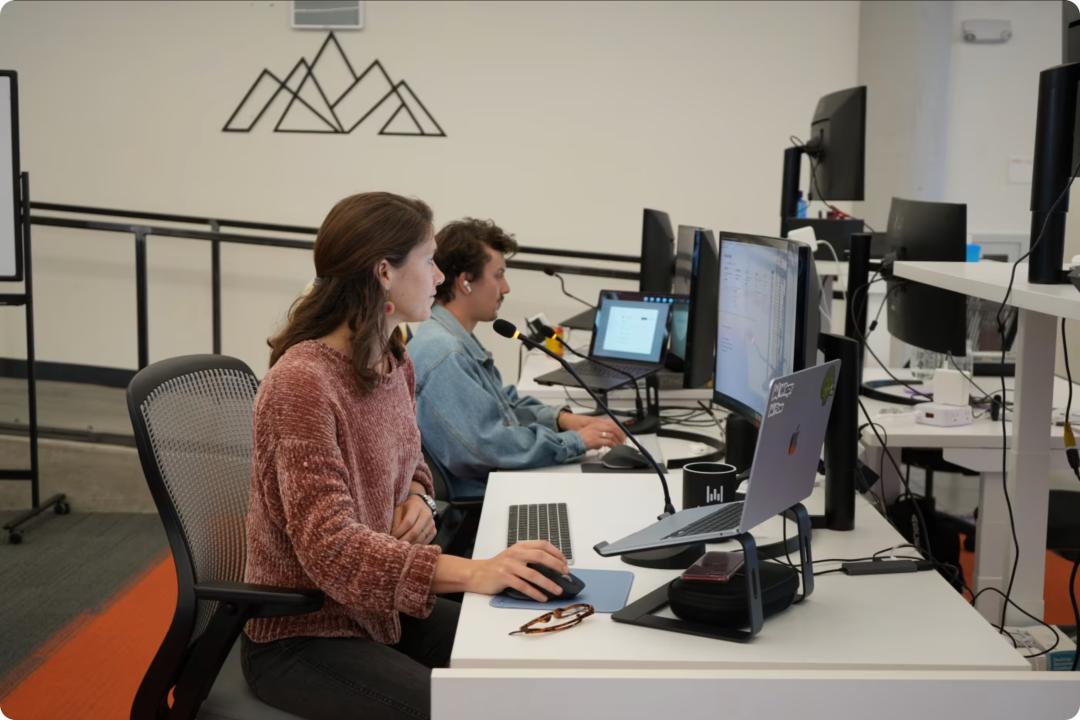
In pursuit of efficient voice transcription, Silicon Valley geeks are going all out with peripherals — some buy $60 gooseneck microphones made for sports broadcasters and pastors to plug into their desks; others go even further, buying programmable "foot pedals" usually used by gamers, just to control the AI recording switch with their toes.
The OASIS ring is just another part of this peripheral frenzy.
They're all desperately searching for the voice entry point of the "post-keyboard era," and OASIS is an interesting, bold solution that genuinely caters to the desire for anytime, anywhere voice input among a certain group of people.
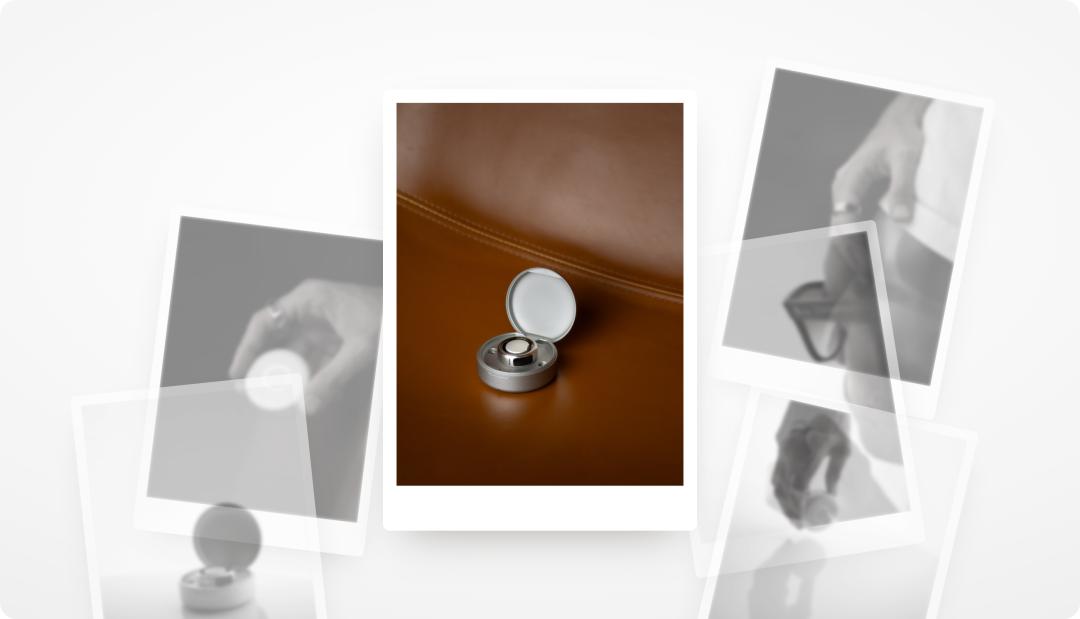
But between its $289 price tag, 16-hour battery life, and that somewhat underwhelming 2D trackpad, everything suggests that the smart ring might not be the final form factor for AI voice input.
A few days ago, Codex also announced on X that it's working on a new AI hardware device: a keyboard with only 13 mechanical keys, one joystick, and one touch sensor.
It's not yet known whether Codex's device will add voice input functions, but 13 keys clearly break away from traditional keyboard design. Some netizens commented that keys like "Wake Codex," "Approve," "Stop," and "Reject" would be more than enough.
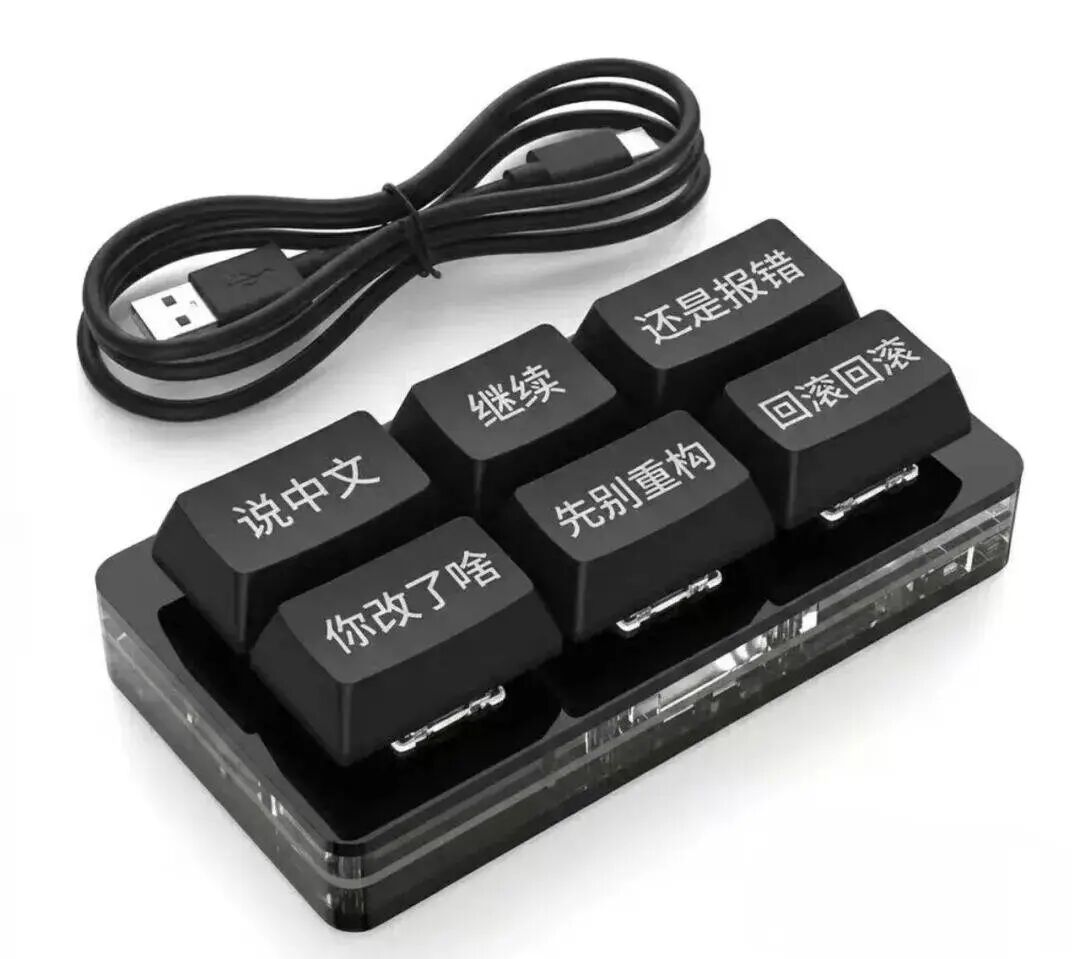
Traditional keyboards are also being reinvented. The question of where our next input will begin, with AI everywhere, seems to be a puzzle that both software and hardware manufacturers are thinking about. In the so-called "post-keyboard era," who will seize the new AI input entry point?
I think on the path to the future of office work, we'll probably see many more oddly-shaped transitional products.
Right now, everyone's acting like a customer service rep. Soon, with spatial gesture input, the office will be full of symphony conductors; with eye-tracking devices, everyone will be a "wall-facing thinker"; and once brain-computer interfaces become widespread, everyone will just be sleeping and dreaming at their desks.
This article is from the WeChat public account "ifanr", authored by Tomorrow Discoverer, and published with authorization from 36Kr.