Huawei, Xiaomi, OPPO, Vivo and Honor are all betting big on large-screen phones. Are small-screen phones about to become completely obsolete?
Just today, a major piece of explosive news suddenly emerged in the digital circle. According to the Weibo blogger @PandaIsVeryBald, five major manufacturers, including Huawei, Xiaomi, OPPO, vivo, and Honor, are collectively deploying large - screen mobile phones and wide - foldable phones.
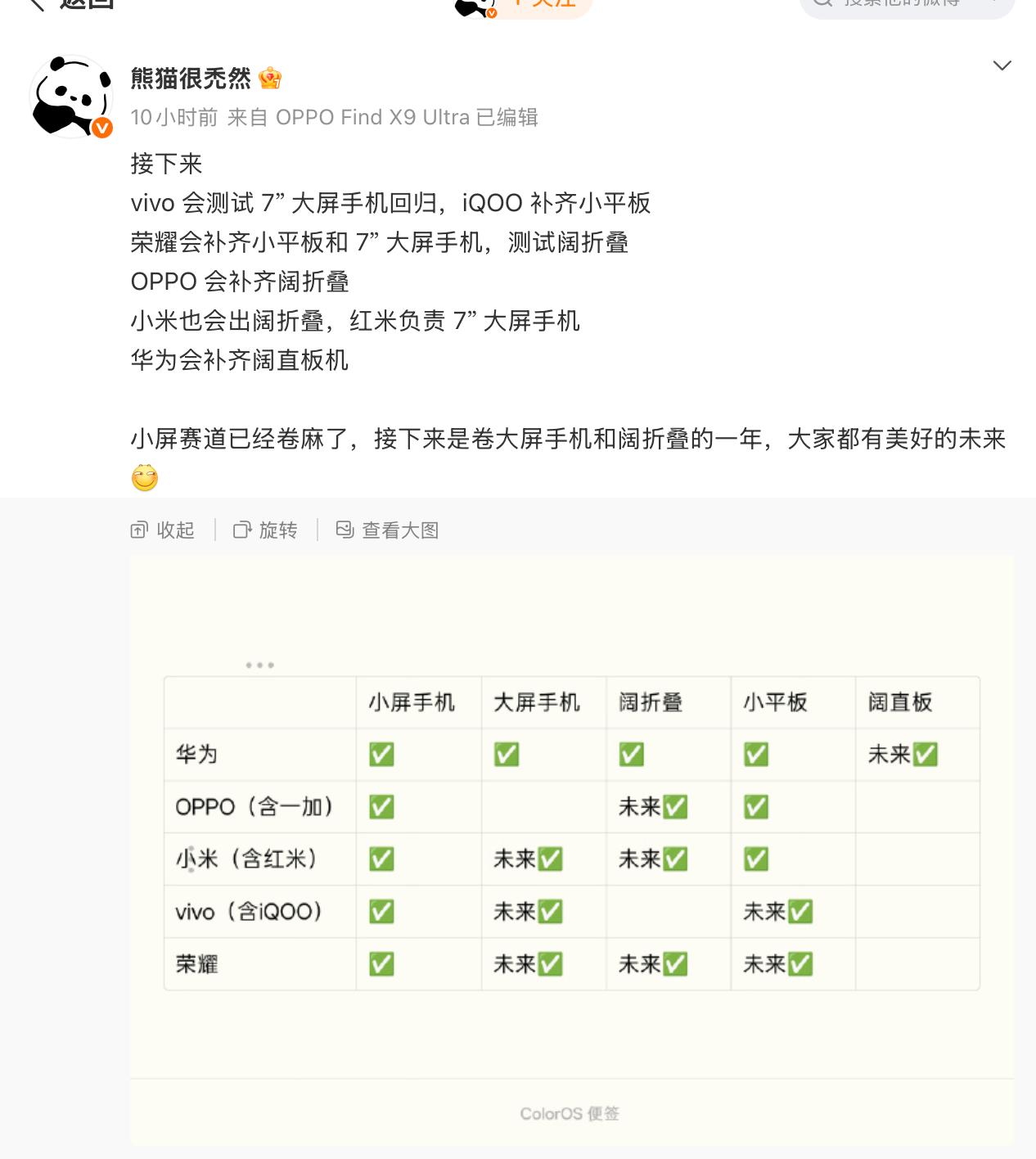
(Image source: @PandaIsVeryBald)
When Lei Technology (ID: Leitech) first saw this news, the first reaction was that the era of small - screen mobile phones might be coming to an end. Of course, this piece of news is not groundless. Before this, REDMI was reported to be launching a 7 - inch high - performance mobile phone, and Honor's 7 - inch 185Hz ultra - large straight - screen phone has also been put on the agenda. From these news, it's clear that the industry consensus is: the small - screen market is highly competitive, and the large - screen market is the next battlefield.
Small - screen phones have reached their limit. Does AI need large screens?
According to the terminal monitoring report released by IDC in May this year, the shipments of large - screen mobile phones above 6.95 inches in China have skyrocketed by 117% year - on - year. The sales of large - screen phones in the mid - range and high - end price segments account for more than 79%. While the market share of small - screen mobile phones below 6.4 inches is only 12%, a 5 - percentage - point decline year - on - year.
In the past two years, small - screen mobile phones with a size of 6.1 to 6.3 inches have truly reached the extreme of competition: the bezels have been made as narrow as possible, the weight has been controlled within 170 grams, the one - handed operation experience has been maximized, and the configurations have also been pushed to the highest level. Manufacturers have done everything they can.
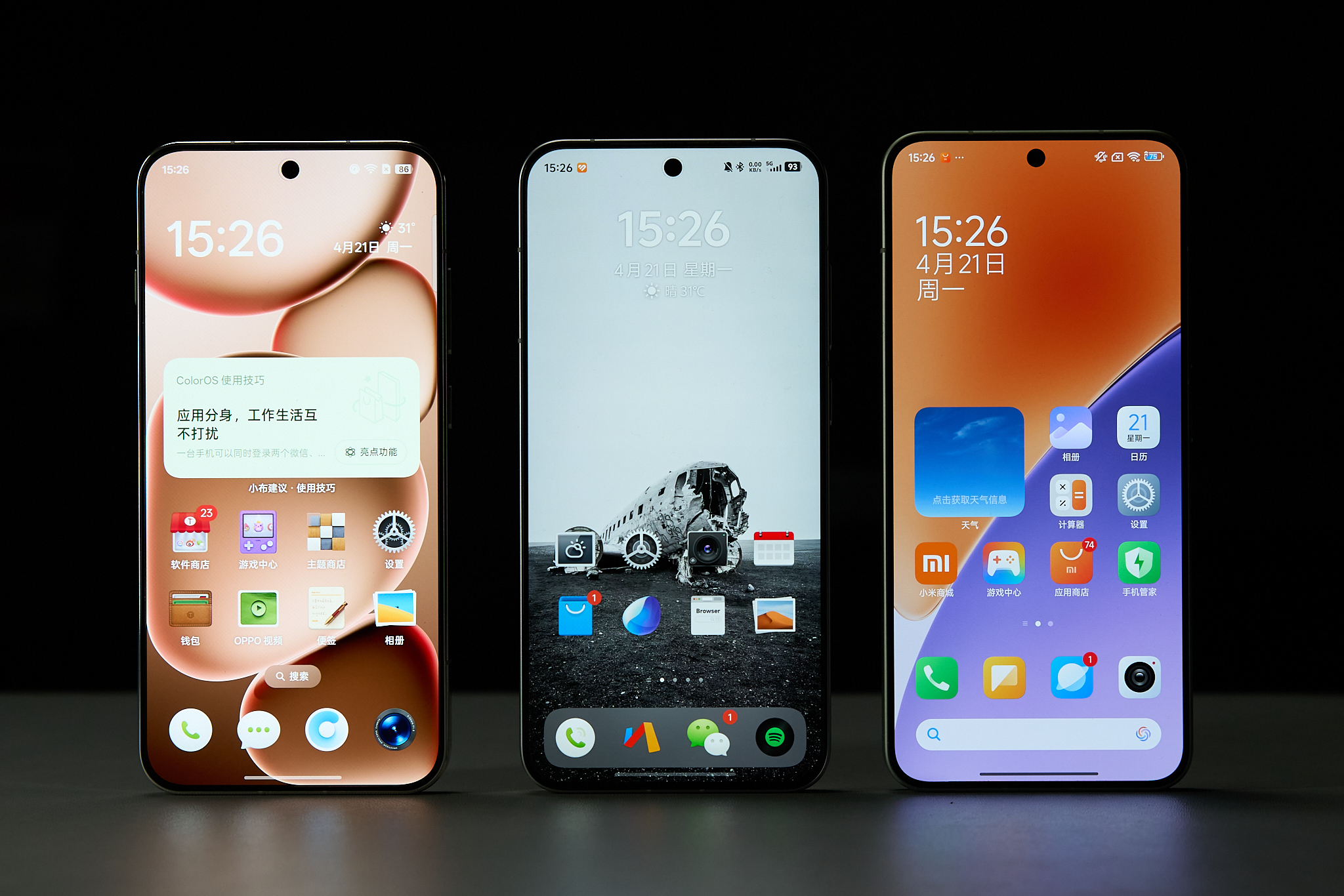
(Image source: Photographed by Lei Technology)
However, the other side of reaching the extreme is that there is no more room for competition. Looking back at today's small - screen flagship phones, can the bezels be made even narrower? Can the weight be made even lighter? Can the configuration be made even higher? It's very difficult. When all manufacturers have made small - screen mobile phones "good enough", the differences between products become negligible. When users change their phones, they find that the new phone is similar to the old one in use, so naturally they have no motivation to change.
Lu Weibing, the president of Xiaomi Group, once said: "The mobile phone industry is going through the most difficult time in the past decade." This is not an exaggeration. When the profit margin of small - screen mobile phones has been compressed to the limit, manufacturers must find new growth points.
The large - screen market is that growth point.
2026 is the year of the explosion of AI mobile phones. IDC predicts that AI mobile phones will account for half of the market in the next few years. However, for AI functions to be truly useful, a small screen simply won't do.
For example, when using the AI image removal function to select passers - by in a picture, if the screen is too small, your fingers are thicker than the passers - by; when using the AI image enlargement function to view the preview effect, if the screen is too small, you can't see the details clearly; when using the AI writing function to select text and adjust the format, if the screen is too small, you have to guess the positioning. The experience of these functions on small - screen mobile phones is compromised.
A more typical example is the split - screen scenario. I once tried to use the vivo X200 Pro mini to handle work, looking at attachments while replying to messages. Limited by the small screen, I had to switch back and forth, which greatly affected efficiency. Later, when I switched back to a large - screen phone, I could use the split - screen function to display materials on the left side of the screen and write opinions on the right side, and the experience was immediately improved.
It can be said that multitasking in the AI era requires a large screen to be valuable.
The "Atomic Workbench" featured in the vivo X Fold6 supports having a video conference, using AI to organize notes, and looking up information simultaneously, with a maximum of four windows running in parallel; Huawei's AI Xiaoyi can provide a split - screen experience of "chatting on the left screen and working on a document on the right screen" on a large screen.
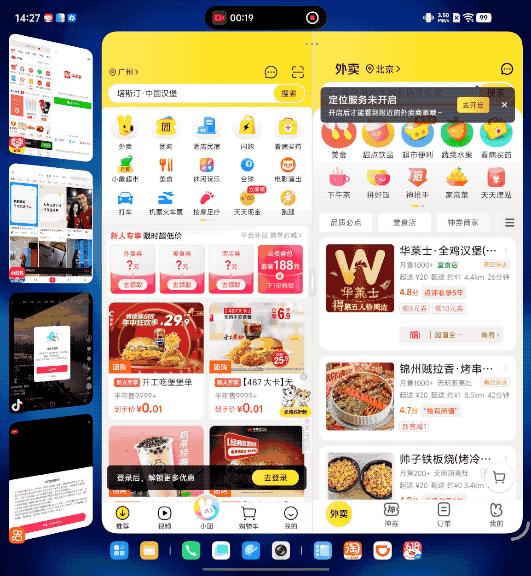
(Image source: Drawn by Lei Technology)
Therefore, the need for large screens in the AI era is not just a marketing tactic of manufacturers, but a real demand of users. With a large screen, AI functions can truly be utilized; with a small screen, AI functions are just for show. This collective deployment of large - screen phones by the five major manufacturers is a bet on the future of AI mobile phones.
Five manufacturers, two strategies, three choices
By carefully looking at the blogger's news, we can find that the strategies of the five major manufacturers are actually quite different.
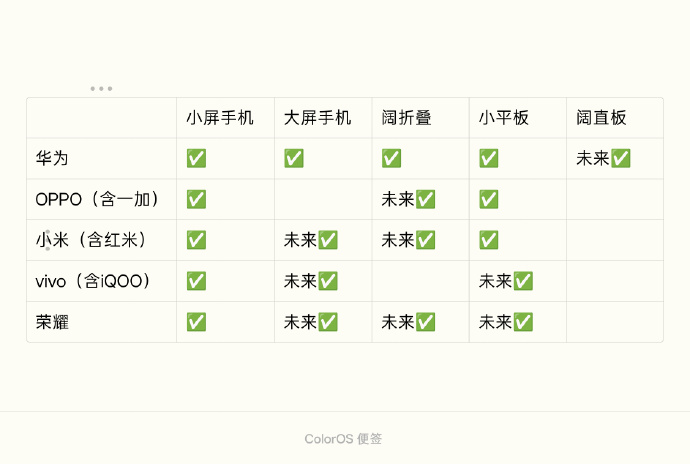
(Image source: @PandaIsVeryBald)
Honor is the most aggressive one. It has launched three lines: small tablets, 7 - inch large - screen mobile phones, and wide - foldable phones, covering almost all large - screen forms. This shows that Honor's judgment on the large - screen market is very clear: it would rather fight on multiple fronts than miss any opportunity.
Xiaomi's strategy is to fight on two fronts. The Xiaomi brand focuses on wide - foldable phones, while Redmi is responsible for 7 - inch large - screen mobile phones. This allows the Xiaomi brand to target the high - end market and enhance its brand image with wide - foldable phones; Redmi targets the cost - effective market and promotes sales with large - screen straight - panel phones. Xiaomi has always adopted the strategy of "testing the waters with sub - brands and then reaping the benefits with the main brand", and this time is no exception.
OPPO is relatively conservative and only chooses to make wide - foldable phones. This shows that OPPO is taking a wait - and - see attitude towards the future of large - screen straight - panel phones and believes that wide - foldable phones will be the mainstream form in the future. From a product logic perspective, OPPO's judgment makes sense: the experience of watching dramas on wide - foldable phones is indeed better than that on large - screen straight - panel phones, and when the price drops to a certain level, the market space will expand significantly.
vivo's strategy is relatively steady. It chooses to supplement its small - tablet lineup and test 7 - inch large - screen mobile phones without aggressively betting on wide - foldable phones. This shows that vivo is still observing the market reaction and preparing to strike later. vivo has always had the style of "not being impulsive but never falling behind". After all, for large manufacturers, being steady is also a strategy.
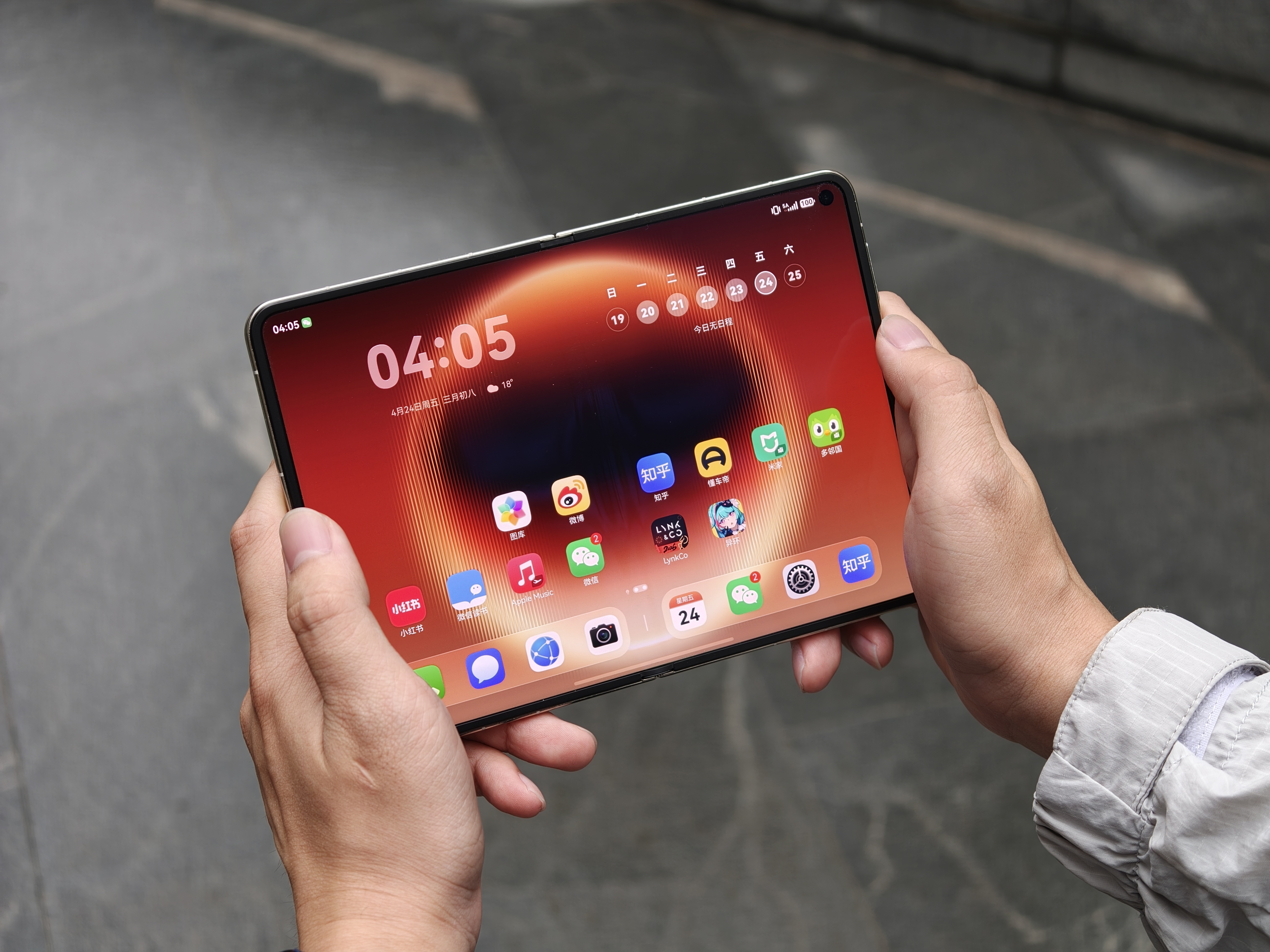
Huawei is the most interesting one among the five manufacturers. As the first manufacturer to launch wide - foldable screen mobile phones, Huawei has extended this concept to straight - panel phones. This shows that Huawei's idea is to cover different user groups with two forms. It will continue to make wide - foldable phones for high - end users; the wide - straight - panel phone is a new product line targeting users who want a large screen but don't want to buy a foldable screen phone.
(Image source: Photographed by Lei Technology)
At this point, many readers must be curious. There are already enough large - screen mobile phones on the market, and the screen sizes of mainstream mobile phones are basically between 6.7 - 6.9 inches. Why are manufacturers still collectively entering this market? The answer is simple: large - screen mobile phones have higher profits and stronger user stickiness.
Let's talk about profits first. Currently, for small - screen flagship phones with a size of 6.1 to 6.3 inches on the market, the pricing is generally in the range of 3,000 to 4,000 yuan; while for large - screen flagship phones above 6.9 inches, the pricing is generally in the range of 5,000 to 6,000 yuan. When the screen size increases, the cost increase is limited, maybe just a few dozen yuan more for the screen, but the selling price can be increased by one or two thousand yuan. Not to mention that most large - screen mobile phones are naturally positioned as high - end products, so manufacturers have no reason not to choose them.
Now let's talk about user stickiness. Users who have used large - screen mobile phones find it difficult to go back to small - screen phones. Why? It's more enjoyable to watch dramas. With a larger screen, the picture details are clearer and the immersion is stronger; it's more fun to play games. With a larger screen, the field of vision is wider and the operation is more accurate; it's more convenient to work. With a larger screen, the split - screen function is more practical and the efficiency is higher. Once you use a large - screen phone, you won't want to go back.
