With the average vehicle age being merely 1.8 years, are new energy vehicle owners changing their cars so frequently?
At the beginning of last month, the China Association of Automobile Manufacturers, in collaboration with Hejun Consulting, released a "2025 China Automobile Aftermarket Annual Development Report". Although most of the content is about the automobile aftermarket, it mentioned a very interesting piece of data:
The average age of traditional fuel - powered passenger cars has reached 8.2 years, and vehicles over 7 years old account for nearly 60%. In contrast, the average age of new - energy passenger cars is only 1.8 years, and vehicles between 1 and 3 years old account for as high as 90%.
I believe that when you see the latter data, your first reaction might be, do new - energy vehicle owners change their cars so frequently? Do they change cars every 1.8 years on average?
Thinking carefully, this exaggerated data does make some sense. China's new - energy vehicle industry started around 2008, officially entered the mainstream public view around 2015, witnessed an explosion around 2021, and the retail penetration rate exceeded 60% in 2025. In this 10 - year cycle, the development has not been slow.
Moreover, if you pay attention to some "old cars" with an age of about 5 years on the road in the past two years, your general impression should be that there are more fuel - powered cars than new - energy vehicles. Where are those truly "old" new - energy vehicles, such as the first - generation electric cars registered from 2016 to 2018? Maybe they are either in the ride - hailing market or have really exited the market.
However, fuel - powered cars are different. Compared with the disadvantages of early electric cars, such as obvious battery degradation, expiring warranties, and uneconomical maintenance costs, as long as they can pass the annual inspection, are easy to maintain, and have a low second - hand price, they can still be used for daily commuting on the road. This is the biggest difference between the two, but it is not entirely the reason for the low average age of new - energy passenger cars.
01
When Cars Become Big Electronic Products
However, many analysis reports have mentioned that new - energy vehicle owners do change cars more frequently than fuel - powered vehicle owners.
The "White Paper on Consumer Insights into Automobile Trade - in" jointly released by Dongchedi and China Automotive Information Technology Co., Ltd. shows that 70% of fuel - powered vehicle users have a replacement cycle of more than 5 years, among which users with a replacement cycle of 5 - 8 years and more than 8 years account for 33% and 37% respectively; in contrast, 90% of new - energy vehicle users have a replacement cycle of less than 5 years.
The data previously released by the China Automobile Dealers Association also points out that the replacement cycle of traditional fuel - powered cars is 6 - 8 years, while that of new - energy vehicles is only 3 - 5 years. As many comments say, cars are showing a trend of becoming fast - moving consumer goods. Especially among the young group, the pursuit of new technology experiences shortens the willingness to hold a car.
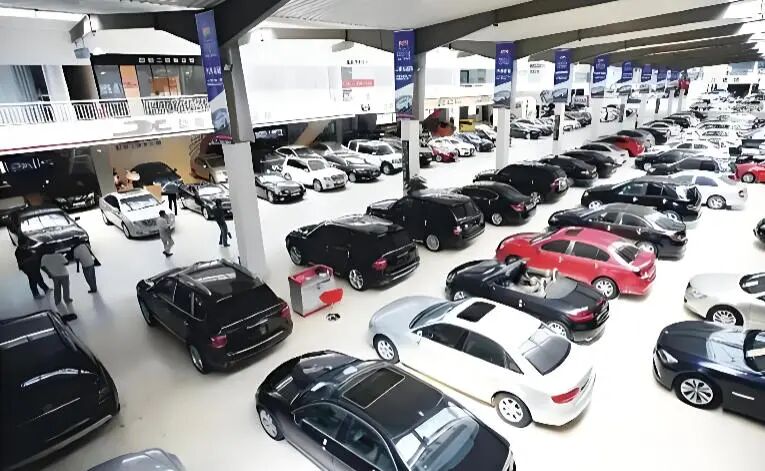
On the surface, the reason for this gap is that new - energy vehicle owners are fond of the new and tired of the old. In fact, as the automotive industry has transitioned from the fuel - powered vehicle era to the new - energy vehicle era, the underlying logic of the automotive industry has changed. As a result, consumers born in the technology era have also changed their car - buying concepts.
In the era of fuel - powered cars, the core competitiveness of a car lies in the three major components: the engine, the chassis, and the gearbox. It is a typical mechanical industrial product. Their iteration follows the accumulation cycle of physical laws and engineering experience, and it often takes five to eight years to complete a truly meaningful replacement.
For this reason, driving a fuel - powered car for ten or eight years does not make people feel significantly backward in terms of technology. As long as it has low fuel consumption and is durable, the difference from the new model is mainly in design and configuration. This experience of no generational - leading in car - using is the reason why the age of fuel - powered cars is generally higher.
However, new - energy vehicles are completely different. The three major components have become the battery, the motor, and the electronic control system, plus the chip and the in - vehicle system. Therefore, they are called big electronic products by consumers. Electronic products have an inherent law, which is a fast iteration speed, and the experience after replacement far exceeds that of existing products.
Similarly, the replacement cycle of new - energy vehicles has been compressed from 5 - 7 years for traditional fuel - powered cars to 18 - 24 months. McKinsey data shows that Chinese emerging car manufacturers have compressed the cycle from concept verification to mass production of new models to about 24 months, which is twice as fast as the 40 - 50 months of traditional car manufacturers. Some new - force brands only need 18 months to complete the process from project establishment to mass production.
According to incomplete statistics, more than 230 new cars were intensively launched in 2025. In March 2026 alone, there were nearly 80 press conferences in the automotive industry, and more than 60 new cars were launched. This phenomenon is no longer a problem that car manufacturers actively consider. When this industry phenomenon becomes a common practice, car manufacturers can only passively follow the trend to update; otherwise, they will lack competitiveness.
When "a minor change every six months and a major replacement every year" becomes the industry norm, the direct consequence is that old car owners frequently experience a decline in experience due to short - cycle model changes. Some new - energy vehicle owners have reported that their cars, which have only been used for four years, cannot support the new system due to insufficient computing power of the in - vehicle chip. When they went to the second - hand car market, car dealers said bluntly, "Although this car is only four years old, it is already considered very old."
Therefore, on the one hand, the cliff - like decline in the resale value makes many car owners at the 3 - 4 - year time point think about changing their cars. Instead of continuing to hold a depreciating asset, it is better to replace it with a new one as soon as possible. On the other hand, the rapid update of intelligent cockpits and intelligent driving technologies weakens the attractiveness of old - model vehicles. Young and trend - seeking consumers are willing to change cars to pay for new technologies.
When a car owner finds a new model with higher configuration and lower price of the same model less than three months after picking up the car, this "back - stabbing" experience will inevitably shorten their psychological expectation of holding the existing vehicle. So, the replacement cycle of new - energy vehicle owners is indeed shorter than that of fuel - powered vehicle owners.
02
The Market Increment Compresses the Average
Of course, the above is only an analysis at the theoretical and emotional levels. In fact, we still need to consider the real economic situation. That is to say, the replacement decisions of most car owners still cannot escape the objective situation of vehicle depreciation and consumption rhythm. Therefore, the average age of 1.8 years for new - energy vehicles needs to be understood from another perspective.
As mentioned at the beginning of the article, the explosive growth of China's new - energy vehicles has essentially occurred in the past five years. From 2021 to 2025, the penetration rate of China's new - energy vehicles showed an explosive growth, rising from less than 15% to over 50%, officially entering the market - leading stage.
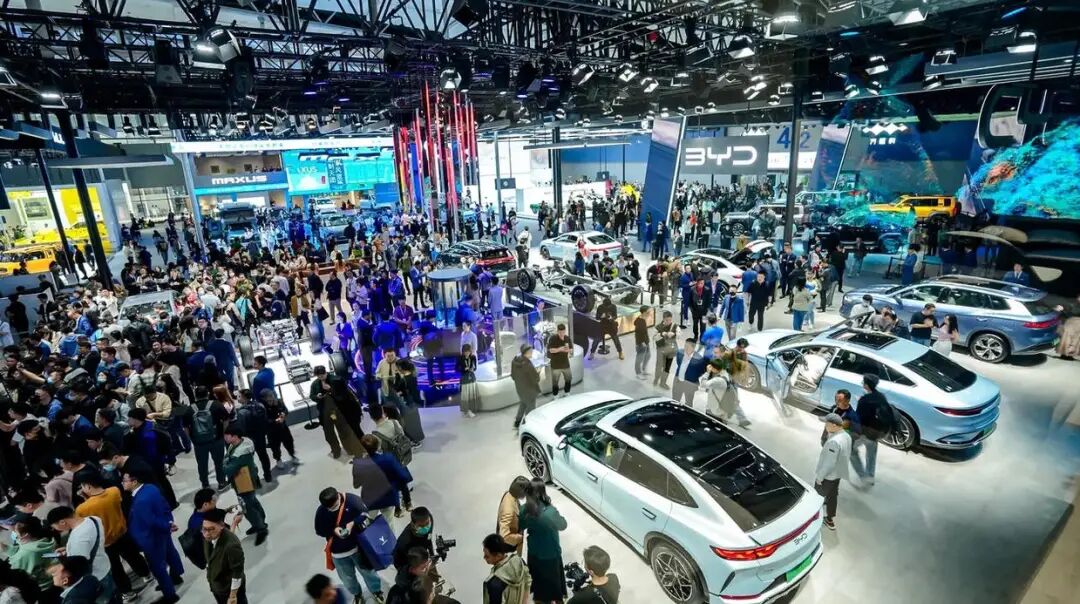
Statistics from the Ministry of Public Security show that as of the end of 2025, the number of new - energy vehicles in the country reached 43.97 million. However, in 2025 alone, the retail sales of new - energy passenger cars were 12.809 million. That is to say, nearly 30% of the new - energy vehicles currently on the road were added within one year in 2025.
It is not difficult to calculate that the age of these vehicles at the statistical time point is generally less than 1 year. Even among the cumulative number of vehicles before 2024, the age of most new - energy vehicles is only 2 - 3 years. So, 90% of the vehicles are concentrated in the 1 - 3 - year age range. It is not that new - energy vehicle owners really change cars frequently, but that the short sales time of new cars has pulled down the average vehicle age.
The continuous growth of new - energy vehicle sales compresses and erodes the market share of fuel - powered cars. The average age of 8.2 years for traditional fuel - powered passenger cars and the nearly 60% proportion of vehicles over 7 years old indicate that the fuel - powered car market has entered the stock stage. Therefore, the increment of new cars is limited, and a large number of long - age vehicles are running on the road.
This judgment can also be verified from the transaction structure of the second - hand car market. A report shows that in 2025, the average age of second - hand cars in transactions rose to 8.2 years, an increase of 0.3 years compared with 7.9 years in 2024. Among them, the average age of second - hand fuel - powered cars is 8.6 years, and the average age of second - hand new - energy cars is 3.4 years, both slightly higher than in 2024.
Some other reports also show that 90% of new - energy vehicle users have a replacement cycle of less than 5 years; the data from the China Automobile Dealers Association also points to 3 - 5 years; the main models of early electric cars are gradually entering the 4 - 6 - year replacement cycle. Even in the current era of the fastest technological iteration, the mainstream replacement rhythm of new - energy vehicle owners is still to change cars every 3 - 5 years.
Returning to the original question, do new - energy vehicle owners change cars very frequently? The answer is that they are indeed more frequent than fuel - powered vehicle owners. But what really deserves attention is another trend. As early new - energy vehicles gradually enter the replacement window period, they will also follow the path of fuel - powered cars, shifting from the incremental market to stock competition.
So, how should car manufacturers obtain more market share? Should they continue to rely on the product logic of rapid iteration to attract consumers? Or should they implement internal and external policies for trade - in to encourage repeat purchases from new and old car owners? One thing is certain: the behavior of "back - stabbing" old car owners will definitely not work. The value of a car brand essentially lies in the attitude of users towards it.
Especially as the homogenization of new - energy vehicle products is serious, the role of making improvements in products is already negligible. More often, consumers pay attention to the brand image of the car and the in - depth relationship between the car manufacturer and the users. New - energy vehicles can be big electronic products, but they are by no means fast - moving consumer goods. How to gain the trust and confidence of consumers is the most important thing.
This article is from the WeChat official account "Automobile Commune" (ID: iAUTO2010), written by Yang Jing and edited by He Zengrong. It is published by 36Kr with authorization.