Musk's Neuralink completes the world's first case, ushering in the era of minimally invasive brain-computer interfaces
On July 1st, Neuralink, under Elon Musk's leadership, dropped a bombshell, announcing the completion of the world's first brain-computer interface (BCI) implantation surgery through the dura mater.
This global star enterprise in the field of BCI posted a video of over five minutes on its social media account, publicly revealing the technical details of the dura mater implantation surgery for the first time. The video attracted intense attention, garnering over 250,000 views and nearly a thousand comments within two days.
What's the significance of this milestone event, and what does it mean for the BCI industry? Arterial News had a conversation with domestic BCI industry experts.
01
A Wound the Size of a Coin: Neuralink's Surgical Revolution
To understand the significance of BCI implantation through the dura mater, one must first understand how traditional invasive BCI surgeries are performed.
The dura mater is located right below the skull and is the outermost protective membrane that wraps around the brain. It is as tough as leather. Traditional invasive BCI implantation surgeries require the removal of a part of the dura mater to expose the cerebral cortex before electrodes can be implanted. This implantation method causes significant tissue trauma and poses higher risks (such as infection or cerebrospinal fluid leakage).
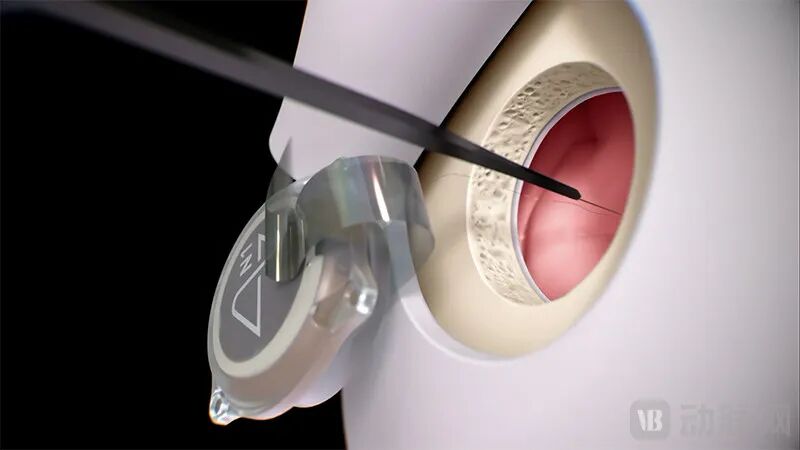
The traditional implantation method requires the removal of a part of the dura mater to expose the cerebral cortex (screenshot from the official video)
Take Neuralink as an example. Its BCI implantation still requires an opening the size of a coin to be made in the dura mater.
The new solution at the beginning of the month completely skipped this step.
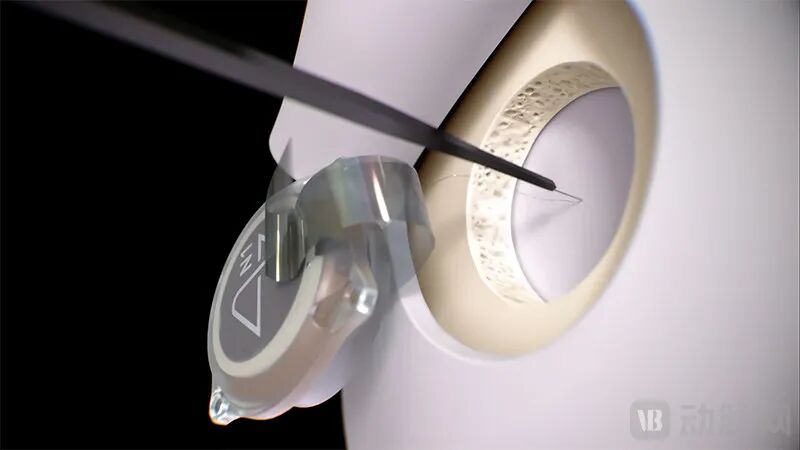
The new solution preserves the white part of the dura mater (screenshot from the official video)
"From day one, we've been working to make the surgery faster and less invasive. Preserving the dura mater instead of removing it is a huge step in that direction," an engineer in the video showed the coin-sized skull wound, with the tough, leather-like dura mater covering the cerebral cortex remaining intact.
"This solution completely eliminates the step of cutting the dura mater. Our robotic implantation device can directly penetrate the dura mater with electrode wires and implant them into the brain itself," the Neuralink team detailed the engineering challenges of this surgical method.
The first challenge is puncturing.
The toughness of the dura mater made the original implantation needles unable to penetrate reliably. The Neuralink team slightly thickened the needle diameter to enable the electrodes to penetrate the dura mater. To verify the design, the team even developed a brand-new test pipeline, simulating the thickness and puncture force of the human dura mater with synthetic dura mater and successfully completing hundreds of puncture tests.
The second challenge is real-time observation during the surgery.
Preserving the dura mater poses a problem for doctors. This opaque barrier prevents doctors from seeing the blood vessels in the cerebral cortex and estimating the distance to the cortex.
To address this, Neuralink's robotics team redesigned the entire optical system. First, they introduced ICG (indocyanine green) fluorescence angiography technology, injecting fluorescent dye intravenously and using infrared light to make the blood vessels glow under the dura mater, helping the robot plan evasive paths.
Second, to accurately measure the dynamic distance between the dura mater surface and the cortex surface in real-time, the team introduced optical coherence tomography (OCT) technology, using lasers for measurement.
In the video, the engineer demonstrated how the OCT module transmits laser light through an optical fiber and then receives the light signal returned from the brain to reconstruct a three-dimensional image of brain tissue: "OCT allows us to measure the distance from the top of the dura mater to the cortex with high precision, so we can insert the electrode wires into the cortex with extremely high accuracy."
According to the introduction, in May 2026, with the assistance of Dr. Lozano from the University Health Network (UHN) in Toronto, Canada, Neuralink completed the first BCI implantation surgery through the dura mater. Neuralink's R1 robot led the entire implantation process, and the insertion time for each electrode wire was about 1.5 seconds.
Neuralink stated that the simplified surgical process is easier to standardize and replicate, further improving safety. It is a key advancement towards automated and large-scale BCI implantation surgeries.
As of the beginning of this year, Neuralink's high-throughput N1 implant with 1024 channels has been implanted in 21 human subjects. The subjects can control cursors and robotic arms with their thoughts and perform real-time speech synthesis. Meanwhile, clinical trials such as Blindsight for visual restoration are also in progress. These advancements led Elon Musk to previously announce that large-scale production of the device and a nearly fully automated surgical process would be launched in 2026.
However, challenges cannot be ignored. In the early cases of Neuralink's BCI implantation, there has been a phenomenon where some electrode wires slightly retract, leading to a decline in effective channels. Whether implantation through the dura mater can ensure long-term in-vivo stability for more than two years remains to be answered by a larger sample size and more time.
02
What Do Domestic BCI Practitioners Think?
Domestic BCI practitioners highly praised this progress.
Zhao Zhengtao, the founder of Ladder Medical, told Arterial News that invasive BCI is the technical route with the best signal quality and the highest ceiling for future applications. Neuralink's progress is the world's first successful implantation of brain electrodes without cutting the dura mater in a human clinical trial. While preserving the integrity of the dura mater, it further reduces surgical trauma and infection risks, enhancing the clinical implementation ability of invasive BCI.
He further stated that the development of implantation technology will make invasive BCI more minimally invasive, and preserving the dura mater also makes the surgical process easier to standardize and replicate. This will help accelerate the clinical application of invasive BCI and expand it in batches, clearing the surgical bottleneck for BCI to move from the laboratory to large-scale clinical applications.
Zhang Yutao, a partner of the first BCI fund, Heying BCI Fund, summarized the significance of this progress from several aspects, including application threshold, clinical benefits, commercialization, and industry evolution.
First, the new surgical method will lower the threshold for invasive BCI.
Traditional invasive BCI surgeries rely heavily on doctors' experience, which means it is difficult to standardize, thus limiting commercialization. The new surgical method uses a robot to automatically puncture the dura mater with electrode wires and implant them into the cortex, avoiding high-risk manual steps and significantly reducing the overall surgical difficulty and individual differences. This means that BCI implantation has the foundation to be popularized in general neurosurgery.
Second, the clinical benefits are significantly improved.
Zhang Yutao said that the dura mater is a brain protection barrier, and preserving it intact is of great significance as it can reduce the probability of postoperative complications such as cerebrospinal fluid leakage, intracranial infection, and meningeal adhesion. At the same time, compared with the traditional surgical method that requires removing the dura mater, the new method causes less trauma and allows for faster postoperative recovery. From the results of this case, the first subject was able to control the computer cursor with their thoughts on the day of implantation, increasing patients' acceptance and accessibility and expanding the applicable population for invasive BCI.
In addition, he believes that this clinical progress will accelerate the commercialization of Neuralink's BCI.
This surgery verifies the feasibility of the "minimally invasive + automated" technical route that Neuralink has been following. It shortens the surgical time from the traditional 8 hours to less than 1 hour and significantly reduces costs. Combined with the standardized surgical method, it will significantly shorten the transformation cycle from clinical trials to routine clinical surgeries for invasive BCI, solving the long-standing bottleneck of effective but non-replicable technology. At the same time, this surgical method also lays a safety foundation for the next-generation implants with higher channel counts and two-way closed-loop regulation, promoting the entire industry from the technology verification stage to the implementation and expansion stage.
Finally, he deduced the evolution direction of the industry.
Zhang Yutao believes that this surgery significantly reduces surgical trauma without sacrificing signal accuracy, making great progress in balancing implantation depth, signal quality, and surgical risk. At the same time, it accelerates the integration of semi-invasive and invasive BCI, clarifying the evolution path centered on minimal invasiveness for the global BCI industry. It will drive the collaborative breakthrough and application of technologies such as flexible electrodes, intraoperative imaging, and surgical robots, and lead to a reevaluation and design of the safety boundaries and engineering implementation plans for invasive BCI.
03
Awareness and Motivation: Great Progress but a Gap Remains in China
Neuralink's progress also serves as a motivation for the current domestic BCI industry.
From last year to this year, the development of BCI in China is obvious to all. Especially in March this year, Boreikon's NEO implantable BCI system was approved for a Class III medical device license, becoming the world's first officially commercialized invasive BCI medical device.
Interestingly, Boreikon's BCI medical device also belongs to the "semi-invasive" route. It uses an 8-lead ECoG solution, with electrodes placed outside the dura mater without penetrating the cerebral cortex. According to public information, Boreikon has completed 32 multi-center clinical trials.
Currently, Boreikon is aiming for an IPO and may become the world's first BCI stock.
There are other competitors in the field. Domestic BCI companies such as Ladder Medical, Brain Tiger Technology, Zhiran Technology, and Nuancore have also made progress. In terms of the total number of clinical subjects, Chinese BCI teams have accumulated nearly a hundred implantation cases, and in some cases, even more than Neuralink.
Of course, there is still a gap in technical depth between the two sides.
Zhang Yutao said that currently, the mainstream route in the domestic clinical scenario is semi-invasive, and invasive BCI is still in its early stage.
Among them, the core strategy of semi-invasive BCI is to compromise on safety to achieve rapid implementation. Boreikon obtaining the license also shows that the clinical approval and commercialization progress of the domestic semi-invasive route is leading globally. Intracortical invasive BCI is mostly in the early stages of prospective clinical trials or registration clinical trials, focusing on flexible electrodes and low-damage implantation.
"In terms of progress, the domestic situation is generally in line with the international progress represented by Neuralink," he summarized.
He believes that from the perspective of core technology gaps and the overall picture, domestic invasive BCI technology has formed unique advantages through differentiated strategies: "The clinical transformation speed, medical device approval, and scenario implementation scale of domestic semi-invasive BCI are in the global first echelon. At the same time, domestic teams generally choose more conservative and low-risk technical paths, and have their own technical accumulation and advantages in long-term safety, patient accessibility, and Chinese neural decoding in local scenarios."
He also said that if using Neuralink's surgery as a benchmark, China still needs to solve several core problems.
"The most core issue is the number of channels and electrode technology. Neuralink has achieved stable clinical implantation of 1024 channels, while domestic invasive products are still in the range of 128 - 256 channels. The difference in the order of magnitude of the number of channels determines the decoding fineness, which also means there is room for improvement in the micro-nano processing accuracy and long-term in-vivo compatibility of domestic high-throughput flexible electrodes."
"The second is the implantation robot and surgical method. Neuralink has achieved fully automated implantation through the dura mater, with a surgical time of only 1 hour and a target cost of $5,000. Domestic surgical robots mainly assist in positioning, and their automation level and intraoperative multi-modal image fusion ability are still insufficient. The core surgical method of puncturing through the dura mater has not been broken through, and traditional neurosurgical manual cutting of the dura mater is still required. This means there is still a large room for improvement in the automation development of domestic surgical robots and the control of consumable costs."
"Finally, in terms of signal decoding and system integration, Neuralink has more mature engineering experience in real-time decoding of high-channel neural signals, wireless transmission, and low-power integration. Clinical subjects can already achieve smooth cursor control, game operation, and text input. China still needs to improve in terms of the number of channels and implantation depth to achieve more precise movement operations and language decoding."
Zhao Zhengtao also believes that Neuralink's progress is worth learning from for the domestic BCI industry: "Frankly speaking, currently, no domestic team has completed a minimally invasive implantation surgery through the dura mater at the same level. Ladder Medical is developing a fully automated BCI surgical robot and exploring various technical paths to achieve the same minimally invasive implantation effect. It is expected to enter the clinical application stage in 2027."
04
BCI: A Sino-US Marathon Race
Although in terms of Neuralink's surgical breakthrough, there is still room for improvement in domestic BCI technology. However, in terms of policy support, domestic BCI may have an advantage. Whether it is the approval and standard setting of BCI medical devices, BCI has been included in the "15th Five-Year Plan" for future industries, and even many local medical insurances have initiated price project establishment.
This field may be one of the few hard technology tracks in the past decade where China and the United States have formed a differentiated competition pattern in both technology and business. No one is copying the other, and no one can easily overtake. In the next few years, both sides will enter the verification stage, and it is still unknown who will win.
This article is from the WeChat official account "Arterial News" (ID: vcbeat), author: Chen Peng, published by 36Kr with authorization.