Half of Unitree, the "grandfather" of robots is completely sold out
Today's topic starts from 1999. In July of that year, Warren Buffett became the biggest killjoy in the world. During his closing speech at the Sun Valley Summit, he made a controversial statement, sharply pointing out that "people need the continuous emergence of new technologies to drive social progress," but this doesn't mean that "companies working on new technologies" will definitely succeed. The aircraft and automobile industries are very specific examples. Both the inventions of the automobile and aviation have fundamentally changed human civilization, but almost all of the hundreds of early automobile manufacturers and airlines went bankrupt.
At that time, this statement could only be regarded as "alarmist talk." Throughout 1999, the NASDAQ was in a state of skyrocketing, with an overall annual increase of 85%. Among them, Qualcomm's increase exceeded 2,600%. Twelve stocks had increases of over 1,000%, and seven stocks had increases of over 900%. Everyone believed that "the Internet" had pushed human civilization to a new height, and the economic laws we were familiar with, which were formed in the traditional physical world, would soon be completely overthrown.
So, if we were to go back to that hot autumn in 1999, we would find that Buffett was a complete "negative example." All financial media were unanimously asking questions like "Is Warren (Buffett) getting old?" and "Should this financier born during World War II retire?" It wasn't until April 2000, when the NASDAQ experienced an unprecedented single - week 25% plunge and the market was in a complete mess, that the doubts about Buffett finally subsided. People then realized that "the social value of a company" and "whether the company can succeed" are actually two completely different things.
Now, let's return to the present and update the proposition: Does AI have a chance to break this rule? As a new technology widely recognized as "able to bring revolutionary changes," can AI both "drive social progress" and allow "the pioneers investing in it to make big money?"
Today, we're going to talk about a somewhat "frustrating" story. It seems to be strongly suggesting that AI also doesn't have a chance to break this rule, and Buffett's warning from over two decades ago still holds true today:
On June 21st local time, Hyundai Motor Group of South Korea announced that they had acquired a 9.65% stake in Boston Dynamics held by SoftBank for $325 million (approximately RMB 2.21 billion). From now on, this company, which is a totem in the field of humanoid robots and the pioneer of the embodied intelligence industry, will officially become a wholly - owned subsidiary of Hyundai Motor Group. Moreover, based on the calculation that $325 million is for a 9.65% equity stake, Boston Dynamics' current overall valuation is approximately $3.368 billion (approximately RMB 22.9 billion), which is only about half of Unitree's issued market value. This is really quite a pity.
Making "The Terminator" a Reality
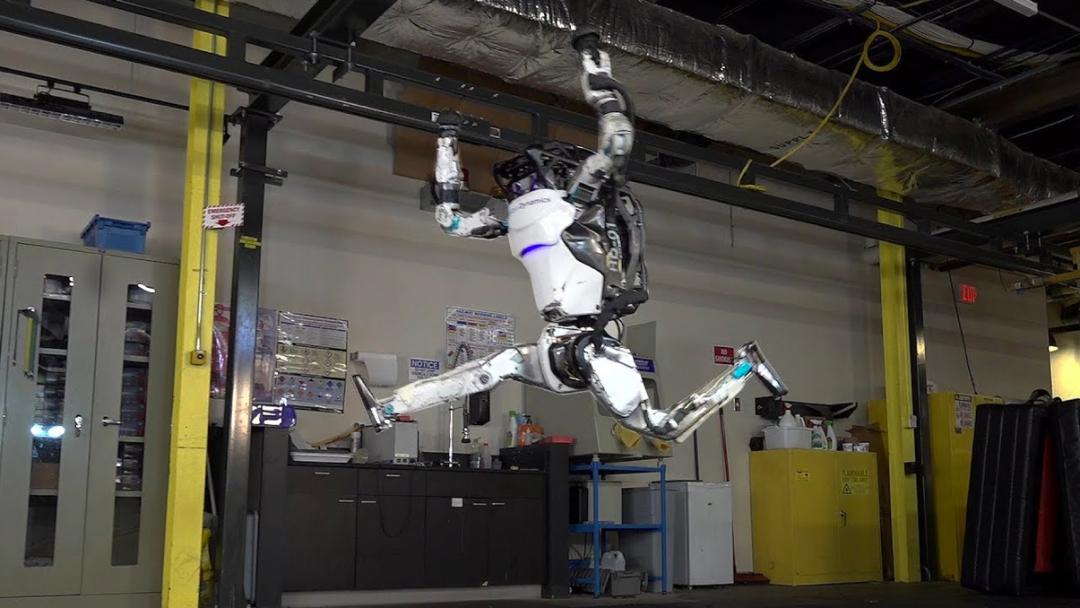
When talking about Boston Dynamics, older friends should quickly think of the following well - known scenes. For example, a robot suddenly makes a big jump while running.
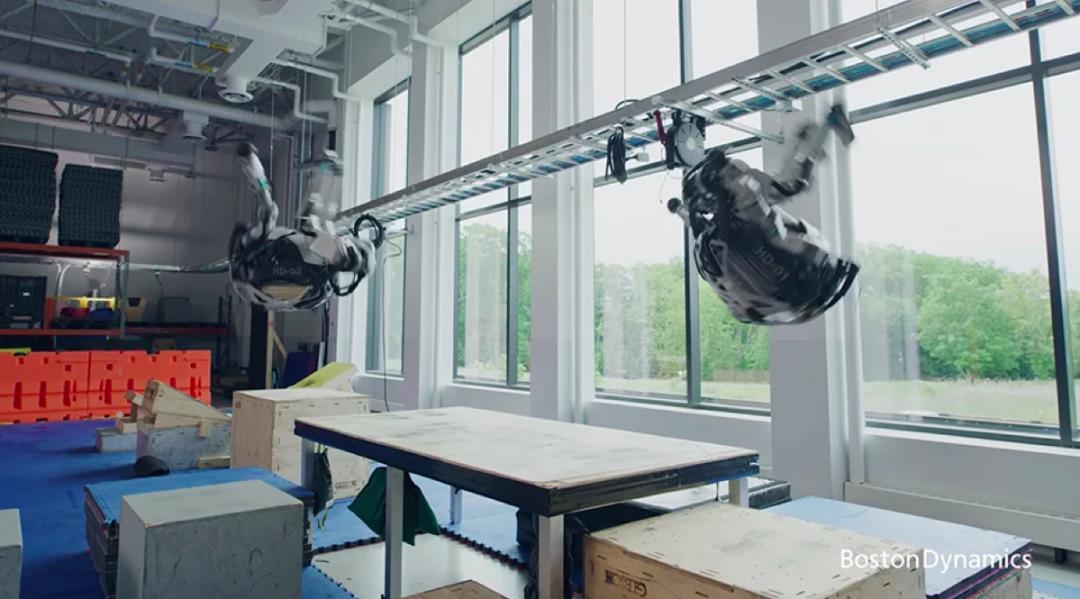
Or, a robot that was running on a flat ground at a constant speed and looking wobbly suddenly takes off and completes a handstand backflip. The applause is deafening.
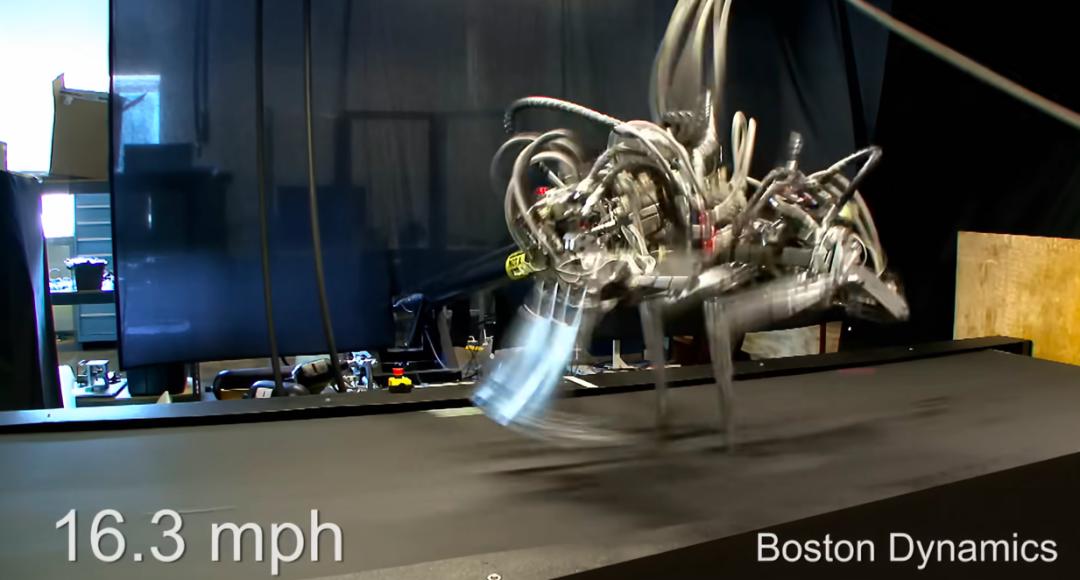
Another example is a mechanical dog that looks like it's about to fall apart suddenly starts running at full speed, and its little legs are moving so fast that there are afterimages.
It can be said that Boston Dynamics, with one model after another, has made people believe that robots are not the square - shaped, toneless - speaking, and mechanically - moving iron lumps in cartoons. They can be as flexible and natural as humans or the small animals around us, and can perfectly integrate into our daily lives. There is even an argument that, just as the GPT era brought about the explosion of the artificial intelligence industry, the reason why embodied intelligence has seen an explosion in recent years started with the open - source Spot SDK (Software Development Kit) in 2020, which allows developers to write upper - level control programs and custom applications for the mechanical dog through Python or C++ interfaces.
Moreover, Boston Dynamics is very likely to be one of the first companies in the standard sense to explore "humanoid robots."
Let's go back to 1984. In this year, the classic science - fiction blockbuster "The Terminator," directed by James Cameron, was officially released. Apart from the intense battle scenes and Arnold Schwarzenegger's cold - looking muscles, the most fascinating part of this film is that it depicts a very real future: as technological capabilities improve, countries will inevitably consider developing robot legions when dealing with national security issues. Different from human soldiers, these robots have no redundant emotions, won't think too much, and can very focusedly complete assigned tasks. In addition, these robots won't feel tired or pain before running out of power, and their strength will be multiplied with the help of technology.
After the release of "The Terminator," a large number of viewers were discussing whether the "Skynet Project" described in the movie really existed. Was James Cameron just imagining out of thin air or did he find a creative prototype?
Interestingly enough, the viewers were actually right. Four years before the release of "The Terminator," in 1980, Carnegie Mellon University (CMU) established a new research department called the "Leg Lab." Marc Raibert, an associate professor of computer science and robotics who led the establishment of the Leg Lab, believed that it's actually quite simple to make robots run and walk like humans. The principle is just "combining several simple, decoupled control laws," but the problem lies in "smoothly controlling joints in a continuous - time manner to achieve walking," which is very difficult. Especially in a typical "unstable condition" like a human residential area, there is currently no good solution for how to combine passive dynamics with active control.
Under this premise, Marc Raibert thought it was necessary to specifically establish a team, apply for a dedicated fund, and focus on improving electromechanical actuators and robot design, while simultaneously optimizing the research on walking algorithms and control according to the improvement of the design process.
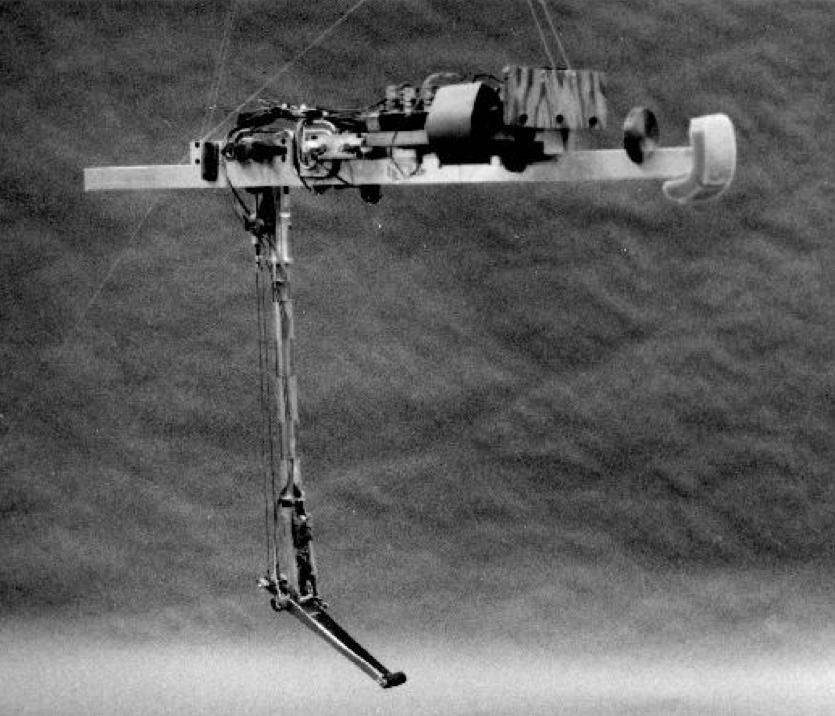
Marc Raibert's judgment was correct. After clarifying the research direction, the Leg Lab quickly made breakthrough progress. As early as 1986 - two years after the release of "The Terminator" - they successfully manufactured a single - legged robot that could jump and stand after the jump. The most epoch - making significance of this robot is that before this, robot activities heavily relied on "air - spring expansion and contraction," while this robot pioneered the use of "rotary joints," which have a larger range of motion, a more compact structure, and are more durable.
However, scientific research is very expensive. In addition to ensuring the daily lives of the research team members, the experimental equipment, supplies, and venues all require a significant amount of money. In order to make greater breakthroughs, in 1987, Marc Raibert led his team to join the Massachusetts Institute of Technology (MIT), where they caught the attention of the US military and began to cooperate with departments such as the Naval Air Warfare Center Training Systems Division (NAWCTSD) to develop a series of products like "3D aircraft carrier simulation software."
Coincidentally, in the 1980s, the US Congress passed the famous Bayh - Dole Act, which allows universities, non - profit institutions, and small businesses that carry out research and development to be granted the patent rights of government - funded scientific research results, in order to encourage the commercial transformation of scientific and technological achievements. Therefore, in the early 1990s, when the Leg Lab successfully developed a bipedal robot, Marc Raibert realized that their research results had broken through the "academic level" and had the possibility of engineering. As a result, the "Leg Lab" was smoothly spun off from MIT and registered as an independent commercial entity, and "Boston Dynamics" was born.
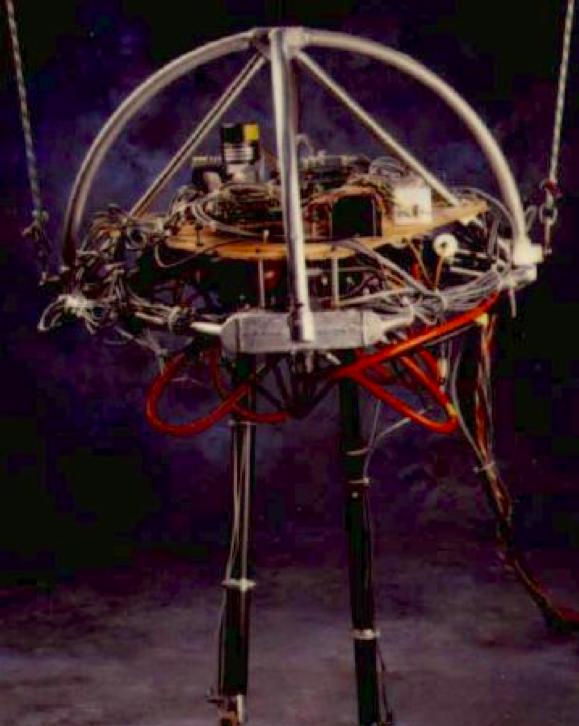
(The 3D Biped bipedal robot in the early 1990s)
Of course, we can also feel how "early" Boston Dynamics was from another perspective. In 2024, Marc Raibert was a guest on Lex Fridman's podcast. When recalling the early days of starting the business, Marc Raibert said that he actually never thought about starting a robot company, or even a hardware company, because he clearly knew that what scientists are best at when starting a business is "manufacturing one - time, fragile prototypes," which have no possibility of commercial application, let alone commercial robots.
No One Pays for "Scientific Research"
By now, you should have realized the problem, which is that Boston Dynamics has a very strong "scientific research background." Since its establishment in 1992, most of Boston Dynamics' business has come from cooperation with the military. Even the milestone product, the quadrupedal mechanical dog BigDog, which made Boston Dynamics famous, was actually a project funded by the Defense Advanced Research Projects Agency (DARPA).
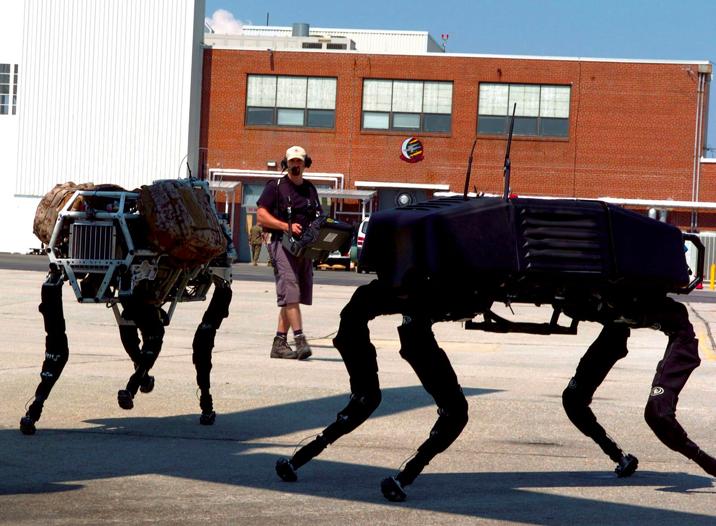
(The BigDog quadrupedal dog)
Imagine, if you were a venture capitalist and encountered a company that is highly "project - based" in business, has a highly concentrated business in the government sector, and whose team seriously lacks market experience, what choice would you make?
Kevin Albert, the founder of the construction robot Canvas and a former engineer at Boston Dynamics, once reflected on his personal social media:
"I would give three suggestions to all future entrepreneurs who want to enter the robot industry: 1. Quantify customer needs as early as possible, and everything should revolve around quickly understanding and quantifying customer needs; 2. The development cycle of reliable hardware is very long, and the number of product iterations is limited. Don't think you can easily transform; 3. Let your team have a clear goal."
This is a very typical inner feeling of a "scholar - type entrepreneur" and also the best summary of Boston Dynamics' later development.
In 2013, Google decided to acquire Boston Dynamics. The person in charge of this deal was Andy Rubin, the father of Android. According to Google co - founder Larry Page, Andy Rubin is a genius at building ecosystems. It was him who turned Android "from a crazy idea into a supercomputer in the hands of hundreds of millions of people." They were very much looking forward to Rubin replicating the same miracle in the robot business (Moonshot). The long - term vision was "to combine Google's advanced artificial intelligence and cloud computing capabilities with Boston Dynamics' unparalleled physical machinery to completely transform the manufacturing, logistics, and other industries that require intelligence and automation."
In order to better fulfill this ambition, Google even went so far as to acquire eight robot companies in six months, including the Japanese small humanoid robot company Schaft, the American humanoid robot and robotic arm manufacturers Meka and Redwood Robotic, and the robot camera system manufacturer Bot & Dolly, etc.
However, Google's honeymoon period with the robot business was very short. In June 2017, Google announced that it was selling Boston Dynamics, Schaft, and other companies to SoftBank in a package deal.
On the surface, it wasn't Boston Dynamics' fault. A more direct reason is that in 2014, Andy Rubin, who was deeply involved in a sexual harassment scandal, finally left Google and switched to being a venture capitalist behind the scenes. The entire Moonshot project lost its most staunch supporter, which also easily made Google lose confidence in the project. But people think that a company as big as Google is unlikely to "abandon a project because of a person." The real reason may be that "Google is essentially a data analysis company. Their business is essentially to classify and understand every piece of digital information generated by users and sell these insights to the demand side... No one knows how robots can create value for Google's shareholders."
A key piece of collateral evidence is that at the same time Google sold off Boston Dynamics, it also sold its satellite business, Terra Bella. The reason why SoftBank was willing to take over is generally believed to be because SoftBank already has the companion robot Pepper. At the same time, SoftBank is a Japanese company. As a highly "otaku" country, the Japanese people have always had a crazy enthusiasm for robots. Coupled with Japan's most complete automobile supply chain in the world, which can well support Boston Dynamics' development, many people think that SoftBank is indeed the best buyer.
Masayoshi Son also said in a statement: "Intelligent robots will be the key driving force for the next stage of the information revolution."
But this honeymoon period was even shorter. In 2020, Hyundai Motor Group announced that they had acquired an 80% stake in Boston Dynamics for $1.1 billion and became the controlling shareholder. Boston Dynamics became a "Korean company" again.
Of course, the reason this time is even more helpless. In 2020, SoftBank, which had experienced the WeWork fiasco and the sharp decline in Uber's stock price, was in its darkest hour, and its cash flow was under extreme pressure. On the other hand, Boston Dynamics needed a large amount of funds to maintain the R & D capabilities required for its main product lines (such as Atlas). Therefore, going their separate ways was indeed the best choice.
However, as the new owner and an owner that emerged during an economic downturn, Hyundai Motor Group won't give as much leeway. In the acquisition statement, Hyundai Motor Group's vision for Boston Dynamics has become "helping it develop service and logistics robots... In the future, as time passes, it hopes to manufacture more humanoid robots for tasks such as taking care of patients in hospitals." The more imaginative "autonomous driving and smart factories" are classified as "other areas of interest."
Where is there any trace of the pioneer in the field? Similarly, in the press release announcing the complete acquisition this time, Hyundai Motor Group described many actual product scenarios. For example, the quadrupedal walking robot Spot will conduct non - contact assessments of patients and help visually impaired people travel, etc. Hyundai Motor Group said: We hope to show the world a brand - new robot era to demonstrate our vision of "for human progress" - in this era, robots will