Led by Ordos and Heda Financial Services, Yiru Technology completes over 100 million yuan Series A financing | 36Kr Exclusive
36Kr has learned that the bio-based leather company "Yiru Technology" has completed over 100 million yuan in Series A financing. This round of financing was co-led by Ordos Group and Heda Financial Services, with Chaosheng Capital participating in the investment. EC Capital served as the exclusive financial advisor. The funds from this round will be mainly used to promote the company's commercial development and capacity building, and to accelerate the technological innovation and product iteration of bio-based leather through AI technology.
Yiru Technology was founded in 2021. It uses synthetic biology as the underlying technology to create a new generation of innovative bio-based materials represented by bio-based leather - by directly producing bio-based resin raw materials through microbial fermentation and then processing them into finished leather products. This achieves a reduction of over 80% in carbon emissions. The production cost of some products is even lower than that of traditional oil-based PU products, and the physical properties (wear resistance, breathability, flexibility) are comparable to those of genuine leather. Thus, it enables the high-performance materials required for mass consumer goods to shift from petroleum-based to bio-based.
In 2024, Yiru Technology completed a Pre-Series A financing of tens of millions of yuan led by Xingkong Capital. At that time, founder Su Rui told 36Kr that the commercial inflection point "might come next year." Now, this company that has long been "under the water" and rarely appeared in public has made significant progress in global commercial implementation - as of the first quarter of 2026, the annual production capacity of its leather production line has exceeded 16 million square meters, and the overseas orders since this year have reached nearly 100 million yuan. This officially kicks off the global layout.
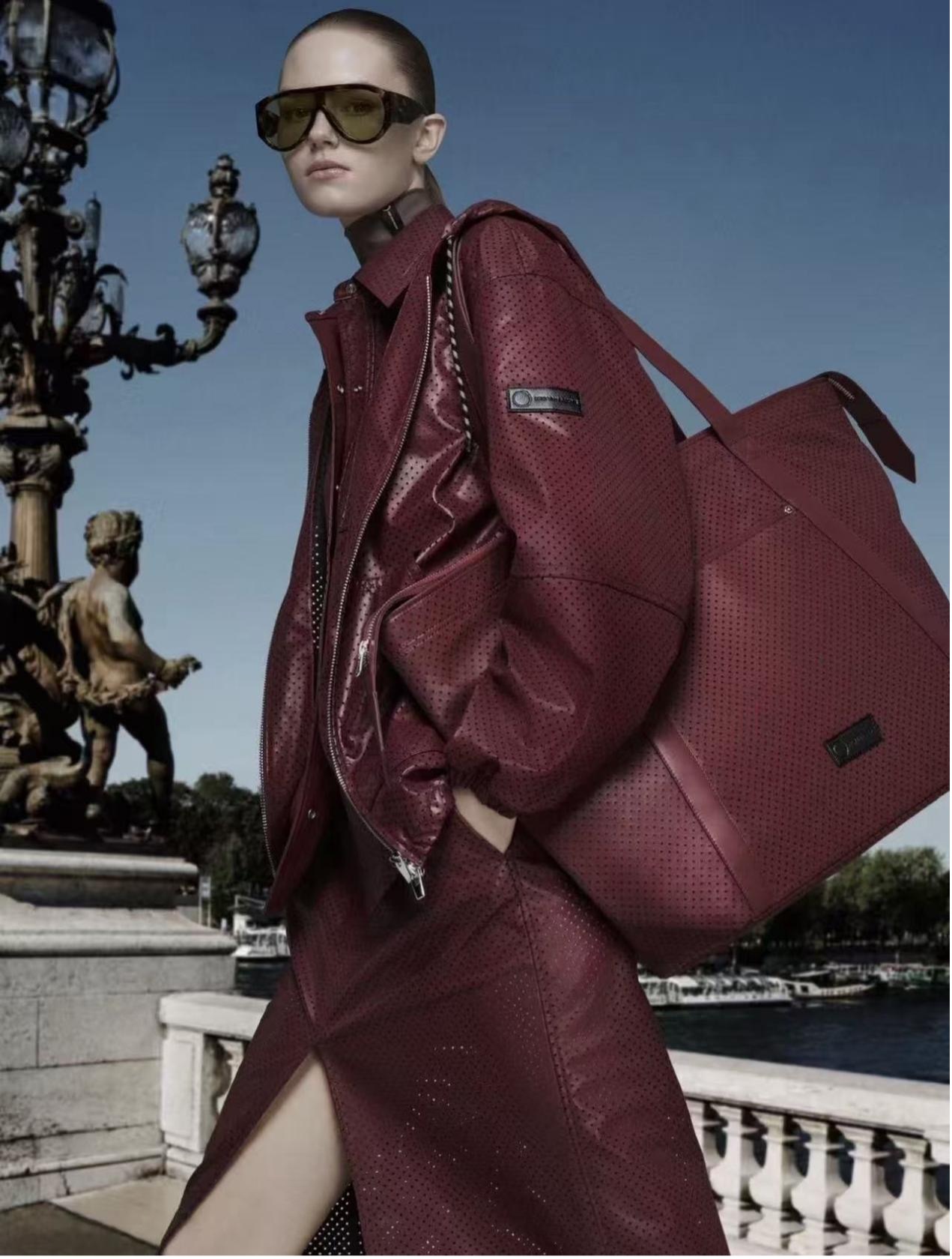
Yiru × ANTA ZERO × Kris Van Assche Designer Series · Vegan Leather Series
01 Breaking Out of the "Lab Narrative"
Bio-based leather, especially the "mushroom leather" made from mycelium, has been one of the most concerned directions in the field of fashion sustainability in the past decade. Overseas companies such as MycoWorks, Modern Meadow, and Ecovative have all received investments from first-tier institutions or luxury groups.
After the hype faded, most of these star projects didn't succeed - the materials could be produced, but the bottlenecks of high cost and difficulty in real mass production meant that they could only remain in concept shows and small-scale co-branded products. "Bio-based leather is more expensive" has also become an unspoken common sense among consumers and brands.
To this day, traditional leather still generally faces problems such as high carbon emissions, large supply fluctuations, and increasing ESG pressure on brands. The market's interest in bio-based leather has not disappeared. However, the industry's evaluation criteria have shifted from "whether it can be produced" to "whether it can be produced cheaply and on a large scale."
Cost is precisely Yiru's current barrier. Su Rui calculated an account for 36Kr: In the European market, the cost of brands using genuine leather is equivalent to about 300 - 400 yuan per meter, while the highest-priced leather products of Yiru are about 200 yuan per meter, and most products are in the range of 80 - 150 yuan per meter, equivalent to reducing the cost to less than half of that of genuine leather. "Moreover, it is permeable, breathable, and more durable than genuine leather."
The reason behind this is that currently, there are very few companies globally that can achieve large-scale mass production of bio-based leather. Su Rui said that there are only a handful of companies in the industry that can stably deliver over one million meters. Yiru is also one of the very few companies that started early and have long adhered to the path of "producing resin through liquid fermentation and then coating it into leather."
Another factor that allows the cost curve to continue to decline is AI. From strain screening, genetic editing design, to parameter optimization of the liquid fermentation process and control of mass production yield, Yiru has built a full-link data-driven R & D engine, pushing the development efficiency and scale-up success rate of bio-materials to the forefront of the industry.
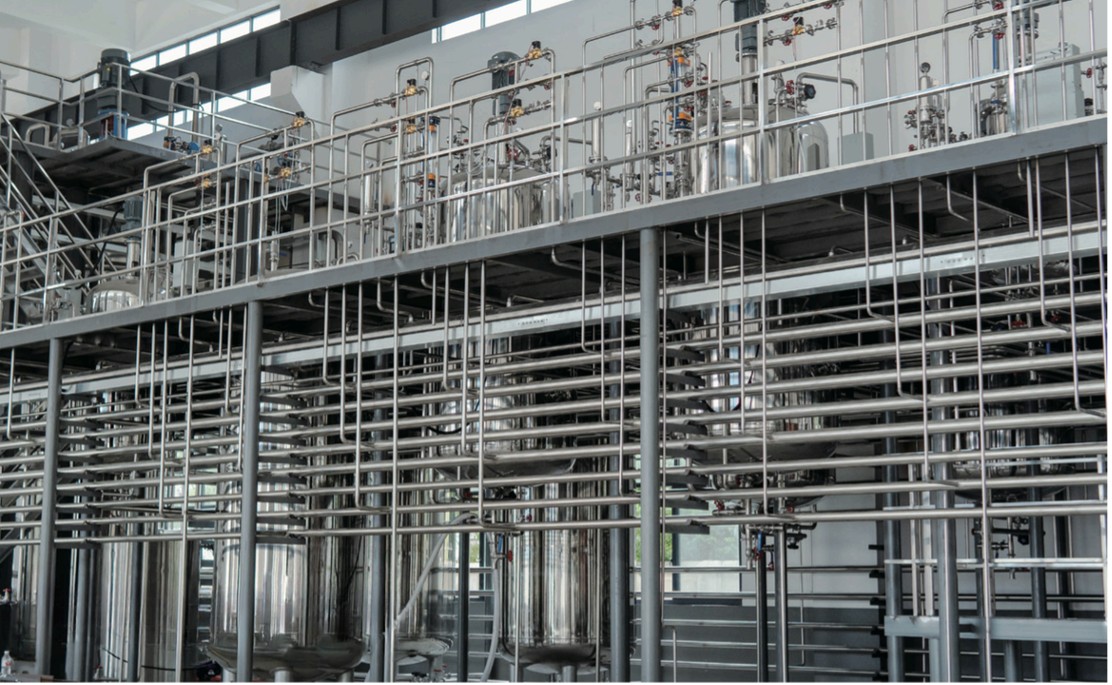
Actual photo of the fermentation tank in Yiru Technology's factory
In terms of products, Yiru uses the Mulkol series for differentiated layout: Mulkol-3 is positioned as a substitute for low-cost artificial leather. It uses relatively hard resins, and its texture is close to high-strength industrial materials, targeting scenarios such as furniture and decoration where low-cost artificial leather is replaced. Mulkol-5 is positioned as a substitute for high-end genuine leather. It uses softer elastomer materials, and its touch is closer to sheepskin and genuine leather, targeting the mid - to high - end markets such as handbags and clothing. Su Rui also revealed that for overseas luxury brand customers, the company has additionally launched a higher - end brand, HORA. Yiru continues to deeply cultivate the luxury and brand consumer markets, gradually building a mature business foundation and brand capabilities through stable product supply and market expansion.
On this basis, Yiru is accelerating its expansion into the broader field of polymer bio-based materials, gradually deploying upstream to the material end, focusing on building a global elastomer raw material system, and simultaneously expanding diverse application directions such as membrane materials and rubber materials. The relevant materials will also further enter consumer product packaging, industrial films, and various terminal application scenarios, continuously broadening the industrial boundaries and application space.
Yiru's in - house R & D team continuously promotes material development and technological iteration around different application scenarios and performance requirements, constantly improving the independent R & D capabilities and product system of elastomer raw materials, and promoting the company to gradually transform from a leather business to a material and bio - based innovation platform - type enterprise centered on raw material development. In this direction, the Electric Power and Metallurgy Group under Ordos Group has profound accumulations in the fields of sustainable energy, low - carbon metallurgy, and green chemical materials, and has established a specialized platform for the synthetic biology industry. It will form a full - chain complementarity with Yiru from upstream raw materials, mid - stream production to downstream product transformation.
02 Reaching the "Commercial Inflection Point"
As of the first quarter of 2026, Yiru has reached commercial cooperation with global benchmark customers in multiple application fields such as clothing, footwear, luggage, home furnishings, and 3C:
- In the sports field, taking Anta as an example, Yiru has established a continuously deepening cooperative relationship with Anta - in April 2025, the co - branded Aojie series of shoes was launched for the first time. In November of the same year, the first - phase products of ANTA ZERO × KRIS VAN ASSCHE went on sale. In March 2026, the second - phase products of the Kris Van Assche cooperation series went on sale. Three rounds of iteration and commercial cooperation were completed within nine months, verifying the replicability and large - scale potential of bio - based materials in the supply chain of leading sports brands.
- At the channel level, Yiru has cooperated with Yicai, an internationally renowned fabric distribution channel provider. As a core distribution channel partner, it accelerates the introduction of products into various industries through its global channel resources.
- At the multi - scenario level, Yiru has cooperated with brands such as Atour and Kempinski in the hotel and home furnishing scenarios; in the municipal and public space fields, its products have been applied to benchmark projects such as Shanghai South Station and Shanghai Daning Park.
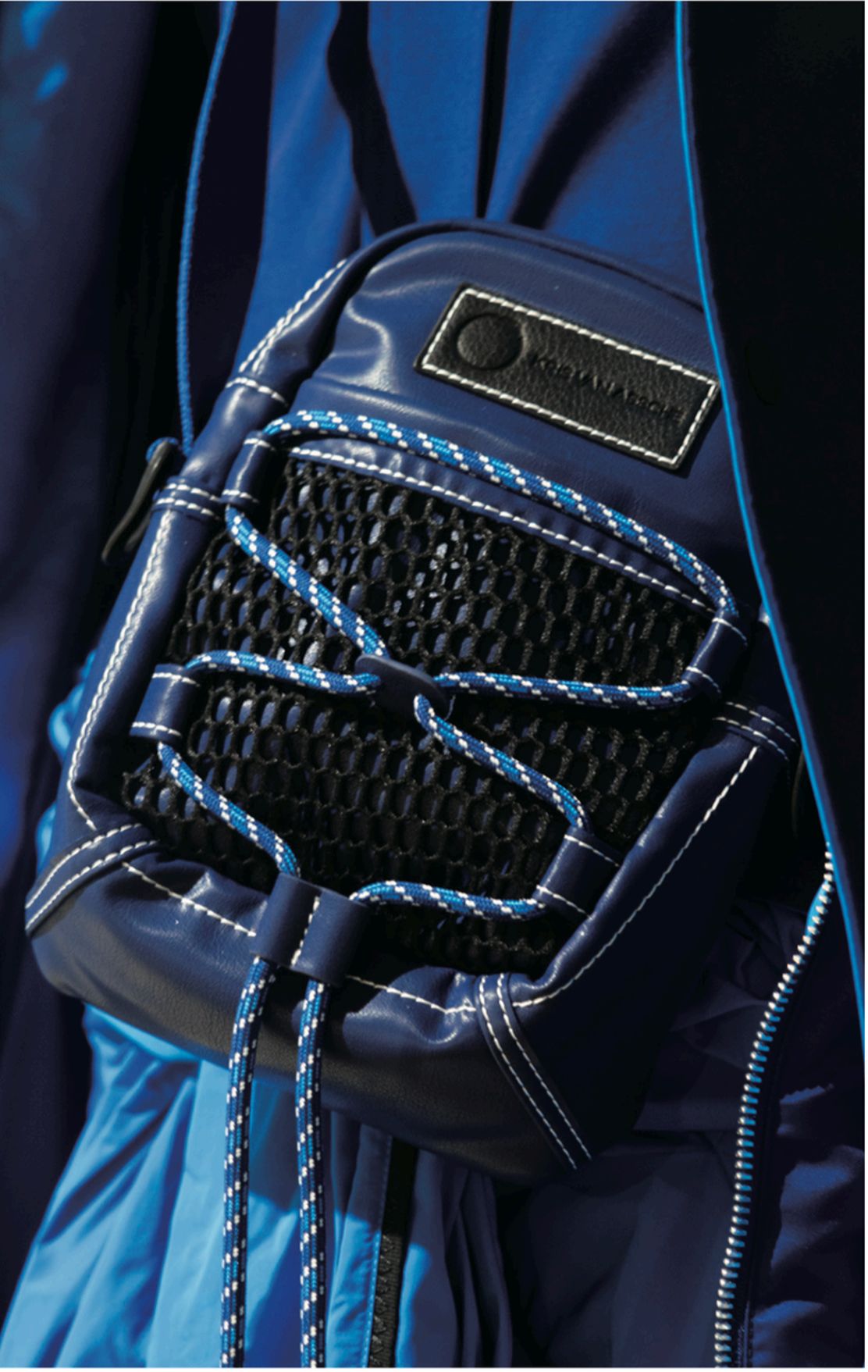
Yiru × ANTA ZERO × Kris Van Assche Designer Series · Vegan Leather Series
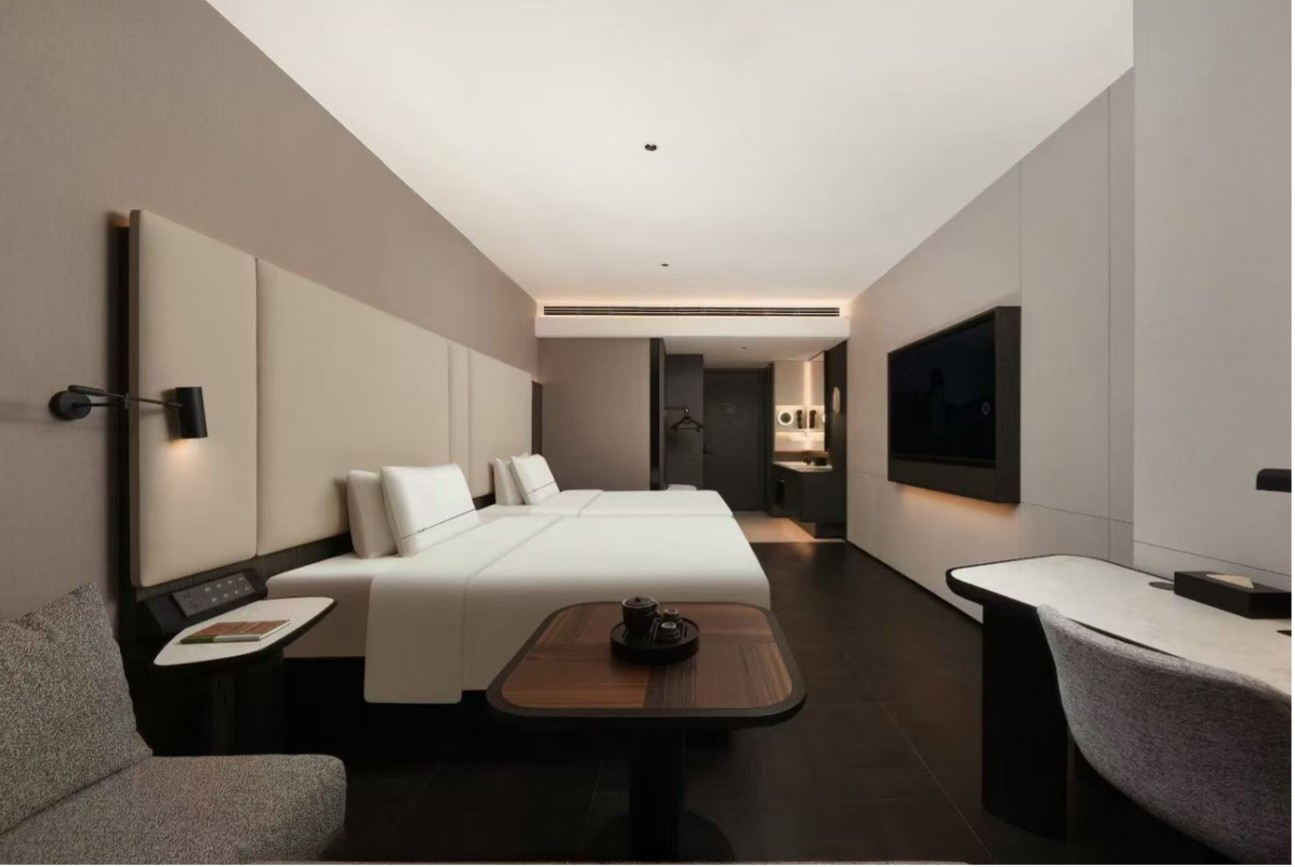
Other cooperation cases of Yiru Technology: Hotel scenarios
In addition, the most notable market is in Europe - Europe has many high - end fashion consumer brands and has a strong and urgent demand for low - carbon and sustainable materials. It is one of the most valuable battlefields for bio - based leather.
It is reported that Yiru has established a wholly - owned subsidiary, SYNMETABIO, in France, using it as a fulcrum for its European regional headquarters to link up cooperation channels in the UK, Germany, Italy, Turkey, and the Nordic regions, and radiate across the major consumer markets in Europe. Against the backdrop of the EU's Carbon Border Adjustment Mechanism (CBAM), Yiru can bring tangible cost advantages and brand promotion effects to European customers with the carbon - reduction and sustainability advantages of its materials.
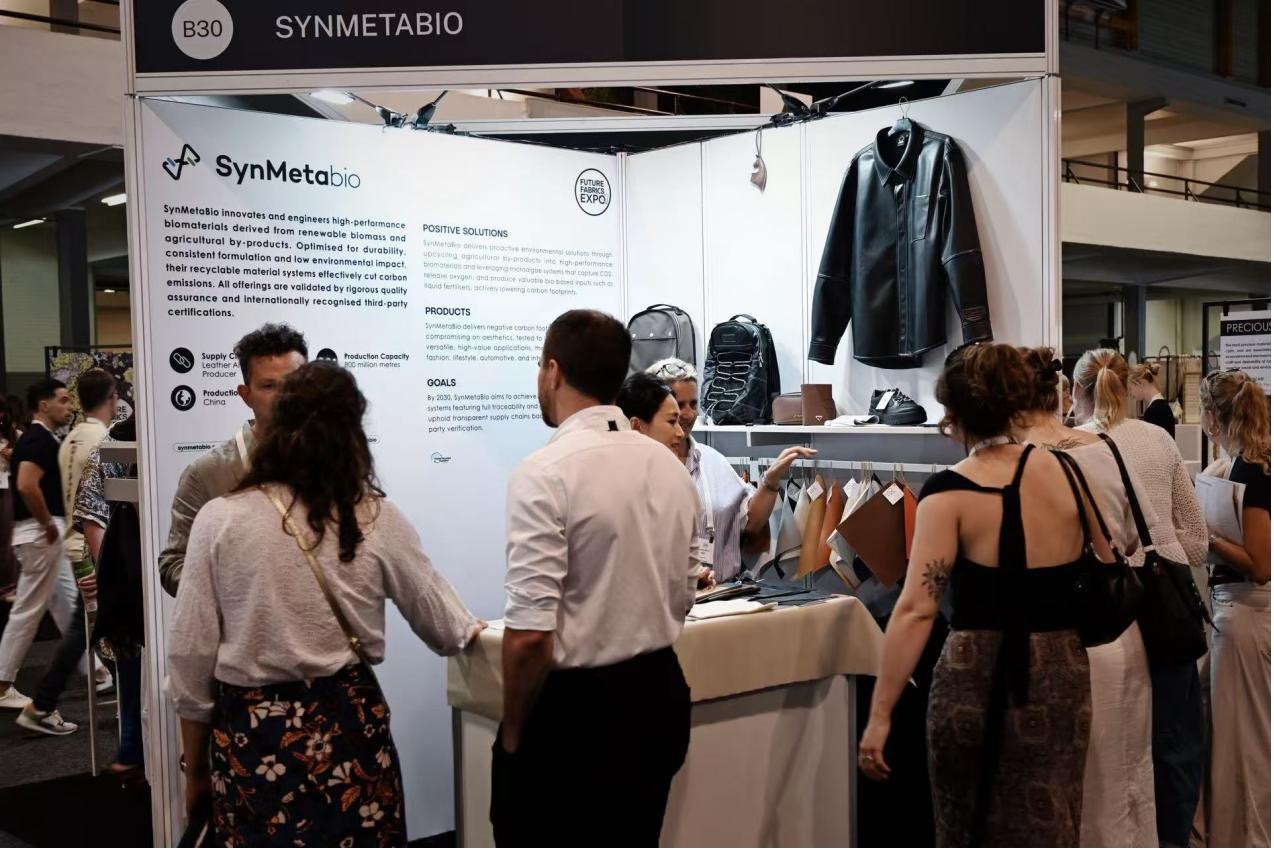
Actual photo of SYNMETABIO at an overseas exhibition
Su Rui revealed that the international geopolitical conflicts have pushed up the cost of traditional supply chains, and Yiru's European orders have increased significantly. The cumulative orders received by its French wholly - owned subsidiary, SYNMETABIO, have approached 100 million yuan, and "almost all come from luxury brands."
Currently, overseas orders account for about two - thirds of Yiru's total business volume, and the company has also set up overseas quality inspection, customs, and transportation teams. In the past six months, Yiru's team has expanded from about 20 people to nearly 70 people.
The rapid expansion of the business is reflected in all aspects, and it is the production capacity that supports these orders. Yiru and listed company Jujie Microfiber have jointly established Anhui Juyi Technology in a light - asset model. Currently, the annual production capacity of its leather production line has exceeded 16 million square meters, and the second - phase factory is under construction. According to Su Rui, the company will also put new finished product factories into operation one after another in the second half of the year.
Su Rui admitted that Yiru will treat 2026 as "the first year of preparing for listing," which seems radical for a company founded in 2021 that has just achieved factory - level scale. In the current situation where the industry is shifting from the "environmental protection narrative" back to "cost and mass production," a Chinese company that can reduce the leather cost to less than half of that of genuine leather and has received nearly 100 million yuan in orders in Europe indeed provides a new and worthy - of - attention sample.