36Kr Exclusive | Cambridge Associate Professor Launches Silicon Photonic Chip Startup, Partners with Huawei and Secures 100 Million Yuan in Funding
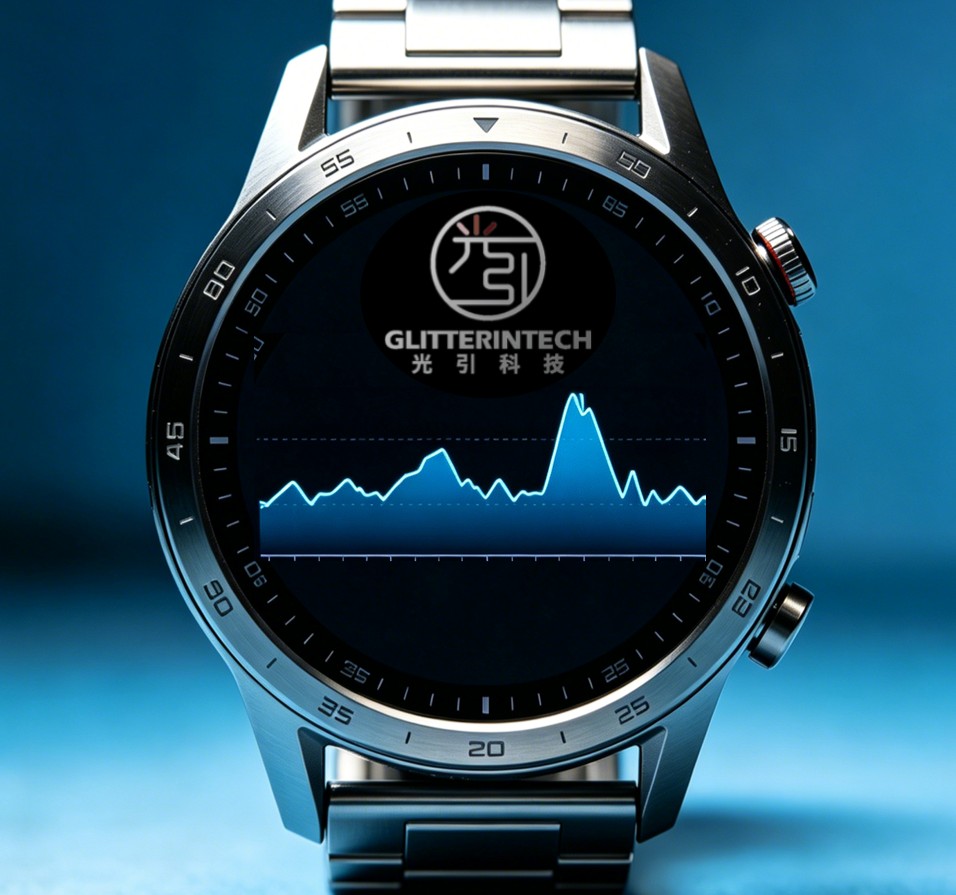
Image source/Enterprise
Author | Ou Xue
Editor | Yuan Silai
Hard Kr has learned that Guangyin Technology, a developer of silicon-based optoelectronic integrated chips, recently completed a Pre-A round of financing worth 100 million yuan. The investors include Photon Strong Chain Fund, Shanda Investment, Changfei Fund, Luoyang Talent, Zhongke Chuangxing, and Xi'an Financial Investment. The funds will be mainly used for the construction of a new laboratory in Shanghai, talent recruitment, and mass production promotion.
Guangyin Technology was founded in Xuzhou in 2021. Its core team was incubated from the research and development team of the University of Cambridge in the UK. The founder, Cheng Qixiang, is a doctor and associate professor at the University of Cambridge. He has been deeply involved in the field of photon integration for over 16 years and once worked in the optoelectronic team of Huawei Hisilicon. Many members of the company's core technology team are from the University of Cambridge, and the proportion of master's/doctoral degree holders reaches 66%.
According to QYResearch data, the global market size of micro and mini spectrometers was approximately $460 million in 2024 and is expected to reach $822 million by 2031, with a compound annual growth rate of 8.8%. Among them, chip-type spectrometers occupy the largest market share and are mainly used in fields such as wearable devices, cameras, and smartphones.
According to a report by The Business Research Company, the micro spectrometer market is expected to grow from $1.18 billion in 2025 to $2.15 billion in 2030, with a compound annual growth rate of 12.8%. The application of wearable spectrometers is one of the main growth drivers.
Guangyin Technology focuses on the design of silicon-based optoelectronic chips and spectral sensing solutions. Its product form is a miniaturized spectral sensing module, which can be applied in scenarios such as human health detection in wearable devices, skin detection in medical aesthetics, and substance detection in industry and food.
Compared with traditional desktop spectrometers, Guangyin Technology integrates a precision optical system onto a chip the size of a grain of rice, adopting the technical route of a "computational spectrometer".
Traditional spectrometers rely on physical light-splitting elements such as prisms or gratings, requiring precise optical structures and mechanical components. They have strict environmental requirements and high costs. In contrast, a computational spectrometer encodes the incident light through sampling units on the chip and then uses algorithms to reconstruct the complete spectral information from a small amount of measurement data, thereby significantly reducing the volume and cost.
According to the company, its spectral chip has a wavelength coverage range of 600 - 2500 nm, a maximum resolution of 0.01 nm, and is the size of a grain of rice. It is estimated that the cost after mass production can be controlled within $20. In comparison, the prices of current mainstream spectral module products on the market mostly range from $100 to $2000, and their sizes vary from that of a fingernail to a charger.
Xu Kangning, the vice president of Guangyin Technology, told Hard Kr that the company's current major customers include leading enterprises such as Huawei and Xiaomi, and it is collaborating with downstream ecological partners on the adaptation of electric drive chips and algorithms. In addition, in the industrial field, the company is also cooperating with several wineries to monitor changes in substances such as alcohol content, starch, and reducing sugar during the fermentation process using spectral sensors.
In the next few years, the company expects to accelerate the mass production of its products, continuously send samples to leading customers for verification, and gradually gain market recognition.
The following is an excerpt from the dialogue between Hard Kr and Xu Kangning (edited):
Hard Kr: What are the main difficulties as the product has not been mass-produced yet?
Xu Kangning: The spectral sensing track we are in is very special. There is no industrial chain in the industry that fully meets our technology. There are no fully matched suppliers for light sources, packaging technologies, and testing equipment. We need to build our own unique processes and production lines. Currently, about 80% of our requirements can be covered by suppliers in the market, and the remaining 20% requires us to purchase equipment, train personnel, and develop processes on our own.
Hard Kr: Compared with the existing PPG (photoplethysmogram) solution, what are the differences in price and performance of the company's technology?
Xu Kangning: Our technical solution is about 2 to 5 times more expensive than the PPG modules in existing smart watches, depending on the measurement indicators and application fields. However, we can measure more parameters with higher accuracy and are a superior alternative to PPG.
The traditional PPG technology mainly relies on photoplethysmogram signals, and the parameters it can measure are limited to a few indicators such as heart rate and blood oxygen. In contrast, spectral sensing can detect various biomarkers such as collagen, blood sugar, lactic acid, and alcohol. Our goal is to integrate spectral sensors into all smart watches to achieve the vision of a "wrist clinic".
Hard Kr: The company has made a major strategic adjustment this year. Is it planning to enter the optical switching field?
Xu Kangning: Yes. Our technical foundation is silicon-based optoelectronics. The three major directions of the Cambridge team are optical switching, optical sensing, and optical computing. The company previously focused on the sensing field. Starting this year, it will focus on establishing a team in Shanghai to develop products in the field of silicon-based optoelectronic optical switching.
Silicon photonics technology is experiencing rapid growth in the optical communication field. According to industry forecasts, the share of silicon photonics technology in the optical module market will double from 30% in 2025 to 60% in 2030. Our founder also worked on optical switching for many years in the early days. This is a field he is very familiar with and is an important second growth curve for the company in the future.
Views of the investors:
View of Zhongke Chuangxing: As one of the early investors in Guangyin Technology, we have firmly believed in this team since the Angel + round. Along the way, the company's growth has far exceeded our expectations, and we are full of confidence in Guangyin's future.
View of Changfei Fund: Guangyin Technology's technical accumulation in the field of optical chips is highly complementary to Changfei's industrial resources. The two sides have close cooperation in industrial chain synergy and look forward to jointly promoting the upgrading of the optical communication industry.
View of Shanda Investment: We are very glad to see an excellent hard technology company like Guangyin Technology nurtured in Xuzhou. From its establishment to growth, we have witnessed the team's solid R & D ability and execution, which is representative of Xuzhou's scientific and technological innovation strength.
View of Xi'an Financial Investment: Guangyin Technology has a solid core technology barrier and has key value in the process of domesticating optical chips. We continue to be optimistic about the company's technical route and look forward to it becoming an industry benchmark.
View of Photon Strong Chain Fund: Guangyin Technology is a key link in the photon industrial chain. Its optical chip technology has important strategic value for strengthening and supplementing the industrial chain. We firmly support the company in breaking through core technologies and promoting the self - controllability of the domestic photon industry.