The "pie" promised by AI companies is backfiring on them.
A large number of AI companies are rushing to go public. Some have skyrocketed, while others have been in a continuous decline. However, SmartVoice is particularly "unlucky".
As one of the earliest domestic AI companies, SmartVoice has been around for nearly two decades. In 2022, it attempted to list on the STAR Market but failed. At the beginning of this year, it planned to make a second attempt at an IPO, and currently, its review status is "inquiry received". Just at this critical moment, three chip distributors have publicly reported that SmartVoice and its holding subsidiaries have engaged in non - compliant and unethical business operations.
According to the distributors' reports, in order to boost its revenue scale, SmartVoice deliberately exaggerated the market prospects to induce distributors to stock up large quantities of goods. Moreover, it recognized sales revenue in advance without completing the full product delivery cycle.
"Their technology is not mature. They seriously underestimated the difficulty of chip delivery and fabricated cooperation resources. The mobile and radio - television operators, as well as leading home appliance customers like Changhong and Konka, which they promised at the beginning, never materialized," said the person - in - charge of one of the distributors.
For SmartVoice, whose business fundamentals were not very good in the first place, the distributors' reports are like adding insult to injury. If the reports are proven true, this listing plan may be ruined by the "pie in the sky" that SmartVoice painted for the distributors.
Poor technology, only good at making empty promises?
SmartVoice's growth was originally an inspiring story of being born in the "winter" of artificial intelligence and breaking the domestic voice technology gap. Due to its early entry into the market, it was once the darling of capital. However, it got off to an early start but ended up lagging behind. As more and more latecomers took off with the help of capital, SmartVoice seems to be running out of steam.
If the distributors' reports are true, we may be able to find the reason behind this lack of stamina.
It is reported that the companies that made the public reports are Shenzhen Weihefeng Semiconductor Co., Ltd., Lianxin Semiconductor (Shenzhen) Co., Ltd., and Shenzhen Donghengsheng Technology Co., Ltd. All three companies are long - term distributors of SmartVoice. The person - in - charge of Weihefeng said, "At the beginning, they painted a very grand picture for us, claiming that the technology was mature and the chips would have no problem with sales. We placed an order worth 5 million yuan for the first time, but after the goods arrived, there were endless quality control problems."
Multiple distributors also confirmed that after receiving the full payment and delivering the hardware chips, SmartVoice unilaterally withdrew its technical team and stopped providing the core keys, turning a large number of sold chips into unsellable electronic waste.
For a long time, SmartVoice has been emphasizing that the company has the ability to independently develop chips, and both its dedicated chips and general - purpose compatible chips are independently developed and designed. However, now the distributors have raised doubts. They claim that the core source of SmartVoice's voice chips in the market comes from two external manufacturers in Zhuhai and Shanghai. Some of the goods were even shipped out directly without removing the original factory silk screen.
According to the distributors, SmartVoice's recognition of channel sales revenue without completing the full delivery cycle has crossed the red line, involving the inflation of the book revenue scale, which may directly lead to the failure of its listing. More importantly, whether it is the quality control issues, inventory backlog, or the distributors' doubts about the independent development of its chips, all seem to point to the lack of technical capabilities of this AI "veteran" in the voice recognition and interaction field. This is undoubtedly tearing apart SmartVoice's technical label.

What should SmartVoice do when it has poor technology but needs revenue growth? It not only made empty promises to the distributors but also to the capital market.
In its previous prospectus, SmartVoice gave a very optimistic performance forecast. The revenue from 2022 to 2026 was expected to reach 452 million yuan, 725 million yuan, 1.15 billion yuan, 1.69 billion yuan, and 2.451 billion yuan respectively, with a compound annual growth rate of over 51.46% from 2021 to 2026. In fact, from 2023 to 2025, SmartVoice's revenue was 539 million yuan, 601 million yuan, and 688 million yuan respectively, with a three - year compound growth rate of only about 12.9%, far from the previous performance commitment.
It was precisely because of this baseless "optimism" that the company was deemed "not meeting the issuance conditions, listing conditions, or information disclosure requirements", and the listing process was terminated.
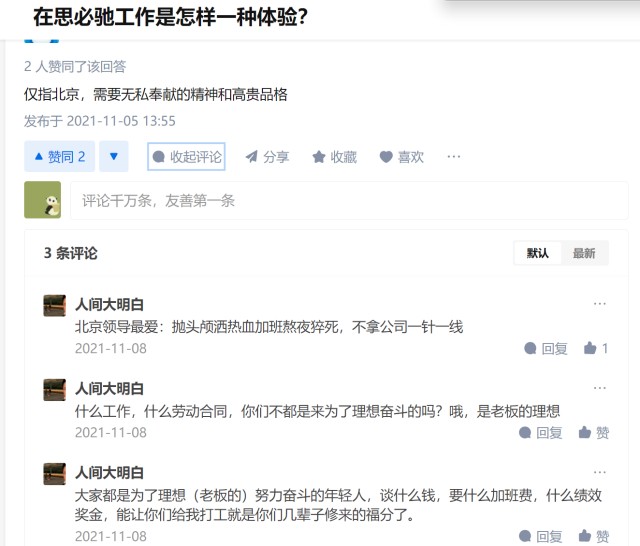
On Zhihu, someone once asked the question: What's it like to work at SmartVoice? One reply said, "The leaders always talk about the industry dream... and even said bluntly that those who don't accept it can just leave SmartVoice." Another reply said sarcastically, "We are all young people striving for the ideal (the boss's). Don't talk about money."
Whether internally or externally, perhaps SmartVoice really needs to reflect.
The "better" the story, the easier it is to fail
A few months ago, an article titled "99% of AI Start - ups Will Die in 2026" in Silicon Valley went viral. The author, Srinivas Rao, said bluntly, "The current AI boom is just a repeat of the Internet bubble."
When the Internet was emerging, there was a global wave of Internet entrepreneurship. Although it was later proven that the Internet brought unprecedented prosperity, many companies were eliminated due to various problems such as capital, business models, and competition before the technology truly matured. This scenario will naturally be repeated in the AI era, especially for some companies that like to tell disruptive stories first and then talk about monetization. Their future can already be foreseen.
When it comes to text - to - image AI tools, many people may still remember Stability AI. In 2022, this London - based startup became the center of the AI boom thanks to the popularity of its AI model, Stable Diffusion. After two consecutive rounds of financing, its valuation soared from 100 million US dollars to 1 billion US dollars. At a highly anticipated press conference in San Francisco, the founder, Emad Mostaque, confidently told the audience, "We don't do many things, but I think we've disrupted the AI world."
However, before he could disrupt the AI world, he "disrupted" his own company.
Mostaque is an extremely boastful person. He often talks grandly about partners and projects before Stability AI actually reaches any cooperation and shows a firm attitude towards these potential collaborations. He even claimed to have contacted the prime minister's offices of several countries to discuss developing AI models for each country.

Within the company, Mostaque often puts forward "weird ideas" and "lofty promises" that do not match the company's actual situation, but never follows through.
The decline of Stability AI exposes the major loopholes in the governance structure of startups that develop too fast under the "acceleration" of capital. If these companies also have a manager who "talks nonsense", they may only face elimination. It is reported that Stability AI faced a serious cash - flow crisis and debt problem in 2025 and finally had to be restructured and brought in external capital for control.
In China, a new wave of listing is creating a feast for AI companies. Newcomers in the large - model field, represented by Zhipu AI and MiniMax, have shown high - growth models and become the most eye - catching players in the capital market. While the new stars are enjoying the limelight, the so - called "Four Little Dragons" of AI, which were once highly anticipated, seem to have gained no benefits from the popularity of the AI concept.
This is because the new AI players based on large models are realizing the stories that the "Four Little Dragons" of AI initially told through technological upgrades, while the "Four Little Dragons" are going in the opposite direction.
Back around 2016, the AI investment and innovation boom emerged after several high - profile AI events. A large amount of capital began to pour into the industry, and the "Four Little Dragons" of AI quickly became the stars in the field. Although they entered different tracks, they all promoted themselves as "general AI platforms" in the early days, claiming to be able to achieve various cross - scenario applications through deep learning. It has to be said that this AI story is more imaginative and attractive than concepts in single fields such as smart home and smart transportation.
However, when it came to realizing the "general AI platform" story, the players in the AI 1.0 era completely changed their tune. The so - called "general" applications all got stuck in the quagmire of customization and eventually became high - labor - consumption customized engineering services.
It's not just startups that rely on exciting and grand stories to attract attention; large corporations are no exception. If you look closely at the financial reports of large corporations now, a common feature is the emphasis on the effect of AI on overall revenue and business growth. However, the market often doesn't buy it. In the Hong Kong stock market, the stock prices of Baidu, Tencent, Alibaba, and Kuaishou started to decline the day after their financial reports were released and hit new lows.
After all, the old Internet model of storytelling is becoming less and less effective.
Accelerated death, AI companies should abandon their illusions
If you look at the "casualty list" of AI companies, an obvious phenomenon is that the time from being popular to being abandoned and forgotten for AI companies is getting shorter and shorter.
For example, Sora was launched in February 2024, and the entire AI video industry was invigorated. All Internet giants rushed to follow up. However, it only took 25 months from its global sensation to its "sudden death" exit. Another example is the British AI startup Robin AI. At the beginning of last year, Robin AI was regarded as a rising star in the European AI industry and completed multiple rounds of financing in a row, attracting top global investors. But within half a year, it was listed on the bankruptcy website.

AI has attracted the most abundant capital in the world, which can quickly give birth to a unicorn. However, once the unicorn slows down, it may be directly eliminated. The reason is simple: the evolution and iteration speed of the AI industry is extremely fast.
From text generation to image and video creation, and from passive question - answering to intelligent agent systems that can actively perform tasks, the industry undergoes a paradigm shift every few months. Taking general large models as an example, in 2024, the average version iteration cycle of a large model was about 132 days. By 2026, this number has been halved, and in some scenarios, it is even calculated in days. Therefore, under high pressure, the cycle from the glorious debut to the dismal exit of many AI startups has also been significantly shortened.
Moreover, a cruel fact is that although the AI track seems to be full of opportunities and can accommodate many innovative companies, market resources and technological advantages are becoming more and more concentrated in the hands of a very small number of players, which makes the survival situation of most AI companies not optimistic.
A report exclusively provided by private - market data firm PitchBook to CNBC shows that among the 857 unicorn companies in the United States, nearly half have not completed a new round of financing for more than three years; more than 220 companies that once crossed the $1 - billion valuation threshold are now labeled as "fallen unicorns".
At the same time, another set of numbers is adding up in the same direction. Driven by the AI boom, more than $250 billion in capital has been poured into OpenAI and Anthropic. The number of global AI unicorns has jumped from 245 at the end of 2024 to about 370 at the beginning of 2026. An extreme polarization pattern has thus been formed. The top 10 unicorn companies in the United States now account for 51.8% of the total market valuation, while in 2022, this proportion was only 18.5%.
Of course, even the few star companies at the top now may not be able to maintain their positions in the next round of technological innovation.
Therefore, in the future, this technological "competition" is likely to "kill" those AI companies that still try to tell stories at the fastest speed, rather than giving them time to prove themselves or find a way out as before.
In a word: Be cautious when telling stories.
This article is from the WeChat official account "Dao Zong You Li" (ID: daotmt). Author: Dao Zong. Republished by 36Kr with permission.