What should you pay attention to when buying luxury bags? Nearly half of consumers will check the second-hand price first.
On June 25th, Bain & Company and the Italian luxury industry association Altagamma jointly released the "Global Luxury Market Research in Spring 2026". The research report predicts that the personal luxury market will rebound to 365 billion to 373 billion euros in 2026, with a growth rate of 2% to 4%. The industry is transitioning from a high - volatility cycle to a new stage of "normalized low growth".
Behind the slowdown in growth, a deeper structural consumption shift is emerging: nearly half of consumers check prices on second - hand platforms before buying a new bag.
On July 2nd, Claudia D'Arpizio, a senior partner at Bain & Company and the global head of the fashion and luxury business, said in an interview with a reporter from NBD (hereinafter referred to as the NBD reporter): "This is not a risk for the industry, but a mirror—it will test whether a brand is really worth the price."
Meanwhile, more than 80% of the luxury market value comes from brands that have participated in sports sponsorship in the past 12 months. Sports are becoming the core medium connecting popular culture and high - end consumption.
As second - hand prices start to become a reference for luxury consumption and sports events become a stage for brand culture shows, the luxury industry is entering a new cycle defined by consumers, data, and popular culture.
Half of consumers check second - hand prices before buying a bag
Currently, the reconstruction of the consumption decision - making path is becoming one of the deepest changes in the luxury industry. Bain data shows that about half of luxury consumers refer to second - hand market prices and supply conditions before making a purchase.
When talking about the potential impact of this trend on brand pricing strategies, D'Arpizio told the NBD reporter, "The resale market has grown into a real reference in consumers' purchase decisions. It's like a mirror that reflects the true value of a brand. The top brands don't need to worry. A healthy second - hand market is precisely an endorsement of their product strength."
So, is the new product price being reverse - anchored by the second - hand market? She pointed out: "The second - hand value of classic styles actually verifies the rationality of their premium. The real pressure is on trendy items—the second - hand market just more honestly reveals what can stand the test of time. Instead of seeing it as a risk, it should be regarded as a guide."
Data from global e - commerce giant eBay confirms this trend. Platform research shows that 89% of global consumers plan to continue or increase their purchases of second - hand goods, with Generation Z and Millennials being the main drivers of growth.
In the first quarter of 2026, the listing volume of women's bags and handbags, as well as jewelry and watches on eBay globally, both increased by nearly 20%. Louis Vuitton, Gucci, and Prada remained at the top of the best - selling list, and the sales of some classic styles increased by more than 300% after the change of the brand's creative director.
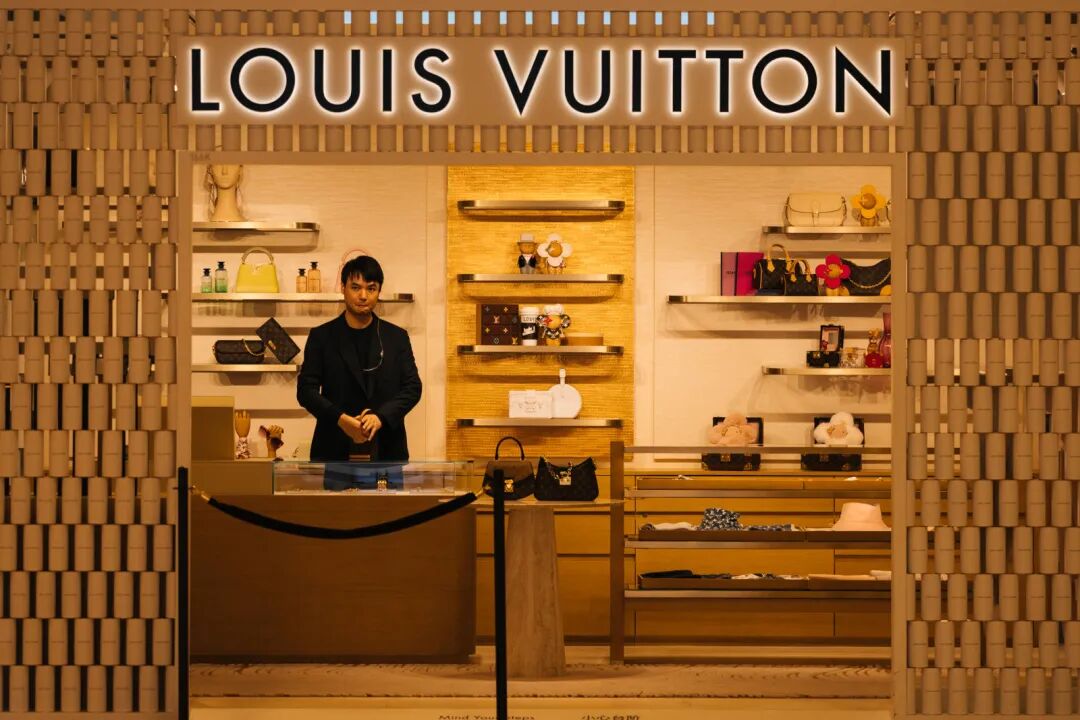
Photo source: Zhang Jian
Lin Wenkui, the general manager of eBay's Greater China International Cross - Border Trade Division, said: "The circular economy is reshaping the global consumer market, and second - hand luxury goods have become an important industry with long - term growth potential."
Regionally, according to the report "Second - Hand Luxury Market Size, Share, Trends, and Forecast (2026 - 2034)" by the IMARC Group, Europe is currently the world's largest second - hand luxury regional market, while the United States is the key single - country market. The rise of online resale platforms has greatly promoted market development.
The NBD reporter learned that Chinese luxury consumption accounts for nearly half of the global total, and there is a huge supply of second - hand goods. Long Zidan, the owner of a second - hand luxury store in China, told the NBD reporter that the domestic second - hand market prefers black and classic colors, while the colorful styles that are unsalable in China can have a premium of 2 to 4 times in Europe and the United States. Her store is planning to go global through cross - border e - commerce.
Meanwhile, AI tools are reshaping the consumption entry point. The Bain report shows that about 50% of consumers have used AI tools during the purchase process, mainly for product comparison and brand discovery. The traditional "brand - led" path is being replaced by a new path of "AI screening - multi - channel verification - re - decision - making".
The resale market and AI - assisted decision - making are jointly embedded in the mainstream consumption chain, making consumer behavior longer, more fragmented, and more difficult to be directly controlled by a single brand narrative.
The new logic of luxury competition: competing for "cultural visibility" in sports arenas
Against the backdrop of slowing growth, the logic of brand competition is changing.
The Bain report points out that more than 80% of the luxury market value comes from brands that have participated in sports sponsorship in the past 12 months. Sports are becoming an important medium connecting popular culture and high - end consumption.
This change is clearer in specific business collaborations. The large luxury production and sales holding group LVMH deeply embedded its brands in the globally - watched cultural event by sponsoring the 2024 Paris Olympics; Louis Vuitton signed a 10 - year official cooperation with F1 (Formula One) and became the title sponsor of the Monaco Grand Prix; Gucci pioneered a title - naming cooperation with the Alpine team. From the 2027 season, the team will be renamed "Gucci Racing Alpine F1 Team"—this is the first brand title - naming in F1 history, marking an upgrade from "labeling" to "brand platform co - construction".
Brands are vying to bet on sports not just for exposure.
D'Arpizio analyzed to the NBD reporter: "Sports can bring something to a brand that the product itself can never give: a vivid, shared moment. It's a collective emotion that unfolds in real time and is felt by millions of people. When a brand is involved, it is no longer just selling a symbol, but starting to provide an experience that people can personally experience and remember."
This is the inherent logic of the luxury industry's shift from "owning more" to "experiencing better". "Sports are one of the few stages where the whole world and a small group of elites can share the same moment. Billions of people watch the game, and a few are on - site. Through the same event, a brand can communicate with both mainstream culture and top - tier customers at the same time, winning both wide resonance and scarce prestige." D'Arpizio emphasized.
The flow of executives confirms the deepening of this trend. In May 2026, the German luxury sportswear brand Bogner appointed Arne Freundt, the former CEO of Puma, as its new CEO, aiming to drive growth with his experience in the sports and lifestyle fields. Executives with top - level sports brand management experience are highly recognized in the luxury industry for their ability models.
The reason why sports sponsorship can establish an emotional connection is not just about "being present". D'Arpizio further said: "When a brand becomes part of what people use to define their love, it is not just an item they buy, but part of their self - perception."
The change in consumption scenarios also reflects this trend. The NBD reporter noticed that some high - end shopping malls are adjusting their brand portfolios, with popular sports brands occupying more core storefronts. The vitality and sense of community brought by sports brands meet the current consumers' pursuit of emotional value.
However, the Bain report also points out that at the current stage, brands' investment in sports is still mainly used for "cultural visibility" and "brand mind - share", rather than directly translating into sales growth. In the new stage of "normalized low growth", the comprehensive visibility of a brand in cultural scenarios, experience scenarios, and digital distribution systems will be the key to competition.
Disclaimer: The content and data in this article are for reference only and do not constitute investment advice. Please verify before use. Any actions taken based on this are at your own risk.
This article is from the WeChat official account "NBD", author: Sun Yuting, editors: Zhang Jinhe, Chen Xu, Du Hengfeng, proofreader: Cheng Peng. Republished by 36Kr with permission.