UBTECH's Ultra-Bionic Robot Surpasses 10,000 Units in First Batch Orders, With a Maximum Price of 990,000 Yuan | Frontline
Author | Huang Nan
Editor | Yuan Silai
On June 30th, Ubtech officially launched the full - size hyper - realistic humanoid robot "YouWorld" U1 series at its 2026 Global Press Conference. The series includes three products: the half - body version U1 Lite, the high - end full - body version U1 Pro, and the high - dynamic full - body version U1 Ultra. The price range is from 119,800 yuan to 990,000 yuan.
Meanwhile, Ubtech announced that the cumulative orders of the U1 series across all channels have exceeded 13,361 units, making it the world's first full - size hyper - realistic humanoid robot with large - scale mass - production capabilities.
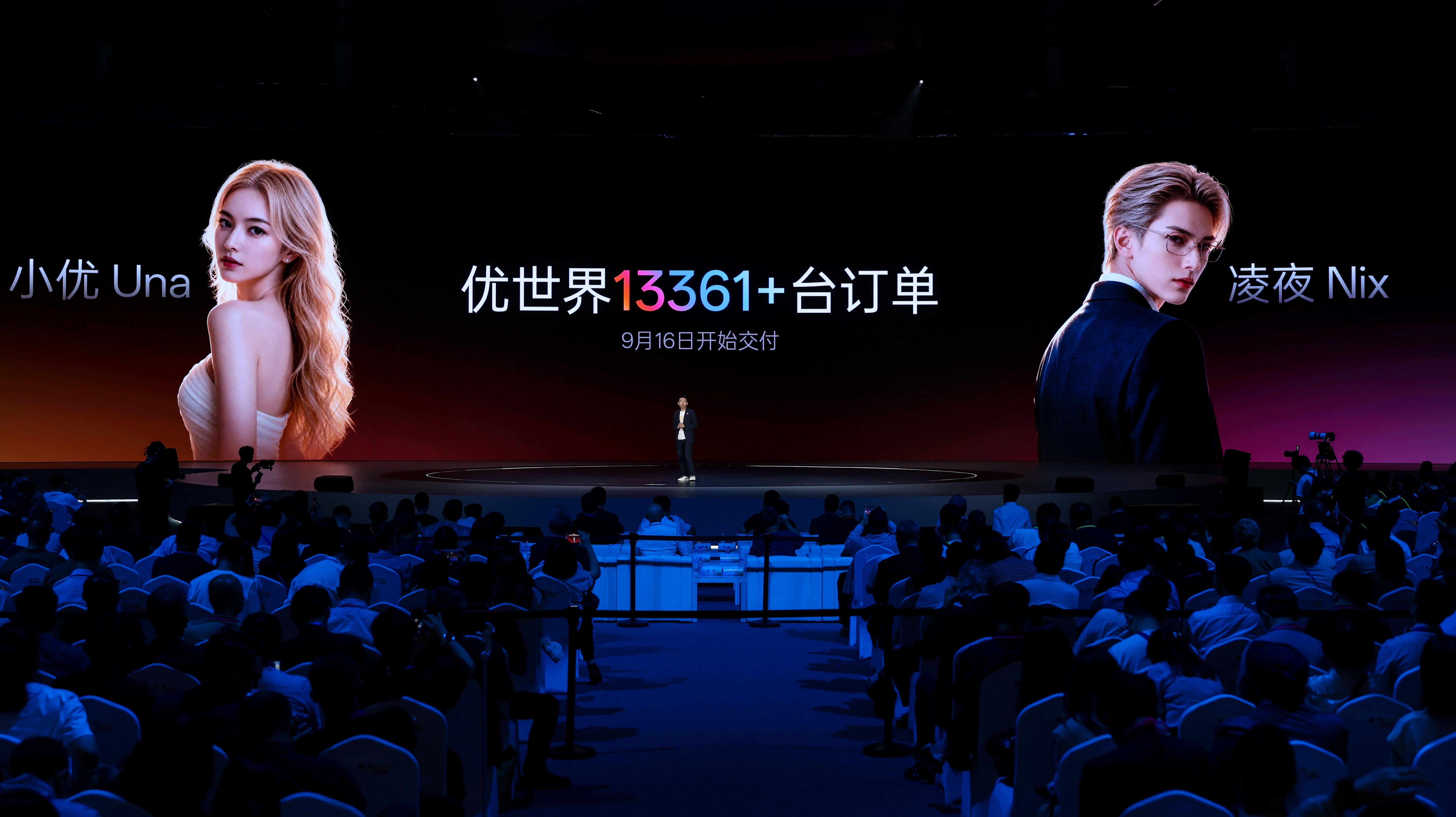
The total orders of the U1 series across all channels have exceeded 10,000 units.
The value of this figure may not lie in the sales volume itself, but in the fact that it points to a structural change. Humanoid robots are moving out of factories and into households. The key variables in industry competition have shifted from "motion control accuracy" and "load - carrying capacity" to a more fundamental question: how can robots truly enter human lives and establish long - term emotional connections?
According to a research report by Guotai Junan, the potential demand for companion robots in the elderly population in China is about 420 billion yuan, and about 500 billion yuan in the youth population. The total potential market size is nearly one trillion yuan. In 2025, the overall market size of intelligent companion robots in China reached 12.86 billion yuan, a year - on - year increase of 24.3%.
At the event site, Zhou Jian, the founder, chairman of the board, and CEO of Ubtech, pointed out in the "Human - Robot Symbiosis" strategy that the symbiosis between humans and robots will evolve in three steps: first, replace high - risk and repetitive labor to liberate human resources; second, penetrate into daily life scenarios to provide companionship services; finally, achieve deep integration between humans and robots and eliminate the boundaries. Zhou Jian envisioned that when robots are widely popularized on a large scale, human income may consist of three categories: basic security, creative income, and "robot dividends", allowing the whole population to share the technological dividends.
This judgment also corresponds to Ubtech's industrial layout of "first in industry, then in business, and finally in consumption". At the industrial end, the Walker S series was mass - produced and delivered in 2025. At the consumer end, the launch of the YouWorld U1 means that it has completed the full - cycle transformation from B2B to B2C.
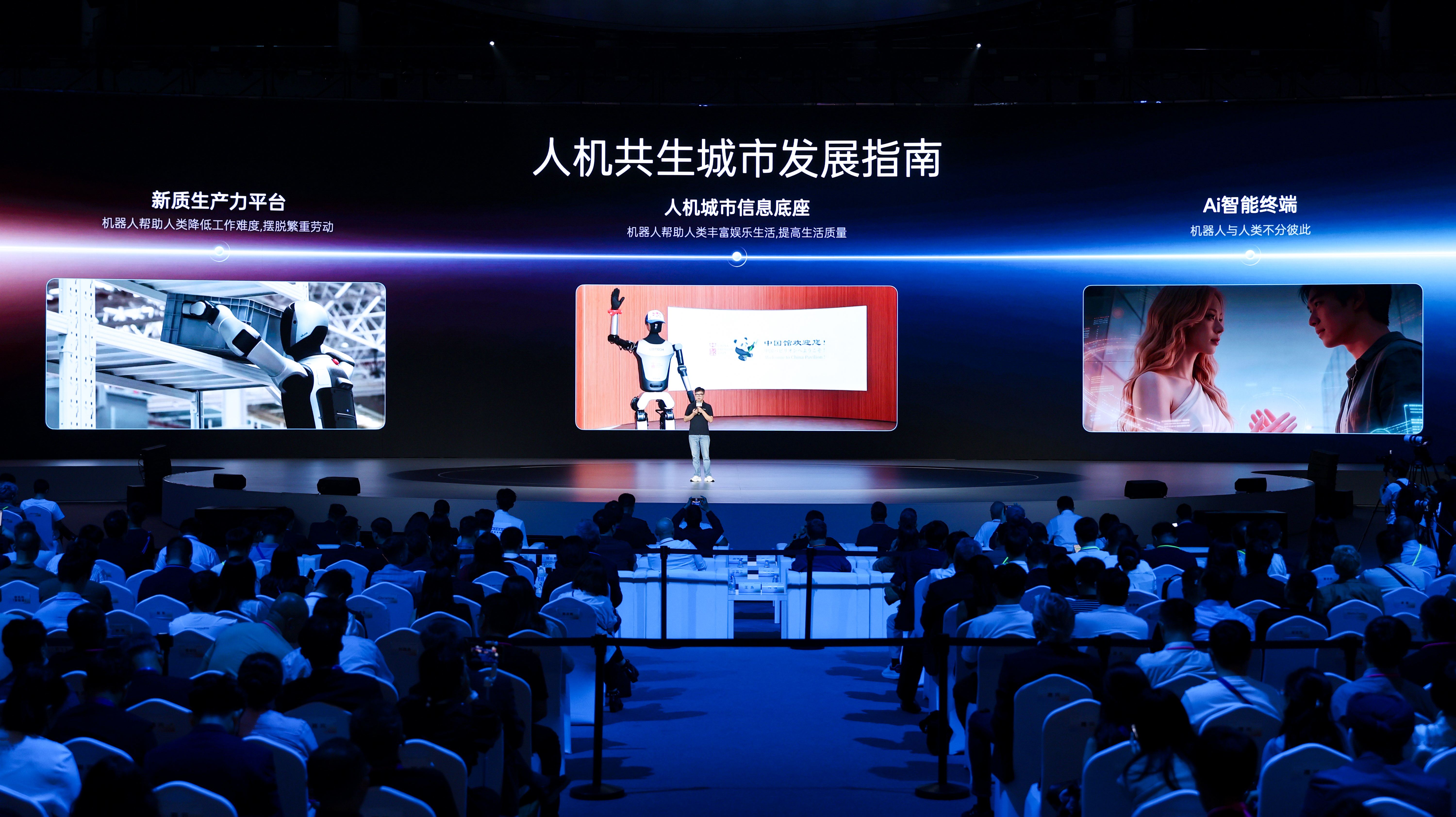
Zhou Jian, the founder, chairman of the board, and CEO of Ubtech, proposed the "Human - Robot Symbiosis" strategy.
In terms of hardware structure, the YouWorld U1 series is equipped with 88 bionic joints. Based on its original dual - fulcrum bionic cervical vertebra, it can replicate 90% of human daily limb movements. This includes more than 300 complex micro - expressions in four major categories, human - like neck movement range and posture maintenance, etc. Even when the power is cut off, the robot can maintain its head posture based on the full - time self - locking technology, avoiding mechanical jerks. The built - in multi - dimensional flexible electronic skin allows the robot to sense the force and position of touch and respond to users' hugs and cuddles at the physical level.
The full set of bionic hardware solves the basic problem of making the robot "look like a human". However, the essence of family companionship requires more than that. It also needs to be able to understand humans and "read people".
The emotional large - scale model is the core ability of the YouWorld U1. Tan Min, the chief brand officer of Ubtech and the president of the Robot Consumer Innovation Division, introduced that this model can recognize more than 20 fine - grained emotions with an accuracy rate of over 90%. In terms of architecture design, YouWorld draws on cognitive neuroscience to build a "bionic fast - slow brain" dual system: the fast brain enables an intuitive response within 500 milliseconds, and the slow brain carries the deep reasoning ability with hundreds of billions of parameters. The two systems work together to make the robot natural in instant interactions and show continuous understanding of users' emotional changes in long - term relationships.
The cross - time - space memory library Agent Memory OS constructs a "digital life system", enabling the robot to continuously record, understand, and respond to users' state changes throughout the product lifecycle. The active care engine realizes interaction without wake - up words based on environmental perception. Users don't need to deliberately wake up the robot, and it can independently determine the intervention timing.
At the detailed level of bionic interaction, YouWorld can control the delay between voice and lip movement within 20 milliseconds through its self - developed controller, reducing the interaction barrier caused by the "mechanical feeling" of traditional robots from the perception level.
In addition, in response to users' high - concern about data security, the YouWorld U1 series will process user data locally first. It will not upload data to the cloud unless necessary. Users can view, export, and delete data at any time, ensuring the bionic interaction experience while effectively protecting data security.
At the press conference, YouWorld simultaneously launched the "Human - Robot Companionship for the Lonely Project". It plans to donate customized bionic robots to groups such as empty - nesters, families who have lost their only child, and families of martyrs every year, with a plan to donate 100 units in 2026. Through 3D facial modeling and voiceprint backtracking technology, it physically replicates the specified image, deeply integrates the emotional interaction large - scale model and exclusive long - term memory, and provides psychological companionship.
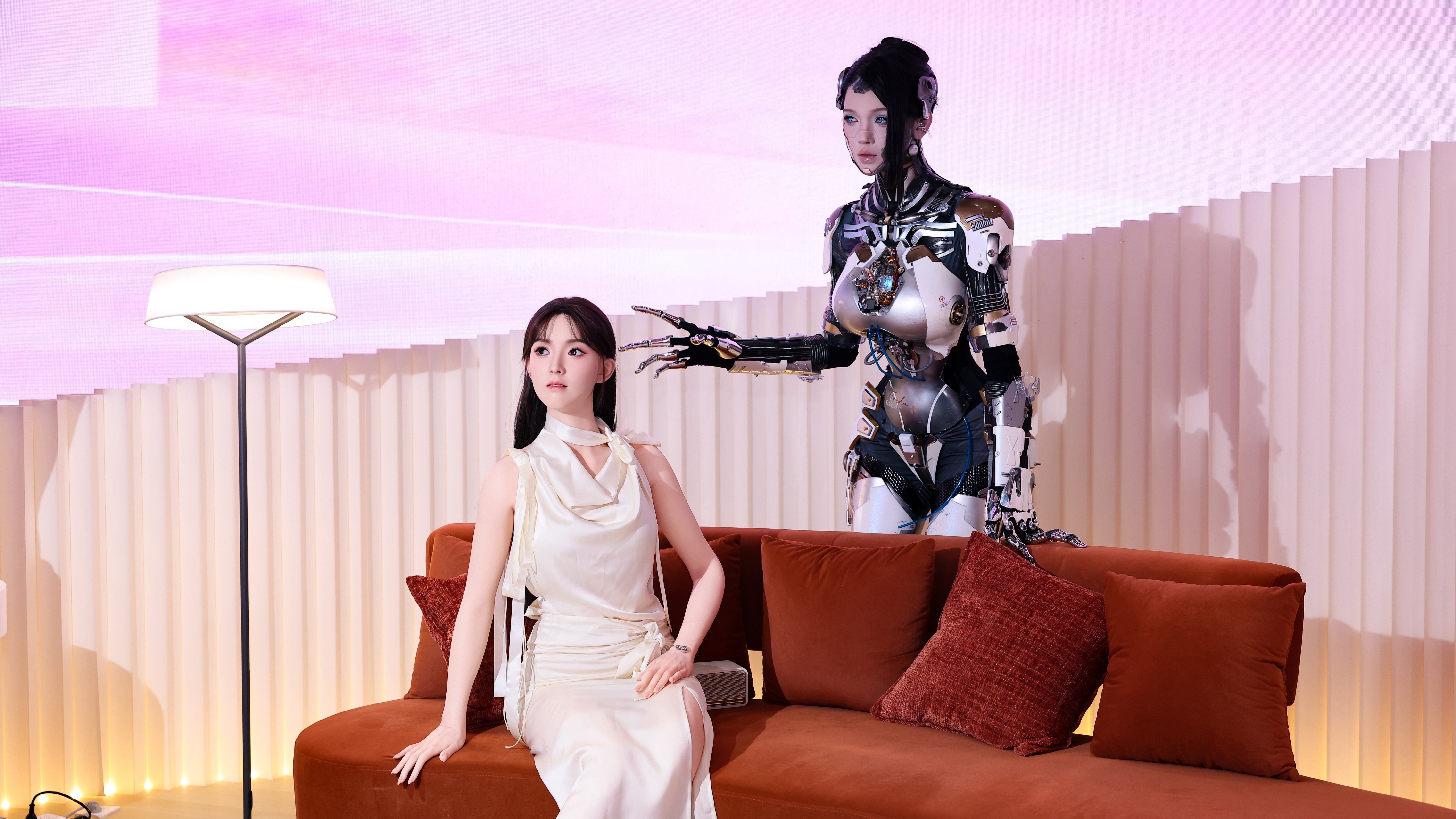
The exhibition hall of Ubtech's 2026 Global Press Conference
From an industry perspective, the focus of humanoid robot development in the past few years has been on "movement ability" and "operation accuracy" - making robots stand, walk, grab, and carry. These abilities have direct value in industrial scenarios. However, when entering household scenarios, the technical evaluation system will undergo a fundamental change: users no longer care about how heavy a load a robot can carry, but rather whether it "understands me", is "natural", and is "trustworthy".
Macro data is confirming the arrival of this transformation. According to IDC statistics, the total global shipments of humanoid robots in 2025 were about 18,000 units, and the proportion flowing into private households was less than 0.8%. More than 90% of the products were still concentrated in industrial scenarios. Morgan Stanley predicts that the shipments of humanoid robots in China are expected to increase to 50,000 units in 2026, tripling from the beginning of the year. It is expected that the market size will reach 2 billion US dollars this year and is expected to climb to 15 billion US dollars in 2030.
Beyond technical feasibility, the consumer market's acceptance of "bionic companionship" is rapidly increasing. Ubtech's self - developed full - chain technologies established over the past decade, from bionic skin, embodied intelligent hardware, operating systems to emotional large - scale models and whole - machine mass - production manufacturing, provide a guarantee for mass - production and delivery.

Ubtech's high - dynamic full - body version U1 Ultra
Of course, humanoid robots still face many real - world challenges in entering households. Whether the emotional interaction in long - term companionship scenarios can be continuously maintained without becoming a "novelty - consuming product", how to maintain the evolution of the interaction experience through OTA iteration during the product lifecycle, and how to define the data security and ethical boundaries after large - scale deployment, these issues still need to be verified by the market.
When a humanoid robot no longer positions itself as a "tool" but enters the household as a "partner", the narrative logic of the human - robot symbiosis era is being broken and rewritten.