This World Cup has shown us a different side of the United States.
Modern cities, efficient organizational capabilities, and enthusiastic citizens...
In 2008, the Beijing Olympics allowed the world to see an open and modern China.
This World Cup also lets us see another side of the United States.
The luxurious, almost "exaggerated" stadiums in the United States are very impressive.
Take the SoFi Stadium in Los Angeles as an example. The first group - stage match of the US team (USA vs Paraguay) was held here.
Zhengjieju couldn't find a suitable large - scale photo of the game on that day, so the following photo of the Qatar 1 - 1 Switzerland match is used for illustration.
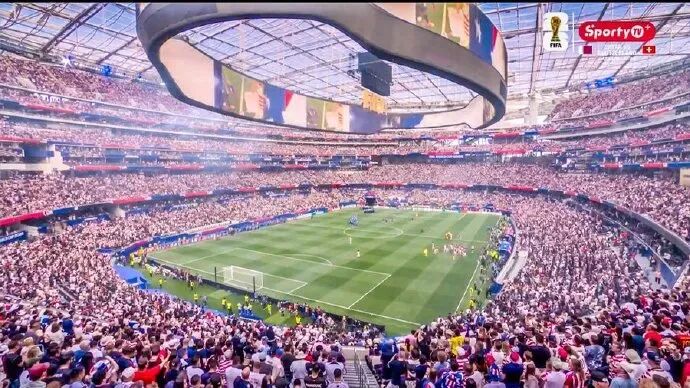
Group B of the 2026 FIFA World Cup in the US, Canada, and Mexico: Qatar 1 - 1 Switzerland match site
It really gives a very shocking feeling.
First, it's large. This stadium has 70,240 regular fixed seats and can accommodate up to 100,000 spectators at peak capacity through temporary expansion. Its spatial scale far exceeds that of most top - level international sports stadiums.
Second, it's luxurious. There is actually a large screen hanging in the center of the stadium.
This is the "Infinity Screen" surround screen provided by Samsung. It weighs 1,000 tons, supports 4K ultra - high - definition resolution and about 80 million pixels, and can display real - time game replays, player data, and special - effect animations.
Looking up, you'll find that the stadium also has a roof. It is a dome composed of 302 adjustable ETFE membrane structures for light intake. Among them, 46 can be opened for ventilation, and there are 27,000 built - in LED lights, which can display game content on the surface of the dome at night.
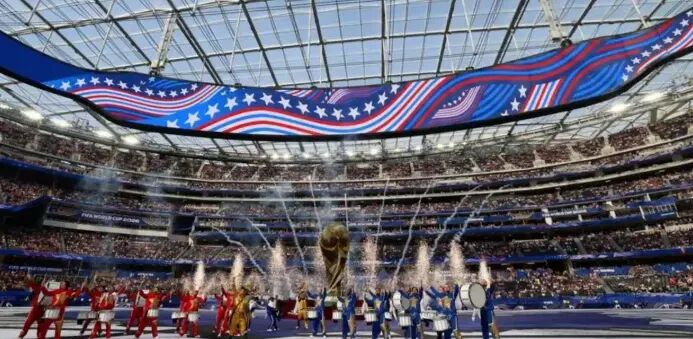
Surround screen and roof
What's visible is as above. What's invisible is that the SoFi Stadium cost $5.5 billion to build, 11 times the cost of the Bird's Nest, and is regarded as the world's most expensive sports stadium.
The United States has provided 11 high - level stadiums like the SoFi Stadium for this World Cup at once.
Note that none of them were newly built specifically for the World Cup.
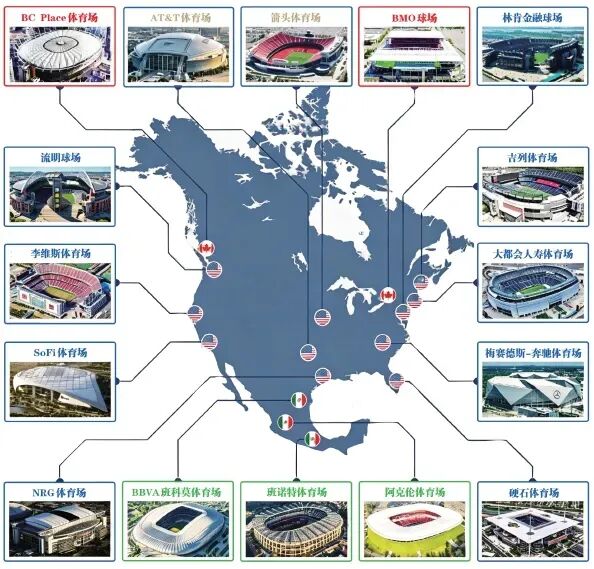
16 stadiums for the 2026 World Cup, 11 in the United States
For example, the cost of the MetLife Stadium in New York is slightly lower but still exceeds $1.6 billion. It can accommodate 82,000 spectators. The natural turf system has been specially renovated, and the media broadcast and fan service facilities have been upgraded.
Another example is the Mercedes - Benz Stadium in Atlanta. It is also equipped with a 360 - degree circular large screen and is the first stadium in the United States to receive the LEED Platinum certification.
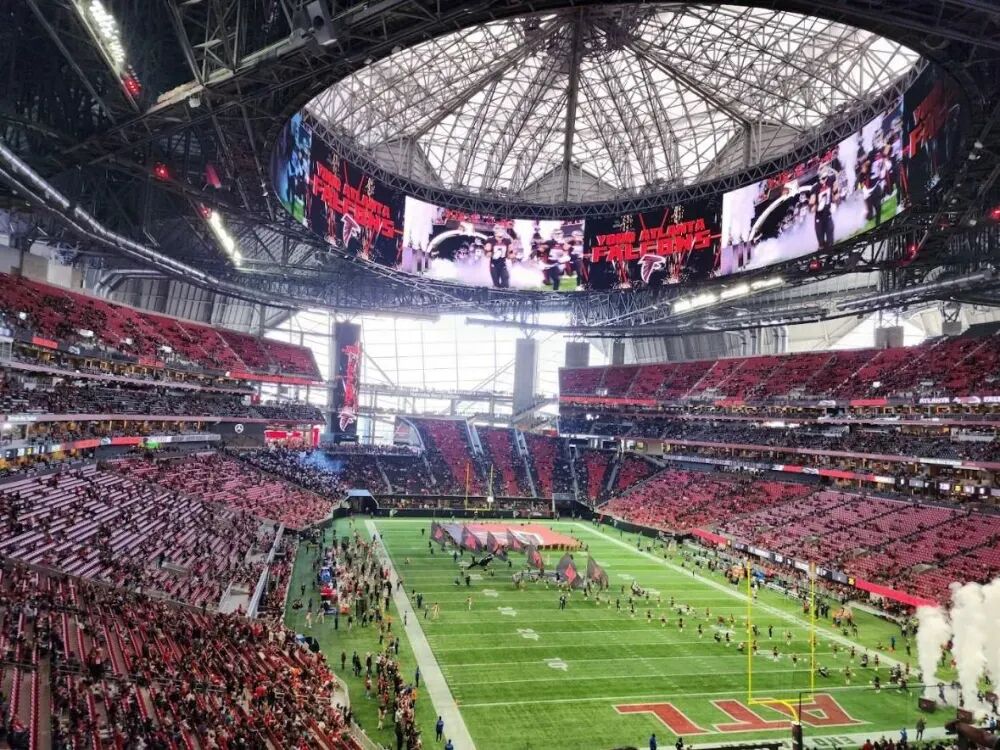
Mercedes - Benz Stadium in Atlanta
Statistical data shows that the United States has more than 100 stadiums with a capacity of over 50,000 people, while China has only 30.
As we all know, stadiums require large investments, are prone to idleness, and are likely to incur losses. This is a common dilemma faced by many large - scale sports stadiums in China at present.
Isn't the United States afraid of losses when building so many large - scale stadiums?
Behind this is a mature private - investment and diversified - monetization operation model.
First, the investment is mainly from private capital. Team owners and business groups fully fund the construction.
From the very beginning of the planning, the stadiums aim at making profits. Commercial, retail, and hotel facilities are developed simultaneously, forming a joint revenue model of sports and real estate.
Second, the income channels are diversified, not just relying on ticket sales.
Long - term naming rights, annual fees for corporate luxury boxes, and multi - year season tickets form a stable basic income.
For example, the financial technology company SoFi paid $300 million to name the SoFi Stadium, recovering part of the construction cost in advance.
More importantly, there are continuous sports events in the United States. Various sports events, including the five major professional leagues of football, basketball, soccer, baseball, and ice hockey, as well as touring concerts and commercial exhibitions, effectively support the continuous operation of the stadiums.
Taking the US professional football season as an example, there are nearly 300 games in a season, and the number of on - site spectators exceeds 10 million.
In fact, all 11 World Cup stadiums provided by the United States for this World Cup are NFL professional football stadiums.
Ultimately, the underlying driving force for the long - term operation of the US stadium business model is a large - scale and all - inclusive sports consumption market.
The United States is the world's largest sports consumption market, with an annual sports - related consumption scale of nearly $400 billion, exceeding the sum of the next 25 countries.
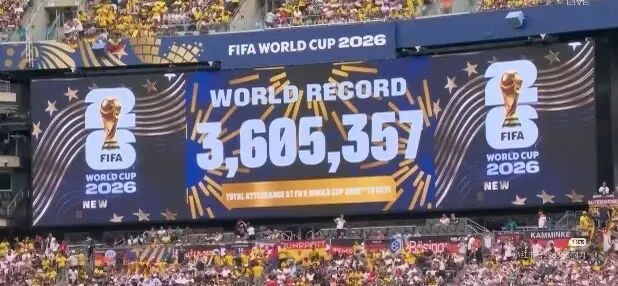
Cumulative on - site spectators for this World Cup
According to media reports, with the World Cup only half - way through, the cumulative number of on - site spectators has reached 3.6054 million, breaking the 32 - year - old all - time high record.
The previous record 32 years ago was also set by the United States.
Currently, the average number of people entering the stadium per game is 64,110, and the average stadium attendance rate is as high as 99.54%. Most stadiums are almost full for every game.
You should know that the tickets for this World Cup are the most expensive in history, with the average price more than twice that of the previous one.
Take the Round of 32 knockout games to be held on July 1st as an example. The price of the outermost seats is more than $3,000 each!
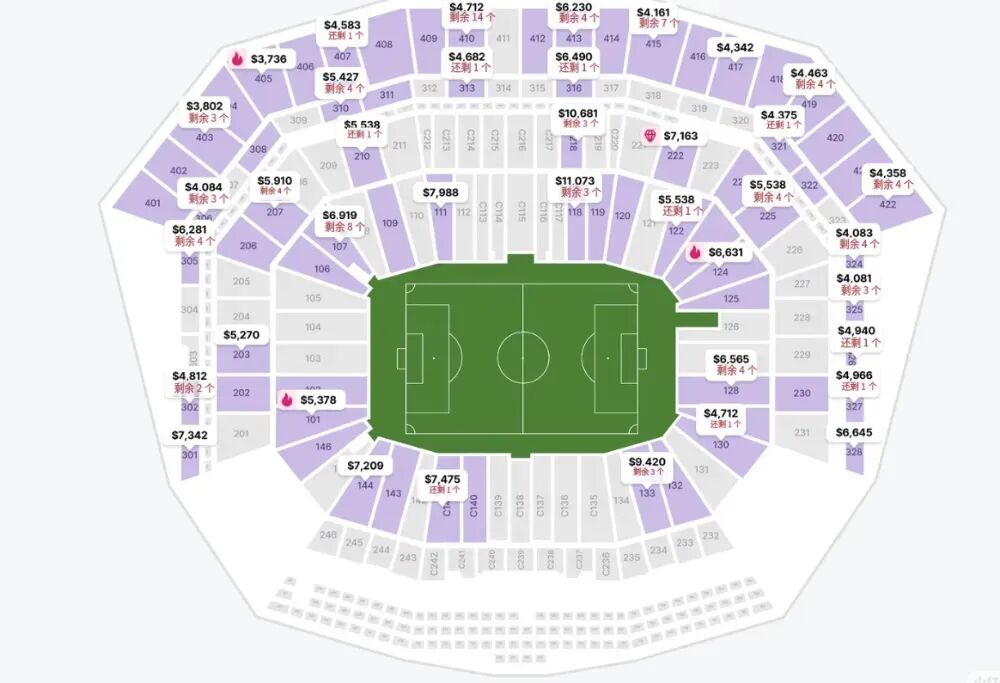
Ticket prices for the Round of 32 knockout games
Some people may say that the World Cup is an international event, and the on - site spectators come from all over the world, not all Americans are consuming.
That's true.
But generally speaking, the proportion of overseas spectators in the World Cup is about 50%.
The local American spectators are still the mainstay.
In particular, for the annual championship finals of the National Football League (Super Bowl) in the United States, the actual market price of a single ticket usually exceeds $7,500 to $9,000.
The average ticket price for the NBA Finals also exceeds $1,000.
It can be said that the American people have long been "tested" by high - priced tickets.
The sports consumption ability of Americans is incredibly strong.
In the past two years, various provinces in China have held regional football leagues one after another. The ticket prices are affordable, generally not exceeding 50 yuan.
Take the Jiangsu Super League as an example. In the first season of the Jiangsu Super League in 2025, from May 10th last year to the finals on November 1st, a total of 85 games were held. The total number of on - site spectators was 2.433 million, with an average of 28,600 per game.
Calculated at an average ticket price of 10 yuan per ticket, the cumulative ticket revenue is less than 30 million yuan.
However, the transportation, catering, and tourism consumption driven by the events should not be underestimated.
Official data shows that the Jiangsu Super League has achieved a significant leverage effect of "1 - yuan tickets driving 7.3 - yuan surrounding consumption".
Following the Jiangsu Super League, the Jiangxi Super League, the Northeast Super League, and the Hunan Super League have emerged. One of the purposes is to drive consumption through football events.
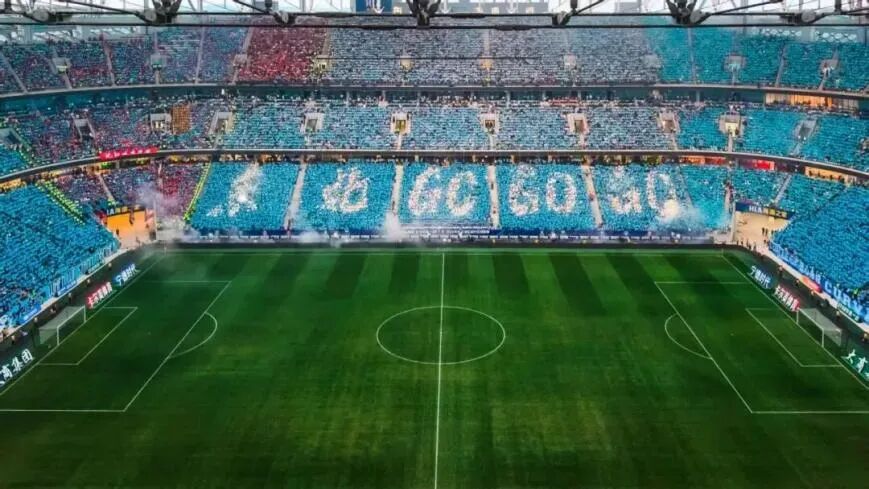
Northeast Super League
Of course, this is correct.
The inspiration from the United States is that sports events themselves have huge consumption potential!
Currently, the wave of consumption upgrading among Chinese residents has arrived. Vigorously cultivating sports consumption and improving the sports industry ecosystem can not only make up for the short - board of domestic demand growth but also form a virtuous cycle among sports venues, professional events, and mass sports.
We look forward to a future where Chinese people have both the economic strength and the consumption enthusiasm to enjoy the pleasure brought by sports to the fullest.
This article is from the WeChat official account “Zhengjieju” (ID: zhengjieclub), written by Zhengjieju and published by 36Kr with authorization.