With a monthly salary of 6,000 RMB, stay-at-home mothers are undergoing a process of self-"distillation".
I was reborn as a household robot. The moment it powered on, I had all the skills like mopping the floor, sweeping, folding clothes, and washing dishes, and I could even tie a perfect and sturdy knot on a garbage bag with one hand. The dream of a robot being able to handle both elegant and mundane tasks has finally come true for me.
If a robot could write a science - fiction novel, it might start like this.
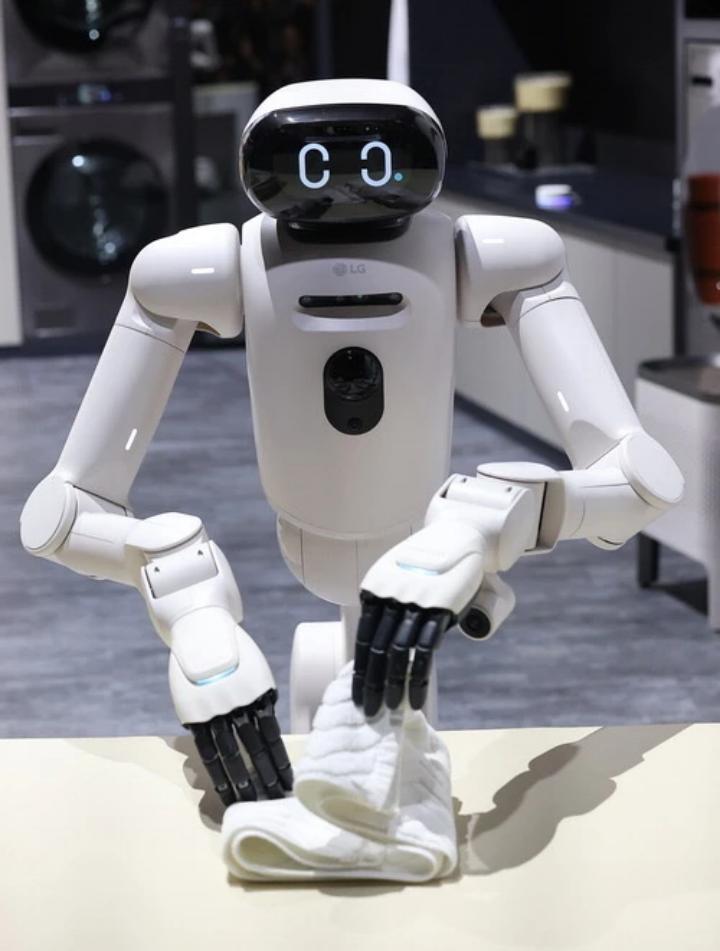
LG CLOiD, a household robot launched by South Korea's LG
In fact, teaching a robot to do housework is essentially like getting a monkey to type out Shakespeare's complete works.
Because the Infinite Monkey Theorem tells us:
Given enough time, a monkey randomly hitting a keyboard will eventually type out Shakespeare's complete works. In the early days of AI development, this thought experiment sparked endless imagination among scientists - if we collect enough random data, will intelligence emerge?
The answer is obviously no: pure random data is like the random typing of a monkey. The efficiency is so low that even until the end of the universe, we won't wait for a valuable inspiration to emerge.
However, the development of AI has completely rewritten this result. Scientists no longer passively wait for monkeys to get lucky. Instead, they actively collect data, from every search to every frame of surveillance footage and every household chore video. In the Truman's world of 2026, there are cameras everywhere. Behaviors are continuously recorded, and data is continuously extracted, labeled, and fed to the model that is learning to replace you.
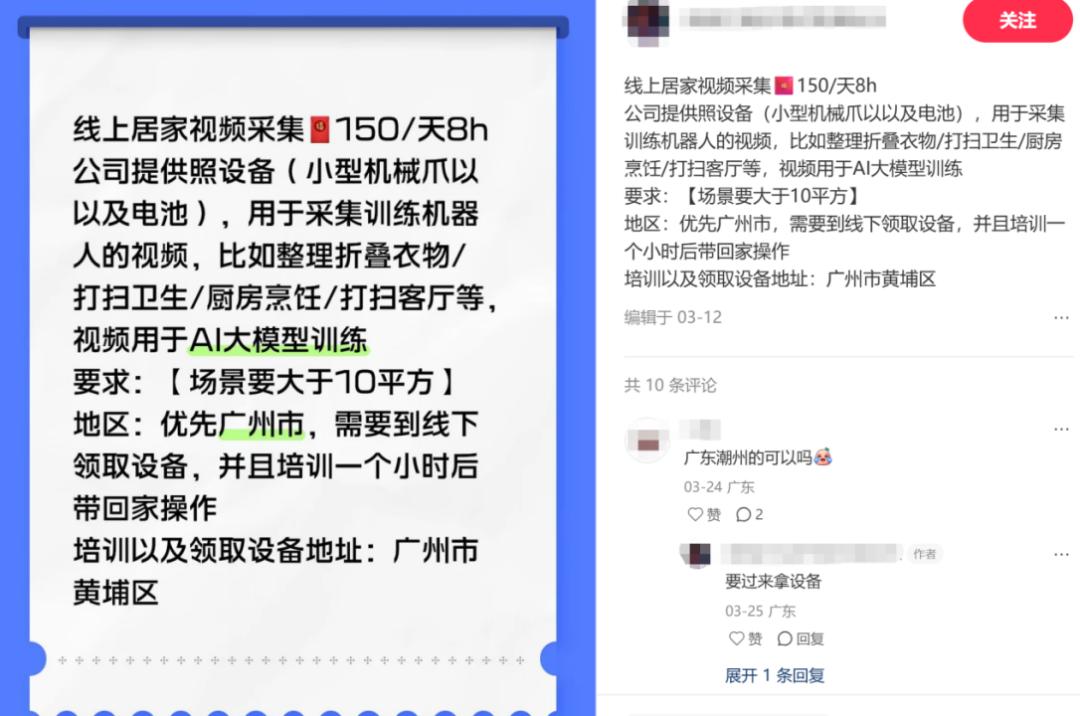
Online home video collection work is becoming increasingly popular
After the algorithm understands the logic of ordinary people doing housework, the actions become replicable instructions. Mass deployment is the ultimate goal of robot companies.
So today, everyone's most basic daily life has also become thought - provoking. Those beautiful visions are inevitably accompanied by sacrifices in the process of realization.
01 When AI data collection wears the cloak of a part - time job
Would you be willing to allow an AI robot to collect your every move for a monthly salary of 4,000 yuan, and ultimately train an intelligent agent that completely replaces your labor function? Many people would instinctively refuse. But when this job is packaged as an "AI data collector", the real purpose is concealed, and it precisely targets stay - at - home moms who urgently need to supplement their family income and have a lot of free time, and self - exploitation is accepted by many.

Household chore collection jobs on BOSS Zhipin
Xiao Ao saw such a job on BOSS Zhipin. At that time, she had just quit her previous company. She wanted to take a break but was afraid that her savings would run out. In this state of being unable to relax and unable to let go, she thought about finding a more flexible way to make money at home.
The HR's promise was very tempting. "Just record your hands. You don't need to show your face or speak. You have flexible working hours and can do it at any time." She thought she had found an easy part - time job at home. She just needed to film herself sealing garbage bags, mopping the floor, and organizing clothes, which were the housework she did every day anyway. Now she could get paid just by shooting videos.
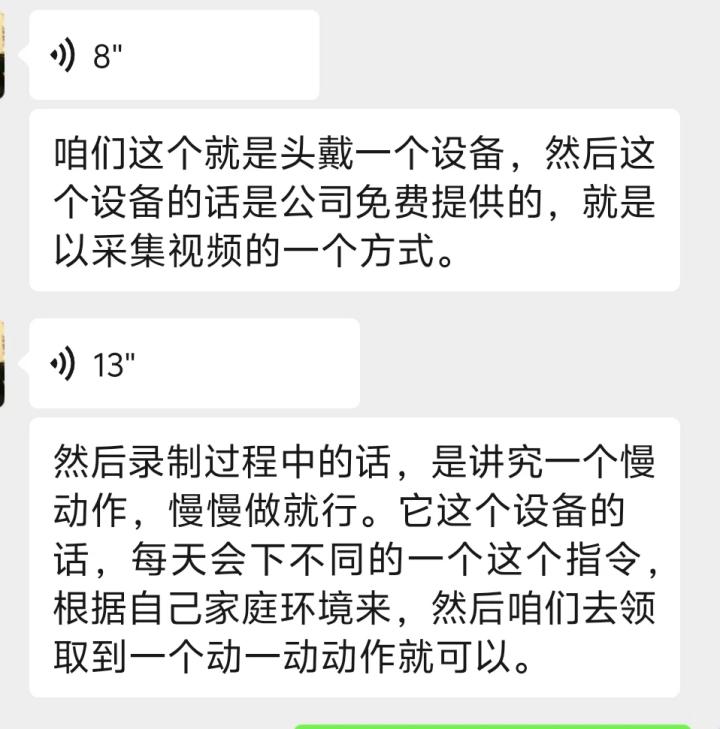
The HR's promise made Xiao Ao excited
She took the order. For the first shooting, she set up her phone on the kitchen counter as required by the training and recorded a video of folding clothes. Three days after uploading, the background prompted that "the review failed" with the reason being "uneven lighting and a shadow on the left side".
At first, Xiao Ao thought the reviewer was just being nitpicky. She had worked so hard folding clothes for so long but didn't get paid. Later, after understanding the purpose of the video, she realized that such a video with a shadow couldn't be recognized by AI and was hardly suitable as training material.
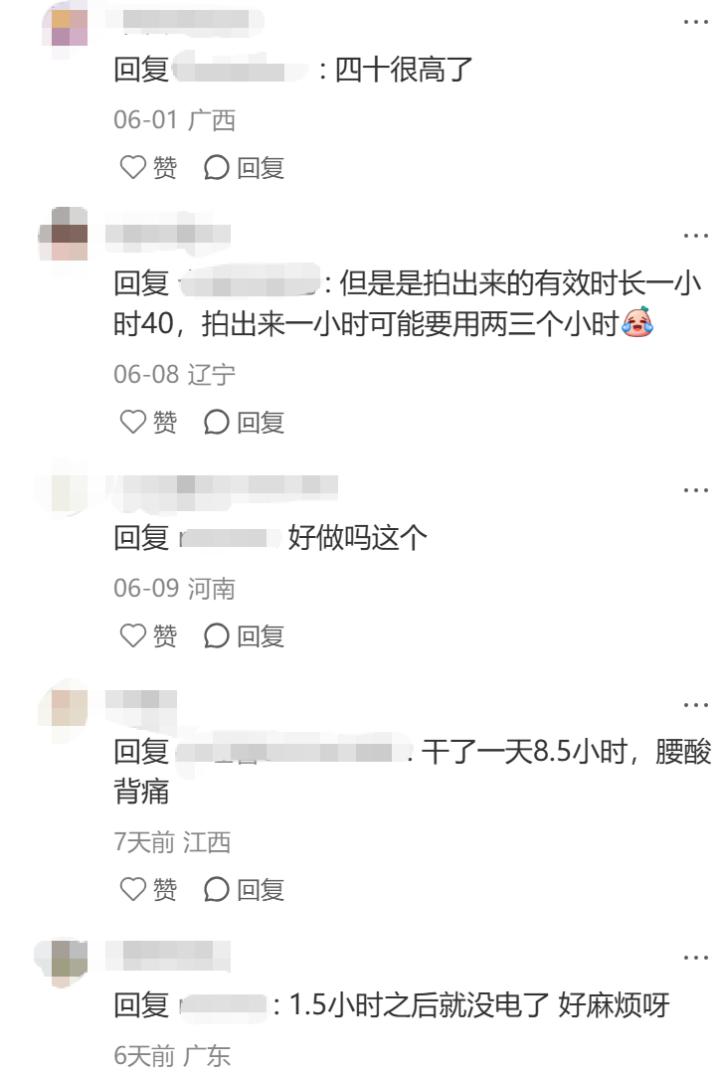
Collectors like Xiao Ao found that the work was not easy
"I changed the light and shot again, but it was still rejected, saying that the starting position of the action was not in the center of the frame." She had to reshoot four times before it was barely qualified. She calculated the time cost: it took her nearly two hours to get the first 20 - second video through the review.
After officially starting work, the pass rate was still shockingly low. If the shooting angle was slightly off, it would be rejected; if the hand movement went beyond the edge of the frame, it would be rejected; if there were sundries in the background, it would be rejected; if the light shone from the left to the right instead of from the front, it would be rejected. "You think you're just doing housework, but the AI platform tells you that your way of doing housework is wrong."
Doing housework has completely become a performance for her. Sometimes she feels like an extra behind the camera, and a group of robots are the most loyal audience.
What really made her decide to quit was an accidental discovery.
One day, there was an additional note in the task package dispatched by the system, saying that they wanted to focus on collecting the action of tying the opening of a garbage bag this week, requiring more than 5 ways of tying. She suddenly realized that the things she was filming were exactly the same as the actions in the online demonstration videos of household robots. "I felt a chill down my spine at that time. I had been filming myself folding clothes, sealing garbage bags, and picking up toys for two months. It turned out that I was teaching robots how to replace me all along." And after the video finally passed the review, the reward was only 3.2 yuan.
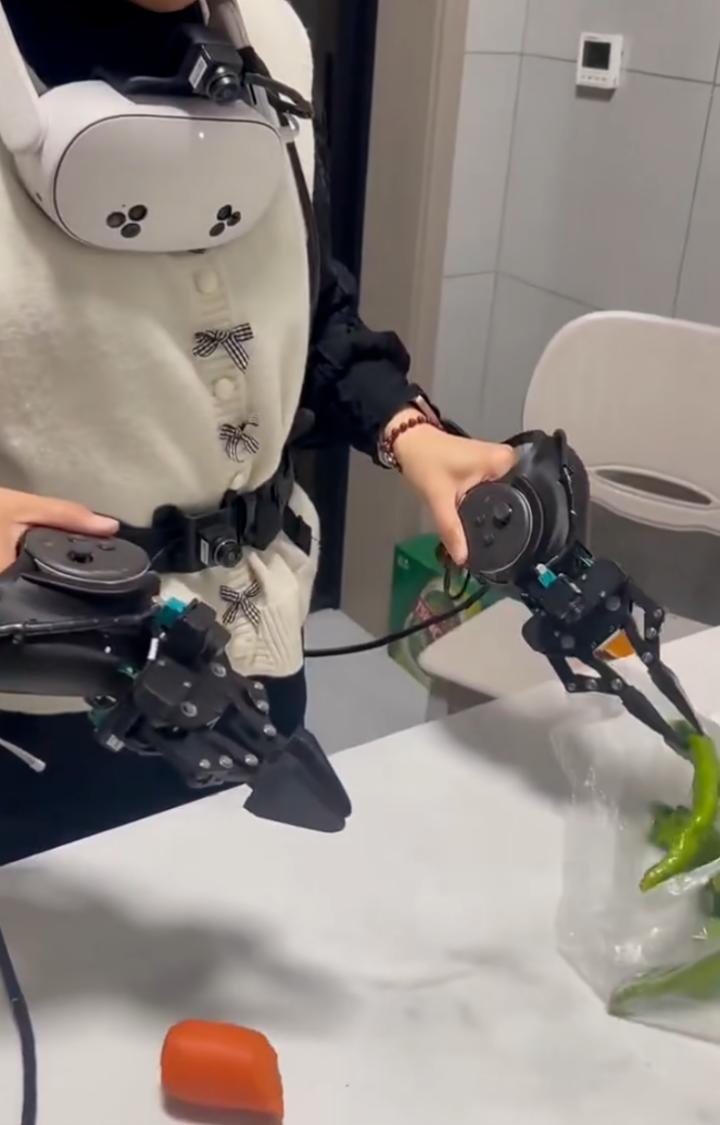
Recording a video of packing vegetables
"I thought I was making extra money, but actually I was working for AI, and they will eventually replace me."
Ya Nan made a more radical choice. A few years ago, she was still delivering food. Now, in the room rented by the company, she has become a full - time data collector. Her daily work is very simple: wear the equipment and film herself folding clothes, wiping the table, and making sandwiches.
Taking the home scene as an example, she can collect more than 200 videos in a day, with an effective duration of about 2 to 3 hours. Her monthly salary is 6,000 to 7,000 yuan, which is much higher than the 3,000 to 4,000 yuan of home collectors, but it's still not a high - paying job.
Her work process has been precisely divided into standard actions by the system. She receives tasks online the night before and repeats the actions in the room the next day, identifying the target object in a messy environment, picking it up with the gripper, and doing it again from a different position.
A video is only 20 to 30 seconds long. The company's daily minimum requirement is 1.5 hours of effective duration, which means she has to produce at least 180 qualified videos every day. From putting on the equipment to taking it off, she spends most of her day repeating the same thing.

Household chore data collection is refined to how to clean a pillow
"You think you're doing a proper job, but you know in your heart that these things will eventually make some people lose their jobs. I just didn't expect that I might be one of them."
There is a more than 10 - fold difference between the hourly wage of embodied intelligence data collectors and the final selling price of the data they create. A high - quality real - machine operation data can sell for hundreds or even thousands of yuan in the data market, while the collector only gets a dozen or twenty yuan.
The data collection circle has a strict division like the caste system in India.
At the bottom are the collectors, whose common profiles include stay - at - home moms, the unemployed, and part - time workers. They are the fuel for the whole chain.
The second layer is the outsourcing platform, which takes orders from data companies and subcontracts them to collectors, taking 30% to 50% in the middle. The third layer is the data company, which cleans, labels, and aligns the raw data and packages it into a trainable data product. At the top are robot body companies such as Unitree, Ubtech, Zhipu, and Tesla, which spend a lot of money to buy this data to train their models.
Workers are at the bottom of the industrial chain, getting the lowest pay and producing the most primitive data. And this data may eventually train a robot that replaces themselves. This may be a higher form of self - exploitation, not only selling their labor personality but also building the machine that will eventually replace them at a very low price.
The dirty work that undergraduates are scrambling for
AI data collection is not a new thing. A few years ago, there were scattered micro - tasks on crowdsourcing platforms, such as Mandarin recording, convenience store shelf labeling, and road image frame selection.
This is a typical Internet dirty work: repetitive, mechanical, low - threshold, and low - return. You frame the traffic lights on the screen, transcribe a voice into text, and label products as "beverages", "snacks", or "daily necessities". Each order pays a few cents, and a skilled person can do hundreds of orders a day.
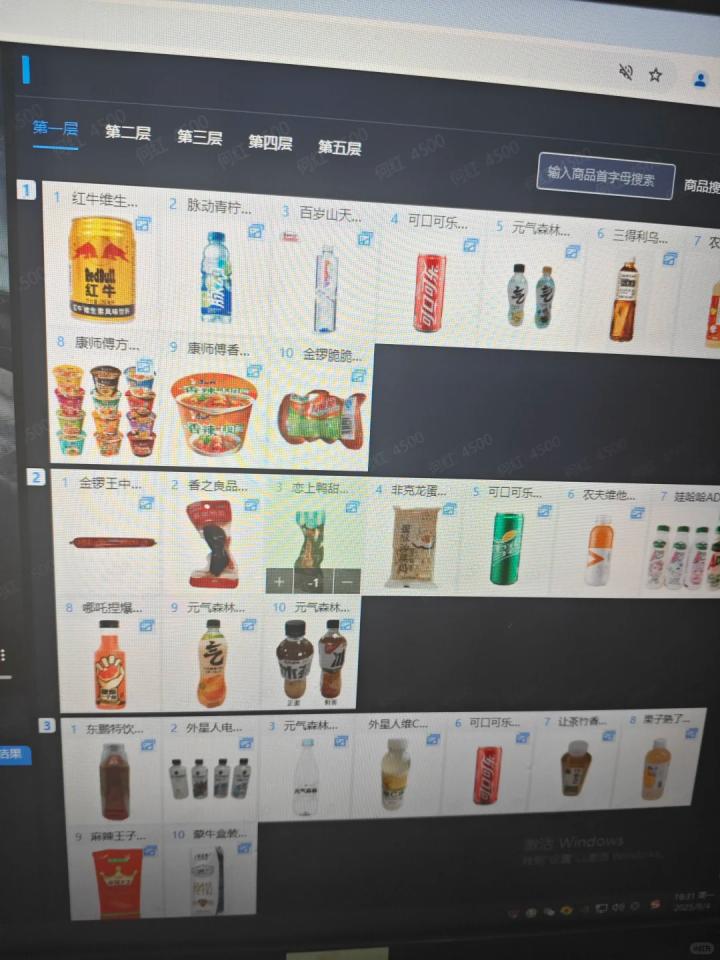
Convenience store data labeling is becoming more and more challenging
Although it's boring, the labor demand is high and the settlement is fast, so it once became a popular side job. College students, full - time moms, small - town youths, and those who can't find a job temporarily can all use it to supplement their family income.
Everyone knows that they are providing raw materials for the algorithm. Voice data is used to train voice recognition, labeled images are fed to the autonomous driving model, and product classification serves the recommendation system.
At that time, this data was far from their core skills. You labeled the cars on the road, not your driving skills; you classified the cola on the shelf, not your work content. Since it didn't threaten your job, you just turned a blind eye.
But now, things are starting to change qualitatively.
AI is evolving from a software form of "processing text and images in the computer" to an embodied intelligence of "entering the real world to do things". Data collection has also expanded from voice and static images to full - body movements and continuous household chore behaviors. Nydia hit reality at this turning point.
As an unemployed middle - aged woman, she wanted to find a transitional job. When she saw the recruitment information saying "data collector", she thought it was an ordinary office job. When she got there, she found out that it was "being a slave for robots". In a room full of robotic arms and cameras, the trial - job content was to operate the robotic arm with a remote control to stack the building blocks in front of her in a specified order.
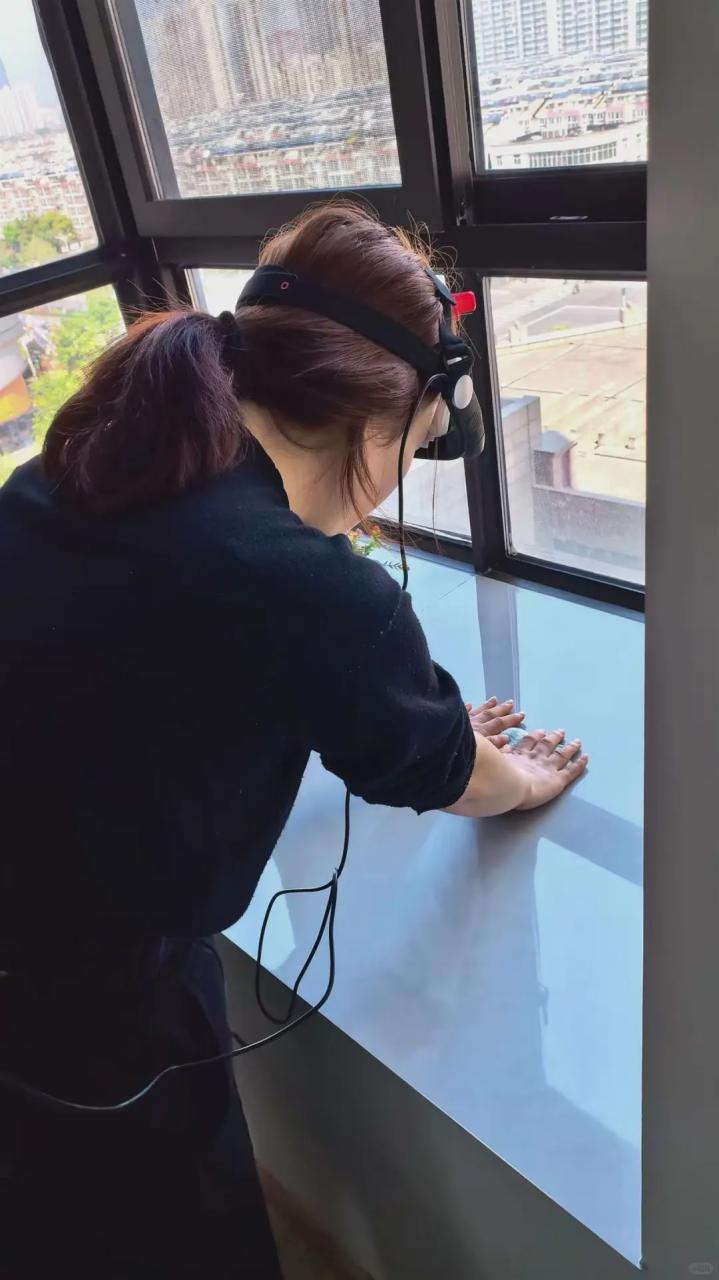
How to wipe the window sill has also become a very delicate art
She tried three times. The robotic arm either grabbed the block crookedly, placed it off - center, or knocked the blocks down. The interviewer beside her made a few notes expressionlessly and then told her, "That's it for today. Go back and wait for the notice." She knew in her heart that the notice wouldn't be an employment notice.
What really shocked her was not that she was eliminated, but that among the people waiting in line for the interview, there were several young people in their early twenties, neatly dressed and holding resumes, obviously just graduated. "I thought only people like us who are old and can't find a job would do this kind of work. But it turns out that young and highly - educated people are also flocking to this industry."
She later wrote on social media, "The dirty work of data labeling, which no one wanted to do before, has now become a hot commodity."
After the trial - job, the staff took them to visit a showroom. There were household robots being tested inside, folding clothes, wiping tables, organizing sundries, and there was even a robot that could play mahjong.
A group of people gathered around the mahjong machine. Someone joked, "We won't even need to play cards by ourselves in the future." Nydia didn't laugh. She stood in front of the clothes - folding robot and watched for a long time. The robot's gripper was repeatedly picking up a T - shirt, folding it, flattening it