From The Weeknd to BTS, why has Hong Kong become a paradise for scalpers?
The scalpers in Hong Kong have met their match this time.
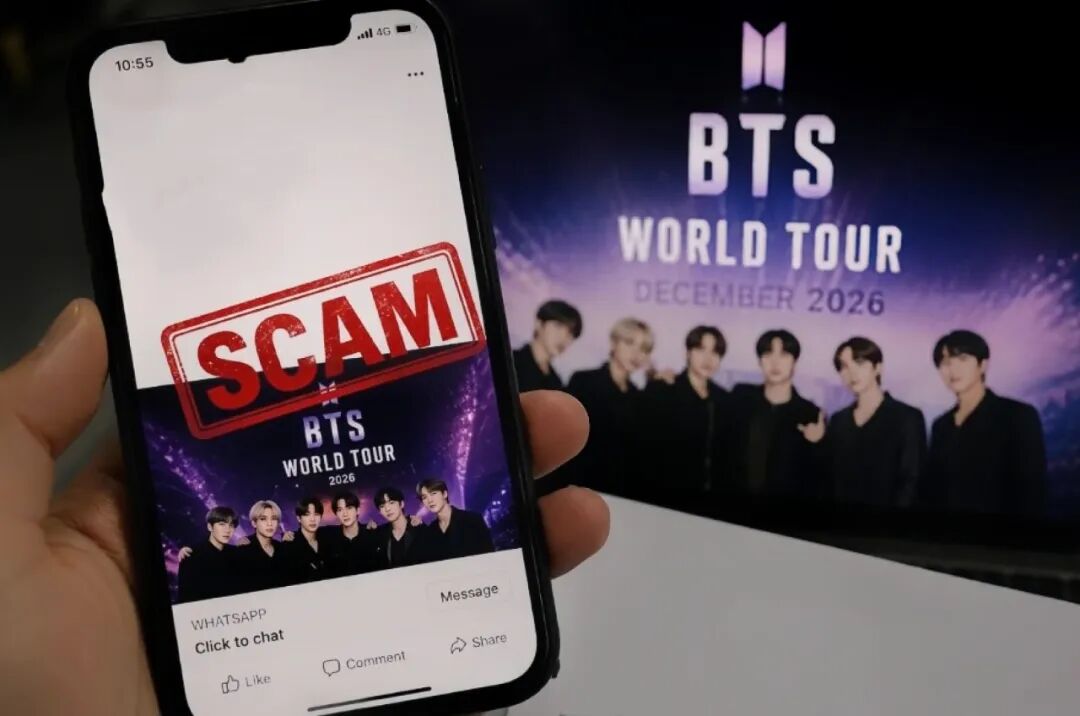
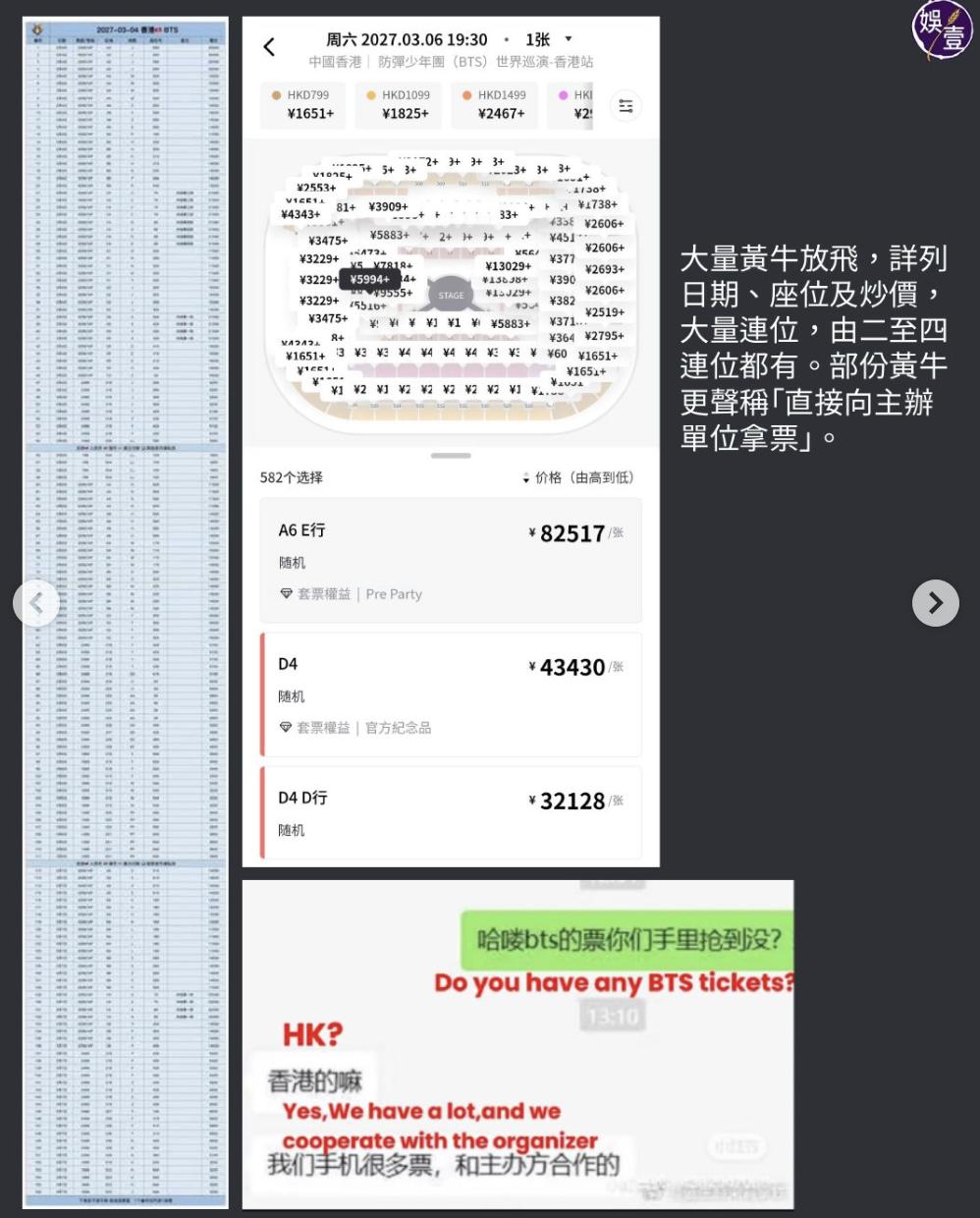
Recently, tickets for the Hong Kong leg of the BTS World Tour 'ARIRANG' went on sale for three consecutive days. In just a few minutes, almost all the publicly available tickets were snapped up. However, a large number of tickets quickly appeared on the secondary market, and some ticket prices were even inflated to 23 times the original price.
What should have been a day of celebration for the fans (Army) turned into a chaotic battle of fans' rights protection, boycotts, and reports against scalpers. Statistics compiled by fans' self - organized groups show that fans hardly managed to buy tickets successfully, whether through the priority purchase or the public sale channels.
As a result, BTS fans from the Chinese mainland, Hong Kong, Macao, and Taiwan have jointly launched the 'BTS Hong Kong Tatler Rights Protection' program three times. They have publicly accused scalpers of hoarding tickets, inflating prices, and even committing fraud in Chinese, English, and Korean to the artist's agency HYBE, the Hong Kong ticketing platform Tatler Tickets, and Live Nation.
However, as of now, there has been no response to this rights - protection effort. On the contrary, the organizers of the Thailand and Singapore legs have imposed sanctions on the scalping chaos. For example, the Thai parliament publicly accepted the fans' rights - protection cases, and the organizer recently announced that tickets for the Thailand leg would be resold and non - compliant tickets would be cancelled.
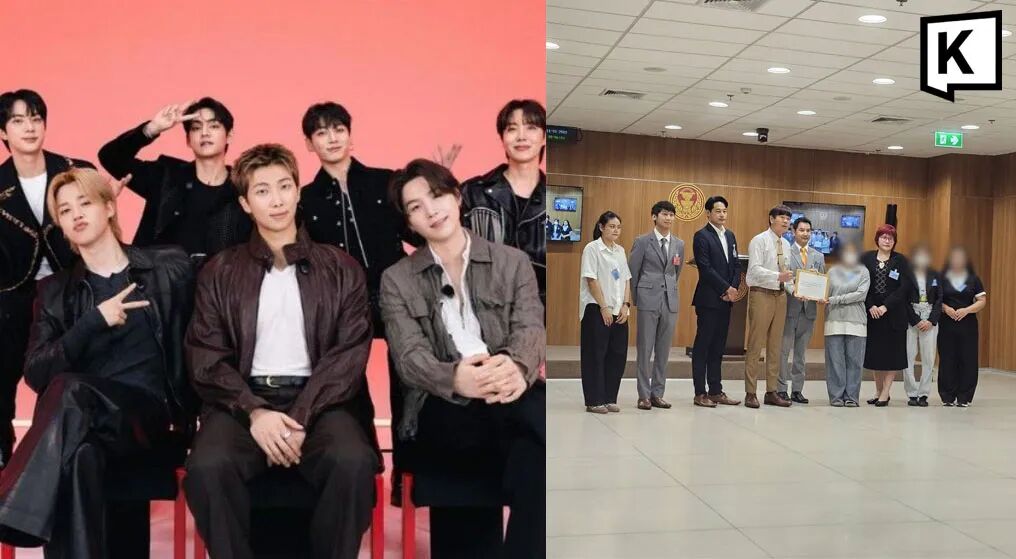
However, for Hong Kong music fans, this scenario is not unfamiliar. From Mayday and Jay Chou to The Weeknd and G - Dragon, and now BTS, the situation of 'fans unable to get tickets while scalpers are everywhere' has almost become the norm in the Hong Kong concert market.
This time, BTS fans are further pointing the finger at a deeper question: Where exactly do the tickets that should belong to ordinary audiences go?
01 The 'Battle between Fans and Scalpers' without Gunpowder
To this day, this 'battle between fans and scalpers' without gunpowder still remains highly intense.
According to Hong Kong media reports on the 16th, the Consumer Council of Hong Kong has continued to receive relevant complaints from consumers in Hong Kong and the Chinese mainland since last week. A large number of fans have spontaneously collected evidence, jointly issued rights - protection statements to relevant Hong Kong regulatory agencies, concert organizers, and the artists' representatives, and called for a collective boycott of scalped tickets.
The BTS concerts in Hong Kong are scheduled to be held in three consecutive shows in March next year. Since there are no concerts on the Chinese mainland, these three days in Hong Kong have become the top choice for many mainland fans. It is reported that the ticket sales are divided into three rounds: On June 9, 'ARMY MEMBERSHIP' members registered on Weverse could make priority purchases on the Tatler Tickets website; on June 10, tickets were pre - distributed on Trip.com (the international version of Ctrip) and Live Nation, and on June 11, tickets were officially sold to the public on the Tatler Tickets website.
What confuses the fans is that after three rounds of ticket - grabbing, both the Tatler Tickets and Live Nation websites crashed, and fans queued for hours without success. Even members with priority purchase rights were unable to buy tickets normally. Moreover, many fans posted on social platforms that even though they were fast, they could not make payments normally. Instead, they were prompted to enter a 'dedicated ticket - purchase password' with more than 50 digits, which further intensified the outside world's doubts about the flow of ticket sources.
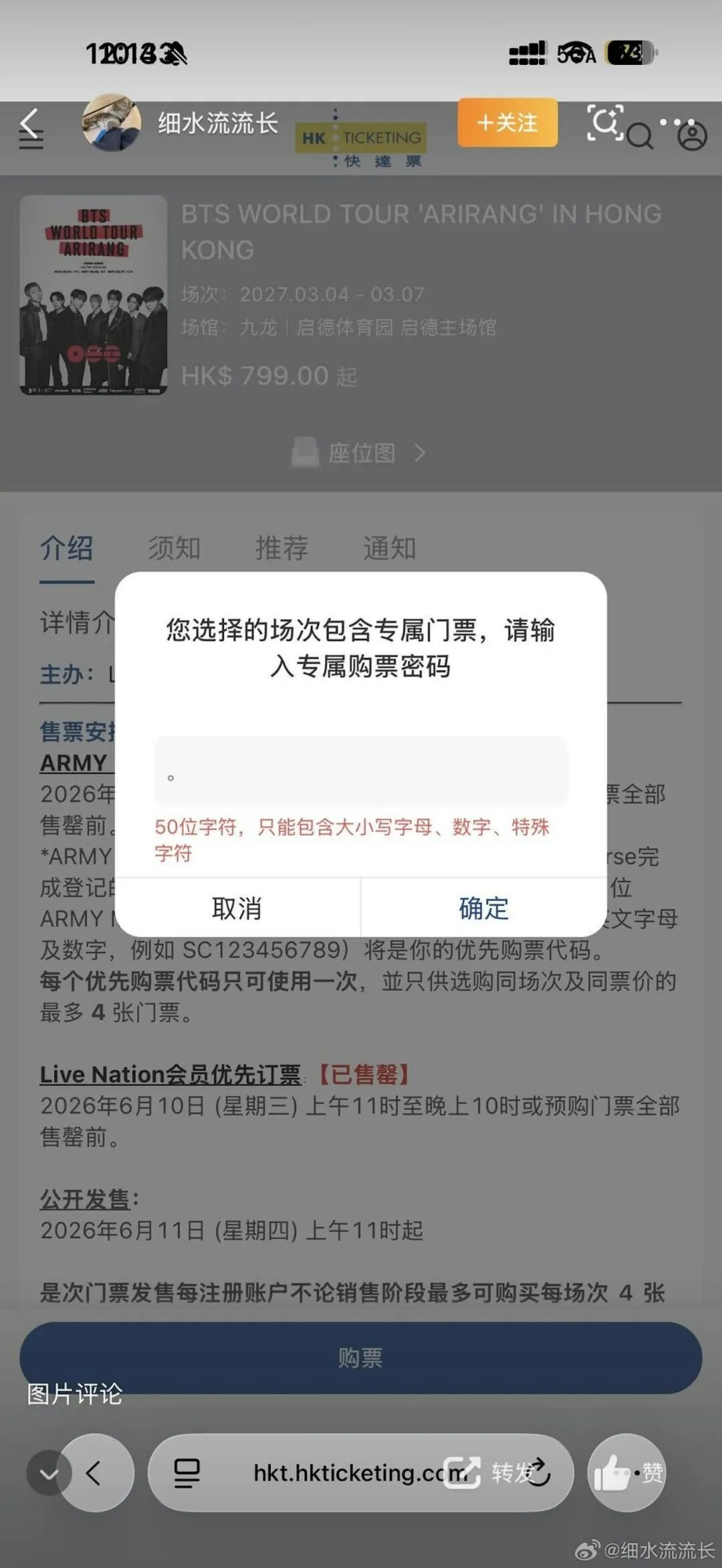
Strangely enough, within less than a minute after the ticket sales started, a large number of scalpers had publicly listed ticket prices on domestic and international social platforms, with the price premium reaching up to 23 times. According to the fans' self - organized statistics, as of June 16, the probability of fans getting tickets by themselves was less than 20%.
As a result, a large - scale fans' rights - protection campaign quickly unfolded.
Fans from Hong Kong, the Chinese mainland, and other regions questioned that Tatler Tickets and Live Nation reserved concert tickets for scalpers. They sent rights - protection emails to the Hong Kong government, demanding a thorough investigation of the ticket - sales backend data, identification and cancellation of robot accounts, release of the tickets hoarded by scalpers, and calling for the upgrading of ticket - purchase risk control, strict real - name system, face verification, ticket purchase limits, anti - crawler interception mechanisms, etc. They also urged the government to supervise the organizers and platforms to crack down on scalpers.
Interestingly, the bundled packages including hotels and Hong Kong Disneyland sold on the international version of Ctrip (with a price of over 6,000 yuan) had a relatively high success rate in ticket - buying. In addition, according to Hong Kong media reports, a small number of fans who managed to get tickets on Tatler Tickets and Live Nation claimed to have used non - mainland, Hong Kong, Macao, and Taiwan VPNs.
In response, Tatler Tickets issued two announcements on June 11 and 12, stating that the system 'treated everyone equally' and did not distinguish network regions. Regarding the 'dedicated ticket - purchase password', it explained that it attached great importance to the issue, actively followed up, and invited users to provide detailed information.
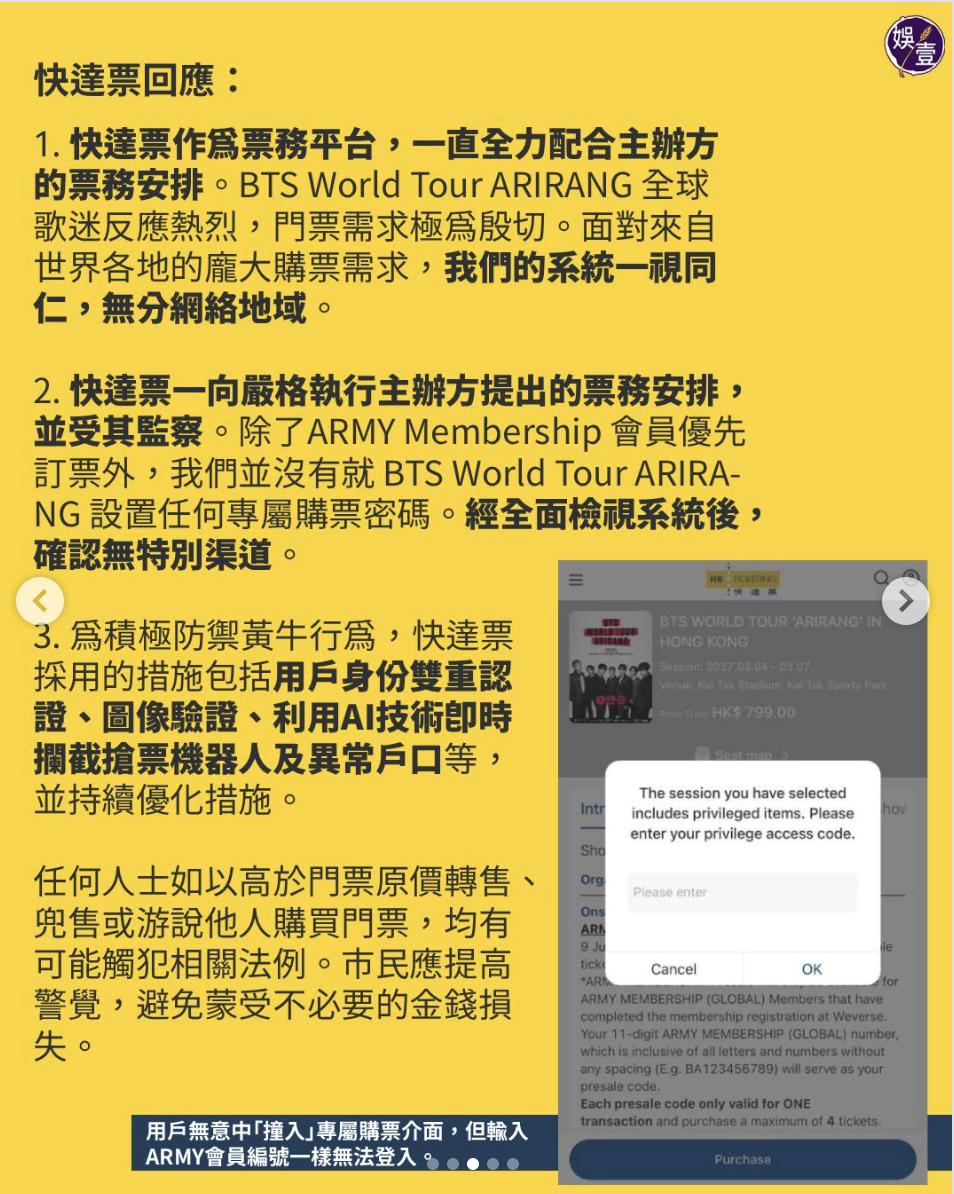
It is worth noting that as the BTS concert rights - protection incident gained more attention, Hong Kong media also mentioned in their reports that in addition to the suspicion of internal tickets being circulated in the scalper market, speculations such as the intervention of AI technology to imitate real - person ticket - buying and Alibaba Cloud restricting ticket - buying by Hong Kong IPs also emerged as possible reasons.
At present, the boycott by BTS fans has shown initial results, and the scalpers have been forced to reduce the price premium to around 5 - 13 times. In response to the fans' refusal to buy, some scalpers revealed to the fans that they estimated that the entire scalping market had invested over 100 million yuan and obtained 150,000 tickets. Now, they are facing a sharp increase in the pressure to recover the funds.
It is worth noting that a similar scenario occurred during the BTS Hong Kong concerts in 2019 - the system crashed, the priority purchase failed, and the fans' ticket - buying rate was extremely low, while the scalpers still 'profited handsomely'. Hong Kong media bluntly said that this was just a game of 'dividing tickets among insiders'.
Six years have passed. The stage has changed, but the rules have hardly changed.
02 Why has Hong Kong become a paradise for scalpers?
Actually, the prevalence of scalpers at concerts in Hong Kong, Macao, and Taiwan has become the norm. Top - tier artists such as The Weeknd, Mayday, and Jay Chou have all been affected. Hong Kong is particularly affected, and behind this is a highly developed gray industry chain.
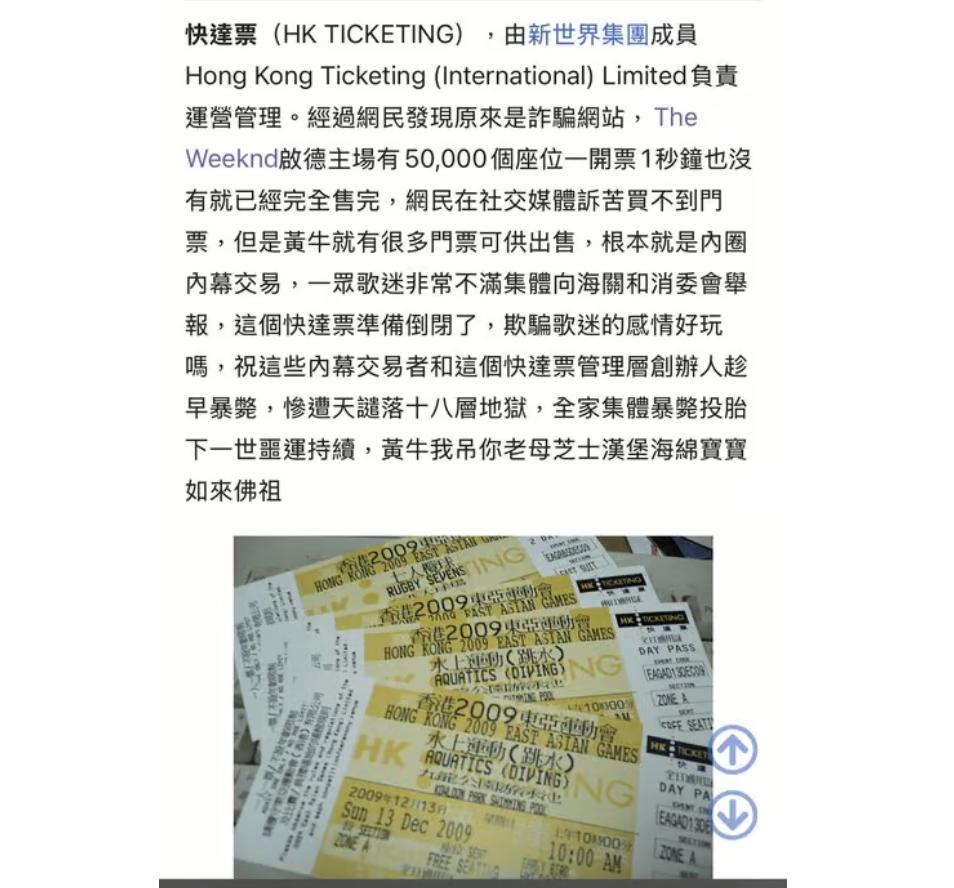
On May 21, tickets for The Weeknd's Hong Kong concert to be held in October went on public sale on the Tatler Tickets website. 50,000 tickets were snapped up in an instant, and scalpers immediately listed ticket prices. This also angered the music fans. Some even vented their anger on the Wikipedia introduction of Tatler Tickets, using foul language to accuse it of 'insider trading'.
So, why have Hong Kong, Macao, and Taiwan, especially Hong Kong, become a paradise for scalpers?
In the Hong Kong entertainment industry, it is an open secret that insiders such as concert organizers control a monopolistic ticket source. These 'black scalpers' legally intercept and distribute core tickets in advance under the guise of sponsor quotas and public - relations tickets. The ratio of these tickets to the publicly available ones is often as disparate as '7:3' or even '8:3'. For example, the Hong Kong Coliseum was once publicly accused by Hong Kong media of having up to 80% of its tickets sold through internal subscriptions, forming a pyramid - shaped interest chain dominated by insiders.
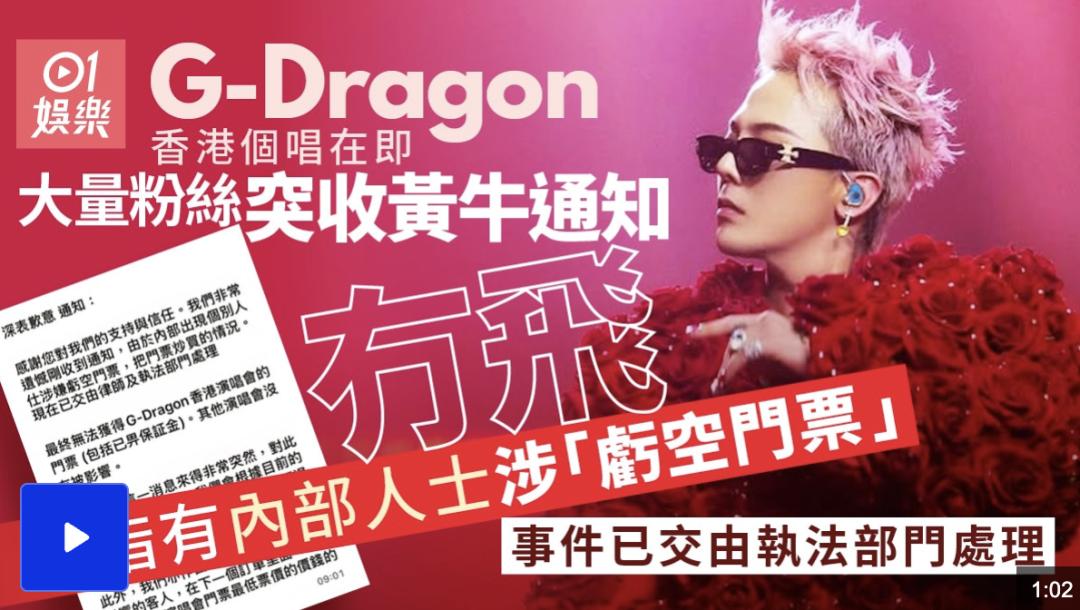
These intercepted tickets are sold in bulk to scalper agents through underground channels, and then evolve into a multi - level distribution structure of 'general agent - first - level agent - distributor - individual customers'. A K - Pop fan who serves as a campus agent for scalpers revealed to Wenyu Xiansheng that for the G - Dragon Hong Kong concert last year, tickets priced at HK$2,399 (about RMB 2,068.96) were sold from internal black scalpers to general scalper agents at prices ranging from HK$17,000 to HK$20,000 per ticket. Each level of agent would mark up the price by about HK$200 to HK$500 for resale. Eventually, fans would see the extremely inflated ticket prices.
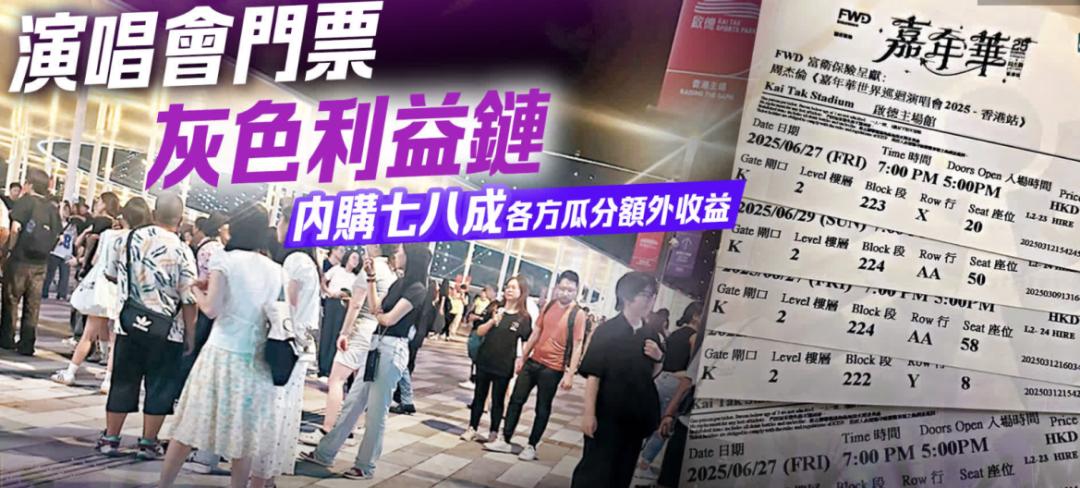
Depending on factors such as the ease of obtaining ticket sources and the popularity of the artists, ticket prices can be extremely inflated. 'Some general agents with good ticket sources will require us to pay an initiation fee and recruit small - scale scalpers from campus or fan groups for long - term distribution,' said the fan.
This pyramid - like distribution method ensures that the tickets in the hands of black scalpers can be sold out through underground channels. Even if scalpers may face ticket hoarding or price cuts, they still need to buy all the tickets from black scalpers. 'Because tickets that are hard to sell can be given as favors, and a popular artist's concert can bring in a lot of money. So, it's necessary to maintain a good relationship with insiders.' Therefore, even if there is a backlog at the end - user level, the upstream still makes a profit.
However, scalpers may also face fraud from black scalpers. For example, Hong Kong media has reported that in some Hong Kong and Taiwan concerts of artists such as JJ Lin and Jay Chou last year, insiders or general agents ran away with the money, leaving the downstream agents with neither tickets nor money. The involved amount reached up to HK$37 million.
In addition, there are also 'fake ticket gangs' in Hong Kong, who produce and sell fake tickets for fraud. The core members of these scalpers often disguise themselves as fans or insiders, sell tickets through social platforms, show fake screenshots, and conduct transactions by mail for mainland users or use ultraviolet lamps for local users to verify the authenticity of tickets. They receive cash or on - site transfers and then disappear quickly. Last year, the Hong Kong and Shenzhen police cooperated to crack a case of fake G - Dragon tickets, in which the scalpers made over HK$100,000 in three months, involving 16 cases.
More importantly, the existing regulatory efforts are obviously insufficient, and the cost of breaking the law is extremely low.
It is understood that Hong Kong does have laws against ticket scalping. The Public Entertainment Places Ordinance prohibits the resale of tickets at a premium in licensed venues, and violators can be fined HK$2,000. However, large - scale performance venues such as the Hong Kong Coliseum and the Hong Kong Stadium managed by the Leisure and Cultural Services Department are not covered by Article 6 of this ordinance, and there are no restrictions on the resale of tickets in the secondary market. Although the Kai Tak Sports Park, which opened in March last year, is under supervision, it still cannot prevent ticket - scalping. In actual law enforcement, the Hong Kong government mainly relies on the Public Health and Municipal Services Ordinance or Section 161 of the Criminal Offences Ordinance (using a computer with criminal or dishonest intent) and violations of stay conditions to hold people accountable. The fine amount is completely disproportionate to the illegal gains.
At the same time, there are also defects in the ticket - purchase system. Hong Kong concerts have not implemented a strict real - name system. There is no requirement to present identification when buying tickets, and no real - name information is printed on the tickets. This directly allows black scalpers and scalpers to hoard a large number of tickets without worrying about resale obstacles. There have even been frequent incidents of scalpers stealing and reselling fans' paper tickets at the venue.
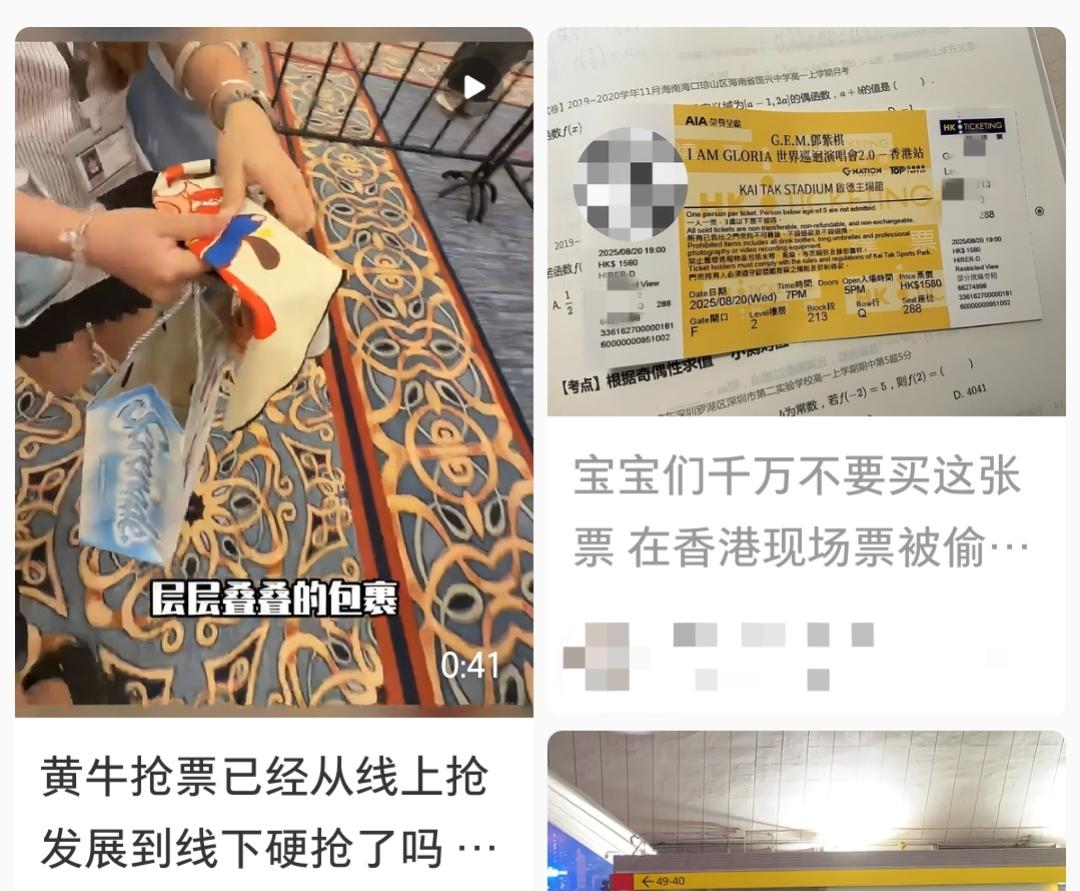
In contrast, the Chinese mainland has long stipulated that the proportion of publicly available tickets should not be less than 85% and has fully implemented a strict real - name system and face verification for entry. Taiwan also strengthened the penalties for scalpers and established a reward mechanism for reporting in 2023. The double weakness of Hong Kong in terms of system perfection and penalty intensity makes it a natural 'business fertile ground' for scalpers.
Ultimately, the scalping problem in Hong Kong is never as simple as 'someone reselling tickets'. It involves multiple aspects such as ticket - source distribution, real - name system, regulatory rules, and technological governance. When these problems accumulate over a long period, a highly developed gray industry chain is formed, which is intricate