Shenzhen's first quantum unicorn is born
Today (June 30), SpinQ Technology, a leading domestic quantum computing enterprise, announced the completion of a 1 billion yuan Series D financing round. The investment community obtained a rather impressive list of investors -
The new investors in this round include CICC Capital, Shanghai Semiconductor Industry Investment, AVIC Honghua, Shanghai Electrical Science, Guozhong Capital, Sichuan Xingchuan, Jinpu Investment, Hengxu Capital, Shangqi Capital, Hongtai Fund, Luhua Investment, Xingzheng Investment, Shenzhen Newspaper Group, Zero2IPO Holdings, Bojia Capital, etc.;
In addition, existing shareholders such as Toukong Donghai, Jingkai Capital, Qingdao Hanrui, and Hainan Fengkaixiang continued to increase their investments, and senior industry investors Lü Dalong and Lan Kun also participated.
So far, SpinQ Technology has raised a total of 2 billion yuan in half a year, becoming a rare quantum computing unicorn in Shenzhen. Further analysis shows that the investors in this round form a four - level state - owned capital matrix covering national - level guidance funds, central enterprise industry funds, and provincial, municipal, and district - level industry funds. This is a rare cross - regional joint layout of state - owned capital in the quantum computing track, which is highly in line with the national and local industrial development directions.
A sign of a trend is faintly emerging.
Steered by a Tsinghua Doctor, a Quantum Computing Unicorn Emerges in Shenzhen
Looking at the wave of quantum computing entrepreneurship in China, SpinQ Technology, which started in Shenzhen, is quite impressive.
Its helmsman, Xiang Jingen, graduated from Tsinghua University for his bachelor's, master's, and doctoral degrees. Later, he went to Harvard University for post - doctoral research and worked as an associate researcher, and also obtained a master's degree in computer science from the University of Waterloo in Canada. His cross - disciplinary background in physics and computer science laid an important foundation for his subsequent entrepreneurship.
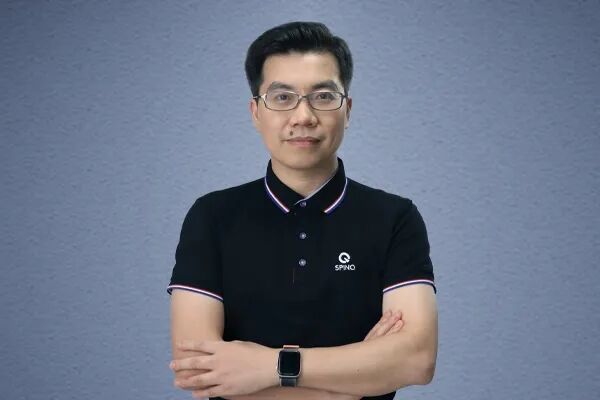
In 2018, judging that quantum computers had entered the inflection point from laboratory research to industrial development, Xiang Jingen founded SpinQ Technology in Shenzhen, dedicated to the industrialization of quantum computing. Under his leadership, the company quickly gathered a group of quantum computing experts from well - known domestic and foreign research institutions such as Harvard University, the Massachusetts Institute of Technology, Tsinghua University, Peking University, the University of Science and Technology of China, and the Hong Kong University of Science and Technology.
As one of the earliest entrants, Xiang Jingen has witnessed the changes in the industry. In the past few years, industry competition often centered around the number of qubits. However, qubits are extremely sensitive, making quantum computers prone to errors. Moreover, the more qubits there are, the higher the probability of errors. Without effective error correction, even a large number of qubits cannot achieve stable computing.
So - called quantum error correction is a key technology to protect quantum computing from noise. The progress of its technological breakthrough directly determines whether quantum computing can move from the laboratory to large - scale industrial applications. Therefore, we can see that international technology giants such as IBM and Google have made quantum error correction a key research direction in recent years. In terms of policies, the 15th Five - Year Plan of the country also clearly states that "develop fault - tolerant general - purpose quantum computers".
Currently, the global competition in quantum computing is shifting from "competing in qubits" to "competing in error correction". Aiming at the goal of fault - tolerant computing, SpinQ Technology has established a two - pronged approach of "theoretical innovation + experimental verification": on the one hand, the company continuously promotes research related to quantum error correction to enable quantum computers to detect and correct errors more quickly; on the other hand, it simultaneously conducts quantum error correction experiments, measurement and control optimization, and related hardware R & D to promote the practical application of quantum computing from the laboratory.
Meanwhile, relying on the semiconductor industry foundation in Shenzhen, SpinQ Technology has also built its own R & D and trial - production line for superconducting quantum chips. It has completed the tape - out verification of 25 - qubit and 103 - qubit superconducting quantum chips, achieving an independent closed - loop from chip design, process development to packaging and testing.
Quietly, a quantum computing unicorn has emerged in Shenzhen.
Investors Gather to Pursue the Future of General - Purpose Quantum Computing
In the past half - year, SpinQ Technology has raised a total of 2 billion yuan. Although the quantum computing track is currently experiencing a capital boom this year, such a large - scale financing is still rare.
If we look at a longer time frame, SpinQ Technology has completed several rounds of financing since its establishment eight years ago, and has formed a diversified capital structure covering financial investment institutions, industrial capital, and state - owned platforms from multiple regions.
In a track where the technological route has not yet been finalized, why do investors collectively choose to bet on it? In communication, investors all mentioned one point: commercialization ability and industrial implementation experience.
As Toukong Donghai, an existing shareholder, said, the continuous additional investment is not only an endorsement of the team's long - term technological concept but also an optimistic view of the company's development model driven by both "technology R & D + commercial implementation". "SpinQ Technology was the first in the industry to build a sustainable business closed - loop and has the growth resilience to survive industry cycles."
Sichuan Xingchuan also admitted: "Quantum computing is a national strategic frontier technology and a future industry track that is key to the 15th Five - Year Plan. SpinQ Technology has both the ability to independently control core technologies and industrial implementation experience, which is highly in line with our direction of deploying hard technologies and cultivating new productive forces. We will coordinate regional industrial and innovation resources across the country to support the company in deepening technological research and promoting the implementation of the quantum computing industrial ecosystem."
Shanghai Semiconductor Industry Investment added: "The development of general - purpose quantum computing highly depends on breakthroughs in chip manufacturing processes and precision manufacturing capabilities. The independent control of core devices is the underlying foundation for the industrialization of quantum computing. SpinQ Technology's full - stack technology layout and the ability to independently develop and mass - produce superconducting quantum chips throughout the process have laid a solid foundation for the engineering implementation of quantum computing. We will coordinate the entire industrial chain resources of semiconductor equipment and materials to help the company continuously iterate on chip manufacturing processes and strengthen the independent control ability of core devices."
This scenario reflects the route that SpinQ Technology established from the beginning: a two - pronged technical layout of "superconducting + nuclear magnetic resonance". In the early stage of entrepreneurship, funds were limited, and the superconducting technology route required large investments and a long R & D cycle. SpinQ Technology first focused on the education and scientific research scenarios based on nuclear magnetic resonance technology, and launched miniaturized quantum computers with a short R & D cycle, fast implementation, and controllable costs. It used commercial revenues to support the research on core technologies.
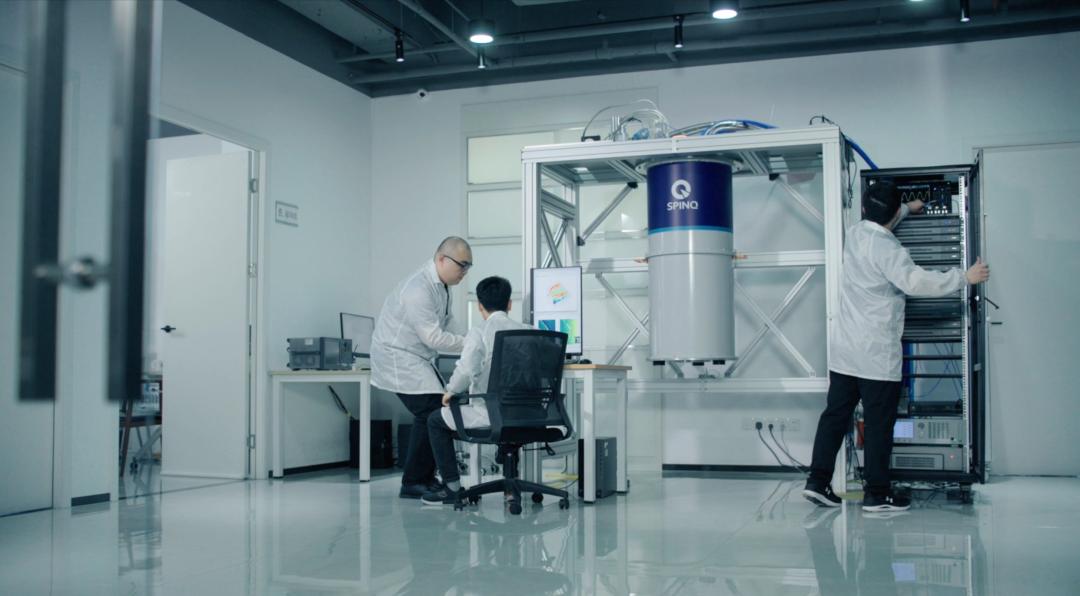
To some extent, this is a consensus in hard - technology investment: capital values both a company's technological ability to reach the future and its current commercialization ability. After all, only companies that can continuously generate profits have the opportunity to survive the long R & D cycle and wait for the day when the technology matures.
For start - up companies, the most important thing is how to survive in the long industrial cycle. It is this "two - pronged" strategy that allows SpinQ Technology to invest in frontier innovation more sustainably and calmly. In the field of superconducting quantum computing, in 2023, SpinQ Technology achieved the first overseas delivery of Chinese superconducting quantum chips; in 2024, it completed the first overseas shipment of a Chinese superconducting quantum computer; in 2025, it delivered the "Ursa Major" superconducting quantum computer in batches, ranking among the few global enterprises with industrial - grade superconducting quantum computer delivery experience.
"Quantum computing is a hard - technology cause that requires long - term commitment, systematic engineering capabilities, and continuous investment," as Dr. Xiang Jingen, the founder and CEO of SpinQ Technology, said. This is destined to be a long journey. However, when quantum computing truly breaks through the barriers from the laboratory to industrial applications, humanity will witness the infinite possibilities of ultimate computing power in many industries such as national defense security, biomedicine, energy materials, and artificial intelligence.
This journey is long and arduous.
This article is from the WeChat official account "The Investment Community" (ID: pedaily2012), author: Wu Qiong, published by 36Kr with authorization.