SHEN Wei, the founder of vivo, never takes reckless risks.
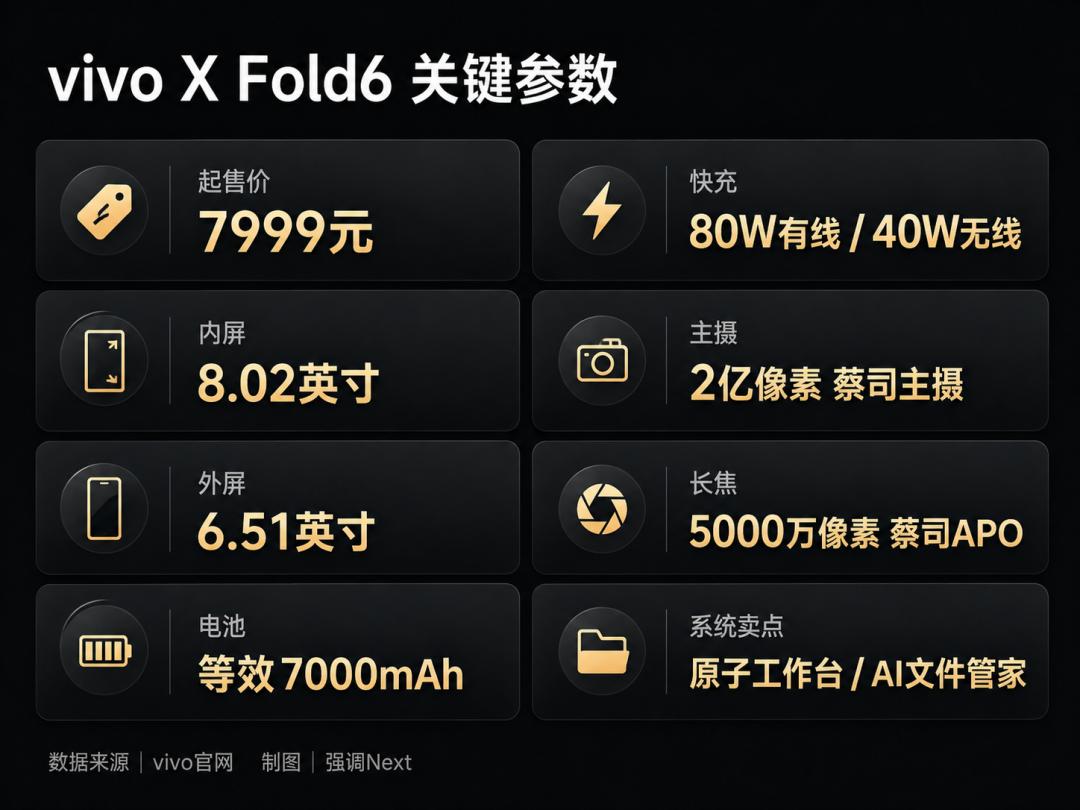
On July 1st, the vivo X Fold6 will be officially available for sale, with a starting price of 7,999 yuan.
This price is not easy to bear. Since the beginning of this year, DRAM and NAND prices have been continuously rising. The cost of chips has changed the profit structure of the entire industry. Huawei and Apple have further tightened their grip on the high - end market, leaving limited pricing space for vivo.
In terms of functionality, vivo still adheres to the principle of "stability first". It makes incremental improvements in screen, battery life, imaging, and AI office capabilities. The X Fold6 is equipped with an 8.02 - inch inner screen, an equivalent 7000mAh battery, a Dimensity 9500 Super Edition chip jointly customized with MediaTek, and a 200 - megapixel Zeiss main camera. These specifications show no obvious weaknesses when compared with the top - tier folding phones.
This is also the most typical characteristic of vivo under the leadership of Shen Wei. It is neither radical nor eye - catching. Over the past decade, this steady approach has helped vivo weather multiple mobile phone industry cycles. However, the mobile phone industry has now entered an extremely brutal reshuffle period. Is vivo's "stability" a moat or a ceiling?
01. The Market Landscape is Changing
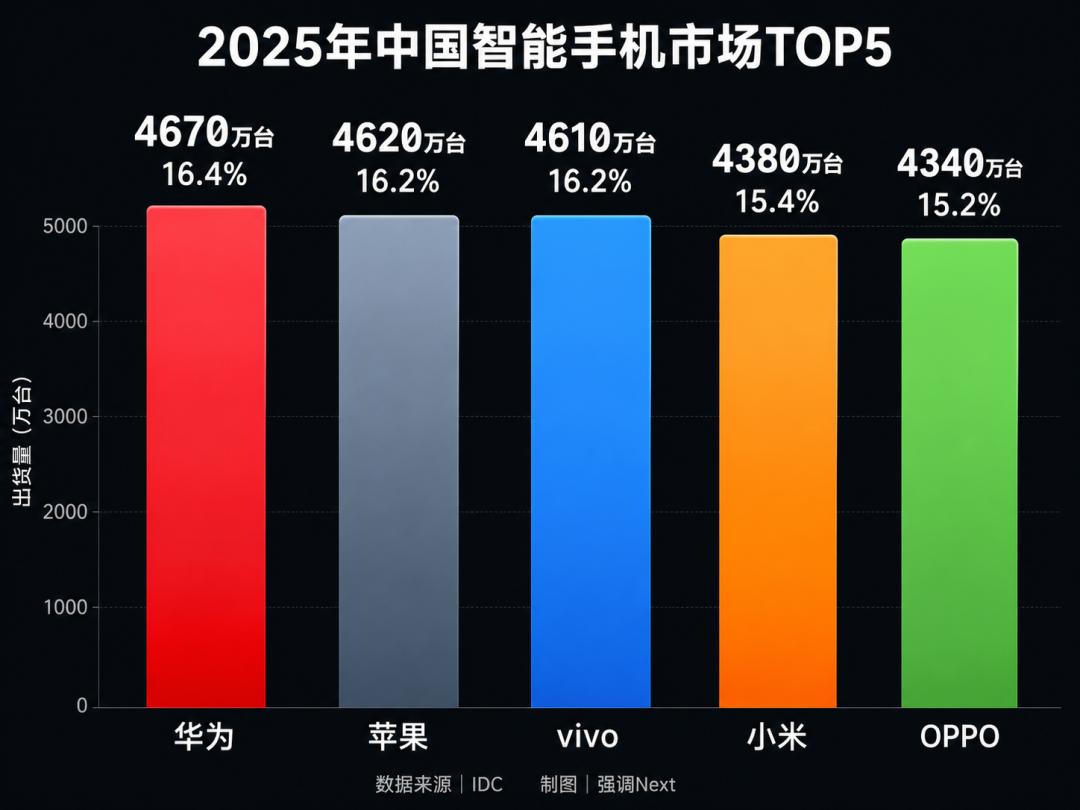
According to IDC data, in 2025, about 285 million smartphones were shipped in China. Huawei regained the top position with a 16.4% market share. Apple and vivo were almost tied for second place, both with a 16.2% share, with a sales difference of only 100,000 units.
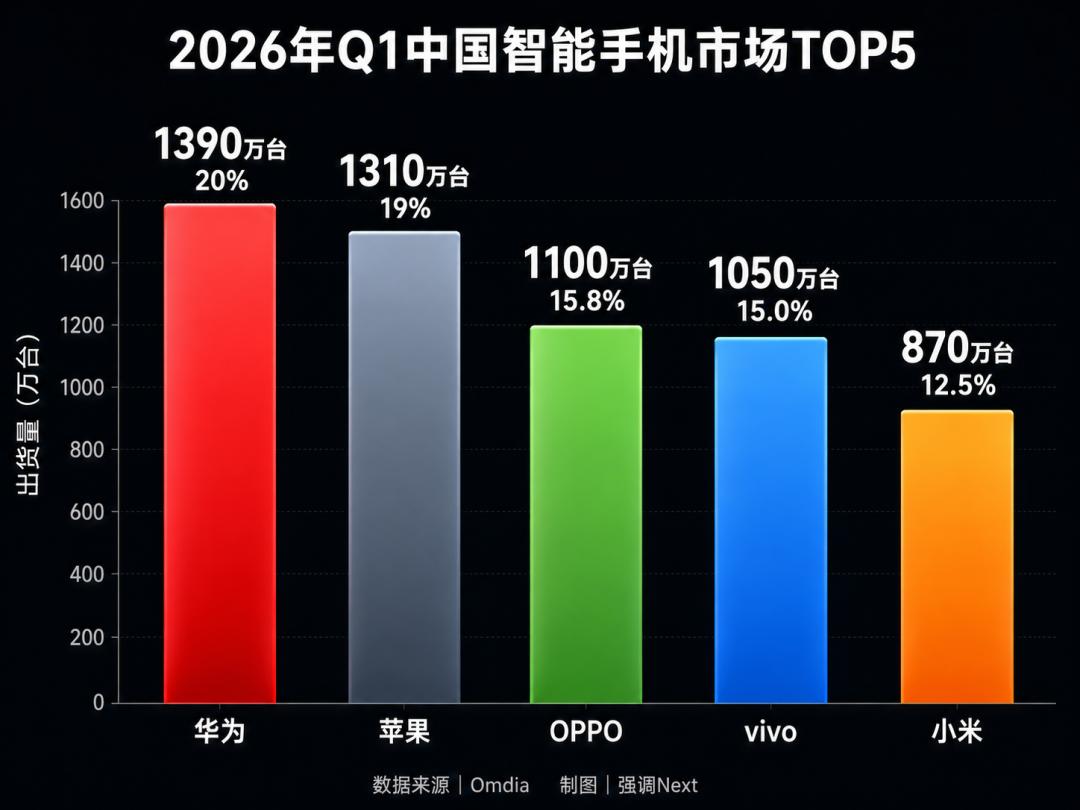
In the first quarter of 2026, under pressure, Omdia data shows that Huawei and Apple ranked first and second with 20% and 19% market shares respectively, with year - on - year growth of 7% and 42% respectively. They are the only two brands with net growth. vivo's market share is about 15% (about 15.2% according to IDC), dropping to fourth place.
Since the beginning of this year, affected by the rising prices of DRAM and NAND, the prices of mid - range models of various mobile phone manufacturers have generally increased by 10% to 30%. The cumulative price increase of the 16GB + 1TB version of the iQOO 15 this year has reached 1,500 yuan.
IDC data shows that the market share of the entry - level market below $200 has shrunk by 13.9 percentage points quarter - on - quarter, while the share of the high - end market above $600 has expanded by 10.1 percentage points. Most of the incremental demand from the mid - range market has been absorbed by Huawei and Apple.
This is not favorable for vivo. In the past, vivo's advantage lay in its balanced product portfolio. The X series targeted the high - end and imaging markets, the S series catered to users who valued aesthetics and selfies, the Y series held the mass market, and the iQOO series supplemented the performance and online user segments. This product matrix has allowed vivo to maintain a stable market share for a long time. However, when the industry's profits are forced to shift towards the high - end, the "balanced" strategy is naturally under pressure.
The impact of rising storage prices on folding phones is two - sided. The prices of folding phones with large - capacity storage have further increased, making buyers more cautious in their decision - making and concentrating the brand effect. The cost - effectiveness of flagship straight - screen phones at the same price range has also been compressed, and the perceived premium of folding phones may actually decrease. The starting price of the X Fold6 is 7,999 yuan. In this year's cost environment, it is not an easy decision for price - sensitive buyers.
02. Folding Phones Don't Lack Initial Sales, but Sustained Sales Throughout the Lifecycle
vivo's folding phones have shown signs of being blockbusters. According to supply chain and media reports, within two weeks of its initial sales in 2025, the vivo X Fold5 accounted for 27.06% of the domestic folding phone activation market, ranking first in the industry. The X Fold3 was the second - best - selling folding phone in China in 2024 (Counterpoint data). However, in terms of quarterly sales, the gap widened again. IDC data shows that in the first quarter of 2026, vivo's folding phone market share was about 5%, while Huawei's was about 60% and Honor's was about 21%.
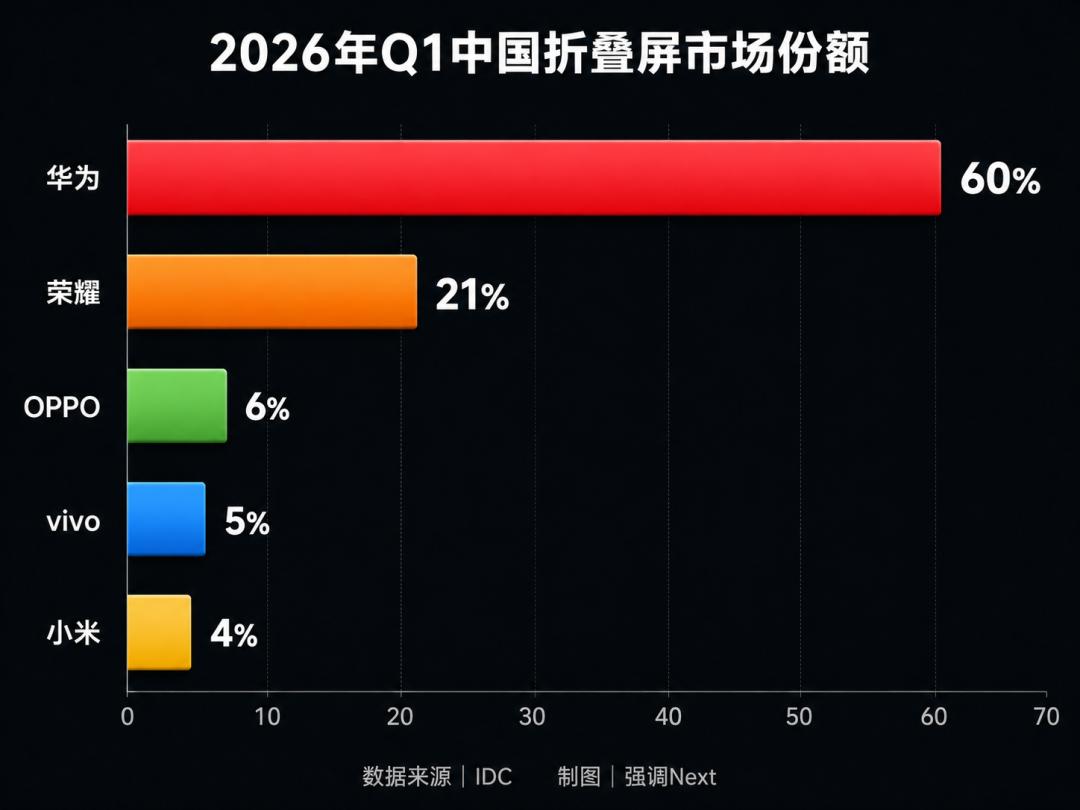
27% in the first two weeks of sales, and 5% after a quarter.
The initial sales figures contain many one - time factors, such as trade - in subsidies, channel sales targets, and promotional activities, which can boost the activation volume. Quarterly market share is often a more accurate reflection of the actual ownership.
This means that vivo has not yet built a large enough user base for its folding phones.
One of the root causes of the inability to retain market share lies in the platform layer. Actual buyers of folding phones generally use multiple devices simultaneously, such as mobile phones, computers, tablets, and some also include smart cars. Huawei's advantage in retaining users in this group comes more from the in - depth device synergy of HarmonyOS. Migrating from HarmonyOS requires exiting one system and adapting to a new one.
It is difficult for vivo to directly replicate this. Compared with HarmonyOS or the Apple ecosystem, the migration cost between ordinary Android manufacturers is lower. vivo can make its folding phones thinner, have longer battery life, and better imaging capabilities, but these are more product - level advantages and do not naturally form an ecological lock - in.
Honor ranks second with a 21% market share, partly due to its historical association with the Huawei brand and corporate procurement penetration. This is also difficult for vivo to replicate.
Therefore, to improve the "retention" of market share, vivo can only rely on gradually improving its system capabilities, AI scenarios, and cross - device experience.
03. The Real Weight of AI Office and Ecosystem
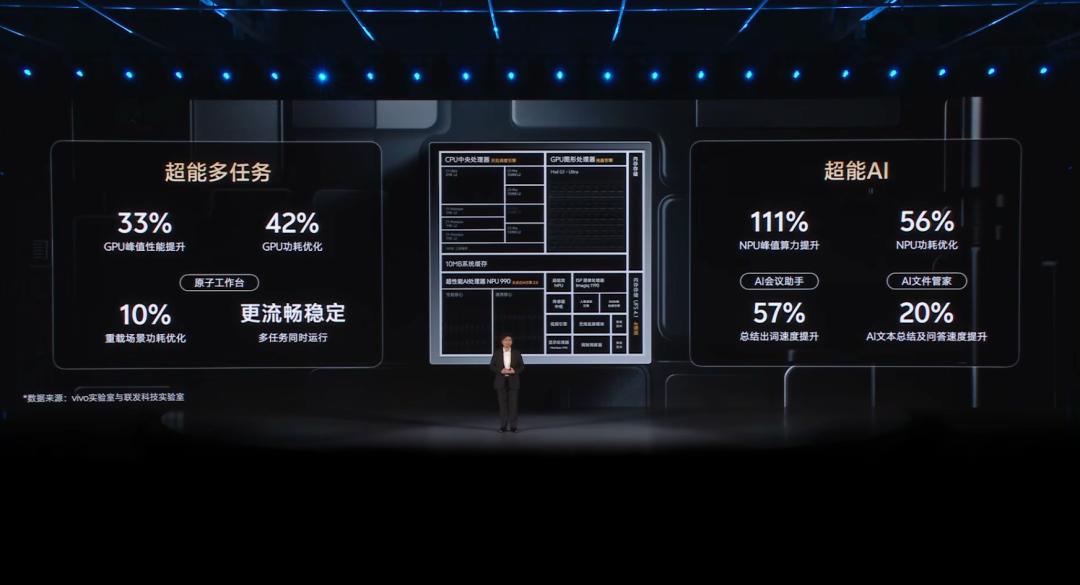
This time, the X Fold6 focuses on AI - enabled lightweight office work, and the direction is correct. The large folding screen is naturally more suitable for cross - application scheduling, multi - window collaboration, and complex information processing. The customized chip of the X Fold6 has increased the NPU performance by 111% and reduced the power consumption by 56%, aiming to make these scenarios run more smoothly.
However, it is still unclear whether AI office can become a moat for folding phones.
Existing research generally shows that the actual usage frequency of the unfolded large screen of folding phones is much lower than users' pre - purchase expectations. Most users' daily usage patterns are not fundamentally different from those of straight - screen phones. The unfolded state is an occasional action, not the core of the daily workflow.
On this basis, the 111% increase in NPU performance may have a very limited impact on "retention" of sales, because "retention" depends on strong daily dependence, not benchmark scores. In the past two years, AI has almost become a standard selling point for flagship mobile phones, but no Android folding phone brand has achieved verifiable quarterly market share growth through AI functions, including Samsung.
In terms of the ecosystem, Shen Wei's judgment is not without foresight. vivo established an AI research institute in 2018, with a team of about a thousand people all year round. It has invested 2 - 3 billion yuan in AI - related fields each year, with a cumulative investment of over 10 billion yuan in six years. The BlueOS car - machine interconnection covers more than 170 automobile brands and over 8,500 models, reaching more than 3.5 million cars through protocols. These investments are not small among domestic mobile phone manufacturers.
However, vivo ships more than 40 million phones each year. Even if we assume that all the owners of these 3.5 million cars choose vivo when replacing their phones, the impact on overall shipments will be quite limited. The more likely value of BlueOS is to establish protocol - related influence in the automotive industry, which is a long - term layout at the industrial chain level and has limited impact on the retention of folding phone users.
Shen Wei chooses to invest in the infrastructure layer of AI rather than creating a front - end narrative like Huawei's HarmonyOS or Xiaomi's cars, which is consistent with his consistent steady style.
However, when making purchasing decisions, high - end users are most likely to perceive the ecological results, not the underlying capabilities. Users will not buy a folding phone because of how many car models a protocol covers. They are more likely to stay with a brand because "this phone works well with my car, computer, and tablet".
This is the most delicate position of vivo at present. It has made a lot of underlying construction but has not yet organized these capabilities into a strong front - end story. For the general public, invisible investments are easily misunderstood as non - existent.
Shen Wei's steady approach has allowed vivo to avoid major mistakes and maintain strong survival ability in the industry cycle. However, the folding phone and AI ecosystem require not just "not making mistakes" but the ability to form irreplaceability in key positions.
04. Two More Critical Indicators
Whether AI - enabled lightweight office can be an effective strategy ultimately depends on whether users have truly developed a daily dependence on the AI functions of folding phones. This will be reflected in the sales and two key data at least a few months later.
First, within 3 to 6 months after the launch, the frequency and depth of software updates for the AI functions of vivo's folding phones. The function list at the press conference is just the starting point, not the end. If subsequent updates continue to focus on AI office, multi - window, and cross - device collaboration, it means that vivo is truly treating the folding phone as a system entry point. If the updates mainly focus on bug fixes and routine optimizations, the X Fold6 will still be more like a well - finished hardware flagship.
Second, whether vivo is willing to publicly disclose the actual usage data of folding phone users within a year, including the average daily usage time in the unfolded state and the monthly active rate of AI functions. If the only data presented at the one - year anniversary of the X Fold6's launch are the initial sales volume and activation number, it probably means that these data cannot support the story it wants to tell.
Shen Wei's steady approach has been an important reason for vivo to weather past cycles. It has allowed vivo to avoid making wrong bets and getting involved in high - stakes battles. However, in the future, vivo needs to prove that not taking risks does not mean not seizing key positions.
The X Fold6 is still a relatively conservative move. It does not push vivo into a radical narrative but combines high - end folding, AI office, system entry, and ecological collaboration in one phone.
This move may not immediately change the folding phone market landscape, but it makes it clear to the outside world that the threshold vivo must cross in the next stage is to transform from making stable and reliable phones to becoming a smart entry point that users are willing to entrust to in the AI era.
This path is not suitable for speculation and is difficult to achieve with a single product. It is more in line with vivo's consistent approach of taking it slow, continuing to work hard, and trying not to stumble. However, this time, the market may not give the steady - paced players as much time as before.
· Main Data Sources:
The market data in this article are compiled from the 2025 annual and Q1 2026 reports of institutions such as IDC, Omdia, and Counterpoint. Due to different statistical methods, there are slight differences in some data, and the information sources are marked in the article.
This article is from the WeChat official account "Emphasize Next" (ID: leo89203898). The author is Yixiu, and the editor is Xiaobai. It is published by 36Kr with authorization.