The more carefully you charge your device, the more dangerous it could be?
Often, people tell you seriously not to charge your phone in a certain way, or it will explode on the spot in no time.
"Charging your phone on a high - speed train will damage it!"
"You must unplug the charger after charging!"
"Using your phone while charging will cause it to explode!"
Moreover, these kinds of news appear in the "Big Happy Family" group on a regular basis.

I always don't know where to start when I want to explain. There is an "expert warning" today and a "real - life case" tomorrow.
Just as I finish explaining one piece of news, another one is already on the way. It seems that charging the phone has become a high - risk activity.
Hello everyone. Today, let's talk about why there are always new rumors about phone charging, which is a daily occurrence.
How does a phone actually charge?
First of all, I'd like to ask if there is anyone in your family who firmly believes in these charging warnings, or if you yourself are such a person.
You unplug the charger right after charging, never fully charge your phone, and never use your phone while it's charging.
If you can actually do two of these things, I'll respect you!
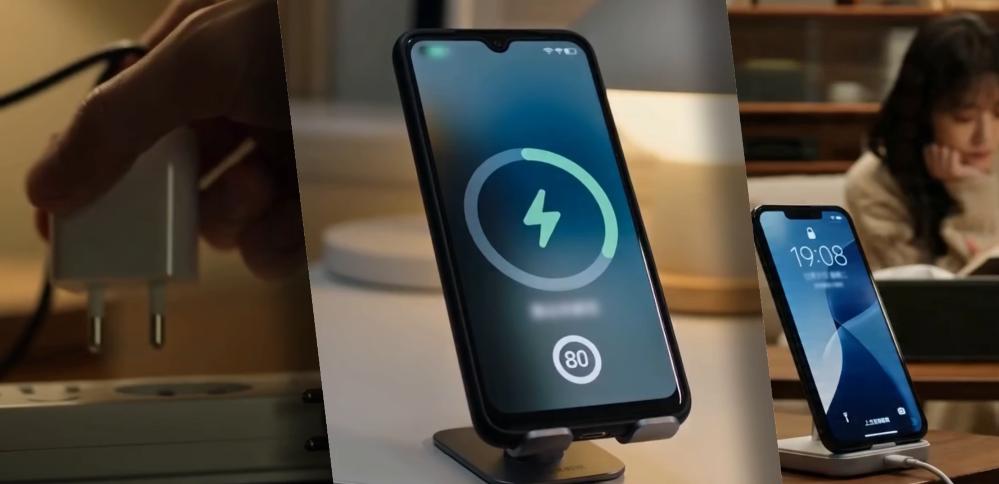
But I want to tell you that these practices may not be useful for the battery.
Why?
Because you don't understand the basic principle of charging.
This is the socket in your home, which provides 220V AC power.
AC power has a characteristic that its voltage is constantly changing. In China, it's about... Anyway, a phone can't directly use this kind of power. It needs a stable DC power supply, and the voltage is only about 4V.
So the first step in phone charging is the charger. There will be a communication between the phone and the charger first.
For example, with common protocols like USB - PD, QC, and the fast - charging protocols of various manufacturers, they need to discuss the allowable voltage and current for this charging session.
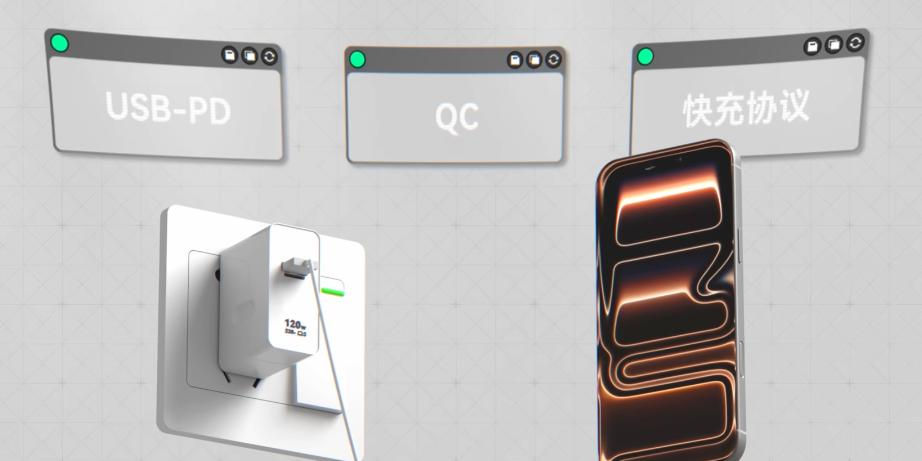
Then the 220V AC power enters the charger and is converted into DC power.
Then, through a switching power supply and a transformer, the voltage is gradually reduced to a level that the phone can use, such as 5V, 9V, or 12V.
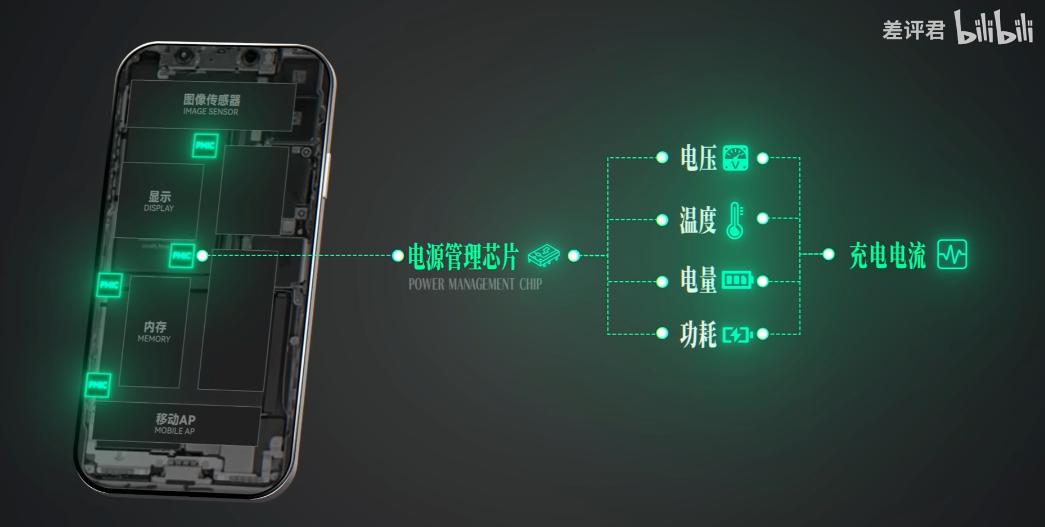
But no matter how high the power is, what really determines whether the power can enter the battery is a power management chip.

It's like a power dispatching center in the phone.
It monitors a lot of information in real - time, such as the voltage, temperature, and battery level of the battery, as well as the power consumption of the phone at present. Then, based on this information, it decides how much current is allowed to enter the battery.
Moreover, battery charging itself is carried out in stages.
When the battery level is low, the system charges with a relatively large current. This stage is called the constant - current stage.
When the battery is almost full, the system stabilizes the voltage near the upper limit of the battery and then gradually reduces the current. This is called the constant - voltage stage.
Finally, the current will become smaller and smaller until the system determines that the battery is fully charged and then stops charging.
So from the phone's perspective, charging is actually a strictly controlled process. It won't let the battery be constantly bombarded with a large current, nor will it let the battery be over - charged. Many phones even further control the charging rhythm.
For example, with night - time slow charging, the phone is first charged to about 80%, and then the remaining 20% is charged close to the time you get up.
Some of the most common charging rumors
Now that we basically understand how a phone charges, let's take a look at those common charging rumors one by one.

First claim: Charging your phone on a high - speed train will damage it
The first "rumor" emerged recently. It says that the power on a high - speed train is different from the power at home.
After the train's pantograph takes power from the power grid, the power goes through an additional AC - DC conversion. This can stabilize the voltage, but the output power may contain high - frequency pulses.
If you use this power to charge your phone, it may cause unstable touch control on the screen, that is, the so - called "drifting screen", and may even accelerate the aging of components in the phone.
This claim actually sounds quite plausible because it does incorporate some real technical details.
But in fact, it's not the case.
Most high - speed railways in China use a 25kV 50Hz AC catenary system.
After the train's pantograph takes power from the catenary, the power first enters the main transformer to reduce the voltage, and then passes through the rectification and inversion systems to provide power for different systems such as traction motors and carriage equipment. This system does involve AC → DC → AC power conversion because traction motors are usually driven by variable - frequency inverters.
But the key is that the passenger sockets don't get power directly from the traction system.
According to the paper "Comparison and Analysis of the Auxiliary Power Supply System of High - Speed EMUs in China", the "Harmony" series of EMUs usually have a dedicated auxiliary power supply system (Auxiliary Power Supply).
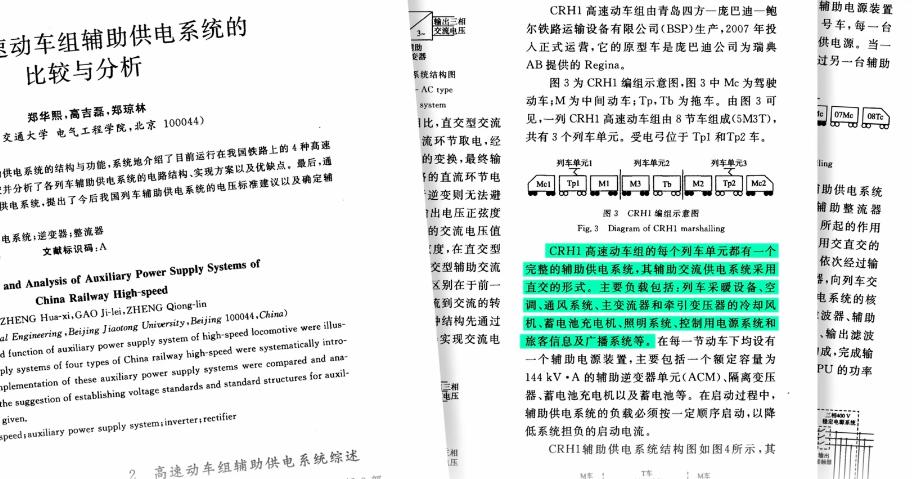
This system converts, isolates, and stabilizes the high - voltage power from the traction side and then outputs a standard 220V 50Hz AC power for carriage lighting, air - conditioning, and passenger sockets.
This process includes electrical isolation, filtering, and voltage stabilization.
The engineers' design goal is actually to make it as close to ordinary mains power as possible. Otherwise, hundreds of electronic devices on the entire high - speed train would go crazy.
Now let's talk about the so - called high - frequency pulses.
Indeed, in modern power electronic devices, inverters and switching power supplies can generate high - frequency harmonics or pulse noise.
But this noise is usually greatly suppressed through filters and electromagnetic compatibility designs. Otherwise, all the electronic devices on the train would be interfered with.
Moreover, even if there is some degree of power noise in the socket, your phone still has two lines of defense.
The first is the phone charger. The charger itself is a switching power supply, and its input end first goes through rectification, capacitor filtering, and EMI filtering circuits.
The second is the power management chip inside the phone. After the power enters the phone, it is regulated and filtered again before entering the battery.
With these two lines of defense, it's difficult for the high - frequency noise in the external power supply to directly reach the battery or the screen system.
As for the so - called "drifting screen" when charging on a high - speed train, the more likely reasons are grounding issues or electromagnetic interference.
When you touch the screen while the phone is charging, if the electrical isolation of the charger is not good, a weak leakage current may be generated on the phone's shell. Capacitive screens are very sensitive to changes in the electric field, and in this case, touch drift may occur.
This situation is not unique to high - speed trains. It may also occur with some low - quality chargers or poorly grounded sockets.
Second claim: Leaving the charger plugged in will cause a fire
The second claim is something you may have heard since childhood. After your phone is fully charged, you must unplug the charger immediately, or it may cause a fire after a long time.
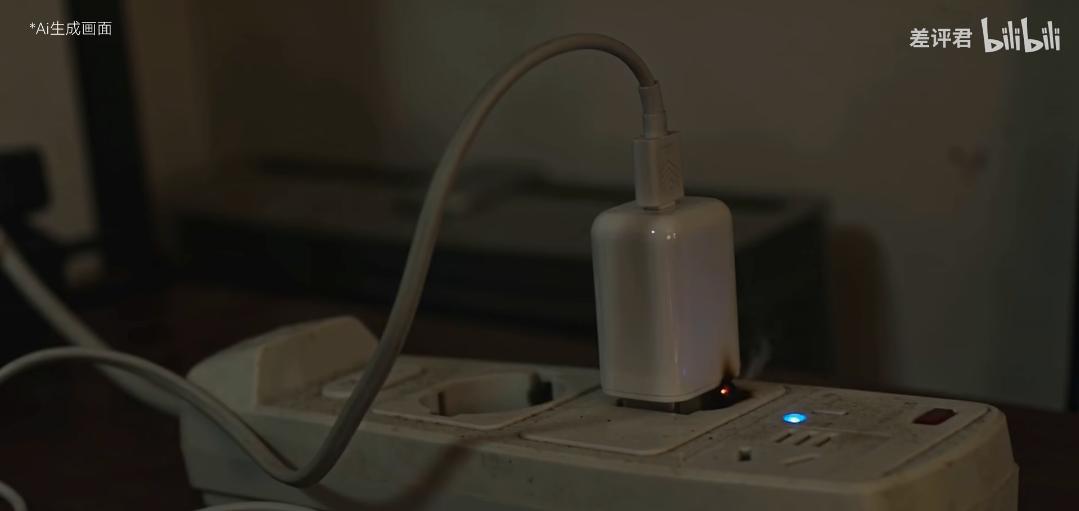
The reason is that if the charger is always plugged into the socket, it is always powered on. Over time, it may heat up, short - circuit, and even cause a fire.
But if we look at the working principle of the charger itself, this situation is actually very unlikely to happen.
Most modern phone chargers are essentially a type of device called a switching power supply.
There is a very important state in its design called the standby state.
When the charger is not connected to a phone, although it is connected to the 220V power supply, its internal main circuit is actually in a low - power standby mode.
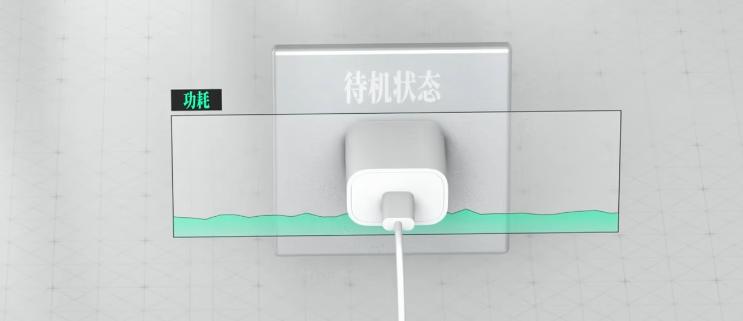
At this time, only a very small current is maintained to detect if there is any device connected. The power consumption at this time is usually very low, generally only about a few tenths of a watt to one watt.
In short, although it is plugged in, it is hardly doing any work.
Moreover, when designing a regular charger, over - current protection, over - temperature protection, and short - circuit protection are added. Once the internal temperature or current is abnormal, the circuit will automatically cut off.

So under normal circumstances, a qualified charger left plugged into the socket for a long time will not increase the risk of fire.
Many so - called "charger fire" accidents are not because the charger is always plugged in, but because of problems with low - quality power strips, chargers, or poor power supply environments such as poor contact.
For example, a loose socket or excessive contact resistance may cause local heating.
So from an engineering perspective, the claim that "leaving the charger plugged in will cause a fire" oversimplifies the problem.
Third claim: Using your phone while charging will cause it to explode
Another claim that many people care about is that using your phone while charging is very likely to cause it to explode.

We've all seen similar videos where a phone suddenly starts smoking and catches fire while being used during charging, turning into a large - scale destructive weapon. So people on the Internet have come to a straightforward conclusion that you'd better not touch your phone while it's charging.
But if we look at the phone's power design, this claim oversimplifies the situation.
Because when designing the phone, engineers already considered a very common usage scenario: using the phone while charging.
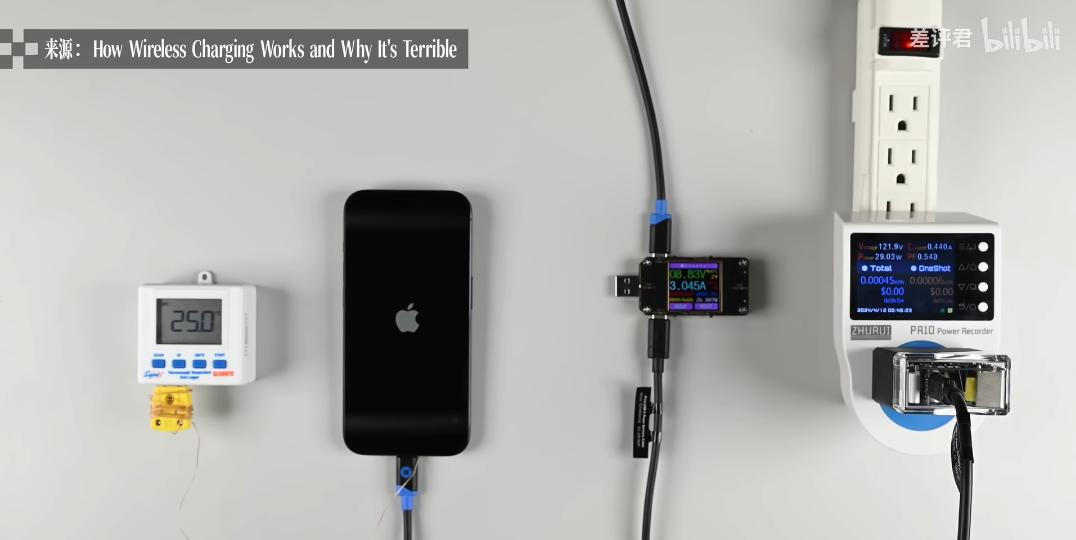
When the phone is plugged into the charger, the power doesn't have only one path.
Part of the power is used to supply the system, such as the screen, processor, and network components that are working.
The other part of the