Small hot pot, hit the brakes
In 2023, as "cost - effectiveness" became the main theme of food and beverage consumption, small hot pots witnessed explosive growth. In just a few years, capital, brands, and franchisees flocked in at an accelerated pace. The market track quickly heated up, and the competition shifted from an incremental stage to a stock stage.
Now, the low - price dividend is fading, and problems such as homogenization, profit pressure, supply chain capabilities, and the reconstruction of consumption scenarios have emerged one after another. Small hot pots are not only one of the most dynamic food and beverage segments in recent years but also a microcosm for observing food and beverage consumption trends, brand competition logic, and category evolution.
Slowing growth! Small hot pots enter the stock era
Small hot pots have moved from the early stage of wild growth to the stock era, and the category competition has shifted from "who enters the market first" to "who can stay."
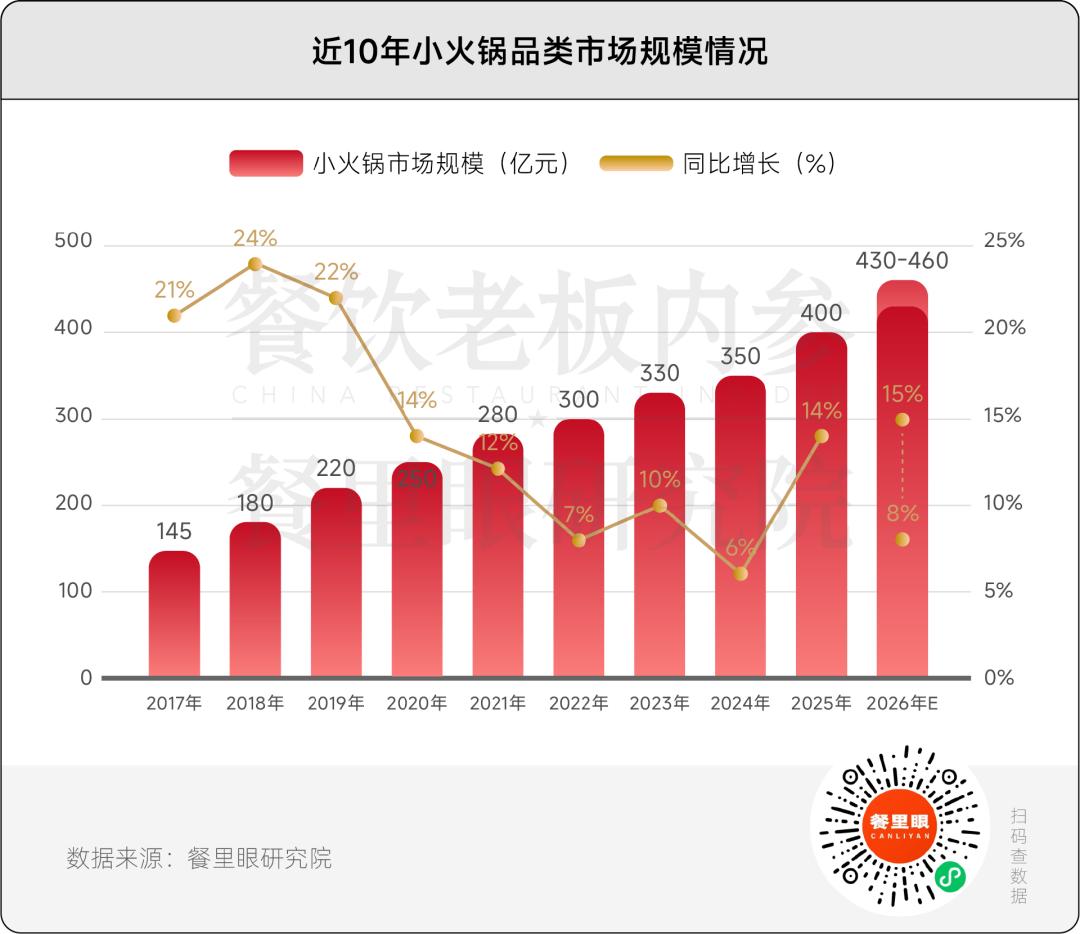
Over the past decade, the market scale, the number of stores, and the stock of enterprises in the small hot pot market have all shown the characteristics of "scale expansion and growth rate convergence."
From 2017 to 2025, the market scale increased from 14.5 billion yuan to approximately 40 billion yuan, with phased differences in the growth rate. From 2017 to 2019, it was a period of relatively rapid growth, with the year - on - year growth rate remaining above 20%. From 2020 to 2024, the growth rate slowed down. In 2025, it reached 40 billion yuan, a year - on - year increase of 14%. It is estimated that the market scale will reach 43 - 46 billion yuan in 2026.
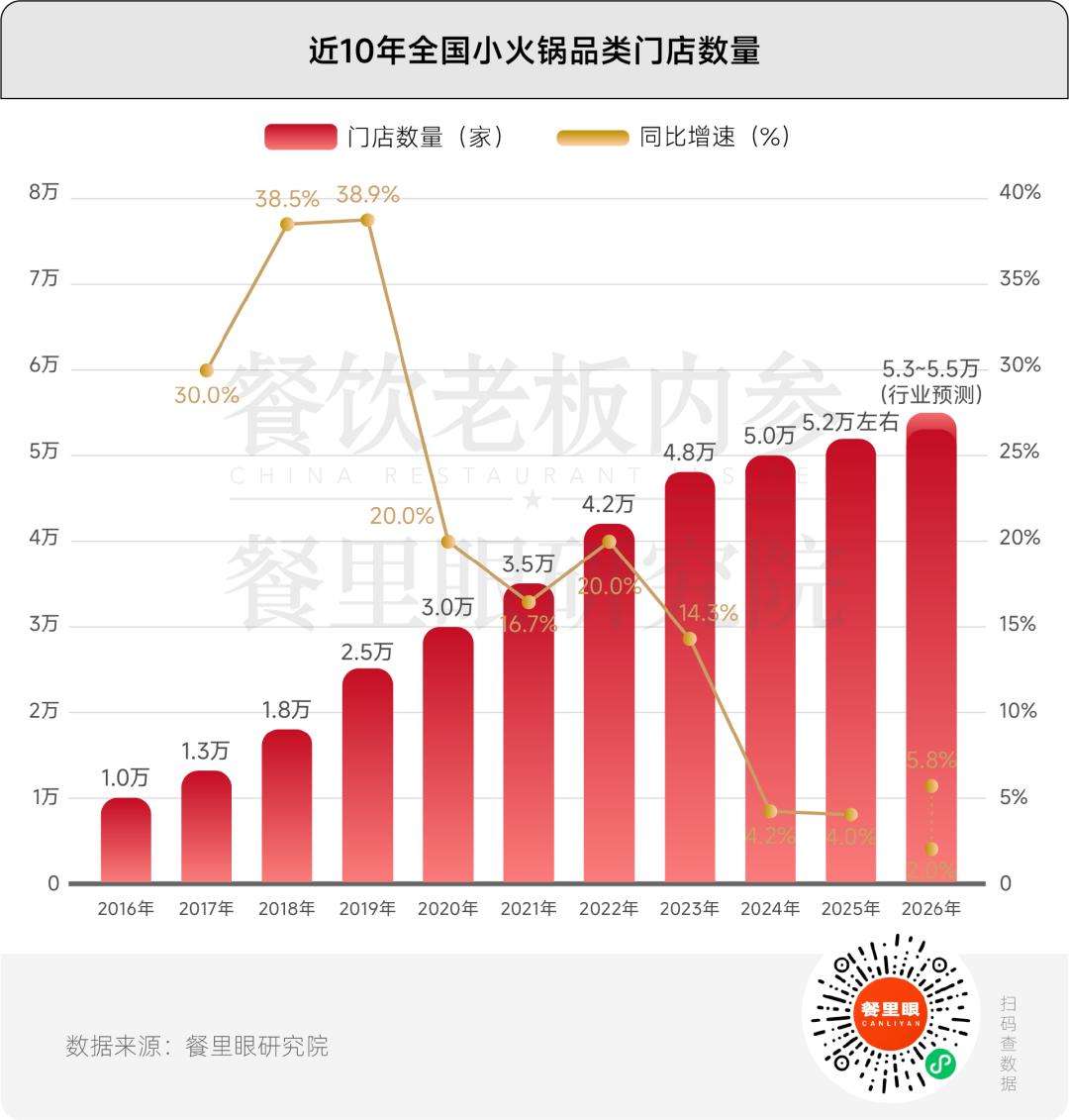
From 2016 to 2025, the number of small hot pot stores nationwide increased from approximately 10,000 to about 52,000, a nearly four - fold increase in 10 years. However, the growth of the number of stores has slowed down in the past two years, and it may reach 53,000 - 55,000 in 2026.
In 2023, the number of stores increased relatively significantly. In the post - pandemic era, rational consumption gave rise to a batch of low - price/affordable small hot pots returning to the market. Small hot pot stores sprang up all over the country. Regional small hot pot brands swept the market with their so - called low - price advantages. For example, Nongxiaoguo ventured into the Beijing market, and some of its stores even directly competed with Haidilao, once boosting the popularity of small hot pot brands and stores.
However, soon, a number of small hot pot stores that attracted customers with low prices were frequently exposed for having poor - quality ingredients, using synthetic meat, and even having food safety issues. There were continuous public opinions and doubts, which seriously affected the potential of the category. After that, as the price war in the food and beverage industry ended, the small hot pot market returned to normal.
As refined operation and quality - cost - effectiveness become the mainstream in the consumer market, both chain brands and single small hot pot stores no longer rely solely on the "wild growth" of stores. They are increasingly emphasizing the establishment of single - store models and long - term stable operation, consolidating and deeply cultivating the regional market, and building brand potential.
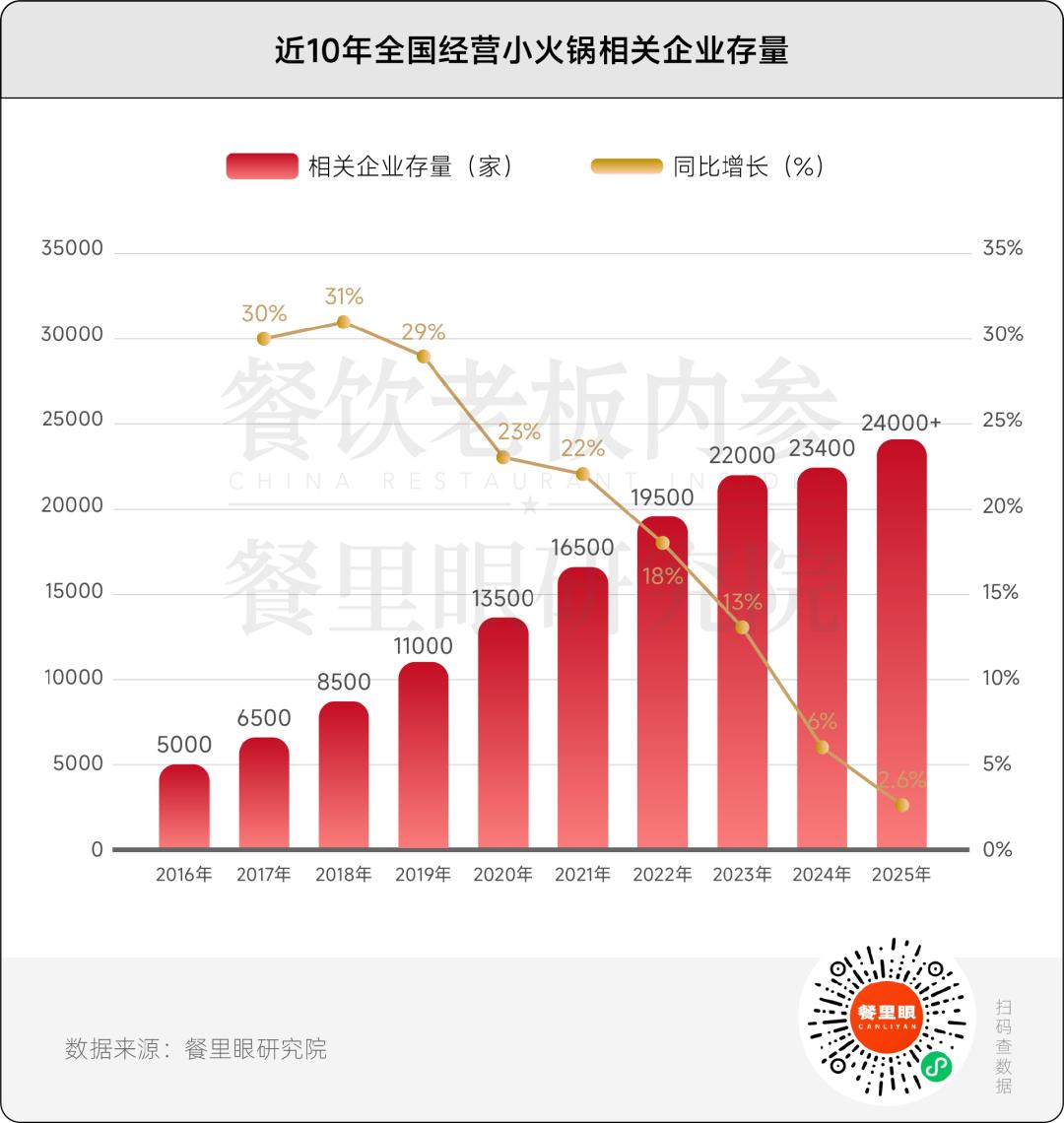
In terms of the stock of relevant enterprises operating small hot pots nationwide, it increased from 5,000 in 2016 to over 24,000 in 2025. From 2017 to 2019, the year - on - year growth rate remained at a high level of 29% - 31%. After 2020, the growth rate declined year by year.
In the era of the strong getting stronger and stock competition, the small hot pot category has entered the "elimination round."
People pay more attention to quality - cost - effectiveness in rational consumption. Therefore, the operation of small hot pots increasingly relies on a stable supply chain, standardized production, and a clear brand positioning to build a moat. As for those small hot pot stores with insufficient basic skills, they may face further elimination pressure.
Diversification of business formats, small hot pots desperately seek differences
In the process of market expansion, diverse demands, and fierce market competition, the business formats of small hot pots tend to be diversified, no longer limited to the traditional single - point model. A co - existence pattern of multiple types such as single - point, self - service, and self - selection has been formed. Behind this is the increasing demand of consumers for "controllable prices, free choices, and high meal - serving efficiency." These business formats have price certainty and a basis for repurchase through refining and implementing mature models.
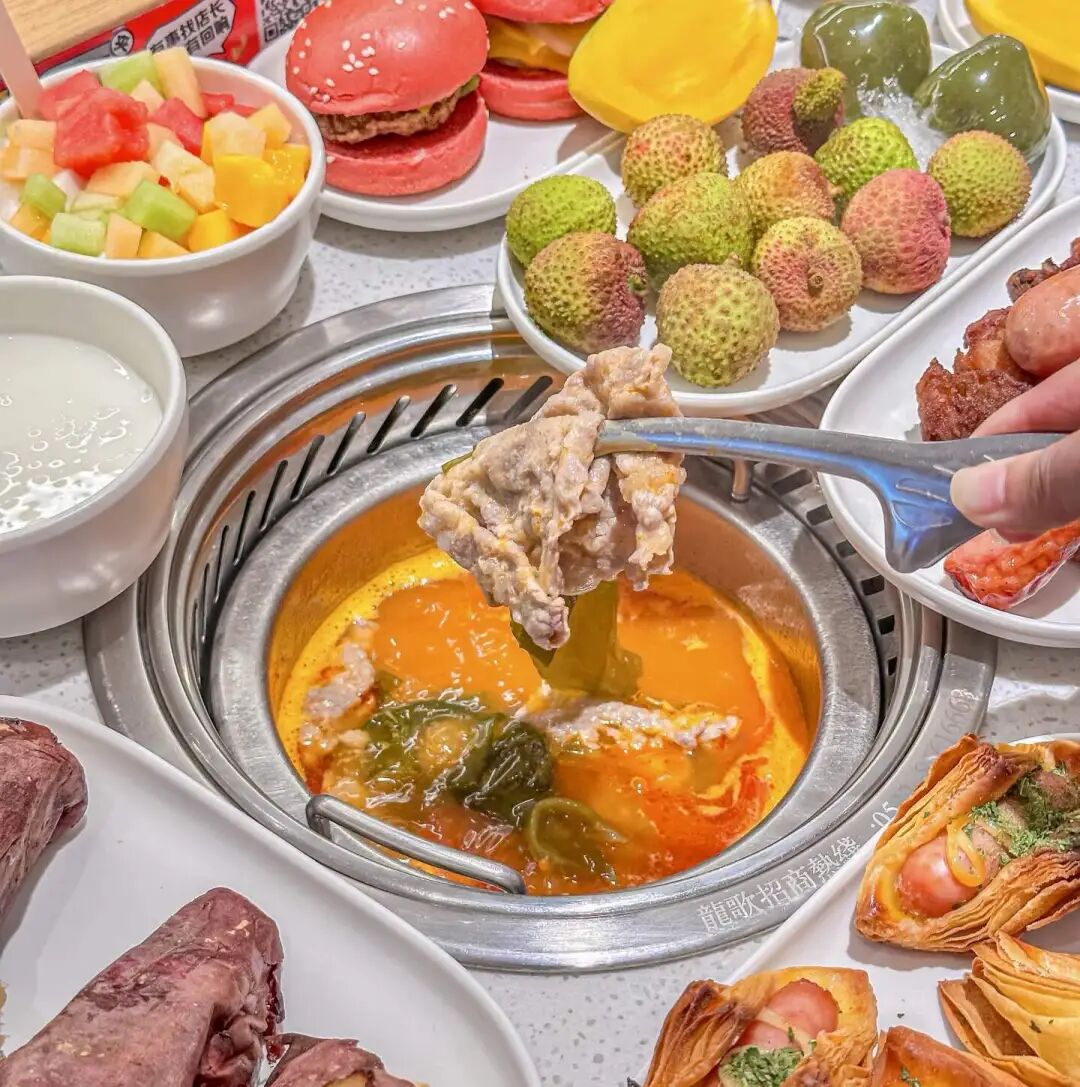
The self - service model generally charges by person or offers a fixed - price option, emphasizing all - you - can - eat. It reduces the decision - making cost for customers. Brands such as Longge Self - service Small Hot Pot and Nongxiaoguo offer dozens or even hundreds of product combinations, including snacks, desserts, drinks, meats, and soup bases, to enhance the experience and sense of value. They improve efficiency and reduce labor costs through standardized supply and self - service models.
The self - selection model of brands such as Weilaxiao Hot Pot and Yiwei Small Hot Pot emphasizes the freedom of choice and the ability to adjust the cost according to one's own needs. Customers can select ingredients by themselves when they arrive at the store, freely match them according to their budget, appetite, and taste, and settle the bill together after the meal. Most stores present in the form of a revolving bar or an ingredient display cabinet. Due to operational pressure and changes, Xiabu Ranch Self - selection Small Hot Pot has opened nearly 10 stores so far.
In terms of the national price range of the small hot pot category, those with an average per - capita consumption of 20 - 80 yuan account for more than 80%, indicating that cost - effectiveness still plays a dominant role.
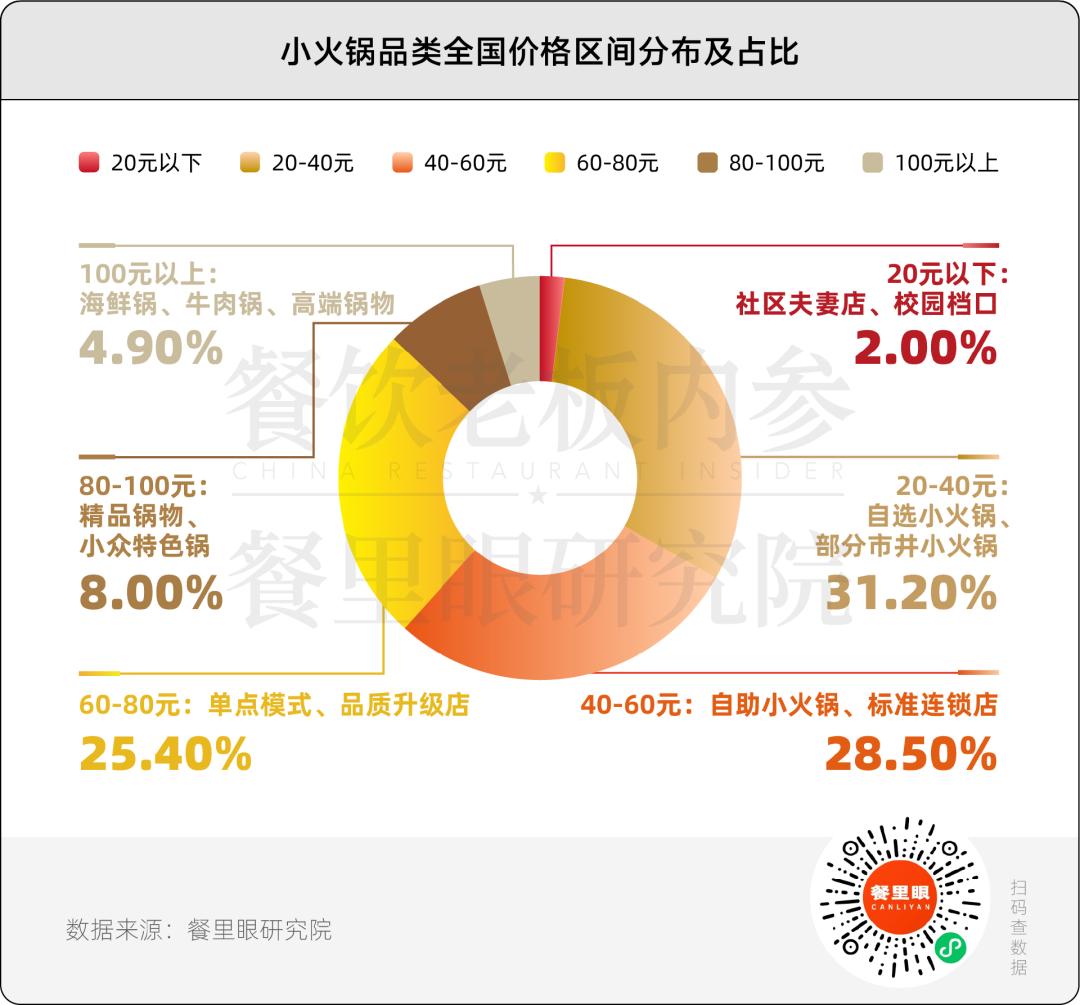
Among them, the 20 - 40 yuan price range accounts for the highest proportion, 31.2%, including self - selection small hot pots and some local - style small hot pots. The prices of self - selection small hot pot dishes are clearly marked, allowing people to choose according to their needs and effectively control the amount of food taken. Local - style small hot pots are mostly located in sinking markets or along community streets, with a strong sense of local flavor and a demand for fast food. Their prices are usually low. The 40 - 60 yuan price range accounts for 28.5%, mainly corresponding to self - service small hot pots and small hot pot chain brands. The 60 - 80 yuan price range accounts for 25.4%, reflected in single - order models and quality - upgraded stores.
This price structure shows that small hot pots are a typical mass - market and cost - effective category.
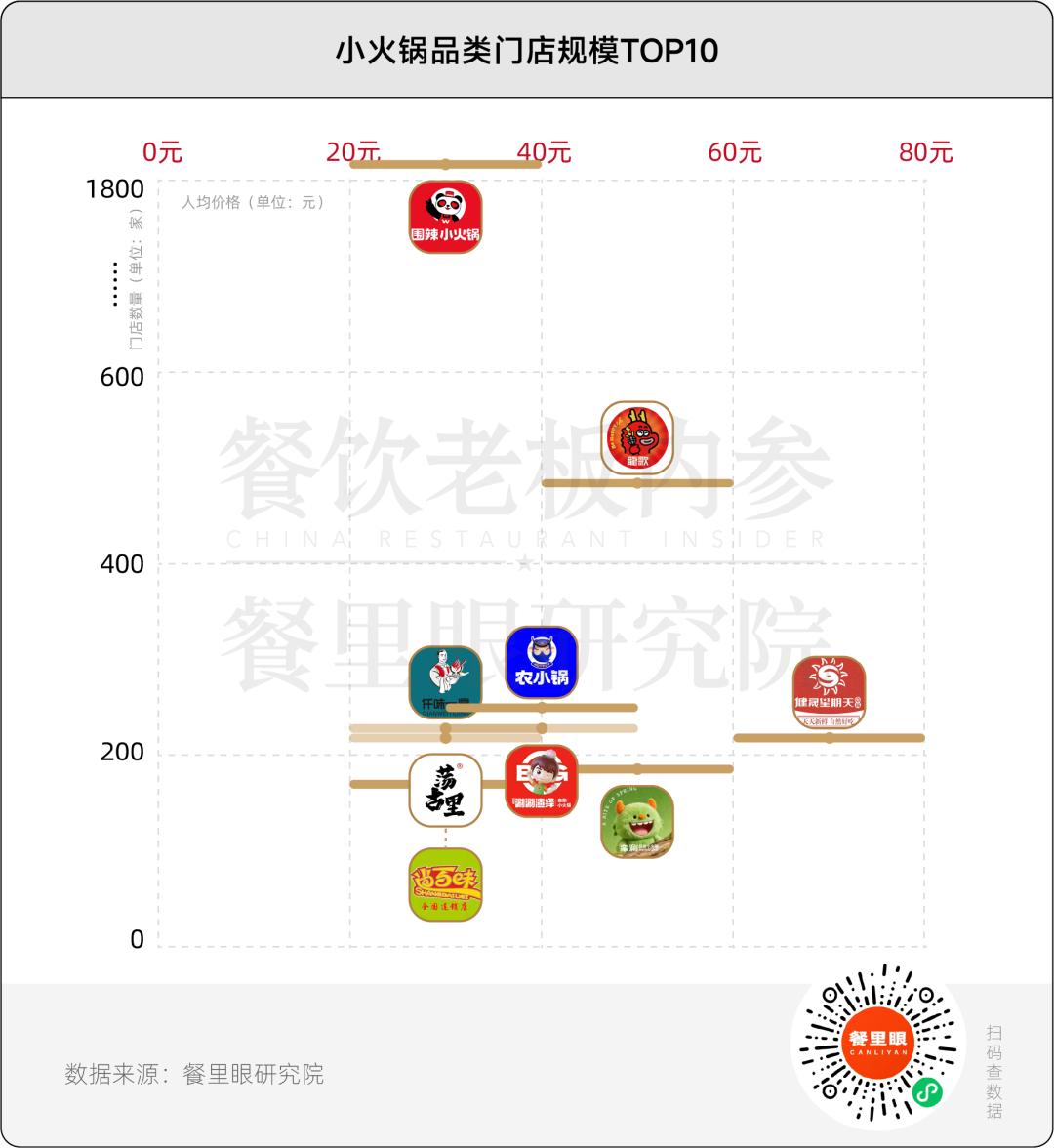
The same is true for the average per - capita consumption of mainstream small hot pot brands. Most are concentrated in the 20 - 80 yuan range, and a small number of brands have an average per - capita consumption of over 80 yuan. This indicates that small hot pots are still based on mass consumption and are gradually moving out of the low - price involution, meeting diverse demands by enriching product varieties.
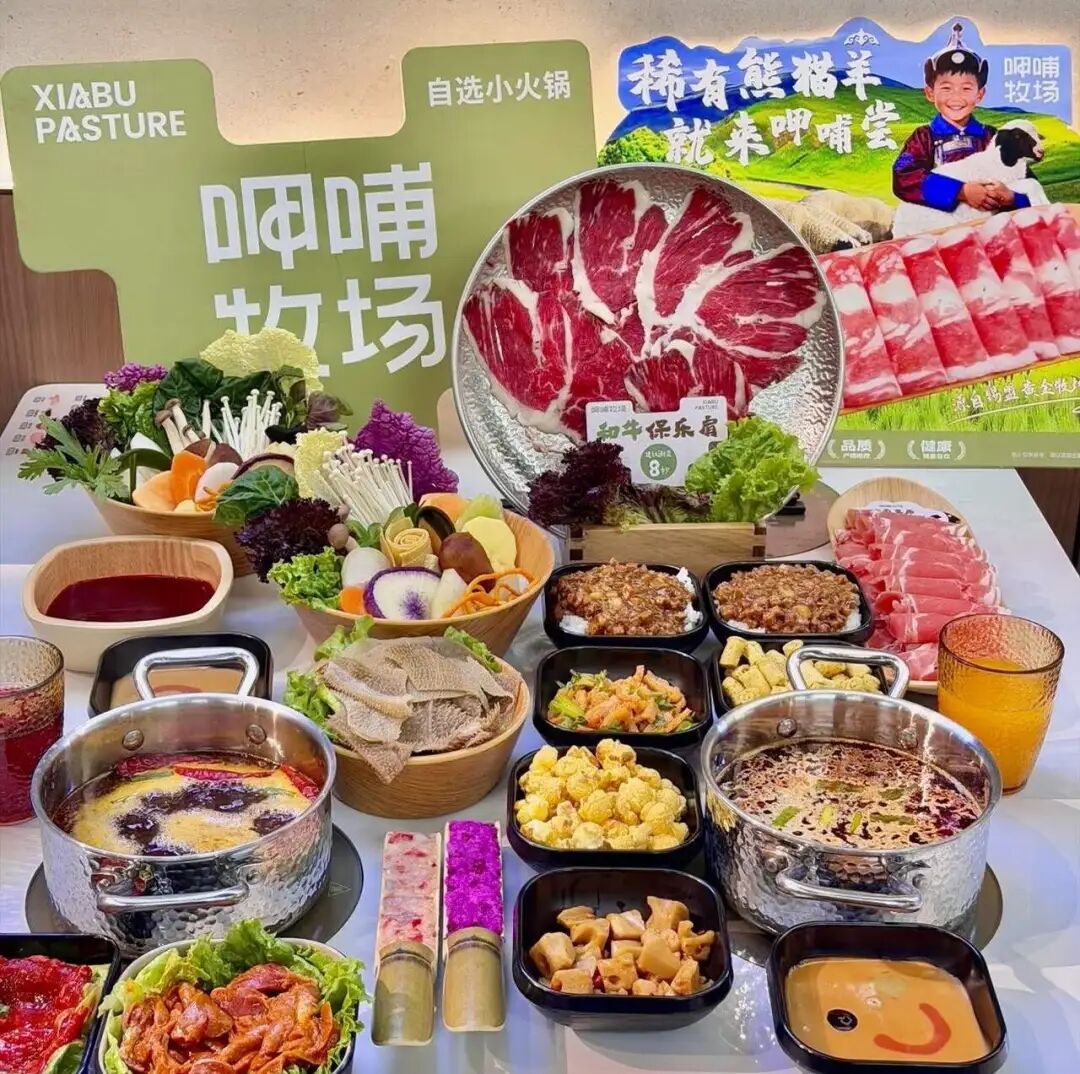
Longge has become popular with its high cost - effectiveness and the one - stop all - you - can - eat experience of "hot pot + desserts + milk tea." It continues to make efforts in product development. The pink bursting - filling small hamburger is regarded as a phenomenon - level hit, with its appearance and taste appealing to young people. Yiwei Small Hot Pot has taken prime - cut beef and high cost - effectiveness as its core selling points since its inception. Quality beef is its core signature, creating a differentiated brand perception and enhancing the sense of value. Xiabu Ranch Self - selection Small Hot Pot, backed by the supply chain strength of the Xiabu Group, emphasizes traceability and the supply of high - quality ingredients, building consumers' trust in the stores.
The competition of small hot pots has shifted from "who is cheaper" to "who is more valuable." Although low prices can bring short - term customer flow, if there is a lack of product variety and meal - serving stability, it will be difficult for stores to form long - term repurchase. The key to quality - cost - effectiveness is to allow consumers to feel a higher degree of choice, a stronger sense of satiety, and a clearer product value within a limited budget.
In this regard, small hot pots are essentially a business "strongly driven by the supply chain."
Being cheap is not enough! Small hot pots reconstruct consumption scenarios
In the past, the rapid rise of small hot pots largely relied on the "price advantage." However, as the industry enters the stock competition stage, relying solely on low prices is no longer sufficient to attract consumers. Compared with eating cheaply, consumers are starting to pay more attention to eating conveniently and comfortably. This means that the focus of small hot pot competition is shifting from price to consumption scenarios.
First, the rapid rise of the single - person dining scenario.
From the reasons why consumers choose small hot pots, "high cost - effectiveness" and "convenience for single - person dining" have become the two core factors driving consumption, accounting for 68% and 62% respectively. This reflects that the growth logic of the current small hot pot market has shifted from simple taste competition to the comprehensive satisfaction of consumption efficiency and consumption experience.
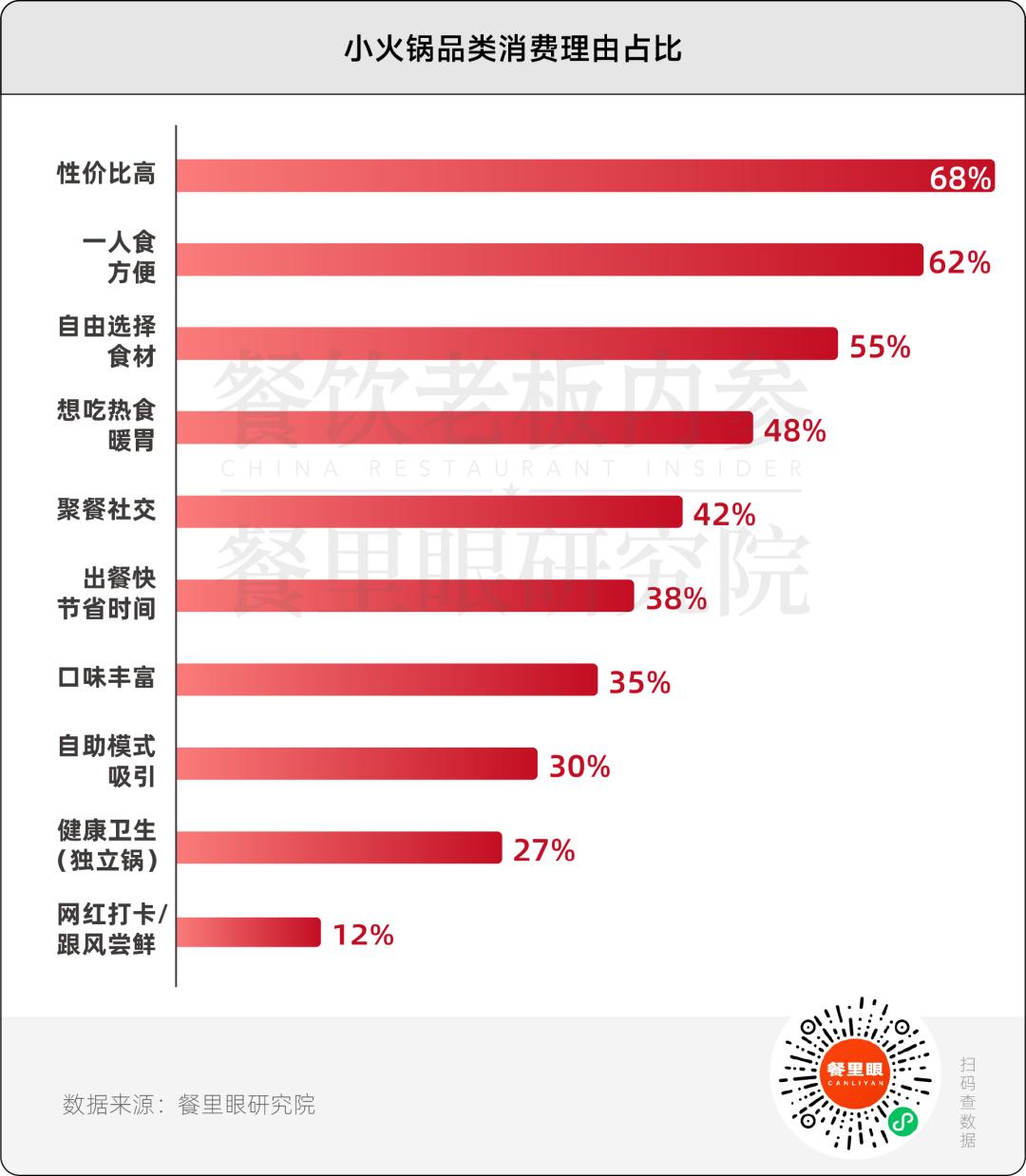
"Single - person dining" reflects that changes in consumption structure and lifestyle are reshaping the hot pot consumption market. With the development of the single economy and the fast - paced lifestyle, consumers' demand for food and beverage pays more attention to convenience and personal experience.
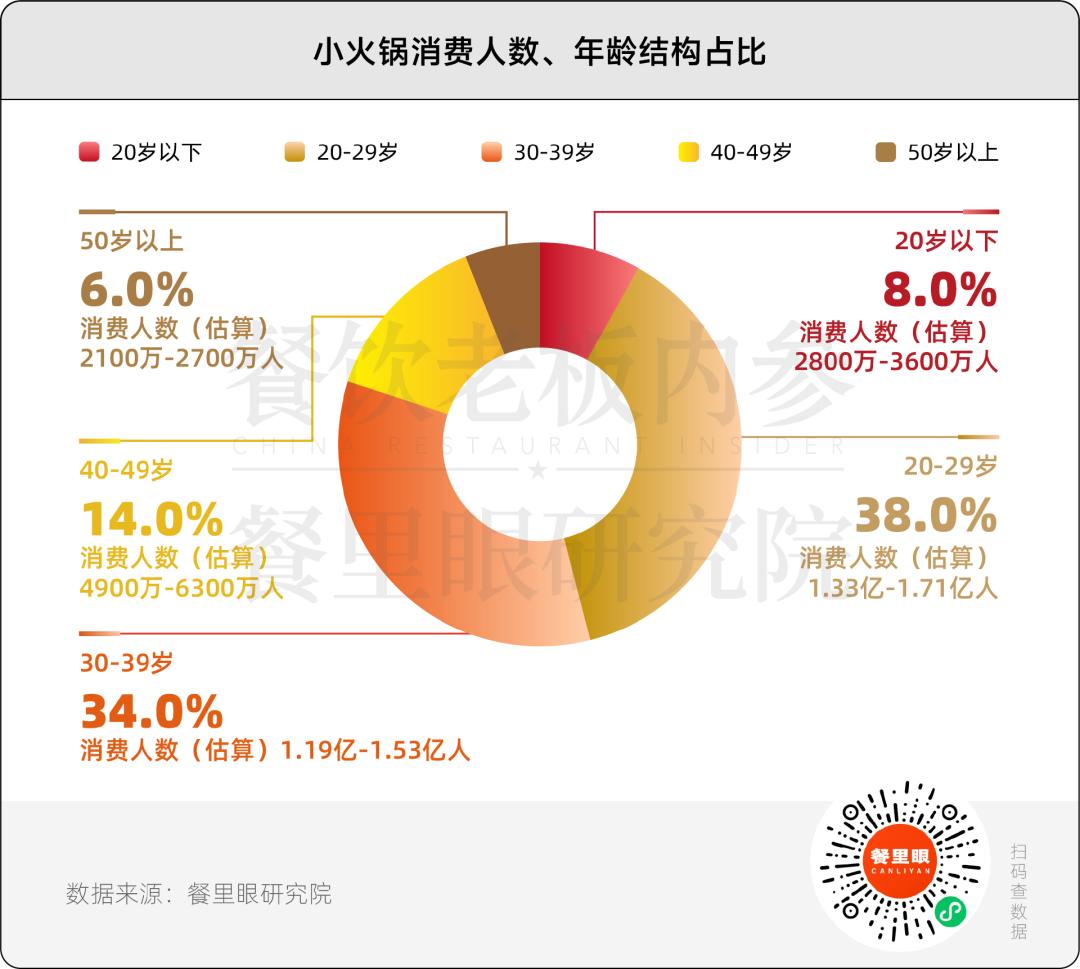
In terms of consumer age, small hot pot consumption shows obvious characteristics of youthfulness. Consumers aged 20 - 39 are the absolute main force, accounting for 72%. This group generally has strong consumption ability and a high frequency of dining out. They have high requirements for "single - person dining," "social gatherings," and personalized experiences. They are also more likely to accept new products and new consumption models, and are the core force driving the growth of the small hot pot market.
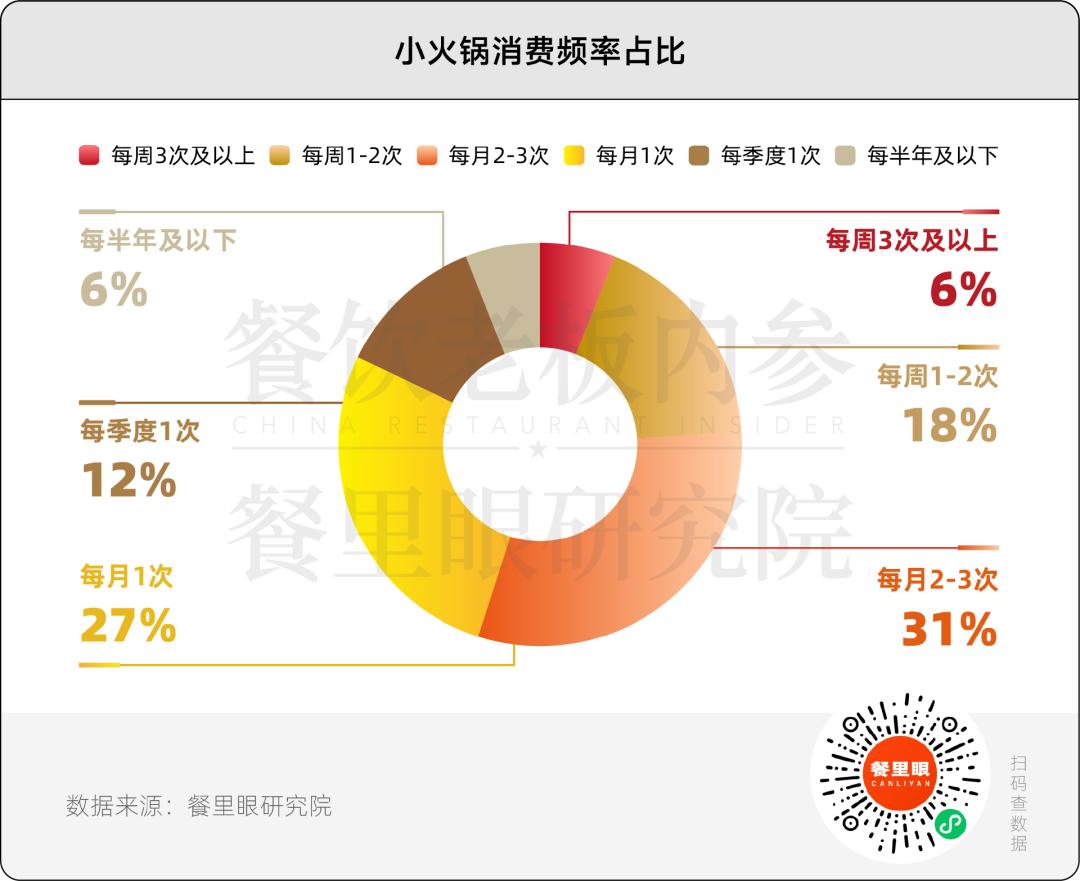
Meanwhile, in terms of consumption frequency, small hot pots already have a relatively high attribute of daily consumption. The proportion of people who consume 1 - 2 times or more per week reaches 24%, reflecting that some consumers have a high degree of stickiness to small hot pots. Overall, small hot pot consumption shows the characteristics of "daily consumption and relatively high repurchase rate," and the market demand has strong stability.
Therefore, "single - person dining" is not only a consumption scenario but also a new demand formed by the combined effects of changes in consumption structure and lifestyle evolution, and it has become an important driving force for the continuous expansion of the small hot pot market.
As the demand for single - person dining continues to expand, another change in small hot pots has also emerged: the fast - food attribute is continuously strengthened.
In order to meet consumers' demand for high - efficiency and high - frequency dining, more and more brands are reshaping small hot pots according to the operating logic of fast food. From product design, store models to operating methods, they are all moving towards "fast - foodization."
A typical example is Laomazha Local - style Small Hot Pot, which features affordable local - style flavors. Its store model is lighter, and the scenario is closer to daily needs. It has transformed small hot pots into a catering form more suitable for single - person dining, work meals, and high - frequency community consumption. For example, it offers small hot pot + rice sets, snacks and sweet drinks, community stores, local - style decoration, and fast - food - style operation, making it