People who are "seriously" engaged in AI film and television creation: It has always been humans who get eliminated
"Who says AI creation has no soul? The ultimate answer of AI still lies with humans."
AI has entered the deep - water zone of film and television creation.
Meanwhile, a group of creators have completed the transformation from tool explorers to content producers.
Nick Shengliang defines AI as "the latest photography technique at present". From film to digital and then to AI, each transformation is just a change in the technological guise, but the authorial nature has never disappeared. Liu Chi and her team completed a feature - length animated narrative film in three weeks with six people. Luo Shihu, one of the first batch of people to contact AI film and television, started a business and transformed into an AI content creator and the founder of an MCN. Ding Yi created a personal IP with his own face through AI, presenting a cyber - punk Northeast world, and currently, the quotation for a single advertisement has exceeded 300,000 yuan. Jim HuiHui, on the basis of game development thinking, is using AI to build a worldview for his original IP...
Although these creators have different paths and are facing different breakthrough points, and currently, AI technology is also constantly evolving, there is one thing highly consistent: the threshold of AI film and television creation is shifting from the technical level to the level of aesthetics and authorial nature.
The disappearance of the technical threshold means opportunities, but at the same time, it also means higher - level competition.
Luo Shihu deeply feels this: "In the current state of this track, only two types of roles can easily survive: one is those who can create high - quality top - notch works, and the other is those who mass - produce low - quality content. It's very painful for those in the middle."
Currently, most of the people who are truly noticed are those who have been polishing their aesthetics and authorial nature before the disappearance of the technical threshold.
Nick Shengliang has ten years of accumulation in independent film education. Liu Chi has years of experience in commercial advertising. Luo Shihu persevered for seven or eight months without income out of love. Ding Yi continuously invests in the cyber - punk Northeast world. Jim HuiHui uses the innovative thinking of game - making to create an AI content IP universe...
When three people can finish a feature - length art film in twenty days; when a six - person team can challenge the "highest level of AIGC industry" in three weeks; when a self - media person can create a cyber - Northeast universe with his own face... the right of image expression is flowing back to individuals at an unprecedented speed.
In Luo Shihu's view, although AI is the latest tool at present, even without an AI model, if the entire worldview, script, and story of the content are excellent, text and pictures can still be liked by many people.
Nick Shengliang believes that AI is just the latest photography technique. Photography has never eliminated painters, but it has allowed more people to become observers and recorders.
AI film and television may be doing the same thing.
Interviewees (in the order of interview time)
Nick Shengliang (Independent film director, AI content creator)
Phoenix Liu Chi (Director, AI content creator)
Luo Shihu (AI content creator, MCN founder)
Ding Yi (AI content creator, personal IP operator)
Jim HuiHui (Game developer, AI content creator, AI original IP creator)
After exploration: Surprises, human - machine co - creation, and the arrival of AI industrialization
In specific creative practices, the ways in which AI intervenes in film and television can be roughly divided into two paths: one is the mixed production of real - shot and AI - generated content, and the other is the full - process AIGC dominated by AI. Under these two paths, humans and AI have reached a certain industrial collaboration flow.
Nick Shengliang's "Reaching the End of the World" is a mixed - production art film. Approximately 80% of the pictures were generated by Keling AI, and the other 20% were real - shot scenes. The real - shot scenes were those long - shot scenes that AI is currently unable to perfectly reproduce, such as a person cycling from afar or a person slowly walking forward in a large - scale view.
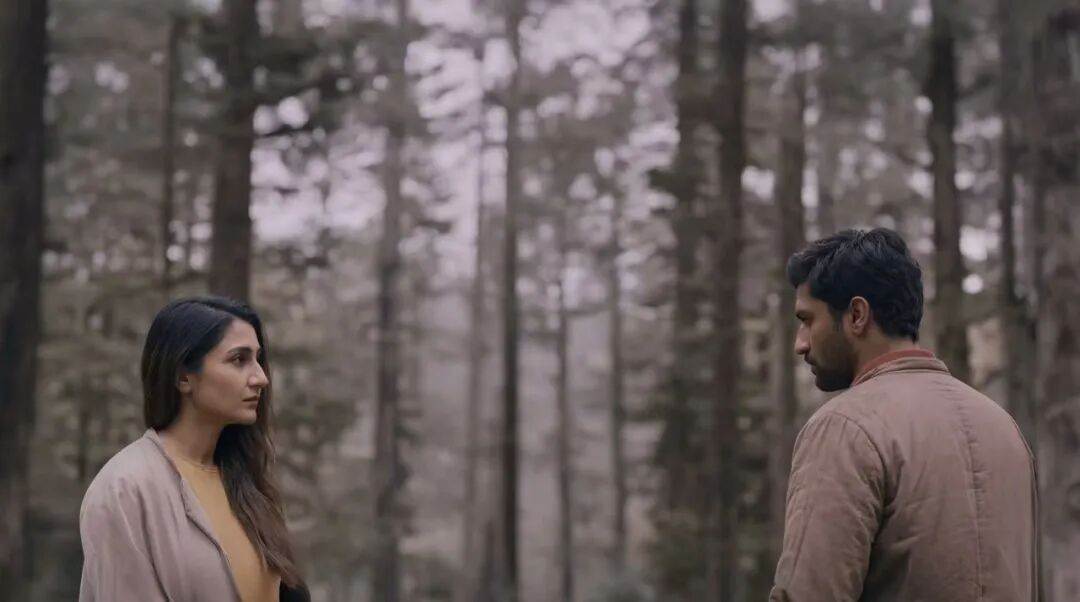
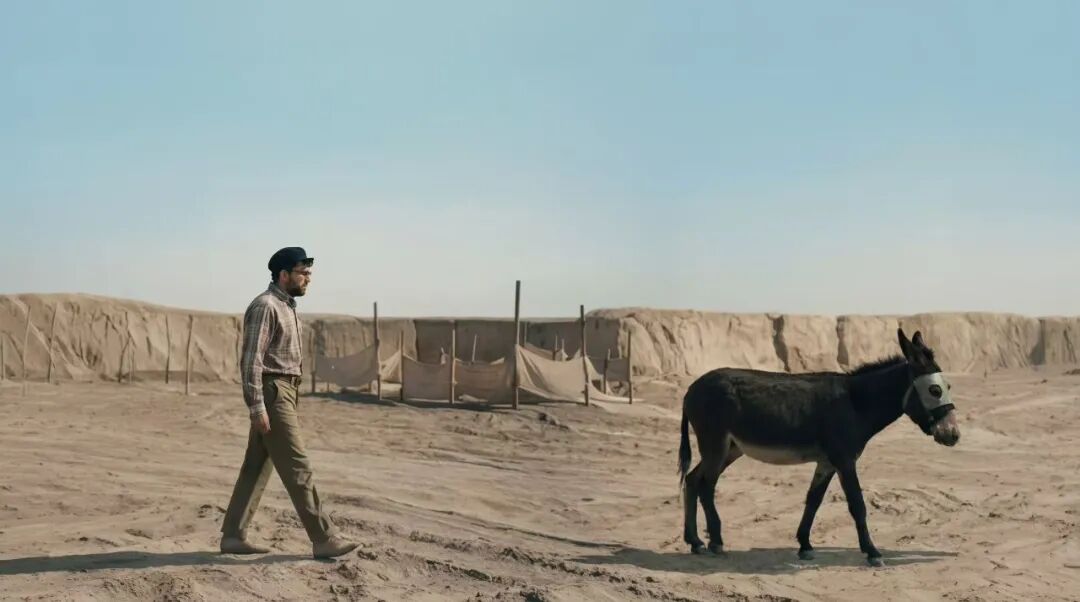
Nick Shengliang's work "Reaching the End of the World"
Nick explained: "Art films usually have more long - shot scenes. The longest shot that AI can generate is only 15 seconds, which is not enough for some narratives." So the team retained five or six relatively long real - shot scenes.
Interestingly, the audience can hardly tell which parts are AI - generated and which are real - shot. "Now many people have the question of not being able to distinguish between AI - generated and real - shot content. In fact, I think this is where AI is currently powerful."
Behind this seamless integration is Nick's team's adherence to the aesthetics of restraint. He revealed that during the entire production process, they gave up seemingly excellent pictures, such as those AI special - effect shots full of visual spectacles, because they still hoped to return to the restrained narrative in the film.
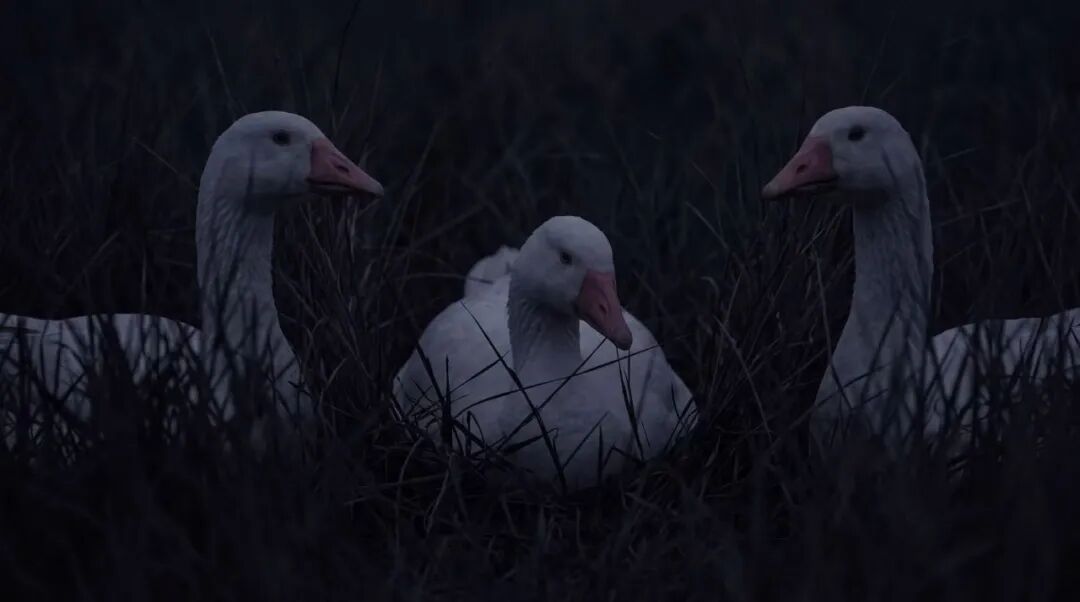
In addition, the clouds, mists, and heavy rains in the film all follow the logic of natural landscapes rather than being showy and surreal.
Liu Chi took another path. Her company started with commercial advertising and used to follow the traditional process of the client putting forward requirements and the contractor executing them. This time, the film made with AI was completed by six people in three weeks.
They made an important adjustment to the workflow: they moved the dubbing forward. "Previously, when making AI videos, lip - syncing was often done as the last step after the editing was completed. This was a waste of time and the results were not that good." She chose to find a dubbing actor to record all the dialogues after the script was finalized and then generate the video based on the audio.
Another noteworthy detail is the division - of - labor model. Liu Chi's team assigns personnel according to scenes, and each person is responsible for all the shots within a specific scene, rather than dividing labor according to traditional film and television processes. They found that this could complete the content more efficiently.
Ding Yi confirmed the two implementation paths from the practical level of personal IP implementation. He created an original IP on the theme of cyber - Northeast, relied on AI for image implementation, and fully controlled the entire creative process and story framework by himself. He did not use a standard script, improvised to extract prompt words, and screened AI - generated content to perfect black - humor short films. Jim HuiHui delved into the original IP of urban science - fiction and suspense and built a dedicated worldview system. He said that in the creation process, AI plays three roles: tool, assistant, and muse of inspiration. Humans take the lead in storyboard and script creation and then select and absorb the best ideas from AI outputs.
A consensus that breaks expectations has emerged. Many interviewees mentioned that they do not pursue 100% control over AI output. Instead, they deliberately leave room for AI to give "surprises".
Luo Shihu often puts forward half - specific requirements to AI in practice and deliberately blurs the other half of the prompt words, allowing the model to randomly design things for him to choose from. He compares this process to card - drawing in a game: "If you draw an SSR card, you will definitely be very happy. Sometimes when we can utilize the model's capabilities to get some very nice shots, we will also be very excited."
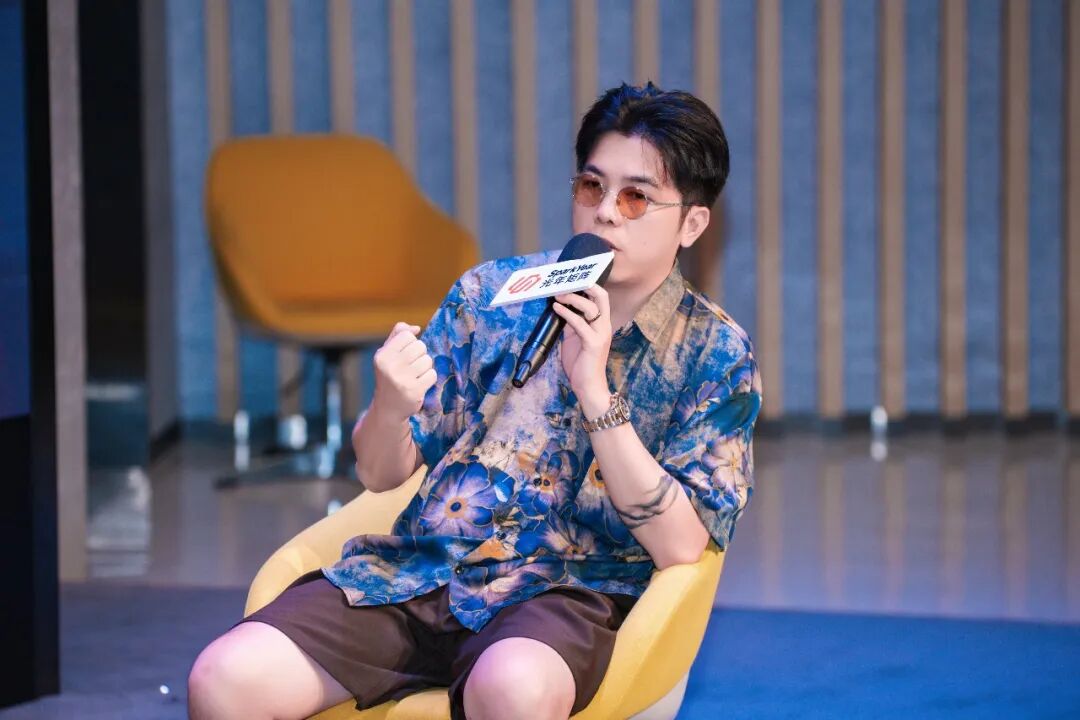
Luo Shihu
He proposed that trying to control AI 100% may make people suffer: "The model is sometimes random and 'disobedient', but I actually like it to be disobedient because there will be better ideas and more surprises."
Nick Shengliang also had a similar experience. When describing a scene, he said: "I wanted him to only look into this one grass - patch, but his movement and overall expression, taking two steps and looking back with a facial expression detail, were actually given to us by AI. We kept them and adjusted according to them."
Liu Chi also found in actual operation that opening up the camera - movement part to AI "often brings surprises".
Although most of the narrative details are still actively controlled by the team members, this form of creation, which involves partial release and selective adoption, has marked that AI film and television creation has transcended the stage of tool operators and entered the real - sense human - machine co - creation.
In addition to the formation of human - machine collaboration, a milestone has quietly arrived at the technical level.
Nick Shengliang revealed in the interview that his team has built a set of AI - based workflow for making 3D movies. That is, through AI open - source software, they convert 2D films into native 3D files that can be played on the 3D projection system in cinemas, and the effect is close to that of traditional 3D production.
The newly launched native 4K capability of Keling makes them see the possibility of hitting the theaters: "To be screened in cinemas, at least 2K resolution is required. If a platform can produce native 4K content, it will have a huge impact on the traditional film industry."
He clearly stated that the technical obstacles to entering the theaters have basically been removed, and the remaining uncertainty mainly lies in the policy aspect. "I think there are still great opportunities in the future because we still hope to enter the domestic theaters."
From the perspective of the traditional film industry, this change has also begun to attract great attention. Nick revealed that several traditional film industry leaders have actively approached him to consult about when AI films can enter the theaters and how to measure the technical standards.
Under the standards of the basic technical specifications of cinemas, perhaps after the mature AI industrial production system is implemented in the future, AI films that meet the picture quality and production specifications will be regularly screened in theaters, and major traditional film companies will also gradually incorporate AI into their regular production processes.
Industrial paradigm: Disappearing thresholds and reshaped positions
In the traditional film and television industrial logic, the crew model that emphasizes manpower and refined division of labor has been broken in AI film and television creation teams. When the production threshold drops significantly, the industry positions are undergoing a structural reshuffle, and lightweight production by small teams has become the new trend in the industry.
Liu Chi mentioned that the scale of traditional animation production is extremely large. In contrast, a 45 - minute AI - animated film can be completed by six people in three weeks, which is a complete scale revolution.
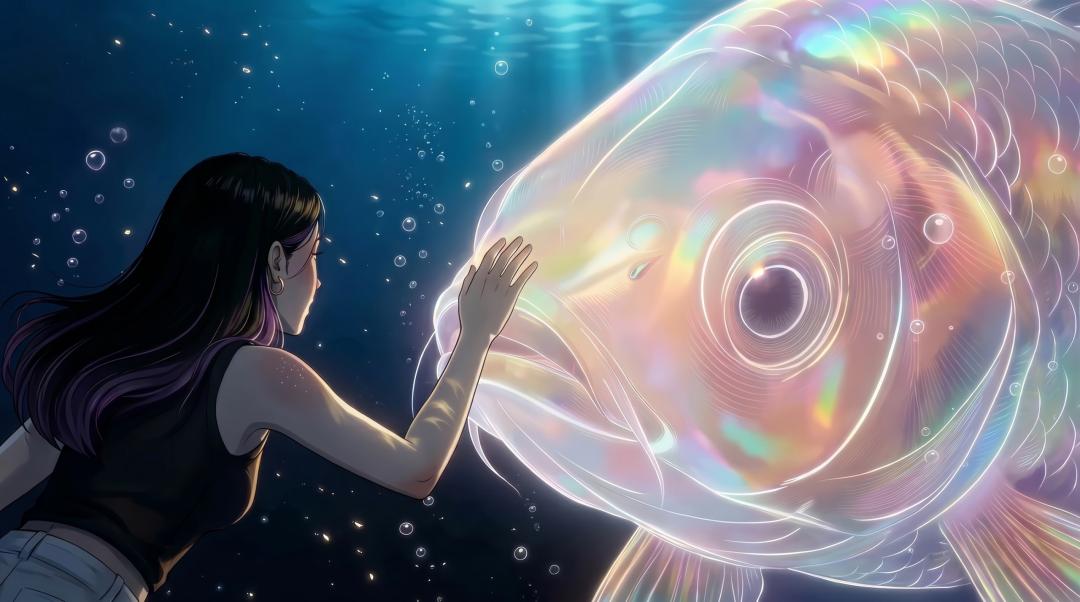
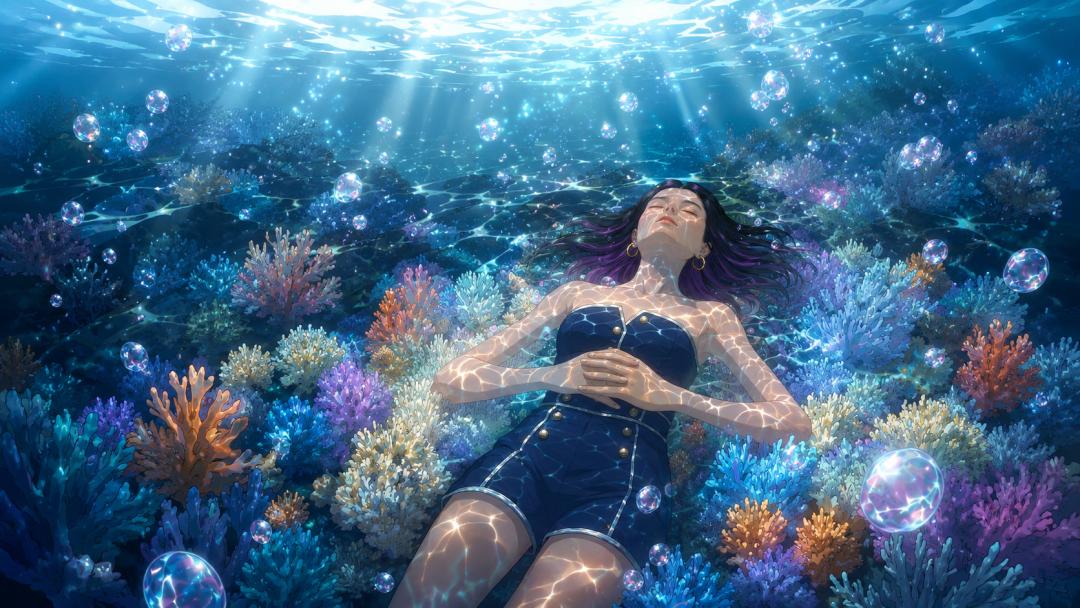
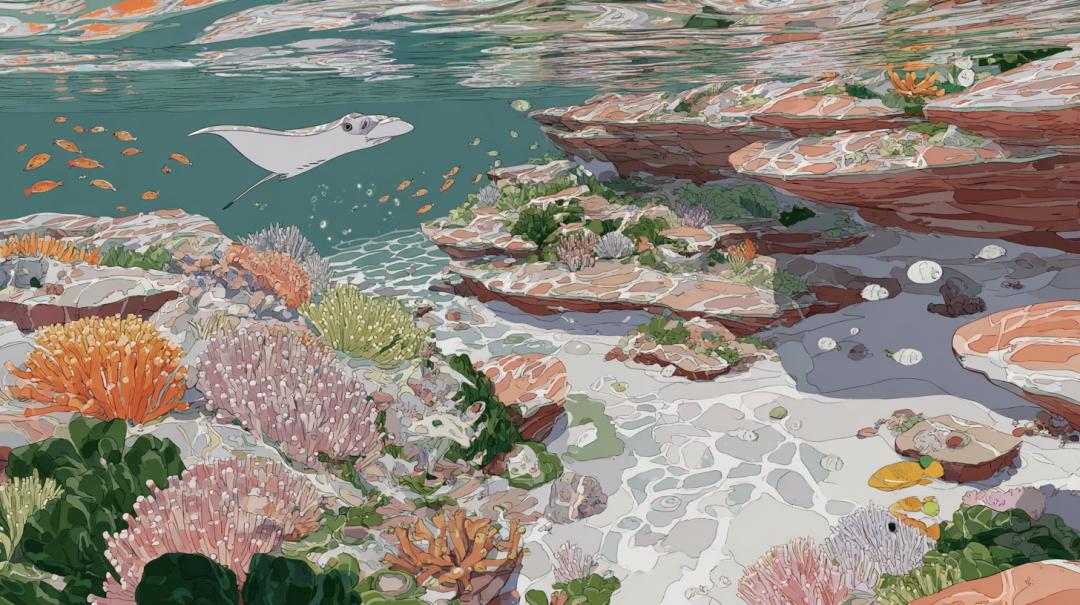
Still from the work "Seven Days of Floating Life" by Director Liu Chi's team. This film won the Best Feature Film in the AIGC Unit of the Beijing International Film Festival.
As one of the first people to contact AI film and television creation, in Luo Shihu's view, the essence of AI is a content production factory. Whether it is for advertisements, short dramas, or large - screen pictures for press conferences, they are all produced using the same set of logic.
"If the client wants to make an advertisement, we can do it; if the client wants to make a short drama, we can also do it; if the client wants to make process pictures or large - screen PPTs for press conferences, we can do it too. They are all content."
Nick Shengliang's team is even smaller. Three people completed an almost 45 - minute art film in twenty days, which is an almost impossible task in the traditional film and television industry.
The core logic behind his team is "integration of director and screenwriter". When the director and the screenwriter discuss each scene, basically, they already have all the prompt words and pictures in mind.
This efficient collaboration model without an intermediate layer is a common feature of small - team AI creation.
In a traditional crew, due to its large scale, each link requires professional personnel. Someone is responsible for key - frame animation, someone for model binding, and someone for performance transfer. However, in AI creation, these links are integrated into each person involved in video generation.
Liu Chi described the characteristics of this new all - around position: "A picture - generating artist not only needs to understand art but also needs to understand character and scene building, dressing, character performance, and editing. Only by having a comprehensive understanding of these can they generate a video." This forms a sharp contrast with the clear and highly specialized division of labor in traditional assembly - line production, and the final integration no longer depends on the editor but permeates every production link.
In an environment where the production threshold is rapidly decreasing, the contradiction of industry differentiation is gradually emerging: the tool threshold is accessible to the general public, but the soft threshold built by creativity and aesthetics continues to rise.
Luo Shihu used a highly impactful metaphor to describe the core logic of this position reshuffle: "Even the security guard in my community can do it. If you give him a tool and let him copy and paste the prompt words according to this book, he can also produce some content. But when everyone can do a thing, it means that high - quality works will be scarcer and there will be fewer people who can do good things."
AI has made the technical threshold of content production zero, but at the same time, it has made high - quality content even scarcer and more valuable.
<