After being "backstabbed" by health-focused home appliances, today's young people have become smarter consumers.
The "Health" IQ Taxes We've Paid Over the Years
He was about to hit the wall.
Before Wang Yan's brain could react, his body felt a sudden jolt as if being pushed from behind. While test - driving this new - energy vehicle that boasted "intelligence" and "safety", he accidentally stepped on the accelerator instead of the brake. By the time he realized it, the car was dashing forward like a wild beast.
In those extremely dangerous seconds, Wang Yan thought the much - hyped risk warning and instant intervention features of this car at the press conference would work immediately. However, the intelligent driving system remained silent. There was no alarm sound, let alone any sign of automatic braking. In the end, it was Wang Yan's instinct that made him step on the brake firmly, stopping the car just a few dozen centimeters away from the wall.
Still in shock, a sense of disgust towards the brand's excessive marketing welled up in Wang Yan's heart. The actual experience was far from the advertised effect. He got out of the car and put this brand on his mental "blacklist". "Just think I can't afford it. Anyway, a big brand like yours doesn't need me," Wang Yan complained.
From then on, Wang Yan learned a lesson: never buy any product that is overly hyped.
This is not only true for buying cars. The routine of "exaggerated advertising and poor - quality products" has penetrated into various consumer goods.
In recent years, young people have started to focus on improving their quality of life, shifting their attention from "looking good" to "living comfortably and safely". As a result, home environmental health has been frequently mentioned. Health - related home appliances have gradually come into the public view. People still prefer to trust big brands when choosing products and are willing to pay the brand premium. Essentially, they hope to get a "guaranteed healthy result" by choosing a "reputable brand".
However, they soon find that some corresponding advertisements are becoming more and more "sophisticated", the concepts are getting more and more "technological", but the real - life experience is increasingly difficult to verify.
Xiaomeng from Beijing has bought quite a few health - related home appliances and has fallen into the consumption trap of "being able to afford it but not being able to use it" several times.
His first water purifier was from a well - known brand. Although it worked fine in general, he always felt a lack of "control" during use. There were many unclear points about this product. He didn't know the TDS value (total dissolved solids in water) and couldn't see how long the filter element would last. Every time he remembered, he would contact the merchant to come and replace the filter element. But with the service fee and the bundled filter elements, each replacement cost over a thousand yuan. This opaque maintenance cost made Xiaomeng feel like he had fallen into an "endless renewal pit".

Drinking water, image source: Unsplash
Later, he switched to a water purifier from another brand. But after just one year of use, the water from it started to have an unpleasant smell. Ironically, he had also bought an air purifier from this brand before, and it also had problems such as loud noise and body vibration after one year of use.
Besides being tricked by some brands, some people have also had a big disappointment after being influenced by emotional marketing.
A netizen was recommended a mite remover by her favorite review blogger. The blogger said it was powerful, capable of cleaning, disinfecting, removing odors, and even had AI intelligent monitoring. But after using it a few times, "it couldn't suck anything up, and I don't even know if it's really removing mites," she posted a complaint. Some netizens in the comment section said their mite removers also had problems after one month of use. This made her completely avoid this brand and "never trust blogger recommendations again".
This phenomenon of "loud advertising but poor performance" is quite common in the field of health - related home appliances.
After being scammed several times, people have realized that some brand advertisements and popular online products that cost a fortune to promote may be just good on the surface. Especially when it comes to non - negotiable home health issues such as formaldehyde residue, bacteria, mites, allergies, and pet hair, for most young people, the price is no longer the problem. The real trouble is the "uncertain result".
Stop Paying for Marketing Tricks
After experiencing a series of bad experiences, consumers have become more strict in their criteria for selecting health - related home appliances.
According to the "Research Report on the Consumption Insights and Trends of Chinese Health - related Home Appliances" by 36Kr Research Institute, more and more consumers have become "learning - type consumers". They have shifted from passively accepting product information to actively seeking it. More than 70% of consumers will search for relevant products on video and content platforms before making a purchase. They especially prefer science - popularization and product - review videos to understand the real technology behind health - related home appliances and make more informed purchase decisions.
That's why in the past, people used to focus on the brand name when buying home appliances. Now, they focus on the technical strength.
Marketing tricks are no longer effective. Consumers care more about whether their real needs can be met, whether the parameters are real and transparent, whether the technical principle is reasonable, and whether the long - term use cost is cost - effective, rather than the so - called "black technology" and "disruptive innovation" in the advertisements.
Before buying health - related home appliances, people start to repeatedly search for product reviews, disassembly videos, and real - user feedback, compare information on different platforms, and cross - verify product details. Some consumers even conduct their own verification.
When Wang Yan was choosing a humidifier, he saw a brand's promotion comparing a competing product, claiming that it could cause "humidifier pneumonia". He didn't believe it. Instead, he searched for relevant academic papers on CNKI to study the underlying principle. To find out the truth, he even bought a humidifier himself and conducted a comparison experiment at home, checking if there were white flocs on the floor to see if the claim was true.
The era when consumers were blindly attracted by brand names is over. They are more willing to pay for real and tangible experiences. It is this increasingly rational consumption attitude that has led to the discovery of some products. These products are usually not in the spotlight of marketing, but they always appear in professional technical reviews, disassembly analyses, and parameter comparisons.
Annie, who used to work in a testing and certification institution, came across a not - so - prominent brand during this screening process.
After the third kitten came to her home, Annie's two original air purifiers were no longer enough. Especially in summer, the kittens shed a lot of hair. Recommended by a friend, Annie decided to buy an air purifier that specializes in purifying pet hair.
She didn't place an order directly. Instead, she spent a lot of time watching reviews, disassembly videos, and analyzing the filter structure. She also compared the horizontal test data of multiple models. As she delved deeper into the research, Annie's understanding of air purifier selection also improved. She no longer only looked at the surface parameters but paid more attention to the actual use effect and hardware structure.
In various review videos and technical discussions, a brand named 352 appeared very frequently. Comments like "solid filter material" and "best comprehensive performance" were often heard. Although its name was a bit "strange", what really attracted Annie was that the filter system of this air purifier was clearly divided. The filter for filtering particles and the one for handling odors were separate, which was more like an engineering design concept. This separate design not only made filter replacement more flexible but also stabilized the overall purification efficiency and extended the filter's service life. The only drawback was that the filter was a bit expensive, costing 700 yuan for a set.
When Annie opened the product details page, she was pleased to find that there was a sense of "anti - marketing - trick" transparency: how the filter life was calculated and how much the subsequent filter replacement would cost were all clearly marked. After learning that the filter didn't need to be replaced for a year, the cost seemed more reasonable. Moreover, the page also clearly marked the purification effect on common pet - related pathogenic microorganisms such as feline calicivirus. "If a brand is this transparent, it's unlikely to be a fraud," Annie thought. Due to her professional sensitivity, and because this machine met her needs and had a good appearance, Annie bought it home.
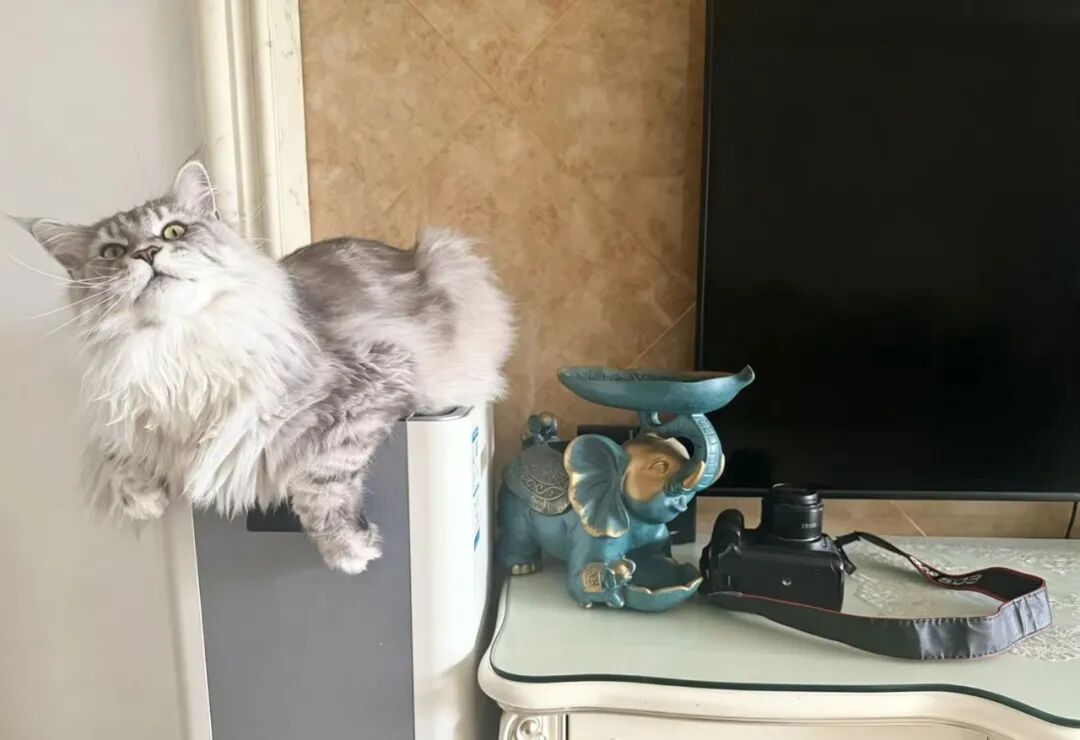
Annie's Maine Coon cat and the air purifier, provided by the interviewee
This consumption shift of not believing in marketing tricks but only in real technology also fits Wang Yan's mental transformation over the years.
As a somewhat geeky programmer, Wang Yan has become immune to all kinds of "formaldehyde - removing black technology" on the market. When buying an air purifier, he only cares about "verifiable parameters".
While most products only showed the CADR values of formaldehyde and particles, Wang Yan found that 352 also marked the removal ability of finer - grained pollutants such as PM10, benzene, and TVOC. "It doesn't avoid the less - easy - to - explain indicators," Wang Yan developed a basic trust in this brand. Although he didn't understand these terms at first, he started to look them up one by one: What does PM10 mean? What's the difference between benzene and TVOC in a new - house environment? Why do few people talk about these things? The more he investigated, the more he realized that 352 didn't force the conclusion of "I'm great" on consumers but was honestly "breaking down the problems".
This honest attitude made Wang Yan decide to buy one and try it. He picked a machine with excellent comprehensive parameters within his budget.
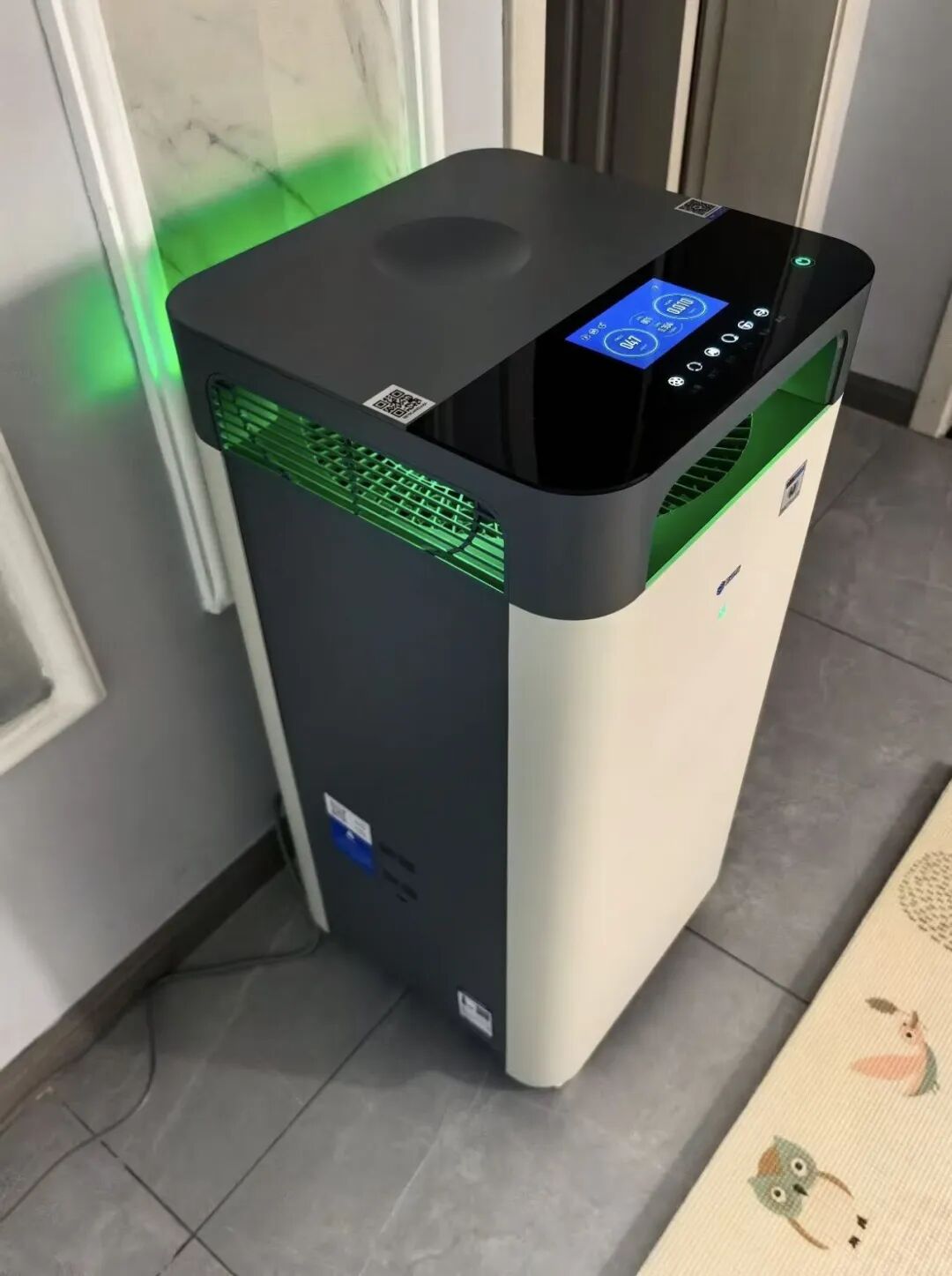
The air purifier Wang Yan bought, provided by the interviewee
After buying it home, Wang Yan monitored two usage scenarios like a quality inspector: First, how much noise would it make at the maximum setting? Would it be as noisy as a tractor? Second, could it ensure quietness and effective purification while he was sleeping at night? After using it for a while, he found that this air purifier could perfectly balance "effective purification" and "sound sleep".
Out of trust in the brand, Wang Yan soon bought a 352 Skin model humidifier. As a detail - oriented person, he found that there were no wheels at the bottom of the machine, which made it inconvenient to move. So he publicly gave suggestions to the brand on social media. Soon, he received a private message from the founder, and his suggestion was adopted. He remembered that when he gave suggestions to other brands on social media before, he was blocked by the brands and called a "troll".
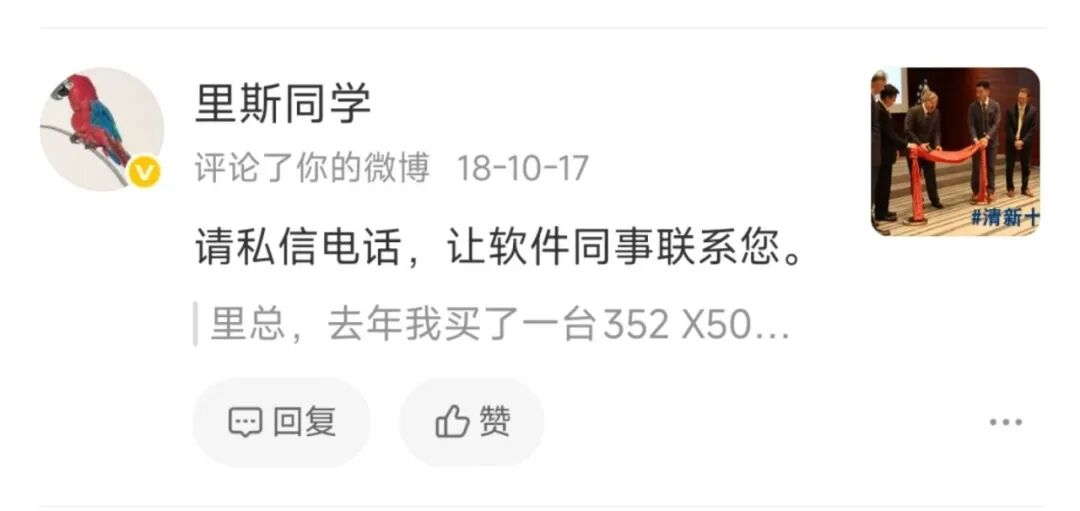
Wang Yan's Weibo post was replied to by the founder
For Wang Yan, who is busy with work and doesn't want to deal with after - sales issues, this pleasant experience has become an important reason for his continuous repurchase. Later, whether it was for his parents' home or his own home, he chose 352 without hesitation. "As long as a product has either good technical ability or a good user experience, I'll consider buying it," Wang Yan said. "But if it has both, it will be a top choice for me."
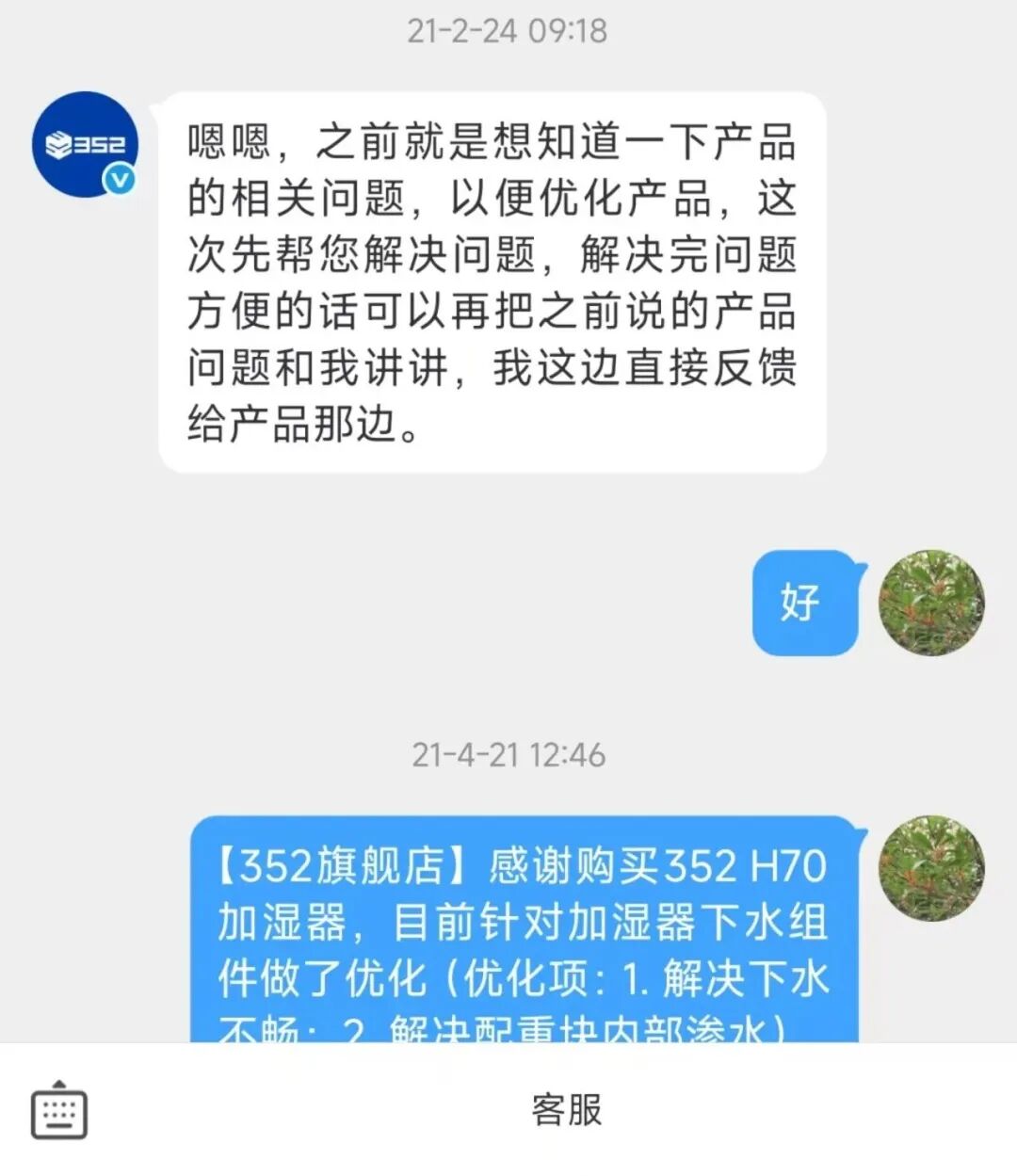
The private message response from 352's official customer service to Wang Yan
Technical Certainty Is Becoming the New Consumption Standard
Young people are constantly looking for some certainty in every aspect of their lives.
When looking for a job, they hope to find a relaxed and stable one. In terms of financial management, they are starting to embrace low - volatility and stable assets. When making friends, some people even refer to MBTI personalities to choose partners with stable emotions and predictable relationships. In a sense, "spending money for peace of mind" is becoming the implicit consumption standard for the new generation.
This trend has also affected the consumption of health - related home appliances. Compared with marketing stories and brand names, young people are starting to trust products whose technology can stand up to scrutiny and whose results can be verified. They no longer pursue products that "sound amazing" but those that "work without problems".
According to a survey by 36Kr Research Institute, 74% of the respondents are willing to pay a premium for home appliances with real technical capabilities, and 38% of them will give priority to products with health - related technologies. On the surface, it seems that people are more tolerant of "technology premiums". In fact, it shows that consumers are shifting from blindly believing in brands to valuing technology more.
This also means that the technology of a product must be transparent, easy to understand, and able to withstand actual tests to attract rational consumers.
352 was recognized as a reference sample by users at this critical moment. Different from the industry's approach of focusing on a single popular product, it is more like an extension of engineering logic: disassembling filter materials, air ducts, power systems, and sensors, and then recombining them into a functional and verifiable system.
When Xiaomeng was choosing equipment, he didn't focus on the various functions but on the operating logic behind the product structure - how the filter materials are layered, how the air flow is organized, how pollutants are processed, and how the whole - link disinfection is carried out during humidification...
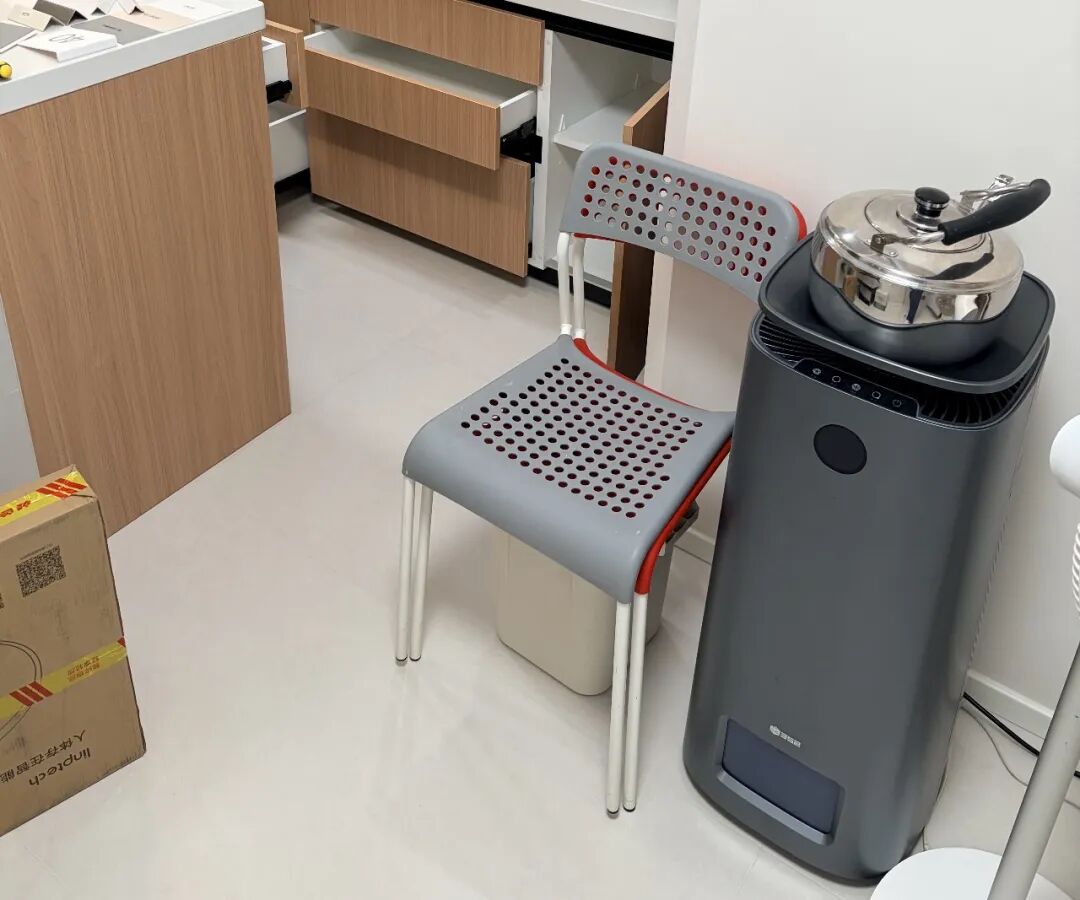
Xiaomeng's humidification and purification all - in - one machine, provided by the interviewee
This simple and straightforward approach is more attractive than any marketing.
Xiaomeng, who just renovated his new house this year, had already placed an order for a water purifier from another brand. But during the waiting period for delivery, he became more and more uneasy and finally cancelled the order and bought a 352 water purifier instead. "I'm really afraid of being scammed. I have a very high level of trust in 352, and I don't even know why," Xiaomeng said.