A ring of AI peripherals is emerging around smartphones.
If the evolution of smartphones in the past decade was a continuous process of drawing users' attention into the screen, then currently, there is a subtle spill - over around the phone, and users' attention is starting to explore beyond the "screen".
The Honor 600 series and the OPPO Reno16 series were released on the same day, and both of them brought the "magnetic auxiliary screen" into the spotlight.
This is not just a competition among similar products; it's more like a collective exploration.
Taking a broader view, you'll find that this phenomenon is occurring frequently: Xiaomi's rear screen, the Plaud and TicNote recording cards, the electronic badges hanging on young people's bags and phones, the Insta360 Mic Pro with a display screen, and even e - ink screen devices focused on pure reading.
These devices with diverse forms all point to a notable industry signal: manufacturers are bypassing the intense competition in the main device market and quietly opening up new battlefields around the phone.
Manufacturers are exploring new growth opportunities here, and users are also adjusting their relationship with the phone. Those small personal items that were once integrated into the screen are resurfacing with the help of AI, small screens, magnetic technology, and subscription services.
They are in between the phone itself and personal expression. They are still light and scattered, but they have quietly opened a crack.
Looking through this crack, what's more worthy of attention than the form is why phone manufacturers are looking beyond the main device and why users are willing to make room for these small hardware devices.
Hello, this is "AI Commotion".
AI hardware is not only looking for an entry point but also a position where it is allowed to exist.
It's Difficult to Make Additions to the Phone Body, so Peripherals Spring Up
The phone, a device that has dominated the terminal entry for many years, is starting to show new signs of growth.
This is a natural development under technological evolution and also a new breakthrough for phone manufacturers in the highly competitive market.
The root of this breakthrough lies in the no - longer - steep global shipment volume. The replacement cycle of up to three years shows that it's difficult for users to pay for minor innovations.
Shifting the rear camera module, adding a periscope lens, or installing a larger battery are hardly enough to make users willingly press the payment button.
This is also a problem that manufacturers can't avoid. Minor innovations not only face weak user willingness to pay but also pose challenges to the supply chain. Any minor adjustment will affect the supply chain, system compatibility, heat dissipation, cost, and after - sales service. One change can cause a chain reaction, with increasing costs and greater uncertainties.
Designs like the notch and the Dynamic Island once created topics, but now, they seem more like local repairs on a mature phone body. Users may notice and discuss them, but it's becoming increasingly difficult to be convinced by them alone.
Stories still need to be told, but many stories are hard to fit into the phone body anymore.
So, the focus shifts outward, and the area around the phone becomes a new testing ground.
Actually, someone tried this a long time ago.
Google's Project Ara aimed to break the phone into replaceable modules but aborted midway; Moto Mods used magnetic technology to attach a projector and a Hasselblad camera module to the back of the phone. The products were made, but the ecosystem didn't thrive; there were also Jolla's TOH back cover, the dual - screen YotaPhone, and Hisense's e - ink screen phone, all of which tried to add new "organs" to the phone.
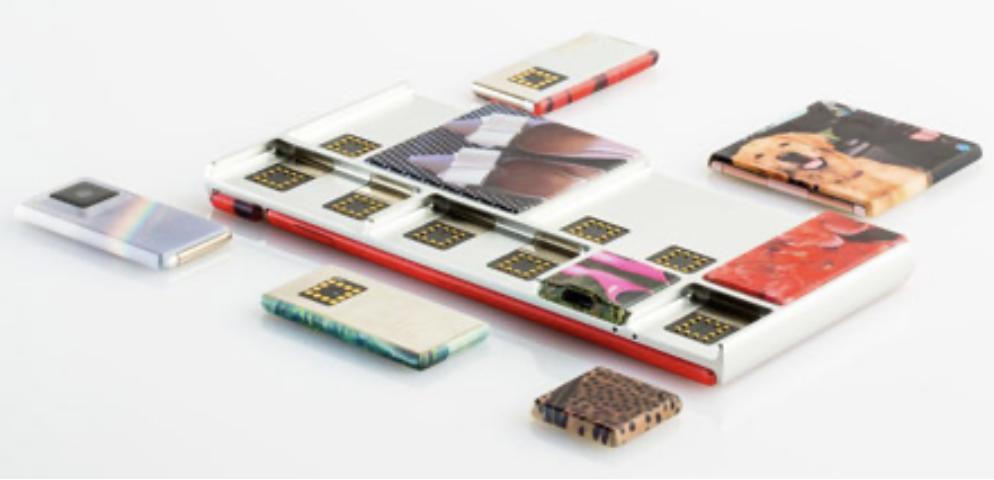
Project Ara modular phone
The outcomes were highly consistent: the paths were too heavy.
They either made major overhauls to the whole phone or forced users to bet on a whole set of module ecosystems when buying the phone. You had to believe that the system could exist in the long - term before you were willing to pay. Once the sales didn't meet expectations and the manufacturer stopped updates, the modules in the hands of early buyers would instantly become electronic orphans.
In the past, peripherals and the whole phone were tightly bound in the same life cycle, sharing the same fate.
What really changed the game and made this revival possible is magnetic technology.
Apple's MagSafe and the subsequent Qi2 protocol left a standardized, low - threshold physical docking position on the back of the phone. Its historical significance is far more than wireless charging; it created a "universal interface" around the phone out of thin air. Peripherals can be attached, removed, and replaced at any time without being tied to the whole phone.
This seemingly insignificant physical change has rewritten the economics of peripherals.
In the past, making a Moto Mods meant taking on the huge risk of reshaping the whole phone; now, making a magnetic accessory can at least start with a light enough physical docking position, and the connection, computing power, and services can be gradually integrated into the phone ecosystem.
OPPO Bubble is a good example. Physically, it can be attached to the magnetic case, with a light and independent form; but in terms of software compatibility, it is still mainly bound to OPPO's own ecosystem.
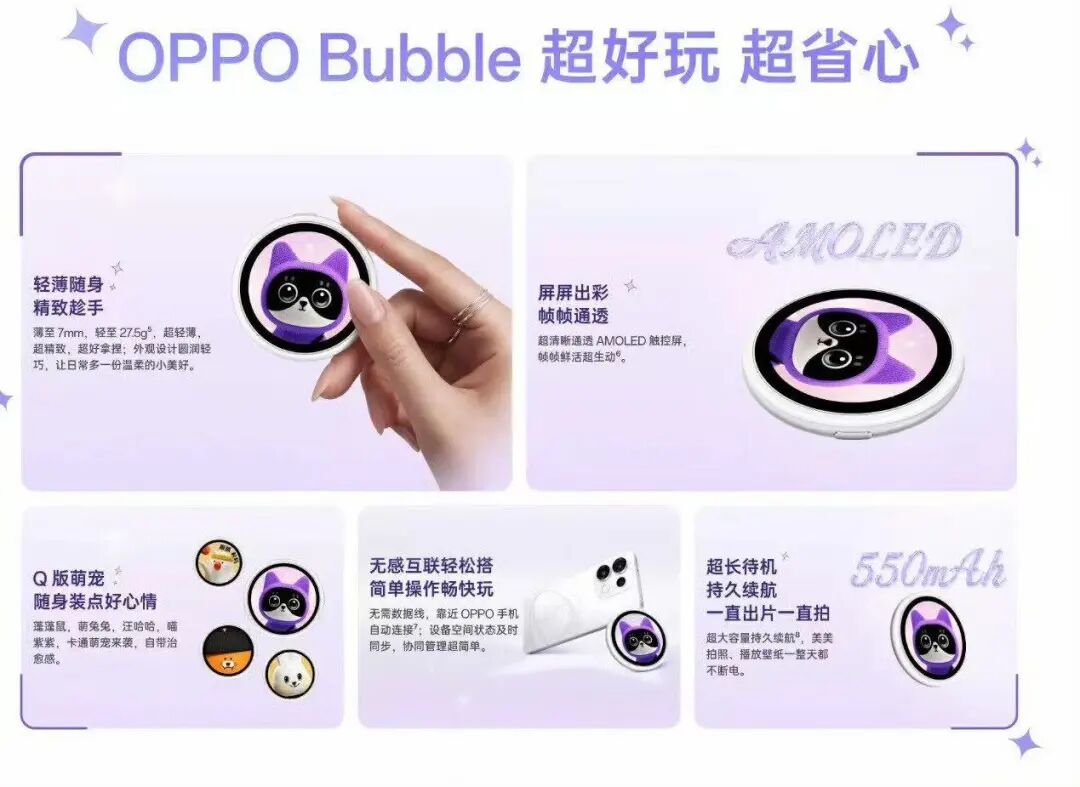
OPPO Bubble trendy selfie screen
Although the hardware has been unbundled, the software hasn't completely let go.
If magnetic technology solves the problem of how to make peripherals lighter, then AI solves the problem of how to make the peripheral business sustainable.
Phone accessories in the past were one - time deals. Once a stand or a phone case was sold, the transaction was basically over. The ceiling was obvious, and it was hard to tell an appealing growth story.
But AI has turned this into a long - term relationship.
Devices like Plaud have become very popular overseas. What's valuable is not just the thin recording board but the transcription, summarization, templates, cloud storage, and subscription services behind it. TicNote is not just about making the recorder smaller; it's about reconnecting meeting, document, task, and knowledge management.
The hardware is just a physical entry point, and behind it is a continuous service chain that charges monthly or annually.
For manufacturers, this is a smart move. These small hardware devices are never meant to replace the phone.
They are experimental fields for the expansion of the phone ecosystem, used to test three things at a low cost: lighter interaction scenarios, more concrete payment reasons, and more sustainable service relationships.
Innovation in the main device has become more difficult, and the old paths are no longer viable. Magnetic technology makes peripherals lighter, and AI makes the business model more sustainable.
With the right timing and conditions, these AI peripherals around the phone have finally emerged.
Three Reasons to Pay from the Phone's Edge
Looking at users, you'll encounter a counter - intuitive phenomenon: People who buy these small hardware devices usually don't pay because of "functional necessities".
The reason is simple. Users today don't lack devices at all. Phones can do everything, and tablets, computers, and watches are all at hand. They are also extremely tired of "migration" and don't want to adapt to a new set of interaction logic for a new device. In contrast, they are more willing to accept adding a small thing to their existing lives.
If you only look at the diverse product forms, you may think the target audience is messy. But in essence, those who are really willing to pay can be mainly divided into three categories.
The first category is knowledge workers overwhelmed by meetings and information flows.
Xu Gao, the founder of Plaud, responded to the question "Why buy it when the phone can record?" with a key statement: Although everyone has a powerful phone, 99.999% of people don't record. This statement reveals the true nature of this kind of product. It doesn't sell the recording function (feature phones already had it), but an insurance against missing information: outsourcing the cognitive action of remembering from the brain to a physical entity that is always present.
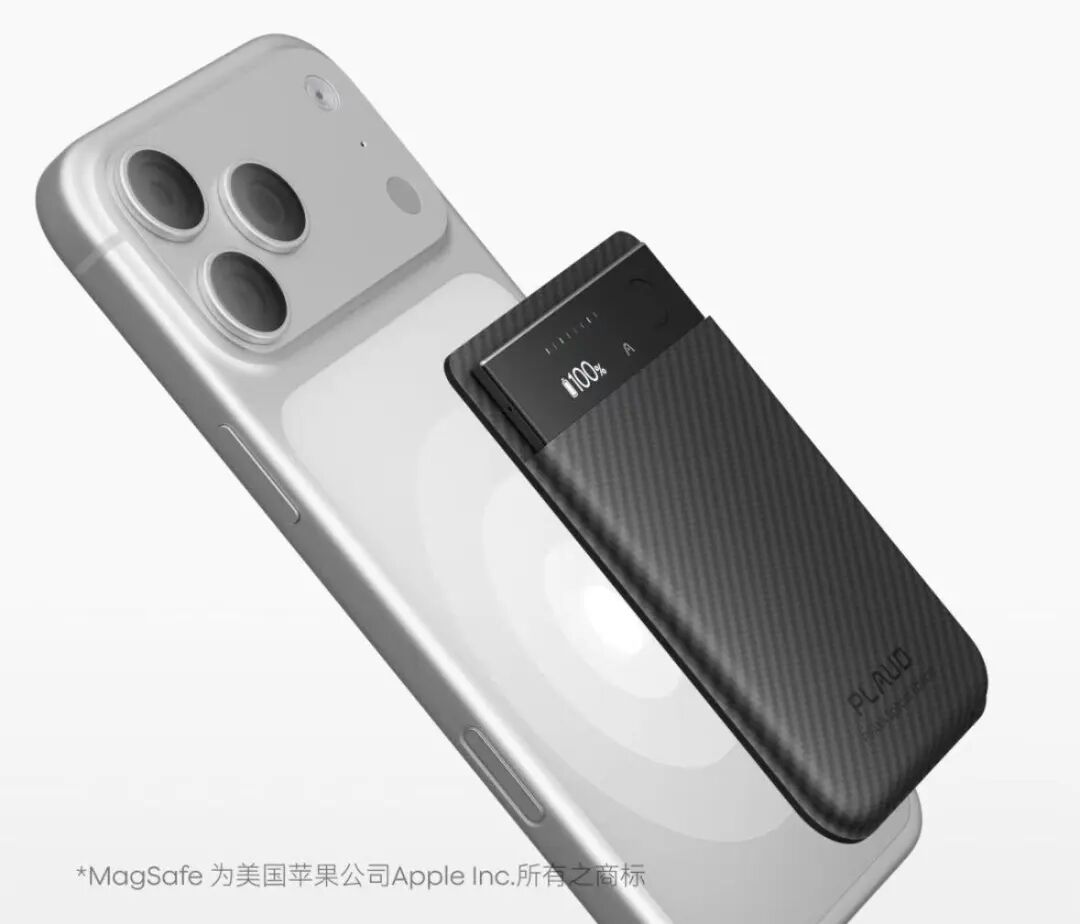
Plaud Note Pro
So users describe it in a proxy way: "It helps me listen to live broadcasts I don't have time to watch and meetings I can't attend. I only need to read the summaries and mind maps it makes."
This is the first verified hardware demand in the era of large models. It is no longer a rigid tool but a hired shadow employee, and the hardware is just its work permit.
The second category is Z - generation consumers of emotions and identities.
Electronic badges and magnetic auxiliary screens seem inexplicable to pure functionalists, but if you understand the consumption logic of contemporary young people, you'll know they are growing on extremely fertile ground.
This kind of hardware doesn't sell functions but emotional value and identity expression. It belongs to the same category as otaku economy, pain bags, and Japanese anime consumption. A small magnetic screen that can be attached to the back of the phone and display the "favorite character" is actually doing what badges, stickers, and pendants used to do - externalizing inner preferences into a visible social symbol.
At the same time, emotional hardware also tests the understanding of specific circles the most. For real otaku fans, a small screen that can upload pictures may not necessarily be a good otaku item. Any flaw in IP, image source, texture, price, or sense of ceremony will reduce the emotional value.
The evolution of creator devices also confirms this trend. For example, the Insta360 Mic Pro not only needs to have good sound recording but also needs to match the on - camera persona through custom patterns. Vogue accurately summarized this trend as "Cute Tech": Hardware is shedding its pure practical attributes and evolving into trendy items. Whether it can provide emotional value and social currency is becoming an equally core reason for purchase.
The third category is the most easily overlooked and also the most profound digital abstainers.
The confession of a user of the BOOX Palma is very typical: "Why not just read books on the iPhone?" But reading on an e - ink screen won't tire the eyes, and there won't be any distractions from various phone notifications. The user finished a book on the first day of unpacking. A device with worse performance than a phone and no SIM card slot sold out, which means there is a negative - function premium in the market. The phone is so all - powerful that its inability to do certain things has become a worthy selling point.
Putting these three types of people together, a deeper commonality emerges.
Knowledge workers are buying attention outsourcing, emotional consumers are buying identity externalization, and digital abstainers are buying interference isolation.
Although they seem to be buying different small hardware devices, in essence, they are all adjusting their relationship with the phone.
There is also an invisible but important factor driving this adjustment: price.
Most of these products are priced at around a thousand yuan or even a few hundred yuan. It doesn't require a heavy decision like buying a new phone, and it can give you the psychological satisfaction of "upgrading my device". With a light decision - making process and direct sense of reward, this price range naturally fits the current impulse consumption and social sharing.
The Folded Daily Life Regains Its Shape
Looking at these peripherals on a longer timeline, you'll find an opposite action.
In the past decade or so, the phone has been integrating. Cameras, MP3 players, recorders, e - books, wallets, toys, and various small personal items have all been integrated into the same glass screen.
This has made life lighter. You can solve many problems by just taking a phone out.
But it has also made life more crowded. Work, entertainment, socializing, reading, recording, payment, and identity expression are all piled up in the same entry point. Everything is more convenient, but it's also easier for things to interrupt each other.
The current change is not a simple return of old items. Some daily activities that were once compressed into apps are starting to have independent containers again.
They may not be more powerful, but their boundaries are clearer.
Consumer electronics has always oscillated between integration and separation. Integration solves the problem of carrying fewer things, and separation solves the problem of overcrowding and confusion. This time, AI, small screens, and magnetic technology have provided new reasons for this separation.
The principle is not complicated. When all - in - one integration reaches its limit, it often leads to duller experiences and psychological overload. When a single screen contains work, entertainment, socializing, memory, and identity, the phone is no longer just a tool but also a gathering point of distractions.
So, people are using physical boundaries to reorganize their psychological boundaries. Some people buy a small hardware device to handle complex information for them, some use it to externalize their cyber identities, and some use it to temporarily escape the influence of the phone.
Objectively speaking, these small hardware devices are currently just a rather rough early experiment.
The experience is unstable, the ecosystem has limitations, the prices are for trial purposes, and it's uncertain whether they can develop into stable usage habits. Many of their specific forms may eventually fade away like Moto Mods did.
But although the products may disappear, the direction may not reverse.
Because they are filling not a functional gap but a psychological gap of the era.
When life has been confined to the same screen for a long time, people will still need something smaller, narrower, and more bounded.
These just - sprouted hardware devices can't provide a mature answer for now.
But they are enough to show that the problem is occurring.
This article is from the WeChat official account "AI Commotion", author: Shen Ziyan, editor: Lü Xinyi. Republished by 36Kr with permission.