Has the "iPhone Moment" for Satellite Communications Arrived?
“It's normal for satellite launches to be queued up. You have to make an appointment and wait in line half a year in advance. We're used to it.” Nowadays, the crowded and busy scene at satellite launch bases is spreading to the capital market. At the Mobile World Congress 2026 (MWC26 Shanghai), industry insiders in satellite communications are excitedly discussing topics such as listing and financing. The fuse is that SpaceX's wealth - creating myth has ignited the enthusiasm of global capital.
As soon as SpaceX went public, its stock price soared, creating a “siphon effect” on the commercial space track in the US stock market. Its market value once reached the fifth place in the US stock market. This not only pushed Elon Musk into the “unexplored territory” of human wealth but also sent the global commercial space industry into a rocket - like ascent.
Currently, the global competition in satellite communications is gradually extending from a simple competition in constellation scale and satellite quantity to a race in industrial collaboration and terminal applications. At MWC26 Shanghai, a satellite communication picture from infrastructure construction to industrial collaboration and then to daily applications is slowly unfolding.
This tests both a country's construction of an integrated “space - air - land - sea” space network and the ecological collaboration of the entire industry.
China has built the world's largest mobile communication network. Now, this network is going “into the sky and the sea”. China Tower has helped the three major communication operators build more than 6.2 million base stations in total. Through the co - construction and sharing model, it is equivalent to building 1.27 million fewer towers, saving more than 430 billion yuan in industry investment and operating costs. This model is being replicated in the construction of the integrated “space - air - land - sea” space network, reusing millions of existing tower resources and significantly reducing the infrastructure cost of the satellite ground segment.
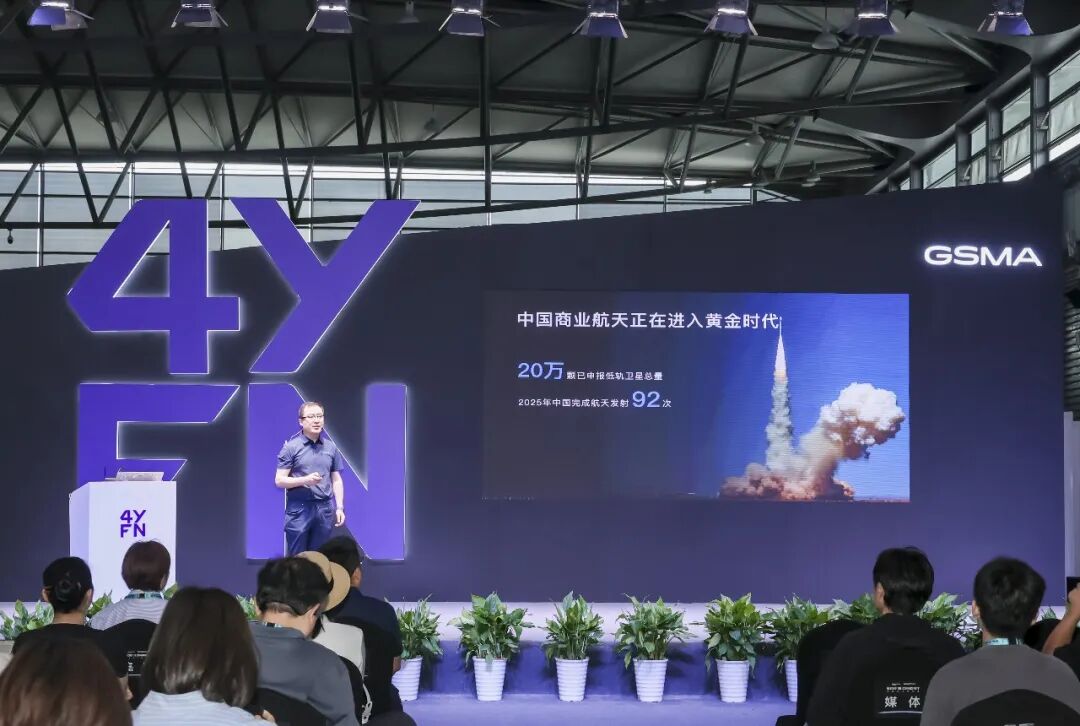
The satellite Internet of Things may become the next explosion point in the capital market and is moving from technical verification to large - scale commercial use. On the first day of MWC26 Shanghai, Space Time and Navigation Technology released the world's first full - stack open - source ecosystem for low - orbit communication constellations, further lowering the threshold for various industries to enter the satellite Internet of Things.
For ordinary users, the most concerned thing is how satellite communication can change from a luxury to a daily necessity. Are satellite terminals really crossing from feature phones to smart phones? Is satellite communication really entering the video era? Is the “iPhone moment” really coming?
The first open - source, the next explosion in the satellite Internet of Things
“The satellite Internet of Things may be the next market to stir up capital waves.” At the MWC26 Shanghai site, many experts in the commercial space field predicted that the satellite Internet of Things will be implemented faster than the satellite Internet.
In May 2026, the Ministry of Industry and Information Technology approved the first domestic commercial trial of satellite Internet of Things services, marking that this field has officially entered the stage of large - scale commercial use from technical verification.
The essence of the low - orbit satellite Internet of Things is to connect a large number of IoT terminals to the network with narrow bandwidth, low power consumption, and low cost. 100 satellites can achieve global coverage, with a shorter investment return cycle and a significantly lower threshold for public use. The communication fee is only 1% of that of traditional satellite communication.
In remote areas, the satellite vehicle networking can send real - time location information and send and receive short messages to ensure vehicle - to - vehicle interconnection; in the vast sea, the tracking of cargo ships also relies on the satellite Internet of Things. These demands have opened up a market space of tens of billions for the satellite Internet of Things.
However, the satellite communication industry chain has a high technical threshold and a long R & D cycle. From on - satellite payloads, communication protocols to terminal products, each link has long adopted a relatively closed R & D model. For a large number of developers and small and medium - sized enterprises, entering the satellite communication field not only requires a large amount of R & D resources but also faces complex system integration and standard adaptation. There is still a relatively high threshold for large - scale development.
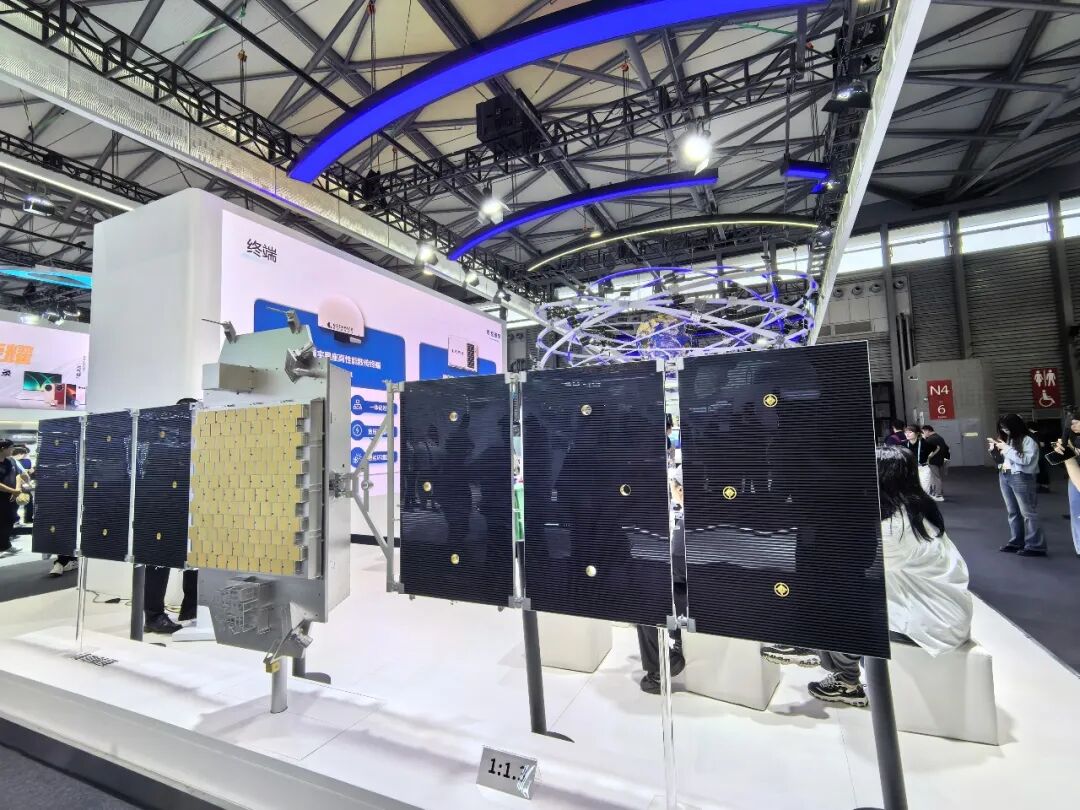
On the first day of MWC26 Shanghai, Space Time and Navigation Technology released the world's first full - stack open - source ecosystem for low - orbit communication constellations. It will build a five - level hierarchical open system around core capabilities such as terminal hardware, standardized communication modules, self - developed satellite communication chips, satellite communication protocols, and satellite system resources, and accelerate the popularization of applications through technology sharing and collaborative innovation.
Exchange openness for scale and exchange the ecosystem for time. This means that developers do not need to repeatedly build the underlying communication capabilities. They can leave tasks such as satellite launch, frequency application, ground gateway station construction, and operation support system to enterprises like Space Time and Navigation Technology that have the ability to build constellation infrastructure.
Wen Ku, the chairman of the China Communications Standards Association, said: “By opening up communication protocols, space - ground interaction interfaces, software and hardware reference designs, and open - source frameworks for measurement, operation, and control, Space Time and Navigation Technology can significantly lower the R & D threshold for the upstream and downstream of the industry chain. Small and medium - sized enterprises can quickly develop dedicated terminals suitable for various industries without building a whole set of satellite communication systems from scratch, continuously reducing the overall application cost.”

Above the exhibition area of Space Time and Navigation Technology, a global low - orbit satellite Internet of Things constellation occupies the central position. Space Time and Navigation Technology has 64 satellites in orbit, achieving communication coverage of any location on the global surface except the North and South Poles, and providing satellite data services to global users. The constellation system has a daily communication capacity of 340 million times and can support 20 million users globally, including about 5 million high - frequency users and 15 million medium - and low - frequency users.
At the MWC26 Shanghai exhibition, Space Time and Navigation Technology signed cooperation agreements with partners such as Ceyear Technology, Jinwei Jidian, Heilongjiang Academy of Agricultural Machinery Sciences, and Tueniao Low - altitude, carrying out in - depth cooperation in directions such as NTN technology innovation, satellite terminal R & D, and industry application innovation. At the same time, it signed ecological cooperation agreements with more than a dozen enterprises, covering multiple key industries such as intelligent networking, marine fisheries, low - altitude economy, energy inspection, and emergency communication.
Satellite terminals, crossing from feature phones to smart phones
The satellite Internet of Things solves the connection needs of a large number of devices with low power consumption and low cost. However, people's demand for Internet access is no longer satisfied with just transmitting signals. They want to transmit videos and do live broadcasts. That is to say, satellite Internet is entering the video era from narrow - band communication.
When it comes to satellite communication, most people's impressions still remain at: sending a short message for safety with Beidou when in danger during mountain climbing or making a distress call with a Tiantong satellite phone in the wilderness. In fact, real - time high - definition picture transmission is required for UAV aerial photography. Live - level videos are needed for on - site emergency command and dispatch to enable accurate judgment at the rear. Outdoor media creators need stable streaming to start a live broadcast in the mountains and deserts. The live - broadcast industry has an annual scale of hundreds of billions, and the UAV market is growing rapidly. Video has become a necessity for various industries.
However, there is a fundamental contradiction between satellite communication and video. Videos require large bandwidth and stable links, while satellite bandwidth is limited and fluctuates greatly. Continuous video transmission consumes a large amount of traffic, and satellite traffic is extremely expensive. A bill for a single video transmission is enough to make the demanders give up.
Without compression, the traffic cannot bear it; with compression, the picture quality is not good; if you reduce the bit rate to maintain the picture quality, there will be constant buffering. The pure hardware approach has no solution. The solution of OneLinQ is not to wait for the satellite bandwidth to become wider or the traffic price to drop but to solve the problem with intelligent computing on the terminal side. On June 25th, OneLinQ released the first edge intelligent computing system for satellite communication terminals, OneLinQ Edge, and the OneLinQ satellite Internet access device FLEX at MWC26 Shanghai and announced for the first time that it had completed Series A financing.

The core logic is that instead of struggling with the fluctuations and high cost of the satellite link during transmission, it is better to optimize the video before it “leaves”. Edge intelligent computing technology completes video compression and encoding decision - making on the terminal side, making the computing happen before data upload. It compresses the original video by 90% and reduces the video traffic cost by 90%, making the video on the satellite link change from “untransmittable, unaffordable, and unwatchable” to “clear, stable, and affordable”.
On - site, a reporter from IT Times saw that the OneLinQ satellite Internet access device FLEX equipped with this system weighs only 6.5 kg and has a body thickness of nearly 12 cm, making the satellite terminal change from “carrying out” to “carrying and using”. As the equipment becomes lighter and the usage cost becomes lower, satellite communication is gradually changing from a luxury to a daily necessity.
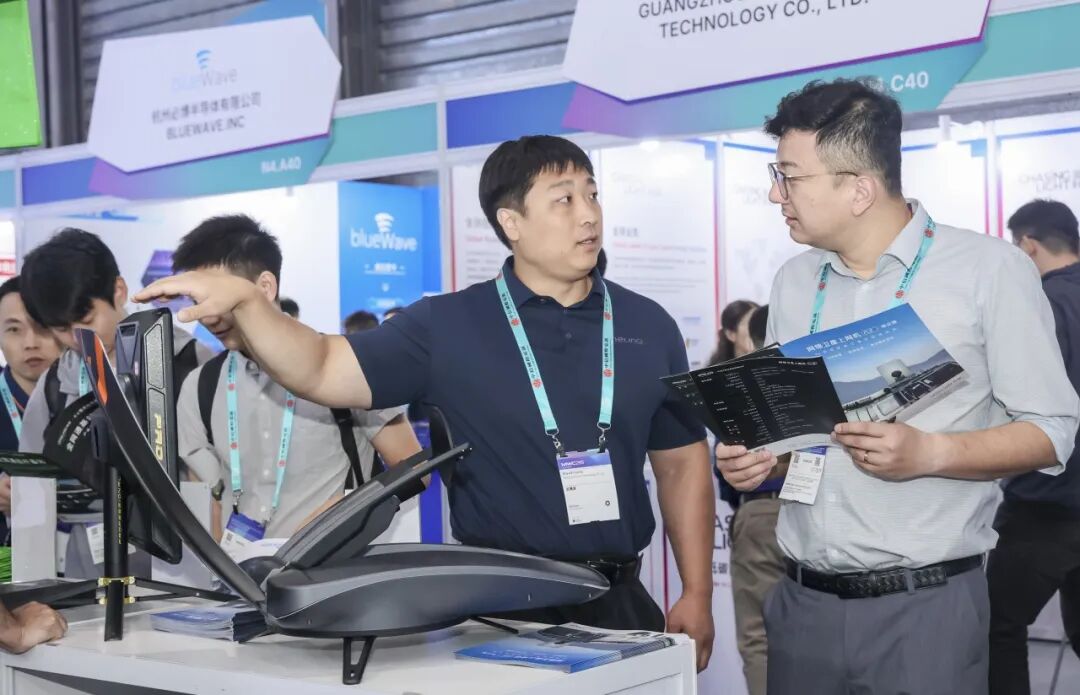
OneLinQ not only introduces the mature intelligent computing technology in consumer electronics into satellite communication but also uses the logic of consumer electronics to expand channels. It took one year to build a national distributor system, covering more than 95% of the provinces, forming a two - level structure of provincial agents + secondary agents. A total of 55 dealers and more than 100 agents have signed contracts. This means that ordinary people can buy satellite terminals just like buying mobile phones.
“The significance of this leap is no less than that from feature phones to smart phones.” Liu Yu, the co - founder and CEO of OneLinQ, said.
In the narrow - band era, the meaning of satellite communication is “not losing contact”. In the video era, the meaning of satellite communication is “being on - site”.
This article is from the WeChat official account “IT Times” (ID: vittimes). Author: Sun Yan. Editors: Qian Lifu and Sun Yan. It is published by 36Kr with authorization.