As storage and computing power become increasingly scarce, Google is exploring the idea of networking old smartphones together to function as AI servers.
Some time ago, with the assistance of Google, the University of California, San Diego (UCSD) planned to build a distributed computing platform by combining 2,000 retired Pixel phones. Specifically, they would use 2,000 second - hand phones to form a huge cloud server, squeezing out all the computing power, with a focus on low - carbon and environmental protection.
When seeing this news, our first reaction is: Has the shortage of chips and computing power reached such an extent? Meanwhile, many people must also be curious: How do old phones turn into server devices?
Digging for treasures in second - hand phones: Chips and storage are valuable resources
According to a report from foreign media The Register, Jennifer Switzer, a former doctoral student at the University of California, San Diego, reached a cooperation with Google. She transformed 2,000 Pixel Folds provided by Google into distributed servers. It is understood that the research team once tried to directly test a large number of second - hand phones together, but soon found that too many batteries in one place would bring a fire risk to the data center.
So, Jennifer Switzer's plan first modifies these second - hand phones. Their batteries and casings will be removed, and components such as cameras and communication modules will also be disassembled. To put it simply, when using second - hand phones to build servers, the most core part is the motherboard and the core components on it, such as the processor and storage. In addition to the simplification at the hardware level, at the software level, the original Android system on these phones is also uninstalled, and Linux, which has lower hardware overhead, is reinstalled.
Then, every 25 - 50 of these phones will form a computing cluster, and multiple clusters will form the final large - scale server. So, how do so many phones connect and communicate with each other? The original cellular network and WiFi of the phones are not suitable for this kind of scenario. After all, networking thousands of devices can easily paralyze the network signal. The researchers finally adopted a PCB board with a wired network port to solve the networking problem and provided a unified power supply to ensure the stable operation and connection of multiple devices.
By now, many people must be wondering: Can the small - sized and limited - TDP mobile phone SoC handle the tasks of a cloud server? After all, in most people's imagination, servers are huge behemoths that are specially placed in large - space computer rooms.
Actually, the computing power of mobile phones is not as weak as people think. Google's Pixel Fold is a foldable screen product released in 2023, with mediocre market performance and many product flaws: high price, wide frame, and obvious creases. The chip used in this phone is Google's self - developed Tensor G 2, and its comprehensive performance is roughly between Qualcomm Snapdragon 888 and Snapdragon 8 Gen1, which is relatively backward in 2023.
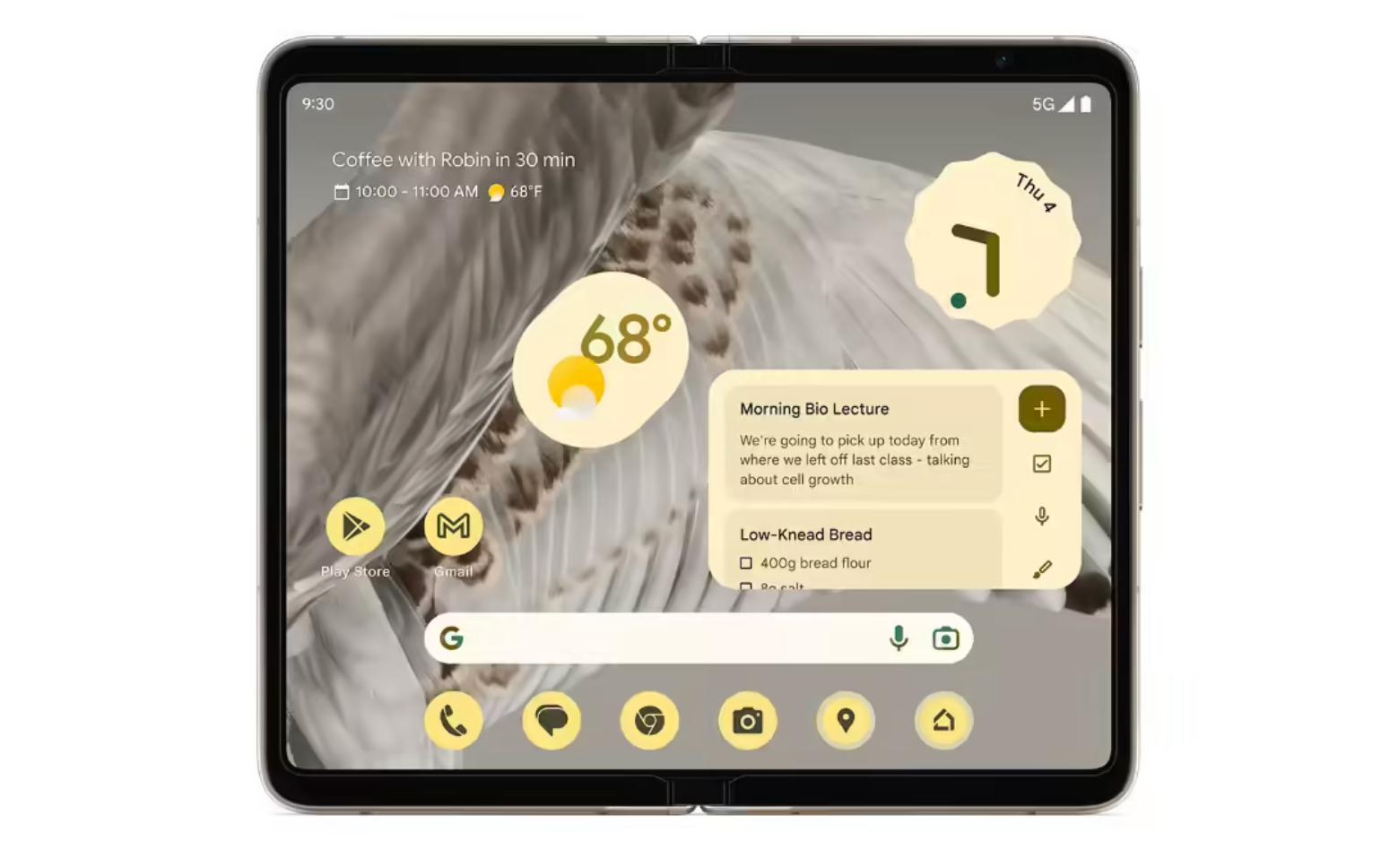
(Image source: Google)
However, the mobile phone industry has been extremely competitive in recent years, and the evolution speed of chips is too fast. The so - called "hot dragon" chips that ordinary users look down on are very popular in the server field. Compared with mobile platforms like mobile phones, servers are not as sensitive to chip energy consumption and heat dissipation. When the motherboard of the Pixel Fold is removed from the casing and connected to the power supply, the problems of energy consumption and heat generation are solved.
Moreover, the Tensor G2 chip contains a Cortex - X1 super - large core and multiple A78 cores, and its performance has exceeded that of many entry - level VPSs provided by cloud service providers. More importantly, Google's chip also integrates 12GB of memory, and there is 256GB or 512GB of flash memory on the motherboard, which directly saves a large amount of cost in storage.
Meanwhile, the Tensor G2 was designed with AI application scenarios in mind from the beginning and also integrates a TPU for edge computing, which is suitable for running some small local models.
Of course, it is still very unrealistic to use a single Pixel Fold to build a server, but when 2,000 phones are put together, the aggregated computing power is very impressive. According to the information revealed by the researchers, even the computing power of a cluster composed of 20 phones can support the load of 75 students submitting their homework online.
Can the computing power anxiety brought by AI be alleviated by second - hand phones?
Frankly speaking, expecting a cluster built with second - hand phones to run the training of large models with hundreds of billions of parameters is nothing but a pipe dream. But if we shift our focus from the centralized cloud super - computing center to the decentralized edge computing, it will be a whole new world.
In the view of Lei Technology (ID: leitech), this kind of micro - cloud factory composed of retired mobile phones is not a downgrade in computing power. Instead, it extremely meets the two core requirements for future AI development: low power consumption and distributed low latency.
Firstly, it alleviates the increasingly severe high - energy - consumption problem of AI. The explosion of large AI models has indeed brought a leap in productivity, but it has also brought a terrifying problem of soaring energy consumption. Traditional centralized data centers need to consume a huge amount of electricity for cooling and power supply to maintain the operation of large computing power clusters.
Since their birth, the SoC chips of smartphones have taken energy efficiency as a core indicator. Mobile chips like the Tensor G2 with built - in TPU computing power, after stripping off power - hungry components such as the screen and baseband, have much lower pure - computing power consumption than traditional x86 server processors. When thousands of such devices are combined, they not only have extremely low carbon emissions and are environmentally friendly but also can break down the huge computing power demand into smaller parts.
(Image source: Google)
Secondly, it is very suitable for the physical distribution characteristics of edge computing. With the evolution of various AI Agents and the complication of end - side application scenarios, future AI computing will no longer upload all data to a distant cloud computer room at once. Instead, it will be more inclined to perform immediate processing at the edge close to the user side.
The clusters of retired mobile phones are small in size and flexible in deployment. They no longer require the demanding physical space like traditional computer rooms. They can be completely deployed in micro - nodes within communities, campuses, and enterprises. This reduction in physical distance greatly reduces the network latency of data transmission, which is tailor - made for AI inference that requires real - time response, local model scheduling, or automated workflows.
Finally, this is also an attempt to solve the anxiety about computing power cost and supply chain. Currently, the prices of the storage and chip supply chains fluctuate frequently, and the hardware cost remains high. The mountains of old mobile phones around the world not only cause resource waste but also bring electronic waste pollution.
Disassembling and reorganizing retired mobile phones and reshaping them into components of edge computing is equivalent to transforming what was once electronic waste into low - carbon cloud computing power nodes. This undoubtedly provides a new and more cost - effective and sustainable way to solve the global AI computing power anxiety.
However, although the micro - cloud factory model has an attractive prospect, its shortcomings are also relatively obvious.
On the one hand, the reliability and lifespan of mobile phone SoCs and storage are not as good as those of traditional server - side products. The flash memory and chips installed on mobile phones are designed for the daily use of ordinary consumers, and they cannot handle 7×24 - hour continuous high - intensity operation like enterprise - level products. Since the mobile phone storage particles and chips are directly packaged on the motherboard, once a failure occurs, the entire node is basically declared dead.
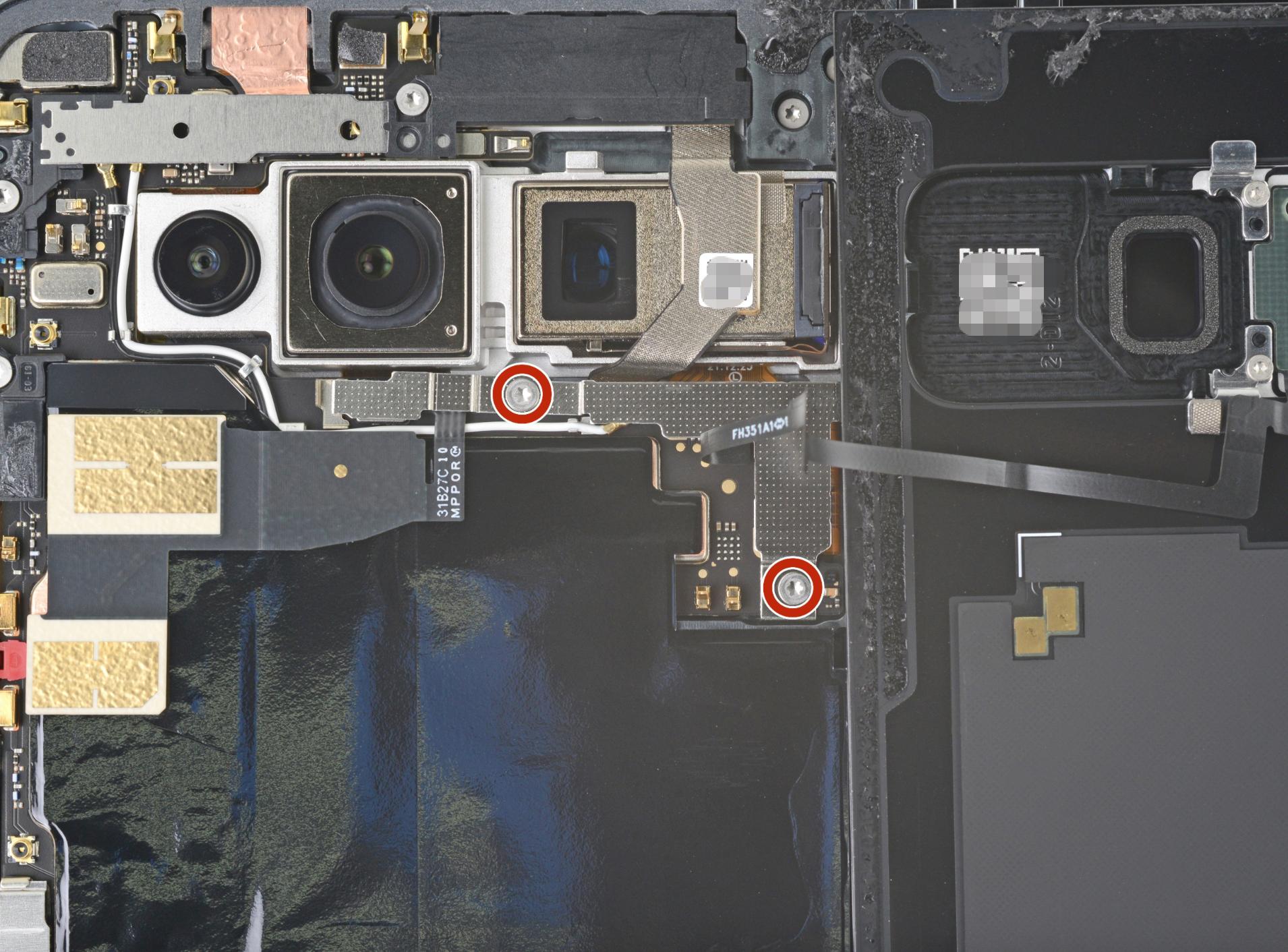
(Pixel Fold motherboard, image source: iFixit)
On the other hand, the computing clusters composed of old mobile phones will face post - maintenance problems. Maintaining a few standard rack - type servers is not the same as maintaining 2,000 exposed and pieced - together mobile phone motherboards. The large number of micro - nodes means that the hardware failure rate will be infinitely magnified. If there are frequent outages, the maintenance personnel will spend a lot of energy just on physical inspections and motherboard replacements.
Actually, the idea of using old mobile phone clusters to build servers has been around before the AI era, but it was abandoned because the input - output ratio was not cost - effective. Now, this solution is being tried again. To put it simply, it is for the reason we mentioned at the beginning: the costs of storage and chips are skyrocketing, and computing power has become scarce. Now, if we use the conventional method to build a server, the cost is much higher than before.
Meanwhile, due to the extreme competition in the mobile phone industry in the past few years, the number of old models eliminated from the mobile phone industry is extremely large, which objectively provides relatively cheap materials. The secondary use of old models is like digging for gold in electronic waste.
Conclusion
Google's and the University of California, San Diego's attempt this time is more like a geek experiment to deal with the current computing power anxiety than a computing power revolution.
In an environment where storage prices are soaring and AI computing power is in short supply, people are used to focusing on top - level GPUs that cost tens of thousands of dollars and have ignored the massive idle mobile - end computing power. Although limited by factors such as flash memory lifespan, this micro - cloud factory pieced together with second - hand mobile phones is destined not to replace the regular army of traditional data centers, but it also provides a very imaginative practical case for edge computing.
Perhaps in the near future, all devices with computing power, such as second - hand tablets, PCs, game consoles, and NAS devices other than mobile phones, may be reused, and the relevant second - hand industrial chain will be reconstructed.