High-end new energy products are capturing the market, yet the long-standing issues persist.
According to the retail data (excluding imported cars) for May 2026 released by the China Passenger Car Association: In that month, a total of more than 160 high - end models had a retail volume of 385,800 vehicles. Chinese brands accounted for 221,000 vehicles, while foreign brands only managed 165,000 vehicles. The sales volume of domestic brands exceeded that of foreign brands.
Specifically, in the two major segments of SUVs and MPVs priced above 200,000 yuan, domestic high - end passenger cars have gained dominance. Among them, the domestic share of SUVs priced above 200,000 yuan exceeds 70%, showing an almost one - sided situation. The MPV market has also completed the transformation to domestic dominance, with the domestic share of this category reaching over 60%.
The victory comes from the collective efforts of Chinese players in the "high - end flagship" segment. This year, the domestic new energy vehicle market has witnessed a concentrated explosion of "Series 9 large vehicles". From the entry - level 150,000 - yuan family cars to the 600,000 - yuan high - end luxury models, at least 26 "Series 9" models have been launched in a cluster, engaging in a fierce competition in the core segments targeting high - end family and business scenarios. This was originally the territory of traditional luxury car brands such as BBA.
Judging from the numbers, domestic cars have won. However, when these "Series 9" models are highly involved in the competition around large space, high - end configurations, and strong power, with serious product homogenization, the question of who can define high - end cars seems to have become an embarrassing one. More fundamentally, the excessive pursuit of configurations in high - end cars may expose the "standstill" of underlying core technologies.
The "Smartphone - style" Dilemma
A few days ago, there was another war of words in the automotive industry. On the morning of June 5th, a video titled "Comparison Test of Ideal L9 Livis vs NIO ES9 on Wavy Roads" suddenly appeared on the official WeChat mini - program of Ideal Auto. A few hours after the video was launched, Ideal quickly removed it from all platforms. Subsequently, Ma Lin, the vice - president of NIO, questioned the authenticity of the video. Instead of directly answering, Ideal posted a photo from the press conference, questioning why Li Bin claimed that the 48V solution was more advanced than the 800V solution.
Since Li Bin made the first move, Ideal naturally wanted to fight back. However, the way it chose was somewhat irrational. The official directly produced a comparison video of competing products, which not only lacked credibility but also lost its composure.
This "suspension battle" between car companies is just a microcosm of the crazy configuration competition among car companies in the high - end flagship segment.
In the competition of "Series 9" cars, car companies have all tilted their most luxurious configurations towards their "Series 9" models. Laser radars, air suspensions, large batteries, rear - wheel steering, high - level intelligent driving... all these are being piled onto the products, and the competition has gradually shifted from basic selling points to more detailed experience dimensions.
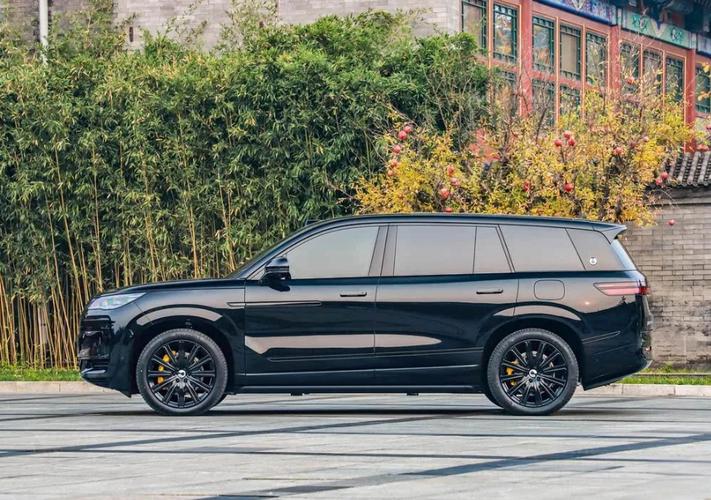
The more similar the configurations are, the smaller the differences between brands become. This means that high - end configurations may not help brands break into the high - end market and form a high - end brand perception among consumers. And this is not the most crucial issue. From the perspective of the entire new energy vehicle industry, if domestic new energy vehicles have pushed the configuration to the physical and experiential limits, the industry may fall into a situation of incremental innovation in the future.
In other words, the current configuration competition may be over - exhausting the innovation space of future products. In this regard, smartphones are undoubtedly the most intuitive reference.
In the early stage of the smartphone market, major mobile phone manufacturers achieved rapid market expansion through functional innovation and technological breakthroughs, making each new generation of products have obvious performance improvements and functional enhancements. However, since 2018, new models launched by different mobile phone brands have become more and more similar and lack obvious distinguishability. Especially for flagship phones, brands have been constantly "piling on" configurations to target the high - end market, competing on hardware parameters. As a result, products cannot be differentiated, which not only leads to the failure of high - end positioning but also exposes the embarrassing fact of stagnant industry innovation.
Why? The market demand has accelerated the upgrading of mobile phones in multiple aspects such as chips, screens, imaging, and battery life, quickly reaching the technological ceiling, and the industry has entered an era of over - performance.
Now, new energy vehicles seem to be repeating the same mistakes. When hard indicators such as battery life, acceleration, and intelligent driving are gradually converging, and "refrigerators, color TVs, and big sofas" have become standard features, what "killer features" can car companies offer to attract and win over consumers? Or from which breakthrough point can they seek major innovation?
Battery Life Cannot Rely on Piling Up Batteries
The piling up of configurations is essentially the integration of the supply chain. In the past, in the high - end SUV market, only a few car companies could offer flagship - level features such as laser radars, air suspensions, large - battery range extenders, and high - level assisted driving. Now, the supply of a series of software and hardware has matured and costs have decreased simultaneously. Therefore, more and more car companies can replicate a set of high - end configurations through the supply chain and enter the high - end market.
However, different from smartphones, the key technologies of smartphones are mainly in the hands of others. Most domestic car companies in China have accumulated systematic self - developed technological capabilities in chips, chassis, intelligent driving, cockpits, operating systems, etc., and most of the other core technologies also come from domestic suppliers. Therefore, they can independently control product innovation and upgrading.
However, the collective configuration competition among domestic car companies is not only the result of the maturity of the supply chain. On the other hand, it reflects the slow or under - expected development of underlying technologies. For example, the most core battery technology.
Last year, according to an article titled "Tracking of New Energy Products and Technology Routes in September" released by Cui Dongshu, the secretary - general of the China Passenger Car Association, the average battery life of domestic pure - electric passenger cars in 2025 was 528 kilometers, compared with 425 kilometers in 2020. That is to say, in five years, the average battery life has increased by 103 kilometers.
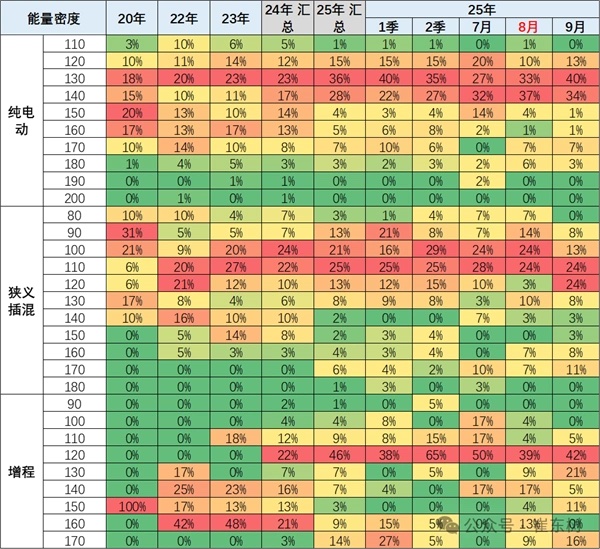
However, the energy density of batteries has increased very slowly in recent years, indicating that the improvement of battery life is not driven by the battery itself but by the lightweighting of the whole vehicle. At this year's technology press conference, Wang Chuanfu officially launched the second - generation blade battery. Compared with the first - generation blade battery, the energy density of the second - generation blade battery has increased by more than 5%, which did not surprise the outside world. We also noticed that the key promotional point of the second - generation blade battery is "setting the fastest charging speed for mass - produced batteries globally", rather than a significant leap in battery life.
The technological breakthrough of lithium - ion batteries is facing a bottleneck, and solid - state batteries are like a "pie in the sky". Every now and then, some companies announce major breakthroughs or mass production, but the promised timelines are constantly being postponed.
In recent years, a large number of "semi - solid" and "quasi - solid" products have actually appeared in the market, and many models have started to be equipped with relevant batteries. However, these do not belong to solid - state batteries in the strict sense. In July this year, the world's first national standard for vehicle - use solid - state batteries, GB/T 43568 - 2026, will be officially implemented. According to the national standard, batteries with a liquid electrolyte content of 5% - 20% are hybrid solid - liquid batteries (i.e., semi - solid). The solid - state batteries equipped in models such as NIO ET9, SAIC MG4, GAC Aion, and Chery are essentially of the hybrid solid - liquid type.
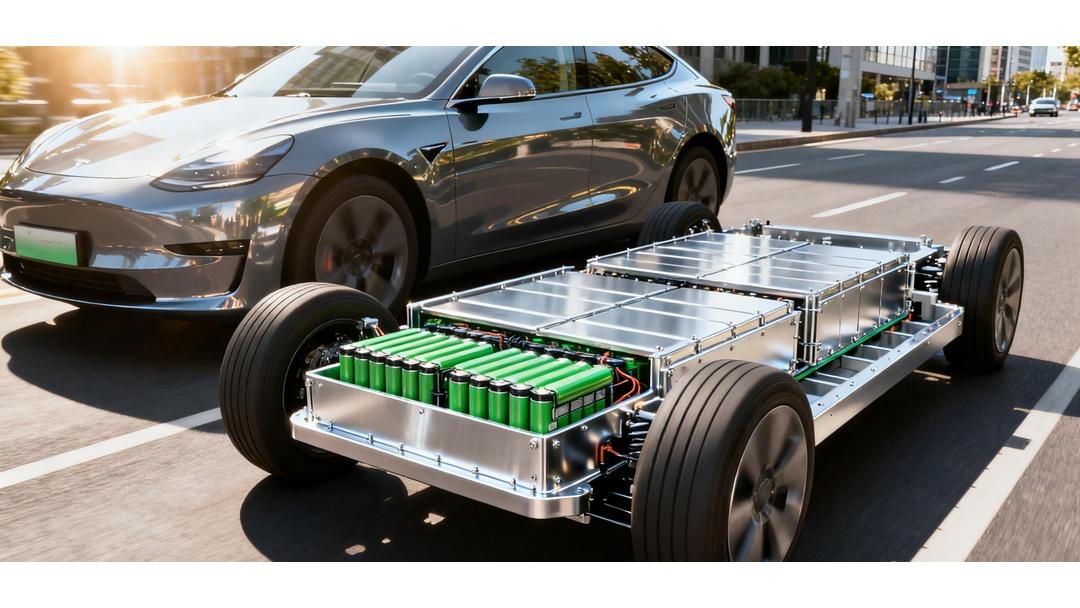
Since this year, the mass - production competition of solid - state batteries has entered the real sprint stage. However, the question of whether real solid - state batteries (all - solid - state batteries) can be successfully developed, mass - produced, and applied remains unanswered.
Perhaps also realizing that a major breakthrough in battery technology may be far off, car companies have been "finding new ways" to improve battery life, such as piling up batteries. However, this has made cars heavier and heavier, completely deviating from the original lightweighting direction. According to the latest industry data, from 2025 to 2026, the average curb weight of new energy passenger cars on sale has exceeded the 2 - ton mark, the weight difference between models has exceeded 600 kilograms, 12 flagship models have entered the 3 - ton level, and the average weight of mid - large new energy vehicles is comparable to that of light - duty civilian trucks.
This is not a good phenomenon. Car companies' practice of increasing battery capacity to improve battery life will only form a vicious cycle of "piling up batteries - increasing weight - high energy consumption - piling up more batteries".
Can Intelligence Capture the Last Stronghold of Luxury Cars?
Around 2020, the total annual sales volume of major foreign car brands in China was close to 2.5 million vehicles, almost monopolizing the entire market for luxury cars priced above 300,000 yuan in China. By this year, this pattern has been completely broken. Chinese new luxury forces represented by Zeekr, Wenjie, and NIO are on the rise, while BBA is obviously losing favor. In the high - end car market, the sales volume of domestic brands has exceeded that of foreign brands.
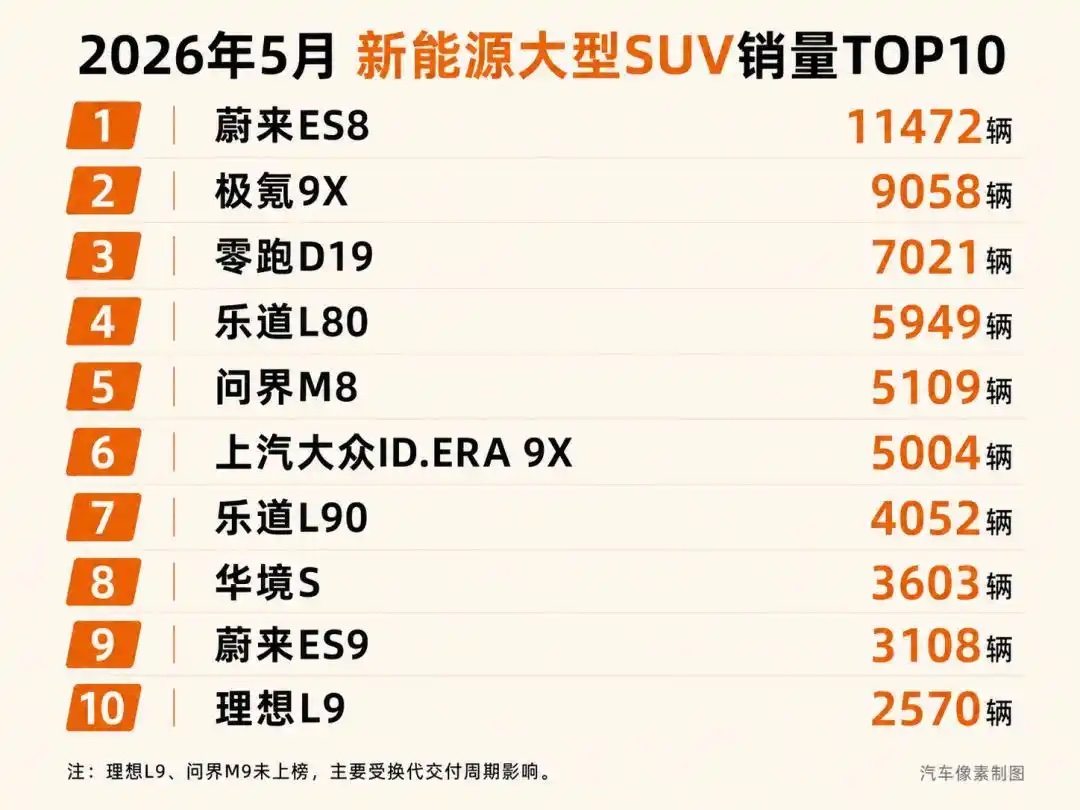
The logic of the luxury car market is changing. In the past, consumers thought that the standard of luxury was "a century - old brand, a large - displacement engine, and leather seats". Now, the luxury recognized by consumers has become configurations such as "intelligent cockpit + intelligent driving + fast charging" that can actually affect the driving experience.
However, it should also be recognized that in the traditional high - end sedan market, new forces still cannot compete with established car brands. Data shows that the domestic share of sedans priced above 200,000 yuan is only about 40%, and the dominance of the segment still lies in German luxury brands.
In the past thirty years, the luxury car market has always been a business narrative centered around luxury sedans. The rise or revival of every luxury brand has started with an epoch - making luxury sedan, and more importantly, luxury sedans hold the most core and high - profit margins. Therefore, if domestic car companies want to establish a "dominant" position in the high - end market, they have to break through the strongholds of BBA in the luxury sedan segment.
Can the new evaluation standard centered on intelligence penetrate into the consumption logic of luxury sedans?
In the high - end SUV and MPV segments, the most core demands of Chinese consumers are often large space, high - end configurations, and strong power. Therefore, consumers give priority to functional values such as space, intelligence, and vehicle - use costs when buying a car. However, different from high - end SUVs and MPVs, the key demands of the mainstream high - end sedan audience are identity tags and business - social attributes. Car buyers are mainly buying a sense of identity. Models such as Mercedes - Benz E - Class and Audi A6L have been deeply involved in the domestic market for more than twenty years and have long been firmly associated with administrative and business vehicle - use scenarios.
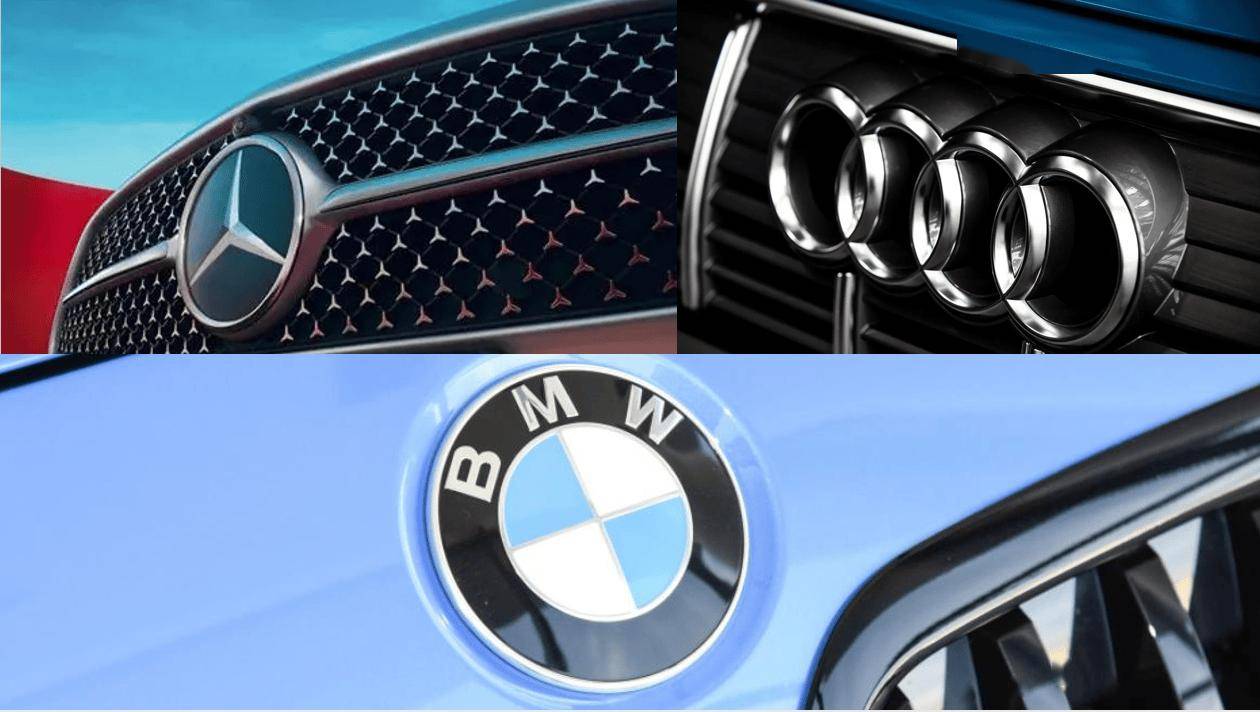
In front of this group of users, the value of brand perception is greater than the experience upgrade brought by intelligence. Sometimes, excessive pursuit of intelligence may even arouse their disgust.
Whether it is high - end SUVs, MPVs, or high - end sedans, whether domestic cars can truly establish high - end brands actually boils down to the original question: how to break out of the configuration competition and seek differential advantages that can support high - end brands.
We can see that NIO relies on its huge investment in building a "battery - swapping ecosystem". Through the battery - swapping network, it has helped the brand form a unique user - stickiness asset. Wenjie follows the "intelligent - driving - driven" route, relying on the continuous iteration of Huawei's Qiankun intelligent - driving system to form an industry - leading reputation. Behind the hot sales of Zeekr 9X stands the performance label accumulated from Zeekr 001 and 009, as well as Geely's overall vehicle expertise.
In an environment where the configuration gap is gradually narrowing, whether brands like NIO and Wenjie can stand firm in the high - end market with their respective differential advantages still needs more time to be verified. Especially in the high - end sedan segment, a different logic may be needed to develop products.
From re - defining high - end to completely "dominating" the high - end market, domestic cars have completed half of the journey. To achieve the ultimate dream, we may still need to wait patiently.