A Borderless Scientific Community: Ten Years of Governance Insights from CERN
The estimated reading time for the full text is about 6 minutes.
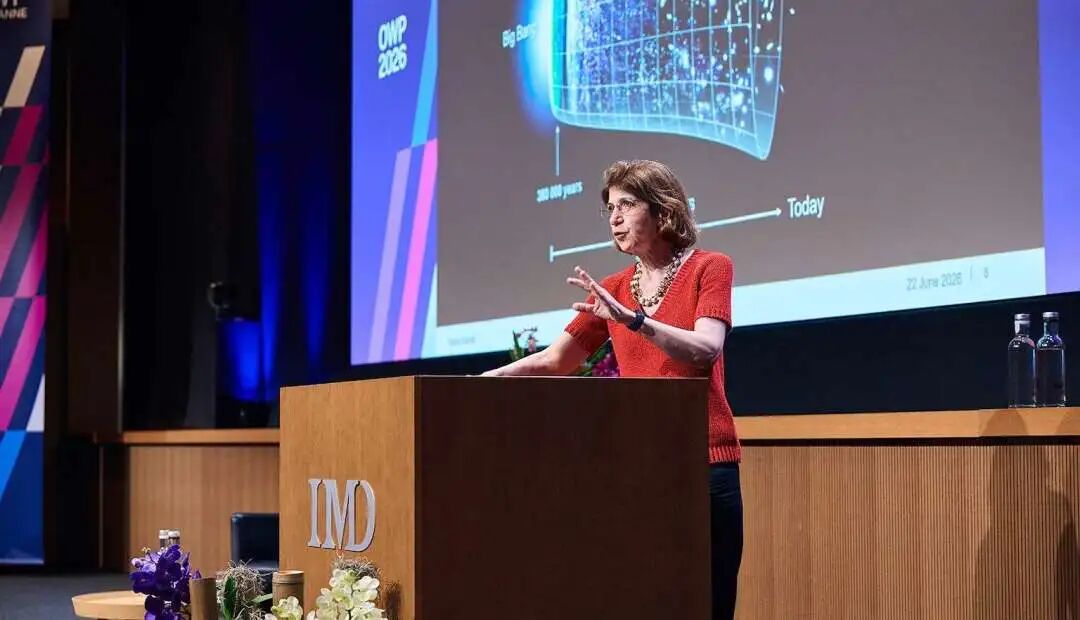
From unraveling the mysteries of the Higgs boson to coordinating one of the world's most complex scientific collaborations, Fabiola Gianotti shares what leadership truly means when goals, passion, patience, and collaboration replace hierarchy and control.
The European Organization for Nuclear Research (CERN), located in Geneva, Switzerland, is a world - leading institution for high - energy physics research. Particle physics focuses on exploring the fundamental units of matter, deciphering the most microscopic composition of the universe, and revealing the underlying operating laws of nature.
The European Organization for Nuclear Research (CERN) has built the Large Hadron Collider (LHC). This device extends humanity's observation scale to 10 - 18 meters, bridging the micro - world and the macro - universe, and helping us explore the underlying laws of the origin and evolution of the universe. As the most powerful particle accelerator ever built by humans, it is buried hundreds of meters underground in a circular tunnel with a circumference of 27 kilometers.
On July 4, 2012, the two general detectors of the Large Hadron Collider (LHC), ATLAS and CMS, jointly announced the successful discovery of a new particle - the Higgs boson. Thanks to this significant discovery, humans have been able to clarify the formation mechanism of the matter that makes up all things in the universe in its early stages.
Achieving these results is inseparable from unprecedented international cooperation
This major breakthrough owes much to a number of cutting - edge new technologies, with the core being the superconducting magnets that endow the Large Hadron Collider with super - capabilities. These devices were jointly developed by Alstom of France, Ansaldo of Italy, and Babcock Noell of Germany, and are a benchmark for CERN's industry - academia - research cooperation. Basic scientific research often uses technologies that are not yet mature in the current industrial community, which requires scientific research institutions and enterprises to jointly carry out research and development.
CERN has always adhered to the principle of open science, freely sharing its top - level interdisciplinary technological achievements with the whole society. In the process of continuously challenging the technological limits of accelerators and detectors, a large number of disruptive technologies have emerged one after another: including the World Wide Web invented by CERN researcher Tim Berners - Lee, hadron radiotherapy technology for cancer treatment, medical imaging electronic measurement and control equipment, and the machine - learning algorithms relied on by autonomous driving. The list goes on.
In a fragmented world, science is a powerful adhesive
CERN was founded in 1954 by a group of far - sighted scientists and politicians with two original intentions: one was to rebuild the European scientific system after the war; the other was to re - establish the trust bond between countries through scientific cooperation. The 12 founding member states that signed the convention in 1954 reached a consensus: First, Europe's recovery must rely on continuous investment in basic science; Second, science is a key force that can re - establish connections in a torn - apart world.
From the initial 12 member states to the present, CERN now has 25 member states and 11 associate member states, and has established about 50 cooperation agreements with scientific and technological powerhouses such as the United States, Japan, Canada, and China, as well as many developing economies.
In this system, CERN is not only a scientific research center but also undertakes the responsibility of capacity building and talent cultivation. Today, its global community covers more than 17,500 people from over 110 countries and regions, truly becoming a global community that transcends geographical and institutional boundaries.
What connects us all is our shared passion, common goals, and the collective mission of exploring the essence of the universe.
Leadership insights from serving at CERN
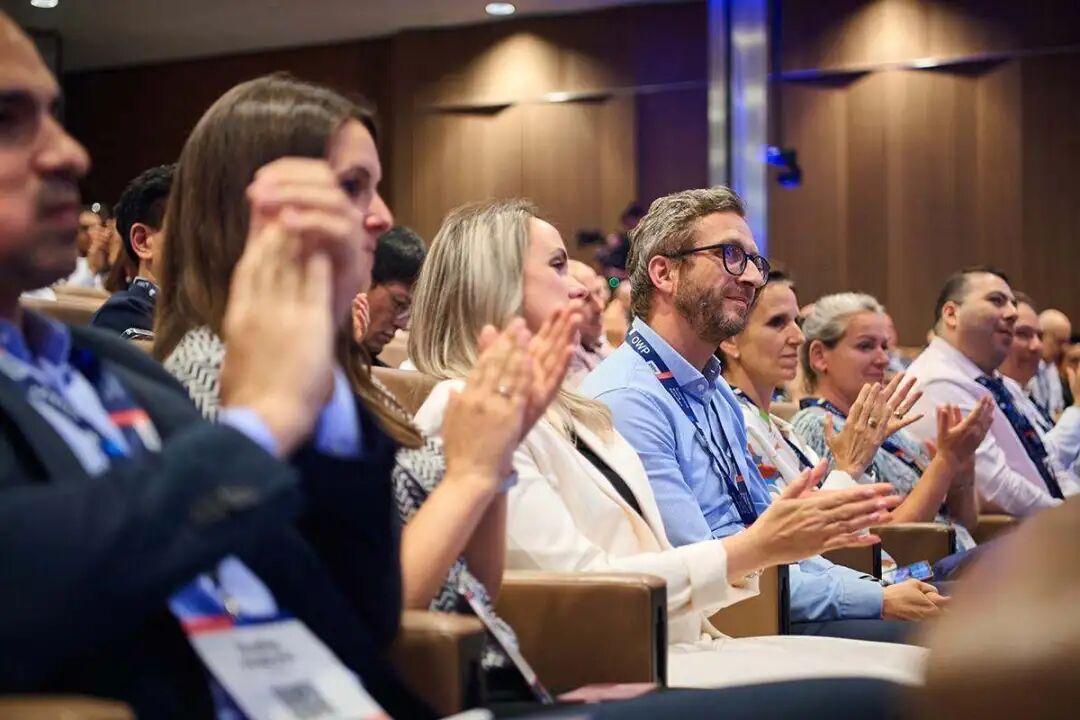
The vast majority of CERN's members are not formal employees but visiting scholars from global universities and research institutions. Salary and performance appraisal have never been the core means of the management system. What keeps the entire institution running efficiently is the shared passion for scientific research, the consistent goals, and the collective mission of exploring the origin of the universe. The cause of unraveling the mysteries of the universe cannot be accomplished independently by an individual, a single institution, or a single economy. It is inherently built on a global cooperation network. Here, the core responsibility of a leader is not to issue orders but to build a solid support system and clear the obstacles for the team.
This is a highly decentralized scientific research community. The right to speak is never determined by the level of position. There is only one criterion: Whose conclusion is more in line with the facts and more verifiable. Even novice young researchers' valid opinions will be seriously considered. Therefore, in the decision - making process, it is crucial to listen attentively and express freely. Although the final decision is made by the management, as long as members feel that their opinions are respected, they will take the initiative to shoulder the responsibility and work together to implement it.
My years of scientific research career have shaped the foundation of my thinking: Advocating facts, maintaining curiosity, and adhering to rigorous logic. After taking up the position of Director - General, I faced the biggest transformation in my thinking: from in - depth thinking in a specific field to horizontal governance of the overall situation.
Basic scientific research aims to achieve in - depth exploration in a specific field, but leading CERN requires spanning multiple fields such as engineering technology, fund - raising, personnel management, government - enterprise cooperation, public communication, and even environmental governance. I have to continuously expand my cognitive boundaries and at the same time accept that I cannot be proficient in every aspect of knowledge.
For scientific researchers, it is a great test to restrain the instinct to dig into every technical detail, but this is precisely a compulsory course for managers: Maintain an overall view, fully trust the professional team, and delegate the autonomy of execution to the front - line.
True leadership does not lie in proving that you know more than everyone else, but in creating fertile ground for team members to grow and showcase their talents.
Even if a manager has a leading edge in some professional fields, they should take the initiative to step aside and attribute the honor to the execution team. Excellent leadership is not demonstrated by personal ability but is more based on self - restraint, listening, and observation over time. Only in this way can team trust be continuously accumulated and organizational resilience be strengthened.
CERN's scientific research projects often last for decades, even spanning generations of researchers. In a long - term cause, leaders should not only anchor the long - term vision but also closely monitor the current progress. Scientific progress always comes from small breakthroughs accumulated over time, and every step of progress has long - term value. An excellent manager will lead the team to break down the goals and attach importance to phased results. Even if the ultimate goal is still far away, every member should be made to see the value of their current work. Every cornerstone on the long road to the future is indispensable.
About the author
Fabiola Gianotti
Former Director - General of CERN (2016 - 2025)
Dr. Fabiola Gianotti is a particle physicist. She served as the Director - General of CERN from 2016 to 2025, becoming the first woman to hold this position and completing two full terms. She has long been involved in many core experiments at CERN and has made outstanding contributions in detector research and development, software systems, and data analysis, especially focusing on research strategies related to the Higgs boson. As the leader of the ATLAS experiment, she played a key role in the discovery of the Higgs boson in 2012.
She has received 16 honorary doctorates and multiple international awards globally, including the Breakthrough Prize in Fundamental Physics, the Enrico Fermi Prize of the Italian Physical Society, and the Tate Medal for International Leadership of the American Physical Society. At the same time, she is an honorary foreign member of seven academies of sciences and has been awarded the Grand Cross of the Order of Merit of the Italian Republic. In 2012, Time magazine named her one of the top five "People of the Year".
About the International Institute for Management Development (IMD) in Switzerland
For nearly 80 years, the International Institute for Management Development (IMD), also known as IMD Business School, has been at the forefront of leadership development. Founded by enterprises and dedicated to serving enterprise development, IMD is an independent educational institution rooted in Switzerland and with a global reach. Its headquarters is located in Lausanne, and it has strategic centers in Singapore, Shenzhen, and Cape Town. It provides training for more than 20,000 senior managers from over 120 countries every year. With more than 145,000 alumni, it has built a far - reaching global elite network. As an educational institution that has consistently ranked among the world's top business schools, IMD is committed to integrating the latest research with business practice, helping leaders address complex challenges, expand solutions, and achieve sustainable practical impacts. We always adhere to the concept of "real learning, real impact" to promote learning for application and application for effectiveness.
This article is from the WeChat official account "I by IMD Insights". Author: I by IMD. Republished by 36Kr with permission.