GPT-5.6 was urgently halted, and OpenAI's most powerful model was forced to implement a "case-by-case review" policy.
We haven't waited for Fable 5, and the release of GPT-5.6 has also been urgently halted!
Just now, Information exclusively reported that due to network security concerns, OpenAI has been required to stagger the release of its most powerful new model.
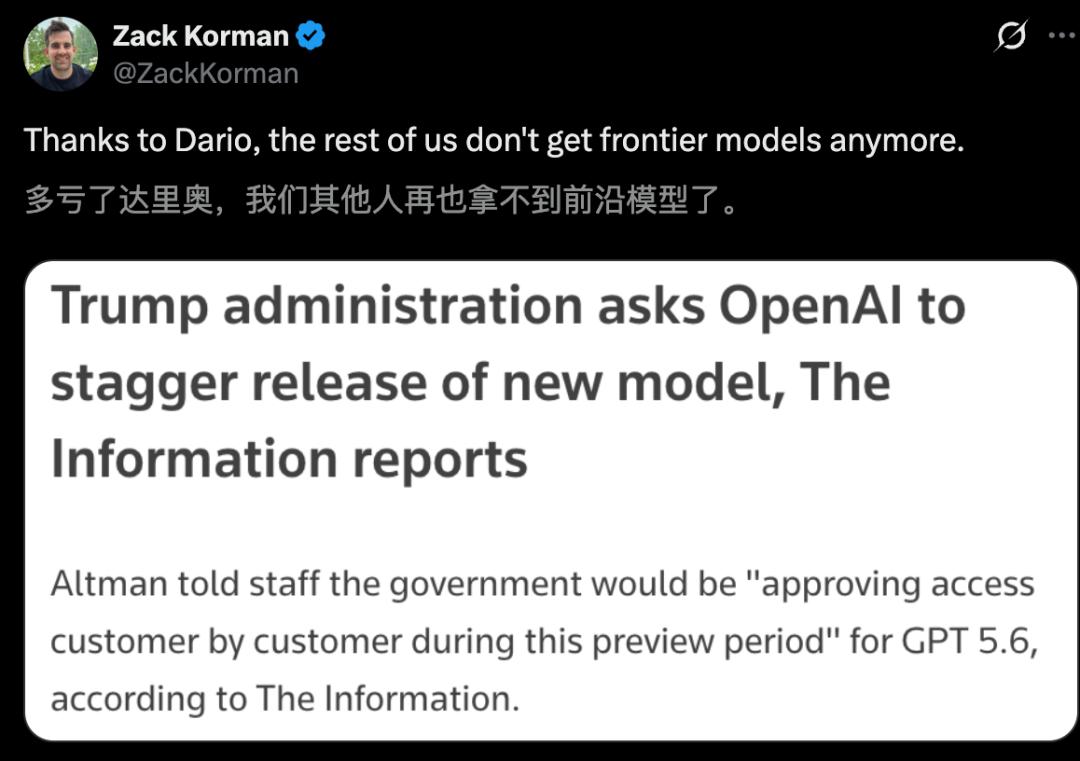
Currently, only a limited preview is available to a small group of partners, and it is not yet available for one-click unlocking across the entire network.
What's suffocating is the approval method - the trial permissions of all users need to be "approved one by one".
In other words, OpenAI doesn't have the final say on who can use GPT-5.6 and when. Strict queuing and access procedures are required.
This is the first time in the history of AI releases.
Netizens have sighed that the era of "free release" of large models may have officially come to an end.

GPT-5.6 to be launched in phases
Mandatory "one customer, one approval"
At the internal Q&A session on Wednesday, Altman told employees that GPT-5.6 will be sent to a small group of partners in the form of a limited preview;
In the memo on Thursday, he made the most crucial point clear -
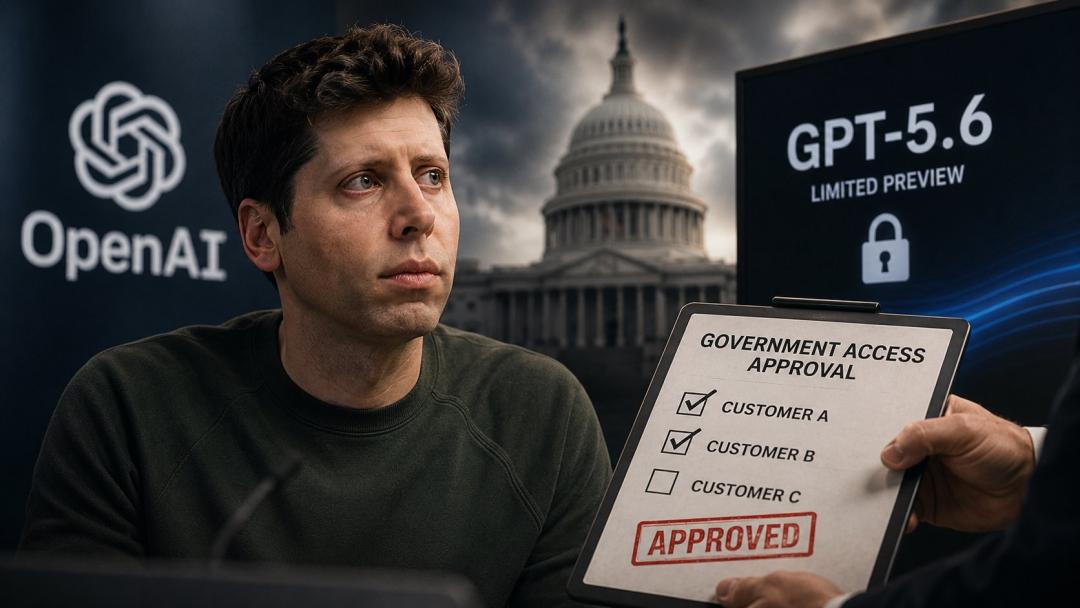
During this preview phase, customers' "access permissions" will be approved one by one.
You know, in the past decade, the only rule in the competition in the field of large models in Silicon Valley has been one word: speed.
Whoever can release first will capture the public's mind, occupy API calls, and dominate the developer ecosystem.
Now, what OpenAI has to do is hold on to its most powerful flagship model and wait for customers to queue up and get approval one by one.
As for the reason, Altman was quite restrained: due to security reviews, it is necessary to release the model in phases.
In other words, GPT-5.6 has become a kind of "special version".
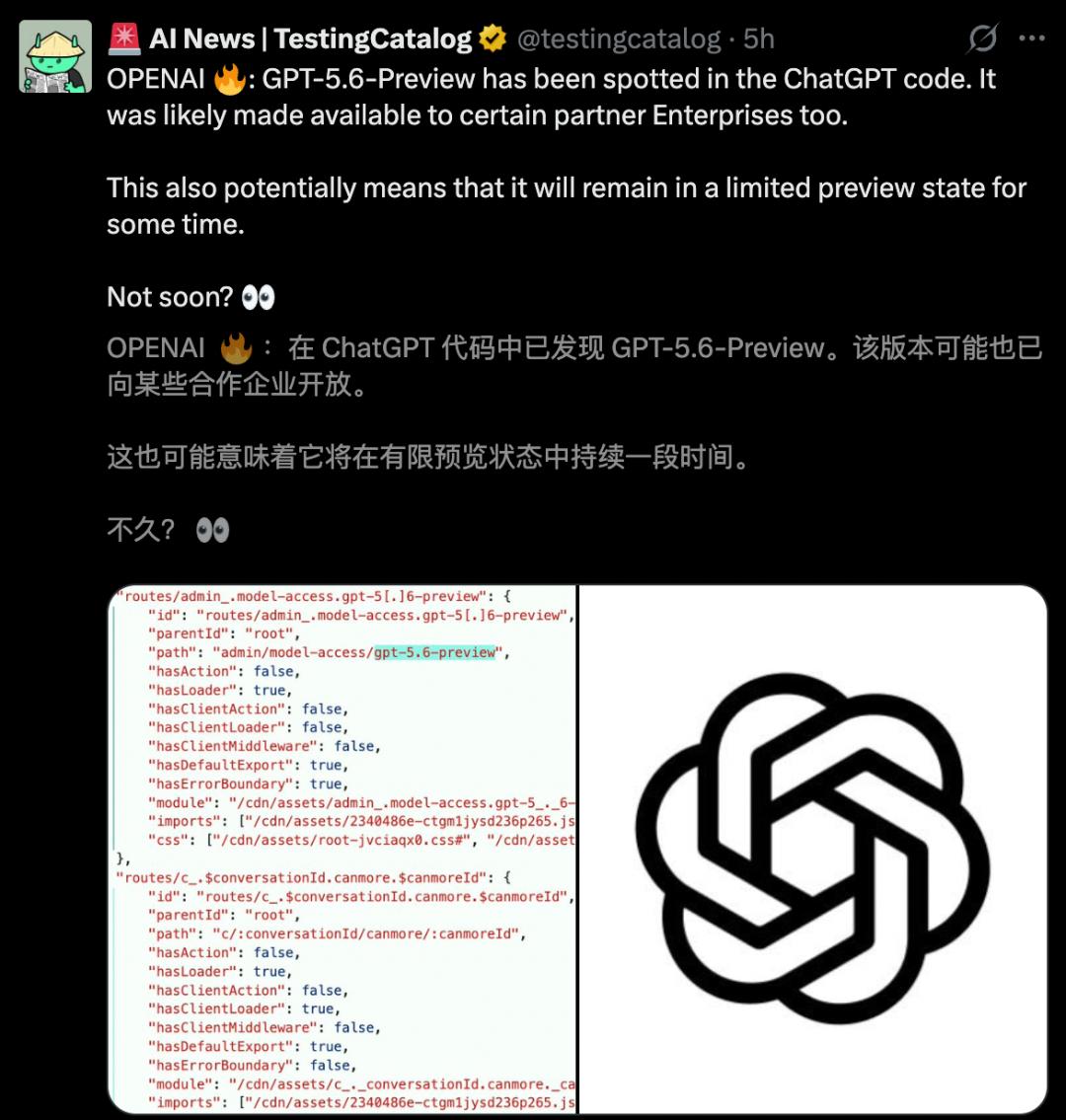
Currently, some developers have found that the GPT-5.6-Preview logo has appeared in the code, and it has been officially opened to some partner enterprises.
Significant improvement in front-end UI design capabilities of GPT-5.6
So far, discussions about the deeper technical details of GPT-5.6 have been heating up across the network.
What first revealed its secret was its internal code name. Developers found a series of checkpoint code names in the test path of Codex.
The most frequently mentioned one is kindle-alpha - allegedly the candidate version for this release.
Some people even found an access route like /admin/model-access/gpt-5.6-preview directly in the code of ChatGPT.
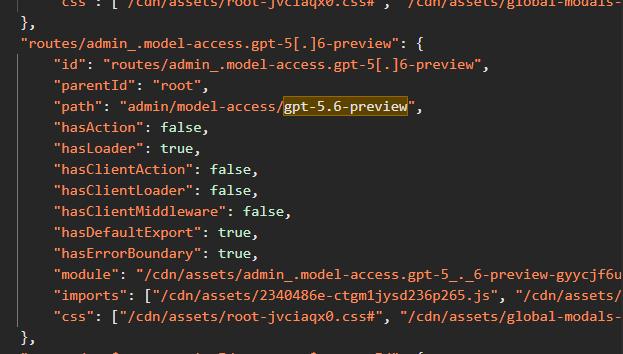
This way of "using route logs as a release calendar" has now become the most effective signal to predict OpenAI's moves.
Some developers have also found out the entire family of GPT-5.6 models, among which one is "GPT-Bidi-1", a voice model at the GPT-4o level.
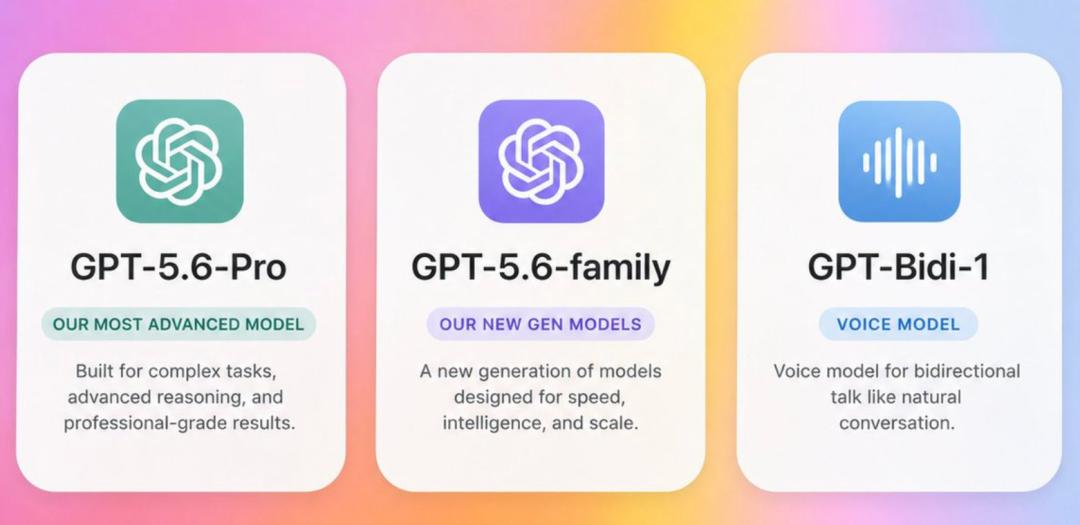
As for how powerful GPT-5.6 really is?
We may be able to get a glimpse of it from the gray test demos that have recently been leaked across the network.
Developer Chetaslua used GPT-5.6 to successfully create a "The Sims" game, completing a sample in just 48 minutes.
It has to be said that AI has shown amazing efficiency in the fields of game development and front-end rendering.
At the same time, GPT-5.6 Pro has also demonstrated extremely strong visual construction capabilities -
It created a voxel-style 3D peacock animation similar to "Minecraft" using only HTML!

With just one picture and one sentence, GPT 5.6 Pro designed a beautiful front-end UI.


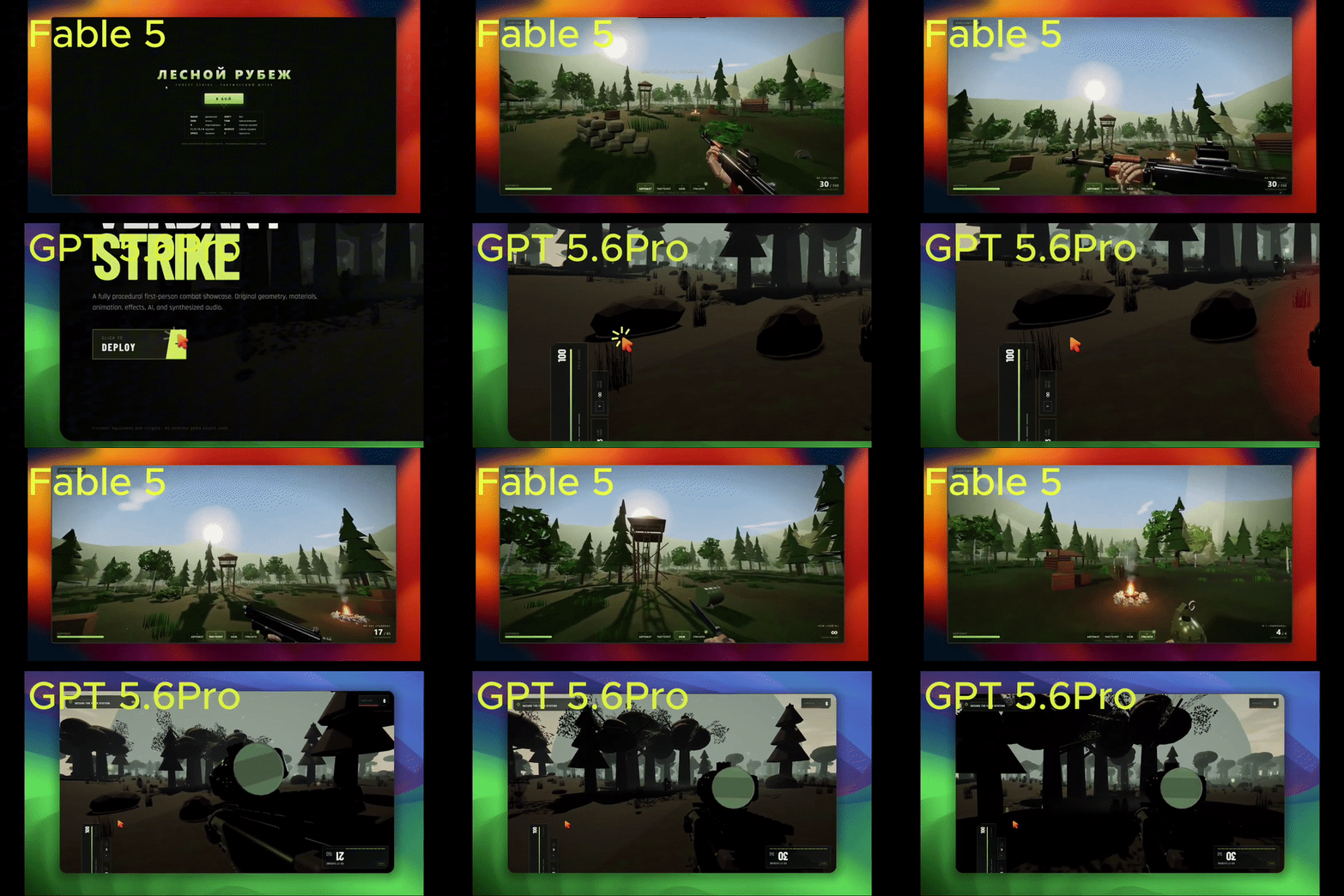
Next, there will be a real battle between GPT-5.6 Pro and Fable 5.
This is a hardcore competition in terms of game logic, UI, and 3D implementation capabilities.
However, under exactly the same instructions, Fable 5's generation performance is significantly better than that of GPT-5.6 Pro, and the whole process is completely independent of external material assistance, with stronger underlying generation ability.
In addition, GPT-5.6 may have a context window of 1.5 million tokens, a one-time increase of about 43% compared to GPT-5.5's 1 million tokens.
To put it simply, it can "swallow" an entire code library or several books at once and read them from beginning to end without getting confused.
As for the model's reasoning effort budget, it has been raised from 768 to 960, and the reasoning "gear" has also been increased.
Moreover, in long-chain Agent tasks, the token consumption is said to be 10% - 15% less than that of GPT-5.5.
Previously, OpenAI's chief scientist, Jakub Pachocki, said that internally, GPT-5.6 is defined as "a meaningful improvement".
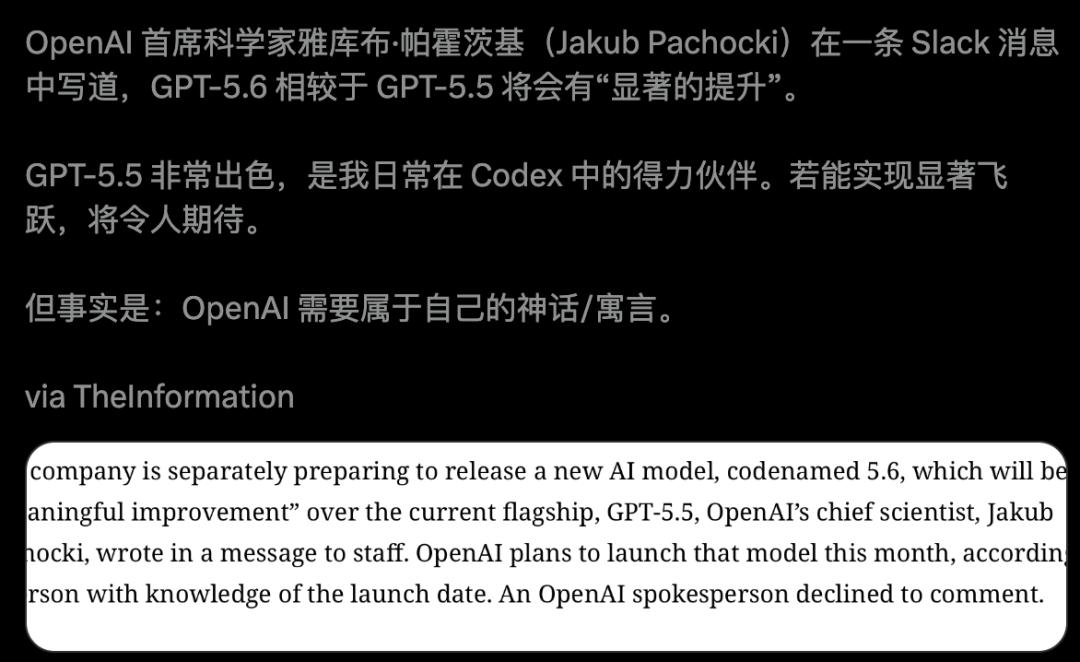
Now, the release switch of this much-anticipated GPT-5.6 has been taken away.
The three flagship models are all stuck in June
It's not just OpenAI. June was supposed to be a "super month" for large models, but the strongest players of the "big three" have all fallen silent.
OpenAI's GPT-5.6 has been put into the queue for "one-by-one customer approval";
Anthropic's Fable 5 and Mythos 5 were taken down three days after their release due to an export control order. Two top laboratories have both had their release gates blocked by the same hand.
Then there's the third one - Google's Gemini 3.5 Pro.
It was high-profilely unveiled at the I/O conference and is a flagship model with a 2 million token context and Deep Think deep reasoning. It was originally scheduled to be officially launched in June.
Pichai said on stage at that time, "Wait for another month", and it is said that the developers in the audience collectively sighed.
As a result, June is almost over, and it is still stuck in the limited preview stage and has not reached ordinary users yet.
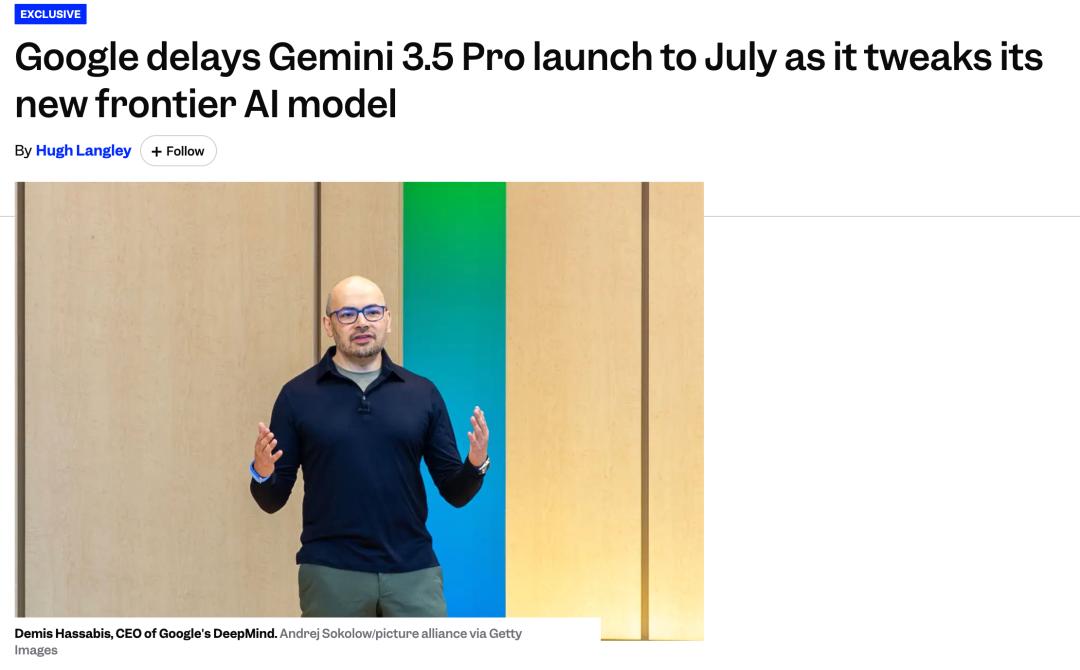
Google's delay is different from the previous two.
The official reason for Gemini 3.5 Pro's delay until July is to polish the quality, absorb early test feedback, solve the token consumption problem exposed in the previous Flash version, and prepare for longer-chain intelligent agent tasks.
In other words, OpenAI and Anthropic were held back by external forces, while Google mostly hit the brakes on its own.
But what's the result? They all end up in the same place. None of the three companies has crossed the line in June.
The three most powerful models on the planet have all stopped at the door of release and have collectively postponed their schedules to July.
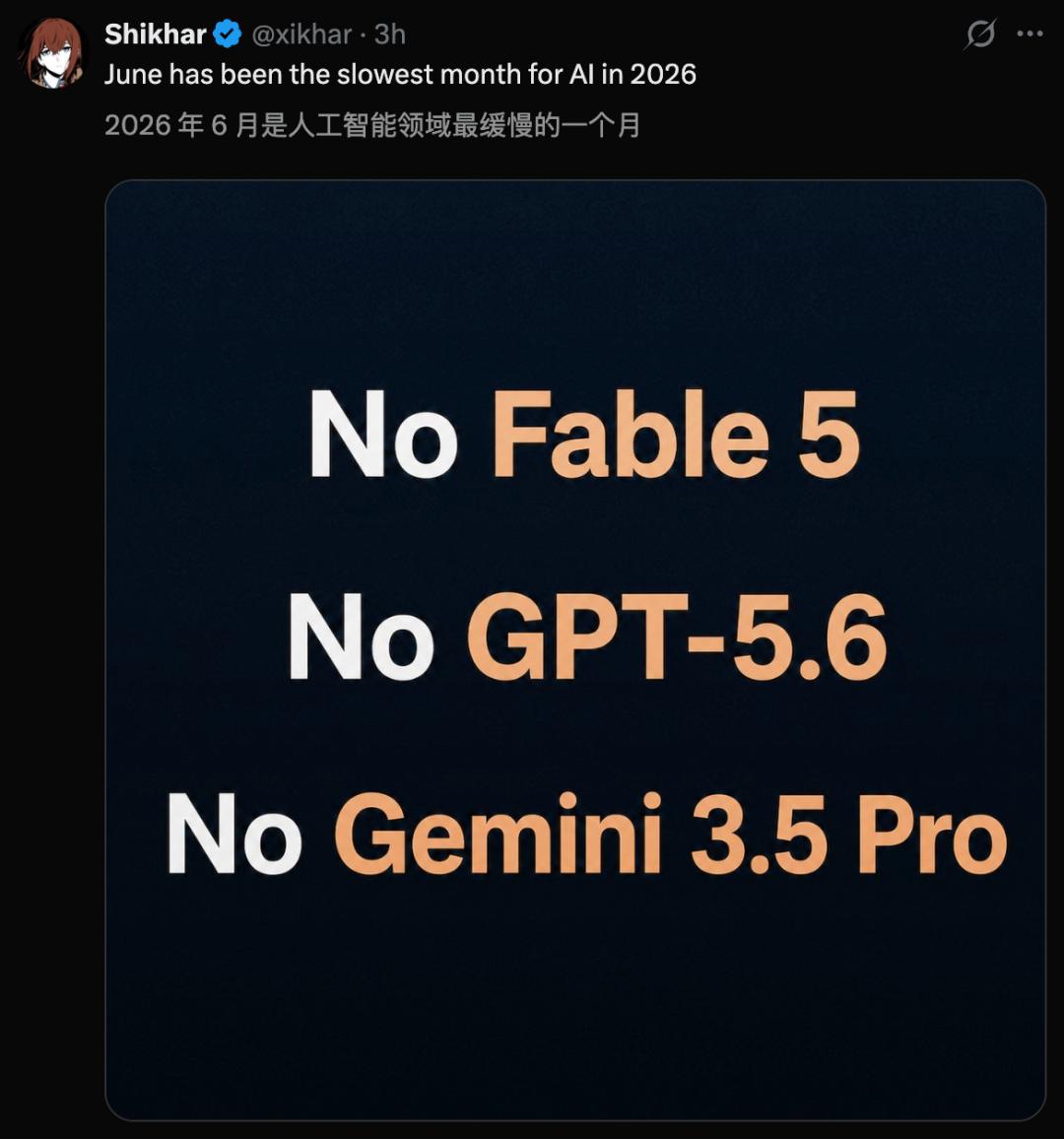
Everyone thought they were about to use the "strongest AI in history", but the reality is that the strongest generation is still inside the door.
The capabilities inside the door are soaring, but people outside have to queue up to get a number.
The wider this gap becomes, the more the joke "the strongest AI has already been created, but it just hasn't been released" approaches reality.
This time, the first thing the public has to learn is to wait.
Reference materials:
https://x.com/daniel_mac8/status/2070246365192438138?s=20
https://www.theinformation.com/articles/trump-administration-asks-openai-stagger-release-new-model-security-concerns
This article is from the WeChat official account "New Intelligence Yuan". Author: ASI Apocalypse, Editor: Peach. It is published by 36Kr with authorization.