Ernie's upgrade, Doubao's paid model: AI bids farewell to the "traffic-only theory"
On June 24th, ByteDance's Doubao launched three paid subscription plans: the Standard Plan at 68 yuan per month, the Enhanced Plan at 200 yuan per month, and the Premium Plan at 500 yuan per month. Additionally, it fully integrated the Doubao 2.1 series of models.
Almost at the same time, Baidu announced the merger of multiple websites, including Wenxin Yiyan's Web version, Wenxin, and Wenxin Assistant, into the Wenxin Assistant page. The pricing strategy remained unchanged, continuing to offer free access.
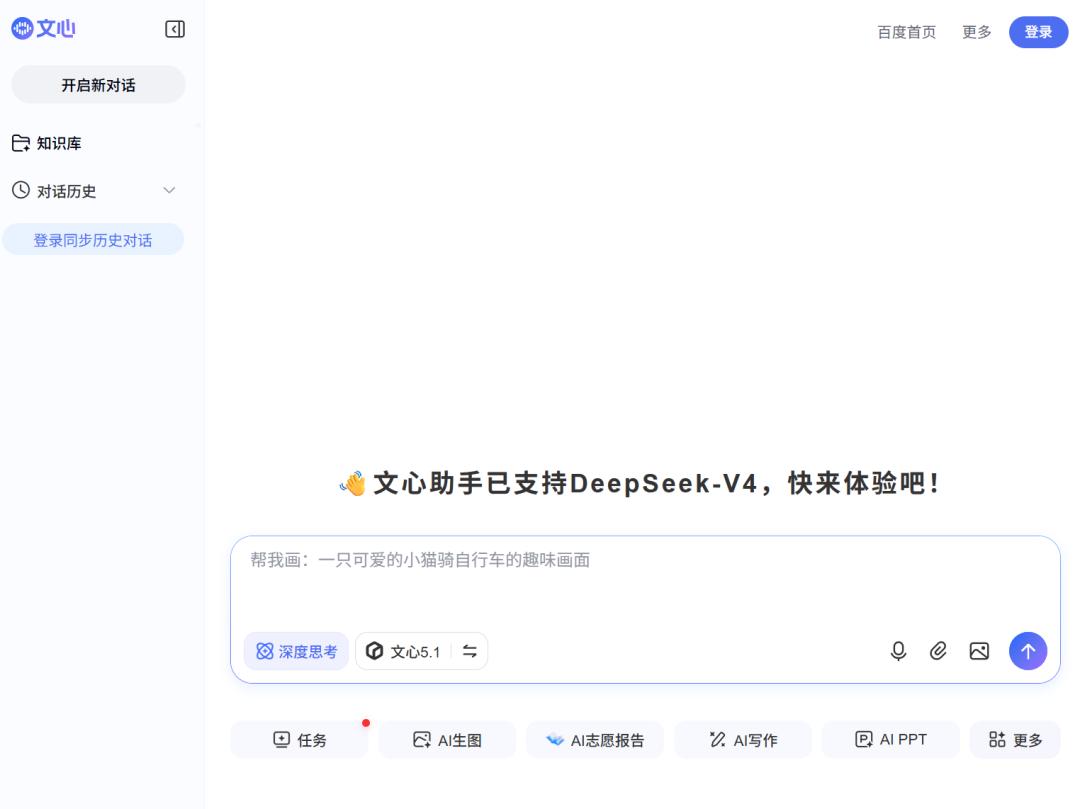
On one hand, AI applications are starting to charge users, while on the other hand, the number of entry - points is decreasing, and the functions are increasing, yet no fees are charged. Facing the same industry challenge, the two companies have each presented their own solutions.
The question is, does the iron - clad rule of the mobile internet era—more entry - points, more traffic, and stronger bargaining power—still hold true in the AI field? Over the past decade, the expansion logic of almost all internet companies has been based on this assumption, spreading entry - points widely, seizing users' time, and building their moats through scale.
However, the cost structure of AI products is completely different from that of the internet era. Each Q&A involves real computing power consumption. Sometimes, more users mean a heavier bill.
Doubao and Wenxin happen to stand on either side of this broken logical chain.
Doubao has priced "task completion" through charging, while Wenxin has made more capabilities into infrastructure by offering free access. Although these two paths seem contradictory, they are actually responding to the same change: AI competition has shifted from competing for the number of entry - points and traffic scale to competing for the ability to actually get things done.
The convergence of these two routes at a similar time provides an excellent opportunity to observe the commercialization crossroads of domestic large - scale models.
The Global AI "Entry - Point" War
Redundant entry - points are almost an inevitable "mid - life crisis" for every company developing AI products.
The logic of early - stage expansion is easy to understand: occupy positions first and then refine the user experience. Whoever retains users first wins at the starting line. There is nothing wrong with this in itself, but the cost is that users often forget where to ask questions.
Microsoft's situation best illustrates this. When opening Word, there is a Copilot on the side; in Teams, there is also a Copilot; on GitHub, Copilot is still there; and there is a Copilot in Edge. Even Windows itself has a built - in Copilot. Users have to switch back and forth between five non - connected entry - points, and none of them share the conversation status and historical context. The AI assistant has become a burden on users' memory.
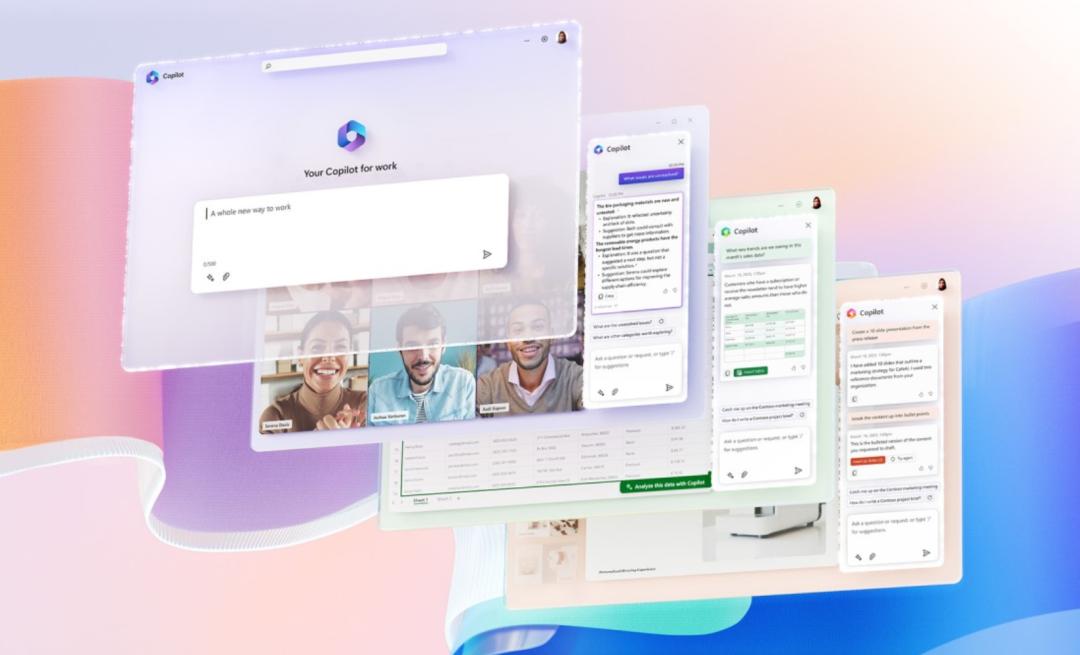
This redundancy was tolerable in the early stages of the product. At that time, Copilot was more of a functional demonstration, such as summarizing a meeting, drafting an email, or completing a piece of code. Users didn't need to rely on it deeply, and the cost of making mistakes and starting over was not high.
However, as the industry moves from chat boxes to intelligent agents, AI requires not just a chat tool but a system that can plan, execute, review, and relay tasks from one scenario to another. It is impossible to rely on several assistants with the same name but no communication to build a system. When users' expectations of AI change from "can it chat" to "can it complete this task", too many entry - points become an enemy of efficiency.
So, almost simultaneously, the tech giants have taken the same action: consolidating the scattered entry - points.
Google's approach is to continuously integrate Gemini into Chrome, a major traffic entry - point. First, it was installed as a sidebar, and then it was upgraded with an "automatic browsing" function. Users can ask Gemini to compare prices, fill out forms, and book tickets, and regain control during sensitive operations such as logging in or making the final payment. Google has a clear goal: to make Gemini the unified AI main entry - point across search, browsers, and office suites, and to protect its core search business from being overshadowed by chat - based interactions.
Microsoft is taking a similar approach. In late May this year, Fortune reported, citing internal sources, that the company is preparing an unnamed "super - app". It plans to integrate Copilot Chat, GitHub Copilot, Copilot Cowork, and the workflow engine codenamed Autopilot into a single interface, led by Jacob Andreou, the person in charge of the Copilot business. The internal project goal is to "create a unified Copilot", and it is scheduled to be launched by the end of summer this year.
Although the solutions provided by these two companies have different details, they are addressing the same problem: Users should not waste time deciding which AI assistant to use before starting to solve a problem.
Baidu's "merger of three websites" is the Chinese market's solution to the same problem.
Closing several websites and unifying a domain name is a visible reduction. The invisible part is that search, library, office, and intelligent agent capabilities are integrated into a single scheduling system for the first time. The system decides which sub - capabilities to use, rather than leaving this choice to users.
For example, in the past, if a user wanted to write a report using AI, they had to decide whether to ask for ideas from Wenxin Yiyan or find a template in the library. The historical records and style preferences of the two were not shared. Now, users no longer need to make this choice. They only need to state their requirements, and the system will handle the rest.
This change, on the surface, is an optimization of the user experience, but in fact, it indicates a shift in the focus of AI competition: Whoever can enable users to complete tasks in one place will truly retain users.
Doubao Goes Left, Wenxin Goes Right
The decision for Doubao to start charging was foreshadowed earlier than the outside world expected.
Going back a month, as early as early May, Doubao quietly hinted at the paid options in the version description on the App Store. After nearly two months of discussion, the decision was finally made public yesterday. The three - tier pricing includes the Standard Plan at 68 yuan, the Enhanced Plan at 200 yuan, and the Premium Plan at 500 yuan. These plans mainly target high - computing - power productivity scenarios such as software development, data analysis, professional design, and long - document parsing, which are the most difficult parts to cover costs under the free - use model.
Compared with the pricing of global peers, 68 yuan is lower than the starting price of ChatGPT Plus and Claude Pro, which is about over a hundred yuan. Although 500 yuan is the highest - tier price for Doubao, it is still significantly lower than the high - end pricing of ChatGPT Pro and Claude Max, which is two to three hundred dollars per month.
This is also the first time in the domestic large - scale model industry that in mass - market applications, the "complex" tasks are directly priced. Simple Q&As remain free, while tasks that truly consume computing power and inference time are considered worthy of a price.
Behind this choice, the real - world pressure is substantial. As of March this year, the daily Token usage of the Doubao large - scale model had exceeded 120 trillion, doubling in three months and reaching 1000 times the level when it was first launched in May 2024.
In the mobile internet era, the rule of "more users, more profits" does not hold true for large - scale model businesses. After all, each free conversation incurs hardware depreciation and electricity costs. A larger user base means a heavier bill, and scale does not necessarily translate into stronger bargaining power.
From this perspective, it is reasonable for Doubao to start charging, while Wenxin has chosen a different path. Behind this choice is Baidu's "long - termism", which the company often mentions but is rarely analyzed in detail.
In addition to the "merger of three websites", Wenxin Big Model 5.1 was also launched. The pricing strategy remains unchanged, continuing to offer free access to all users. The function matrix has been further expanded, with new capabilities such as online editing of Office documents, scheduled tasks, AI volunteer reports, AI PPTs, in - depth research, and AI music. The coverage has extended from single - point Q&As to specific scenarios in learning, office work, and daily life.
Wenxin's confidence in maintaining free access lies in the fact that technology has already brought down the cost curve.
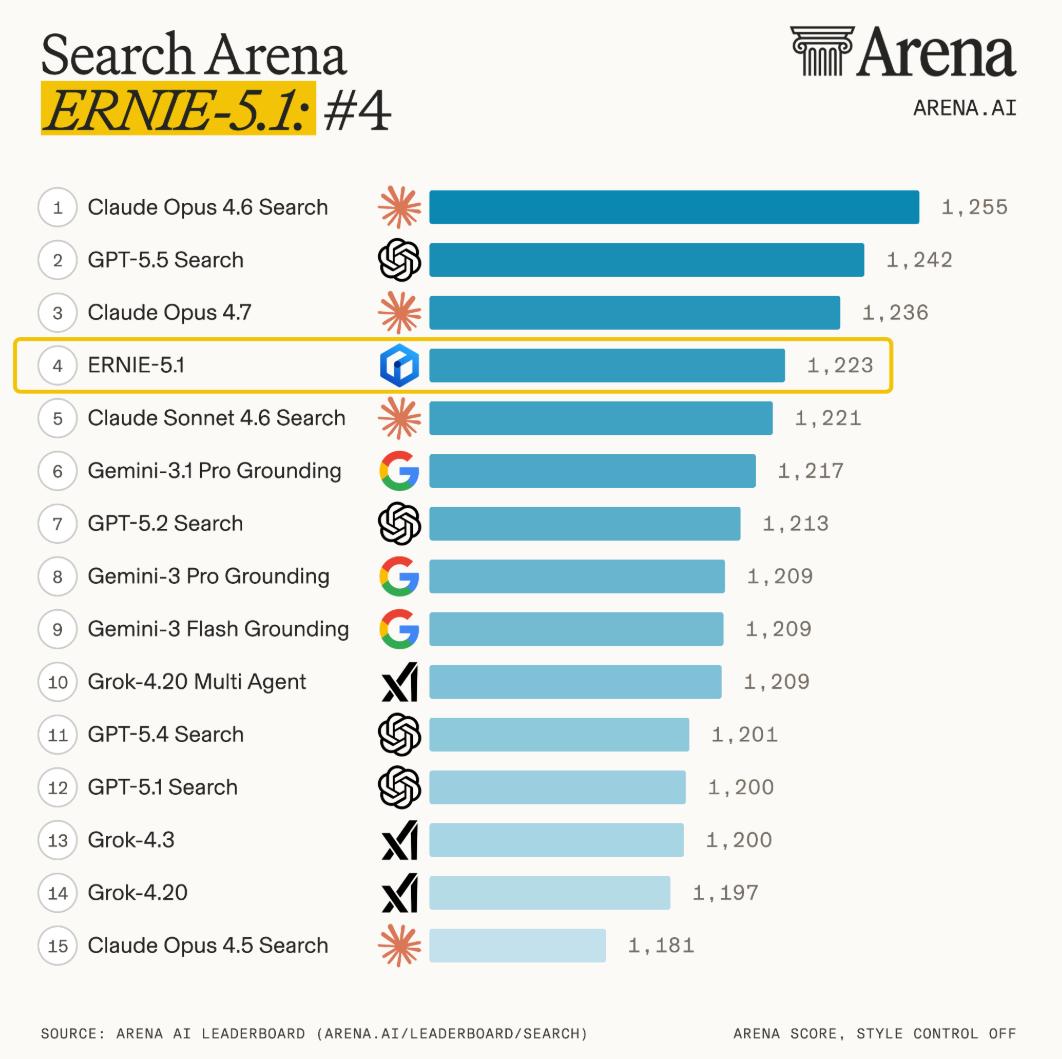
Wenxin Big Model 5.1 scored 1223 points on the Search Arena list, an internationally recognized evaluation. It ranks fourth globally and first in China, and is currently the only domestic model on this list. In the AIME26 evaluation, known as the "mathematics competition - level" (with tool - calling), it scored 99.6 points, second only to Gemini 3.1 Pro.
More importantly, in terms of cost, Wenxin 5.1 uses a "multi - dimensional elastic pre - training" method. It extracts an optimal sub - network directly from the sub - model matrix of Wenxin 5.0, fully inheriting the knowledge learned by 5.0 and eliminating the cost of training from scratch. The total parameters have been compressed to about one - third of the previous generation, and the activated parameters have been compressed to about one - half. The pre - training cost is only 6% of models of the same scale.
However, having a good cost - control account alone is not enough to support the weight of "long - termism".
It is worth noting that there has already been a wave of charging among domestic large - scale models this year, but Wenxin has chosen to go against the trend.
Zhipu raised the price of its GLM Coding Plan on February 12th and cancelled the first - purchase discount. The Lite plan increased to 49 yuan, and the Max plan increased to 469 yuan. Jieyue Xingchen launched its paid Step Plan for the first time on March 23rd, with a starting price of 49 yuan per month. MiniMax made a more dramatic change. On June 1st, with the launch of the new model M3, it changed its charging method from per - use to per - Token consumption, without prior notice. The entry - level plan jumped from 29 yuan to 49 yuan, causing an uproar in the developer community.
As a company with practical experience in AI pricing, Baidu has actively chosen to keep the basic capabilities free when the industry has generally started tiered charging. This choice requires not only more solid cost - control capabilities but also confidence in its long - term strategy.
A short - term market stance is far from sufficient to support this choice. Baidu has maintained a high level of R & D investment in the AI field over the past decade, covering the entire technology stack from the chip layer (Kunlun Chips), the framework layer (PaddlePaddle), the model layer (Wenxin Big Model), to the application layer (a series of applications and intelligent agents).
After all, whether the free - access strategy can be sustained ultimately depends on whether the entire technology stack is truly integrated.
Different Resources, Different Paths
The two paths chosen by Doubao and Wenxin are determined by different resource endowments.
Baidu follows an "ecosystem flywheel" strategy. It uses technological advantages to attract a large user base, which in turn forms an ecological moat. Through existing engines such as search and intelligent cloud, the value of AI capabilities is indirectly realized. The characteristic of this chain is that the monetization process is far from users but close to Baidu's existing businesses. For example, search and cloud services are stable cash - flow businesses, and integrating AI capabilities is essentially adding a new engine to these old businesses.
Doubao follows a "product flywheel" strategy. Product capabilities attract user payments, and the revenue is used to support model R & D, forming a more quickly effective cycle. This path is closest to users, and the payment return is fast. However, the price is that the product must continuously prove its value. Whether users renew their subscriptions each month is the most direct evaluation of the product.

Breaking it down, these two strategies lead to different real - world choices in four dimensions.
The most obvious is the monetization path mentioned above. Baidu can indirectly realize the value of AI through existing engines, which is a long - term strategy with strong anti - cyclical ability. Doubao relies more on C - end subscriptions and API calls, which is a shorter path but requires continuous verification of users' willingness to pay.
In terms of user strategy, Wenxin expands its daily active user base with a low - threshold approach and retains users through a wide range of functions, following a "wide - coverage" logic. Doubao adopts a tiered operation strategy, using the free version to attract users and the paid version to generate revenue, following a "user - segmentation" logic. In fact, they are addressing the same problem: how to match users with value, but from different perspectives. One expands the user base first and then filters out value, while the other prices the value first and lets users choose according to their needs.
Of course, they also convey their technological confidence in different ways. Wenxin offers top - level capabilities for free, which is supported by the engineering ability to continuously iterate and evolve the model. Doubao places high - level capabilities in paid plans and uses pricing to anchor the product value. The amount users are willing to pay for a certain ability determines its value.
Wenxin uses "free access" as an entry - point to build trust, while Doubao uses "pricing" as a value benchmark. Although their logical directions are opposite, their goals are the same: to make users believe that the company's technological capabilities are worth the price.
Although the starting points and radii of these two flywheels are different, they are not necessarily mutually exclusive.
In the short term, both choices are reasonable. Baidu has an ecological foundation to support free access, while ByteDance needs to quickly establish a commercial closed - loop. This does not prove which strategy is superior; it is just that two different resource structures have led to different rhythms.
In the medium to long term, three changing factors will determine the future: how much the computing power cost can be reduced, how mature users' willingness to pay for AI will become, and whether AI can truly become an irreplaceable productive force. All three factors are still evolving, and it is too early to draw conclusions.
Globally, these two paths are becoming a common product philosophy.
Even Google and Microsoft, which have already "folded" their entry - points, have left themselves dual options when it comes to charging. Microsoft 365 Copilot offers a monthly subscription of 30 dollars for enterprise customers, while the consumer version still offers free access to basic functions. Gemini also has several tiers. After Google's I/O conference in May this year, the price of the top - tier Ultra subscription was reduced from 249.99 dollars to 199.99 dollars per month, and a 99.99 - dollar intermediate plan was added. The free version has always been retained in the product matrix.
First, integrate the entry - points, and then determine the charging rhythm based on scenarios