Snapping up body fat scales, taking AI as your "buddy", the first batch of netizens are flocking to Afu for weight loss.
What does losing 50 million kilograms (100 million jin) of weight mean?
Let's do a simple "calorie calculation". Calculated based on the medically recommended safe weight loss rate (1 to 2 jin per week), it would take a single person more than a million years to lose all that weight entirely on their own.
But if we split this target across the entire national population, plus the professional health AI to guide the weight loss process, this almost impossible goal will become easily achievable.
Against the backdrop of the "Weight Management Year" initiative jointly launched by 16 departments including the National Health Commission, on June 25, the AI health application "Afu" announced the official launch of the "Scientific Weight Loss of 100 Million Jin" health campaign, which includes three core actions: body fat scales available for only 0.01 yuan, upgraded AI interpretation function of Afu to customize diet and exercise plans for users, and the upcoming weight loss challenge.
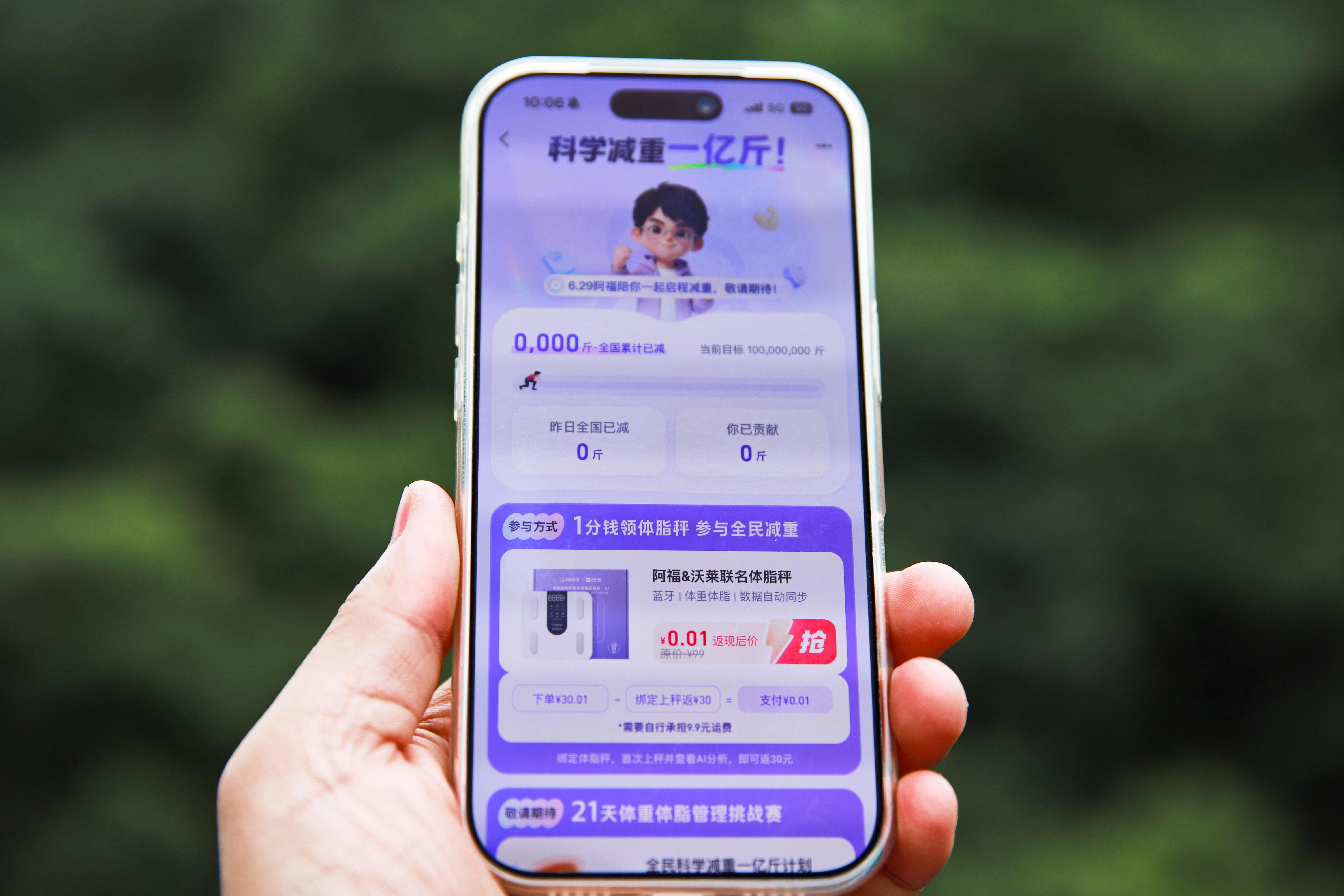
Calculated based on Afu's existing 100 million users, each person only needs to lose 1 jin on average to achieve the small goal of "100 million jin".
Weight loss used to be a lonely ascetic practice for many people: people feel distressed when paying for paid courses, do blind exercises without professional guidance, and give up after just two weeks of persistence. But now, Afu brings tools and companionship to every ordinary person, and openly states that "you are not alone, all netizens across the country are working towards the goal together", which continuously ignites the participation enthusiasm of users who are on the same weight loss journey across the network.
The first batch of users rushed to Afu for weight loss, and the body fat scales were immediately snapped up. Data from the Ant Afu official flagship store shows that the number of claims for this AI body fat scale has exceeded 100,000 units within 8 hours after its launch. Behind the rapidly growing figure, more and more users are participating in scientific weight loss with extremely low access thresholds.
Ordinary people no longer need to feel anxious about weight loss
What ordinary people lack on their weight loss journey is never determination, but scientific methods and easy-to-use tools.
First of all, there are many misunderstandings about weight loss: many people only insist on "eating less or even not eating anything", and rely on strict fasting to lose weight quickly. In fact, real scientific weight loss emphasizes "not eating nothing, but eating right". Only by taking into account calorie deficit, protein, dietary fiber and basic metabolism, paired with reasonable exercise, can people reduce fat and increase muscle. Blindly adopting fragmented weight loss strategies will easily lead to the dead end of dieting that harms health and weight rebound.
Then let's talk about tools. Fitness software requires monthly subscription fees, the cheapest weight loss injection costs hundreds of yuan per month, and professional personal trainers charge by the hour. These configurations that used to be exclusive to the middle class in first- and second-tier cities are unaffordable for most ordinary people in the long run.
Afu's approach this time is very straightforward, and it precisely targets these two pain points at the same time. At the tool level, Afu cooperates with its "hardware partner ecosystem" to drive down the price of body fat scales through subsidies. The body fat scale that originally costs 99 yuan on the market can now be obtained by paying only 0.01 yuan out of pocket plus 9.9 yuan for express delivery, which not only prevents speculators who only seek free benefits, but also delivers body fat scales to people who really need to lose weight. The logic is simple: only when ordinary people master real and comprehensive body data such as body fat percentage and muscle mass percentage, and know where their own problems lie, can weight loss be called "scientific".

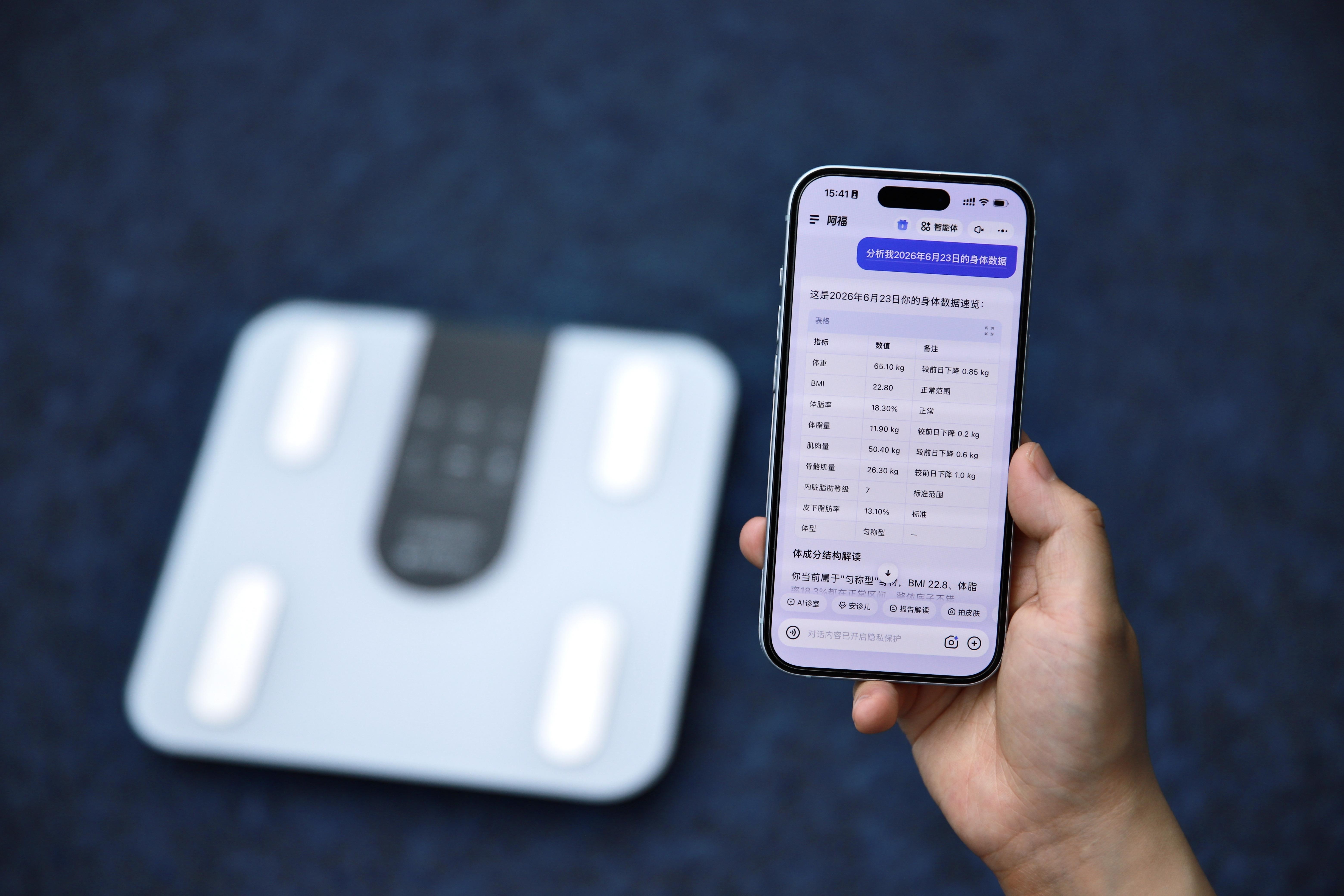
At the same time, Afu has also upgraded its AI function to act as an "AI weight loss buddy". After binding the Afu App with the body fat scale, users can not only view 18 items of health information including weight, body fat percentage, visceral fat and muscle mass in the "My Health" section on the homepage, but also get personalized data analysis, diet and exercise suggestions based on their own data, covering specific details such as how to match each meal, how long to exercise every day, and what type of exercise to do.
In the past, after users bought body fat scales, the monitoring function and professional interpretation function were relatively separated, resulting in long-term idle of device data, which gradually turned into unused ornaments. In this campaign, Afu directly installs the "24-hour online AI weight loss buddy" in mobile phones, forming a closed service loop of "health record - analysis and interpretation - health action".
This set of methods is equivalent to turning the middle-class exclusive weight loss configuration of "body fat scale + professional weight loss coach + nutritionist" from a luxury into an affordable daily product for everyone, through health AI and large-scale supply of body fat scales.
A fitness enthusiast shared his real experience of losing weight with Afu. He is 177cm tall, weighs 190 jin, and his BMI is close to 30. Previously, he had tried to consult general AI models for weight loss advice, and most of the answers pointed out that his BMI exceeded the standard, he was obese and needed to lose weight immediately. This user said: "Afu can capture the characteristic of 'high muscle mass' of my body, and the suggestions are more in line with my actual situation." Afu told him that high BMI does not necessarily mean obesity, and it is better to judge together with waist circumference, body fat and physical examination indicators. Compared with only focusing on reducing weight, it is more important to reduce fat first while preserving muscle.
Of course, tools alone are not enough. Targeting another major taboo of weight loss - "three minutes of enthusiasm", Ant Afu said that it will organize health challenges, and use incentive mechanisms to make users' persistent weight loss process more interesting.
The specific rules of the challenge are still being collected from the whole network, but turning serious weight management into a relaxing game for the whole people to participate in, and using group atmosphere to eliminate boredom, is itself a key step to lower the threshold of weight loss. In Afu's discussion section, many people have started to offer suggestions for rewards to achieve the small goal of 100 million jin. "Suggest launching a school map to let me see who in my class is holding back the progress", "How about automatically converting the grams of weight lost into Ant Forest energy", "How about giving half a jin of shrimp as a reward for losing one jin of meat, have you considered it?", "This 100 million jin big project is totally qualified to apply for the Guinness World Record, right?"

With the combination of affordable hardware, free AI guidance and national weight loss PK, Afu may really fill the service gap on the road of ordinary people's scientific weight loss.
With body fat scales, Afu finds the correct way to apply health AI
The huge popularity of Afu's "Scientific Weight Loss of 100 Million Jin" campaign hits the real weight loss needs of the vast number of ordinary people. From an industry perspective, this is actually a key step for medical and health AI products to shift from low-frequency medical visit scenarios to high-frequency daily health management scenarios.
Afus independent App has been launched for more than a year, and the total number of users has exceeded 100 million, but many users still regard it as an online medical AI tool, whose high-frequency usage scenarios are concentrated in passive medical demands such as AI disease consultation and appointment registration. In fact, as the entrance that Ant has deeply cultivated in the AI+health track, Afu is expected to achieve far more than these.
Zhang Junjie, Vice President of Ant Group and President of Ant Health Business Group, has stated on many occasions that Afu is positioned as an "AI health friend", with the goal of making users "turn to Afu for any health-related matters".
Taking the initiative to manage weight is exactly a daily health demand that covers all age groups, and has the potential to extend AI health services to scenarios such as three daily meals and daily exercise. This can not only further improve user stickiness, but also explore a feasible path for medical and health AI to integrate into the daily life of the public.
At the end of 2024, a field survey completed by the team of Professor Catherine Tucker from MIT Sloan School of Management stated that generative AI "has real value in weight management". The survey was divided into a control group and an AI intervention group, and the results showed that the subjects who used generative AI to get real-time and personalized diet advice had a significantly greater reduction in weight and BMI index than the control group that did not use it; in addition, from the perspective of user portraits, the people who got the most obvious weight loss effect and the greatest benefit are often those with lower education levels and lack of basic nutrition knowledge.
This exactly matches Afu's current user base. Data provided by Ant Afu shows that among the 100 million users, more than half come from third-tier cities, counties and towns, where professional nutritionists and fitness coaches are relatively scarce, the public can hardly obtain systematic and professional fat loss knowledge, and are easily misled by online "folk remedies".
From a professional medical perspective, although weight loss surgery and GLP-1 weight loss drugs work faster, their high cost can hardly cover hundreds of millions of overweight people, and both have certain side effects, so they are not suitable for national promotion. In contrast, AI health weight loss services can be replicated on a large scale, with relatively higher public health cost-effectiveness.
To a certain extent, what AI does is actually "effectively improve health through low-cost intervention".
Of course, AI is not omnipotent. Catherine Tucker's team's research also found that AI "still has limitations in building a sense of community and interpersonal support". After all, weight loss is not only a physiological challenge, but also a psychological battle. The automatically generated incentive information inevitably has the characteristics of repetition and rigidity, and when users face frustration during the plateau period or lose motivation, AI may not be able to provide the understanding and support that can only be established between people.
However, Afu's cleverness lies in that it tries to combine "floor-price body fat scale + AI weight loss guidance + national challenge" to package tools, knowledge and atmosphere together, increasing the probability of making "national scientific weight loss" a success.
The real value of Afu's "Scientific Weight Loss of 100 Million Jin" campaign may not lie in the number itself, but in giving every ordinary person a "toolkit" for scientific weight management. This year will be the final year of the "Weight Management Year" initiative, but the road to national health management has only just begun.
Afu is already ready, how many jin do you plan to lose?