What is the end point of range extenders? Netizens: We've already seen it.
"What is the ultimate destination of range - extended technology?"
This was the first question pre - spoiled by Li Xiang before the launch event of the all - new Li L8 on June 23rd. That night, Liu Jie, the president of Li Auto's product line, gave Li Auto's answer: The ultimate destination of range - extended technology is Li Auto's 5C range - extended technology.
One's stance determines their attitude. So far, the industry has not reached a consensus on this question. Newcomers in the range - extended field, lacking technical route accumulation and product depth, tend to tell a general story: "The end of range - extended technology is super range - extended technology." Pure - electric players who stick to the pure - electric or battery - swapping path are more willing to accept the prediction that "the end of range - extended technology is pure - electric, and the preferred option for pure - electric is battery - swapping."
"There is no truth, only perspectives." As time progresses linearly, the final outcome of range - extended technology is unique. Although the current discussions about the "end" of range - extended technology are intensifying, the final outcome has already been foreshadowed.
In the context where the pure - electric era has become the absolute direction, when car companies are still arguing about what the end of range - extended technology is, it precisely indicates that this technical path is not far from its end.
01
Range - Extended Brands, Holding On Tightly
"The end of range - extended technology is Li Auto's 5C range - extended technology."
Directly and deeply linking a brand name with the end of a technical route is rare even in the current automotive industry where marketing slogans are generally flamboyant. Behind Li Auto's rather "arrogant" and distinct declaration lies pressure, confidence, and its clear - cut stance on the technical route.
As one of the earliest entrants in the domestic range - extended market, range - extended models are the foundation for Li Auto's survival. However, as a large number of new players enter the market and the overall capacity of the range - extended segment continues to shrink, Li Auto, which once dominated the market with its L series, has seen the popularity of its original products gradually decline.
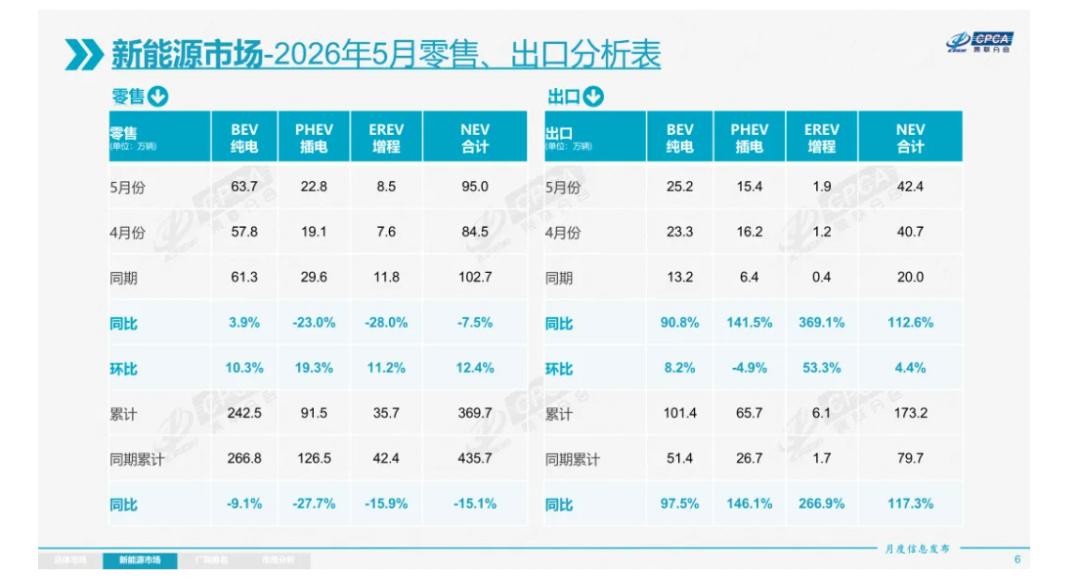
In May, only three range - extended models, such as the Wenjie M6, Wenjie M7, and Volkswagen ID.ERA 9X, sold more than 3,000 units. At the retail end, the sales volume of range - extended models was only 85,000 units, a year - on - year decrease of 28%, leading the decline in the new - energy market. In the long - term sales perspective, the performance of the range - extended market is still not optimistic. From January to May, the cumulative sales volume of range - extended models was 357,000 units, and the gap with plug - in hybrid and pure - electric models continued to widen.
Within Li Auto, after the launch of the pure - electric route, the i series has gradually taken over the sales burden, and the i6 has become the core model for driving sales. According to information revealed at a small - scale shareholders' meeting at the end of May, one of Li Auto's core goals this year is to stabilize the monthly sales volume of the i series above 30,000 units with the release of the i9 in the second half of the year.
Although the rapid growth of the pure - electric segment is beneficial to the overall sales volume, Li Auto is probably not willing to accept it at the cost of marginalizing the range - extended business. Especially high - end range - extended models such as the L9 and L8 have always been the core source of the brand's profits. Stabilizing the basic range - extended market and extending the survival cycle of range - extended models as much as possible can buy more time for expanding the pure - electric increment. Therefore, another core task for Li Auto is to ensure the successful replacement of the entire L series, including the L9, L8, and the subsequent L6.
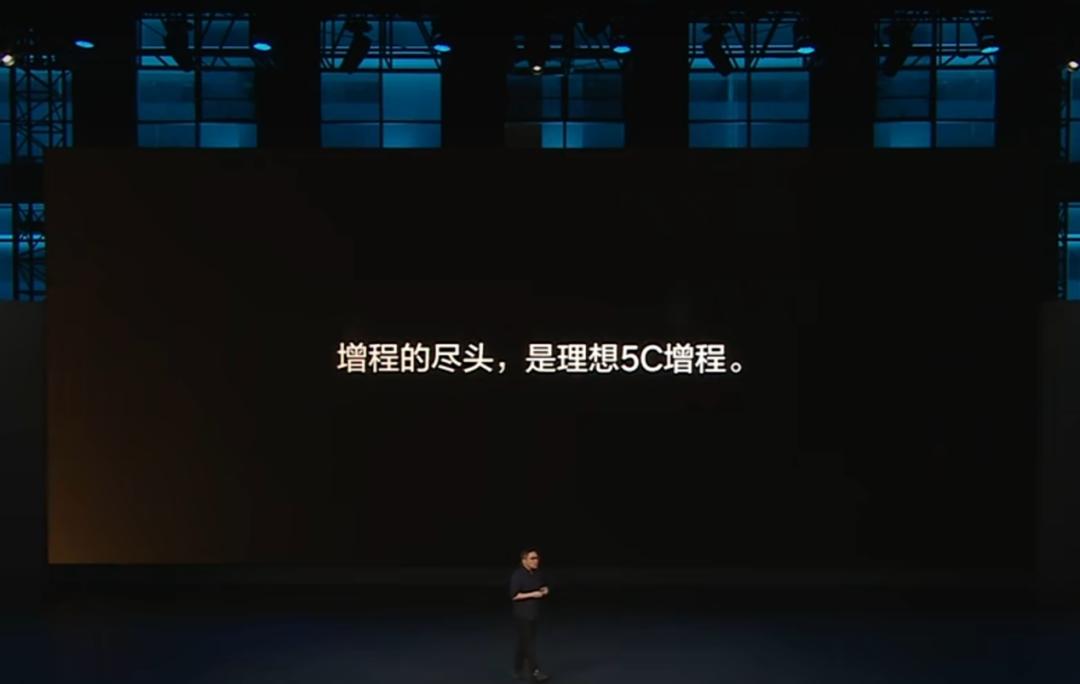
In this context, strengthening its technical barriers in the range - extended market has become the key for Li Auto to break through the dilemma of market shrinkage. The high - profile promotion of "the end of range - extended technology is Li Auto's 5C range - extended technology" is the core action for the brand to consolidate its technical voice.
In terms of product strength, range is the core support for this technical claim. The 72.7 - kWh 5C battery provides a pure - electric range of 430 kilometers, combined with a charging speed of 10 minutes, which is sufficient for the new car to function as a pure - electric vehicle in short - distance commuting. In the latest mileage test conducted by Yiche, the all - new Li L8 also achieved a comprehensive range of 1,779 kilometers, which is sufficient to prove the hardcore strength of Li Auto's 5C range - extended technology.
However, not all entrants have sufficient accumulation and depth to define the end of range - extended technology with their own brands. For new range - extended players with a relatively small user base, they tend to tell a more moderate story: "The end of range - extended technology is super range - extended technology."
Brands such as IM Motors, Leapmotor, XPeng, and Deepal have successively laid out in this direction, and joint - venture brands such as SAIC Volkswagen and Dongfeng Nissan are also entering the range - extended field.
The so - called super range - extended models refer to a new batch of range - extended vehicles with a CLTC pure - electric range generally above 400 kilometers. Since last year, large - capacity batteries have become the standard for range - extended models, and the recently updated all - new Li L8 and L9 also follow the same concept.
Take XPeng, which has increased investment in range - extended R & D in recent years, as an example. After overseas visits and research, He Xiaopeng judged that although the domestic range - extended market is under sales pressure, the charging infrastructure in many overseas countries is still imperfect. With the continuous increase in China's automobile export volume, range - extended models are highly adaptable to the overseas market and can bring substantial profits to the enterprise.
In addition, even though fast - charging technology is constantly improving, range anxiety has not been completely eliminated. The 400 - kilometer pure - electric range and over - thousand - kilometer comprehensive range provided by super range - extended models can not only meet daily pure - electric travel but also eliminate charging concerns in long - distance scenarios. For joint - venture brands, entering the range - extended field can not only improve the power matrix but also make up for the late start in the pure - electric route to a certain extent.
02
When Discussing the End
It's Not Far from the End
When you stare into the abyss, the abyss also stares back at you. Similarly, when car companies are arguing fiercely about the end of range - extended technology, it may indicate that range - extended technology is approaching its end, dancing its last dance.
"Range - extended vehicles are making the battery packs larger and larger, which is to further reduce the startup of the range extender. You used to use it five or six times a year, but now you may only use it once or twice a year. It doesn't seem cost - effective to carry hundreds of kilograms of stuff around every day when driving." Previously, Li Bin, who focuses on pure - electric vehicles, once euphemistically expressed the embarrassment of range - extended vehicles.
As he said, if the range extender is rarely started in a year and daily driving almost completely relies on the pure - electric mode, it is not cost - effective for consumers to carry a heavy range - extended system around. In fact, many owners who once chose range - extended vehicles due to range anxiety found that they were mostly in the pure - electric mode during actual use and clearly stated that they would switch to a pure - electric vehicle for their next purchase.
Thus, a third view has emerged, which is currently the most likely outcome: "The end of range - extended technology is pure - electric."
In May, against the backdrop of a 22% year - on - year decline in the overall sales volume of domestic passenger cars, only pure - electric vehicles achieved sales growth. Despite the continuous reduction of relevant purchase subsidies, the sales volume of pure - electric vehicles still increased by 4% year - on - year, with a total of 637,000 units sold, setting a new historical high of 42% penetration rate in the domestic passenger car market.
The greatest significance of range - extended technology is to relieve the anxiety caused by the insufficient range of pure - electric vehicles. However, with the development of flash - charging technology and batteries, some pure - electric models have achieved a range of over 1,000 kilometers, and the charging speed is controlled within 10 minutes, which undoubtedly greatly alleviates the range anxiety of range - extended vehicle owners.
Furthermore, there are many pure - electric vehicles on the market with a range of over 700 kilometers. The commuting range of traditional practical gasoline vehicles in urban areas mostly hovers between 700 - 800 kilometers. With faster charging speed and better charging experience, the user experience of pure - electric vehicles has actually been greatly improved.
At the Beijing Auto Show in April, among the 215 exhibited models, new - energy vehicles accounted for over 70%. Among them, the number of pure - electric models (88) exceeded the sum of plug - in hybrid and range - extended models. In addition, the proportion of pure - electric and range - extended models in single - model sales has also undergone a great change. At the initial stage of the launch of the Denza Z9GT, the proportion of pure - electric orders was 78%, which is exactly the opposite of the previous situation where range - extended orders accounted for 80% - 90%. 80% of the new orders for BYD's Ocean Network are for pure - electric models, and the pure - electric version of the Nissan NX8 accounts for 80% of the order volume. Even Li Auto, an old player in the range - extended field, has shifted its sales focus to the pure - electric model i6.
With the future technological breakthroughs in solid - state batteries and the expansion of charging pile networks, the short - term transitional nature of range - extended technology will become more obvious.
Half a year ago, when the super range - extended solution of a large battery + a small fuel tank was regarded as the development direction of the range - extended route, no one would have thought that the market would change so rapidly and completely.
Currently, consumers can still choose range - extended models according to their actual vehicle - use needs, and car companies can still find development space for range - extended technology overseas. Range - extended vehicles will surely retain a small market share, just like gasoline vehicles. However, as time progresses linearly, the final outcome of range - extended technology is doomed to be unique and certain.
When everyone starts to ask about the "end," it means that the transformation is approaching. How to make good use of the last window of range - extended technology to create more profits and buy more time for the pure - electric transformation may be a question that enterprises need to think about more at present.
This article is from the WeChat official account "Automobile Commune" (ID: iAUTO2010), written by Sai Jiatong and edited by He Zengrong. It is reprinted by 36Kr with permission.