Tea Brands Are All Selling Ice Cream: A Hidden Battle Over "Time"
At 10 a.m. on May 21, 2026, on Wukang Road in Shanghai.
The Bawang Cha Ji store hadn't opened yet, but there were already more than twenty people queuing at the door. They weren't there to buy Boya Juexian - on this day, Bawang Cha Ji simultaneously launched "Cha Latte" in 9 cities across the country. They poured the signature tea base into an Italian Gelato freezer and made tea - flavored ice cream at 18 yuan per scoop.
On the same day, the same queuing scenes were replicated in different cities, such as Shenzhen Mixc World, Chengdu Taikoo Li, and Beijing Sanlitun.
In Zhengzhou, the "Ice Cream Hut" downstairs of the headquarters of Mixue Bingcheng had been popular for several months. A cone cost 2 yuan. During the May Day holiday, the peak daily passenger flow reached 30,000, with an average queuing time of 5 hours. The daily revenue from cones was at least 60,000 yuan - not counting the 9 - yuan limited - edition sundae bowls that were also purchased.
On June 1st, Heytea opened its first independent "Heygelato Lab +" at Xiamen Mixc City, upgrading Gelato from the store's product line to an independent space. The "Porcini Heygelato" co - branded with a Michelin chef in the store was full of a sense of novelty, which was in line with Heytea's consistent style.
A week later, General Mills issued an official announcement: Ningji, with an average consumption of 15 yuan per person, officially obtained the exclusive operation right of 171 core stores of Haagen - Dazs in the Chinese mainland.
In the summer of 2026, milk tea sellers collectively flocked to the ice cream track. According to statistics from Yilan Business, in just the first five months, 6 mainstream tea beverage brands launched 31 ice products. From 2 - yuan cones to high - end ice creams costing over 50 yuan, tea beverage brands used ice cream to push themselves to two extremes: either extremely cheap or offering an extremely high - end experience. There was hardly anyone daring to occupy the middle ground.
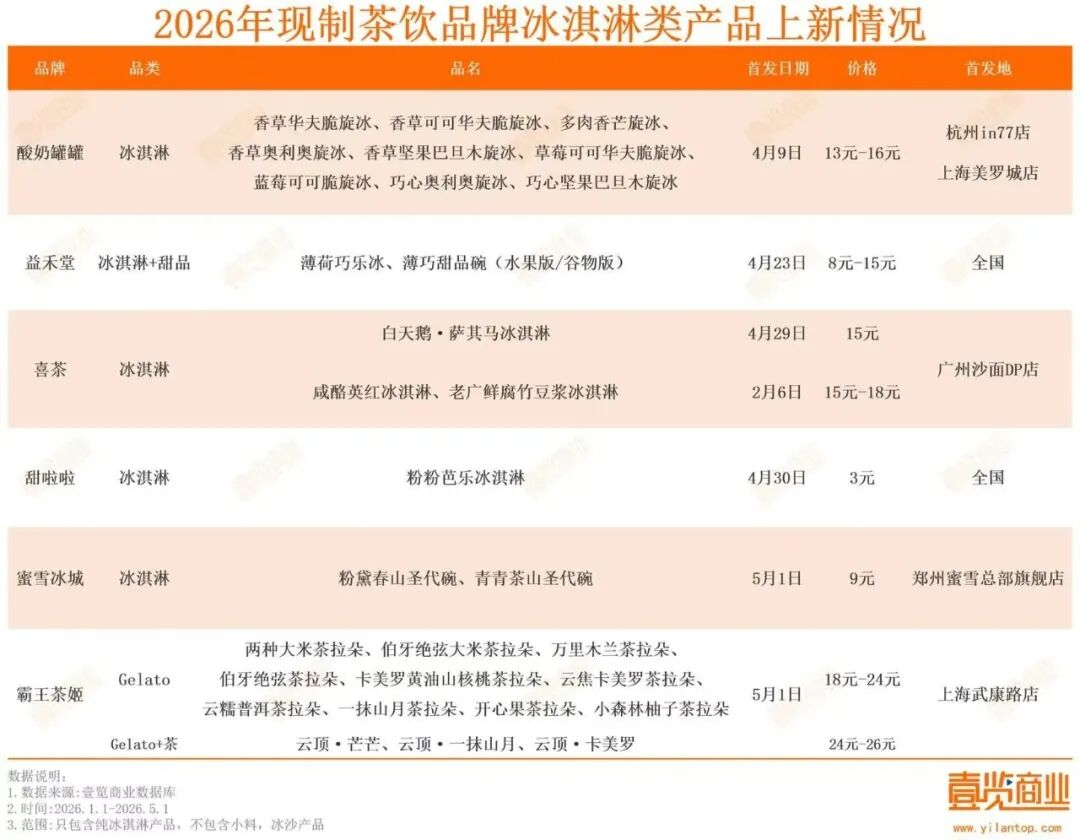
Behind this collective entry, two curves are intersecting.
One is the inflection point of the growth rate in the tea beverage industry. Data from the Hongcan Industry Research Institute shows that the market size of the new tea beverage market in 2025 was 187 billion yuan, and the growth rate dropped sharply from 19.3% in 2023 to 6.4%. The sample brands closed nearly 30,000 stores net throughout the year. Two consecutive years of decline in the growth rate means that it's no longer possible to earn incremental revenue just by opening new stores.
The other is the structural opportunity in the ice cream market. Data from iMedia Research shows that the market size of the Chinese ice cream market in 2024 reached 183.5 billion yuan. Among them, the market size of Italian Gelato increased from 5.43 billion yuan in 2019 to 12.222 billion yuan in 2024, with an annual compound growth rate of 17.62%, far exceeding the industry average.
One industry has reached the peak of its growth, while the other is booming. This is the underlying logic of this collective cross - border move.
1. Why ice cream?
Cross - border moves by tea beverage brands are not new. A few years ago, the entire industry flocked to the coffee business. Nayuki even changed its store name to "Nayuki's Tea & Coffee"; later, they also tried the baking, breakfast, and snack businesses... Most of these attempts ended up in vain. The revenue of Nayuki's baking business declined for four consecutive years, and in 2025, it was only 352 million yuan, more than half of the peak in 2022. Maotai Ice Cream spent about 460 million yuan on marketing, and three years later, its business department was dissolved, leaving only a few scenic - spot stores.
Why can ice cream succeed? Because it meets three conditions simultaneously, while coffee and baking only meet one or two of them.
Highly reusable supply chain. Milk bases, fruits, and syrups are the same raw materials used in both tea beverages and ice cream, with a coincidence rate of 70% - 80%. The existing cold chain can meet the - 18°C storage requirements by adjusting the temperature zones, without the need to rebuild the logistics system. The only real new additions are a desktop ice cream machine costing 3,000 to 10,000 yuan and an operation space of 1 to 2 square meters, and the marginal gross profit margin can reach over 65%.
Mixue Bingcheng has taken full advantage of this. It is essentially an S2B2C supply - chain company - in 2025, its sales revenue from goods and equipment was 32.766 billion yuan, accounting for 97.6% of its total revenue. It produces 100% of its core ingredients by itself, with five production bases having an annual production capacity of 1.65 million tons. This has pushed the cost of its 2 - yuan cone down to 1.2 to 1.4 yuan, the lowest in the industry. The popularity of the "Ice Cream Hut" at its Zhengzhou headquarters is a concentrated manifestation of extreme cost - effectiveness.

Higher profit efficiency. The gross profit margin of freshly - made soft ice cream is 62% - 68%, and that of Gelato can reach 65% - 70%, generally higher than the 55% - 62% level of tea beverage stores. It can also increase the average customer spending by 15% to 25%. In well - run stores, the revenue from ice products can account for over 30%.
The market pattern is far from solidified. The coffee market has been squeezed to the 9.9 - yuan price range, while the baking industry faces the problems of a large number of SKUs, high losses, and difficulty in standardization. Ice cream is different: foreign brands are systematically withdrawing, and domestic brands have not yet formed an absolute leader, so the window of opportunity still exists.
Haagen - Dazs' contraction is the most representative: at its peak in 2019, it had 557 stores in the Chinese mainland, but by 2026, only 171 core stores were transferred to Ningji, with over 380 stores closed in seven years. The CFO of General Mills said bluntly that "the direct - operation model is not the company's core competence" - the average customer spending of over 50 yuan cannot support the rent in core business districts.
Haagen - Dazs is not the only one withdrawing. The first store of the Italian Gelato brand GROM in Shanghai in 2019 was 177 square meters, but it withdrew from the market entirely after three years. Baskin - Robbins had over 90 stores at its peak, but now there are less than 10. The store locations and market gaps vacated by foreign brands are being filled by domestic brands one by one.
However, these three conditions still don't explain the most crucial question: Why in 2026? Why did all the brands seem to have made an appointment and enter the market collectively this summer?
The answer lies in an easily overlooked aspect - store operating hours.
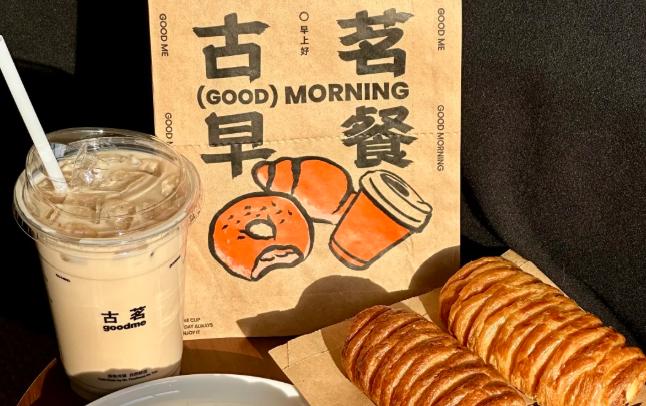
Traditional tea beverage stores have a peak cup - output period of only 4 to 5 hours in the afternoon. In the morning, the equipment is idle, the labor is redundant, but the rent has to be paid in full. Guming once piloted a breakfast combination in thousands of stores in Guangdong and Guangxi. Without large - scale promotion, the average daily turnover of each store increased by over 200 yuan. This income is not large, but the logic is clear: there is real money hidden in the idle hours.
Ice cream can open up more consumption scenarios - buying and eating while shopping, relieving greasiness after a late - night snack or a meal, and socializing through check - ins - all are areas where tea beverages originally had a weak presence. So in 2026, Mixue Bingcheng made a significant adjustment: it actively slowed down the pace of opening new stores, and the core assessment indicator shifted from "the number of new stores opened" to "the increase in the turnover of each store."
This is not just adding a new product line, but a re - division of the 16 - hour operating time of each store.
2. Three different bets
Brands with different endowments have taken three completely different paths.
Mixue Bingcheng has taken the "supply - chain dominance" path. It targets the 2 - 9 - yuan price range and relies on its 46,000 stores and fully self - produced supply chain to penetrate the sinking market. Its 2 - yuan cone is not the result of subsidies, but is achieved by its annual production capacity of 1.65 million tons and 100% self - production of core ingredients. The barrier lies in the supply chain and cannot be copied by others.
The core question is whether the brand can move upmarket. The attempt with the 9 - yuan sundae bowl is to explore the ceiling of the "affordable" label.
Bawang Cha Ji and Heytea are in the 18 - 24 - yuan price range and are conducting experiments with brand premium. However, their paths are opposite - Bawang Cha Ji "dig deep internally" and directly translates classic tea bases such as Boya Juexian into Gelato, using the concept of "only tea can prevail" to build category exclusivity; Heytea "cross - borders externally", creating topics through co - branding and independent LAB stores to attract high - end consumers.
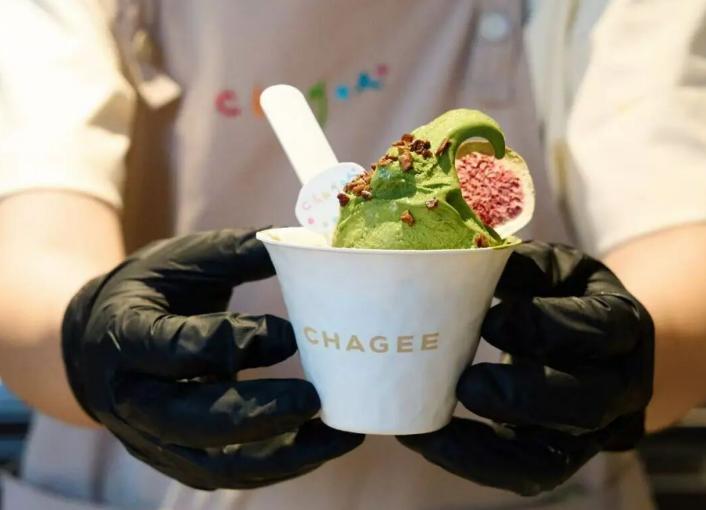
Both paths point to the same question: the hidden costs of Gelato, such as losses, depreciation, and labor, are not low. Whether the current pricing can cover all - round costs still needs time to be verified.
Ningji's choice is the most radical - taking over Haagen - Dazs with a light - asset model. It values the rare store locations of Haagen - Dazs, 73% of which are on the first floor of core shopping malls.
However, the contradictions are also the most prominent: Ningji has an average customer spending of 14.86 yuan and operates 1,799 stores through a franchise system; Haagen - Dazs has an average customer spending of 54.81 yuan and provides high - end services through a direct - operation model. The underlying logics of the two systems hardly intersect, and the supply chains are also difficult to coordinate. Taking over this burden is not easy.
These three paths present three fundamental questions: Mixue Bingcheng needs to answer "Can efficiency lead to brand building?"; Bawang Cha Ji and Heytea need to answer "Can the pricing cover the costs?"; Ningji needs to answer "Can the franchise system operate a high - end direct - operation business?"
3. Summer will always pass
This ice - cream frenzy faces several insurmountable challenges.
Seasonality. Data from the China National Food Industry Association shows that the revenue of the ice cream industry during the peak season from June to September accounts for 62% of the annual revenue. The remaining 8 months have to cover all the fixed costs with only 38% of the income. Leading brands can hedge against this through a product matrix of "ice cream in summer and tea in winter", but small and medium - sized franchisees who open independent ice cream shops blindly are completely exposed to seasonal fluctuations, and the number of stores closing during the off - season is increasing year by year.
Losses. Gelato is made by hand on - site, and the industry's average loss rate is 15% - 22% - raw material pre - treatment, production debugging, melting during sales, and free - tasting promotions all erode profits.
Data from the LeadLeo Research Institute shows that the average pay - back period in the industry is over 10 months, and stores with poor location choices need over 18 months. The rent on the first floor of core business districts in Shanghai is about 12 - 25 yuan per square meter per day, and the combined cost of rent, labor, and losses accounts for over 40% of the operating costs.
Homogenization. This is the most fatal problem. Among the 31 ice products launched by 6 brands, the vast majority follow the same logic of "own tea base + Gelato + ingredients", and jasmine green tea base accounts for nearly 70% of the new products. The high - degree of formula coincidence combined with the over - use of co - branding has made over 60% of consumers regard it as the primary problem in the industry, and the window for developing popular products has been compressed from several months to several weeks.
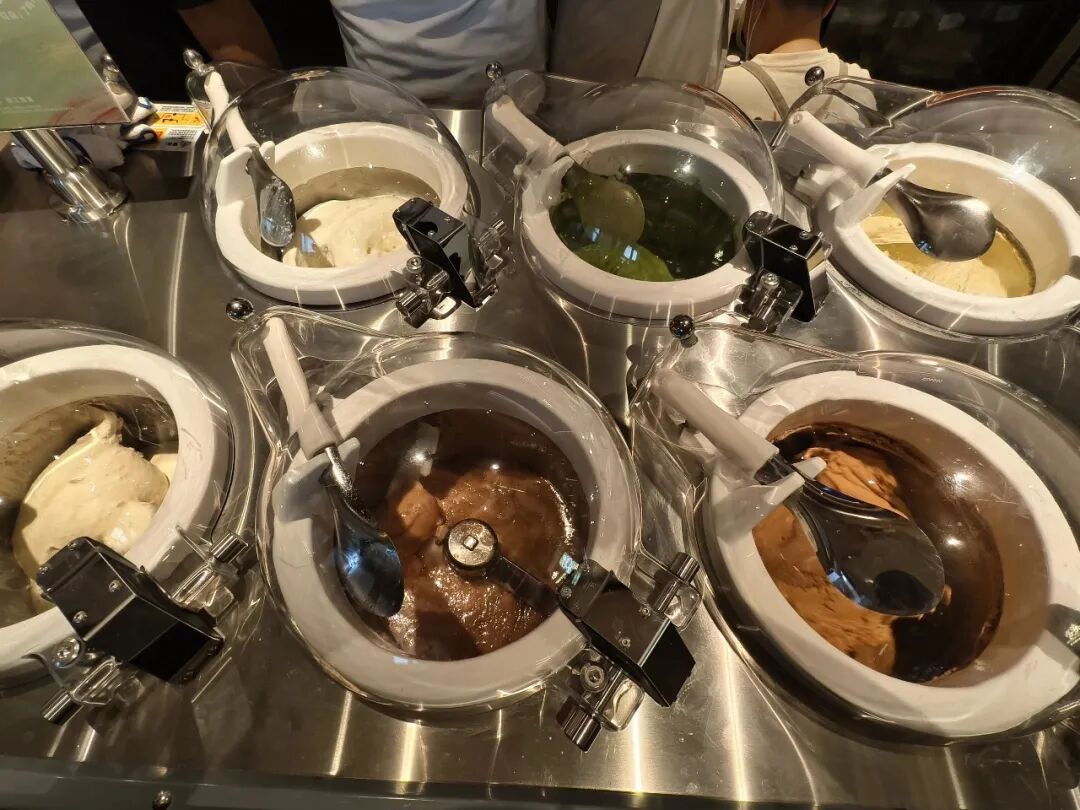
The "popular product - imitation - price reduction - ineffectiveness" death cycle in the tea beverage industry is being rapidly replicated in the ice cream market. This time, the speed is faster because everyone is using the same raw materials, the same equipment, and the same logic.
In the long run, this market is likely to develop into a dumbbell - shaped structure: on one end is Mixue Bingcheng's affordable and high - frequency model, with 2 - 6 - yuan products to maintain the basic market and relying on scale to reduce costs; on the other end, Heytea and Bawang Cha Ji, with their tea - base barriers and brand premium, will firmly occupy the mid - to high - end market in the 18 - 24 - yuan range.
The middle - price range will bear the brunt - the store - opening speed of Mr. Ye Ren slowed down significantly in 2026, and Bobbi & Ice, which sticks to the 12 - yuan price range, is in an awkward position as it can't offer high - end experiences on the one hand and extreme cost - effectiveness on the other.
