Thousands of development zones in China are facing a major reshuffle
Do you know where the real engine of China's economy lies?
It's not just as simple as Beijing, Shanghai, Guangzhou, and Shenzhen.
In fact, thousands of development zones across the country - especially the 232 national economic and technological development zones among them - have created nearly 1/8 of the country's GDP and 1/4 of the total import and export volume with less than 0.3% of the country's land area.
They are the engines of China's industrialization, the first stop for foreign investment to enter China, and the birthplaces of numerous manufacturing myths.
However, in recent years, this engine has been undergoing an unprecedented transformation.
Liaoning merged and abolished 17 provincial-level and above economic development zones in less than 5 months, and plans to cut another 28 this year.
All 103 development zones in Guizhou have been required to divest their social functions, and the number of parks in Chongqing has been reduced by more than 50%.
Why?
Why do the development zones, which were once the panacea for local economies, now need to "slim down"?
Actually, behind this reform lies a profound transformation in the logic of China's economic growth.
It's Not the First Shuffle
Let's rewind the time to May 4, 1984.
The Party Central Committee and the State Council approved and forwarded the "Summary of the Symposium on Some Coastal Cities", deciding to further open up 14 coastal port cities and establish economic and technological development zones in places with conditions, implementing some policies of special economic zones.
On September 25, 1984, the State Council approved the establishment of China's first economic and technological development zone - Dalian Economic and Technological Development Zone.
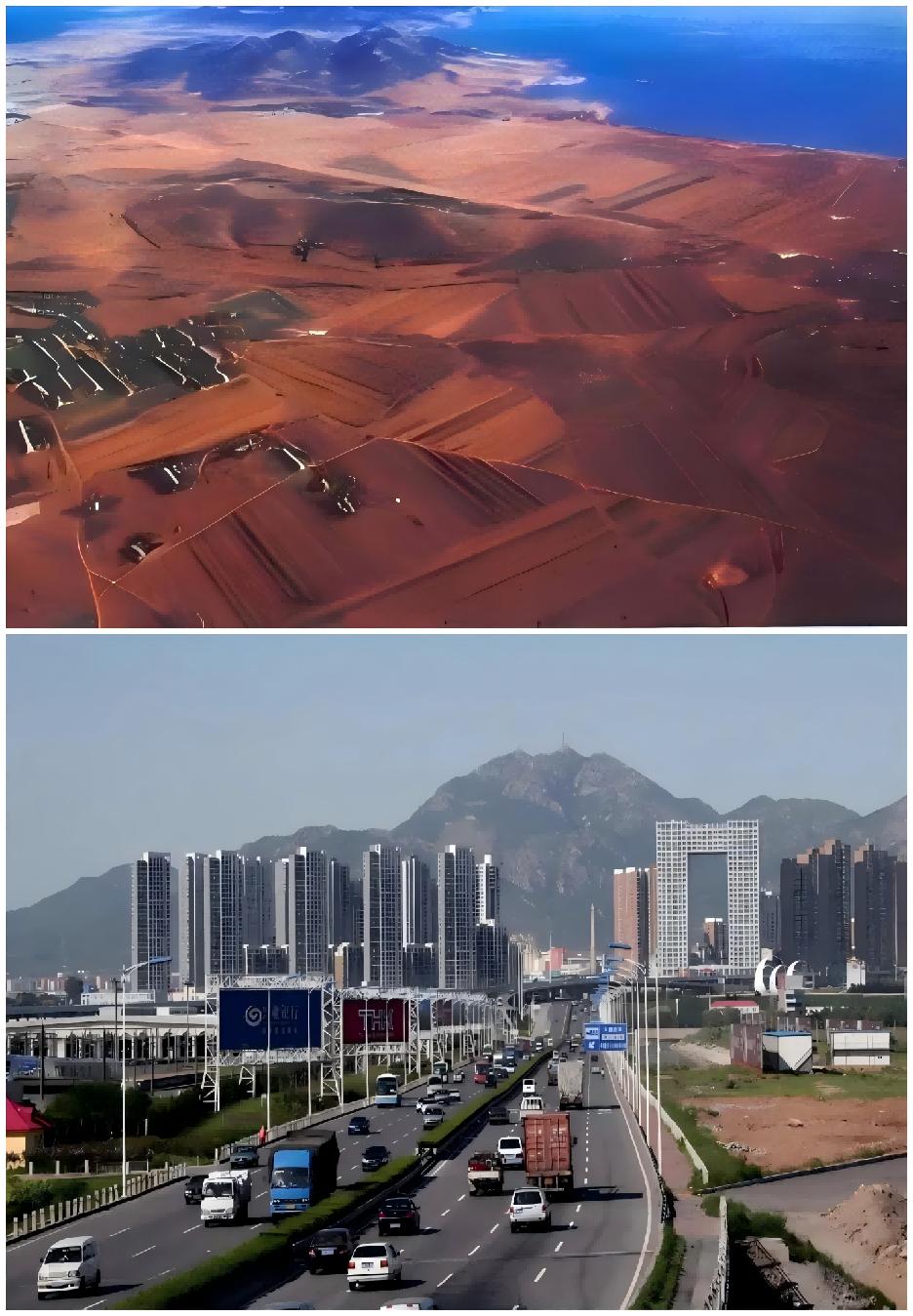
Dalian Economic and Technological Development Zone
Then, after the great leader's "Southern Tour Speech" in 1992, the first round of "development zone fever" swept across the country.
Provinces, cities, and counties all over the country set aside land to establish development zones and hung up signs to attract investment.
Without industrial foundation, supporting facilities, or even enterprises to settle in, they would hang up the signs first.
By 2003, the number of various development zones across the country had swelled to 6,866.
This number is really scary.
You know, at that time, there were only 2,861 county-level administrative divisions in the Chinese mainland, with an average of 2.4 development zones per county.
In 2003, the Ministry of Land and Resources and the National Development and Reform Commission jointly carried out a large-scale cleanup and rectification. The number of development zones across the country was reduced from 6,866 to 1,568, and the area of cancellation reached 24,900 square kilometers - equivalent to the area of the entire Hainan Island.
But at this time, China had just entered the "golden 20 years of development". As the economy grew, the number of development zones rebounded again.
Around 2018, the total number of various development zones exceeded 2,500 again.
The number is not the key. The key is that many development zones are actually overrated.
For example, there is a Gongchangling Economic Development Zone in Liaoyang City, Liaoning Province. It was originally a provincial-level economic development zone focusing on health care, but it was officially abolished last month.
Why?
The 5.15-square-kilometer area of the Gongchangling Economic Development Zone highly overlaps with the Gongchangling administrative area, resulting in situations such as "one territory, two sets of personnel" and enterprises having to "run back and forth" when handling affairs.
A large amount of industrial land here is idle, and there are very few enterprises settled in. A considerable part of the daily work of the management committee is to handle land disputes in villages within the jurisdiction and residents' petitions.
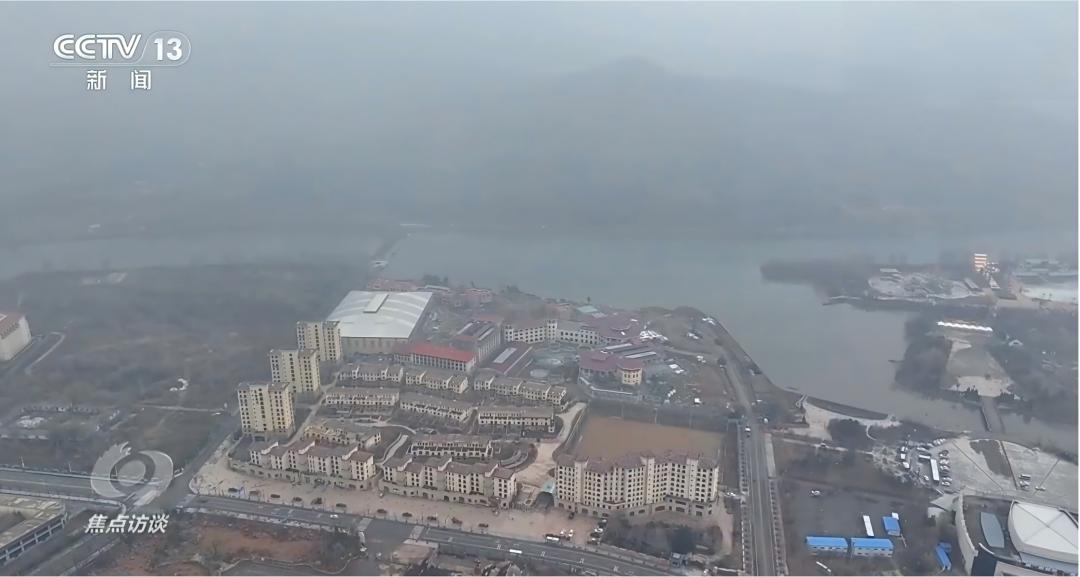
In June this year, the Gongchangling Economic Development Zone was reported by CCTV's "Focus Interview"
An economic development zone has become an "empty shell institution" without industries.
This is not an isolated case.
Before this rectification and reform, there were 92 provincial-level economic development zones in Liaoning Province.
A considerable part of them are small in area, have few enterprises, and low output value. They have similar industries to other surrounding parks and can only compete with each other by offering lower land prices.
Some parks have an annual industrial output value of less than 100 million yuan, but they support more than a dozen internal institutions and dozens of staff.
Looking across the country, in 2022, the number of development zones in Henan was reduced from 288 to 184.
Since 2023, the number of parks in Chongqing has been reduced by more than 50%, the management institutions have been streamlined by more than 50%, and nearly 500 park operation companies have been reduced.
Only the fittest can survive. Development zones that do not conform to economic laws are difficult to continue to exist.
However, even the surviving development zones are facing another deeper transformation.
What does this mean?
The Economic Engine Turns into a "Small Government"
Behind the development zones is the "institutional dividend".
That is, within a specific geographical scope, create a policy depression more preferential than the surrounding areas, and use relatively better infrastructure, administrative efficiency, and resource support to attract the agglomeration of capital and industries.
In the early years, most economic development zones were selected in rural open spaces on the outskirts of cities.
There were neither mature urban infrastructure nor a perfect administrative management system in the surrounding areas.
When foreign-funded enterprises and workers came, what about the living facilities and transportation? What about health care and children's education?
The management committee had to solve these problems by itself, building schools, hospitals, communities, and even police stations.
And this is an important part of the investment promotion work.
An industrial area gradually developed a complete urban management system.
This is the helplessness of reality and the inevitability of history.
A person from the management committee of a national economic development zone once told the media: "In the era of rapid development of development zones, assigning townships and streets to development zones can more effectively meet the land needs of development zones. Education, medical care, etc. are also tools for investment promotion."
It's very straightforward: behind enterprises are people, and schools and hospitals are used to compete for enterprises.
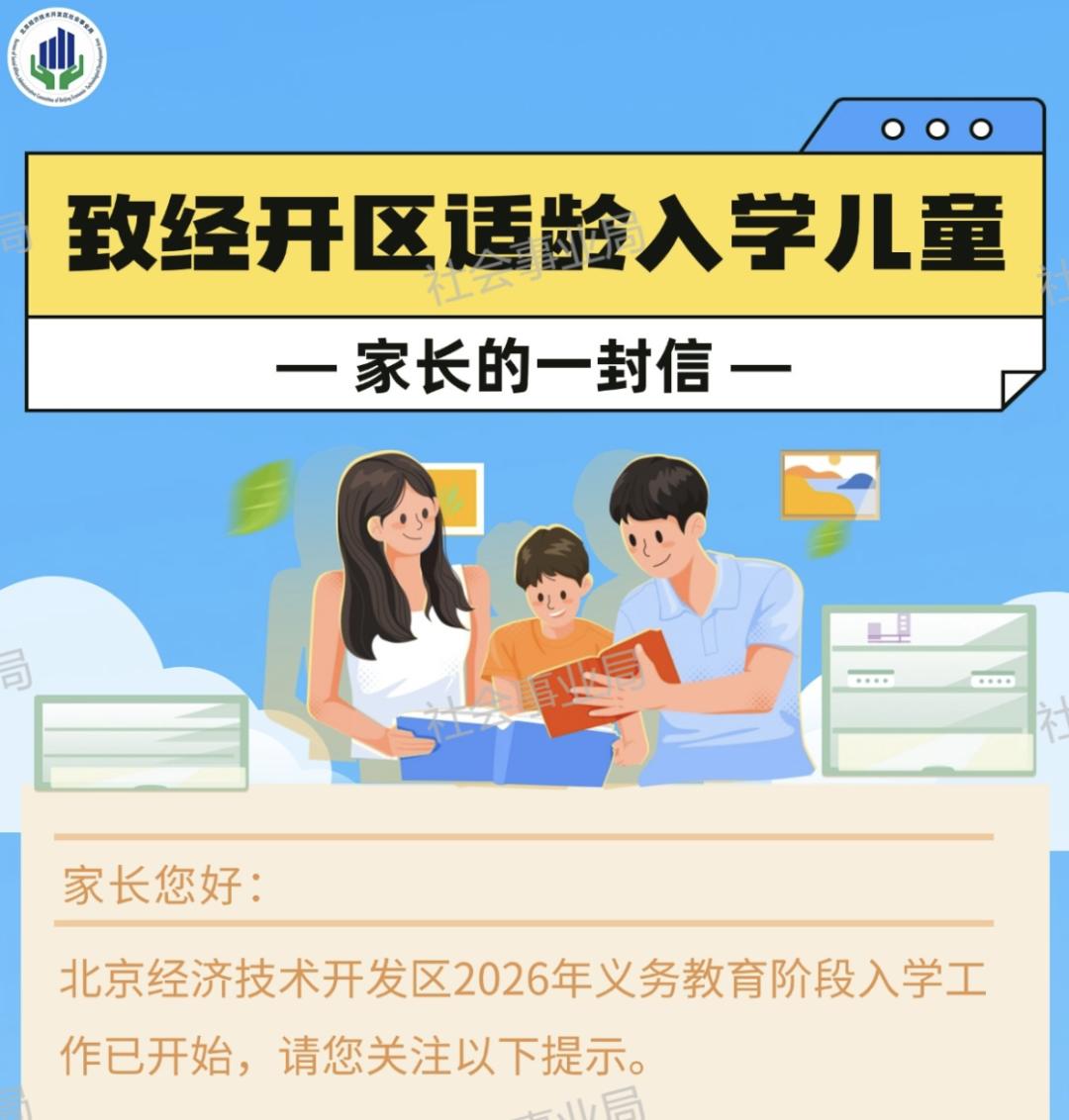
The Beijing Economic and Technological Development Zone administers two streets, has an independent enrollment registration port for compulsory education, and is managed by the Social Affairs Bureau of the management committee
With the expansion of urbanization, the boundaries of development zones are getting larger and larger.
New townships and villages in the surrounding areas are included in the jurisdiction, and the original social management functions are also transferred to the management committee.
The social affairs in the hands of the management committee are getting more and more, and the burden is getting heavier and heavier.
But today, this "burden" has reached an astonishing level.
For example, the Xi'an Yanliang National Aviation High-tech Industrial Base was upgraded to the Shaanxi Aviation Economic and Technological Development Zone, a national-level economic development zone, in 2010. It is currently the only national-level economic development zone with aviation as its characteristic in China.
But before 2021, the Yanliang District of Xi'an and the aviation base were "one institution, two signs".
In other words, the management committee of the aviation base simultaneously undertakes as many as 104 social affairs management functions.
What's behind it?
A management committee director has to deal with school enrollment issues, hospital disputes, villagers' petitions, urban management law enforcement... in the jurisdiction every day.
How much time and energy does he have to study industrial policies, negotiate investment promotion projects, and serve the needs of enterprises?
Originally, it was supposed to create incremental value, but in the end, it became a zero-sum game.
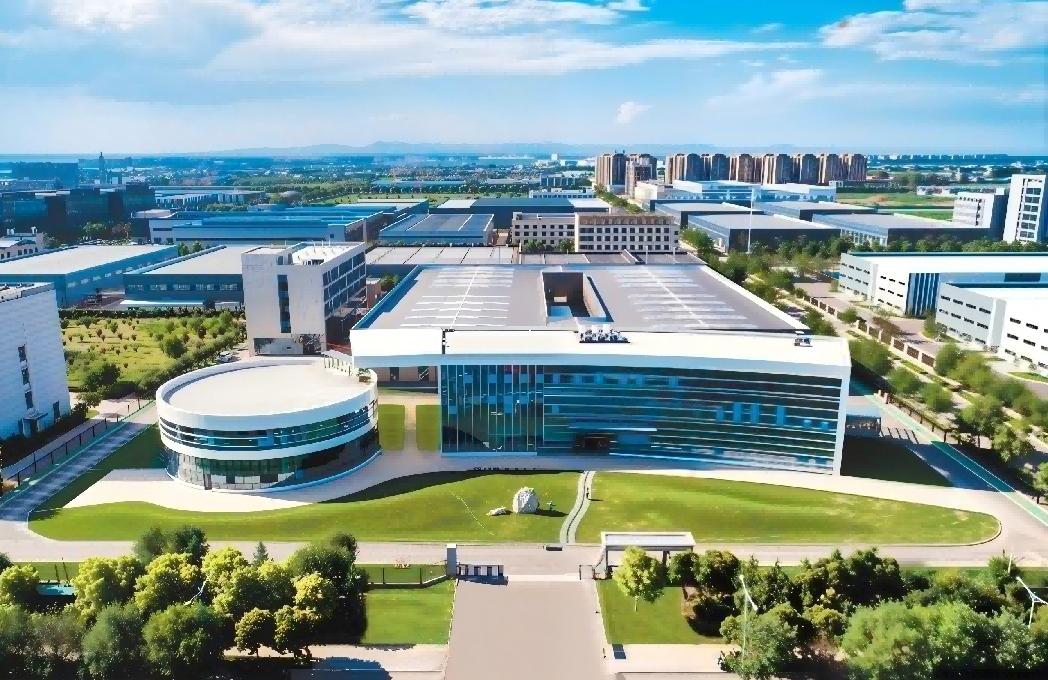
The Intelligent Manufacturing Center Industrial Park in Yanliang District, Xi'an (Aviation Base)
Every bit of energy occupied by social affairs is snatched from economic development.
In recent years, a more hidden problem has begun to emerge, which is the financial problem.
The schools in the development zone need to operate, the hospitals need to provide services, the roads need to be repaired, the sub-district offices need to pay salaries, and the landscaping needs to be maintained...
None of these expenses can be reduced.
But what about the income?
The land finance has reached its end.
Some inefficient development zones are now suffering as much as they were dependent on land transfer income in the past.
Industry insiders pointed out: The phenomenon of park cancellation and integration across the country is essentially due to the unsustainability of the land finance development model and the accelerated resolution of the debts of urban investment platforms.
The "small government" model, which used to represent orderliness and efficiency, has now become a "burden".
This is a reality that has to be admitted.
What Do Outstanding Development Zones Look Like?
In the first five months of 2026, the total value of foreign trade imports and exports of the Suzhou Industrial Park reached 659.09 billion yuan, a year-on-year increase of 110.1%.
For 10 consecutive months, it has refreshed the monthly scale historical record.
What does this mean?
The Suzhou Industrial Park covers an area of 278 square kilometers.
With 3.2% of the total area of Suzhou City, it contributes 44.5% of the city's total import and export volume.
The foreign trade volume of this park in just five months has exceeded the annual level of many big cities.
Of course, this is partly due to the explosion of the memory chip industry this year. But the indisputable fact is that the Suzhou Industrial Park is the first national-level economic development zone in China with a GDP exceeding 400 billion yuan.
In 2025, the GDP of the Suzhou Industrial Park further increased to 416.31 billion yuan.
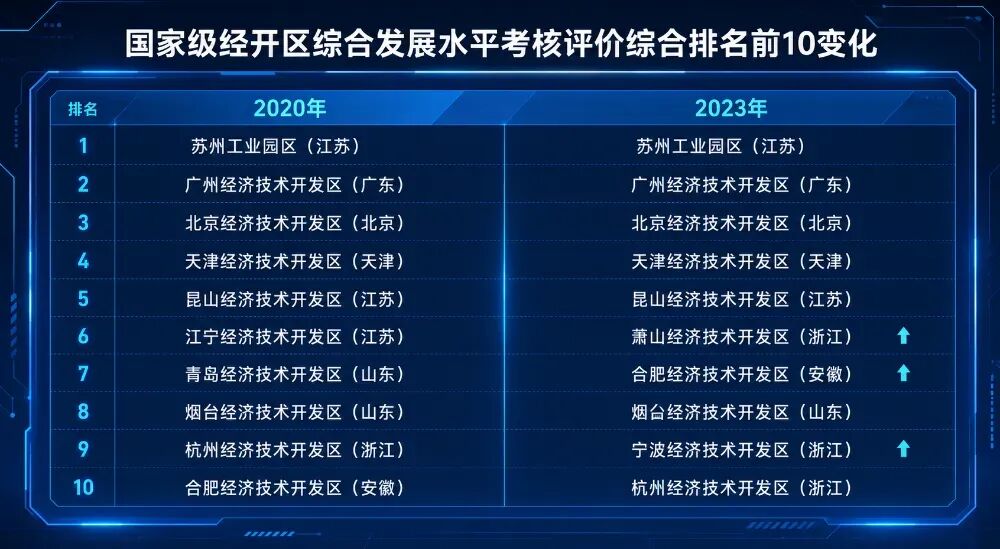
In the comprehensive development level assessment of national-level economic development zones, the Suzhou Industrial Park has ranked first for nine consecutive years.
Why is it so successful?
The Suzhou Industrial Park was established in 1994, drawing on the experience of the Jurong Industrial Park in Singapore.
From the very beginning, it established a principle: the separation of the administrative management subject and the development and construction subject.
The management committee is responsible for policy formulation, administrative approval, and optimization of the business environment. It implements the large department system according to the merger of functions, and the personnel scale is only 1/3 to 1/2 of that of an administrative region with the same population. It is a benchmark for a streamlined and efficient administrative system in China.
Specific land development, carrier construction, park operation, and industrial investment are all entrusted to professional market-oriented platform companies, forming a multi-level and vertical operation system.
Among them, the China-Singapore Group is the core development subject of the park and also the flagship platform for cooperation between China and Singapore.
The Suzhou BioBAY is a benchmark for the professional operation of industrial parks in China. The operation team mainly comes from the biomedical industry and has a deep understanding of the pain points in the whole process of enterprises from R & D to listing.
This is the most core institutional gene of the Suzhou Industrial Park and also the secret of its prosperity for thirty years.
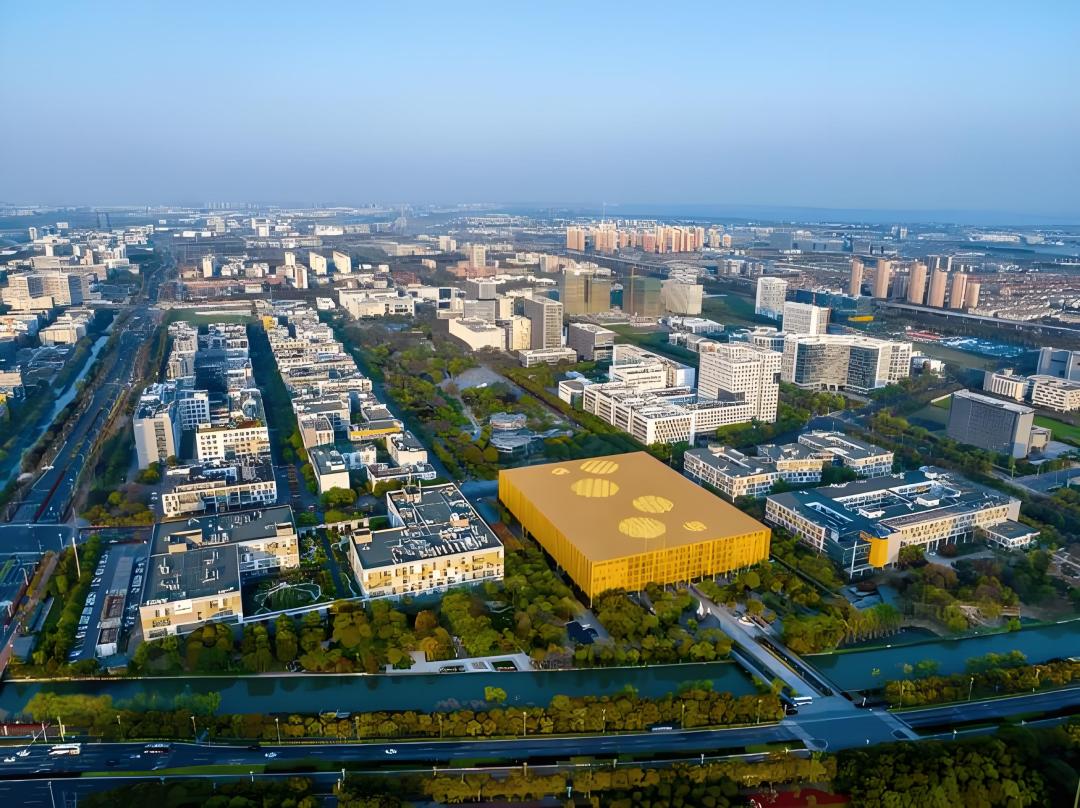
The Suzhou BioBAY is a science and technology innovation carrier built by the Suzhou Industrial Park
to cultivate the biomedical industry
There is also the well - known Hefei Economic Development Zone.
In the latest assessment by the Ministry of Commerce in 2024, it ranked 7th in the country, entering the top ten in the country for four consecutive years and being the absolute number one among development zones in the central and western regions.
Its industrial logic is very clear: new energy vehicles, integrated circuits, and smart home appliances, the three leading industries, are all well - developed.
Three leading vehicle manufacturers, Volkswagen, NIO, and Jianghuai, and more than 140 parts and components enterprises, with a vehicle production capacity of over one million.
On the 12th of this month, Changxin Technology, the fourth - largest DRAM manufacturer in the world and the first in China, obtained the approval of the China Securities Regulatory Commission for its IPO registration, and its market value is expected to reach 2 - 3 trillion yuan.
Xinrui Investment, which belongs to the Hefei Economic Development Zone, is the key investor behind it.
It is not difficult to see the common characteristics of these benchmark development zones:
They do not rely on the "policy depression" of low - cost land and tax exemptions; they focus on services rather than management; their industrial positioning is extremely clear; and the marketization and professionalization levels of platform enterprises are quite high.
This way of operating development zones is the real killer move.
The New Survival Law
In 2023, an important policy signal emerged.
The "Opinions on Deepening the Reform of the