Doubao now supports one-click taxi-hailing?
More than twenty years ago, we couldn't imagine that we could buy what we wanted just by moving our fingers on the Internet. Three or four years ago, we could hardly predict that many jobs would disappear with the popularization of AI.
Nowadays, the trend of AI is becoming more and more obvious. Previously, the entry of Alipay evolved from scanning codes to "AI authorization + personal confirmation". Later, Doubao, under ByteDance, also started to learn to call a car for users.
On June 22nd, according to a report from Science and Technology Innovation Board Daily, Doubao App is conducting a gray test on its car-hailing function. Many people say that this is ByteDance's attempt to gain another foothold in the scenario-based services of the local life track. It is reported that the transportation capacity for Doubao's car-hailing service is provided by Caocao Chuxing.
During the testing phase, Doubao's car-hailing function has not been fully rolled out. Currently, only some users in Beijing and Hangzhou have the qualification for the gray test and can directly use the one-click car-hailing service within the Doubao App.
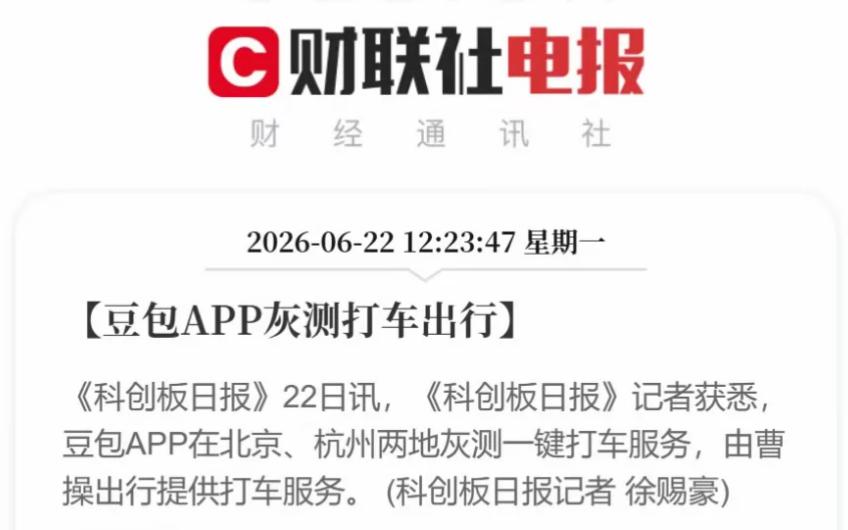
Image source: Internet
01
How does Doubao achieve one-sentence car-hailing?
Previously, Doubao had already been connected to business scenarios such as Douyin e-commerce and Douyin group buying. The car-hailing function in this gray test means that Doubao has officially extended from an AI dialogue assistant to the travel scenario. Its core interaction logic can also be summarized in eight words, namely "state the demand orally and complete the deal with one click".
During the operation process on the user side, users don't need to switch to a car-hailing app. They only need to open the Doubao APP and state their travel-related needs orally in the dialogue box. The system can automatically identify the starting and ending locations, the number of passengers, and car preferences, and automatically match the transportation capacity of Caocao Chuxing. Users can check the route, car model, and price based on the information identified by the system. After one-click confirmation, Caocao Chuxing will immediately dispatch a car.
Compared with traditional car-hailing, it takes at least 5 clicks from opening the APP - entering the starting point - entering the destination - selecting the car model - confirming the order. Now, with the help of AI, the car-hailing logic is compressed into one dialogue interaction, greatly improving travel efficiency.
In addition to the user side, in the operation on the driver side of Doubao's car-hailing service, many on-duty Caocao Chuxing drivers reported that the platform has now connected to exclusive travel orders from the Doubao App. After drivers accept an order, there will be a pop-up window prompt saying, "Hello, master. This is a Doubao service order. If you do a good job in this trip service, you will get a 2-yuan surprise service fee from the platform."
Although the 2-yuan additional incentive is small, it is a signal that makes drivers clearly aware that they need to serve the order from the AI entry well. Currently, this function is still in the gray testing phase and has not been opened to all users. Only some users in Beijing and Hangzhou can directly experience it.
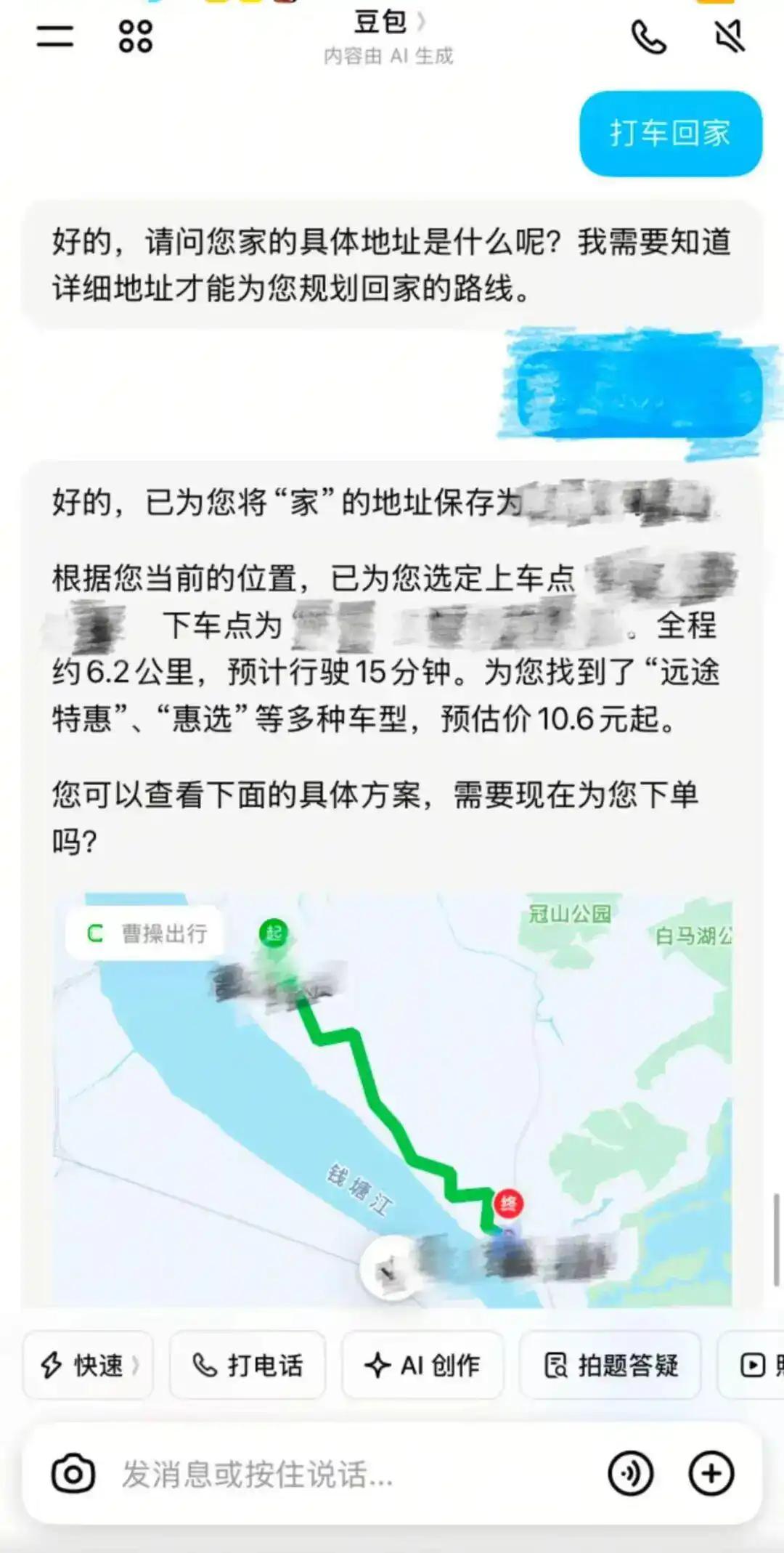
Image source: IT Home
02
Why did Caocao Chuxing and Doubao "get together"?
In this gray test of the car-hailing function, in addition to Doubao, Caocao Chuxing has also attracted attention again. Caocao Chuxing comes from a Chinese saying, "Mention Cao Cao and he appears", which means that the online car-hailing service can arrive as soon as you call.
According to public information, Caocao Chuxing was incubated by Geely in 2015 and directly adopted the heavy-asset B2C model. It started its online test in Ningbo in November and then expanded across the country. It was initially called Caocao Special Car and was officially upgraded to "Caocao Chuxing" in February 2019.
Many people may wonder why Doubao chose Caocao Chuxing as its "partner"?
Currently in the market, the two major mainstream AI car-hailing platforms are Qianwen and Didi. As AI apps, Alibaba's Qianwen is listed as Doubao's main competitor. When Qianwen's car-hailing service was launched for two weeks, coinciding with the Tomb-Sweeping Festival, the demand soared, with a week-on-week growth of over 1500%.
Qianwen relies on Gaode Car-Hailing and has captured a large amount of convenient travel traffic. Since Qianwen has taken the lead in the car-hailing market, if ByteDance wants to gain a foothold in the travel field, it must find an independent third-party platform that is not restricted by the Alibaba system, and this platform also happens to have a strong demand for AI transformation and customer acquisition.
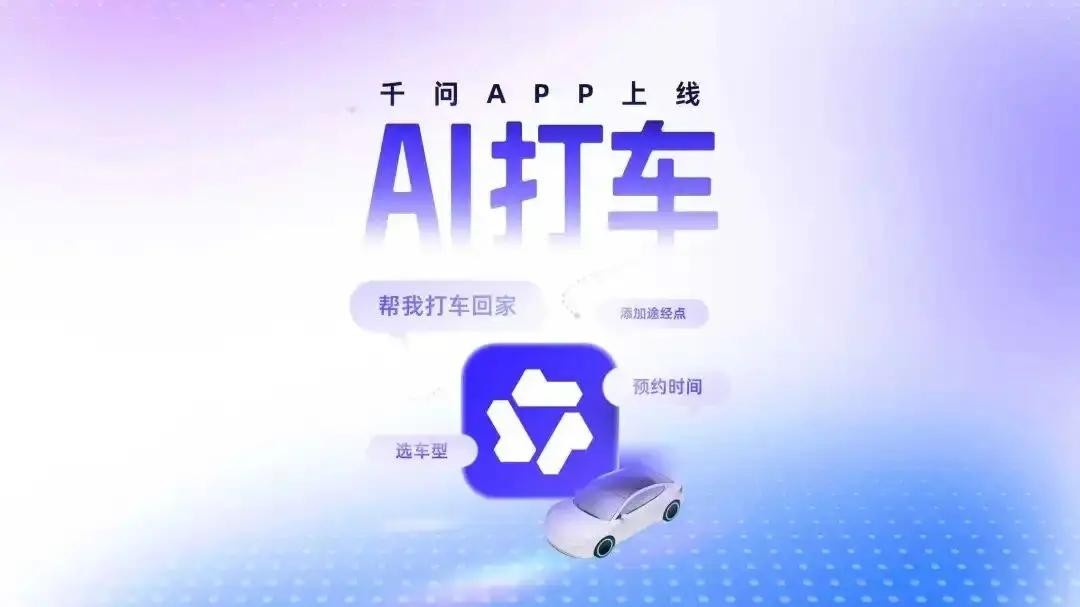
Image source: Internet
Therefore, Caocao Chuxing has become the best choice for Doubao.
Firstly, Li Shufu, the founder of Geely, has absolute control over Caocao Chuxing, which ensures that Caocao Chuxing will not hold back on Doubao because of Qianwen.
Secondly, on June 9th, Caocao Chuxing planned to establish an independent AI division to comprehensively promote the implementation of the company's AI strategy. On June 18th, at the 2026 International Automobile and Supply Chain Expo (Hong Kong), Caocao Chuxing announced its full AI transformation and released a new RoboX strategy.
The core of this strategy is to build a globally leading physical AI mobile technology platform, construct an intelligent transportation capacity system covering scenarios such as Robotaxi and Robovan, and announce a "Double One Hundred Thousand Plan" to deploy 100,000 Robotaxis and 100,000 Robovans in total by 2030.
Therefore, it is not difficult to understand why Caocao Chuxing has become the first travel scenario partner in Doubao's AI ecosystem.
The cooperation between the two is a win-win situation. For Doubao, although it has hundreds of millions of monthly active users, having no transportation capacity in the travel field is a real shortcoming. While Caocao Chuxing has less traffic than Doubao, with only over 41.3 million monthly active users, it has over 630,000 active drivers, a self-owned customized fleet of 38,000 vehicles, and is connected to an energy replenishment network including 448 battery swapping stations. Its service network currently covers 195 cities across the country, integrating a mature transportation capacity scheduling, vehicle maintenance, and user service system, which just makes up for Doubao's shortcoming.
For Caocao Chuxing, at the critical moment of AI transformation, it urgently needs a large amount of traffic to support it, especially to lay the most crucial customer acquisition pipeline for its RoboX strategy. Then, the AI entry of Doubao with over 300 million monthly active users has become the optimal solution for Caocao Chuxing.
The "union" between the two is essentially a two-way pursuit between AI interaction ability and the physical transportation capacity network.
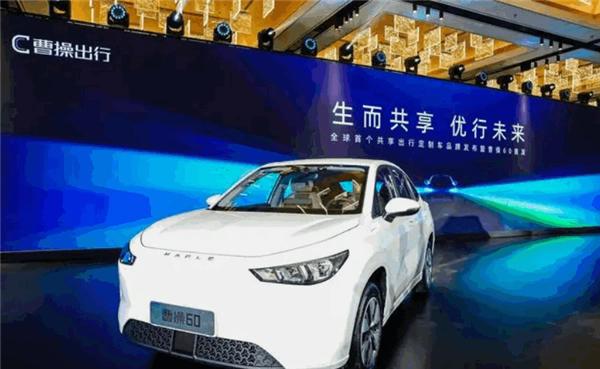
Image source: Internet
03
After Doubao's gray test, a tripartite confrontation in AI car-hailing may form
Previously, Didi relied on its own ecosystem, and Qianwen relied on Alibaba and joined hands with Gaode. The two major mainstream AI car-hailing platforms in the market have been competing with each other. Now, Doubao's car-hailing service under the ByteDance system has joined the battle. Will the wave of AI in the online car-hailing industry become more and more powerful? Will a tripartite confrontation be formed?
Let's first review the relevant timeline of AI car-hailing: On March 17th, 2026, the first version of Didi's AI travel assistant, Xiaodi v1.0, was officially launched, supporting complex requirements expressed in one sentence. The system can automatically match car models with more than 90 service tags. Immediately afterwards, one week later, Alibaba's Qianwen App officially launched its AI car-hailing function. Users can complete the entire car-hailing process within Gaode Map through natural language instructions.
On June 9th, Didi took a new move and connected to the WeChat AI ecosystem. In the future, users can say "Help me call a Didi to the airport" in WeChat to activate the service. On June 22nd, Doubao joined hands with Caocao Chuxing to conduct a gray test on the one-click car-hailing function.
From the perspective of the timeline, the time difference between the three major AI car-hailing systems is not large. Didi and Qianwen took the lead, but overall, Doubao is not without the possibility of catching up.
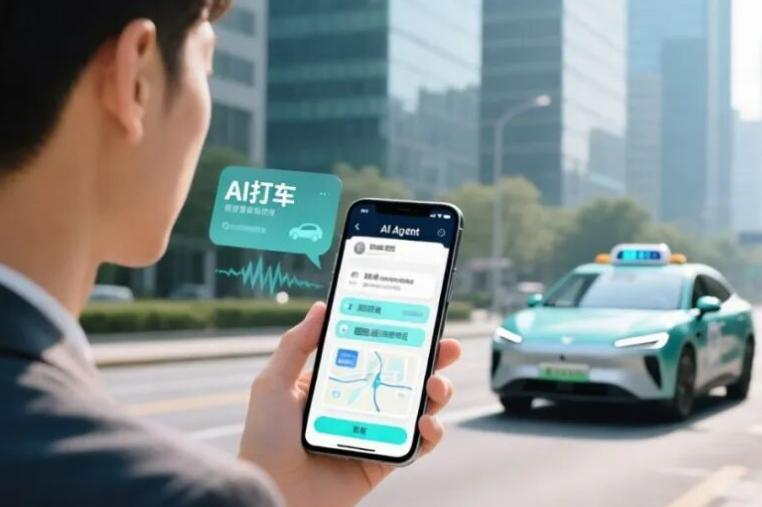
Image source: Internet
In this competition, the three mainstream car-hailing functions are basically similar. In terms of the interaction entry, for Didi, Qianwen, and Doubao, the interaction entries are all in their respective APP dialogue boxes, and there is no need to jump. In terms of the order placement method, Didi is slightly different from Qianwen and Doubao. The former can manually select from up to 3 candidate card options, while the latter two tend to confirm and place an order automatically with one click. In terms of personalized memory, Didi supports the matching of more than 90 service tags, and both Qianwen and Doubao support the memory of common addresses and habits.
However, according to the known information, the advantage of Doubao's car-hailing service may lie in its partner, Caocao Chuxing. It is reported that Caocao Chuxing's unique intelligent vehicle control ability allows users to remotely control the car's air-conditioning temperature, ventilation mode, and music playback during the AI dialogue when experiencing Doubao's AI car-hailing service, and can remember the user's cockpit preferences based on historical data, realizing a full-process intelligent closed-loop from car-hailing to riding.
In the context of comparable technical capabilities, for AI car-hailing to better understand users, slight experience differences may become the basis for users' decisions. After all, people say that the key judgment for future AI car-hailing may not be whether it can be used, but whether it is easy to use, shifting from the competition of transportation capacity scale to the competition of service accuracy and interaction efficiency.

Image source: Internet
04
What is ByteDance planning behind Doubao's car-hailing function?
The actions of large companies are often not isolated. Just like Doubao's gray test of the car-hailing service this time, it is not just a function upgrade. We should not only focus on the product itself. This is more like a long-term layout of ByteDance in the local life field.
According to QuestMobile data, as of March 2026, the overall monthly active user scale of the local life industry was 569 million, and the market scale is constantly expanding. As mentioned before, Doubao has already been connected to the Douyin ecosystem, including core local life sectors such as e-commerce and group buying. After laying out the "eating" and "shopping" sectors, as the high-frequency and rigid demand "travel" in the "eating, shopping, and traveling" sectors, Doubao's car-hailing service, as "in-transit consumption", has become ByteDance's third move, helping ByteDance to systematically build an all-round life service platform.
The so-called in-transit consumption refers to the consumption that is triggered and connected during the user's movement from point A to point B. For example, you see a restaurant on Douyin and have a strong desire to go there. You place a group-buying order. To go to the store for verification, you have to go out. From the time you go out until you reach the destination, you need a car. What Doubao wants to seize now is this moment when you need a car.
In-transit consumption can enable ByteDance to obtain three things: judge the regional consumption ability through the user's real-time location data; form a user behavior portrait through the travel time and route; form a full-link data pool from seeing to arriving through the consumption closed-loop.
Previously, users either opened Didi or Gaode. In either case, it meant that users left ByteDance's ecosystem, creating a situation where ByteDance was missing one piece. The launch of Doubao's car-hailing service allows users' consumption decisions to be made within ByteDance, and their physical movement also takes place within ByteDance.
Therefore, the real value of Doubao's gray test of the car-hailing service is the data adhesive for ByteDance's local life. It is the physical channel connecting all local life scenarios. With it, ByteDance can truly have a complete local life closed-loop.
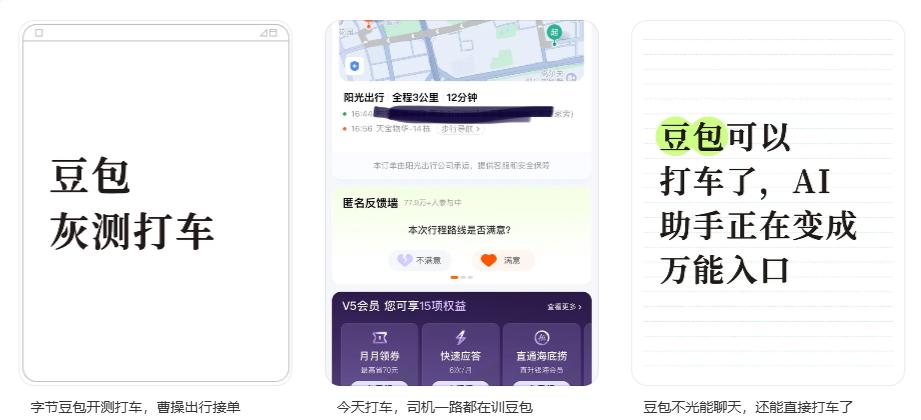
Image source: Xiaohongshu
In addition to the integrity of the local life puzzle, in ByteDance's consideration, another strategic value of Doubao's gray internal test of the car-hailing service is that it is the first test field for Doubao's AI Agent to enter real transactions. Chatting, writing copywriting, etc., these are all capabilities at the information level, but calling a car and making a payment are capabilities at the transaction level. Only when it can complete transactions can AI truly enter the user's life stream.
Car-hailing is the