Just now, Claude Code has undergone a major upgrade, and Karpathy: This marks the third transformation of LLMs
Just now, Claude Code has undergone a major upgrade.
Anthropic has officially released a brand - new enterprise collaboration tool:
Claude Tag.
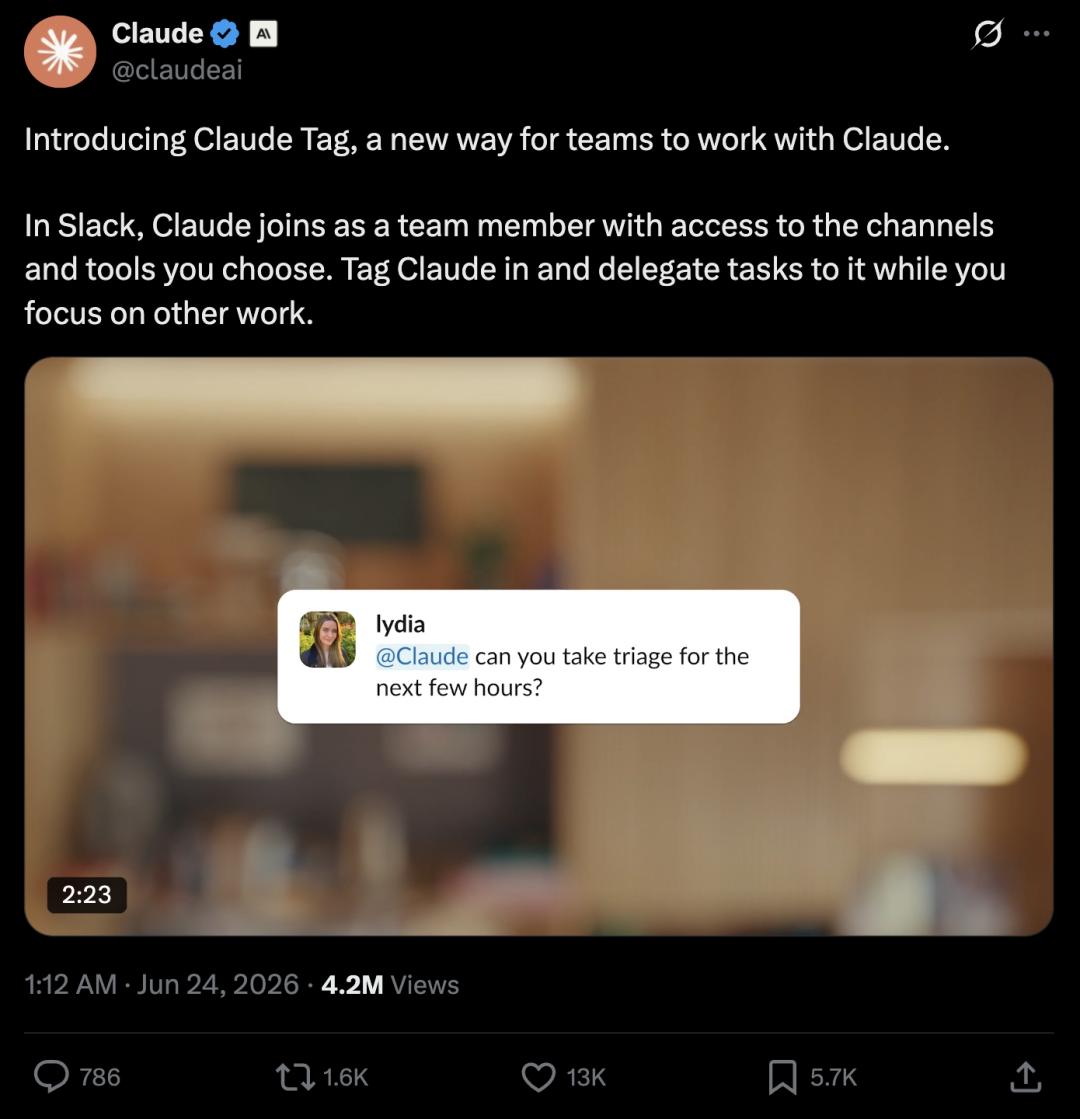
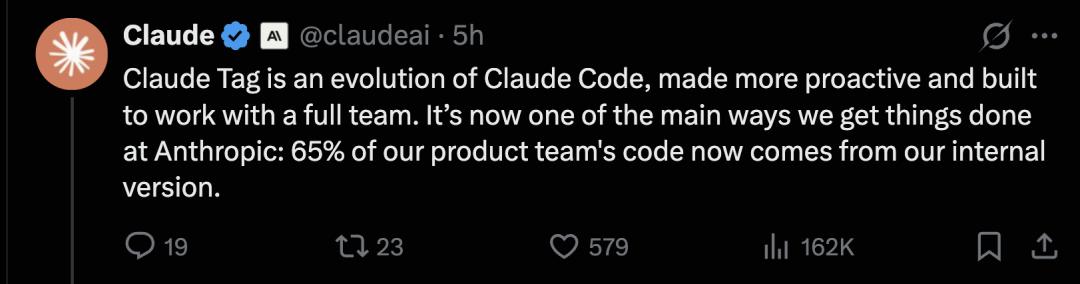
The official positions it as an evolution of Claude Code: more proactive and better at team collaboration.
Anthropic revealed that currently, about 65% of the company's product code has been completed with the participation of Claude Tag.
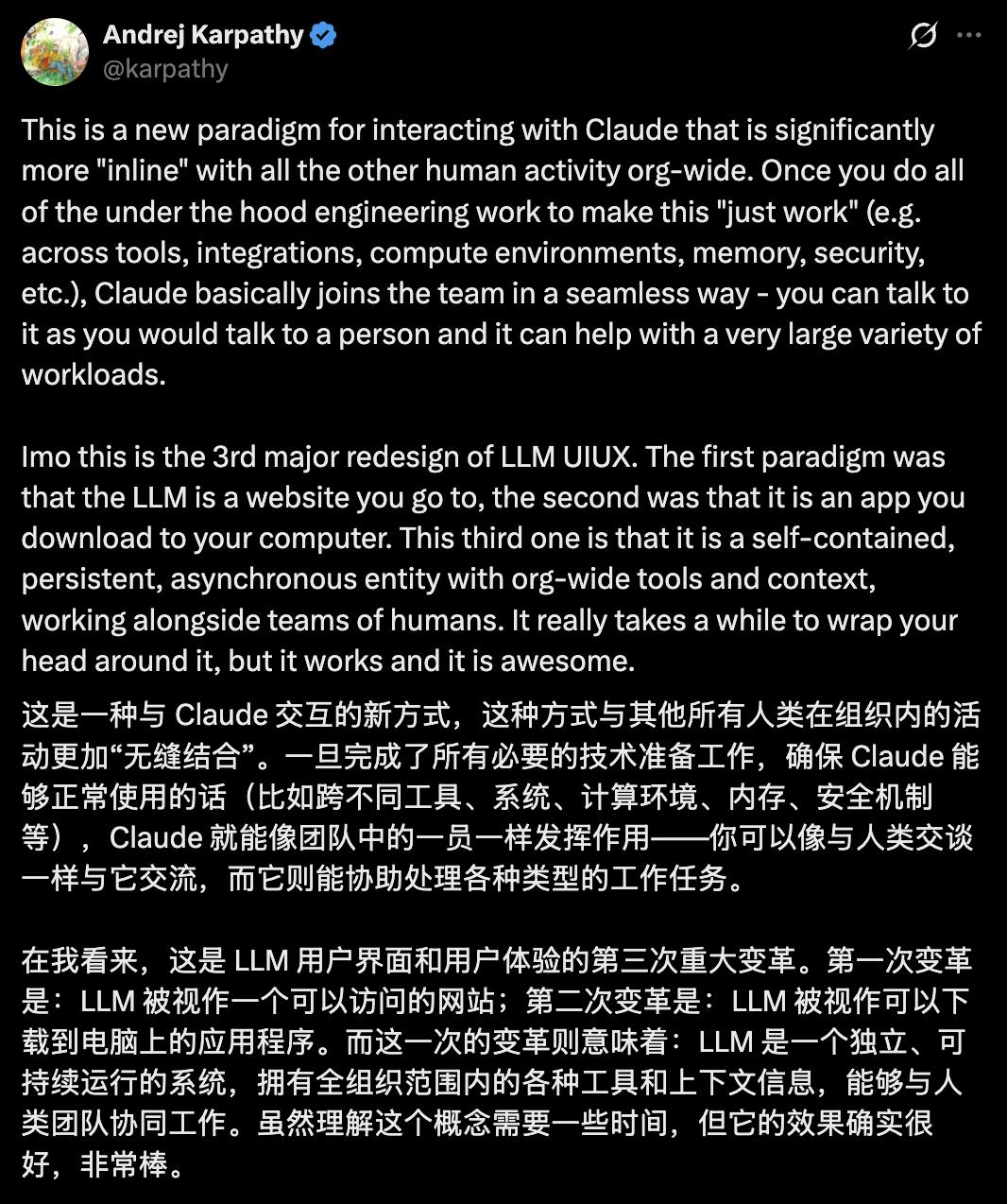
Karpathy, who joined Anthropic not long ago, also showed his support immediately, saying that their product is excellent:
This is the third major transformation of the LLM user interface. The first was the web - based chat, the second was the desktop application, and this time, the LLM has become an independent and continuously running system with in - organization tools and context, capable of collaborating with human teams.
Although the official says so, overall, Claude Tag may not just be a "upgraded Claude Code".
It seems more like an attempt by Anthropic to make Claude deeply integrate into the organizational context, enterprise knowledge, and workflow.
Different from traditional AI assistants that mainly serve individuals, the core selling point of Claude Tag is team collaboration.
Claude can not only passively respond to @ in group chats but also actively participate in the team workflow after enabling the relevant mode.
For example, in Slack, you just need to @Claude and make a request, and it will break the task into several steps and then use its own tools to complete these steps one by one.
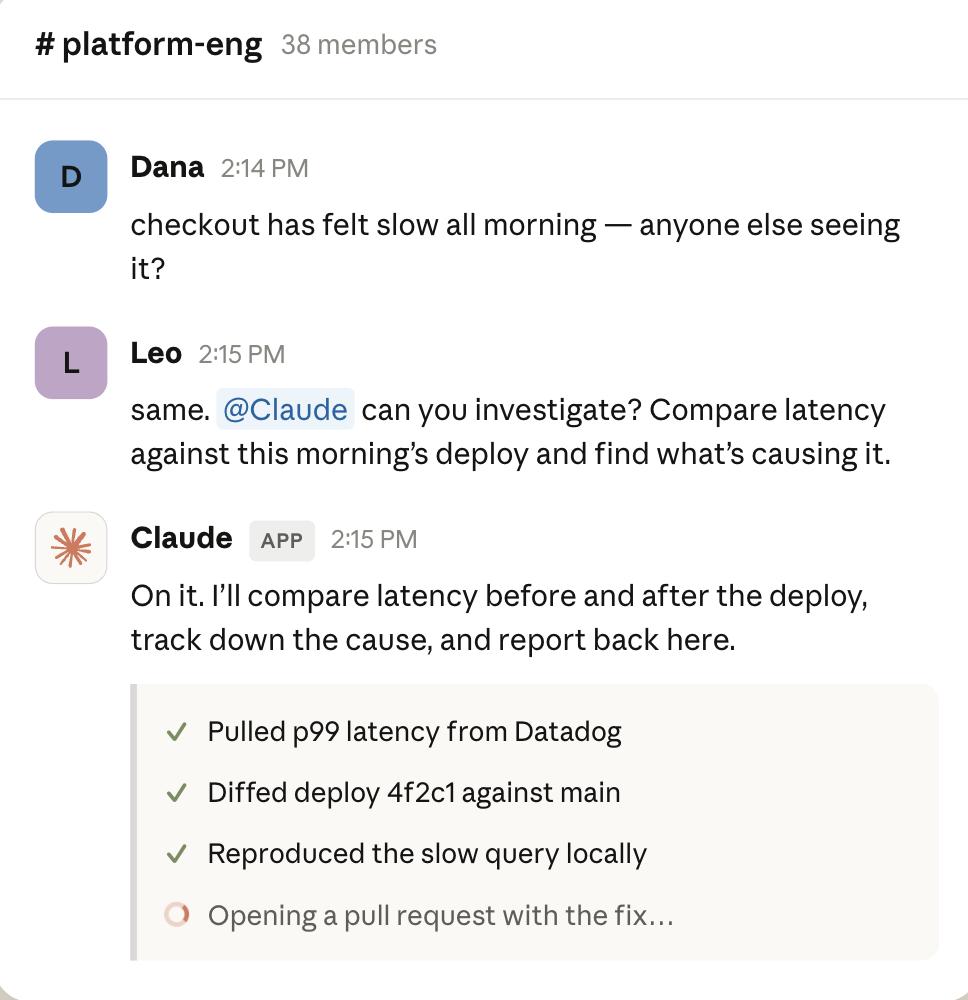
Specifically, it can handle the submission or merging of pull requests, perform data analysis, or assist in solving various problems. After the task is completed, it will reply with the results on Slack.
Currently, Claude Tag can only be used in conjunction with Opus 4.8, and there is still no news about Fable 5.
The direction of Claude Tag is actually not unexpected. Previously, whether it was the "lobster", the "digital employee", or the AI partner launched by Feishu, they were all attempts in this direction and trend.
It's just that the model capabilities of Claude still make this upgrade highly anticipated.
Are you, a worker, ready to welcome the AI colleague that can work in tandem?
Advanced teams, use Claude first?
Generally speaking, Claude Tag is a bit like many Agents that were previously active in chat software, but this time, Anthropic has directly embedded it into the Slack workflow.
Users can directly @Claude in channels or discussion threads and let it act as a shared AI assistant for the team.
It can not only see the current conversation but also understand the background information and context that has been accumulated in the entire discussion.
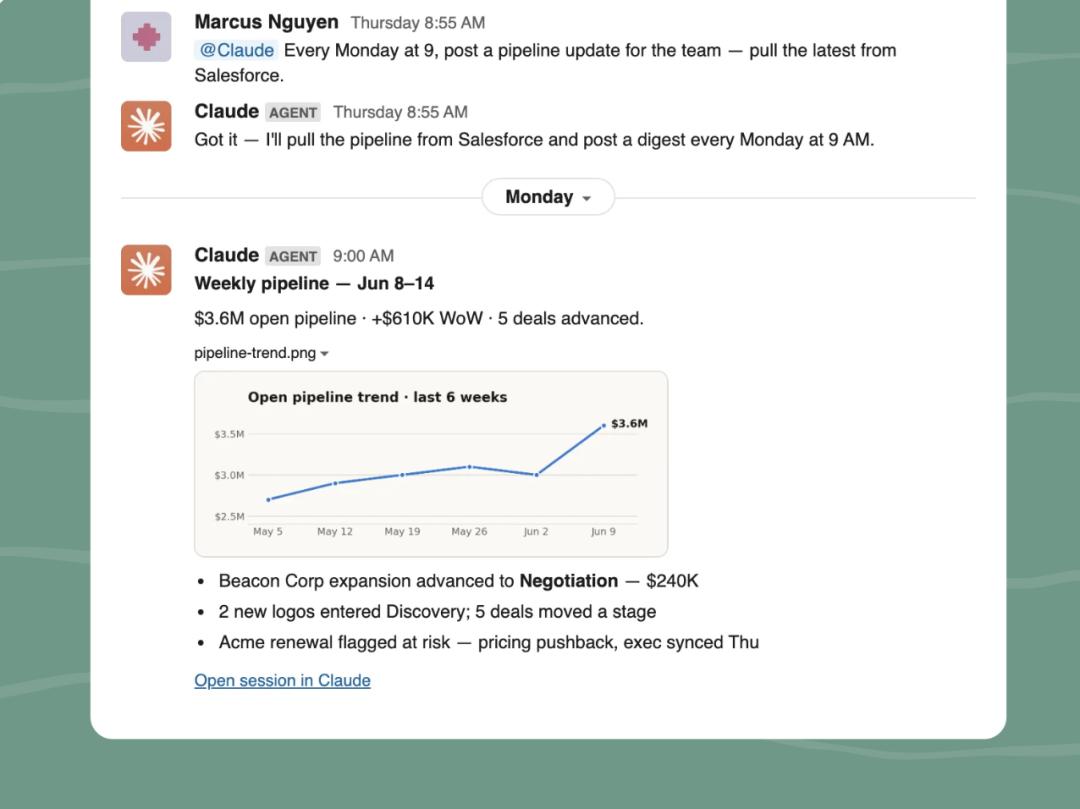
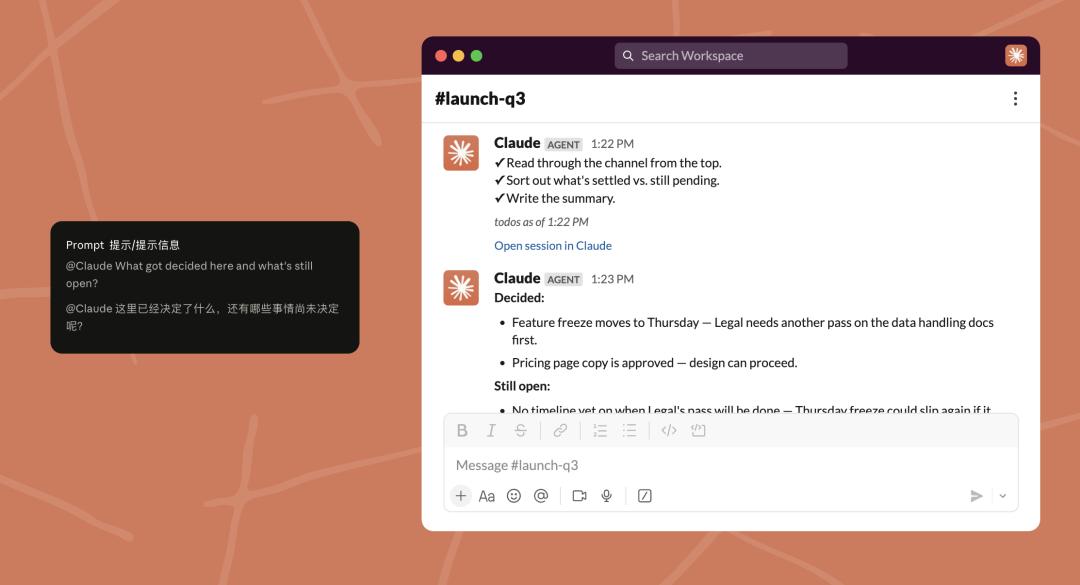
Whether it's analyzing data, submitting work orders, organizing meeting minutes, or breaking down a long chat record into specific action plans, you can directly hand them over to it for processing.
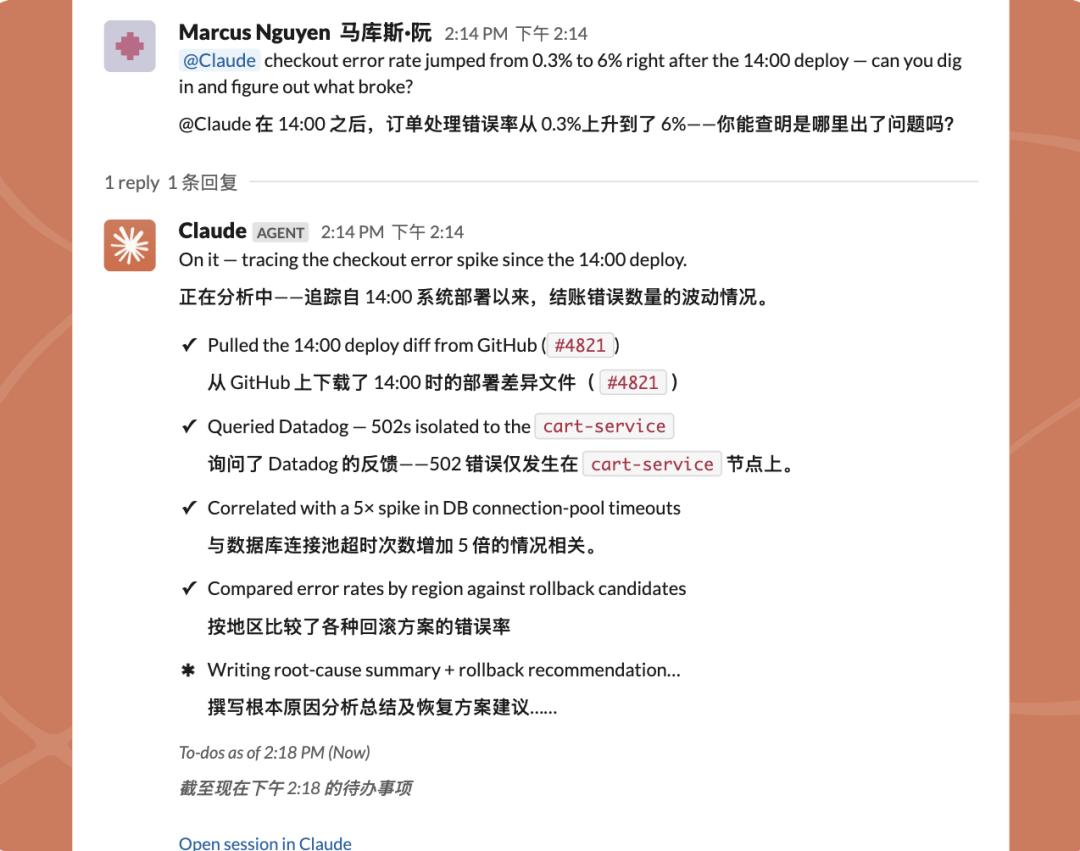
However, the most special thing about Claude Tag is not that it can chat, but that it starts to work like a real team member.
Users can not only let it complete tasks immediately but also assign long - term work to it.
For example, continuously monitor a certain channel, automatically summarize the progress every week, mark urgent matters, or send reminders to relevant responsible persons at regular intervals.
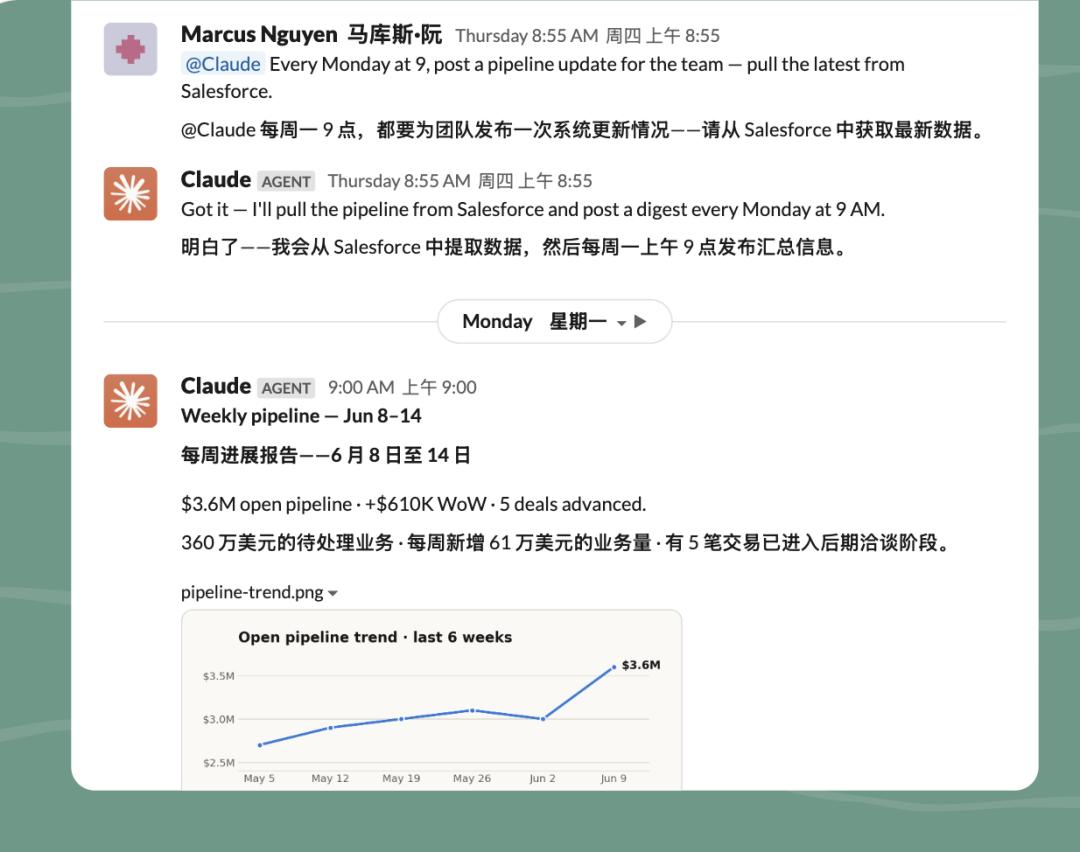
After the task is assigned, even if several hours or even days pass, Claude will continue to push forward. After the task is completed, it will actively come back to @ you to check the results.
If connected to Claude Code, it can even directly convert the development requirements in Slack into actual engineering tasks and synchronize the results back to the original channel.
As we mentioned at the beginning, the biggest difference from traditional AI assistants is that Claude Tag is not that each person has their own chat window, but the entire channel shares the same Claude.
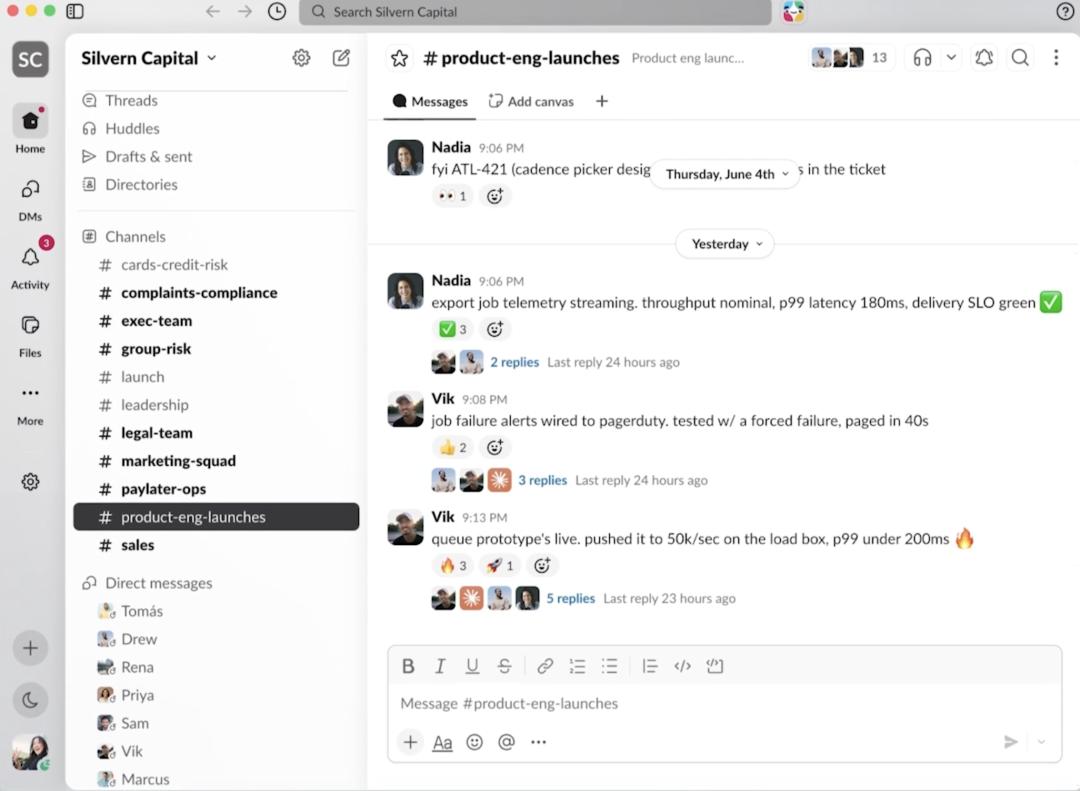
For example, if Zhang San assigns a task to Claude, Li Si can directly see the progress and continue to push it forward when he later enters the channel, and Wang Wu can also understand the whole story when he joins.
Everyone collaborates around the same Claude instead of maintaining their own context.
As the usage time increases, Claude will gradually accumulate organizational knowledge. It will understand the project background, team practices, technology stack preferences, and collaboration processes, and users don't need to explain from scratch every time.
In the official blog, Anthropic emphasized four capabilities this time: shared context, continuous memory, active intervention, and asynchronous execution.
The most interesting one is the active intervention (Ambient Mode).
After enabling it, Claude will not just wait for others to ask questions but will pop up on its own.
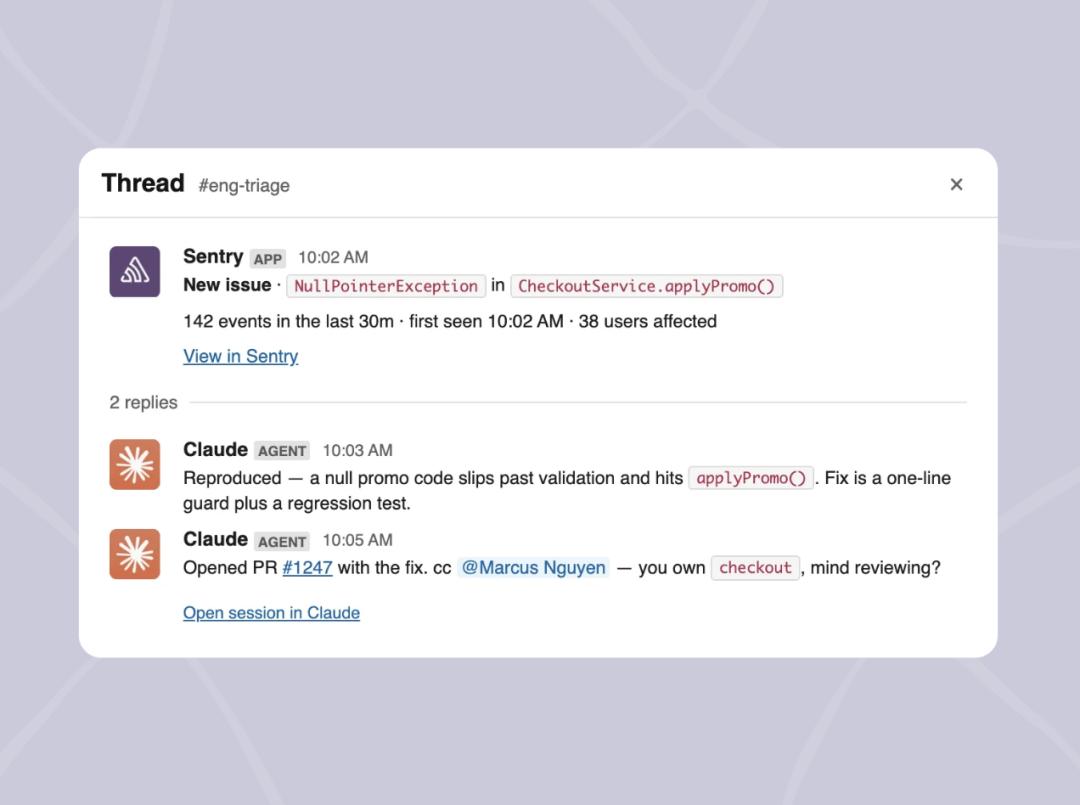
It will remind important discussions that have been ignored, follow up on problems that have not been solved for a long time, mark matters that need decision - making, and actively notify the team after finding relevant information.
In a sense, Claude begins to have the ability of "active work".
And asynchronous execution makes it more like a real Agent.
After users assign tasks, they can completely leave Slack. Claude will arrange its own execution plan, continuously push forward the project, and actively report the results after completion.
In the official demonstration, in a channel named #product - eng - launches, an engineer named Nadia proposed to add a cadence picker function. Claude immediately analyzed the codebase and provided a solution.
The whole process takes place in the Slack discussion thread, and team members can see Claude's analysis, decision - making, and execution process in real - time.
From the perspective of the overall product form, Claude Tag is no longer just a chatbot but has become a unified entrance within the enterprise.
People look for Claude, and then Claude goes to call various systems such as GitHub, Jira, Linear, databases, and CRM.
For employees, in the future, they may no longer need to remember the entrances of dozens of enterprise software but only need to remember one name: @Claude.
As analyzed by TechCrunch, what Anthropic really wants to do is not just let Claude write code but make it understand the knowledge, processes, and collaboration relationships within the organization and deeply embed it into the enterprise workflow.
This is also the new direction of the current enterprise AI competition.
Microsoft has Graph and Copilot. Snowflake and Databricks hope to become the enterprise knowledge base, and Glean tries to build an intelligent layer connecting models and enterprise data.
Many netizens also expressed the same view that Anthropic is indeed moving towards different application scenarios.
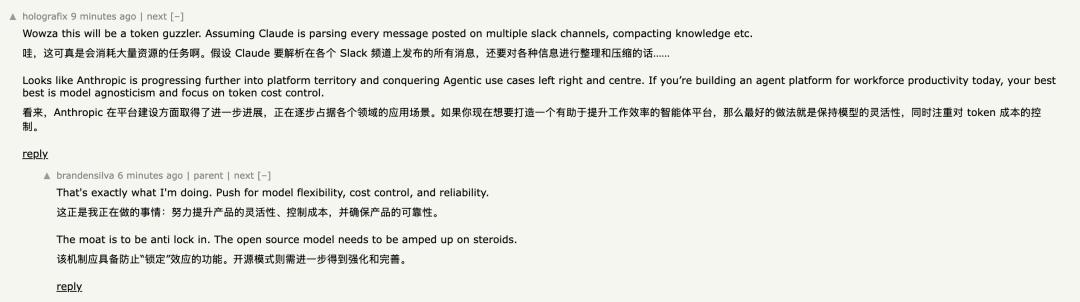
What everyone is competing for is essentially the organizational knowledge within the enterprise that is difficult to record explicitly but actually exists.
Actual deployment
In terms of deployment, Claude Tag has currently landed on Slack first.
In response, Rob Seaman, the general manager of Slack, said in a statement:
This means that "AI can be used by multiple people together". In the past, the human - machine collaboration that could only be completed in private chats can now be carried out publicly in the team channel, and all members can see the AI's thinking process, task progress, and final results.
In terms of privacy and permission management, Anthropic has also made strict designs.
Administrators can decide which tools and data Claude can access and which channels it can appear in.
Anthropic calls this different "Claude identities" —
The Claude used by the sales team will not remember the information of the engineering team, and the engineering team cannot access the data and tools related to sales. All memories and permissions are strictly limited within their respective scopes.
After completing the permission configuration, team members can directly start using it.
Administrators can not only set the Token budget at the organizational and channel levels but also view all the operation records executed by Claude and the initiator of each task.
Currently, Claude Tag has opened a beta test for Claude Enterprise and Team users.
Enterprises only need to complete steps such as Slack connection, tool authorization, and budget setting to start using it. In the next 30 days, Claude Tag will gradually replace the existing Slack version of the Claude application.
According to Reuters, Anthropic also plans to expand this function to more collaboration platforms in the next few weeks.
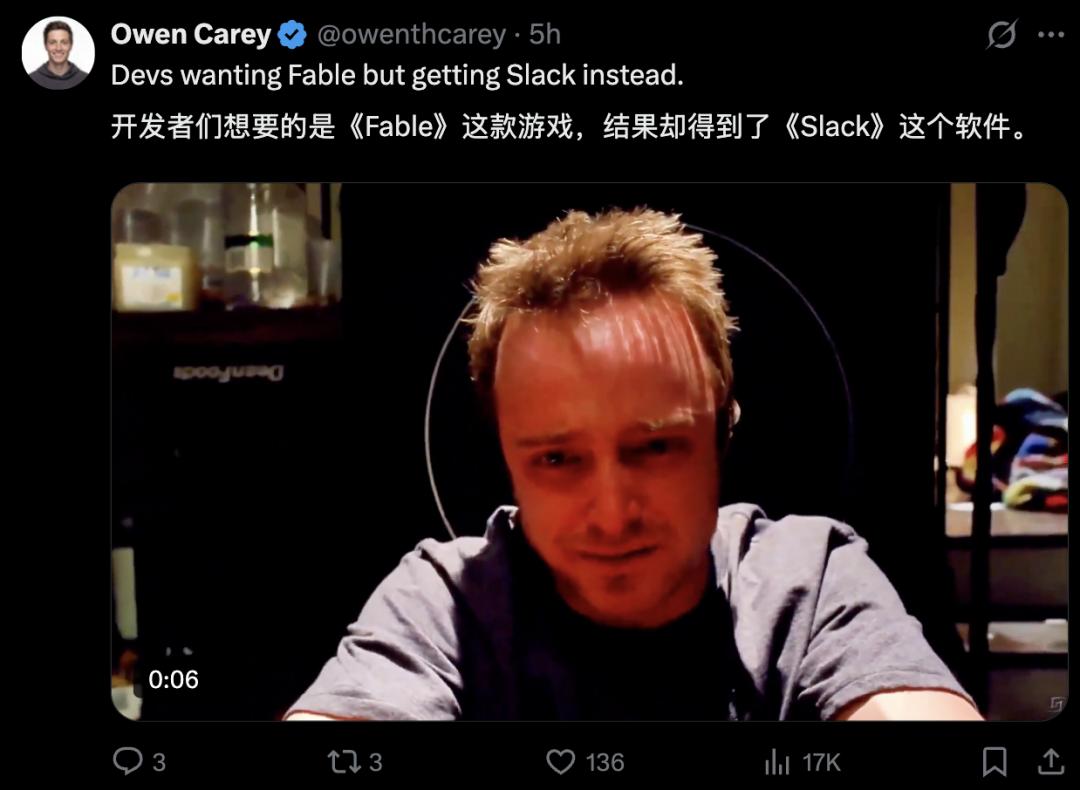
As soon as Claude is updated, I think of Fable
Of course, on major social media platforms, this update of Claude has also triggered a situation similar to the offline of 4o some time ago.
On Reddit, the first thing under the official blog is the summary of the comment section by AI:
Most people's opinion is: We don't care. Just bring Fable back.
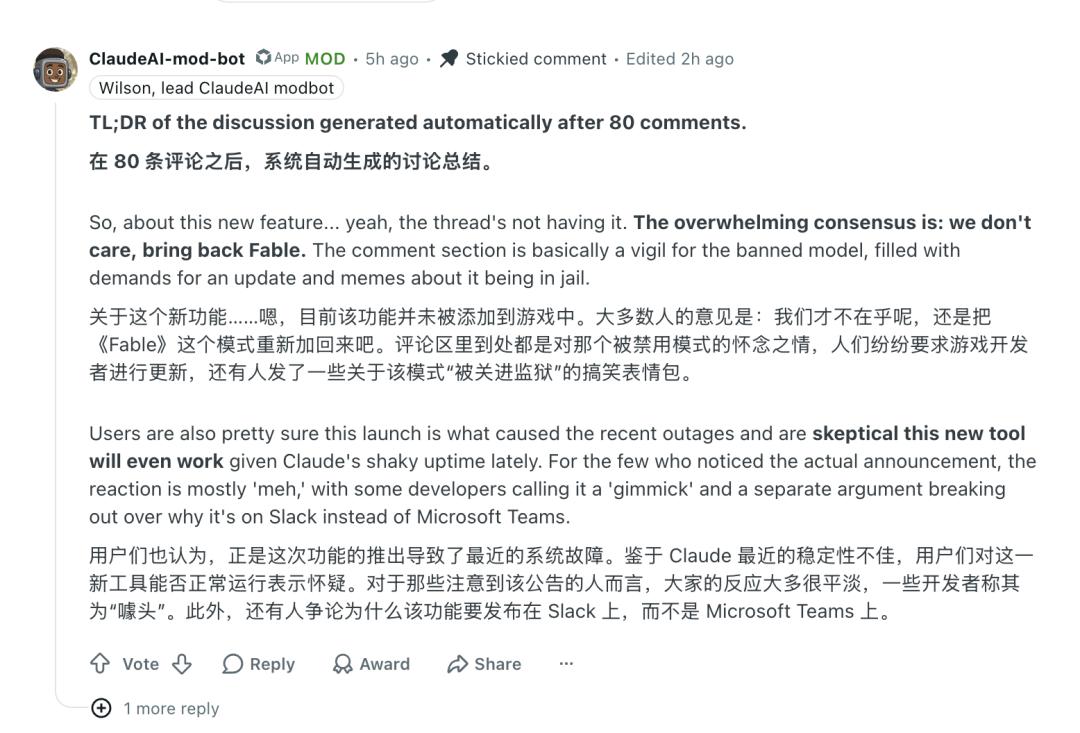
In the specific comments, the return of Fable has become the main theme.
