Do mass-market BBA models offer a 100,000-yuan discount? Fuel vehicles are slashing prices across the board in a desperate push for sales.
According to data from the Passenger Car Market Information Joint Committee of the China Automobile Dealers Association (hereinafter referred to as the Passenger Car Joint Committee), the retail sales of passenger cars in China in May were approximately 1.51 million units, with the retail penetration rate of new energy passenger cars reaching a record high of 62.9%. Among the top ten best - selling models of the month, not a single fuel - powered vehicle was included. Subsequently, news spread in the industry about significant and concentrated price cuts for fuel - powered vehicles. In particular, the news that "you can get a Land Rover Range Rover Evoque L, a model in the 400,000 - yuan class, for 180,000 yuan" received wide attention.
In fact, due to the industry price war, it has become a common topic that fuel - powered vehicles offer discounts.
Cui Dongshu, the secretary - general of the Passenger Car Joint Committee, previously wrote in an article that in the first five months of 2026, 77 models in the industry announced price cuts, 4 fewer than the same period last year. Among them, 36 were conventional fuel - powered and hybrid models, an increase of 14 compared to the same period last year; 16 were plug - in hybrid models, basically the same as last year; and 22 were pure - electric models, a decrease of 14 compared to the same period last year. The fuel and plug - in hybrid markets have been diverted by pure - electric models, and the terminal competition pressure has been continuously increasing.
In May this year, the average price cuts per vehicle for new energy vehicles and conventional fuel - powered vehicles were 21,000 yuan and 25,000 yuan respectively; from January to May, the average discounts for the two were 31,000 yuan and 33,000 yuan respectively, with not much difference.
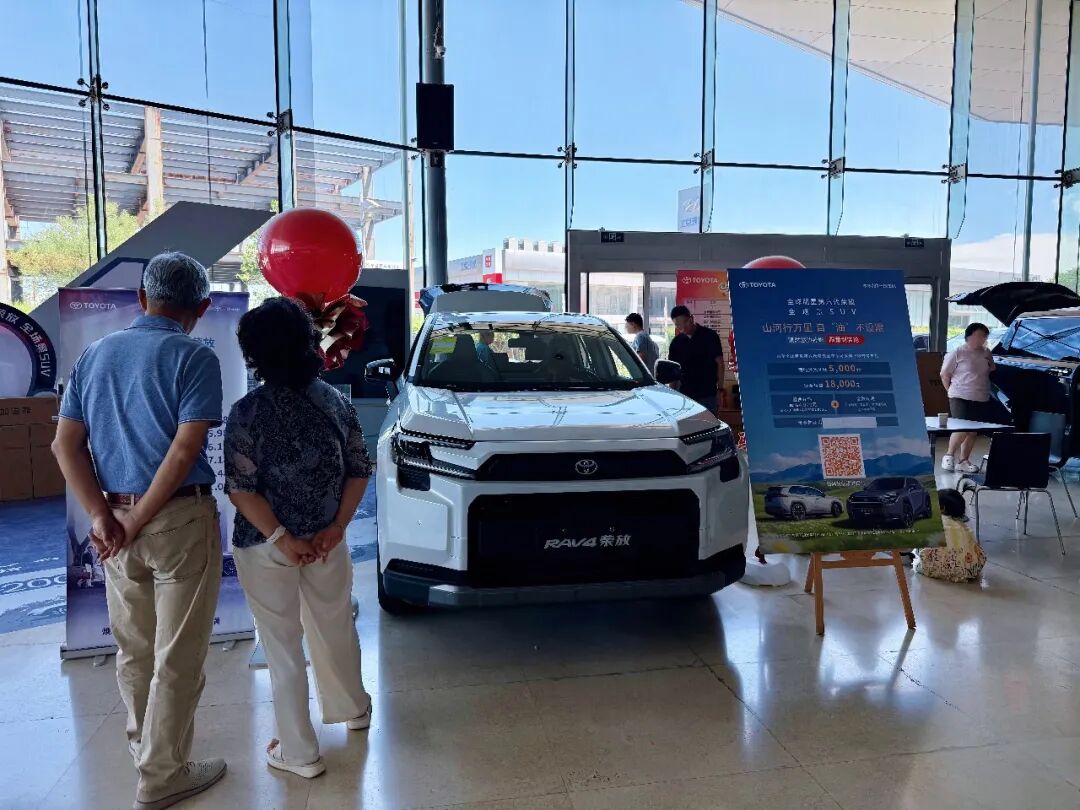
Consumers are looking at cars at a FAW Toyota store in Beijing. Photo/Feng Huang WEEKLY Auto
During the just - passed Dragon Boat Festival holiday, after visiting multiple 4S stores of traditional automobile brands in Beijing, Feng Huang WEEKLY Auto found that the number of in - store customers had significantly increased compared to normal days. All fuel - powered vehicle brands offered different degrees of car - purchase discounts, but the actual terminal discount range did not reach the level of "a sharp drop, almost a half - price cut" as rumored online.
In addition to conventional promotion policies such as direct cash discounts, replacement subsidies, and financial interest - free loans, salespeople at many stores revealed that there were two reasons for the increased discounts in this round: First, to meet the semi - annual sales assessment targets at the end of June; second, to accelerate the clearance of old - model inventories in preparation for the launch of new products and avoid the risk of long - term storage depreciation.
A salesperson of a luxury brand frankly told reporters: "There is definitely an impact from new energy vehicles, but our basic market is still stable, and the brand is also actively adjusting and seeking transformation."
1
Approaching the semi - annual node, fuel - powered vehicles increase terminal discounts
Two years ago, traditional automakers such as BMW, Mercedes - Benz, and Audi successively announced their withdrawal from the "price war" and raised the prices of some of their models. At that time, BMW salespeople said that the price increase was to bring the previously sharply dropped car prices back to normal levels. However, the official statement did not reverse the terminal trend, and the bare - car prices of many fuel - powered models were still more than 100,000 yuan lower than the official guide prices.
In fact, this level of terminal discounts is not a recent phenomenon. Since the full - scale launch of the industry price war in 2003, significant price concessions have become the norm in the fuel - powered vehicle market.
The quotation provided by a salesperson at a Beijing Mercedes - Benz 4S store shows that for the Mercedes - Benz C 260L sports sedan with an official guide price of 324,600 yuan, the dealer's bare - car discount price is 216,600 yuan. After adding insurance, decorative accessories, and license - plate fees, the on - road price of the vehicle is about 256,100 yuan, nearly 70,000 yuan lower than the guide price.
When Feng Huang WEEKLY Auto asked if all models enjoyed the same amount of discounts, the salesperson said that the higher - priced Mercedes - Benz S - Class and Maybach models had greater discount efforts. The guide price of the Maybach S 480 model is 1.468 million yuan, and "it can be bought at this on - road price now."
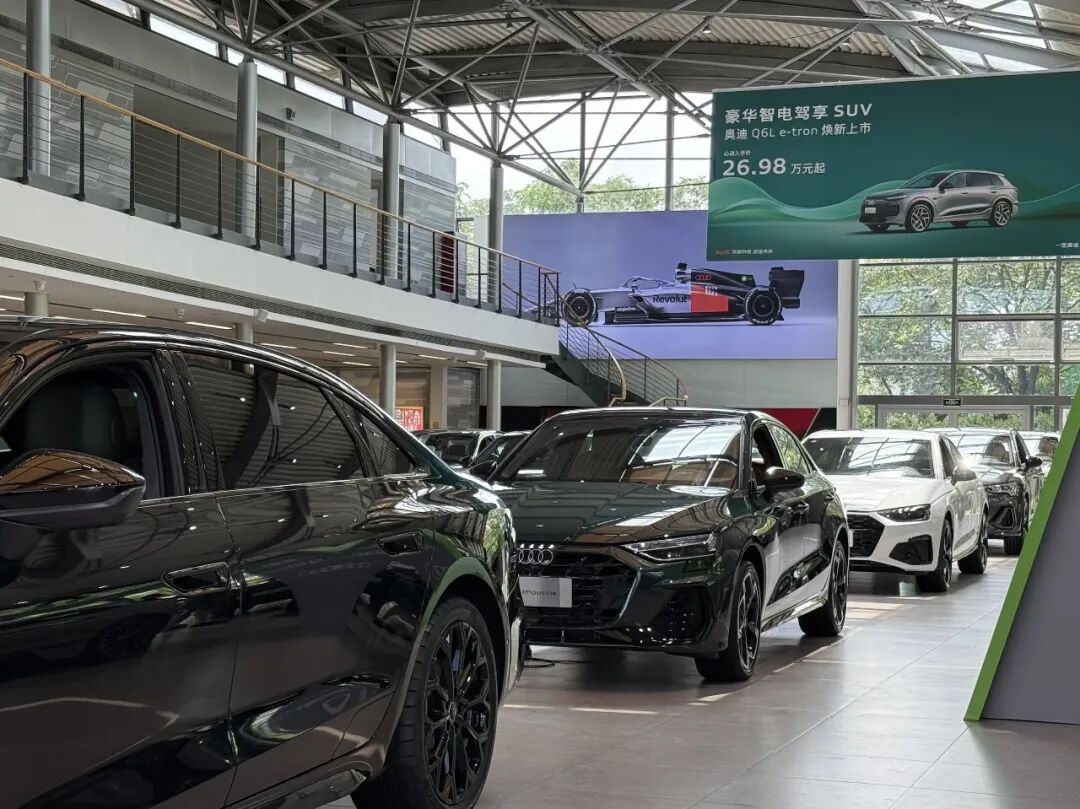
Audi sales store in Beijing. Photo/Feng Huang WEEKLY Auto
A salesperson at an Audi store said that this year is a big year for Audi's product launches, and there are not many discounts on new cars. The manufacturer's discount amount ranges from 3,000 to 15,000 yuan. Consumers who pursue cost - effectiveness can give priority to old - model vehicles. The brand - new Audi A6L quattro Premium model with a guide price of 387,900 yuan currently only enjoys a 3,000 - yuan manufacturer's discount and a 20,000 - yuan dealer's discount. After adding taxes, insurance, license - plate fees, etc., the on - road price is about 411,900 yuan, while the old - model only costs more than 350,000 yuan. The old - model A4L with a guide price in the 300,000 - yuan range and the Q5L in the 350,000 - yuan range, which are high - volume models, have greater discount efforts, and their on - road prices have dropped to about 230,000 yuan and 280,000 yuan respectively.
The salesperson straightforwardly said that the models with larger price cuts are mainly old - model exhibition cars or inventory cars. "If Audi cuts prices too much and reaches the same price as Volkswagen, will Volkswagen still be able to sell its cars?"
Feng Huang WEEKLY Auto then went to the FAW - Volkswagen showroom. To meet the mid - year sales target, the brand launched limited - time discounts on its star models such as the Sagitar, Magotan, and Tanyue. Among them, the Magotan 30 - million - unit selection model 380TSI Luxury with a guide price of 206,900 yuan enjoys a 60,000 - yuan cash discount, and the bare - car price drops directly to 140,000 yuan. After calculating the purchase tax, insurance, and decoration costs, the full - payment price is less than 170,000 yuan. The on - road price of the Sagitar has even been reduced to less than 110,000 yuan. The salesperson even said that if an order is placed this month, the price can be further negotiated.
FAW Toyota also launched limited - time discounts of different degrees on its models such as the RAV4, Corolla, bZ3, and Prado. Reporters noticed that the promotional poster for the RAV4 model indicates that the vehicle can enjoy a 5,000 - yuan fuel subsidy and an 18,000 - yuan direct cash discount. Although the bottom of the poster states that this discount is only available for customers who issue invoices before May 31, the store salesperson frankly said that customers who place orders now can still enjoy this set of preferential policies.
2
Facing growth pressure, fuel - powered vehicles accelerate self - rescue
According to the financial reports released by the enterprises, in 2025, BMW Group, Mercedes - Benz Group, and Audi Group obtained net profits of 7.451 billion, 5.331 billion, and 4.617 billion euros respectively, with year - on - year decreases of 3%, 48.8%, and an increase of 10.2% respectively. However, a large part of Audi Group's profit growth came from financial gains. After excluding this part of the gains, its operating profit during the period decreased by 13.6% year - on - year to 3.371 billion yuan.
The intensification of market competition and the decline in delivery volume in China are the main reasons for the reduced profitability of the three major groups. Japanese and American brands are also facing the same problem. Automobile manufacturers are increasingly aware that simply cutting prices is only a short - term self - rescue method. In addition to promoting the electrification layout, fuel - powered vehicles themselves also need to be iteratively upgraded according to changes in market demand.
Feng Huang WEEKLY Auto observed that the iteration logic of fuel - powered vehicles is accelerating to fit that of new energy vehicles. The new Volkswagen Magotan and Honda Civic have replaced the old in - built central control screens with floating central control screens, and their interior design styles are moving closer to those of new - force brands; Audi's new A5L, A6L, and Q5L models all offer the option to install Huawei's Qiankun Intelligent Driving system; Mercedes - Benz has emphasized the display of assisted driving and human - vehicle interaction functions on the official website introduction pages of its main - selling models such as the GLB, GLC, and C - Class.
Salespeople have also developed a set of words to "strictly defend" against new energy vehicles: "If the annual driving mileage is not that high, the costs of driving a fuel - powered vehicle and an electric vehicle are actually not much different." The basic sales volume, brand recognition, chassis texture, and safety attributes are also the core selling points of fuel - powered vehicles.
"Actually, the target audiences are different. Some people only recognize fuel - powered vehicles, especially some older car - buying groups, whose acceptance and awareness of new energy vehicles are relatively limited," said a salesperson of a joint - venture brand. "Of course, young people definitely like intelligent things, and we also have corresponding upgrades."
The sales data of automobile manufacturers in June has not been released yet, and it is still unknown whether this round of promotions can drive a sales recovery. However, the Passenger Car Joint Committee analyzed that this month is not a traditional peak season for the auto market, and consumers' wait - and - see attitude is still relatively strong. The total demand is still in the bottom - building recovery period; the demand for fuel - powered vehicles is low under the high oil price, and they need to rely on promotions to increase marginal sales. It is estimated that the retail market scale of narrow - sense passenger cars in June will be approximately 1.65 million units, a month - on - month increase of 9.3%. Among them, the retail volume of new energy vehicles is expected to be about 1.05 million units, a month - on - month increase of 10.5%, and the penetration rate is about 63.6%.
If fuel - powered vehicles want to turn the situation around, they may need more time.
This article is from the WeChat official account "Feng Huang WEEKLY Auto". Author: Zhao Yu. Editor: Hao Lin. Republished by 36Kr with permission.