Japan has developed an AI model that is positioned as a rival to Fable 5, but I think it's somewhat far-fetched.
This morning, I read a news article. A Japanese AI company released a new model, claiming to rival the current most powerful human model, Fable 5.
However, after reading their technical documentation, I found it rather far - fetched.
A company named Sakana AI released the so - called Sakana Fugu series of orchestrator models. To some extent, this Fugu can't even be called a model; it's more of a dispatcher.
Because this Fugu itself isn't the base of a large - scale model. Instead, it calls on the capabilities of other models according to different task types.
For example, when a user issues a programming task, Fugu calls Claude Opus 4.8. When a user issues a math task, Fugu calls GPT - 5.5.
Of course, the actual execution process is definitely more complex than what I've described, but the general logic is like this.
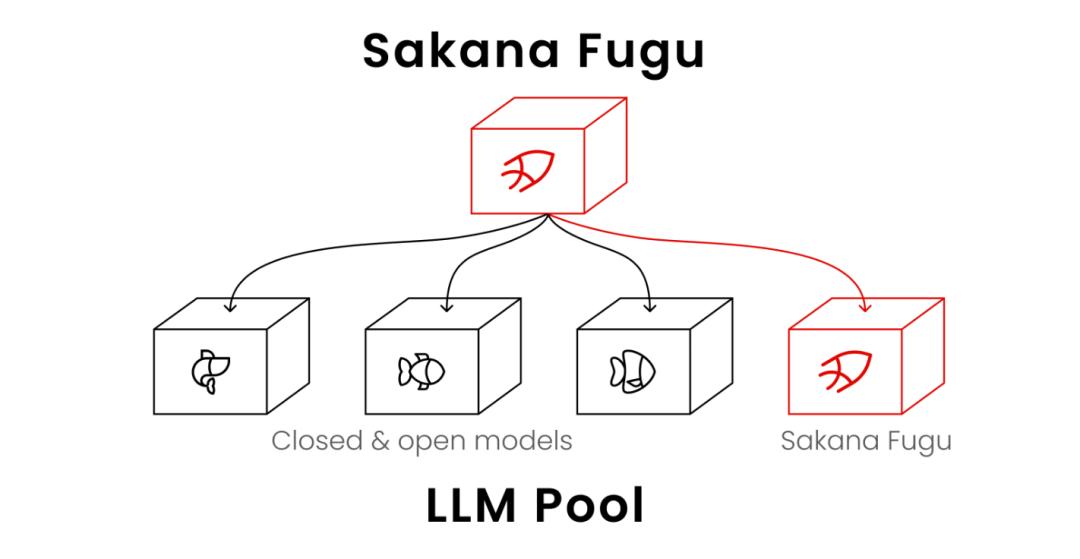
So, Fugu itself doesn't actually produce model capabilities. They're just the carriers of models.
Under this technical architecture and logic, they also conducted some benchmark tests with models including Opus 4.8 and GPT - 5.5.
From the results, Fugu Ultra outperformed Opus 4.8 in all aspects.
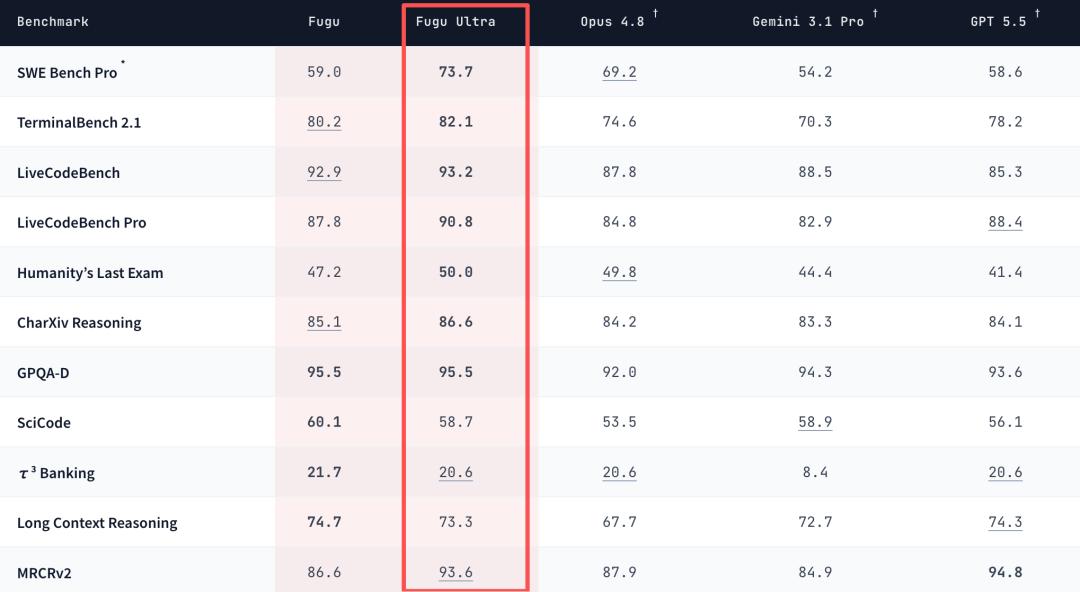
In addition, in engineering, science, and reasoning tests, the performance of Fugu Ultra was close to or exceeded that of the current most powerful Fable 5 and Mythos Preview.
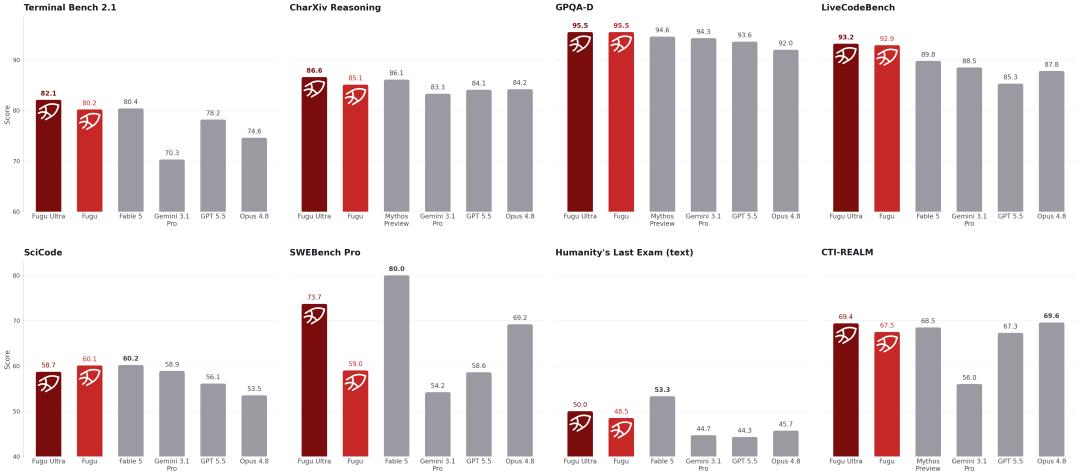
Seeing this, I thought this company really knows how to put up a good front.
They're clearly using the capabilities of others, yet they claim that their model has outperformed others in various competitions.
Of course, we can't say they're completely useless. After all, those who "sell water" still need to do some packaging and processing. In my opinion, the core ability of Fugu is actually the ability of task classification and scheduling.
Currently, all model providers claim to have very powerful models, but in fact, each has its own strengths. There isn't an all - powerful model that can handle all tasks.
Therefore, Fugu has captured this need, which is why they developed this product.
They'll recognize and judge the type of task proposed by the user, and then disassemble the task. For example, tasks can be classified into scientific research, code writing, and reasoning. They'll also determine whether multi - modal capabilities need to be called.
Next, they'll call different working models based on the subdivided tasks. These working models are actually some of the current mainstream models, such as Claude, GPT, and Gemini.
Even within the same task, different model capabilities can be called according to the task breakdown.
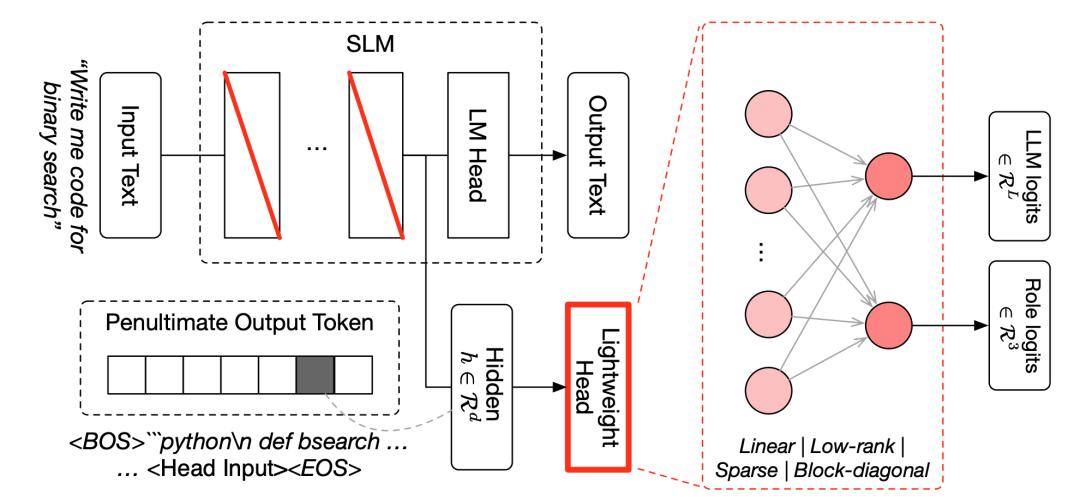
This model that combines the strengths of various models has enabled Fugu to achieve such results in the evaluations. Essentially, it plays the role of a scheduler.
In terms of price, for Fugu Ultra, the input price per million tokens is $5, and the output price is $30. If the context exceeds 272k, the price will be a bit higher.
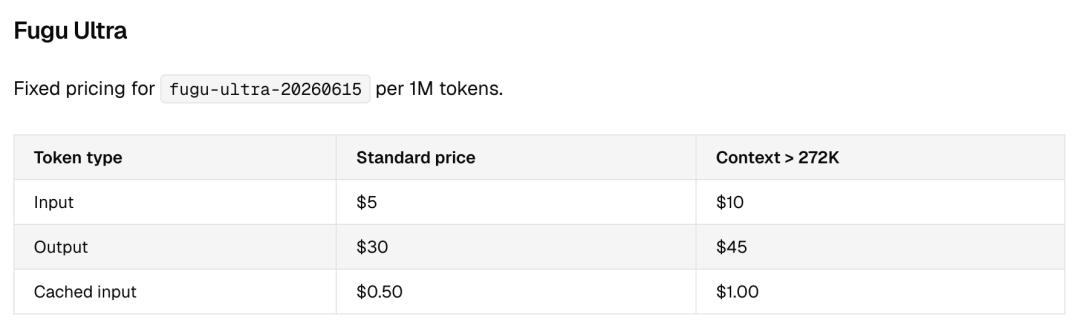
Currently, it can be used through API calls, with a dedicated API Key and development documentation.
The reason I'm talking about this case with you today is actually to discuss an issue, that is, as AI has developed to this stage, the future competition may shift.
In the past, the competition was about model capabilities. In the future, it will be about application capabilities.
In the coming period, the upper limit of the evolution of model capabilities may not be as high as before. So, many user - scenario - based requirements will gradually be implemented.
Fugu is a typical example. They're a bit like Hao123 back then, only playing the role of a transfer scheduler.
However, this unified - entry approach has indeed solved the scenario - based requirements of many people.
I myself have such problems when using Agents. The requirements in different scenarios are assigned to different Agents, and each Agent uses a different model.
Although the transfer station can now solve the problem of using one API Key to access all models, different configurations are still needed for each.
The advantage of Fugu is that it has achieved internal routing, which actually creates user value to a certain extent.
However, I think the uncertainty for this "water - selling" model lies in whether the model providers they call on will support them in the long run.
Think about it. If you take away the entry point and they become suppliers, it obviously doesn't align with the interests of the model providers.
There's a possibility that once Fugu reaches a certain scale, it will likely be suppressed, and then the model won't work anymore.
I think this example may inspire readers who are involved in product development.
Developing a product is never about inventing new technologies; it's about combining technologies with scenarios, users, requirements, and product positioning.
Although I'm not optimistic about the long - term development of Fugu, this approach is worth learning from: identifying problems, recognizing requirements, returning to scenarios, and providing solutions.
Sometimes, the most difficult part of product development isn't making the product, but recognizing the demand signal.
The AI era has arrived so rapidly, but I actually think the value of product managers has increased.
In scenarios that require recognition, insight, judgment, and decision - making, the participation of excellent product managers is still indispensable.
If product managers with these capabilities can combine with AI, it will lead to a huge boost in productivity.
Finally, I looked up the meaning of the word "Fugu", and it turns out it means pufferfish.
It seems the Japanese are trying to have it all.
This article is from the WeChat public account "Tang Ren" (ID: RyanTang007), and the author is Tang Ren. It is published by 36Kr with authorization.