36Kr Exclusive | Backed by Gong Hongjia, Lu Qi and overseas capital, a Peking University team develops a new generation of data collection terminals using EMG wristbands
Author | Qiao Yujie
Editor | Yuan Silai
Yingke learned that the SnowOrigin team has received investments from Gong Hongjia, Lu Qi, and overseas institutions. This team with a Peking University background uses sEMG (surface electromyography) motor nerve signal decoding technology as an entry point. Through neural wristbands, first-person perspective collection devices, and the self-developed NMH (Neural Math Hybrid) AI decoding model, it constructs a new-generation human operation data collection solution for embodied intelligence.
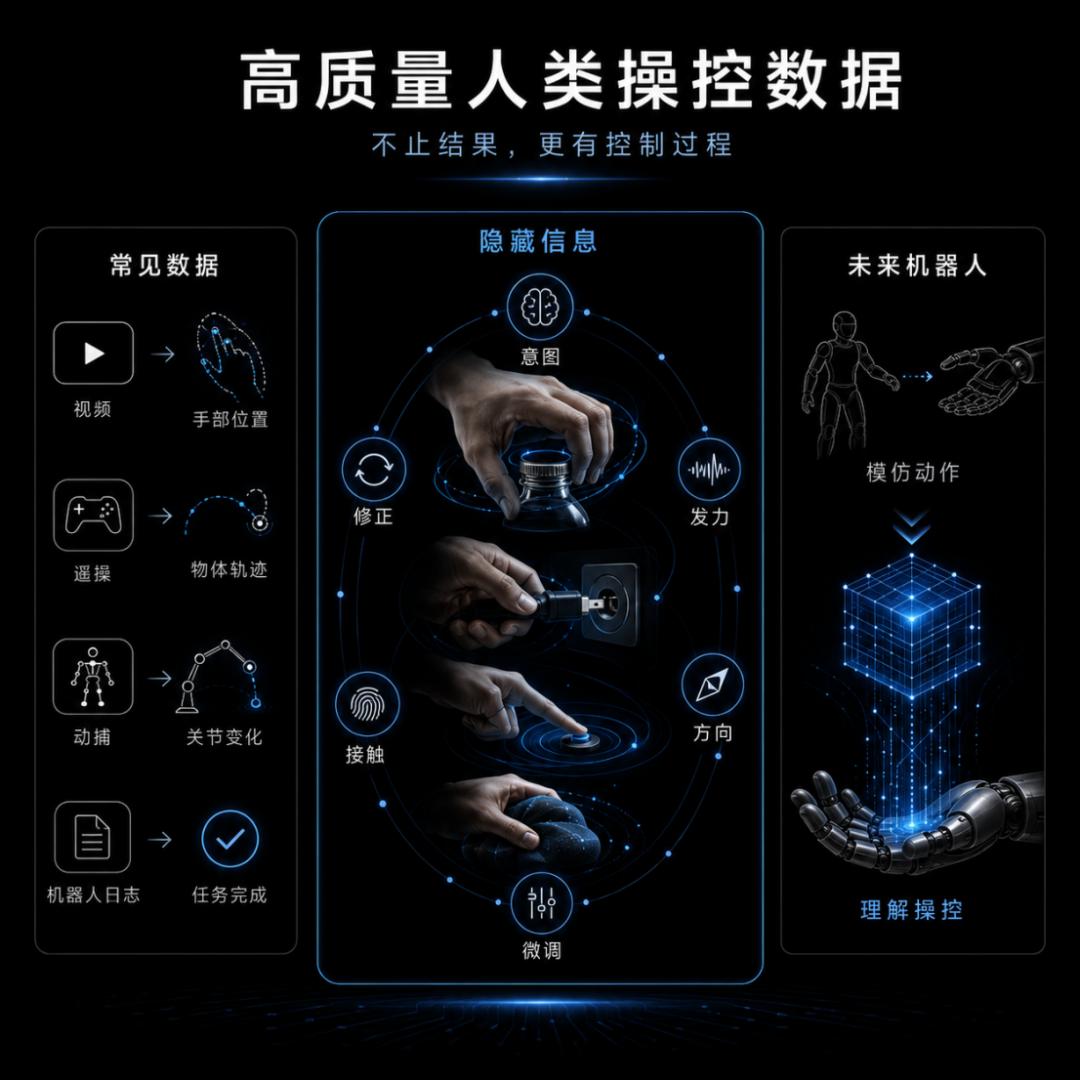
Currently, with the rapid development of embodied intelligence and Physical AI, the industry's demand for high-quality human operation data is increasing day by day. However, most of the mainstream data collection methods, whether it is first-person perspective video, motion capture, or teleoperation systems, can only record the action results or spatial trajectories, and lack coverage of key information such as the force exertion process, operation intention, and subtle adjustments.
The wearable devices such as SnowOrigin's neural wristbands and panoramic headbands can combine electromyography and motor nerve signal decoding technology to capture the process of human interaction with the real world and convert it into structured data including posture (Pose), force (Force), and micro-control (Micro-control), providing underlying data support (Data infra) for robot, world model, and embodied intelligence training.
The Internet era has spawned the massive text data required for large language models, while the development of Physical AI requires full-modal interaction data between humans and the real world. Founder Qin Xu introduced that compared with video recording of "what was done", neural signals such as electromyography can further reflect "why it was done, how the force was exerted, and what fine-tuning was carried out during the process", thus helping AI understand the essence of human interaction with the physical world.
Based on this concept, SnowOrigin converts the human operation process in the real world into data assets that can be used for model training and scenario applications through non-invasive motor nerve signal collection, combined with Ego environmental perception, spatial positioning, and multi-modal synchronization technology, providing more abundant and real underlying data support for embodied intelligence and world models.
(Image source/Enterprise)
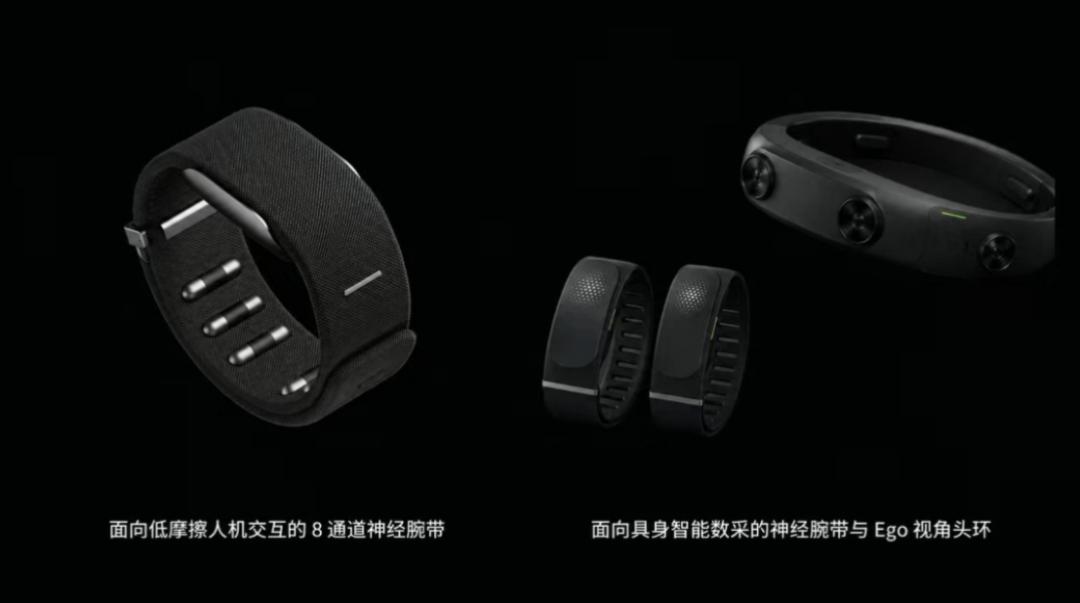
At the product level, SnowOrigin has currently launched wearable devices such as neural wristbands and panoramic headbands, and continues to promote the research and development of a new generation of data collection terminals. It hopes to build a human operation data infrastructure for the Physical AI era with a lightweight and scalable data collection solution.
(Image source/Enterprise)
Qin Xu introduced that compared with motion capture gloves, exoskeletons, or teleoperation devices that rely on laboratory environments, the wearable neural signal collection solution has the advantages of lower cost, lighter wearing, and being suitable for long-term continuous collection. It does not affect normal life, work, and study, and is expected to promote the large-scale acquisition of human embodied data.
At the model level, the team has independently developed the NMH (Neural Math Hybrid) AI decoding model, which can decode sEMG (surface electromyography) motor nerve signals in real time, converting information such as intention, posture, force exertion trend, micro-control, and environmental context during the human operation process into structured data, providing a more abundant and higher-quality data source for embodied intelligence data collection.
Currently, SnowOrigin is simultaneously promoting two commercialization paths: on the one hand, providing a more natural human-computer interaction entrance for terminals such as embodied intelligent robots and AI glasses, reducing the interaction threshold and improving the continuous interaction experience; on the other hand, building a human embodied data infrastructure for Physical AI, providing underlying data services for robot training and world models.
Regarding the team, founder Qin Xu graduated from the School of Computer Science at Peking University, majoring in Computer Application Technology. He is from the National Engineering Laboratory for Coding and Decoding at Peking University led by academician Gao Wen and dean Huang Tiejun. Co-founder Wang Zhilin graduated from the State Key Laboratory of Software Development Environment at Beihang University. He has long been engaged in research in the fields of artificial intelligence and computer vision, and has published many papers in top international academic conferences, with a single top AI paper citation of over 2,400.
The following is an excerpt from the conversation between Yingke and SnowOrigin founder Qin Xu:
Yingke: Meta's neural wristband has attracted wide attention to this technology, and domestic enterprises are also following up. Where does SnowOrigin's technological barrier lie?
Qin Xu: Many people think that the principle of electromyography signal wristbands is not complicated, but the real difficulty in turning laboratory things into mass-producible and commercializable products is all-round.
At the hardware level, most of the common electromyography wristbands in China currently still have an 8-channel design, with a sampling rate of only 200 to 250 Hz and a signal-to-noise ratio of more than twenty dB. And we have now achieved more channels, a higher sampling rate, and a signal-to-noise ratio of over 43. Moreover, this is not just a matter of piling up parameters. A high number of channels means more complex signal processing, more precise hardware design, and it also has to be small and low-power as required for wearable devices.
At the electrode and process level, metal electrodes need to ensure high conductivity and deal with various noises: motion noise, transmission noise, and contact noise. Moreover, the skin impedance and muscle structure of different people vary greatly, and the signal characteristics are completely different. We have made thousands of customized designs and human body experiment iterations to find the balance point.
In terms of the AI decoding model, in 2023, we developed the control interaction model. We were the first team in China to decode electromyography signals into full hand posture data in real time. When wearing the wristband and gently moving your fingers, the model can restore the complete intention and posture, and complete the interaction with various smart devices based on the Bluetooth protocol. It is not difficult to pile up the hardware parameters. The difficult part is that the algorithm can accurately translate the signals into actions and intentions.
So we are currently relatively leading in three dimensions: hardware, software, and the AI decoding model.
Yingke: The company's short-term positioning is the "human-computer interaction entrance", and the long-term goal is the "embodied intelligence data infrastructure". What is the current commercialization progress of these two aspects?
Qin Xu: In terms of human-computer interaction, several leading AI glasses companies have expressed strong cooperation intentions.
In terms of data collection, there is currently a paradigm shift, from heterogeneous sensor solutions, from motion capture gloves, from teleoperation devices, to wearable neural signal collection solutions. This is a brand-new paradigm. What everyone is doing now is to verify the effectiveness and feasibility of this solution and then quickly seize the position.
The difference between SnowOrigin and other players is that we have been deeply involved in this field for three years before this track became popular. We were the first in China to restore hand postures from electromyography signals, the first to develop the control interaction model, and the first to promote the mass production of 8-channel and more-channel electromyography wristbands. Now the window for the paradigm shift has opened, the verification stage is basically completed, and it is in a critical period of seizing the position.
Homepage image source | Provided by the enterprise
Typesetting | Fan Xinya