Gas-powered cars maintain roads, while electric cars help drivers gain weight.
In September 2023, the Yangwang U8 was launched. This million-yuan new energy luxury car is equipped with a series of cutting-edge technologies such as e - Quad and Cloud Chariot - P. It can perform stunts like floating on water and turning in place. However, it weighs up to 3.46 tons. The U8L Ding Shi Edition, which was introduced last year, gained an additional 200 kg after its size was increased.
What does this mean? In the 1990s, the popular Santana in China weighed only about 1.1 tons. The Prado with a frame weighed about 2.1 tons in its previous generation. The extended - wheelbase Range Rover, which is over 5.25 meters long, is a full ton lighter than the Yangwang U8L.
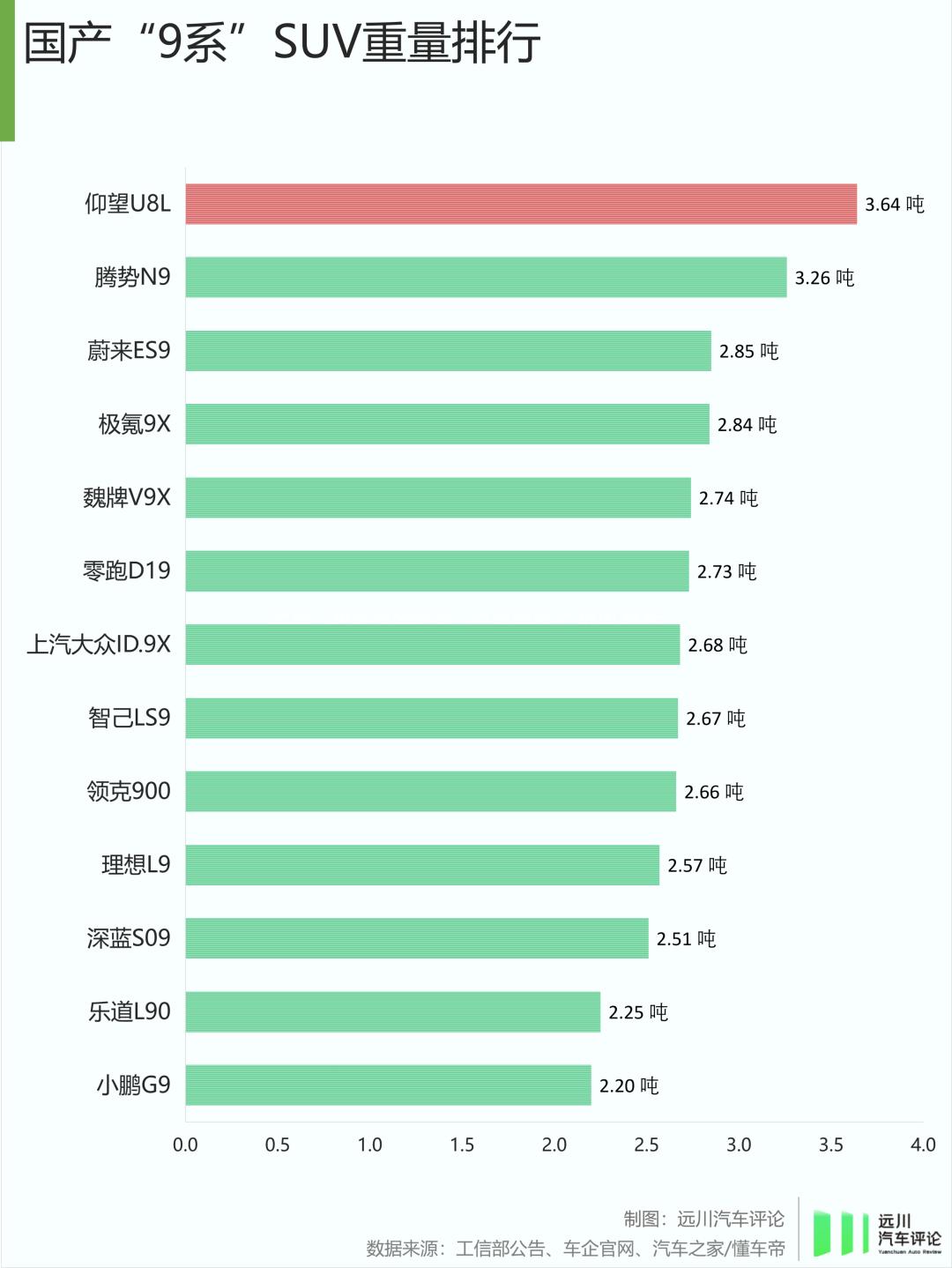
Electric behemoths like the Yangwang U8 are not an exception. Looking at the entire market, almost all new energy vehicles are irreversibly "putting on weight". The reason behind this is obvious: In order to meet consumers' endless desires, car manufacturers have stuffed in all the possible configurations.
If users want more space, car manufacturers increase the vehicle's dimensions. If they want longer range, a large battery with a capacity of over a hundred kilowatt - hours is installed on the chassis. If they want a sense of luxury, zero - gravity seats, power - closing doors are added, and it's better to be equipped with a refrigerator, air suspension, and rear - wheel steering. If they want intelligence, several 4K screens and dozens of intelligent driving hardware including lidar are of course necessary.
This straightforward approach has made Chinese new energy vehicles stand out in terms of cost - effectiveness. However, on the other hand, almost every selling point written in the configuration list will eventually make electric vehicles carry a heavier "burden".
From January to April this year, the average curb weight of new energy passenger vehicles in China has soared to 1939 kg, a 27.5% increase compared to 2020.
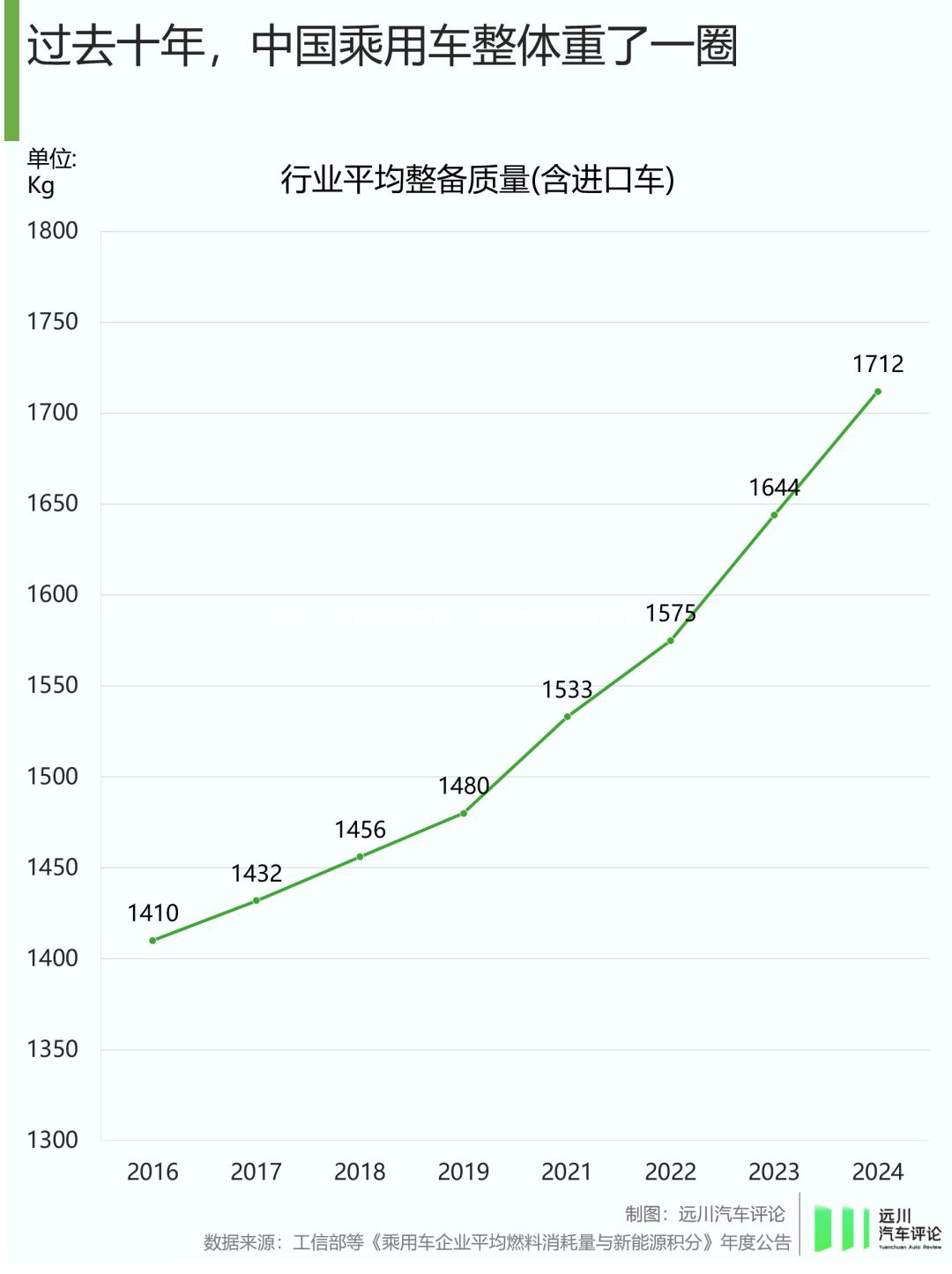
That's why there has been a lot of discussion in the industry recently about the "vehicle weight tax". The ultimate goal of these discussions is not to simply punish electric vehicles, but to figure out the fiscal accounts in the post - fuel vehicle era.
01
It's Getting Harder to Reduce Vehicle Weight
There is an old consensus in the automotive industry: "Rather lose ten horsepower than gain one kilogram." Colin Chapman, the founder of Lotus Cars, also said: "Increasing horsepower can make you faster on straight roads, but reducing weight can make you faster everywhere."
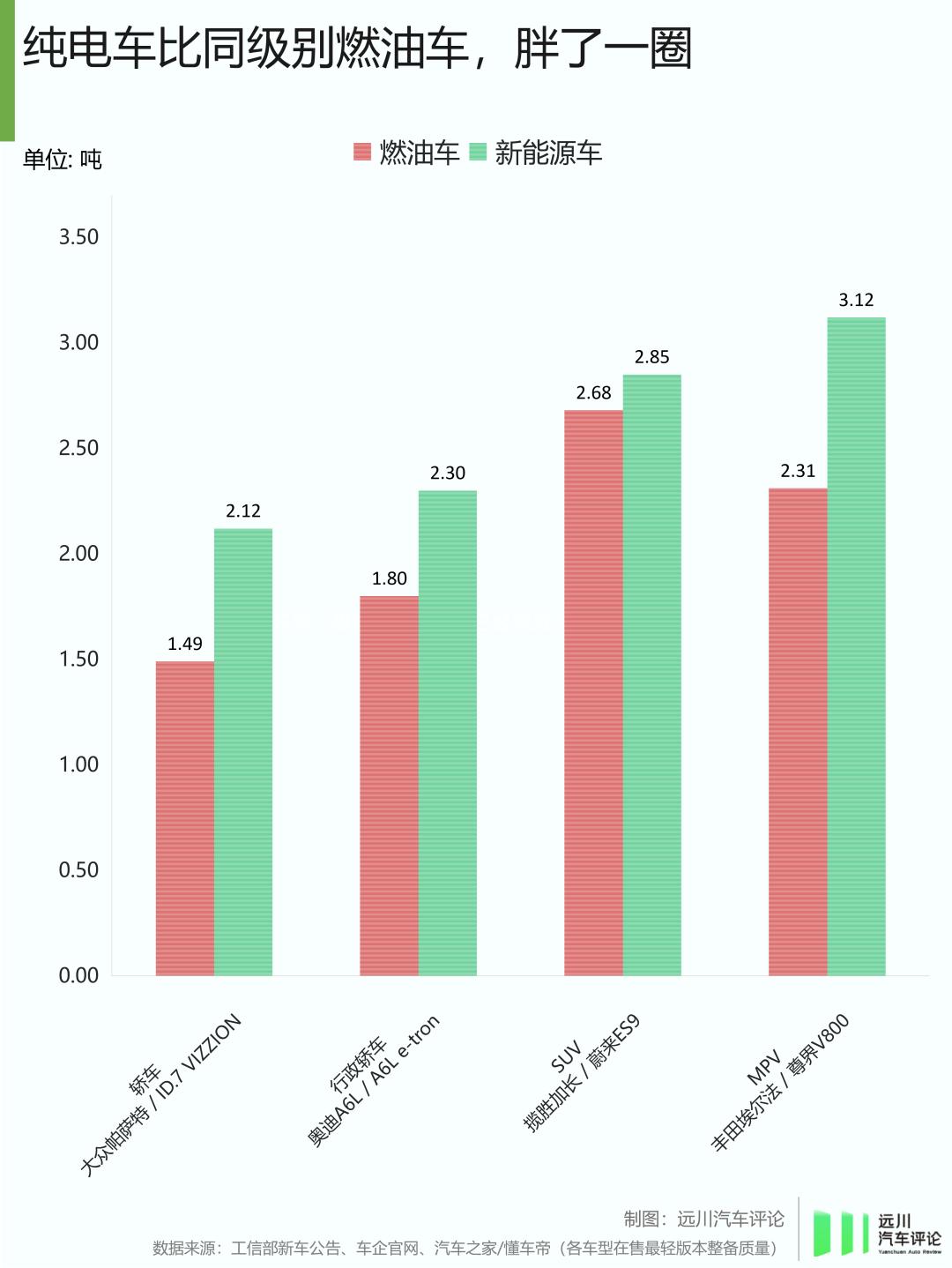
These two well - known sayings in the fuel vehicle era are still relevant in the electric vehicle era. Because electric vehicles have an inherent "obesity" gene.
Generally, a 2.0T engine weighs about 130 kg, and an AT transmission weighs between 80 - 100 kg. The total weight of the two is just over 200 kg. In contrast, a 40 - kilowatt - hour lithium iron phosphate battery weighs about 300 kg.
In other words, even without the traditional transmission and drive shaft, electric vehicles are at least a hundred kilograms heavier than fuel vehicles of the same class.
The new electric vehicle startups are well aware of this and have been thinking about solutions.
For example, the first - generation NIO ES8 launched in 2017 was equipped with a 70 - kilowatt - hour ternary lithium battery produced by CATL. The battery pack weighed up to 525 kg. To offset this additional weight, the ES8 used a very expensive all - aluminum body, and the weight of the body - in - white reached an industry - leading 335 kg. However, the total vehicle weight still reached 2.46 tons.
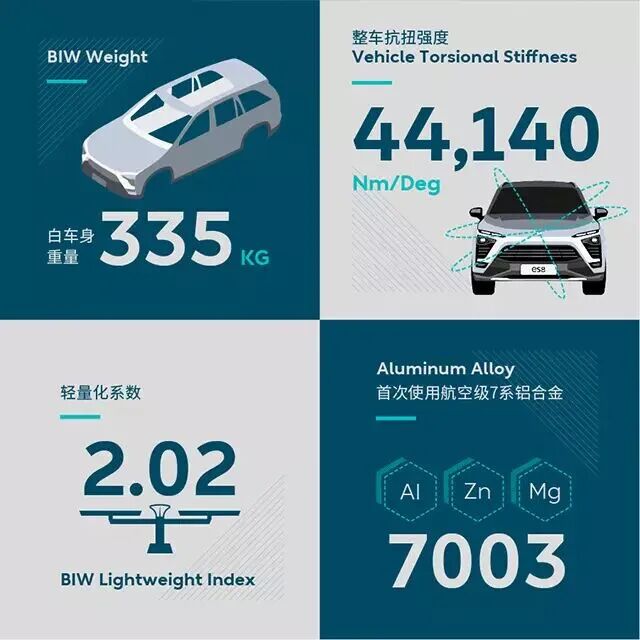
Body parameters of the first - generation NIO ES8
Tesla is a pioneer in electric vehicle lightweighting. In 2020, Tesla was the first to apply the integrated large - die - casting technology to the Model Y, integrating dozens of small parts that originally needed stamping and welding into a single rear floor.
After that, new startups in China such as XPeng, Zeekr, Xiaomi, and Li Auto followed suit, and the results were immediate.
For example, the XPeng P7+ launched in 2024 uses integrated die - casting technology for both the front and rear, reducing the weight of the body - in - white by 30 kg, a weight - reduction ratio of 15.8%. The first - generation Xiaomi SU7 reduces the weight of the body - in - white by 17% compared to the traditional welding process. The newly launched new - generation Li L9 reduces the weight of the rear floor by 37.3 kg through large - die - casting.
For electric vehicles, all - aluminum bodies and integrated die - casting are indeed effective weight - reduction tools, but they each have their limitations.
In terms of materials, although the all - aluminum body has a relatively high stiffness, the strength of top - notch hot - formed steel far exceeds that of aluminum alloy (2000 MPa vs 600 MPa), and it has a stronger anti - deformation ability.
Therefore, after comprehensively considering cost and safety, most vehicles choose a steel - aluminum hybrid body and continue using high - strength steel in key parts such as the A - pillar, B - pillar, and sill beam.
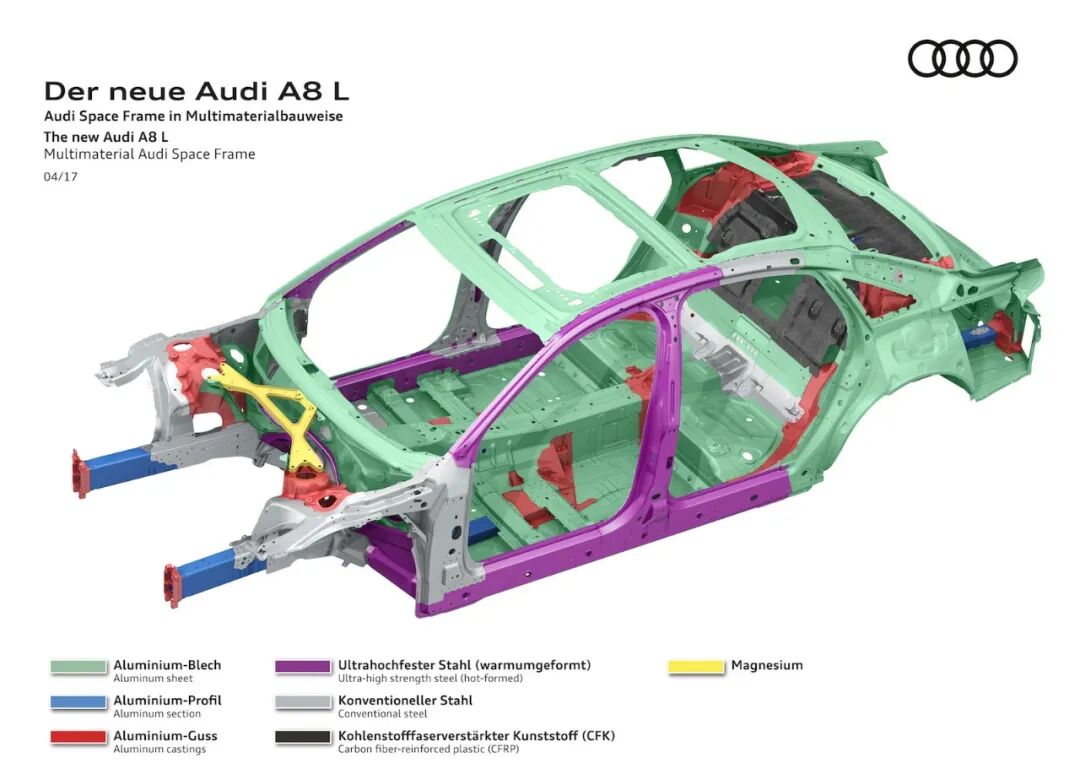
The Audi A8, which was the first to introduce the all - aluminum body, has now returned to the mainstream
A typical example is the Audi A8. Once the first to implement the all - aluminum body, it has now returned to the steel - aluminum hybrid body.
In terms of technology, integrated die - casting has entered a stage of diminishing marginal returns.
In the past few years, the maximum clamping force of die - casting machines has soared from 6000T to 16000T, and the covered parts have extended from the rear floor to the front engine compartment. However, the equipment investment has increased linearly, while the weight - reduction benefits no longer increase proportionally. Larger machines and more integrated castings only bring a few kilograms of lightweight benefits.
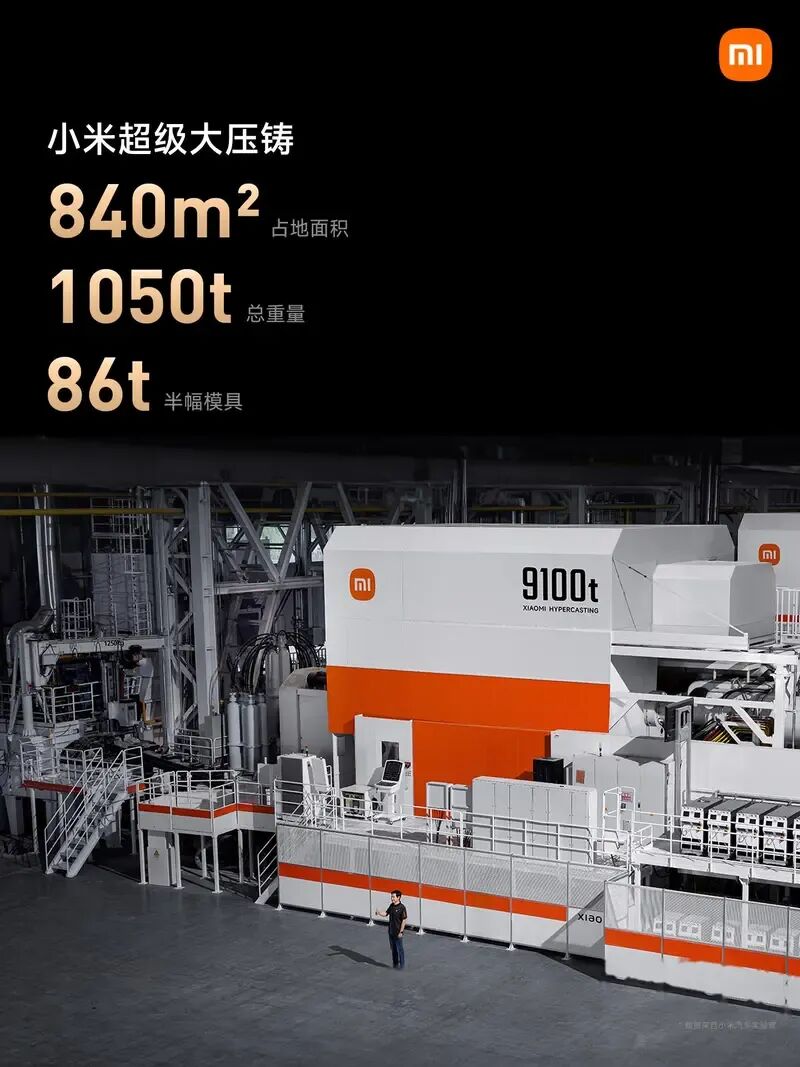
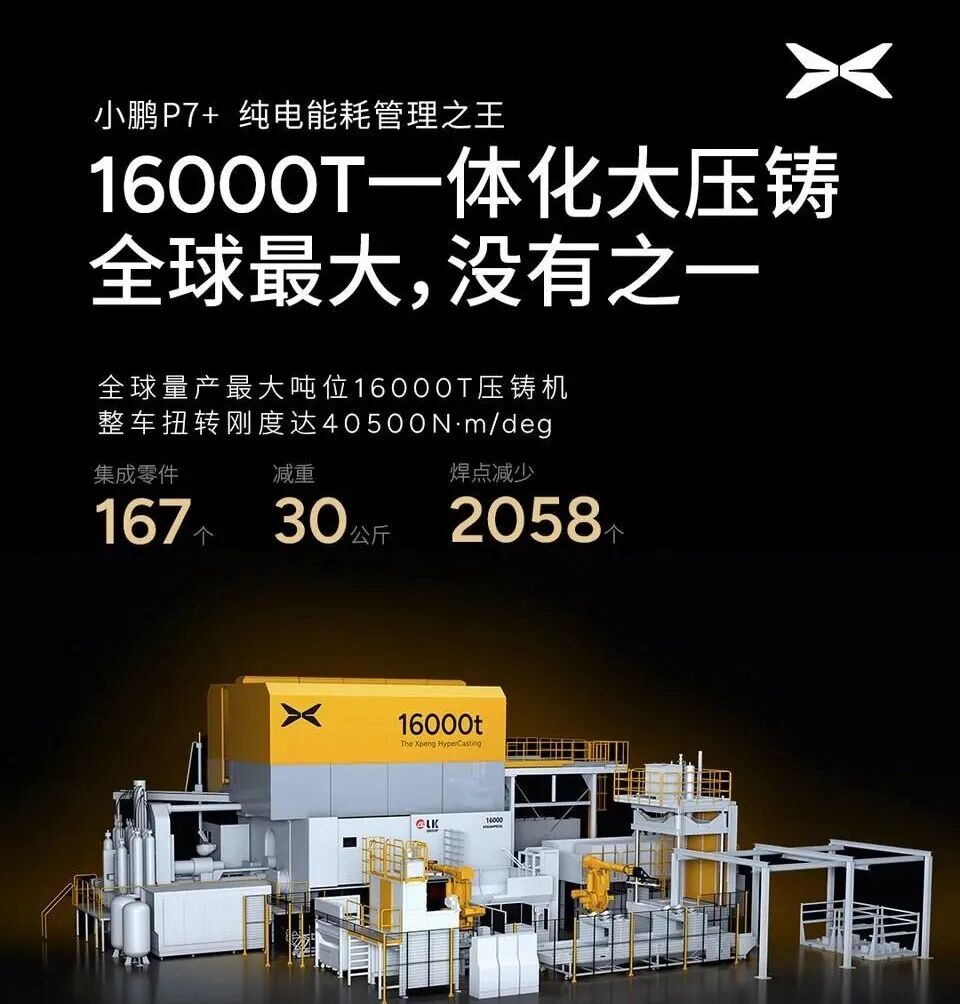
New startups have taken die - casting machines to a new level
What's more frustrating is that the few dozen kilograms "saved" by material and process engineers from the body - in - white are only enough to increase the battery pack capacity by a few kilowatt - hours. And blindly increasing the battery easily traps electric vehicles in an "obesity spiral":
Increase the battery capacity - the chassis and suspension must be strengthened - the brake discs must be enlarged, and the tires must be widened - the vehicle body structure needs to be further strengthened - the power consumption per 100 kilometers soars - in order to maintain the range, a larger battery has to be installed.
The best way to break this spiral is to improve the battery energy density as much as possible, because the battery is the biggest "culprit" of electric vehicle obesity.
02
There Is No Perfect Battery
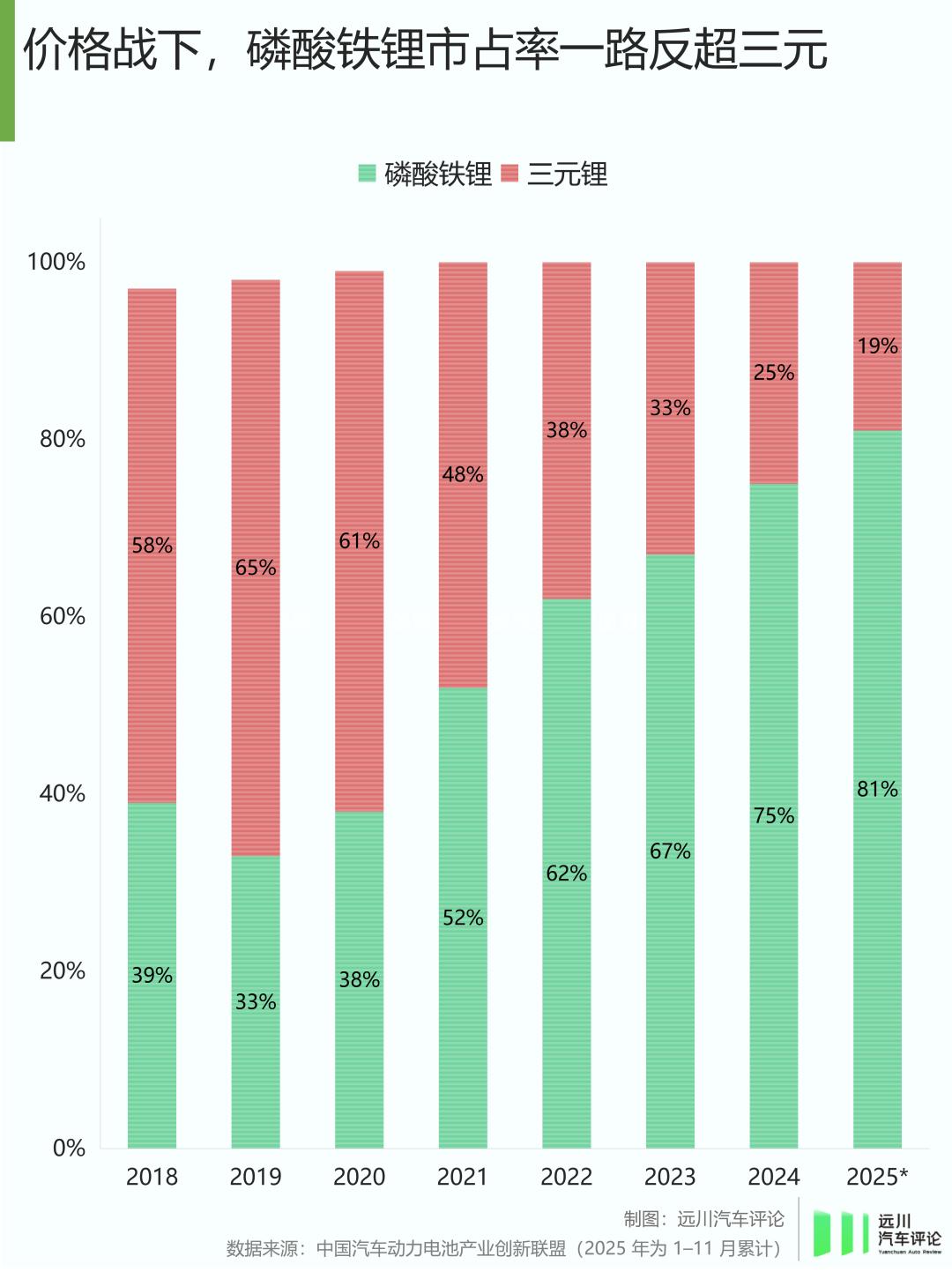
Before 2020, ternary lithium batteries with higher energy density were the mainstream choice in the new energy vehicle market. However, the suddenly emerging blade battery changed the game rules. It almost single - handedly brought the marginalized lithium iron phosphate back to the center of the stage.
In 2021, the price of upstream lithium carbonate materials soared to a maximum of 600,000 yuan per ton, magnifying the cost - effectiveness advantage of lithium iron phosphate. Two years later, a fierce price war in the auto market broke out across the board. Cost reduction became the bottom line for car manufacturers' survival. Lithium iron phosphate took the opportunity to penetrate into more markets and finally overtook ternary lithium.
Last year, the market share of lithium iron phosphate in the domestic new energy passenger vehicle market exceeded the 80% mark. Especially in the mid - to - low - end market with a selling price of less than 150,000 yuan, ternary lithium is on the verge of extinction.
Compared with ternary lithium, lithium iron phosphate has the advantages of lower price, better safety, and longer cycle life. However, the price is a lower energy density, so for the same capacity, it is heavier than ternary lithium .
Take the 2021 - launched Leapmotor C11 510 Luxury Edition as an example. The 76.6 - kWh ternary lithium battery pack weighs about 465 kg, while the 78.5 - kWh lithium iron phosphate battery pack weighs up to 600 kg. The latter only has two more kilowatt - hours of capacity but is 130 kg heavier.
This huge weight difference is determined by the underlying material characteristics.
The energy density of a lithium battery depends on how much charge (gram capacity) the cathode material can hold and its discharge platform voltage. In these two core indicators, lithium iron phosphate is at an overall disadvantage.
For example, the discharge voltage platform of lithium iron phosphate is only 3.2V - 3.4V, and the theoretical gram capacity is only about 170 mAh/g. In contrast, ternary lithium with nickel, cobalt, and manganese elements has a discharge voltage platform of 3.7V - 3.8V, and the theoretical gram capacity can reach 280 mAh/g. The upper limit of its energy density is much higher than that of lithium iron phosphate.
That's why, after 2020, the energy density of lithium iron phosphate cells has been increasing relatively slowly. Battery manufacturers mainly improve the system energy density by reducing structural components.
For example, the first - generation BYD blade battery uses CTP (Cell to Pack) technology, which essentially skips the traditional module link, eliminates a large number of unnecessary "dead weights" such as screw fasteners, partitions, and wiring harnesses, and directly assembles dozens of cells into a complete battery pack, thus achieving a system energy density of 140 Wh/kg.
However, when the structural components in the battery pack cannot be further reduced and the cells are even integrated into the chassis (Cell to Chassis), it becomes increasingly difficult to "steal space" through structural innovation.
The second - generation BYD blade battery, which was publicly launched this year, has a soaring charging speed, but the system energy density has only increased by 5%, equivalent to an annual increase of only 1%.
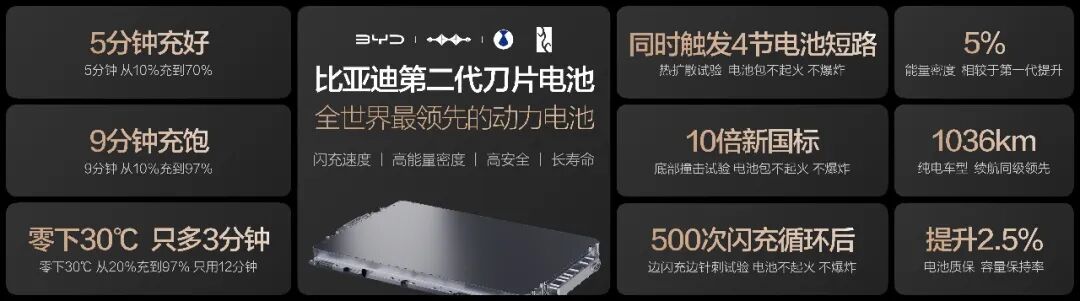
The second - generation blade battery has a rapid increase in charging efficiency but a slow increase in energy density
As the progress of battery technology slows down, it is difficult to improve all aspects of battery performance simultaneously. Long range, low cost, and lightweight have become an "impossible triangle" that electric vehicles are difficult to overcome in the short term.
GAO Huan, the CTO of CATL, made a very intuitive comparison. A 125 - kilowatt - hour battery made of ternary lithium materials weighs about 625 kg. However, if the material is changed to lithium iron phosphate, although it can save tens of thousands of yuan, the weight will directly soar to 880 kg because the battery system energy density drops from 200 Wh/kg to 142 Wh/kg.
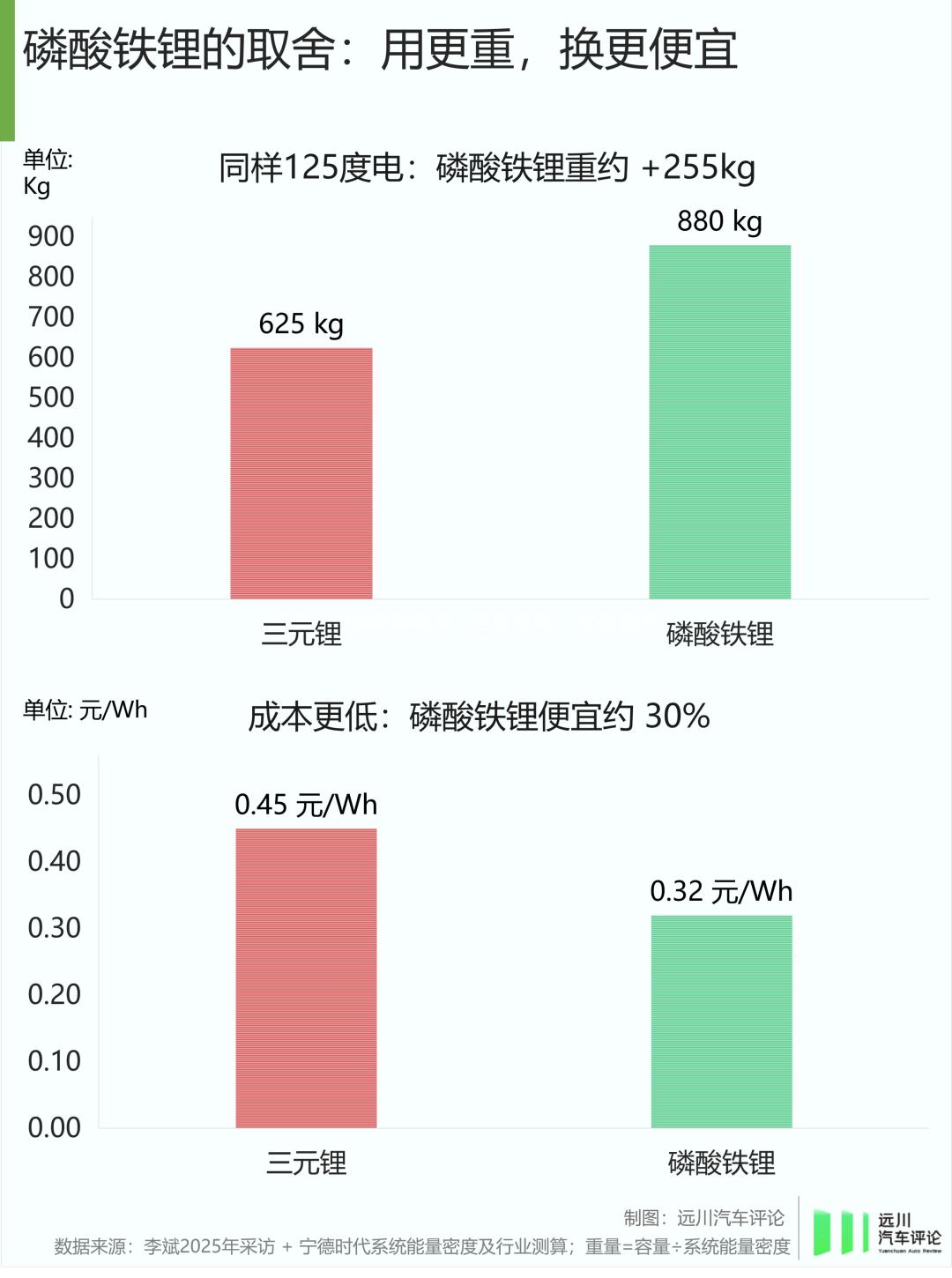
At the "Technology Day" held in April, GAO Huan made a bold statement: "For pure electric vehicles with a selling price of over 250,000 yuan, choosing lithium iron phosphate is a downgrade."
But regardless of the bold statement, in an extremely competitive market, no product manager can ignore the cost difference of tens of thousands of yuan.
So we can see that whether it is the entry - level Tesla Model Y priced at 263,500 yuan, the