Four MIT dropouts created the fastest myth of breaking 100 million, with Elon Musk footing the bill.
[Introduction] A valuation of $29.3 billion in just two years! Michael Truell, who started coding at 11 and interned at Google during his freshman year at MIT, along with three classmates, has written the latest wealth - creation myth in Silicon Valley. When Elon Musk's SpaceX hit the acquisition button, a more massive AI empire has taken shape.
Today, four billionaires are born!
Just four days after its listing, SpaceX, under Elon Musk, acquired the current top - tier AI coding tool, Cursor, entirely through a stock - based deal.
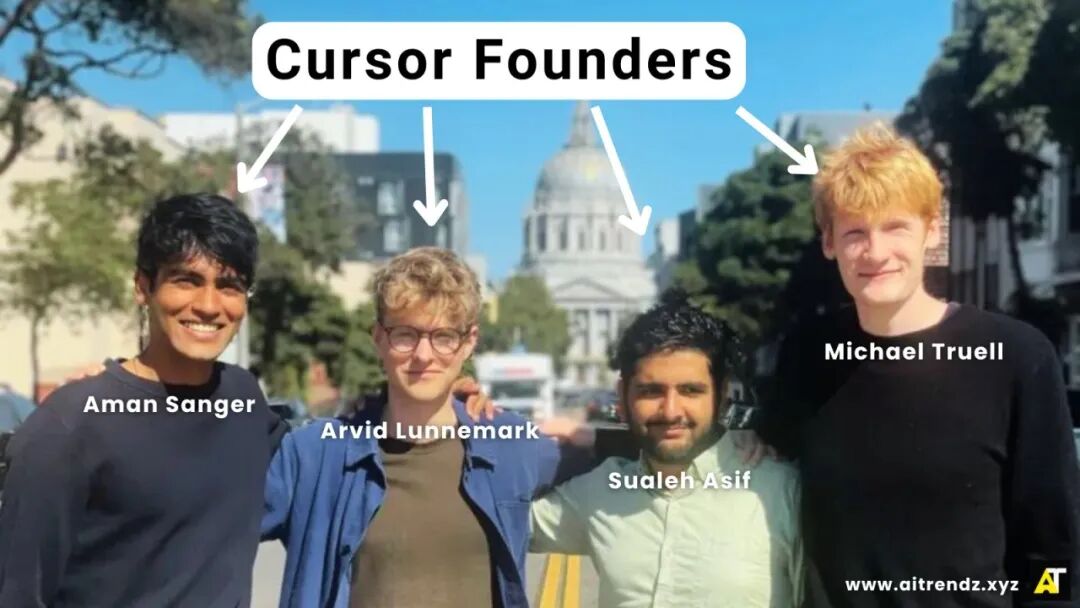
The creators of this myth are actually four MIT graduates in their twenties.
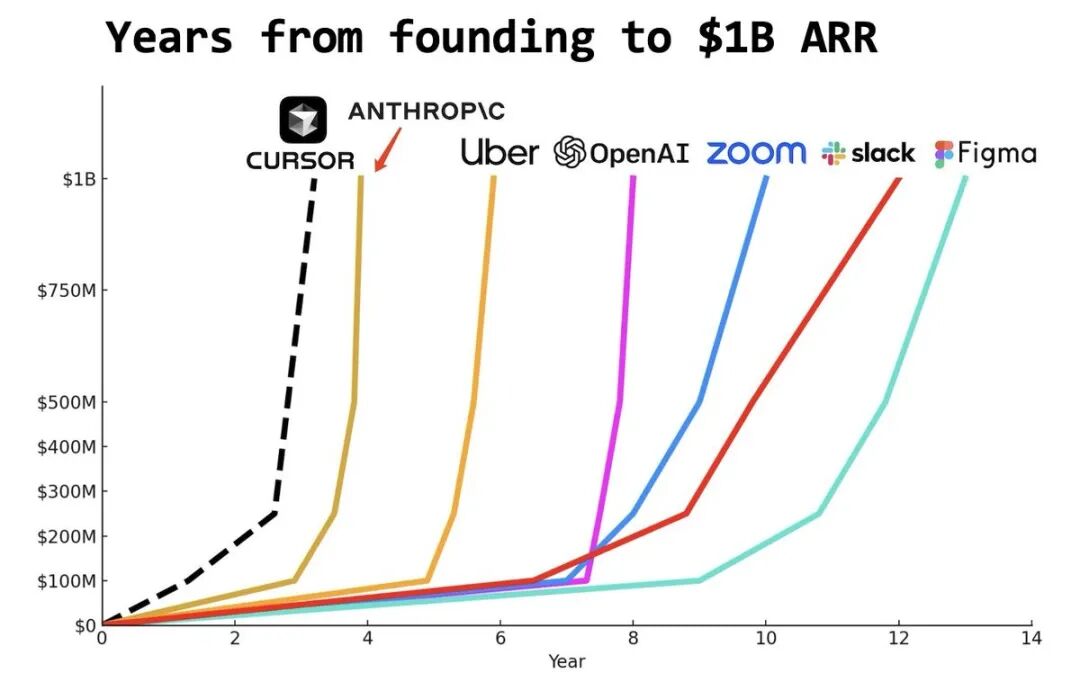
Cursor's valuation soared to as high as $29.3 billion, and its annualized revenue exceeded the $1 billion mark!
In less than two years, they transformed a fledgling AI programming team into a benchmark that defines the entire AI era.
Peeling off the filter of "getting rich overnight", the stories behind these four MIT geeks are truly inspiring.

Dropping out of MIT and becoming CEO at 25
Michael Truell, Sualeh Asif, Aman Sanger, and Arvid Lunnemark.
In 2022, these four young MIT students made a crazy decision: to drop out of school collectively and found Anysphere.
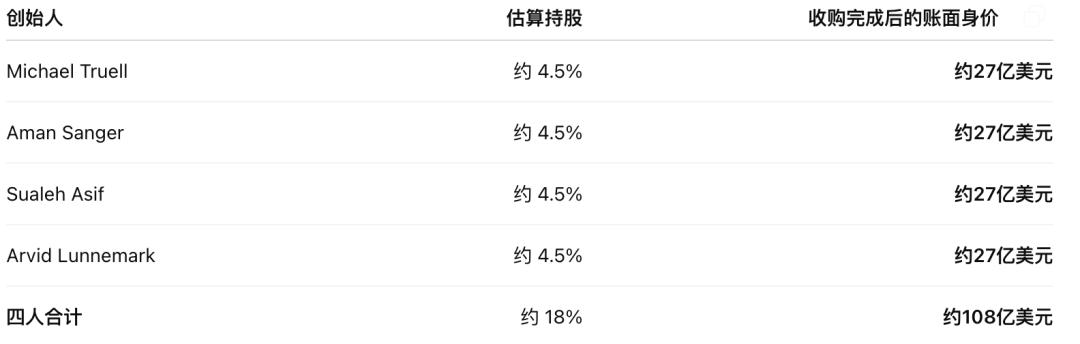
Facts have proven that they won the bet!
Now, each of them holds about 4.5% of Corsor's shares, and their personal net worth has soared to over $1.3 billion.
However, the real "soul figure" of this wealth - creation myth is CEO Michael Truell.
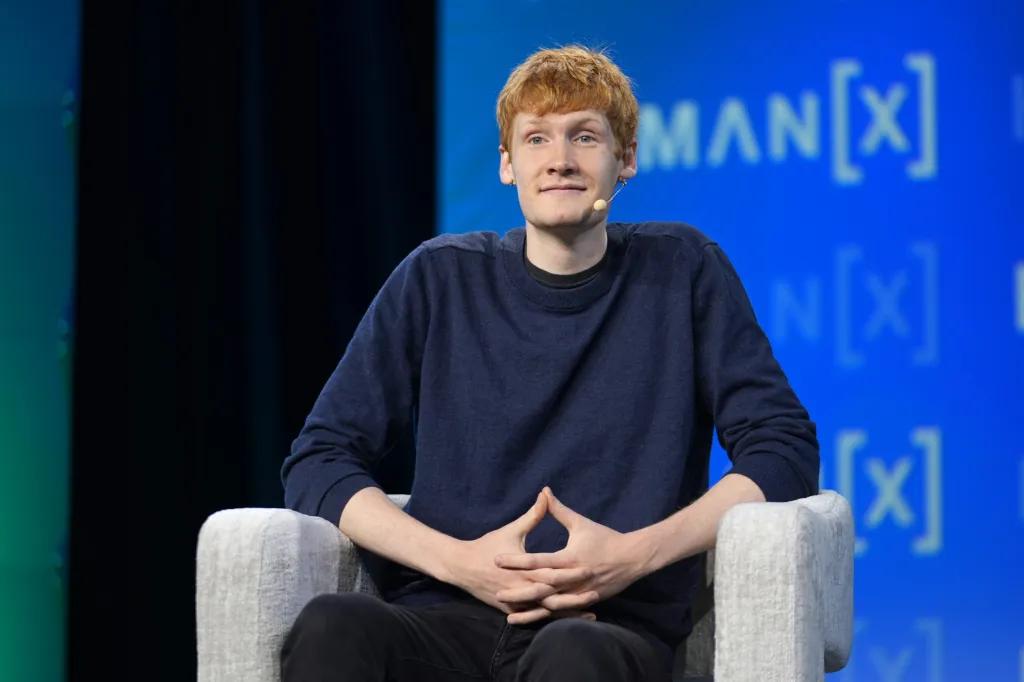
Truell grew up in New York and attended Horace Mann, a top - tier preparatory school in the Bronx.
Since he was 11, he has written his first line of code to create a mobile game for himself.
This "hard - core for fun" spirit has almost accompanied every step of his later life.
At the age of 18, just after his freshman year at MIT, Truell went to Google for an internship. His job was to train a language model for sorting information streams.

In other words, long before ChatGPT set the world on fire, this young man had already plunged into the world of large - scale models.
It was also during that internship that he met the person who changed his fate - Ali Partovi, an early investor in Facebook and Airbnb, who was recruiting young talents for the Neo Scholars program at that time.
Truell completed a programming written test at a "record - breaking speed".
Partovi drew a circled star next to his name on the spot. The meaning of this mark was: as long as this young man worked on any project, he would invest.
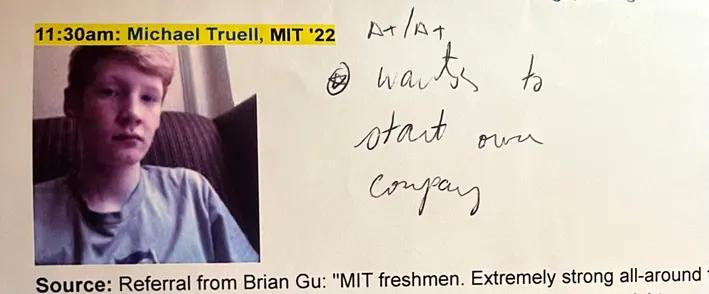
Later, Truell became one of the 30 selected by Neo Scholars each year.
Later, when he founded Cursor, Partovi became one of the first - round investors.
The star drawn on paper back then has now expanded into a behemoth worth $60 billion.
A boy who started writing games at 11 has written himself into the biggest wealth - creation myth in Silicon Valley in less than 15 years.
Four young MIT students wrote the Silicon Valley myth in three years
Don't be fooled by their current glory. During that difficult startup period -
They almost gave up!
Back in 2021, ChatGPT had not yet emerged, and the drama of OpenAI overturning the Silicon Valley game table had not yet played out.
At that time, Michael Truell and his MIT classmates were sitting together, constantly struggling with a soul - searching question:
Where should we pour our passion for AI?
A year later, they found the answer.
Initially, these four young men were all heavy users of Microsoft's GitHub Copilot.

However, in their day - to - day heavy reliance, they gradually noticed the limitations of existing tools and were convinced that they could break through this ceiling.
Surprisingly, their first startup direction was not AI programming at all.
At first, they didn't want to "compete" in AI programming
Truell said that their first project was a "Copilot for mechanical engineers". The reason was very practical: it was an "obscure and less - competitive" field.
Meanwhile, two members of the team were also working on a "message encryption project".
What was the result? One after another, these directions failed.
It was not until nearly half a year later that the team, which had been hitting walls in a desperate situation, finally changed course and plunged into AI programming -
A field they deliberately avoided at first because "they thought it was too competitive".
But at that moment, the four of them finally woke up and saw their inner desires clearly. "We realized that we were inherently fanatical about the future of programming."
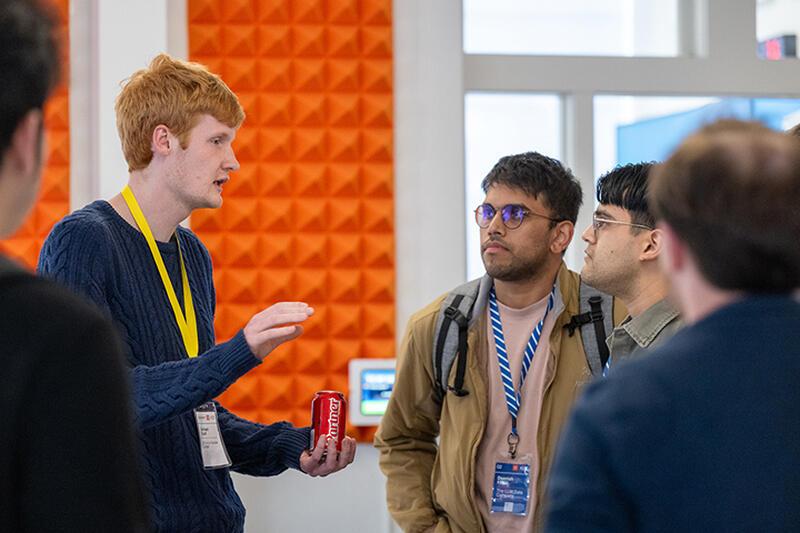
All that was left was to go all out. Looking back on this journey, Truell's tone was understated, but every word carried a lot of weight:
We had great faith and enthusiasm for this. So at a certain critical point, we decided - to do it.
In other words, what really made Cursor successful was the simplest decision: to go all in.
From 0 to $1 billion in less than two years
In early 2023, Cursor's first product was just launched.
But in just 12 months, its ARR skyrocketed to $100 million like a rocket, setting the fastest record for a SaaS company to reach this milestone in history.
In comparison, Slack, once regarded as a growth myth, took two and a half years, and Dropbox took four years.
This is just the beginning.
Throughout 2025, Cursor's valuation soared from $2.5 billion to $29.3 billion, nearly 12 times, and it secured a massive $2.3 billion in Series D financing.
As of this month, the internal data shows that its annualized revenue is approaching the astonishing $2.6 billion mark.
Compared with the revenue myth, Cursor's industry penetration is equally astonishing.
A company with only more than 300 employees has quietly won 67% of the Fortune 500 companies, including Salesforce, Samsung, and Budweiser.

In terms of technological evolution, it has also shown fierce aggression.
Cursor 3, which was launched at the beginning of this year, heavily bet on "Agentic Coding". This sharp move precisely targeted Claude Code under Anthropic.
A product that has made global developers go crazy completed its commercial cycle the moment it was launched.
Buying the "ticket" to AI programming
When Elon Musk hit the acquisition button, Cursor was at a delicate moment of "peak glory".
Why would a rocket - building company spend a fortune to buy a code - writing tool?
The answer is already hidden in another deal four months ago: SpaceX's acquisition of xAI.
What Elon Musk wants is a vertically integrated AI empire -
It has computing power and models at the bottom (xAI), and what it lacks at the top is a "killer application" that can be directly monetized and directly control the entrance to the enterprise market.
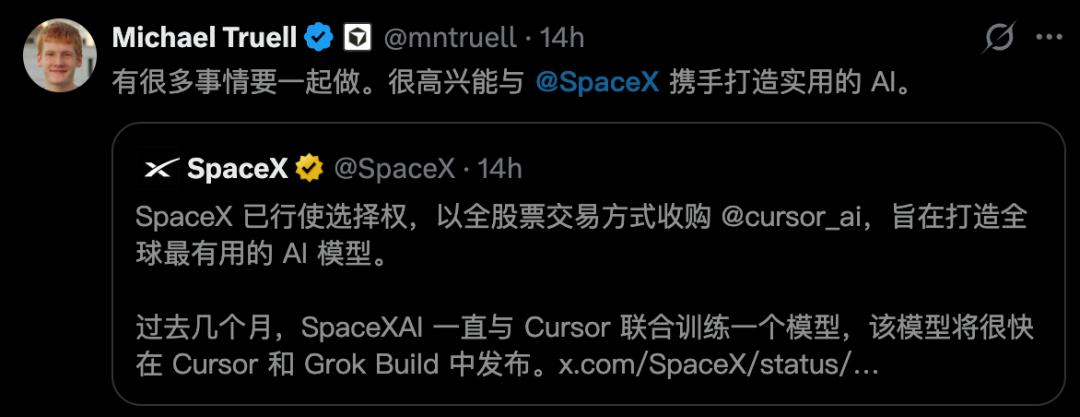
Buying Cursor means that xAI has gone from being behind to leading in the field of AI programming overnight.
As CEO Truell said, "Cursor's goal is to invent a brand - new way of programming."
What they really want to do is to help humans write all software.
What Elon Musk bought for $6 billion is a ticket to the future of "machines writing machines".
Reference materials:
https://x.com/siddarthpaim/status/2066885326388531496?s=20
https://fortune.com/article/who-is-michael-truell-cursor-ceo-spacex-acquisition/
This article is from the WeChat official account "New Intelligence Yuan", author: ASI Apocalypse; editor: Taozi. It is published by 36Kr with authorization.