Airspace restructuring: The "inflection point" of the low-altitude economy has arrived
On June 16th, the mobile module of the "Fly in Zhejiang" flight service was launched. By entering a place name, flight route, or area, users can query in real - time whether they "can fly", marking that low - altitude flight services have entered the "fingertip era".
Not long ago, with the support of military and civil aviation control departments, regions such as Shanghai and Sichuan opened up dedicated airspace to explore the "scan - to - fly" model, promoting the accelerated implementation of the "low - altitude + cultural tourism" model.
Behind these developments, there is a major background. Since May this year, the new national flight - suitable airspace for micro, light, and small unmanned aerial vehicles has been officially put into use, and the Civil Unmanned Aerial Vehicle Integrated Management Platform (UOM) has simultaneously completed the update of the national airspace GIS data.
Overall, the flight - suitable areas in Hunan, Guangdong, Shandong, Sichuan, Guangxi and other regions have significantly increased, and the low - altitude flight space has been continuously expanded.
"This round of national adjustment of low - altitude flight - suitable airspace is the inevitable result of the superposition of policy, legal, and market drivers," Zhu Keli, the founding dean of the Guoyan New Economy Research Institute and the dean of the Bay Area Low - altitude Economy Research Institute, told Urban Evolution. The UOM platform has achieved a national network with minute - level updates. This marks that the low - altitude airspace is undergoing a substantial transformation from a control logic to a production factor logic, and it is a key turning point for the low - altitude economy to move from policy - driven enthusiasm to a commercial closed - loop.
How will this affect the development of the low - altitude economy? With the "airspace scramble" coming to a temporary end, what will regions compete for in the next stage?
01
Seizing Airspace
Airspace is to the low - altitude economy what road traffic is to automobiles. It is the core resource element for ensuring the development of the industry. For scenarios to be implemented and aircraft to take off, the first requirement is to have low - altitude airspace.
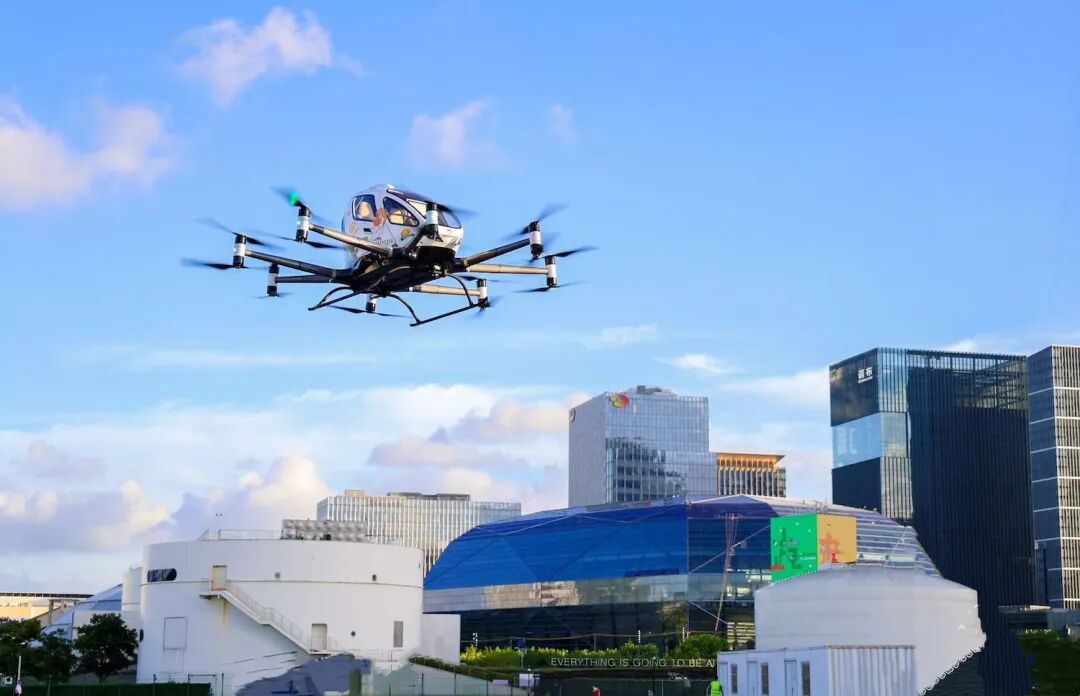
Photo source: Xinhua News Agency
However, low - altitude airspace management involves the coordination of the military, local governments, and the civilian sector. The coordination is difficult and the approval cycle is long. This institutional constraint has, to some extent, delayed the commercialization process of the low - altitude economy.
In the past few years, regions such as Hunan, Sichuan, Anhui, and Hainan have taken the lead in pilot projects, using various mechanism innovations to improve the efficiency of low - altitude airspace resource utilization.
For example, Hunan was the first in the country to complete the classification and demarcation of airspace and established the first province - wide low - altitude surveillance network in the country; Sichuan carried out a pilot project on low - altitude operation management, releasing more than 120,000 square kilometers of low - altitude airspace resources.
Now, the new round of national adjustment of flight - suitable airspace means that airspace management from the central to local levels is being "unshackled" on a large scale.
According to the incomplete statistics of Urban Evolution, after the new round of national airspace adjustment, more than 20 provinces, including Guangdong, Jiangsu, Zhejiang, Shandong, Sichuan, Henan, Hubei, Fujian, Shanghai, Hunan, and Anhui, have announced the scope of the new - version flight - suitable airspace for unmanned aerial vehicles.
Among them, the proportions of flight - suitable airspace in Guangxi, Sichuan, Hunan, and Jiangxi are 84.26%, 80%, 75.5%, and 64.71% respectively, ranking among the top in the country.
In terms of growth, the proportion of flight - suitable airspace in Hunan has increased from the original 43% to 75.5%, with the highest growth rate in the country; the airspace scope in Sichuan has been further expanded, and the flight - suitable airspace is expected to exceed 80% of the provincial area; the new - version flight - suitable airspace in Guangdong is about 102,400 square kilometers, with a 16% increase compared with the previous flight - suitable airspace, accounting for 57% of the provincial area...
These provinces have also become the winners in the new round of airspace resource release. More importantly, the airspace structure has been further optimized to better meet real - world needs.
For example, the low - altitude airspace below 120 meters in Shenzhen has achieved normal and full - area opening, with the flight - suitable airspace covering 75% of the city; in Changsha, the proportion of flight - suitable airspace in the urban area has increased from less than 0.5% to 82.9%, a 177 - fold increase.
"The significant expansion of the airspace scope has sent a positive signal to the industry," a relevant person in charge of Voliflyer told Urban Evolution. The industry has felt that the support policies for the low - altitude economy have been intensively implemented this year. In the past, eVTOL R & D often faced the confusion of "rules in the making". Now, this "construction blueprint" is becoming clearer, giving unprecedented "certainty" and "acceleration" to the industry's development.
An expert from the civil aviation system analyzed to Urban Evolution that the new round of airspace adjustment conveys two core trends.
Firstly, China's low - altitude management is shifting from a "one - size - fits - all" approach to refined classified control. Innovative models such as the "stepped" airspace demarcation have been promoted from pilot projects to the whole country. After the upgrade of the UOM platform, the airspace data can be updated every minute, which also solves the contradiction between the previous static airspace and dynamic needs.
Secondly, the UOM platform has completed the update of the national unified GIS data, marking the basic completion of the digital airspace management infrastructure. At the beginning of this year, the Civil Aviation Administration of China also issued a special document to establish the data exchange specifications between the national unified UOM platform and service providers.
This is also an important prerequisite for promoting the large - scale implementation of the low - altitude economy.
02
New Competition Points
In the past, fragmented airspace was more like a "restricted area" than an available resource. Now, with the UOM unifying the national GIS data, the cross - regional information barrier has been completely broken. In Zhu Keli's view, this means that airspace has changed from an "uncontrollable risk point" to a "dispatchable production material", solving the core pain point of industrial scale - up - airspace certainty.
He believes that this is a substantial turning point. After the airspace boundaries are clear, local governments need to shift their focus from "competing for airspace" to building an ecosystem, strengthening supporting facilities, and cultivating scenarios, promoting the low - altitude economy to move from factor - based to scenario - based and then to economic - based, achieving large - scale implementation.
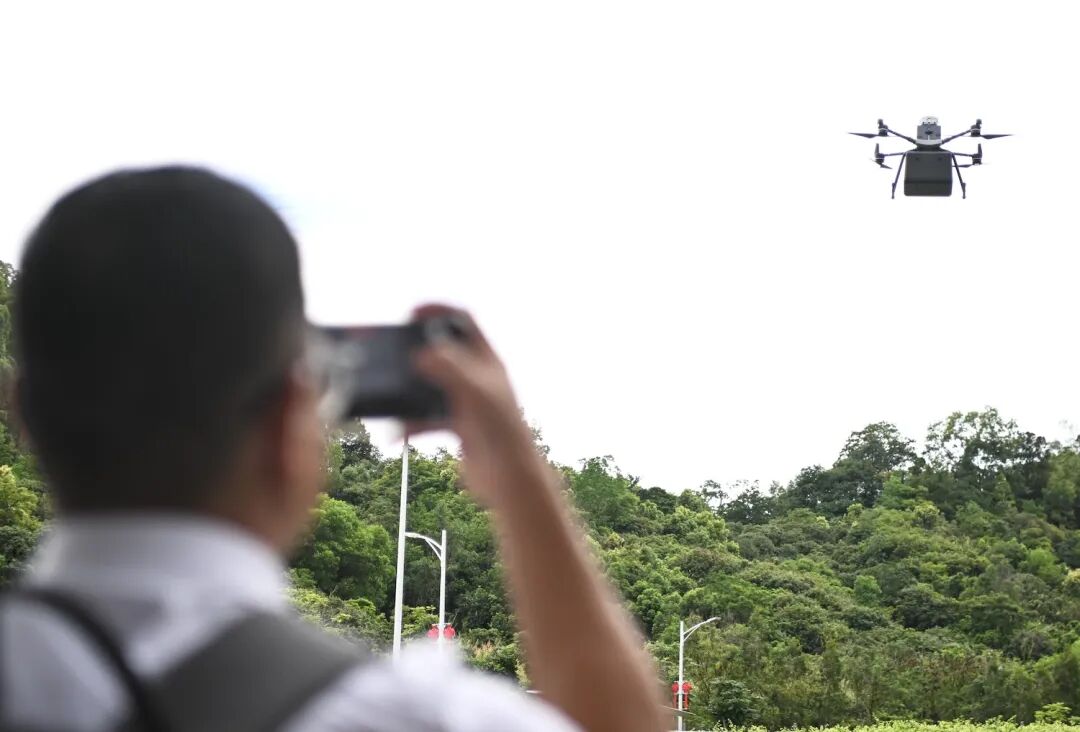
Photo source: Xinhua News Agency
A relevant person from the development and reform system in the western region mentioned that the current problem is mainly the lack of vertical take - off and landing facilities and flight services and support facilities such as communication, navigation, monitoring, and meteorology, which are difficult to meet the needs of the rapid expansion of low - altitude scenarios.
This also reflects that low - altitude infrastructure is becoming a new "competition point" for regions. The research institute of AVIC Securities predicts that in 2026, the construction of low - altitude infrastructure may enter an accelerated period of systematic layout.
Urban Evolution noticed that from the coastal areas to the inland, and from the first - tier regions to the second - tier regions, almost all regard the integrated provincial low - altitude control platform as the top priority. The 14th Five - Year Plan Outline of Guangdong Province previously proposed to focus on building a provincial intelligent connected system and improve the functions of the provincial comprehensive flight service station and the three flight service stations in Guangzhou, Shenzhen, and Zhuhai.
These provincial/municipal platforms need to connect and cooperate with the UOM platform to introduce diversified low - altitude economic scenarios for implementation. The aforementioned civil aviation system expert mentioned -
In the national low - altitude management service network, the UOM platform is the "traffic rule - maker", providing underlying basic services such as airspace information, flight declaration, and qualification verification. The provincial platform is more like a "regional operation dispatcher", focusing on the in - depth application of scenarios within the UOM framework and achieving local efficient operation through intelligent dispatching algorithms.
This requires the provincial platform to connect upwards, synchronizing flight trajectories, equipment status, and operation data to the UOM platform in real - time. It also needs to integrate the data resources of city - level flight service stations downwards and connect horizontally with military and civil aviation control departments, as well as departments such as public security, emergency management, natural resources, and meteorology, to achieve on - demand sharing of flight information and joint supervision of flight activities.
For example, the UOM platform is responsible for national - level monitoring of illegal behaviors, but specific local - level precise supervision and emergency response still rely on the provincial platform.
Building a hub is just the first step. It is more crucial to densify the air route network. The three major facilities of vertical take - off and landing, low - altitude public air route support, and safety protection, together with the provincial platform, form the "three networks and one platform", which is the core of the current low - altitude infrastructure construction in various regions.
These infrastructures are closely related to the degree of regional airspace opening and scenario exploration. The earlier the "roads" of infrastructure are paved, the more conducive it is to the large - scale implementation of scenarios. However, it cannot be ignored that the investment in low - altitude infrastructure is large and the return cycle is long. We cannot blindly follow the trend and cause resource waste.
03
Strategic "Take - off"
The low - altitude economy is shifting from strategic layout to substantial implementation.
In 2024, the low - altitude economy was first written into the government work report. In 2025, it was identified as an emerging industry to be key - cultivated. In 2026, it has risen to an emerging pillar industry. In just three years, it has achieved a strategic leap, which is rare among emerging industries.
The Civil Aviation Administration of China predicts that the market scale of China's low - altitude economy will reach 1.5 trillion yuan in 2025 and is expected to exceed 3.5 trillion yuan in 2035. This intuitively reflects the importance of the "emerging pillar industry".
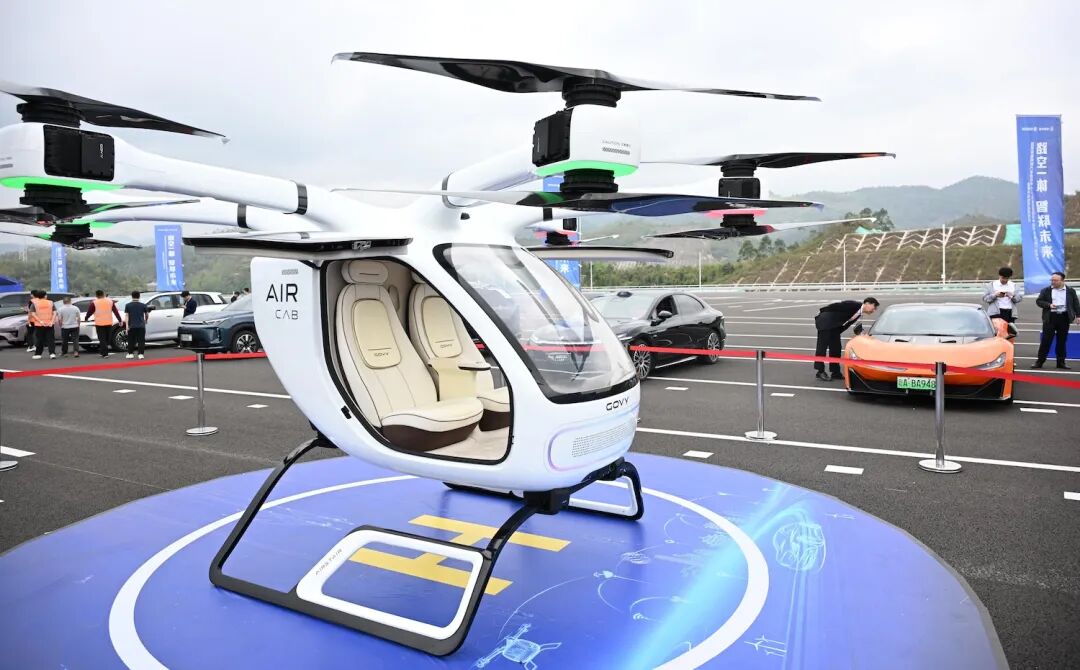
Photo source: Xinhua News Agency
Looking forward to the 14th Five - Year Plan period, regions such as Guangdong and Zhejiang have clearly stated that they will cultivate the low - altitude economy as an "emerging pillar" industry. Regions such as Jiangsu and Sichuan aim to build high - grounds for the development of the low - altitude economy, all seizing the window period for the industrialization of the low - altitude economy.
In Zhu Keli's view, this round of airspace reconstruction will intensify the regional differentiation of the low - altitude economy. The core of the differentiation lies not in the airspace area but in the comprehensive competition of industrial foundation, scenario implementation ability, supporting facility perfection, and policy implementation ability.
"Regions such as Hunan, Zhejiang, Shenzhen, and Sichuan have taken the lead, completed airspace expansion and platform docking, and launched micro - innovations such as the 'scan - to - fly' model, forming a first - mover advantage. They can quickly attract the agglomeration of enterprises, the inflow of capital, and the gathering of talents, entering a positive cycle of 'opening - agglomeration - development - further opening'," he said.
The number and distribution of general aviation airports are a window for observation.
Urban Evolution queried the General Aviation Airport Information Management System (GAAS) and found that as of now, the number of general aviation airports in the country has reached 546. Among them, Shenzhen (43) ranks first in the country in terms of the number of general aviation airports. Shanghai (12), Beijing (11), Suzhou (7), Hangzhou (7), and Shenyang (7) also rank among the top in the country. In addition, northeastern cities such as Heihe (26), Jiamusi (15), Jixi (10), Shuangyashan (10), and Hegang (8) also perform prominently.
It is not difficult to find that, except for the northeastern cities with dense state - owned farms and forest farms, the rest are regions with relatively active low - altitude economic development, such as the Guangdong - Hong Kong - Macao Greater Bay Area and the Yangtze River Delta. Statistics also show that since the beginning of this year, 23 new general aviation airports have been registered/obtained certificates in the country, among which 11 are in Guangdong and 7 are in Shenzhen, reflecting the strong demand for low - altitude economic scenarios.
"However, for regular flights, it also involves various aspects such as policy planning, regulations and standards, airspace management, and infrastructure. It is a long - term and high - investment process."
The relevant person in charge of Voliflyer said that this requires the government and enterprises to focus on scenario implementation and be guided by market demand to promote the industry to enter a positive cycle.
Not long ago, the National Development and Reform Commission announced that low - altitude infrastructure has been included in the 7 - trillion - yuan new infrastructure package and emphasized "continuously promoting central state - owned enterprises to open up high - value application scenarios and opening up core resources such as energy, transportation, and computing power to private enterprises".
This sends a signal that central state - owned enterprises are entering the market. In the past, it was a common practice for local governments to take the lead in promoting the opening of scenarios such as urban governance and power line inspection to guide the implementation of low - altitude economic scenarios. Now, with the entry of central state - owned enterprises that control resources such as aviation, power grids, energy, and communication, they will surely empower the construction of the low - altitude economic industrial ecosystem with their full - chain capabilities of "equipment + facilities + scenarios".
For example, State Grid promotes scenarios such as drone inspection, and the Agricultural Development Group promotes scenarios such as agricultural and forestry plant protection. The Aviation Industry Corporation of China and China Railway Signal & Communication Corporation cooperate with local governments to carry out pilot projects such as urban air traffic and low - altitude cultural tourism.
This is also the resource that local governments will "seize" in the next step. How to cooperate well with central and state - owned enterprises will, to a certain extent, determine the switching efficiency of the low - altitude economy from "policy - driven" to "market - driven". For example, many central and western cities are exploring cooperation with China Tower to convert existing communication tower sites and other resources into low - altitude take - off and landing fields and communication and navigation facilities.
This round of airspace "unshackling" has opened the door for the low - altitude economy to move towards large - scale development, but there are still numerous tests behind the door, including infrastructure investment, safety supervision coordination, and commercial scenario implementation.
In this long - distance race, vision and perseverance are more important than a head start.