The 24-year-old "AI stock guru" has taken Wall Street by storm, and his fiancee is the Chief of Staff to the CEO of Anthropic.
After leaving OpenAI, 24-year-old AI prodigy Leopold Aschenbrenner is causing a stir.
When he founded the AI-themed hedge fund Situational Awareness two years ago, he had no professional investment experience and only started with a few hundred million dollars.
Now, he manages assets of over $20 billion, approaching those of Bill Ackman's Pershing Square and Dan Loeb's Third Point—these are all established titans that have made their names on Wall Street for decades.
As of May this year, he has earned about 270% after fees. Since its inception, the fund has had a post-fee increase of over 1000%.
A young man with no prior investment experience is outperforming the veterans on Wall Street.
What's even more exaggerated is his popularity online, which is comparable to that of top celebrities.
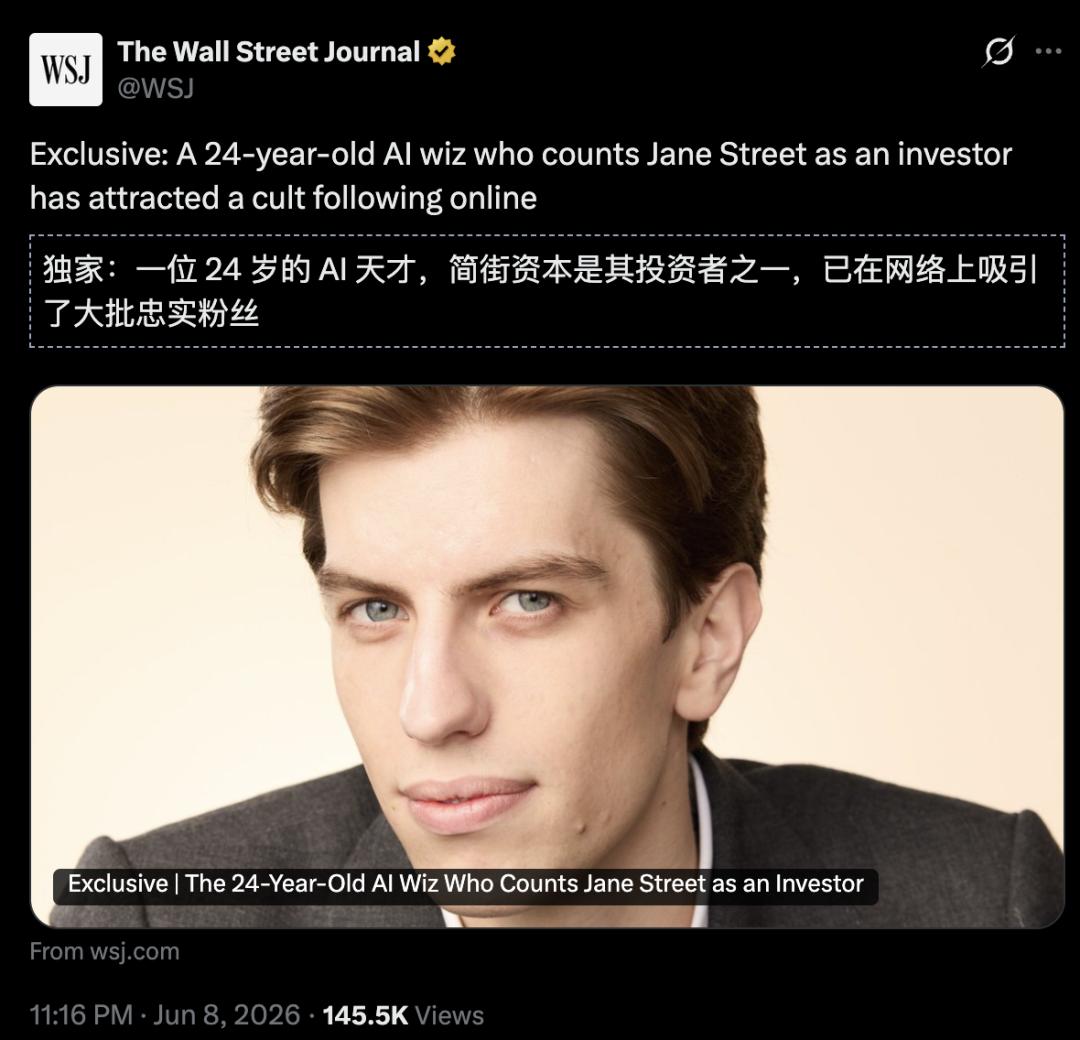
Although he rarely makes public appearances or posts, each quarterly disclosure of the fund's holdings triggers a frenzy across the internet. Fans analyze his trades as if studying the Bible, and there are even apps that offer a "one-click copy trading" function.
The "Gambling God" of the AI Era
Is a 24-Year-Old German
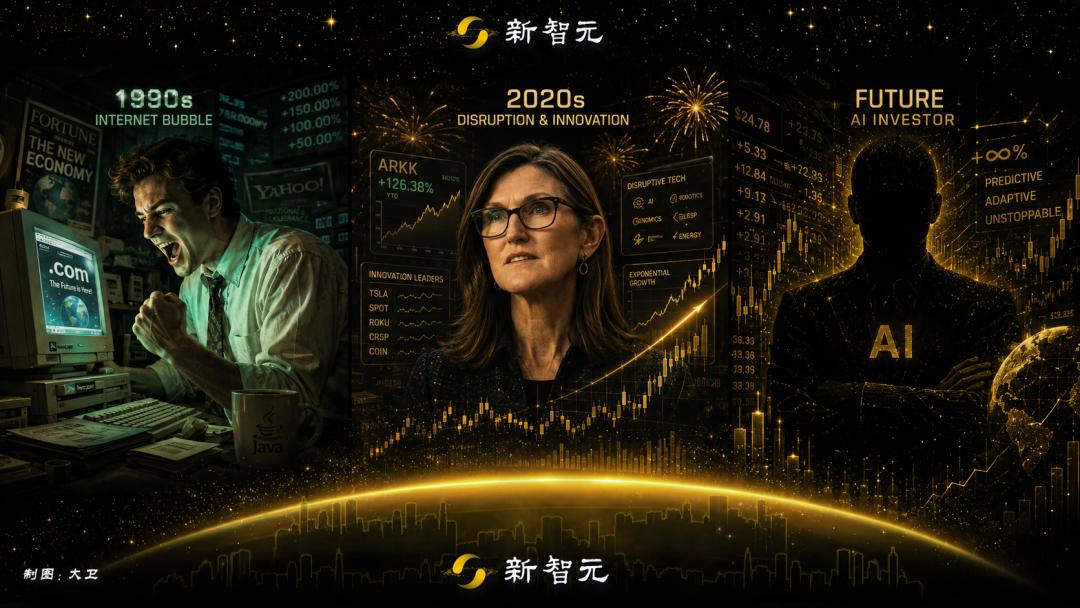
Every market frenzy produces a new "Stock God."
During the dot-com bubble, there was Ryan Jacob, and in the 2020 bull market, there was "Wooden Sister" Cathie Wood.
But when it comes to betting on AI, no one is more sought after than Leopold Aschenbrenner—yet he hardly ever shows up or posts, living like an invisible god.
In May, there was news that he had invested in solar energy company T1 Energy. The stock price soared 23% on the same day, and the trading volume reached the second-highest in history.
In the top tech talk show TBPN, it only took two minutes to discuss Elon Musk's and OpenAI's century-long lawsuit, but it took more than five times as long to talk about his latest holdings.
Podcast host Tim Ferriss directly crowned him the "Nostradamus of the AI world," saying that his prediction accuracy for AI is "close to psychic."
What exactly did he bet right on?
The most profitable investment was in Anthropic.
This company now accounts for one-fifth of his fund's assets.
When he invested in February 2025, Anthropic was valued at $61.5 billion; now, that figure is $965 billion.
In less than a year and a half, it has increased by more than ten times. Such holdings should not have appeared in regulatory disclosures—the U.S. stock reports do not include foreign stocks and unlisted companies, and his most profitable investments are precisely hidden in these two categories.
There is also South Korean storage chip giant SK Hynix. He started investing in November 2024 and watched it enter the trillion-dollar club.
Even the most discerning money is coming to support him.
Jane Street, the most profitable quantitative trading firm on Wall Street, rarely entrusts its money to external fund managers, but it has given its money to him.
The two also co-led an investment in AI chip startup MatX and are jointly investing in AI cloud computing company Fluidstack.
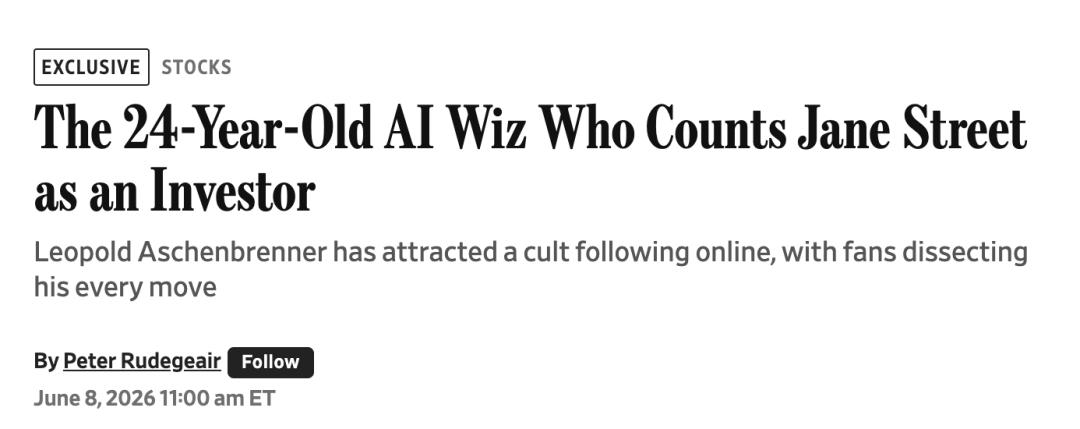
However, in the early days of his career, this "Stock God" did not have a smooth journey.
As a German, he graduated from Columbia University with top honors in 2021.
After that, he worked in the charity department of Sam Bankman-Fried's FTX cryptocurrency exchange, which later went bankrupt.
Then, he spent a year at OpenAI, during which there were constant controversies, and he was eventually fired.
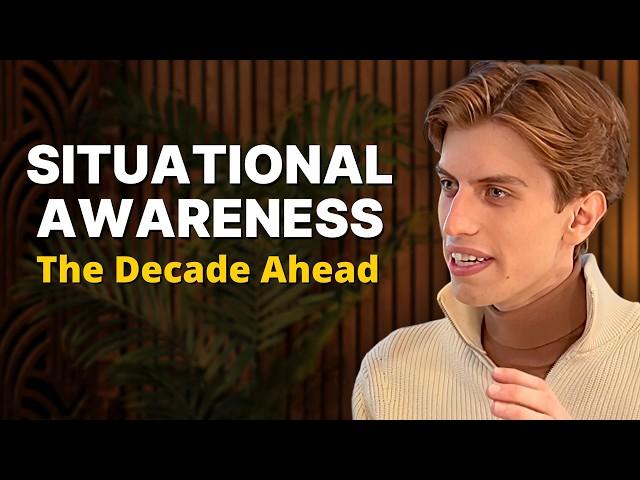
However, just two months after being fired by this most influential AI giant, he wrote a 165-page manifesto on artificial intelligence—"Situational Awareness: The Next 10 Years."
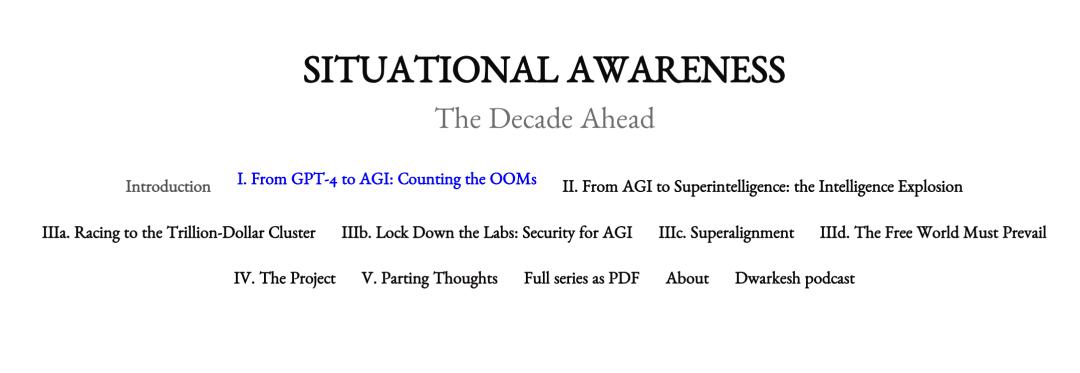
Portal: https://situational-awareness.ai/
This manifesto spread like wildfire in Silicon Valley and Washington.
Immediately afterwards, he founded a hedge fund with assets under management of over $1.5 billion, attracting a group of tech giants and politicians to become his followers.
He Turns the "Doomsday Alarm"
Into a Tech Version of the "Long Telegram"
Every year, the AI safety circle produces countless long, obscure, and depressing academic papers.
Most of them lie quietly in niche forums like LessWrong, fading away in the arguments of a small group of "AI doomsayers."
But "Situational Awareness: The Next Decade" published by Leopold Aschenbrenner in June 2024 broke this fate.
In this manifesto, Leopold Aschenbrenner did not use those technical terms that would put investors to sleep.
Instead, he adopted a grand narrative with strong tension.
He tried to write this manifesto as the "Long Telegram" of the AI era.
In 1946, American diplomat George Kennan, writing under the pseudonym Mr. X, wrote the "Long Telegram," unexpectedly starting the Cold War.
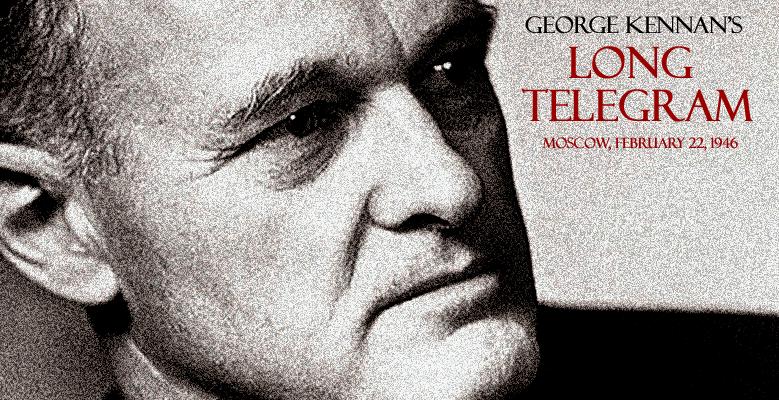
Emulating this, Leopold Aschenbrenner is shouting: The era of AGI is approaching at an exponential rate, and apart from the "prophets" in a few Silicon Valley labs, the world is completely unprepared and can't even imagine it.
To help capitalists who know nothing about technology understand the horror of "exponential growth," he made a highly emotionally charged analogy.
At that time, only a very small number of people truly understood the mathematical implications of the exponential spread of the pandemic.
Before the market completely collapsed, this small number of people shorted the market and stocked up on masks, earning historic profits. Today, the arrival of AGI is also an irreversible exponential curve.
Those who perceive it in advance and take action will reap the greatest economic dividends of this century.
This narrative has produced an almost religiously fanatical effect.
Scott Aaronson, a professor at the University of Texas and a former OpenAI employee, exclaimed after reading it:
This might really be a document that a general or someone in the national security system would read and then say, "Action must be taken on this."
He has packaged the boring calculations about GPU computing power and data bottlenecks in the lab into an apocalyptic revelation about human destiny, geopolitical competition, and huge wealth.
He is not just predicting the future; he is using people's extreme fear of "being left behind by the future" (FOMO) to build a safe passage to redemption for capital.
The Conductor of $500 Million:
When Survival Anxiety Flows into Electricity, Copper Mines, and Chips
In Silicon Valley, beliefs are worthless if they can't be translated into stakes.
Sholto Douglas, a friend of Leopold Aschenbrenner and the head of Anthropic's reinforcement learning extension technology, described it as a "theory of change":
Leopold Aschenbrenner firmly believes in how the world will develop, and he is actually putting his money where his mouth is.
Thus, the Situational Awareness LP hedge fund was born.
This fund received seed funding from Silicon Valley giants such as Nat Friedman, the head of Meta's AI products, Daniel Gros, and the Collison brothers, the co-founders of Stripe. Carl Shulman, an AI prediction scholar, serves as the research director.
The logic of the SA fund is extremely straightforward:
If superintelligence is destined to arrive, then regardless of which AI giant ultimately wins, humanity must build a temple for it in the physical world—
This requires an astronomical amount of electricity, transformers, copper cables, and semiconductors.
According to the public holdings disclosed by the U.S. Securities and Exchange Commission (SEC), the long positions of the SA fund are precisely focused on these AI physical infrastructures:
Intel and Broadcom: The chip foundation that supports the interconnection of trillion-parameter models.
Vistra: An independent power generation giant that provides continuous power for data centers.
Core Scientific: A new infrastructure player that has successfully transformed from a Bitcoin mining company to a high-density AI computing power hosting provider.
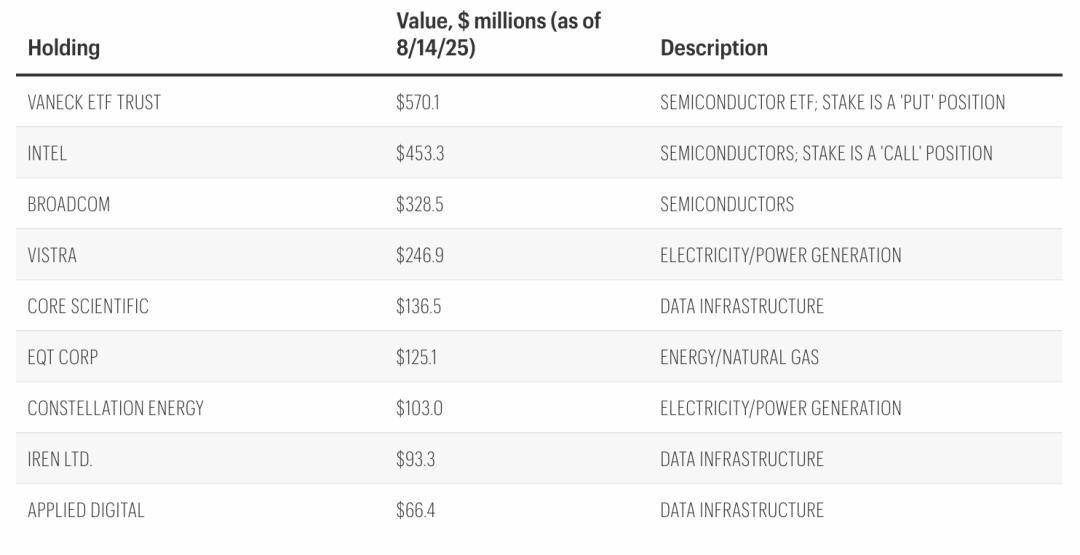
This "unity of knowledge and action" close-combat investment strategy brought the SA fund an astonishing 47% post-fee return in the first half of 2025.
He even foresightedly allocated about $459 million in Intel call options in the first quarter, accurately predicting the subsequent injection of national capital in the United States and NVIDIA's investment, leaving countless seasoned Wall Street veterans stunned.
Senior hedge fund investor Graham Duncan commented that Leopold Aschenbrenner reminded him of Michael Burry in "The Big Short": "If you want to have a different perspective, you'd better be a bit different yourself."

The Tear of Morality:
"AI Savior" or "Warmonger"?
However, behind Leopold Aschenbrenner's glamorous wealth myth, there is a very dark and disturbing moral shadow.
Do you also feel the absurdity and tear in this?
Leopold Aschenbrenner was once a core member of the "Effective Altruism (EA)" community, whose ultimate mission is to prevent the existential risk of human extinction caused by AI.
He used to work in OpenAI's Super Alignment Team, researching every day how to make machines smarter than humans remain kind.
His fiancée, Avital Balwit, the current chief of staff to the CEO of Anthropic, has also written articles, worriedly pointing out that AGI will end human employment within five years.
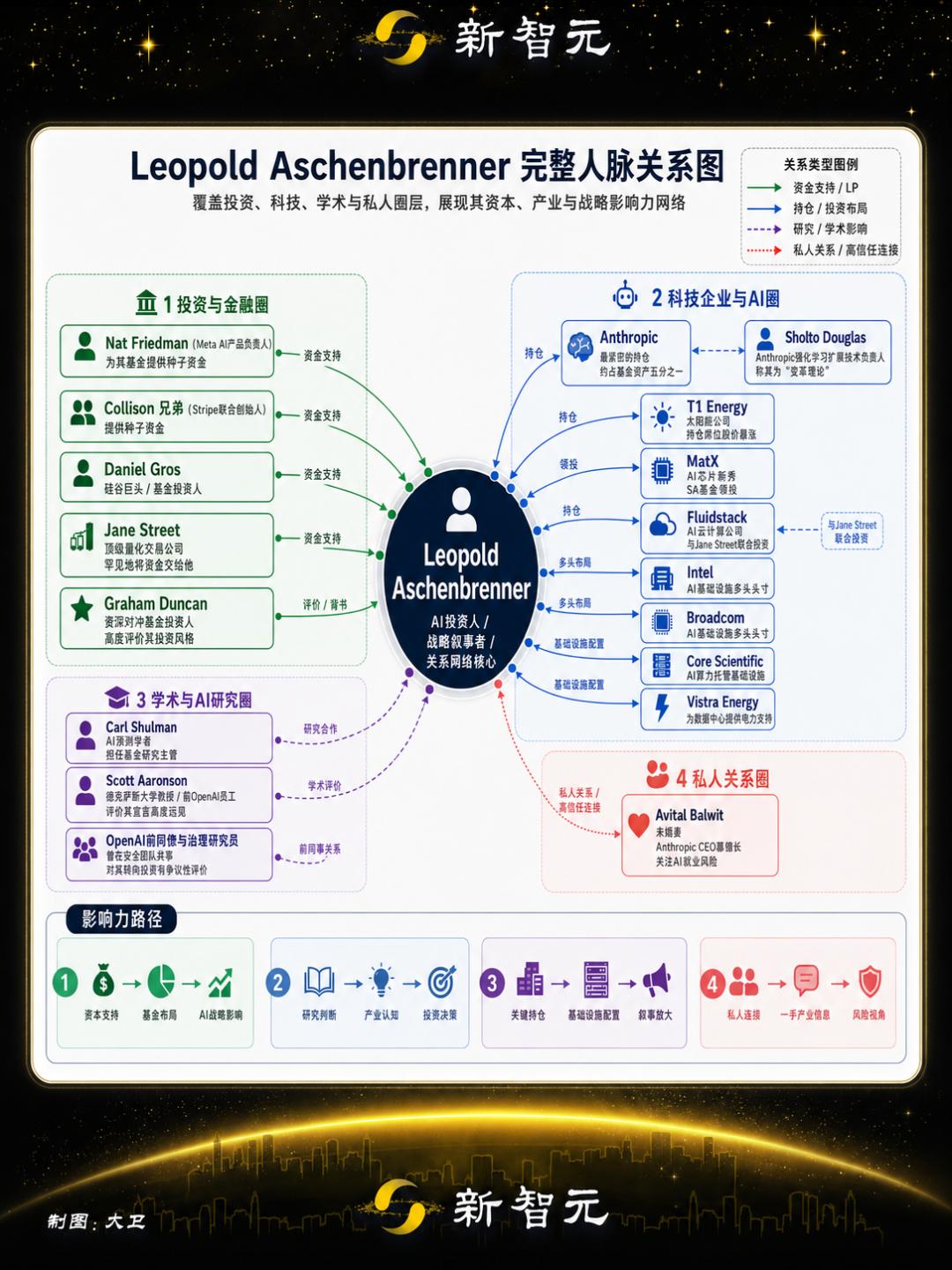
However, while his fiancée is worried about "the end of employment," Leopold Aschenbrenner is using the same technology to make his investors rich.
For his former colleagues in the safety circle, Leopold Aschenbrenner's actions are nothing short of a complete betrayal.
"Some people who are very worried about the existential risk of AI now don't like Leopold very much. They think he sold out his ideals," a former OpenAI governance researcher said painfully.
The deeper crisis lies in the "geopolitical arms race" narrative he advocates.
In "Situational Awareness," he strongly advocates that the United States must accelerate AI development at all costs and at the speed of wartime mobilization to maintain its global technological hegemony.
This dangerous rhetoric suits the tastes of Washington hawks and Silicon Valley accelerationists and is starting to have a real impact on U.S. national strategy.
As AI governance experts worry: "The most effective way to predict a technological Cold War is to fund it yourself."
By instilling the panic of "being destroyed if you don't accelerate" into politicians and capitalists, Leopold Aschenbrenner has personally promoted the arrival of the "dangerous future" he talks about.
And his hedge fund is reaping the benefits in this arms race he has incited.
He has successfully proven that narrative is wealth.
On the eve of AGI, the most profitable people are not those who write code, but the super packagers who can translate "tech panic" into "hundred-fold returns."
References:
https://x.com/WSJ/status/2064003719100764198?s=20
https://www.wsj.com/finance/stocks/the-24-year-old-ai-wiz-who-count