Multiple large enterprises have faced heavy fines, and "loot boxes" in the gaming industry may become a thing of the past
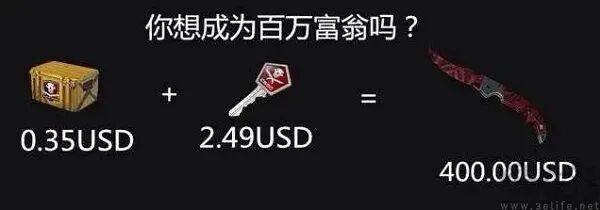
If you're a die-hard fan of "CS2", October 23, 2025, might be an unforgettable day. On this day, the developer Valve suddenly announced that players could exchange five low-tier in-game cosmetic skins for one high-tier skin. As soon as the news broke, the in-game cosmetic trading market of "CS2" instantly collapsed, giving many players a taste of what stockholders dread - the so-called "one-character death knife".
At that time, Valve kept changing the rules, repeatedly hammering the in-game cosmetic trading market. What was the purpose? Now the answer is finally out. Valve wasn't intentionally going against the players, but was cornered by regulatory agencies around the world.
Recently, the Federal District Court of Brazil ruled that "loot box opening" poses an addiction risk and involves disguised gambling. Multiple internet platforms and game companies were ordered to pay a total of 298 million Brazilian reals (approximately 397 million Chinese yuan) in compensation to local consumers. A host of game publishers and developers in the industry, including Apple, Google, Valve, Tencent, Sony, Nintendo, EA, Riot Games, and Ubisoft, were all involved.
In addition to the monetary compensation, the Brazilian court also required these companies to rectify the relevant in-game designs. They must provide previews or X-ray views in the "loot box" gameplay to eliminate randomness.
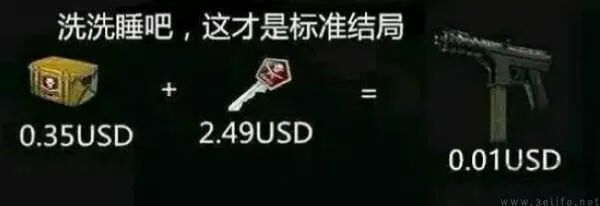
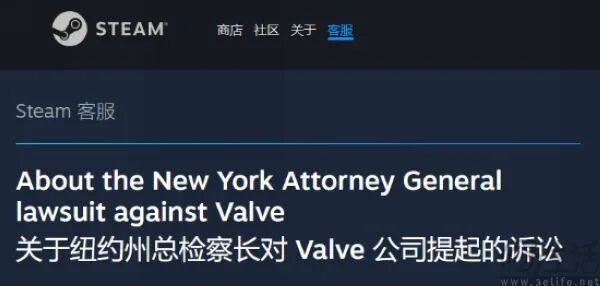
Coincidentally, the government of New York State in the United States previously planned to sue Valve in March over the loot box mechanisms in "CS2" and "Dota2". The reason was that this gameplay was considered similar to slot machines and suspected of "illegal gambling". Valve distributes loot boxes for free to players through games like "CS2" and "Dota2", but these boxes require a $2.5 key to open, and players will randomly receive a valuable in-game cosmetic, such as a weapon skin or an accessory. However, players have no control over the prizes they can get. The value and probability are completely determined by Valve.
Considering that the practice has already been banned in the Netherlands and Belgium, "loot box opening" is being targeted globally. This business model, which has allowed numerous game manufacturers and platforms to reap huge profits and has even become a pillar of the current game industry, is now in a desperate situation. In other words, Valve's previous series of related operations were a "fight for survival" to prevent Steam from being labeled as a gambling platform by regulatory agencies.
So how important is "loot box opening" to the current game industry? The characteristic of this gameplay is that it doesn't fundamentally affect the game's balance. It's not a "pay to win" model. For game manufacturers, it's an easy and worry - free way to make money. Compared with directly selling items that affect game balance in the in - game store, obtaining virtual items like skins and costumes through "loot box opening" to satisfy players' vanity can transform the "conflict of interests" between players and game manufacturers into an "internal conflict" between the lucky ones and the unlucky ones.
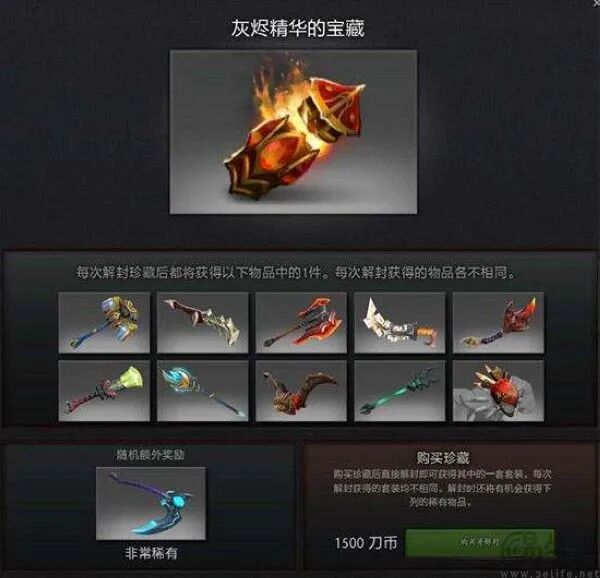
The original sin of "loot box opening" lies in the uncertain reward feedback mechanism designed by game manufacturers. In the famous "Skinner box" experiment, it has been proven that the uncertainty of rewards can continuously stimulate human dopamine secretion. Game developers usually make the visual and audio effects of opening rare items extremely beautiful to enhance players' sense of acquisition.
If it were just about "loot box opening", it might be okay. But in the current era when GaaS (Games as a Service) is prevalent, game manufacturers have combined it with the micro - transaction system. As a result, the virtual items obtained from "loot boxes" are no longer just for show but are linked to real money. This is why the "loot box" gameplay has quickly caught the attention of regulatory agencies in the past few years. After all, the combination of randomness and monetization is too closely related to gambling.
Actually, game manufacturers also think that all this is a last resort. With the development of the times and the industry, the development costs borne by game manufacturers have increased significantly, while players' spending levels have not improved significantly for a long time. The price of a $60 AAA game was popularized as early as the first decade of this century and only increased to $70 a few years ago. However, the development cost of games has risen sharply.
So the entire industry has been forced to use GaaS to extend the lifespan of games and obtain returns from continuous operation. Then how to attract players to keep playing? The answer given by game manufacturers is to combine "loot box opening" with micro - transactions, providing players with a combination of in - game actions and a small amount of money to take small risks for big rewards and earn more money.
Yes, from the players' perspective, when "loot box opening" is combined with micro - transactions, playing games not only provides entertainment but also offers the chance of getting rich overnight. The experience of making money while playing games is extremely appealing, which is also one of the reasons why "CS2" and "Dota2" have remained popular on Steam for a long time.
Different from real - world sports cards, Pokémon cards, and Labubu toys, whose second - hand markets are formed spontaneously and the publishers like Pop Mart don't operate official secondary trading markets or collect commissions. Game manufacturers, on the other hand, are both the issuers of the loot boxes and the operators of the official trading markets. They are involved in the entire process of buying keys, opening boxes, and trading for cash.
Previously, when this gameplay of game manufacturers didn't catch the attention of regulatory agencies, they could make money quietly. But now, things are different. Once the regulatory agencies step in, game manufacturers are having a hard time, and "loot box opening" might really become a thing of the past.
This article is from the WeChat official account "3eLife" (ID: IT - 3eLife). The author is 3eLife. It is published by 36Kr with permission.