He just raised 2.7 billion yuan, and Li Feifei also invested in the round.
In today's venture capital and investment market, "world model" is undoubtedly the hottest of hot topics. Almost every day, we see new "world model" companies completing financing, with their valuations skyrocketing and their shareholder lists boasting a who's who. Moreover, in the press releases of these financing news, people repeatedly emphasize a fact: a qualified super-intelligent agent should not rely solely on data feeding to acquire capabilities, but rather understand the physical world actively, just like humans.
However, Pete Florence wrote a long public letter after starting his business, opening with the words: "Don't label my company as a world model company."
This is truly going against the grain. Pete Florence is not just an "entrepreneur." Before starting his business, he worked at Google's DeepMind team, rising from an ordinary researcher to a senior research scientist. He was one of the core developers of the robot control model Gemini Robotics, which was released by DeepMind in 2025. During this period, his most influential achievement was introducing a brand - new robot model architecture, "Vision - Language - Action Models," to the world in 2023 together with his colleagues.
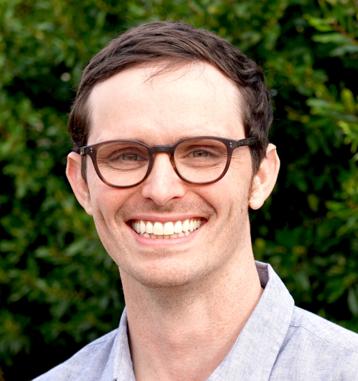
(Pete Florence, Source: Social Media)
Yes, indeed. If "world model" or "VLA" represents the most cutting - edge and widely - recognized direction today, then Pete Florence is undoubtedly a pioneer on this path. It's truly shocking that someone like him is leading the way in discarding the "world model" label.
Now, the shock factor has doubled. Recently, Generalist AI, the embodied intelligence company founded by Pete Florence, completed a new round of financing with a total scale of $400 million (approximately 2.7 billion RMB) and a valuation of $2 billion (approximately 13.55 billion RMB). The investors in this round include NVentures under NVIDIA, NFDG jointly managed by well - known angel investors Nat Friedman and Daniel Gross, Bezos Expeditions, the family office of Jeff Bezos, Bin Lin, the co - founder of Xiaomi, Eric Yuan, the founder of Zoom, and Fei - Fei Li, the most representative scientist in the field of world models.
"Goals" are more important than "Labels"
Why does Pete Florence, one of the main founders of the world model, resist being labeled as a "world model" company? And why does Fei - Fei Li, the most representative scholar in the field of world models, support such an openly "heretical" entrepreneur with real money? The story may start in 2019.
At that time, Pete Florence was pursuing a Ph.D. in computer science at the Massachusetts Institute of Technology (MIT), with his main research areas including robot manipulation, computer vision, and natural language processing. From this background, Pete Florence has a very orthodox academic pedigree, with a traditional research direction and academic background. He is not someone who needs to be "maverick" to secure resources. However, the problem is that MIT assigned him a supervisor named Russ Tedrake.
Who is Russ Tedrake? First of all, he is definitely an academic heavyweight. In 2019, he served as a professor of electrical engineering and computer science at MIT and the director of the Robotics Center at the Computer Science and Artificial Intelligence Laboratory. Every year, during the famous DARPA Robotics Challenge, he leads the MIT team. Outside the university, he also serves as the vice - president of the Robotics Research Center at the Toyota Research Institute. It can be said that Russ Tedrake is one of the top scholars in the field of robotics, with sufficient resources to help the young Pete Florence realize his academic dreams.
However, in Russ Tedrake's self - perception, what fascinates him is not programming code, but "physics." In a self - introduction, Russ Tedrake recalled that his journey into the academic field of computer science began when he was researching "bipedal robots" and saw the "rich dynamic characteristics," which sparked his strong interest in "complex fluid dynamics control." Therefore, compared with other researchers who first study how to make robots pick apples or fold quilts when starting out, his first research topics were how to control "stalled aircraft or flapping - wing aircraft" and how to "pass through dense obstacles at high speed."
This background means that Russ Tedrake attaches great importance to "understanding the physical world." The official MIT website describes Russ Tedrake's academic characteristics as follows: "The professor's research focuses on finding elegant control solutions for interesting (under - actuated, stochastic, and/or difficult - to - model) dynamic systems and is able to build these systems for experimental verification. He is particularly interested in the connection between mechanics (especially non - smooth mechanics) and machine learning/optimization theory to achieve robust control design for complex mechanical systems."
Influenced by this environment, Pete Florence naturally became a "physics school" in computer science. For example, his most representative academic achievement during his Ph.D. was a paper titled "Self - Supervised Correspondence for Vision - Based Movement Strategy Learning." This paper proposed that they found a way through imitation learning that allows robots to complete challenging operation tasks with only 50 demonstrations and generalize to different types of objects and adapt to the configurations of deformable objects. This paper also won the Best Paper Award in the field of Robotics and Automation at the IEEE (Institute of Electrical and Electronics Engineers) in 2020.
Of course, which "school" one belongs to is not important. What matters is that under the influence of this environment, Pete Florence has a different way of thinking. Many researchers are used to starting with existing technologies, then conducting experiments to explore the possibilities of these technologies, and finally determining the application scenarios. Pete Florence believes that the correct order should be to "set specific goals first" and then design the technical path.
After joining Google's DeepMind team, Pete Florence carried out his work in this direction. His first representative work was the Transporter Network, the first - generation robot model architecture launched by Google in 2021. In the paper announcing the model, Pete Florence said that organizing items should be a very basic skill, but for robots, completing this action requires "high - level and low - level perceptual reasoning." They need to consider where to place the books and in what order, while ensuring that the edges of the books are aligned to form a neat stack.
The Transporter Network is a model architecture designed to "make simple actions simple." It allows robots to perform various operations based on vision in a general way, with a fast training speed and less dependence on the training environment.
The release of the VLA architecture jointly with the DeepMind team in 2023 was also a natural result of this thinking. In the paper that kicked off the current era of world models, the authors stated that they hoped the VLA architecture could "significantly improve the generalization ability to new objects, interpret instructions not present in the robot training data (such as placing an object on a specific number or icon), and perform basic reasoning based on user instructions (such as picking up the smallest or largest object, or the object closest to other objects)."
Returning to the question at the beginning, why does Pete Florence, one of the main founders of the world model, resist being labeled as a "world model" company? The answer is simple: Pete Florence believes that "goals" are more important than "labels."
In his view, the current enthusiasm for world models is actually "idea - driven." For example, a large part of this enthusiasm can be attributed to the excitement of the capital market in discovering non - consensus in a hot direction. Moreover, if we want to truly promote robots into our work and life and create productivity, building a "world model" is clearly not a goal. The real goal should be that robots can complete various unseen tasks with extremely high success rates and speeds, without any specific task - related data.
This is also the reason why Pete Florence decided to leave Google's DeepMind and start his own business. At the NVIDIA GTC Conference in 2025, Pete Florence first appeared in the public eye as the co - founder and CEO of Generalist AI. He said, "We are determined to build robots that can do anything... Imagine what the world would be like if the marginal cost of physical labor dropped to zero."
99% Success Rate
Besides being "heretical" in terms of technical concepts, Pete Florence's entrepreneurial path also seems rather non - mainstream.
Theoretically, an entrepreneur with such a resume would surely be highly sought after by VCs in today's market. Yann LeCun, Ilya Sutskever, and Mira Murati are all examples. Their companies completed seed rounds of over $1 billion as soon as they were registered (or even before registration). However, Generalist AI, founded by Pete Florence, only received investments from a few institutions such as NVIDIA, Bezos' family office, and NFDG at the beginning. If NVentures, NVIDIA's venture capital arm, hadn't organized a "portfolio company round - table" at the GTC Conference in 2025, no one would have known that he had left his job to start a business.
Why is this the case? The most likely answer is Pete Florence's active choice. As mentioned above, Pete Florence joined Google's DeepMind team right after graduation and worked there from 2019 to 2025, with no other work experience in between. That is to say, Generalist AI is his first entrepreneurial experience, and it is necessary to be extremely cautious.
In fact, at the NVIDIA GTC Conference in 2025, when he first appeared as an entrepreneur, Pete Florence very clearly showed his "caution." Apart from telling everyone that he was building "robots," he didn't reveal any specific business directions and simply said, "We are still in stealth mode."
It wasn't until November 2025 that people saw the specific business of Generalist AI for the first time. In November 2025, Generalist AI released their first - generation embodied intelligence model, GEN - 0. In the official introduction, Generalist AI said that GEN - 0 combines the advantages of vision models and language models and goes beyond them. Gen - 0 can capture human - level reflexes and physical common sense.
To put it simply, it can continuously improve its capabilities as the model scale and training data increase, breaking through the bottlenecks of previous small - scale models; it can think and act like a human, making quick and natural responses in the real physical environment; it is naturally compatible with different types of robots without additional modification; more importantly, it relies on a large amount of real - world operation data, no longer restricted by data scarcity, and can flexibly adjust the composition of the training data. Many technology media pointed out that GEN - 0 proves that the mathematical "scaling laws" driving large - language models like ChatGPT also apply to physical movements.
However, GEN - 0 is not perfect. For example, it has not solved the dataset problem that has plagued the field of embodied intelligence. Therefore, in April 2026, Generalist AI quickly iterated to a new version, GEN - 1.
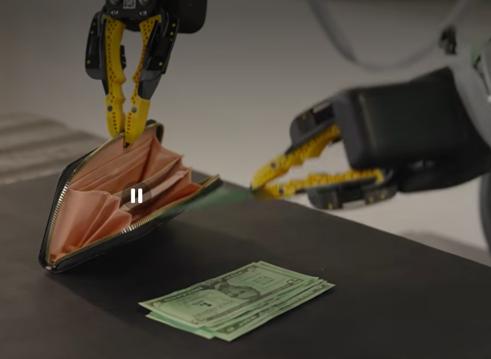
("Mechanical Hand," Source: Generalist AI Social Media)
To solve the dataset problem, Generalist AI developed a wearable device to capture the tiny movements and visual information of humans performing manual tasks. Generalist AI said that during the development of GEN - 1, they collected over 500,000 hours of "PB - level physical interaction data" through these mechanical hands for training their physical model. After sufficient training, Generalist AI said that GEN - 1 has a success rate of up to 99% in repetitive but delicate mechanical tasks such as folding cartons, packing mobile phones, and maintaining floor - cleaning robots. Its speed is about three times that of the previous generation, GEN - 0, and it only takes about an hour to achieve this goal.
Therefore, Generalist AI proudly announced that the physical model of GEN - 1 has approached a turning point similar to that of GPT - 3. The performance of some tasks has begun to "reach the level required for deployment in commercial practical environments," and "we can expect that each new generation of models will bring a series of increasingly complex new tasks that can be mastered."
In the official blog, Pete Florence pointed out that the development process of GEN - 1 is the best interpretation of his personal technical concept. First, he set a rational goal, that is, robots can complete various unseen tasks with extremely high success rates and speeds, without any specific task - related data. Then, based on this goal, he set a solution path, allowing the use of a small amount of robot data (referred to as X) for specific tasks and achieving a high - level performance of the task, and then continuously reducing X while improving performance.
At this point, the question we raised earlier has been answered. It doesn't matter whether the products developed by Generalist AI are called "world models" or not. As long as you are optimistic about the embodied intelligence industry and believe that robots can be widely used in actual production, Generalist AI is indeed a worthy investment choice. And the financing round of Generalist AI was quickly finalized within two months after the release of GEN - 1.
According to reports, the old shareholders, NVIDIA, Bezos Expeditions, and NDFG, all chose to reinvest, and even increased their investment. In addition, new investors include Bin Lin, the co - founder of Xiaomi, Eric Yuan, the founder of Zoom, Fei - Fei Li, a Chinese - American scientist, as well as institutional investors such as Radical Ventures, 8VC, Union Square Ventures, Hanabi Capital, and Norwest.
In other words, Pete Florence no longer needs to prove himself in June 2026. At least the lofty goals he set, such as what he said in a podcast in 2025 when he just started his business, "General - purpose robots should not just dabble in everything but be professional enough to be useful in real - world tasks," are on the way to being fulfilled.
This article is from the WeChat official account Touzhongwang, written by Pu Fan and published by 36Kr with permission.