Why has the concept of "treating disease before its onset" transformed from a slogan into a business, and why are smart rings the key entry point?
The concept of healthy life expectancy, which used to only appear in medical discussions, has now entered the daily conversations of ordinary people. People not only want to live longer, but also maintain normal physical conditions for a longer period of time, and this demand has changed many things.
One important change is that the dominance of health management is shifting from hospitals to individuals.
In the past, people were used to going to the hospital only when they got sick, and panicking only when there were abnormalities in their physical examination reports. The concept of "treating diseases before they arise" sounded like a mere slogan. However, under the dual demands of a growing elderly population and rising awareness of healthy lifestyles, it has finally become a feasible way of life.
In recent years, office workers in their early 30s have taken the initiative to buy smart hardware focused on health monitoring functions. This new popular trend has opened a new window for smart wearable devices: to become a direct channel for ordinary people to actively carry out health management. According to data from Omdia, the global shipment of wearable devices reached about 200 million units in 2025, among which the health monitoring function has become the core development direction of the industry.
However, an awkward problem has always existed: many devices are put into drawers after being worn for a few months after people buy them home. The reason is that users find them troublesome to wear, inconvenient to charge, or unable to understand the data even after checking it, and they still have to consult doctors.
Different brands have different ideas to solve this problem. Among them, Riyuejian, a smart wearable brand founded in 2023 by Haichuang Intelligent Technology and Alan Chan, a well-known Hong Kong designer, has chosen a new path that is "both professionally intelligent and popularly fashionable".
Instead of making bracelets or watches, Riyuejian has developed a smart ring. It has currently launched two series: Wuji and Taiji. The brand takes Chinese culture as its design concept, integrating AI intelligent algorithms with the aesthetic language that combines Eastern sentiment and Western elegance.
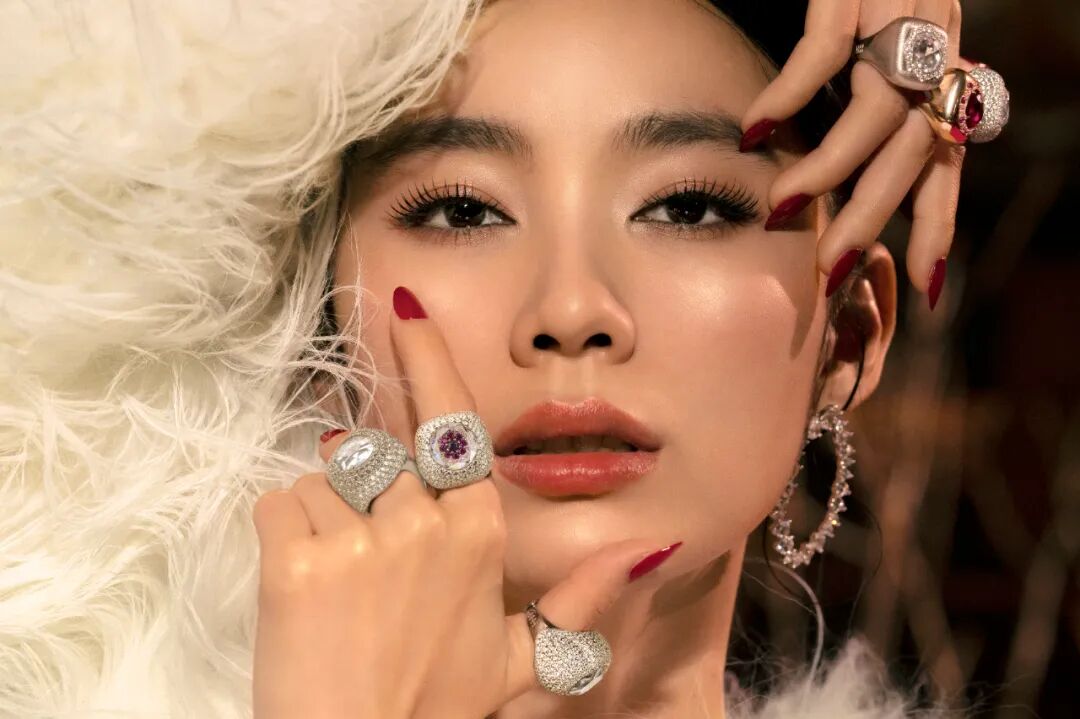
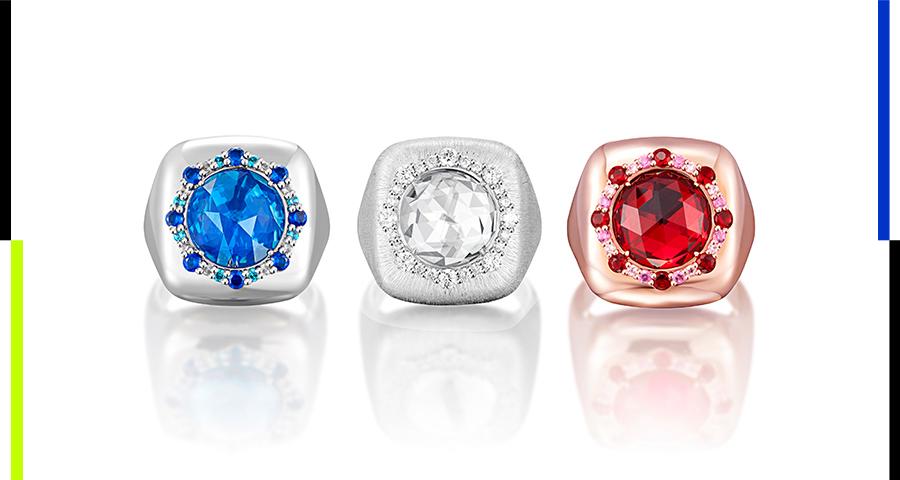
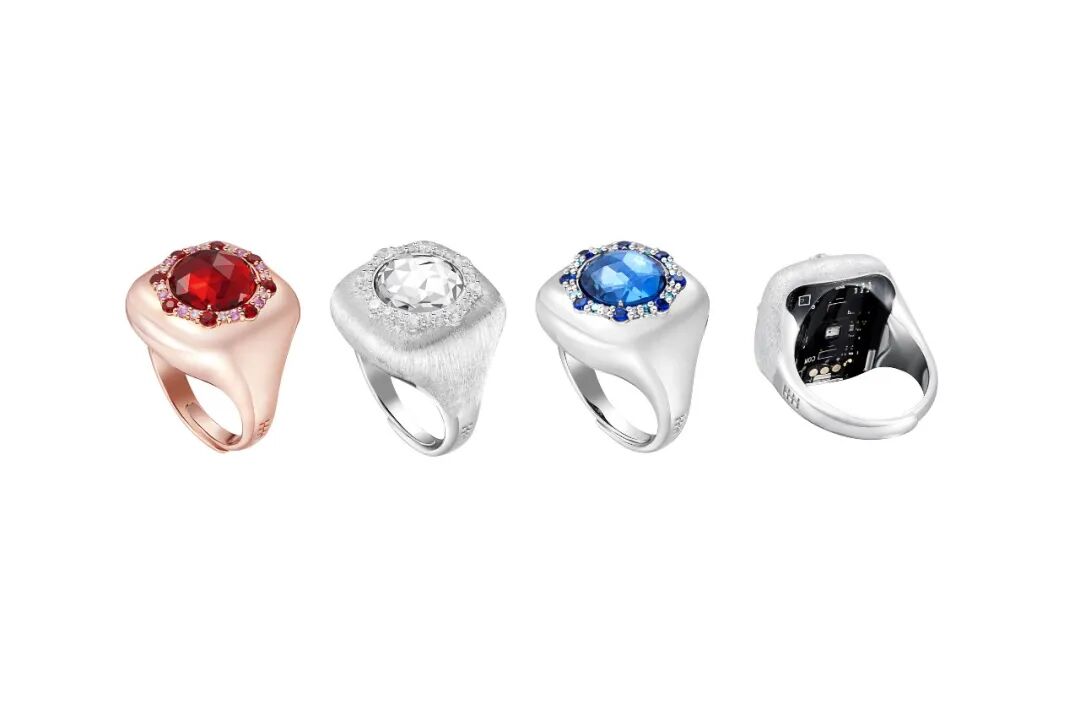
Compared with electronic products, the Wuji series looks more like jewelry. Adopting the design concept of "heaven is round and earth is square", it is created with the design language of high-end jewelry, which is enough to change the perception of high-end users on the appearance of traditional wearable devices.
This ring combines the attributes of technology and the value of art accessories. It can not only make health monitoring continuous and imperceptible, but also allow users to gain emotional value from design aesthetics, making them more willing to wear it for a long time.
The Wuji ring tries to prove one thing: Only when technology is integrated into forms that users love, can monitoring devices be truly accepted by users and transformed into a way of life.

How Can Health Monitoring Win People's Trust?
Smart wearable devices, especially in the field of health monitoring, are experiencing a narrative upgrade.
In the past decade, the core task of the smart wearable industry has always been popularization: to make more people realize the importance of health management, be willing to wear devices, and get used to recording health data. Now, the keyword has become trust.
Why should users trust that the data provided by a ring or a bracelet is useful to them? It depends on three key factors: data accuracy, long-term verification, and the degree of integration with the medical system.
It sounds like a purely technical task, but in fact, it involves complex professional logic behind it.
The most fatal flaw of traditional health monitoring devices lies in their "fragmentation". Annual physical examinations provide static data at a certain point in time, while the occurrence of diseases is often a dynamic evolution process.
Therefore, the problem with many devices is that although the dimensions of data that can be collected seem rich, the monitoring scenarios are not sustainable. For example, in mainstream product forms, bracelets and watches are too noticeable when worn on the wrist, and many people will take them off on specific occasions: take them off for meetings, take a bath, charge them, and may not wear them at all during business trips. Once taken off, continuous monitoring is interrupted.
This is also the reason why smart rings have begun to receive widespread attention. A smart ring worn around the clock can capture continuous curves of heart rate, blood oxygen, body temperature, sleep structure and even emotional stress. The increase in density in the time dimension gives the value of "trends", which may far exceed the values of some breakpoints.
Therefore, choosing the product form of smart ring is also Riyuejian's value deconstruction of traditional wearable devices as a health management brand.
The Wuji ring can achieve the maximum imperceptible experience, and the efficiency of capturing continuous changes is higher. A real usage scenario is: when users wake up in the morning, open the Riyuejian APP, they will see a visual trend chart of their sleep. If there is any abnormality, the APP interface will immediately give non-diagnostic professional risk prompts.
From measuring once to "recording for a lifetime", continuity is changing the way ordinary people understand their bodies. A reviewable and predictable timeline can build trust far more than isolated test results.
At present, most smart wearable devices on the market are disconnected from professional health diagnosis and medical systems. Device manufacturers understand hardware and supply chains, but they may not have a professional medical background, which will also cause users' distrust. Because when there is a real problem with the body, people still need to seek medical treatment, and physical data is only a bridge between active management and passive medical treatment.
The reason why Riyuejian positions its brand in the health management track rather than smart hardware is to break the situation through a professional path.
Riyuejian's approach is to build deep technical capabilities and barriers from three levels: algorithm training, consultant system, and longitudinal research on specific health issues.
Riyuejian has cooperated with the Hong Kong Productivity Council to jointly develop products, including algorithm innovation. At the same time, the brand has built a medical expert consultant system, focusing on endogenous anti-aging research. Riyuejian has created a unique "medical × daily" business model, allowing health management to be verified with the support of professional medical experience.

Move Towards a Closed Loop of Health Services
For active health management, professional data monitoring alone is far from enough. If the data cannot be understood and converted into actions, the numbers will only become a source of anxiety: users may see an abnormal increase in heart rate without knowing the reason, or see a low sleep score without knowing how to improve it.
This is also the fundamental reason why many health wearable products fail: they take data collection as the end point, but what users really need is action suggestions.
Therefore, Riyuejian has created a closed-loop health management system covering three links: monitoring, analysis and intervention. The key is that the intervention must be light-weight and executable enough to be integrated into daily life.
The Riyuejian APP has made targeted designs in this regard. If the ring monitors that the user's stress value is high for several consecutive days, the user can choose the mindfulness meditation courses provided in the APP for practice according to their own needs. If the deep sleep duration is insufficient, the system will also give some general suggestions for optimizing the sleep environment. These intervention measures have low thresholds, and users do not need additional consumption or specially set aside time.
The AI health assistant "Taiji Girl" built into the APP is trained based on more than one million professional journal literatures, and can provide 7×24 hours of accompanying health consultation. Users can ask about the possible causes of a certain index fluctuation or how to adjust their work and rest during special physical stages based on the collected data.
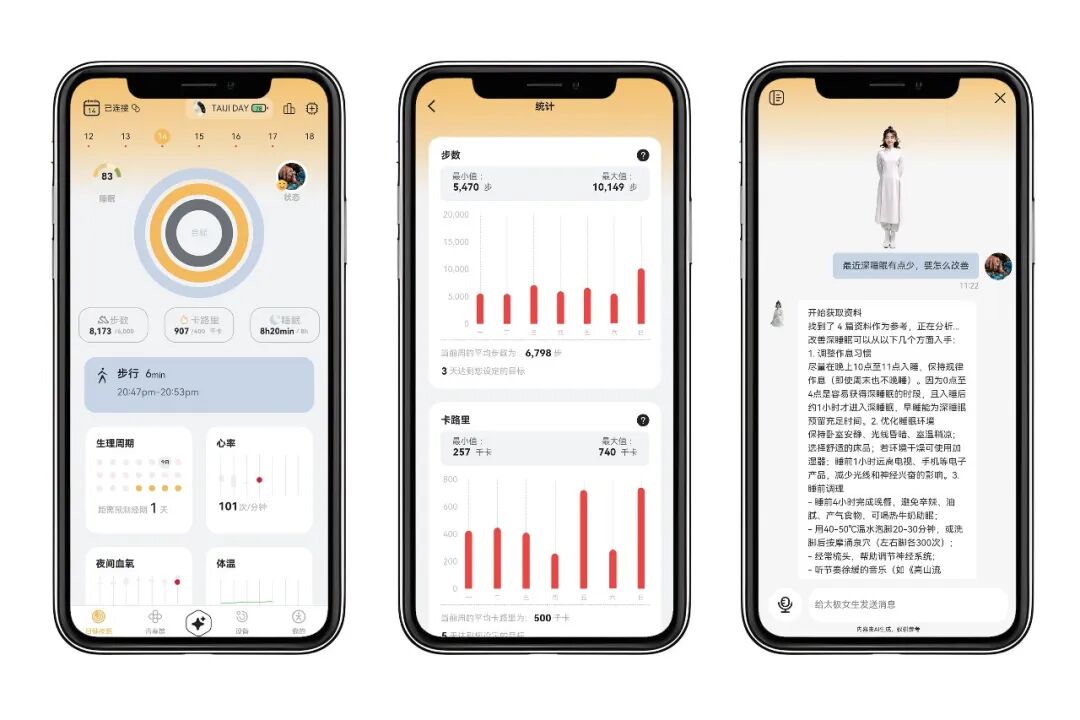
The AI assistant silently understands the data like a health butler. As a pre-consultation tool between users and professional medical care, it helps users understand their bodies more frequently in daily scenarios, and helps users describe their symptoms more accurately when they really need medical treatment.
From emotional and stress assessment, physiological cycle management to multiple sports mode monitoring, Riyuejian is extending single data collection to full-scenario health management through AI applications. Under the guidance of actions, users can truly feel the improvement of sleep quality and the recovery of energy levels.
Responding to users' physical changes with smart technologies, enabling monitoring devices to shift from data collection to service provision, health management has truly completed the last mile of development.
At present, Riyuejian is promoting longitudinal projects such as menopause health management, shifting post-diagnosis interventions from general suggestions to population-specific solutions for specific stages, covering the health management dimensions of more and more groups throughout their life cycles. At the same time, it is also integrating health service contents such as mindfulness meditation, traditional Chinese medicine pulse diagnosis, and psychological counseling.
Services at different levels will also form a more three-dimensional health service ecosystem, making Riyuejian a health management service provider. In the future, users do not need to switch between different APPs. All health-related data, behaviors and suggestions are gathered on one platform, and active health management will change from an extra burden and anxiety to the fun of controlling and improving the body in simple conversations.

From Personal Health to Smart Life
After the capability of health monitoring is verified, a question that is ready to come up is where else the technology can be applied.
Riyuejian's answer is to extend to smart life scenarios. At present, Riyuejian has several hardware categories under planning: smart glasses, smart eye masks, and smart water cups.
Different from rings, these products are not used to monitor health, but to integrate technology into daily life. For example, smart glasses focus on lightweight products and fashionable design, support real-time translation of 19 languages, and are equipped with detachable smart temples: a pair of glasses is equipped with two sets of temples, and when the audio function is not needed, you can directly replace them with ordinary temples. The smart eye mask integrates heating relief and sleep-aid audio. When you wear it during lunch break, you can adjust the heat compress temperature at will and play sleep-aid music at the same time; the smart water cup automatically records the amount of water you drink each time, so that the completion progress of the daily water drinking target is clear at a glance.
Putting these products together, you will find an interesting change. Riyuejian does not bind everything to the concept of health monitoring. The audio function of smart glasses and the sleep-aid function of smart eye masks have nothing to do with heart rate and blood oxygen.
The brand is moving towards a broader direction: compared to an all-powerful health monitoring terminal, it wants to create a set of solutions for a healthy lifestyle, dispersing intelligent capabilities into jewelry-level devices worn daily, and each device only does one or two things, but does them naturally enough.
This idea is different from that of mainstream smart wearable manufacturers. Many brands try to use a bracelet or watch to cover all functions, but users find that 80% of the functions are hardly used. Riyuejian chooses scenario splitting: you use a water cup when drinking water, wear an eye mask during lunch break, and wear glasses when going out or working. There is no need for learning and operation, and intelligence is embedded in these daily fashion items.
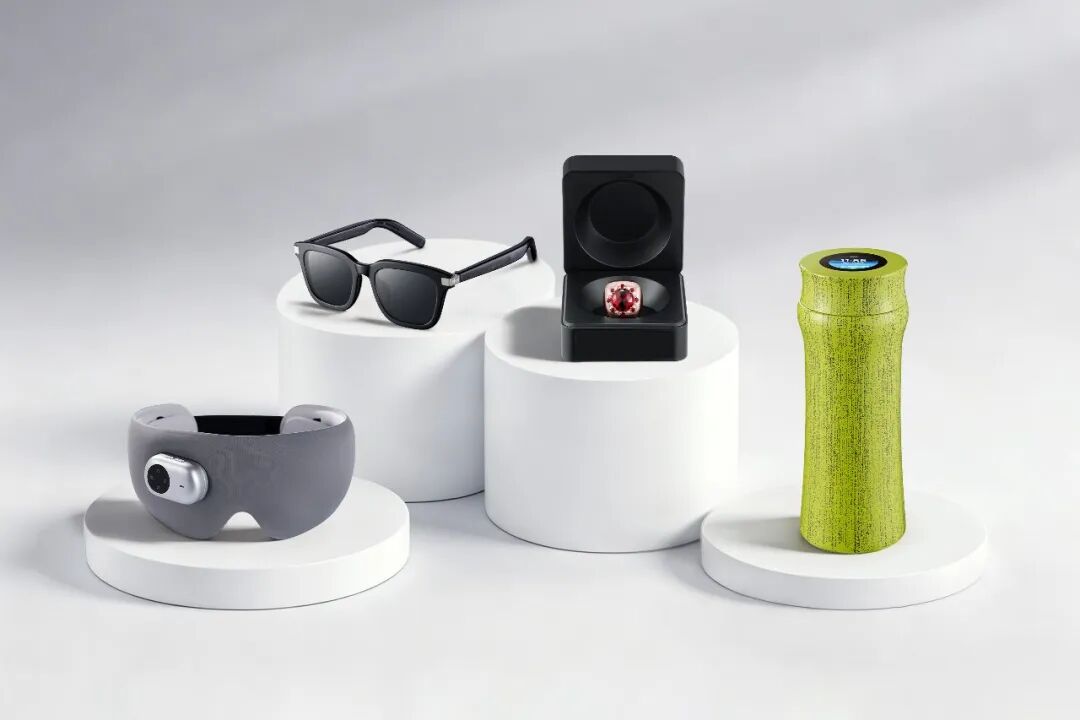
Rather than letting users adapt to devices, it is better to let devices adapt to life. From drinking water, taking a nap to relaxing between work, every tiny daily behavior can be recorded, understood and optimized.
With the two lines of health monitoring and smart life running in parallel, Riyuejian's brand path has gradually become clear: taking a smart ring as the core entry point, it continues to expand towards in-depth penetration into daily life and continuous creation of social value.
Compared with an AI hardware company, Riyuejian is more like an ecosystem builder based on health management.
Going back to the original question, if a smart ring is only positioned as a data monitoring sensor, it will never get rid of the label of "functional accessory".
Riyuejian hopes that it can become the physical entry point of a healthy lifestyle, and link with users' daily decisions such as diet, exercise, and emotion regulation. From breakpoint monitoring hardware to lifestyle management center, smart wearable devices are helping people complete the upgrading of health management.
The concept of "health is life" in the longevity economy is also the premise for more people to move from passive treatment to active health: no longer regard health management as a "task that needs to be completed by taking time out specially", and let health integrate into the natural state of every breath, every step, and every sleep.