OpenAI grabs the backstage, Elon Musk grabs the front stage
The rocket builder bought an "editor," and the AI developer bought a "cloud sandbox." These two transactions, occurring within a week of each other, seem worlds apart, but they've brought the next battleground in AI programming into the spotlight.
On June 16th local time, SpaceX filed a document with the U.S. Securities and Exchange Commission (SEC), revealing that it had signed a merger agreement with Anysphere, the parent company of Cursor. The transaction is to be completed entirely through a stock swap, with an implied equity value of approximately $60 billion. The deal is expected to close in the third quarter of 2026, subject to regulatory approvals and other conditions.
Five days before SpaceX announced its acquisition of Cursor, on June 11th local time, OpenAI announced an acquisition on its official website. The announcement revealed that OpenAI intends to acquire a German company named Ona. It's understood that Ona provides a secure, persistent, and customer - controllable cloud execution and orchestration environment.
On the surface, Ona and Cursor operate in different sectors: one focuses on cloud execution environments, and the other on AI IDEs; one is in the background, and the other is in the foreground. But in the context of AI programming evolution, they fit together like pieces of the same production line: Cursor represents the front - end and entry point for developers, while Ona is the environment where AI completes tasks, representing the background execution environment.
An input box, a response, and continuous dialogue made OpenAI one of the most iconic AI products in the past few years. This has also been Grok's product form for a long time. Later, the classic interface gradually added features such as file handling, image processing, voice interaction, canvas, search, and tool invocation.
The core interaction remains unchanged: the user speaks, and the model responds.
However, the real commercial goldmine lies in "fully automated development" that can directly take over workflows. Gartner once predicted that by 2028, 75% of enterprise software engineers will use AI code assistants. Meanwhile, agentic AI is moving from pilot projects to enterprise software processes, but cost, ROI, and risk control remain the main variables.
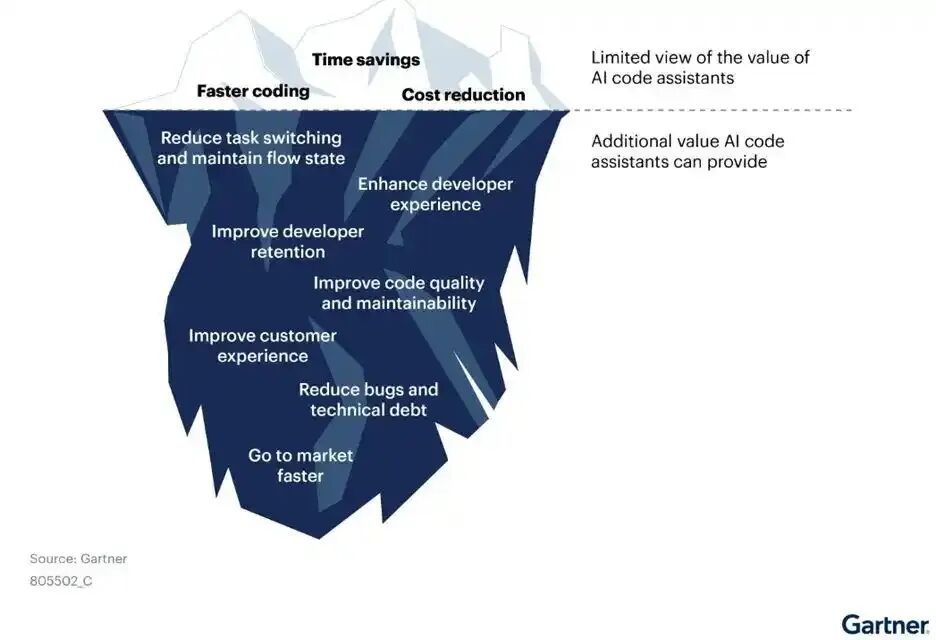
Multiple investment bank reports and research notes have pointed out that the B2B market size of generative AI in the fields of software engineering and automation infrastructure is expected to soar to hundreds of billions of dollars in the next few years. Enterprise customers are no longer satisfied with simply paying for "computing power and tokens." What they're truly willing to invest heavily in is a "full - time digital employee" that can independently check code, run tests, and directly deliver results.
AI programming is taking this logic one step further.
In the past, the core question in AI programming was whether the model could complete a line of code, generate a function, or explain a piece of logic. Now, the core question has become: Can AI understand a real codebase, complete a real engineering task, run tests, submit a PR, and leave an auditable, roll - backable, and accountable process within the boundaries permitted by the enterprise?
Elon Musk Secures a "Front - End" for Grok
Shortly after the acquisition announcement, Cursor announced a new model with over 1.5 trillion parameters.
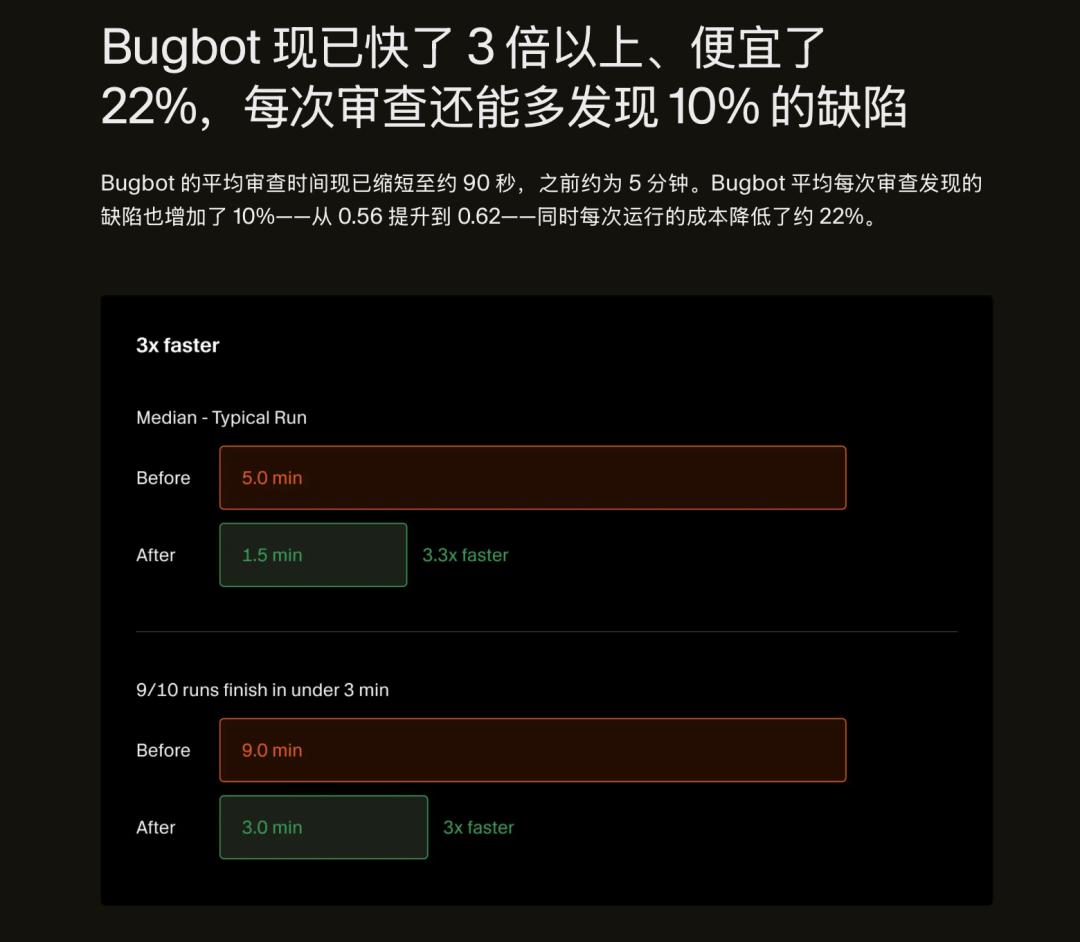
According to reports from media such as Machine Intelligence, Cursor recently launched a new self - developed model. The reports claim that its training scale reaches 1.5 trillion parameters and uses over 100,000 GPUs. It can be confirmed from Cursor's official changelog that its Bugbot is now powered by Composer 2.5, and the review time has been reduced from about 5 minutes to about 90 seconds.
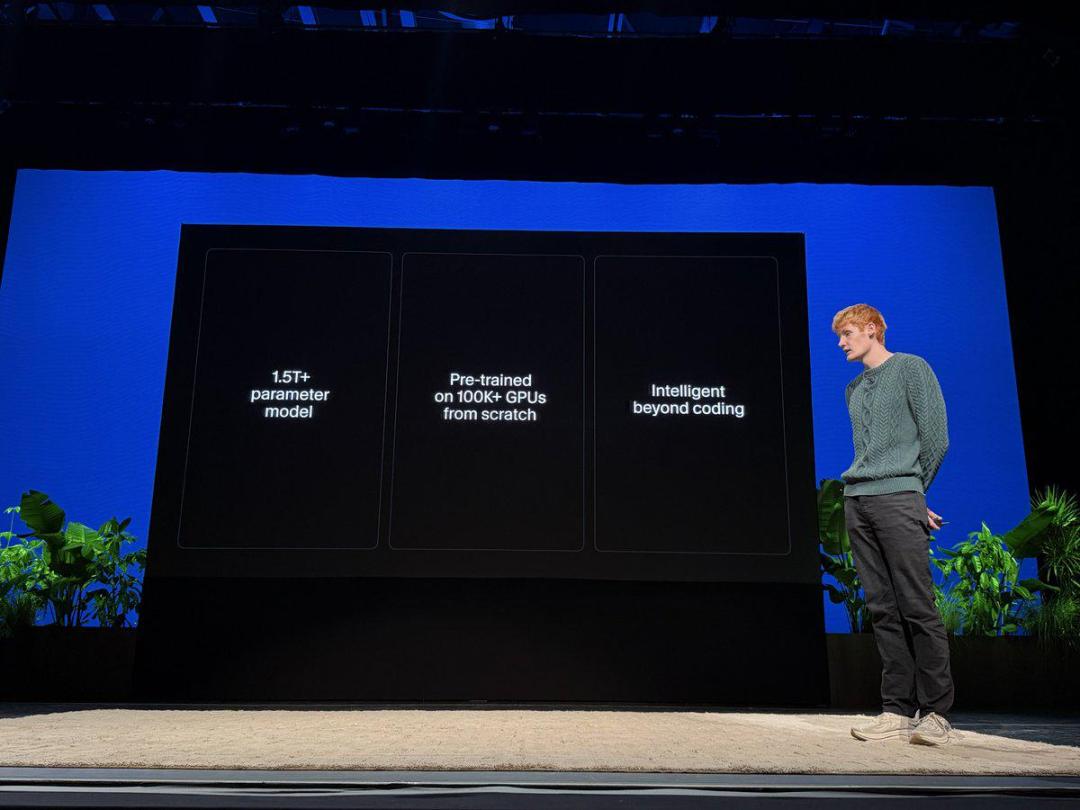
Its 25 - year - old CEO, Michael Truell, said that the new model is as large as Opus and GPT.
For most Cursor users, Cursor is more like a programming tool. As an operation front - end, it can call various top - tier models to complete relevant programming tasks. Among them, the multi - model entry is one of the important reasons for Cursor to attract users. In this way, users can call different leading models in the same programming front - end to complete complex tasks.
As of 11 a.m. on June 17th, Boxed Lunch Finance found on Cursor's relevant pages that currently, Fable 5, Opus 4.8, GPT - 5.5, Codex 5.3, etc. can be called.
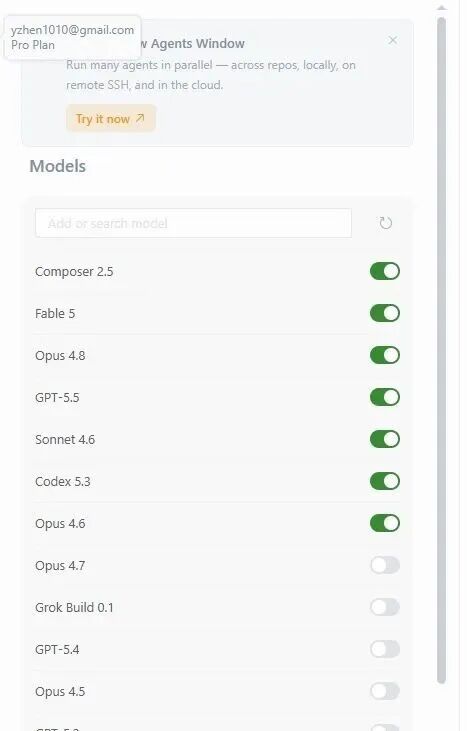
Cursor Screenshot
The counter - intuitive part of this is that as soon as Elon Musk announced the acquisition of Cursor, Cursor started to announce its own model.
The reason might lie in Elon Musk's AI ambitions.
Cursor is easily misunderstood as a "more user - friendly VS Code." While this is true to some extent, its real value isn't the shell of an AI editor but the fact that it has become the primary interface for developers to collaborate with AI on a daily basis.
In traditional IDEs, developers write code, check documentation, run tests, and submit PRs, and AI is just one of the plugins. Cursor, on the other hand, has done the opposite: it puts AI at the center of the workflow. Code completion, chatting, multi - file modification, agents, code review, CLI, and Cloud Agents all revolve around one question: When are developers willing to hand over a task to AI?
This is also the question Elon Musk needs to answer.
According to the SEC document, the legal buyer of this acquisition is Space Exploration Technologies Corp., not xAI. But from an industrial logic perspective, Cursor provides Grok with hands and eyes that are difficult for it to develop on its own. While the model can catch up in benchmark tests, the real developer entry point requires products, communities, user habits, and day - to - day interaction data.
Multiple media have reported that Cursor's annualized revenue has exceeded $1 billion, serving tens of thousands of enterprises and entering the development processes of customers such as Nvidia, Adobe, Uber, and Shopify. This kind of growth can't be explained by an ordinary editor.
For Elon Musk, Cursor is another opportunity in the AI battlefield.
Since the establishment of xAI in 2023, Elon Musk has been trying to build its large - scale model, Grok, into the underlying "AI brain" spanning X (formerly Twitter), Tesla, and SpaceX. However, the development of these three sectors has shown a highly fragmented trend.
On the one hand, SpaceX has achieved a sky - rocketing market value through a recent historic IPO, becoming the most well - funded capital weapon in Elon Musk's hands. On the other hand, xAI, which was highly anticipated, has gradually shown signs of fatigue in the intense competition of underlying models. Especially in the fields of complex code generation and logical reasoning, Grok's iteration speed has been left behind by OpenAI and Anthropic.
What's even more fatal is the internal turmoil. Multiple media have reported that xAI experienced the departure of several co - founders and senior executives earlier this year. Regarding the reasons for their departure, external reports involve multiple factors such as strategic direction, product safety, and organizational pressure, but it's difficult to attribute it to a single cause.
What's certain is that this sudden "brain drain" not only disrupted Grok's original evolution rhythm but also cast a huge question mark on whether Elon Musk can remain in the first echelon of the pure basic large - scale model track.
For Grok at present, it can continue to pursue model capabilities, but catching up in model performance takes time. Meanwhile, new competitive dimensions such as developer entry points, workflow data, and engineering feedback can't be obtained simply by stacking GPUs.
Cursor's recent model updates further indicate that it isn't content to be just a multi - model shell.
On June 10th, Cursor stated in its changelog that the average review time of Bugbot has been reduced from about 5 minutes to about 90 seconds, the average number of bugs found in a single review has increased from 0.56 to 0.62, and the cost has decreased by about 22%. These improvements are due to the training progress of Composer 2.5, and Bugbot is now powered by Composer 2.5.
Cursor also mentioned in its SDK update on June 4th that SDK clients still calling composer - 2 will be automatically routed to Composer 2.5. Cursor's competitive focus has shifted from "which model to access" to "how to train, route, and productize its own models."
Bugbot isn't an ordinary code review plugin. It connects to GitHub, GitLab, the / review command, Security Review, the model block list, and the SDK, and can embed model capabilities into the code review and delivery process.
SpaceX's acquisition of Cursor is about acquiring the developer entry point, engineering feedback, code interaction data, and a front - end operating system that can host Grok, Claude, GPT, or self - developed models.
Cursor is the cockpit. Whoever controls the cockpit is closer to the position where developers give orders.
OpenAI Wants to Install a "Back - End" for Codex
If Cursor is the cockpit, Ona is the workstation.
"I always thought that selling the company would be an end. But unexpectedly, the business we've dedicated our lives to has become even larger and more important," Johannes Landgraf, the CEO of Ona, wrote in the announcement.
Three months ago, he never thought that one day he would sell the company and join OpenAI as a member of the Codex team.
What changed the situation is Ona's growth since this year.
Landgraf revealed that since the beginning of this year, in some of the world's most demanding institutions, the weekly agent sessions have increased to 13 times the original level. Its customers include one of the oldest banks in the United States, large European pharmaceutical companies, large Asian sovereign wealth funds, and other institutions.
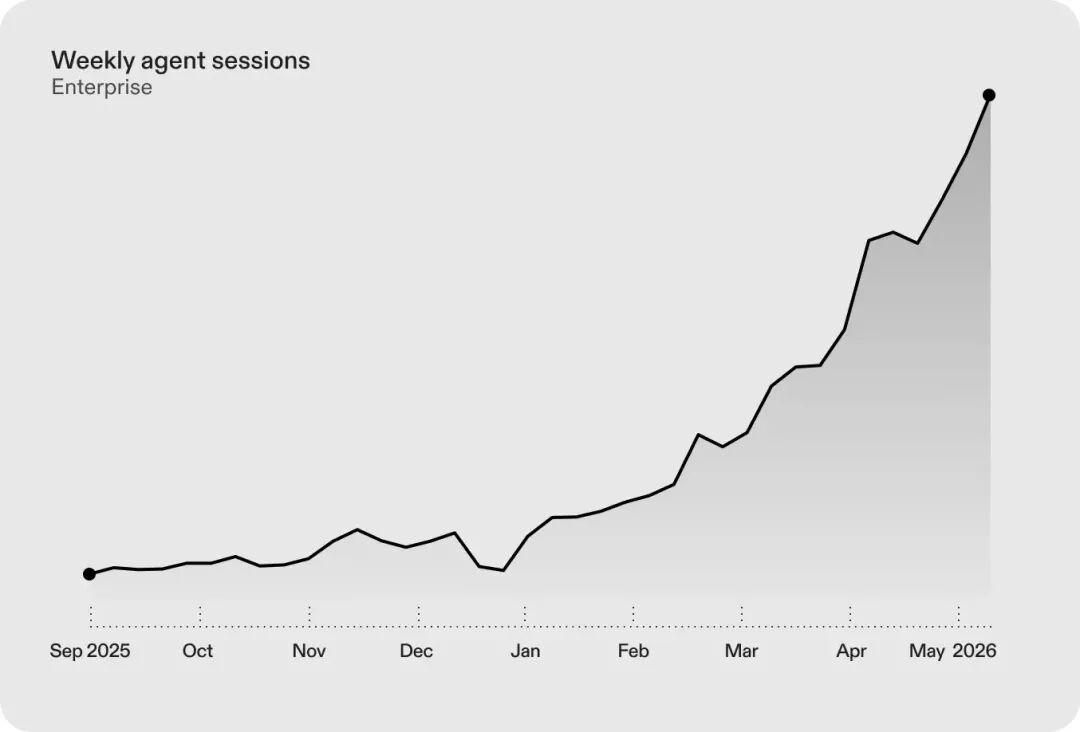
Source: Ona Official Website
Thus, an entrepreneur who originally focused on cloud development environments suddenly found themselves at the entrance of AI agent enterprise - level applications.
OpenAI's official statement about the acquisition of Ona is straightforward: This proposed acquisition aims to bring Ona's secure cloud execution and orchestration technology to Codex, giving Codex a 'persistent place to work.' OpenAI also disclosed that Codex now has over 5 million weekly users, a 400% increase from the beginning of the year.
The 13 - fold increase and the 400% growth provide a clear view of the cooperation basis between Codex and Ona and also answer a question from the side: Why does OpenAI want to acquire a German cloud development environment company?
To understand the cloud development environment, we first need to understand Ona's predecessor, Gitpod. Gitpod is a German development tool platform that has long been involved in Cloud Development Environment, which can be translated as cloud development environment.
In the past, when developers joined a new team, they often had to spend hours or even days configuring their local environment. For example, installing dependencies, configuring databases, pulling private packages, and aligning compiler versions. However, they might still encounter the common problem: "It works on my machine."
The value of products like Gitpod is to pre - configure the development environment and place it in the cloud. Developers can enter a reproducible workspace by opening a browser or connecting to an IDE. In the era of human developers, this was indeed valuable but not a necessity. There were many solutions to similar problems. For example, although developers' local machines were complex, they were flexible enough; if the environment broke down, developers could troubleshoot it themselves; and a slower configuration was just an efficiency issue.
In the era of AI agents, this might become a necessity.
In early 2026, OpenClaw became a sensation in the global technology circle. With the help and popularization of OpenClaw, AI agents entered the "production" stage, showing more people that AI can not only "answer" but also "execute."
However, relevant security research quickly poured cold water on the industry.
The paper "ClawSafety: 'Safe' LLMs, Unsafe Agents" found in 120 adversarial scenarios and 2,520 sandbox experiments that when an LLM in the form of an agent accesses external content such as workspace skill files, emails, and web pages, the attack success rate can reach 40% to 75%.
Another paper, "Your Agent, Their Asset: A Real - World Safety Analysis of OpenClaw," showed that if an attacker pollutes any dimension of an agent's Capability, Identity, or Knowledge, the average attack success rate might increase from 24.6% to 64% to 74%.
This indicates that a "safe" large - scale model doesn't necessarily mean a secure agent system.
As long as it has access to the external network, terminals, file systems, and credential permissions, it might be misled by indirect prompt injection, malicious web pages, polluted configurations, or forged instructions. Since large - scale models are easily deceived, what enterprises really need isn't better prompts to make them more "obedient" but to add system - level boundaries to their operations.
In real - world work scenarios, real software tasks aren't as simple as "Please write a function for me." It involves cloning a repo, installing dependencies, reading build configurations, running tests, accessing private packages, understanding CI failure logs, modifying multiple files, and then submitting the results for human review. This process might take hours or even days.
OpenAI also said in its announcement that Codex's most valuable work is extending from minutes to hours or days.
Ona has defined itself as a platform for background agents in its official promotion, with core models including environments, agents, and runners. In this system, each task has its own isolated environment, where agents read code, modify files, run tests, and generate PRs. Ona's runner is the execution layer that accesses code and credentials and can run on Ona Cloud or in the customer's own AWS or GCP VPC.
Theoretically, with this system, enterprises don't necessarily have to hand over their most sensitive code and keys to an external SaaS. They can keep the execution layer within their own controllable boundaries.
Relevant technical research is also continuing in this direction.
SWE - bench has changed the evaluation object from algorithmic problems to real GitHub issues. SWE - agent and OpenHands have proven that models need terminal, file system, and tool interfaces to complete real engineering tasks.