Is the perpetually sold-out GLM-5.2 really worth using?
To be honest, at first when you told me that domestic models could rival Claude and GPT, I was skeptical.
However, after camping on Shichao for three days, I finally managed to grab Zhipu's Coding Plan package. After two intense rounds of using tokens.

I found that there might actually be something to it...
As we all know, a few days ago, Anthropic started causing a stir again. Just when the model was performing well, it suddenly raised the banner of "security" and disabled the most powerful model, Fable 5, which had only been online for a few days.
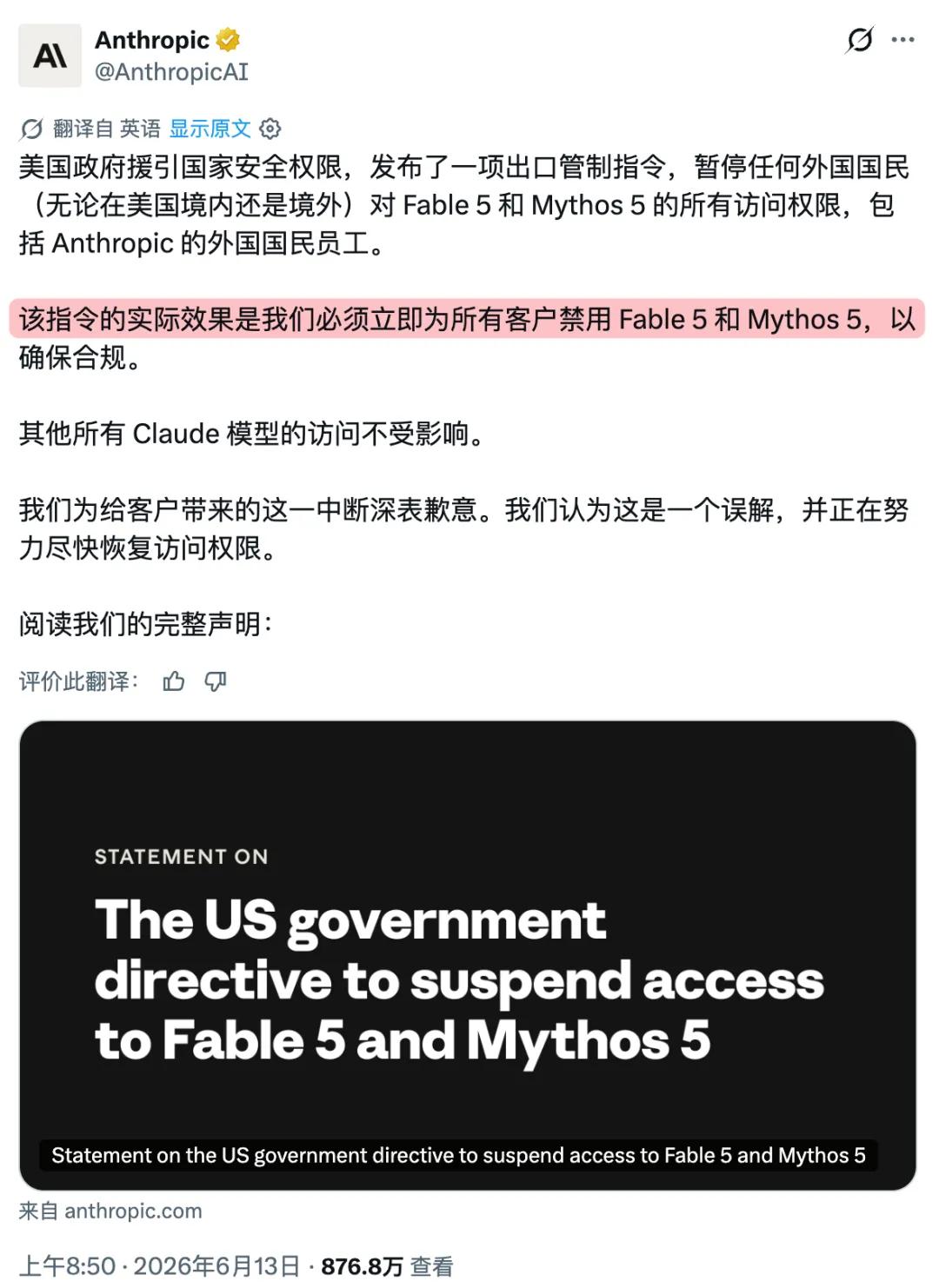
Just when everyone was complaining, Zhipu stepped in.
In the morning, Claude issued a ban, and in the afternoon, Zhipu responded by releasing a new model.
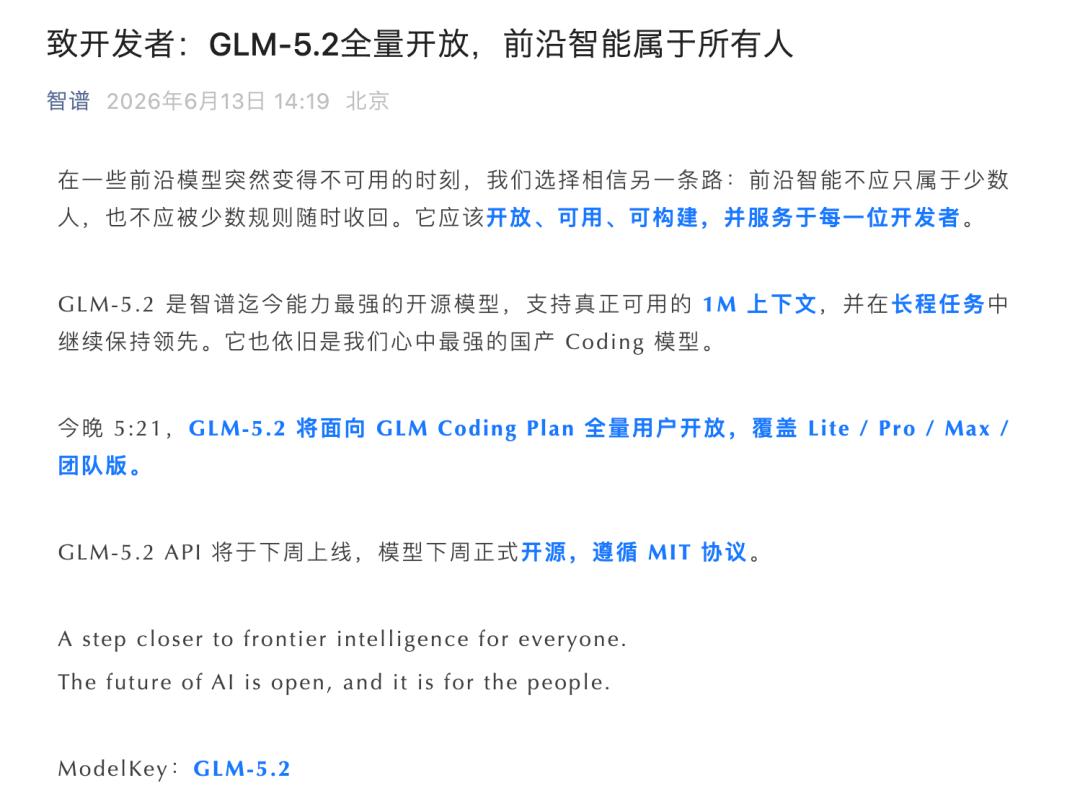
Today, it went a step further and directly opened up the weights, and it supports the most lenient MIT license. This means that everyone can not only use it directly but also modify and commercialize it on its basis.
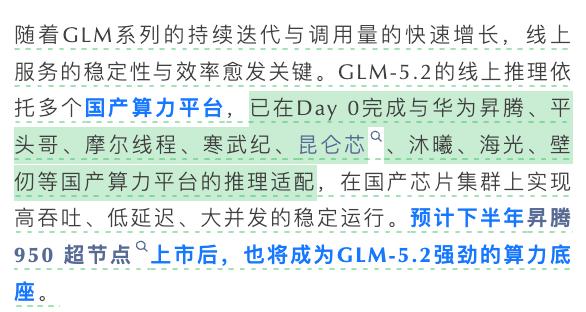
At the same time, it also coordinated with domestic computing power. It directly completed inference adaptation with domestic computing power platforms such as Huawei Ascend, T-head, Moore Threads, Cambricon, Kunlunxin, Muxi, Hygon, and Biren.
Actually, for those who don't usually tinker with large models, they may not have much of an idea about Zhipu, a relatively low - key company.
But if you shout in a group full of programmers, you'll know how valuable the previous generation GLM - 5.1 was. People generally gave positive reviews, and the negative reviews mainly focused on two aspects.
One is that it's extremely difficult to get. It's even harder to grab than concert tickets. It refreshes at 10 a.m. every day, and whether you can buy it depends entirely on your hand - speed...
The second problem is that the model only supports a context length of 256k. This means that if you use it to do something a bit more complex and the context gets filled up, the model's performance will decline.
This update of GLM - 5.2 has largely addressed this issue. After learning from past experiences, it has directly increased the context to one million.
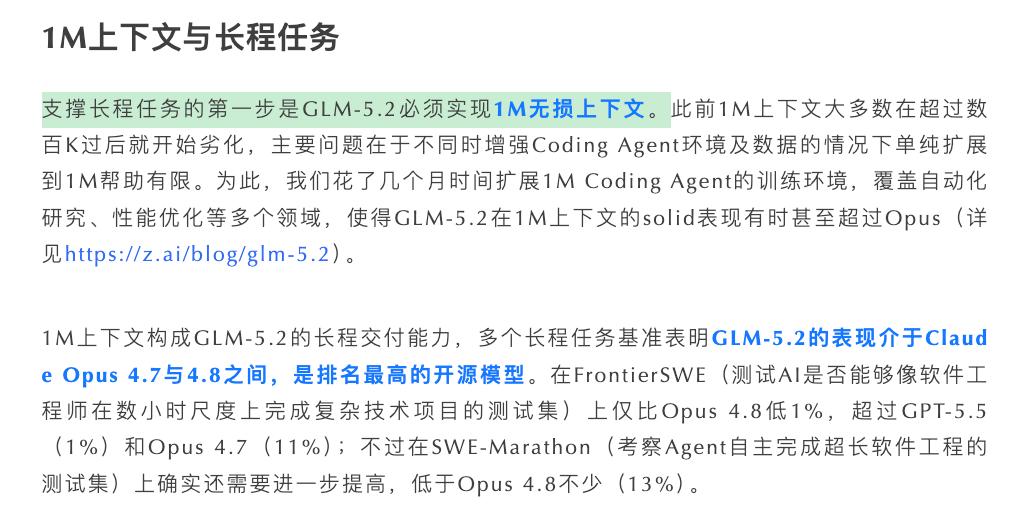
Judging from the scores of several core long - range tasks, GLM - 5.2 performed extremely well this time. Its overall hard power is between Claude Opus 4.7 and 4.8.
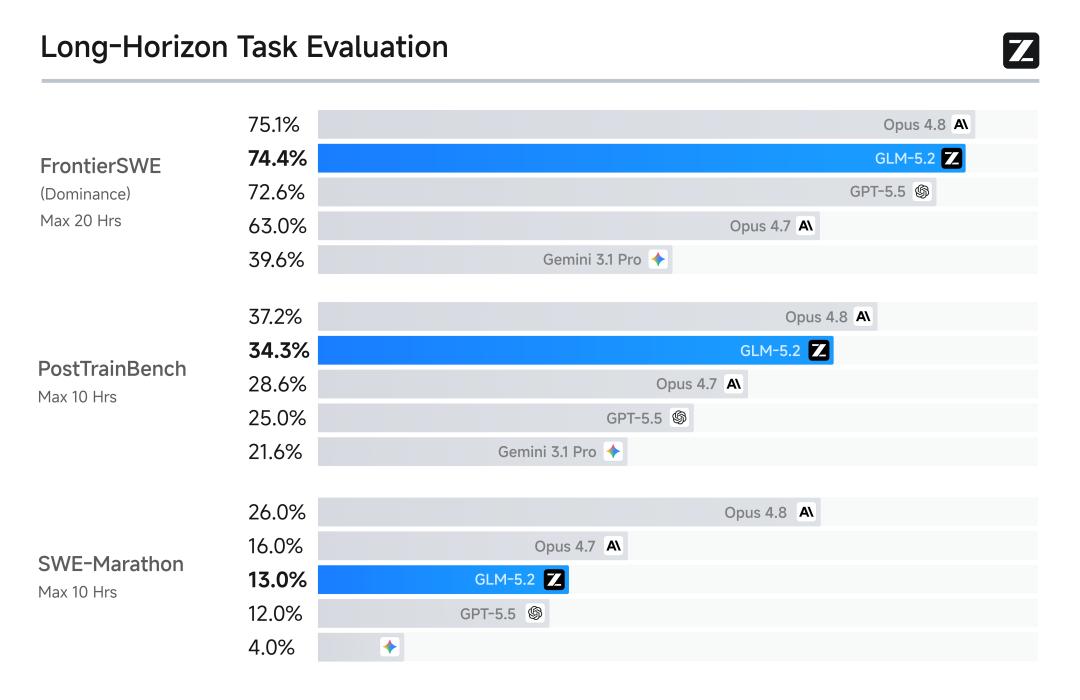
This is just an appetizer. Although people are now somewhat desensitized to various AI rankings and know that scores are just a reference, GLM - 5.2's scores this time still seem a bit exaggerated.
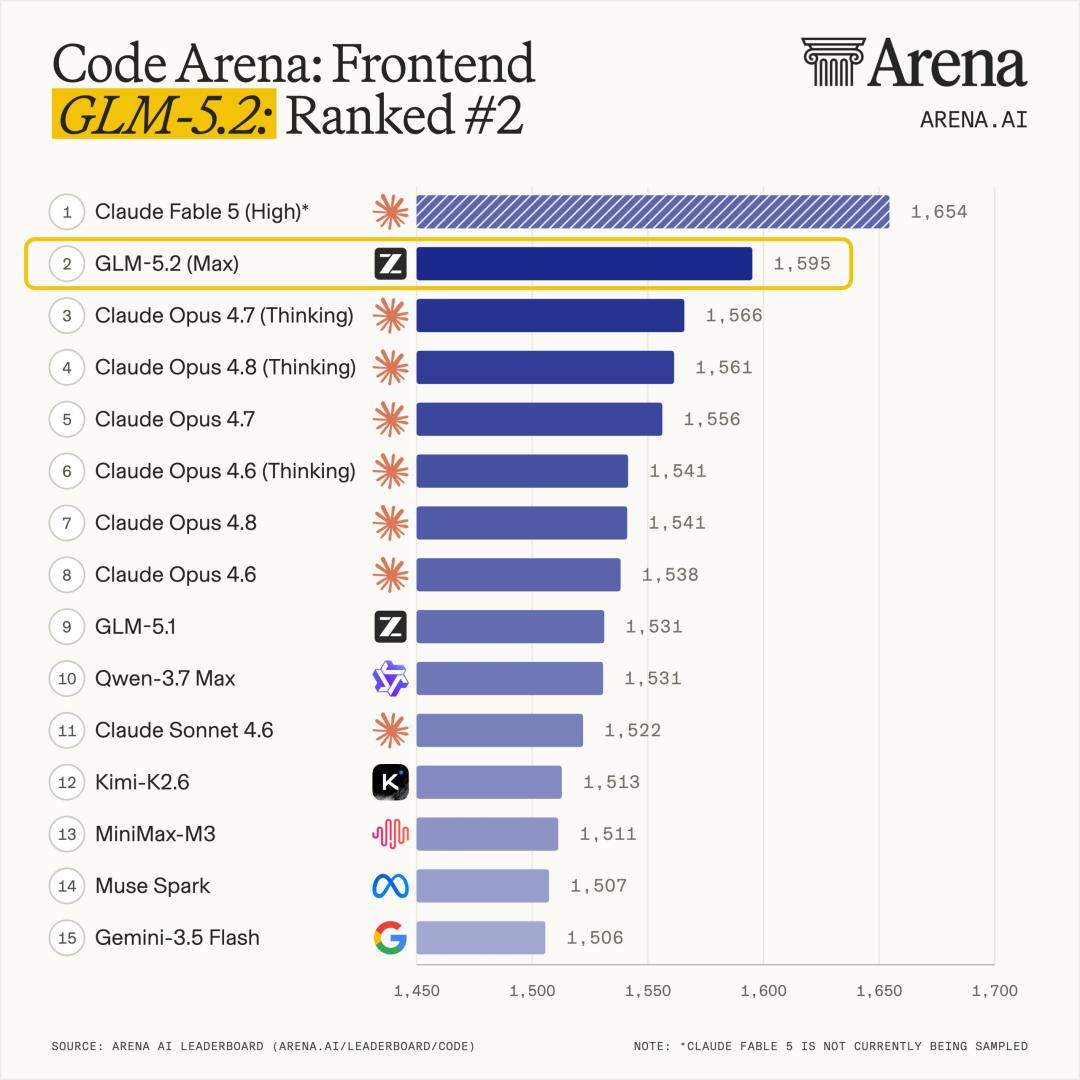
Let me put it this way. In the classic global user blind - evaluation large - model arena, Code Arena, GLM 5.2 directly took the first place among the available models...
The only model with a higher score is Claude Fable 5, which was disabled a few days ago.
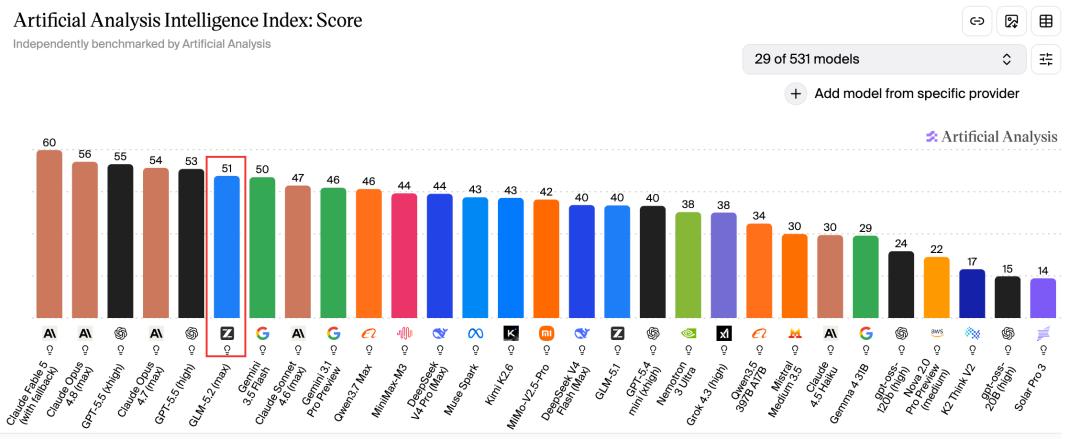
In Artificial Analysis, Zhipu's performance is only second to Claude and OpenAI.
Of course, high scores are just a reference. To see if it's just a "bookworm" that can only do well in tests, Shichao tested it directly.
Let's start with a simple question as an appetizer. Just like when we tested Fable a few days ago, we asked it to create a spinning ball game first.
Write a Python program to display a ball bouncing inside a rotating hexagon. Only five sides of the hexagon are walls, and one side is passable. When the ball hits the wall, it automatically splits into two, or it passes through the passable boundary and falls outside the map. The ball's movement trajectory should be affected by gravity and must bounce realistically off the rotating walls. Display the total number of balls generated in the lower - left corner of the interface. When all the balls fall outside the interface, the game ends, and the player can restart the game.
Zhipu's approach to this problem is quite similar to Fable's. It didn't create a bunch of fancy animations like GPT.
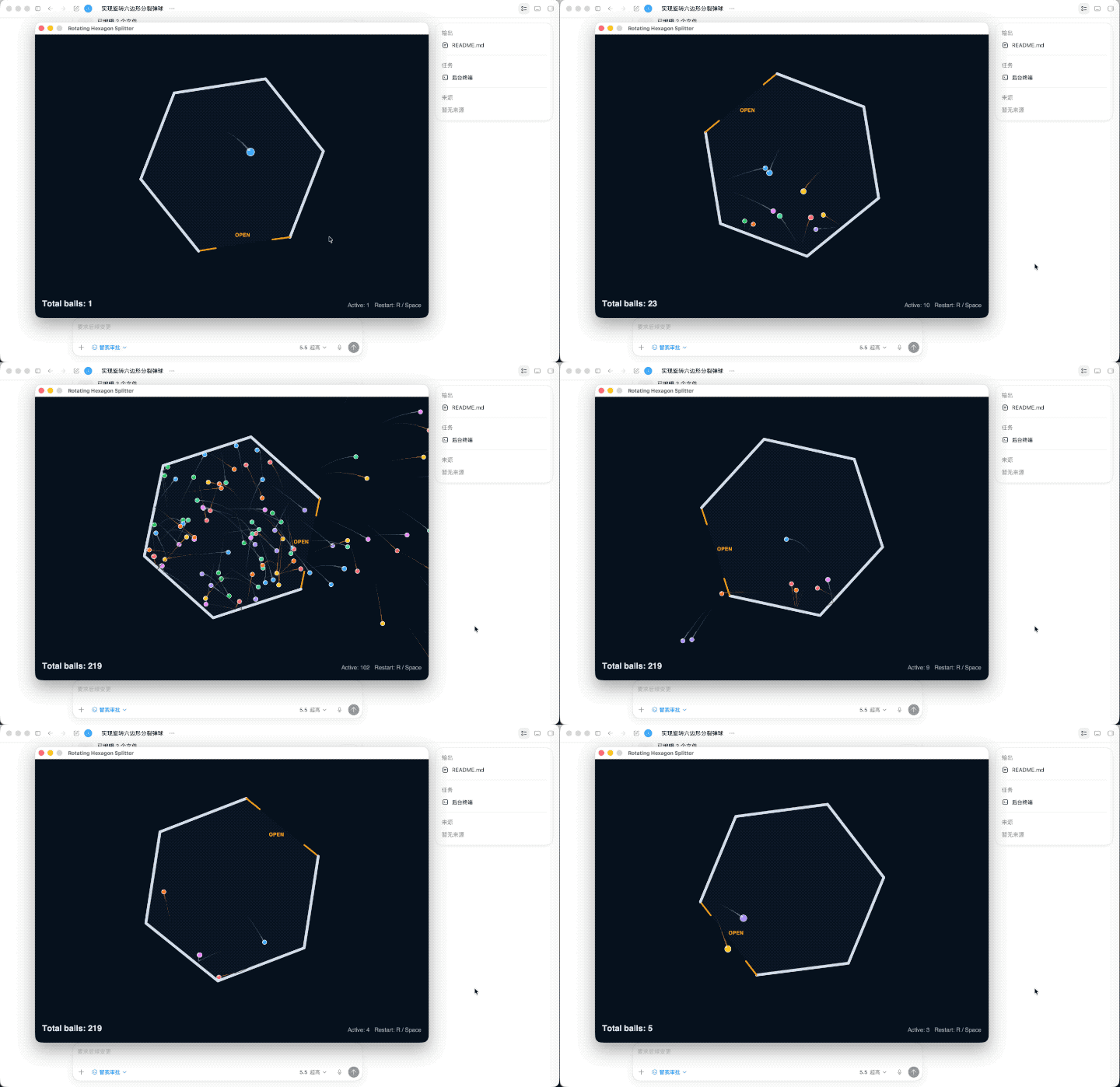
The ball created by GPT with gorgeous special - effect trails.
Instead, considering that too many balls would affect performance, it limited the maximum number of "current balls" on the screen.
After the previous balls fall, new balls will continue to be generated.
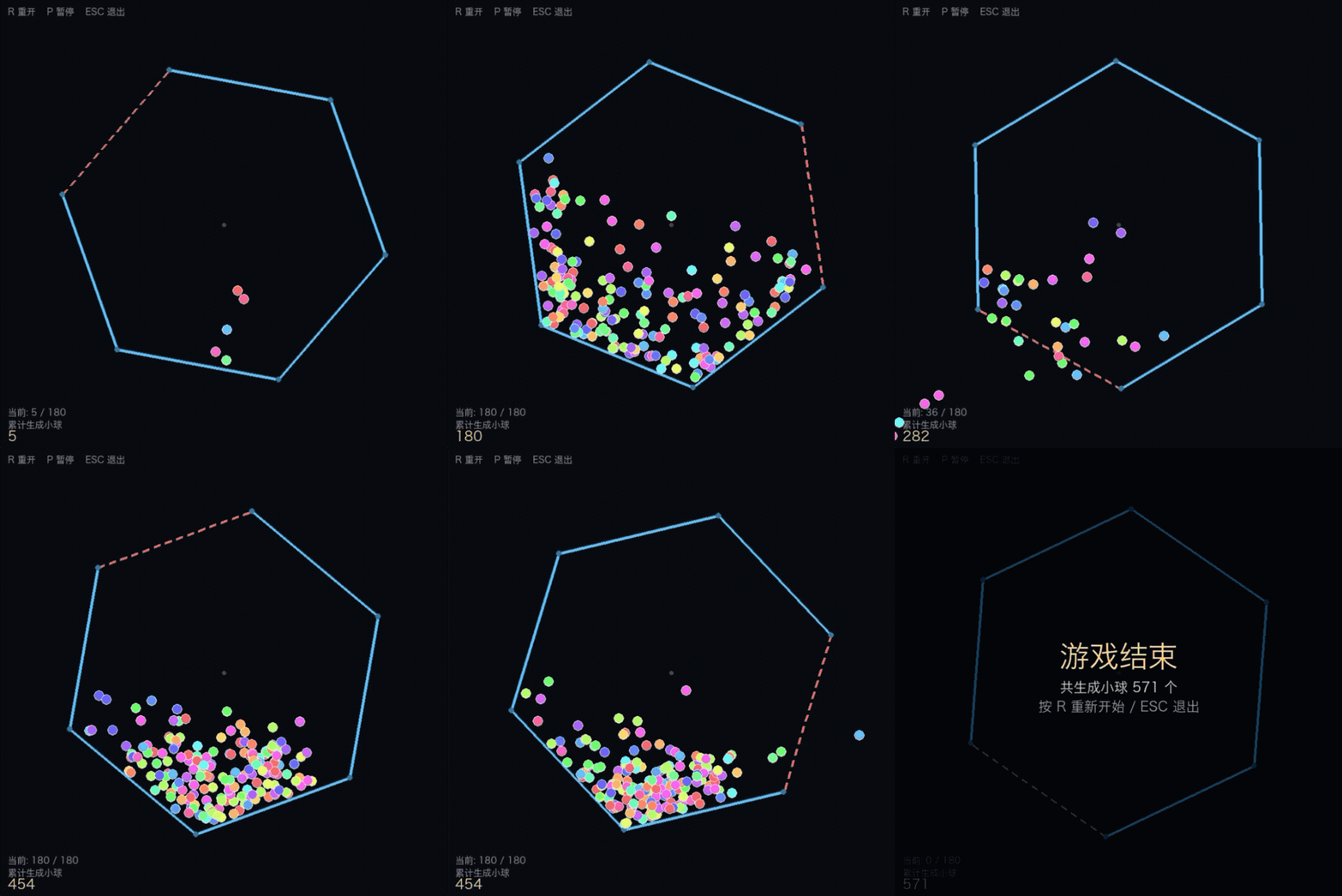
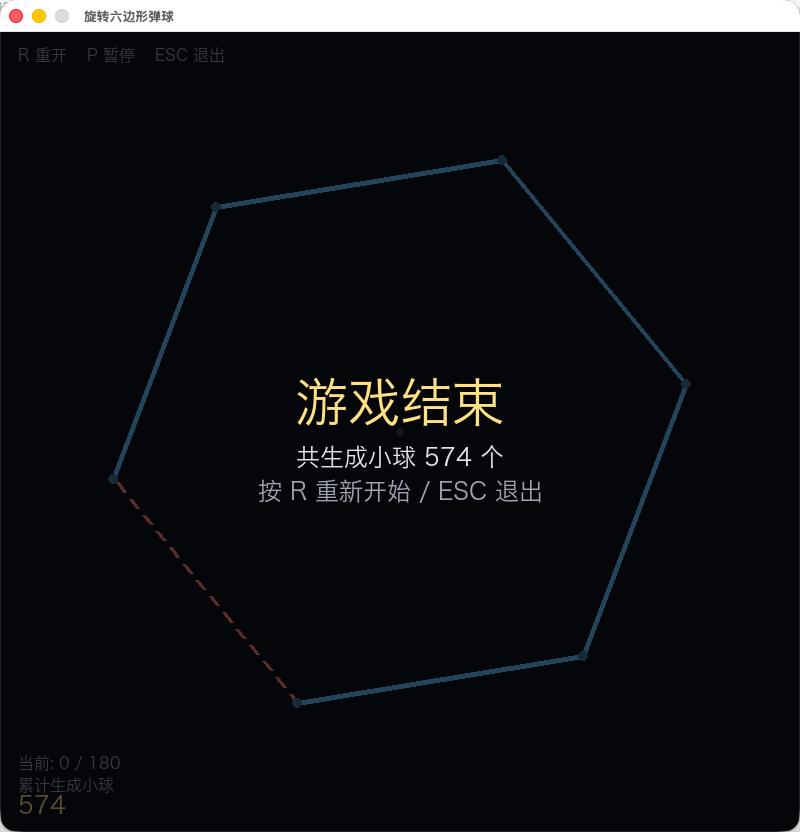
The effect created by GLM - 5.2 in Claude Code
At the same time, without any prompts, it used a Chinese UI for this small game.
Recently, it's the World Cup. It's no problem for it to create a penalty - kick simulator:
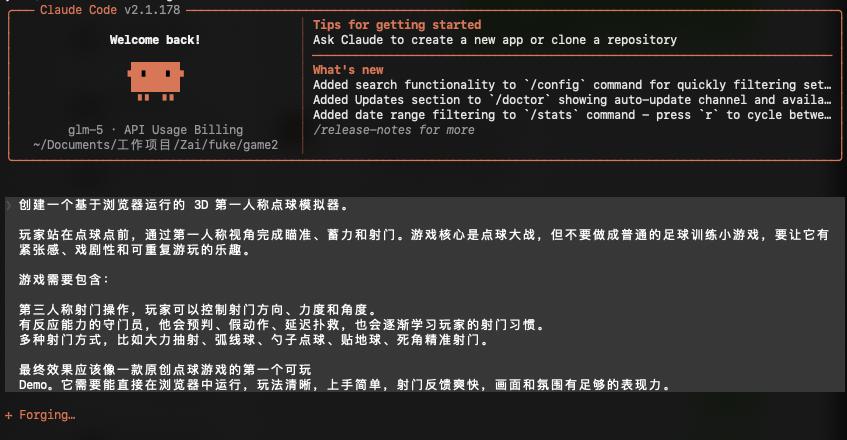
GLM - 5.2 directly created a whole 3D game at once. It works fine, but the goal - scoring judgment is a bit lenient. In several rounds, Shichao saw the ball hit the goalkeeper, but it still went into the goal as if it had passed through the goalkeeper.

Claude Opus 4.8's creation is a bit abstract. Although it added a camera follow when the ball scores, there is a bug in the program. Once the ball goes into the goal, it gets stuck...

At least in terms of the logic of programming projects, Shichao's experience with it is not much different from that of 4.8...
Of course, besides these small games and demos, it's also no problem for it to handle some complex project migrations.
For example, recently Shichao found a very interesting AI automatic novel - continuation project on Github. You can create your own characters, set the world view, and then interact with the AI to develop the plot.
After playing with it on the computer for a few days, Shichao got eager to try. He thought this kind of thing would be more suitable to run on the phone, so that he could use fragmented time to chat with the AI. So he wondered if he could directly transplant the project locally to the phone and have a taste of being a writer.
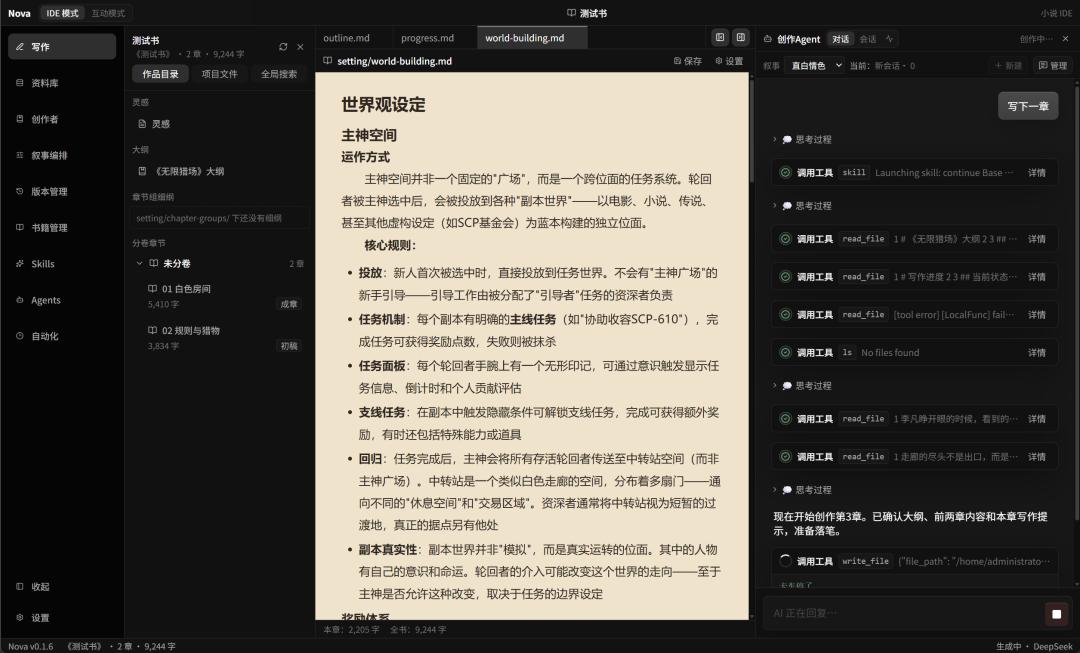
At first, Shichao planned to use CodeX to migrate the project from the computer to the phone.
Unexpectedly, CodeX flat - out refused three times. First, it thought that the current project runs separately on the front - end and back - end, which is not suitable to run on the phone.

Then it said that refactoring the project would be very labor - intensive. It suggested that I only refactor the front - end interface on the phone and then buy a server and register a domain name for the back - end business...

What? Dude, it's 2026. When facing a difficult coding problem, your first reaction is to tell me to spend more money on a server? Is the AI teaching me how to do things?
Angrily, I copied the same words and pasted them into GLM's chat box.
Facts have proved that in this regard, GLM is not as shrewd as GPT.
It didn't talk about any alternative solutions. It simply sorted out the context, then immediately launched three agents in the background and divided them into three groups to dig into the code library to figure out how to do the underlying local migration. It shows full initiative.
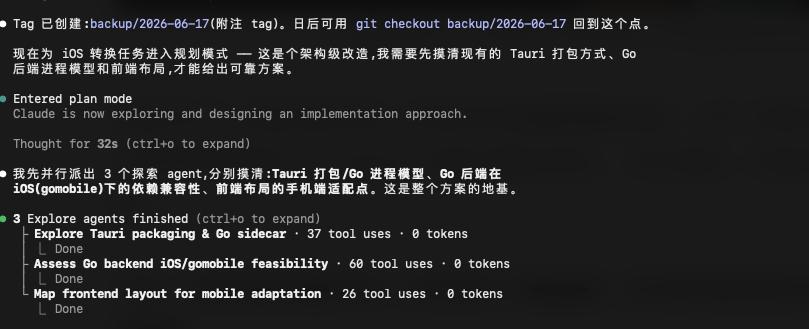
It soon found a solution that CodeX didn't notice, which cleared the way for me to run the project on the phone.
