Li Auto kicks off the "mid-game battle" in the AI era
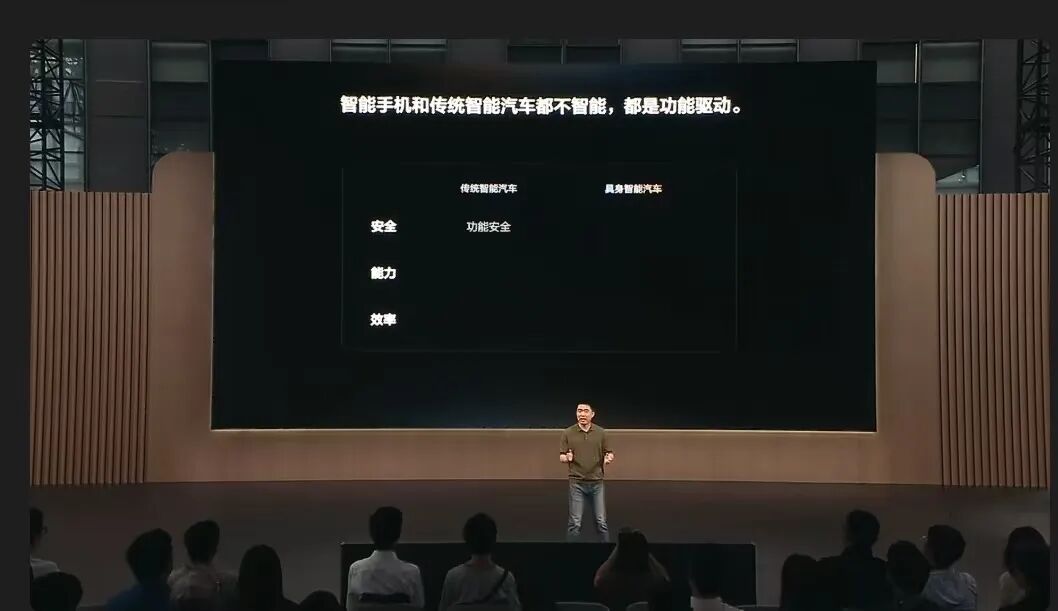
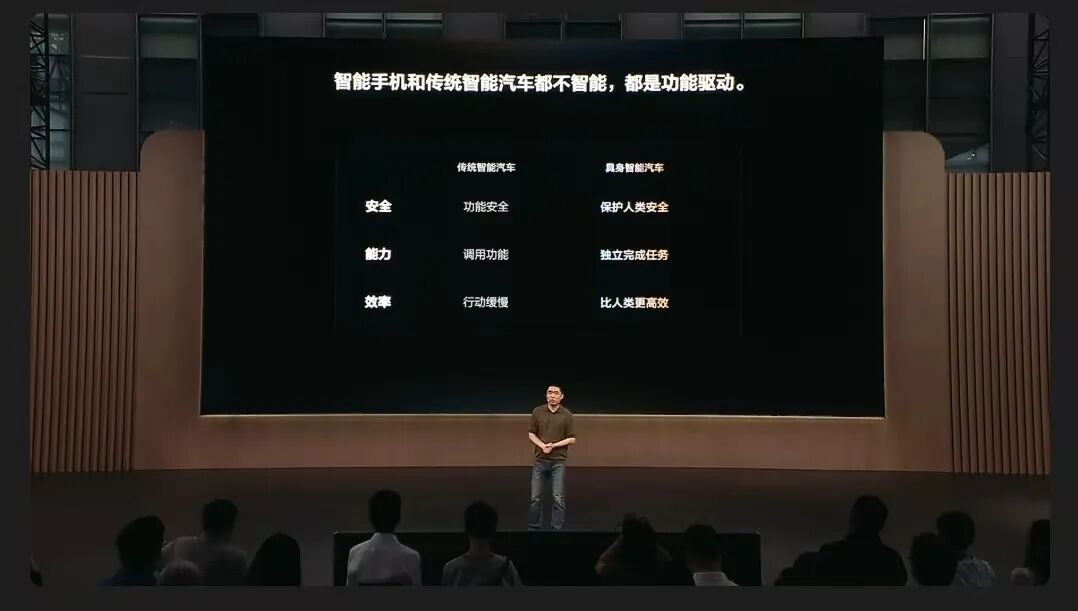
"Today's smartphones and smart cars are not truly intelligent. In essence, they are function-driven rather than living intelligent agents."
"Li Auto adheres to being the best version of itself. Don't expect us to become someone else."
At the Li Auto Livis Day on June 15th, Li Xiang used these two sentences as the beginning and end of the press conference respectively. These two statements are the most typical representatives of Li Auto's current strategic choices and perseverance.
The former "bold statement", just like the insistence on the range-extended route back then, comes from Li Auto's unique judgment. However, this time Li Auto's choice has already formed a certain market consensus, and the implementation difficulty is much greater. The latter expresses a high degree of strategic determination and implicitly responds to the market's doubts about "straying from the core business".
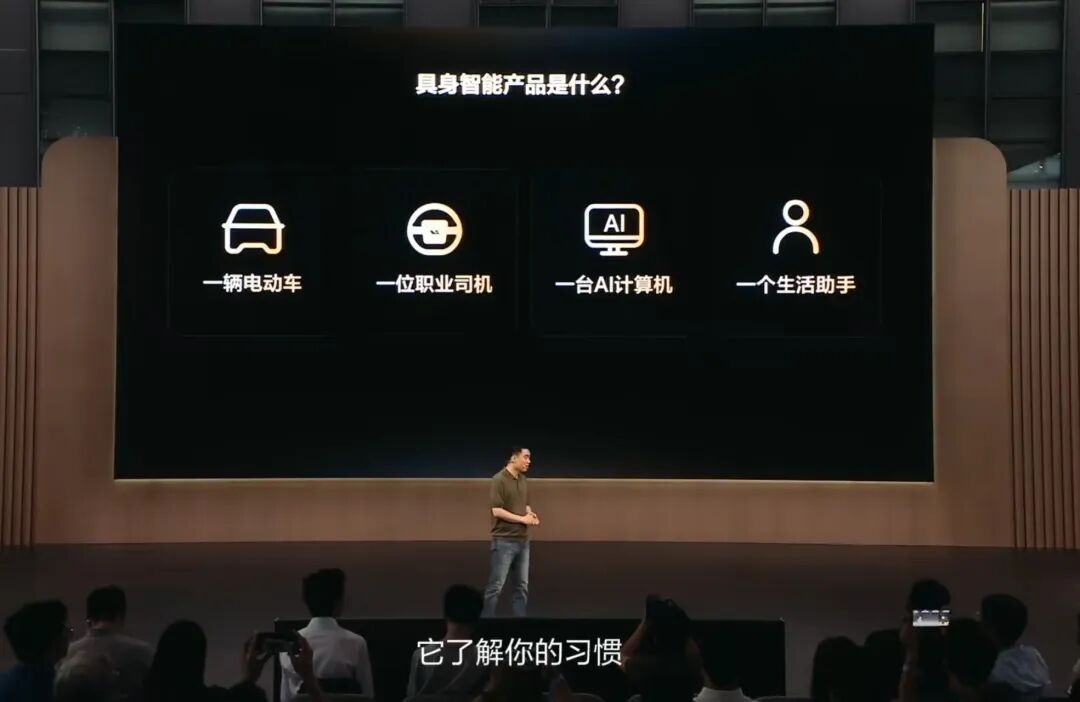
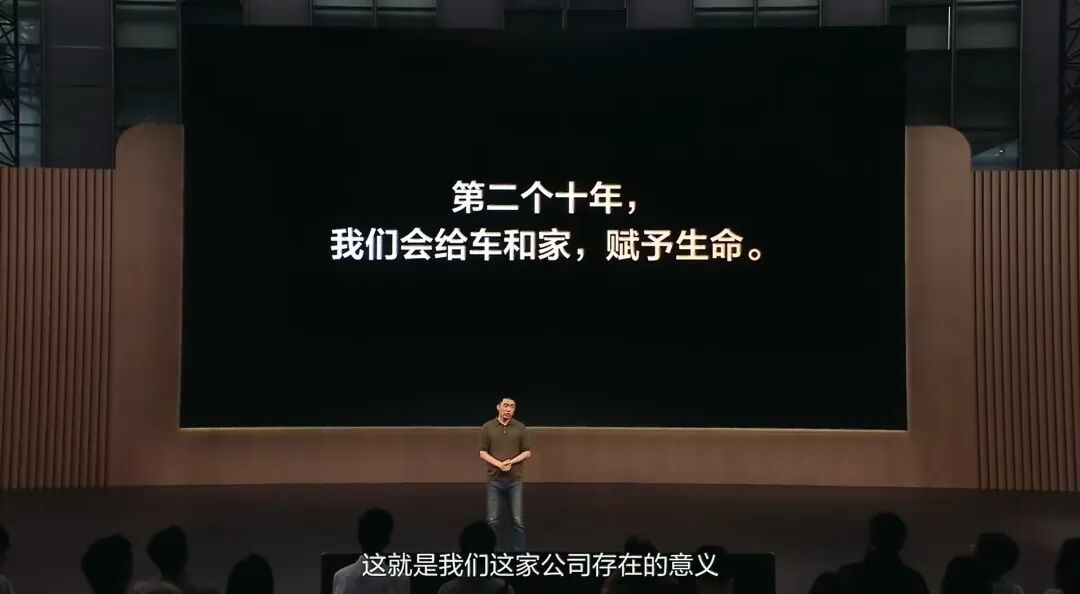
As Li Xiang said, in the past decade, Li Auto has successfully transformed its car products into "mobile homes"; in the second decade, Li Auto's task is to "endow cars and homes with life" - not only an electric vehicle, but also a professional driver, an AI computer, and a life assistant.
Since publicly announcing the transformation into an AI company at the end of 2024, Li Auto has finally taken a substantial step. If the first decade is summarized as Li Auto's "first half", with the core being to stabilize the car - building foundation and simultaneously improve AI basic capabilities, then the Livis Day marks Li Auto's entry into the "mid - game battle" of building long - term barriers and achieving full - scale commercial implementation.
Underlying Evolution
Among a group of car companies, although Li Auto is quite radical, it cannot be called reckless. On the transformation path from car - building to embodied intelligence, Li Auto has chosen a self - consistent and smooth transition curve, that is, defining the entire vehicle as a wheeled embodied robot. This can also be seen from Li Auto's promotional videos, where the L9 livis often transforms into a "Transformer - like car".
Using car products as the "experimental field" first, Li Auto directly avoids a "sharp turn" at the business level. Simply put, the car - building experience accumulated in the previous decade can be translated into the infrastructure for embodied intelligence, eliminating the need to start from scratch in a cross - border field; and as an embodied execution unit, car products also solve the problems of slow implementation and long return cycles of embodied intelligence.
Compared with Tesla and XPeng, Li Auto has chosen a more ingenious route. Of course, this complete and continuous transition curve is also based on its long - term in - depth exploration of the family scenario. It can be said that the family travel scenario is the core link connecting its vehicle hardware and in - vehicle agents.
To achieve this, the first step is to carry out a fundamental subversion and evolution. Li Xiang also mentioned that building an embodied intelligent car that can protect human safety, complete tasks independently, and be more efficient than humans using embodied intelligence is much more difficult than developing from a large language model to an agent. "The entire system needs to be re - engineered."
At the organizational level, Li Auto has been completely transformed according to the embodied logic. The previous organizational structure, which was mainly dominated by the car - building logic of power, chassis, intelligent driving, and cockpit, has been changed into three parallel primary R & D teams: the base model, the software body, and the hardware body, corresponding to the AI brain, AI nerves, and AI body respectively. Under the base model, three secondary departments of embodied engineering, embodied interaction, and embodied behavior have been newly added, and autonomous driving has been upgraded to an independent secondary department.
Li Auto's organizational "reshuffle" aims, firstly, to conduct a comprehensive reconstruction guided by AI to more efficiently implement the AI and embodied strategies; secondly, to break the division boundaries and use the flexibility advantage of small - scale organizations to counter the functional barriers.
At the product definition level, the L9 Livis, which is in the vanguard, already has an obvious prototype of embodied intelligence. Comfortable configurations such as refrigerators, color TVs, and sofas are more for promoting car sales, while autonomous perception, continuous behavior, and multi - modal general intelligence have begun to become the core values of the product.
Specifically, the changes at the hardware level include the unification of the computing power architecture, the embodiment of the chassis, and the integration of perception. At the software level, the change is from executing commands to autonomous task agents.
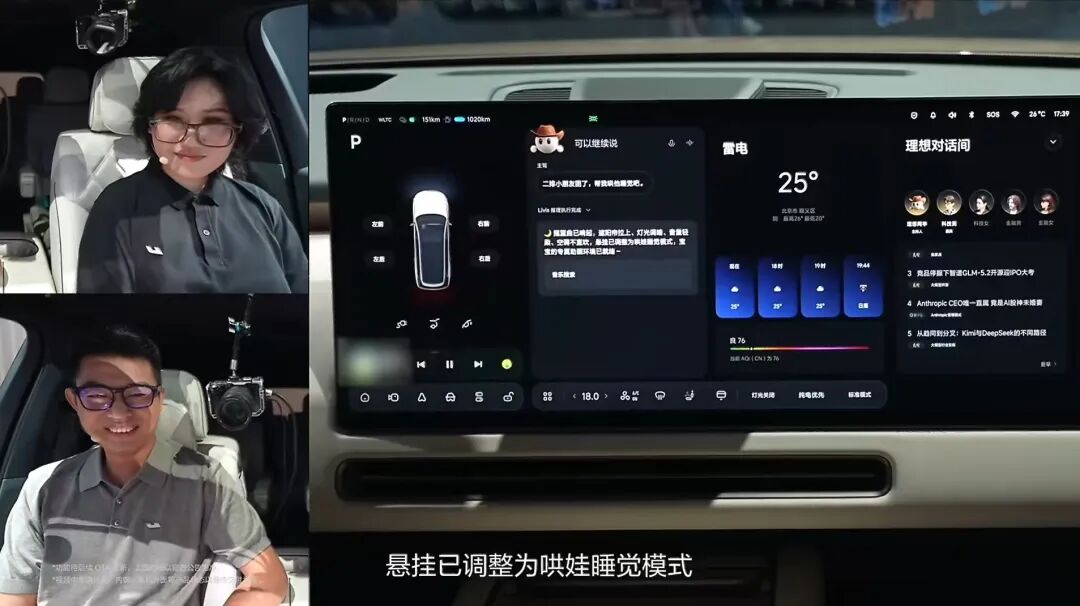
An impressive example is that Li Xiang demonstrated at the press conference how the L9 Livis can switch to a nanny to lull a child to sleep: just give a voice command, and the car will automatically close the windows and sunshades, play a lullaby, and the whole body of the car will sway like a rocking chair.
Of course, Li Auto's transformation path is not smooth. The pain brought by organizational adjustment is friction and personnel turmoil. In just the past year, many senior executives, including Lang Xianpeng, the former "number one" in intelligent driving, Chen Wei, the former person in charge of the base model, Wang Kai, the former CTO, Xia Zhongpu, the former person in charge of end - to - end model R & D, Jia Peng, the former person in charge of VLA R & D, and Wang Jiajia, the former person in charge of intelligent driving mass - production R & D, have successively left the company. Many of them have ventured into the fields of embodied intelligence and autonomous driving, making Li Auto one of the "military academies" in the embodied intelligence startup circle.
In addition, the company is troubled by the unfavorable transformation to pure - electric vehicles. Against the background of continuously increasing investment in AI R & D, Li Auto still faces pressure on profits and capital reserves.
Completing the Hardware Puzzle
Since its establishment, Li Auto's admiration for Apple has been well - known. It has always regarded Apple as the ultimate form of the enterprise. In the past, this benchmarking was mainly reflected in design, product methodology, and ecological integration in the business model.
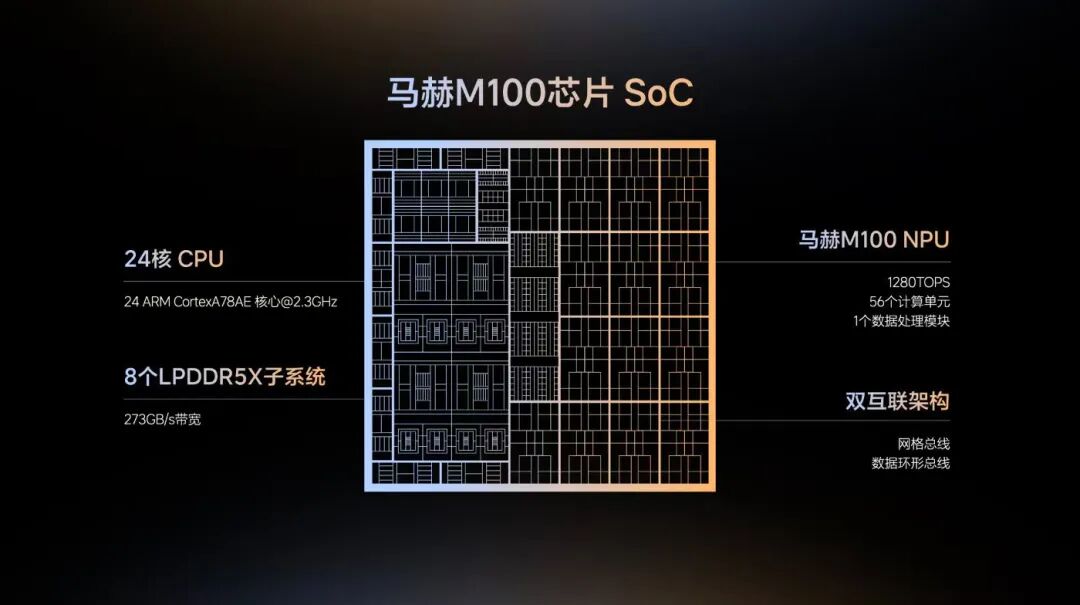
Now, with the mass - production of the Mach M100 chip in vehicles, Li Auto is also getting closer to Apple in terms of vertical integration and organizational efficiency. This is mainly reflected in the "trinity" integration of chips, basic models, and applications, which is highly similar to Apple's vertical collaborative closed - loop from chips to systems.
Therefore, Li Auto officially proposed at the Livis Day that in the fourth quarter, the capabilities of its assisted driving model should match those of Tesla's FSD V14. Earlier this year, another radical player, XPeng, also made a "bet" to achieve the overall effect of Tesla's FSD V14.2 in Silicon Valley in the summer. Otherwise, Liu Xianming, the head of XPeng's General Intelligence Center, would run naked across the Golden Gate Bridge.
Obviously, with the gradual implementation of Tesla's FSD in China, the players in the top echelon of intelligent driving are perhaps more excited than afraid. After all, this is an opportunity to compete fairly with the world's top players.
One reason is the same path and higher efficiency. Xie Yan, the CTO of Li Auto, believes that Li Auto and Tesla have the same starting point, but Li Auto has higher integration efficiency, can avoid departmental barriers, and make team cooperation closer.
More importantly, there has been a breakthrough at the hardware level. If in the past, Li Auto's entry into the first echelon of domestic intelligent driving relied more on software capabilities, then the improvement of "hard power" now gives Li Auto more confidence.
The Mach M100 is the world's first dynamic data - flow AI chip. It abandons the von Neumann instruction queue and follows the parallel and flowing laws of AI computing, allowing data flow to drive computing. At the same time, the architecture itself is designed around the computing form of AI. The successful installation of this "world's most powerful AI chip" in vehicles, as described by Li Xiang, means that the last piece of the puzzle for Li Auto's full - stack self - research has fallen into place.
The core advantages of the data - flow architecture in AI computing are reflected in three aspects: direct data access to reduce waste, efficient pipeline - style execution, and global broadcasting ability. The result of the superposition of these three advantages is that the Mach M100 uses most of its hardware resources for actual computing rather than scheduling and data transfer, which is why it can release higher effective computing power in the same area.
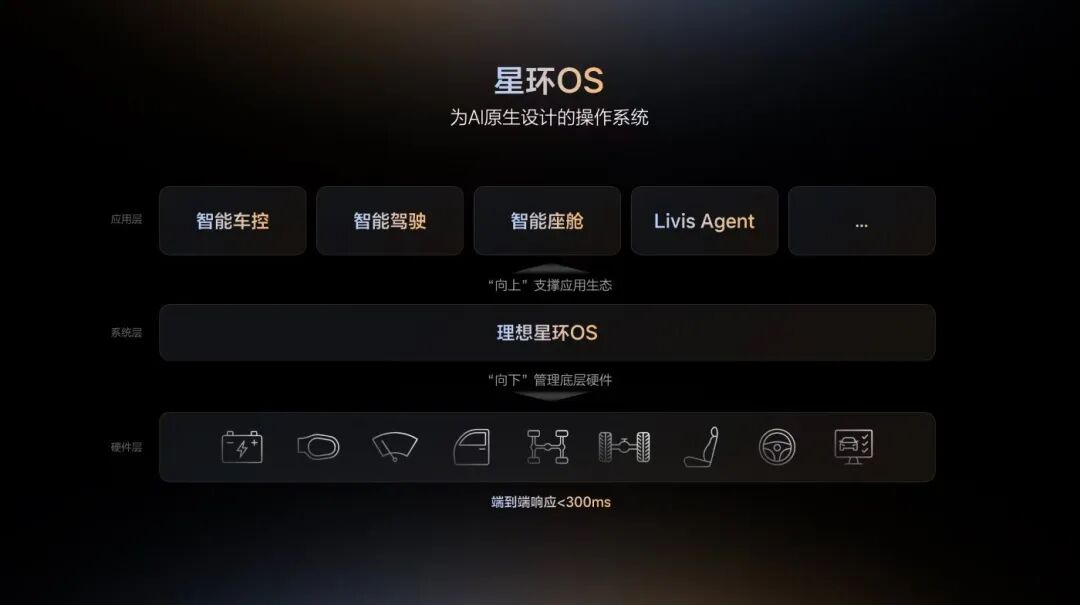
Relying on the Mach M100, Li Auto has completely connected the in - vehicle AI full - stack technology chain from the chip to the compiler, the Xinghuan OS in - vehicle system, and then to the Mach dual - model architecture. At the underlying level, it forms a complete embodied intelligent computing and execution system. At the surface level, it significantly improves computing power, speed, and efficiency. For example, the in - vehicle computing power has increased to 2560 TOPS, the scale of imitation learning has increased by 50%, the data of reinforcement learning has increased by 15 times, and the number of parameters has increased by 10 times.
Corresponding to the core implementation carrier of the car, the most direct manifestation is the rapid improvement of intelligent assisted driving technology. Li Auto has planned "military orders" for three major OTAs in the second half of the year, with the goals of a 30% increase in efficiency, autonomous handling of complex human - like scenarios, and comprehensive superiority over human drivers in terms of safety and efficiency.
New Competition in AI - Powered Cars
The relationship between embodied intelligence and car - building is the "key point" that Li Xiang mentioned multiple times at the press conference. In fact, the integration of AI into cars has become an irresistible industry trend in the past two years. Li Auto, XPeng, and the AIVA brand recently launched by Seres are undoubtedly the most representative players in China at present.
From the perspective of technology and concept, there are many similarities among the three, and they also show typical differences. It can be said that these three players represent three typical samples of AI transformation of domestic car companies.
AIVA is undoubtedly the most radical and disruptive player in the AI - native car - building paradigm. This is first reflected in the underlying logic of "AI first, then the car". AI is the core value of car purchase, rather than an additional function. The ByteDance Doubao large model is natively embedded in the vehicle's underlying system, and all vehicle electronics, seats, physical sign perception, lidar, and chassis drive are connected to the same AI central hub.
AIVA's advantage lies in the empowerment of ByteDance. Compared with car companies, ByteDance started earlier in the field of AI and has more comprehensive and stronger comprehensive capabilities. It has technological and data advantages that car companies cannot match, whether in the B - end or C - end. The disadvantages are in two aspects. Firstly, there is a "disconnect". The software and hardware of AIVA are not natively compatible, and its ceiling is lower compared with Li Auto. Secondly, it is "not refined". ByteDance has less experience in the automotive industry, which means there is still a long way to go in transforming AI technology into engineering capabilities.
The "geeky" XPeng is the most persistent player in the field of physical AI. Not long ago, XPeng Motors officially changed its name to XPeng Group, which is the best manifestation of its determination to transform into physical AI. For example, XPeng abandoned the traditional rule - based algorithm early on and fully switched to Tesla's pure - vision route.
XPeng, with the most extensive business layout and the fastest expansion of AI boundaries, mainly adheres to the "technical base" and emergence concept. One AI model can be reused in multiple fields such as cars, Robotaxis, humanoid robots, and flying cars. Compared with Li Auto, XPeng has also achieved full - stack vertical integration through self - developed chips, operating systems, and in - vehicle applications. However, for XPeng with greater ambitions, the car is only one of the carriers for AI implementation. Its future imagination space is significantly higher than that of Li Auto, and the corresponding potential risks and capital hidden dangers are also much higher.
Overall, Li Auto continues its consistent pragmatic style and makes the most stable strategic choices. It expands around the advantageous field of family scenarios and has certain advantages in terms of safety and companionship.
In short, Li Auto's goal is to create a "silicon - based family member", where the car is an autonomous intelligent agent; XPeng's goal is the entire physical AI world, and the car is just a branch; AIVA targets the young group and focuses on the extension of the emotional value of Doubao in travel scenarios.
In the new energy vehicle track, Li Auto has proven its foresight and product - polishing ability. However, intelligent agent cars are destined to be a much longer - distance race. Whether Li Auto can replicate its past glory in this field still needs time to prove.
This article is from the WeChat official account "Photon Intelligent Mobility", author: Xu Zhi. Republished by 36Kr with permission.