Opening 72.11% higher on the first day of listing: A full insight into SENASIC's underlying Physical AI technology backbone and self-developed platform
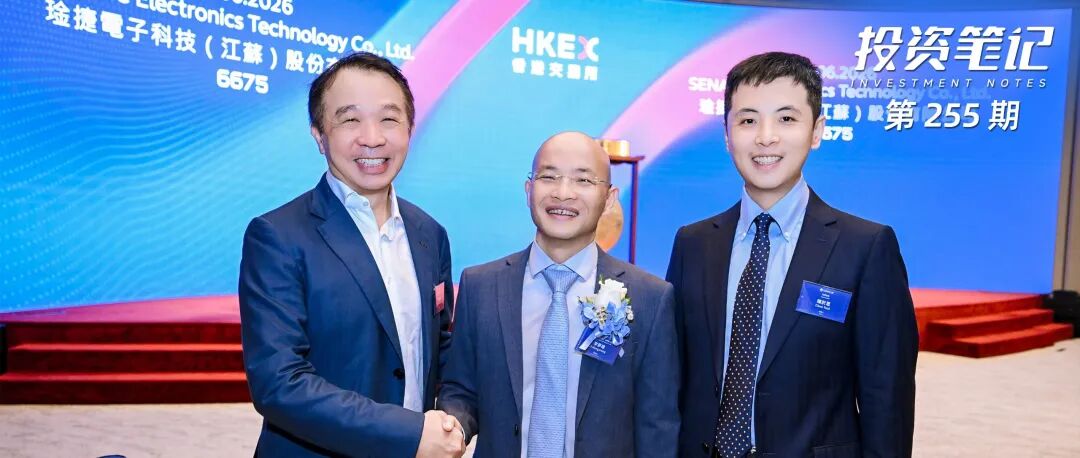

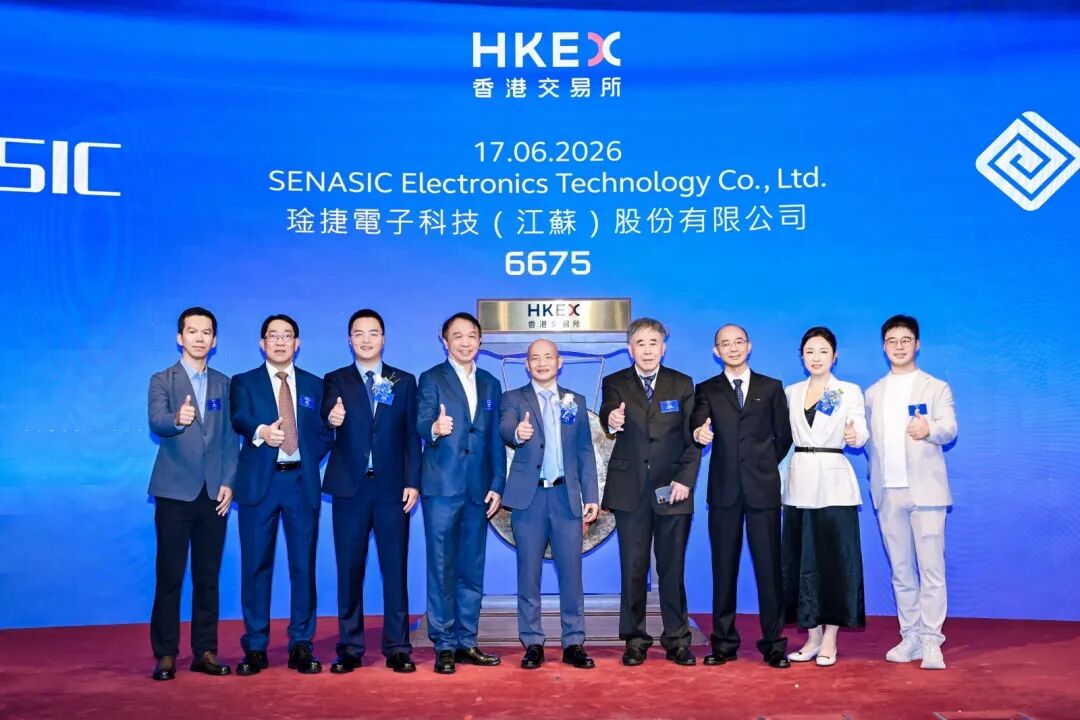
Today, SENASIC (6675.HK) officially listed on the Hong Kong Stock Exchange, becoming the first listed company in the Hong Kong stock market focusing on the Physical AI edge sensing and computing chip track. On the first day of listing, SENASIC opened 72.11% higher at HK$31.6, with a market value approaching HK$12 billion.

From tires and energy storage,
To entering the future robot track
If three keywords are used to define SENASIC, they are "edge, intelligence, and wireless". From the very beginning, SENASIC targeted the edge intelligence scenarios, and the application scenarios gradually expanded from tires to energy storage. With the popularity of AI, it has also been applied to emerging technology scenarios such as future robots. Whether it is intelligent battery cell chips, intelligent general sensing chips, or intelligent tire chips, all product forms essentially revolve around these three core capabilities: SENASIC has a unified underlying technology approach - this is the most core logic of the company and a system that has been built since the company's establishment.
The core barrier of SENASIC lies in its self-developed Physical AI edge sensing and computing chip underlying platform. Different from cloud-based large models focusing on text and image generation, the company's Physical AI technology system is centered around "sensing and collection + edge local computing + wireless transmission". It embeds micro intelligent computing power into physical hardware to achieve an edge closed-loop of physical environment perception, real-time risk reasoning, and autonomous device execution. Relying on this unified full-stack self-developed platform, SENASIC has successively launched two commercialization tracks, automotive TPMS and energy storage wireless BMS, and has made forward-looking layouts for humanoid robot perception chips, creating a three-tier growth curve. It has become a scarce Physical AI hardware base manufacturer in China that has achieved large-scale mass production at the automotive-grade level and can reuse technology across industries.
GGV Capital said that whether it is intelligent vehicles, energy storage, or robots and embodied intelligence, in essence, they all rely on the stable perception, real-time processing, and reliable feedback of the real physical world. SENASIC's past accumulation in ultra-low power consumption, mixed signals, and automotive-grade mass production just forms the foundation for such capabilities. SENASIC is forming a set of underlying intelligent perception capabilities for the Physical AI era. What is valuable about SENASIC is that the team does not only solve single-point problems but can abstract platform capabilities from the underlying technology and migrate them to more high-threshold scenarios. After AI enters the physical world, the real challenge is not to create a beautiful demo but to make the system work stably in the real environment for a long time and be mass-produced and delivered. Chinese enterprises with high-standard R & D, mass production verification, and global service capabilities will have the opportunity to grow into leading global platform companies in the Physical AI era. What SENASIC is doing is to convert the signals of the real world into usable intelligence. We look forward to the company continuously expanding its capability boundaries and promoting intelligent technology to enter a broader physical world.
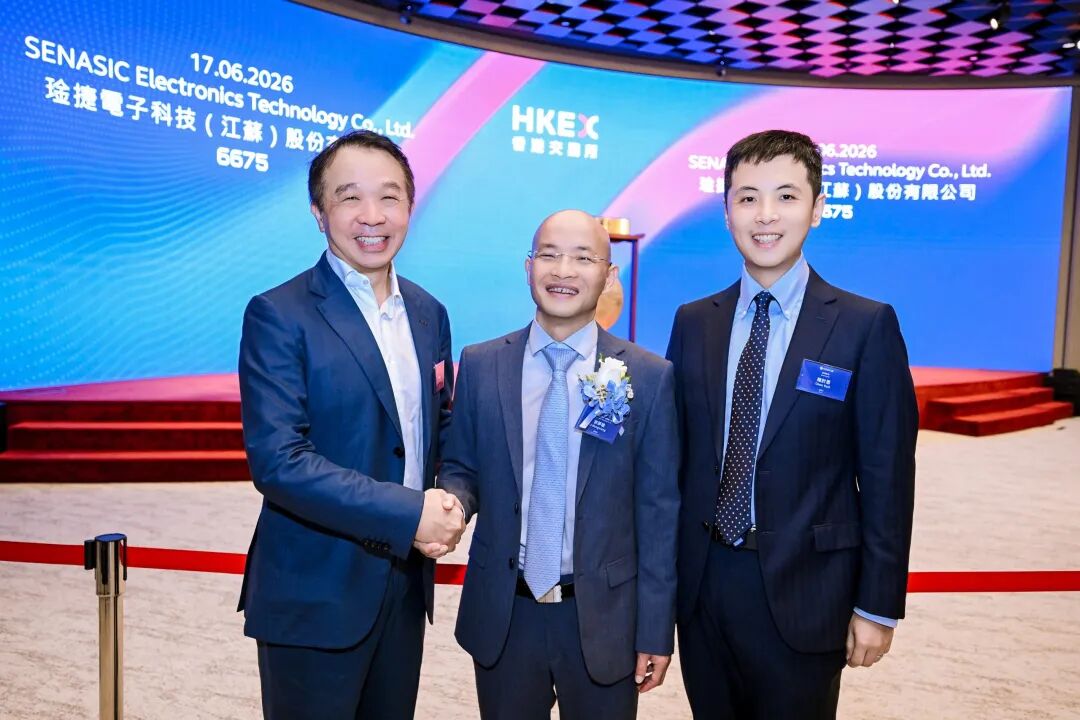
The person on the left is Fu Jixun, the managing partner of GGV Capital. The person in the middle is Li Mengxiong, the founder and CEO of SENASIC. The person on the right is Chen Yusi, a partner of GGV Capital.
Looking back on when SENASIC first entered the intelligent tire scenario, it gradually realized that its core ability lies in the acquisition and processing of signals from the physical world. The so - called "edge" means that the device completes data collection, processing, and decision - making locally without relying on the cloud, thus achieving lower latency and higher real - time performance. On this basis, through local computing and algorithm processing, the second keyword, "intelligence", is realized. Finally, information is transmitted wirelessly, that is, "wireless". It is this underlying platform that enables SENASIC's products to be reused across scenarios.
Tires, batteries, and robots - they all interact with the physical world. Although the signal types are different, the underlying logic is the same. Through this platform, SENASIC enables the originally "passive" components to have perception and feedback capabilities - they can "see" their own states, "understand" environmental changes, and transmit information, and even participate in system decision - making. Therefore, from a higher perspective, SENASIC is not making chips for a specific industry but is building a basic capability platform for edge intelligence. This is why the company can continuously expand from one application scenario to another without starting from scratch. From the company's internal perspective, this is not a deliberate "positioning transformation" but a natural manifestation of the continuous expansion of the business boundary.
Before 2018, SENASIC focused on the direction of intelligent tire chips. At that time, the company actively participated in the development and innovation of the Chinese automotive market and keenly captured the new needs of domestic automakers.
In the tire scenario, customers not only hoped to collect basic data such as temperature and pressure but also hoped to transmit more information through low - power Bluetooth and other means and even visualize the data directly on the mobile phone. However, the mainstream solution at that time was still 433MHz communication, which had insufficient bandwidth and capabilities.
Meanwhile, some customers proposed a concept similar to "intelligent battery cells" at an earlier stage, hoping to implement a battery management system wirelessly - which was very advanced at that time. Although it was not what the industry calls intelligent battery cells today, the customers' needs at that time had shown SENASIC a clear direction: allowing edge intelligence to play a great application potential in different scenarios. This also conforms to SENASIC's original intention of starting a business. From the beginning, this company did not just want to focus on tires but planned to develop more underlying edge computing and sensing chips.

So far, SENASIC has formed multiple growth curves: The intelligent tire is the first curve, which is relatively mature and stable. The intelligent battery cell is the second curve, which is also the fastest - growing business at present. The robot belongs to the third curve and is in the process of continuous layout. SENASIC is essentially a chip company based on edge intelligent platform capabilities, rather than a company in a single application field. This has always been the company's self - awareness.

Making battery cells perceptible
SENASIC's intelligent battery cell solution can endow each battery cell with an "identity" and "data capabilities".
On the one hand, it can reflect the basic elements of the battery, such as production information and usage history. More importantly, it can also monitor the battery's operating status in real - time. By sampling and analyzing the daily charge - discharge data of the battery cells, it can judge the current state of charge, health status, and future degradation trend. Combining historical data, it can also predict in advance whether there are risks in the future, such as internal structural changes, puncture, or the possibility of thermal runaway. This ability essentially turns the battery from a "passive component" into an intelligent unit that can be perceived and judged.
From a technical and product logic perspective, SENASIC's intelligent battery cell is also part of the evolution of the wireless BMS (Battery Management System). The core problem of traditional wired BMS is the complex wiring harness, which takes up space and affects the system's structural design. In power batteries and energy storage systems, everyone hopes to use the space as much as possible to improve energy density rather than for wiring harnesses and structural components. The wireless solution can significantly reduce these limitations and improve production efficiency. For example, in the battery production process, if a battery cell has a problem, the replacement cost under the wired solution is very high. However, if each battery cell has an independent chip and communication ability, replacement is very convenient, greatly improving production and operation and maintenance efficiency.
Another key change is the transformation of the data form. The data obtained by traditional BMS is often "package - level" and fragmented. SENASIC's intelligent battery cells can record continuous and complete data throughout the battery's life cycle, starting from the battery cell's factory - production, transportation, installation in the vehicle, use for more than 10 years, and even entering the second life cycle of the energy storage system. This fundamentally changes the way of battery management and provides a basis for safety management, life prediction, and asset management.
SENASIC has always emphasized a logic: what needs to be optimized in the end is the system cost, not the cost of a single chip. The traditional solution may require fewer chips but a large number of wiring harnesses and structural components. SENASIC's solution may require more chips, but the unit price is lower, and it reduces the wiring harness and other costs. Ultimately, the overall system cost decreases. In this process, SENASIC continuously discusses priorities with customers: under the existing cost constraints, whether to prioritize higher functions, cost reduction, or make certain trade - offs in performance indicators to find the optimal solution.
Currently, the intelligent battery cell is in the stage of transitioning from technical verification to large - scale application. As the market further expands, this business has become a very important growth curve for SENASIC.

Market vs. Product, Function vs. Project
Based on the existing technology platform, SENASIC proposed the concept of "joint definition" in its cooperation model with customers - it is not simply "you put forward requirements, and I provide products" but jointly defining products with customers.
Customers often put forward many specific requirements, but these requirements are often from an application perspective. For example, they hope to achieve higher accuracy, smaller volume, or a more flexible structure. However, in the chip implementation path, it is not necessarily possible to directly follow the customers' original ideas. SENASIC will combine its own accumulation in underlying technology and discuss with customers: what kind of technical route is more suitable to implement certain functions, or even actively propose new solutions and introduce problem - solving methods that customers have not considered.
The "joint definition" process is essentially similar to collaborative development in the engineering field - different functional roles participate in product definition at the same stage, thereby improving efficiency and reducing rework in the later stage. SENASIC usually promotes the process around two core documents: one is the MRD (Market Requirement Document), in which customers mainly put forward requirements from an application perspective, describing scenarios, functions, and constraints; the other is the PRS (Product Requirement Specification), in which the company internalizes these requirements into specific chip - level implementations. The transformation from market requirements to technical requirements is a very critical link in product development. The product requirement document itself is a bridge between business requirements and technical implementation.
Customers will tell SENASIC what kind of products they need at the application level. For example, in the intelligent battery cell scenario, customers need to monitor voltage, temperature, and more complex state parameters. At the same time, they require that the power consumption should not affect the battery cell's own endurance, and the power consumption in the standby state must be low enough. There are also system - level requirements - when there are many battery cells, how to solve problems such as communication interference and data transmission reliability. The characteristic of this stage is that customers describe requirements more from an application perspective rather than from a chip implementation perspective.
On this basis, SENASIC's system engineers and chip design engineers work together to transform these requirements into specific chip product definitions, translating "what the customer wants" into "how the chip should be made" - including architecture design, module division, and the specific implementation methods of various performance indicators.
This process involves not only hardware but also software and system - level collaboration. It should be emphasized that this process is dynamic because customers' requirements often change continuously, especially in the field of new products such as intelligent battery cells, where the requirements are not stable in the early stage.
However, SENASIC will not adjust repeatedly following the changing requirements without limit - if it does so, the product may not be able to be truly implemented. The company will set a clear time window internally. Before this time point, it will absorb requirements as much as possible and complete the definition. Once it enters the subsequent stage, the current version of the product requirements will be frozen. If customers put forward new requirements later, they will be implemented in the next - generation products.
This is a process of phased definition and iterative evolution, a process that does not pursue perfection from the beginning.
In summary, "joint definition" is a deep - binding process from application requirements to product definition and then to the implementation path. In industries such as robotics that are not yet fully mature, this model is likely to be the most effective. It enables products not to be optimized based on existing paradigms but to be jointly created for future scenarios.
A straightforward example: in the intelligent tire scenario, past solutions only told users whether the current tire pressure and temperature were abnormal. Now, customers' requirements are to be able to predict the risk of a tire blow - out in advance. This has limited significance in the human - driving scenario because the human reaction speed cannot keep up. However, it is completely different in the autonomous driving system.
