Hefei with a trillion-yuan GDP cannot nurture a 10-billion-yuan mall?
What comes to mind when you think of Hefei?
Is it the historical mists of the Three Kingdoms era, the hometown of Li Hongzhang, the leader of the "Westernization Movement", the old joking nickname of the "biggest county town", or the current label of the "most powerful venture - capital city"?
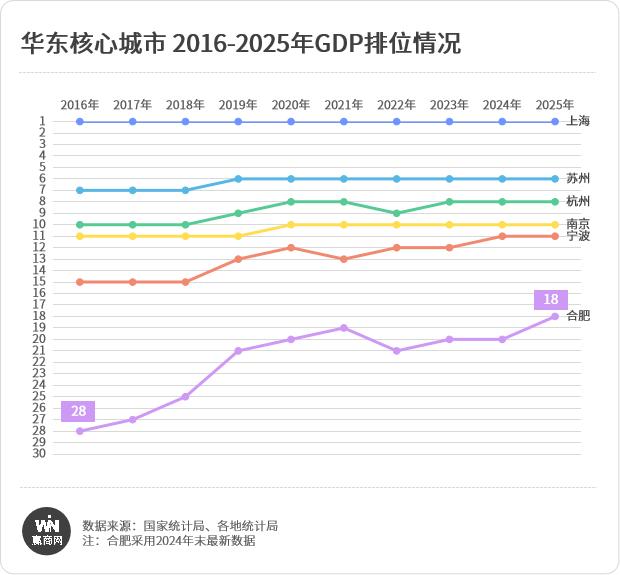
In the past decade, Hefei has been the most dazzling dark - horse in China's urban economic landscape. Its GDP has jumped from the 28th to the 18th place in the country, advancing 10 positions in a decade. The growth rate of above - scale industries leads the Yangtze River Delta, and the proportion of strategic emerging industries exceeds 60%. The permanent population has increased by 2.13 million, and those under 35 years old account for half of the total. This city has redefined its urban level with the rapid development of industries and population.
"Excellent education and well - developed railway network" have become the standard features of Hefei. As one of the three major basic urban functions of "education, railway, and commerce", has the commerce in Hefei also delivered a performance that matches a city with a trillion - level economy and a population of tens of millions?
Objectively speaking, Hefei's commerce has scale and foundation, but so far, there has not emerged a real benchmark that can represent the "new Hefei". The siphoning effect of the leading commercial districts is too strong, the cultivation of emerging commercial districts is weak, and the supply of high - end and non - standard products is lacking. The commerce of this technological city stands at the crossroads of "quantitative change to qualitative change".
With such questions in mind, the Research Center of Winshang delved into Hefei, sorted out the evolution logic of its commercial pattern, examined the current bottlenecks and opportunities, and looked forward to the commercial future that a technological city should have.
01.
On China's commercial map
Where is Hefei located?
To understand Hefei, we must divide consecutive years into short periods. Because Hefei has been growing too fast, in all aspects.
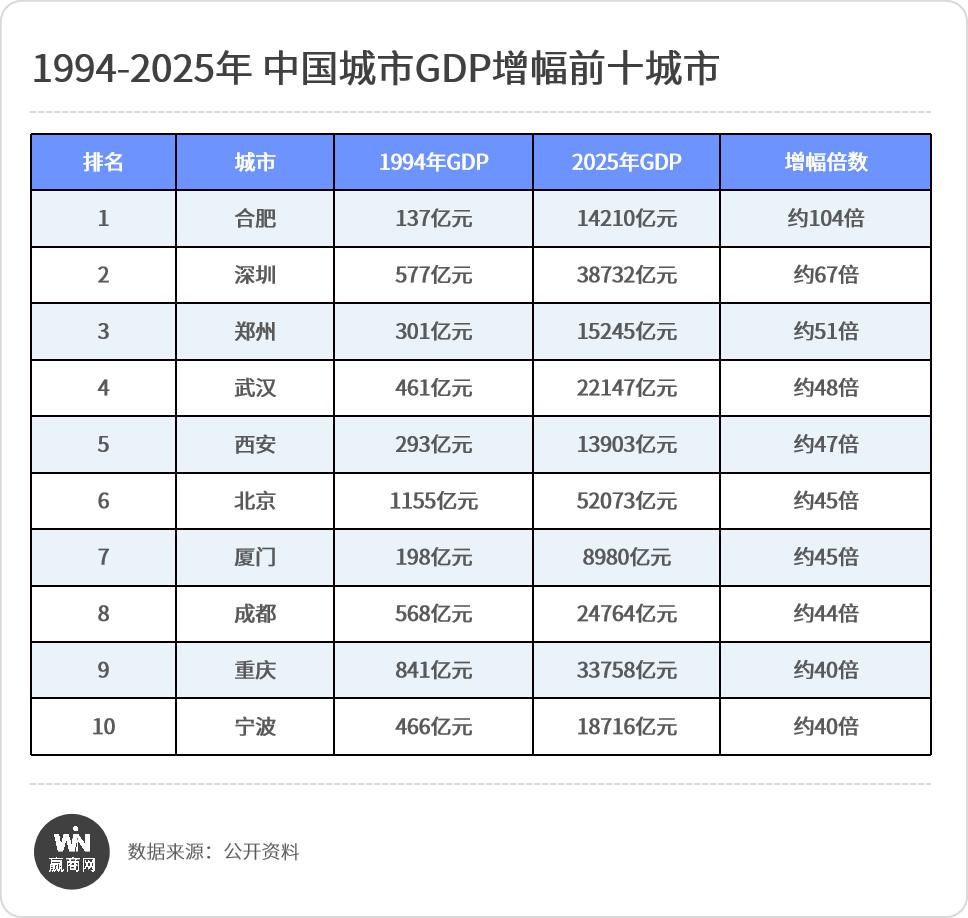
If we rank the top ten cities in China in terms of GDP growth from 1994 to 2025, Hefei leads by a large margin with an increase of about 104 times, intuitively demonstrating the drastic changes in China's urban economic pattern in the past three decades.
As a "new" city, your impression of Hefei's commerce and your perception of its prime locations mainly depend on when you came to Hefei.
2005: The "biggest county town"
In that year, Hefei's GDP was only 107.438 billion yuan, ranking 45th in the country and always at the bottom among the provincial capitals in central China. The city's permanent population was only 4.63 million, and the urban area was still confined within the moat. As a typical star - shaped radial urban spatial structure, the four current municipal districts of Luyang, Shushan, Baohe, and Yaohai were only established through administrative division adjustments in 2002. They were renamed from the former East Urban District, Central Urban District, West Urban District, and Suburban District, bounded by the Nanfei River, Banqiao River, Old City Wall Road, and Jinzhai Road.
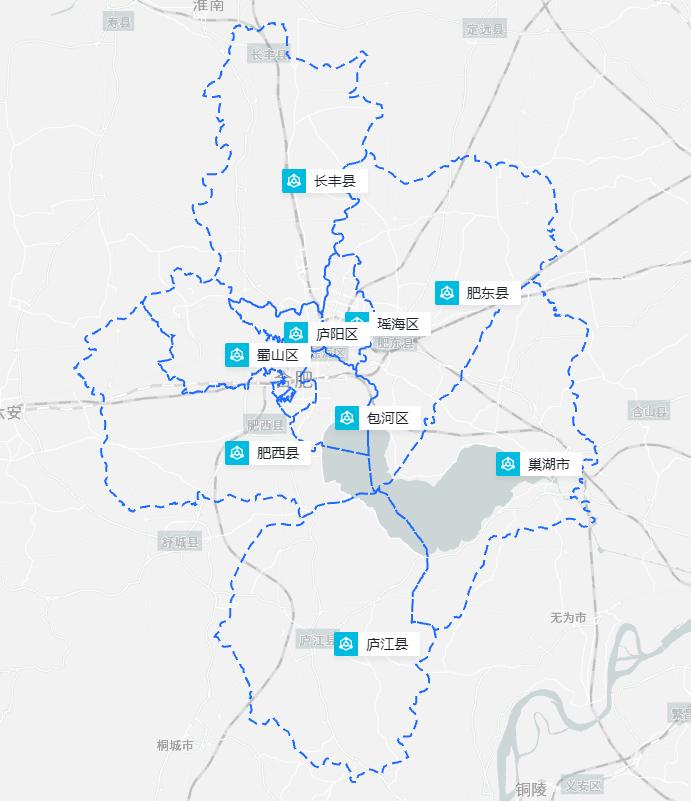
Image source: Urban Commercial Map Investment Research and Strategy System
At that time, Hefei's urban framework had not been expanded yet. Prime locations were basically limited within the Second Ring Road, and areas outside the moat (the First Ring Road) were considered "the countryside". Native Hefei people always think that Luyang District is the eternal urban area. Since Hefei was established as a county in the Qin Dynasty, this area has been the site of the "Ancient Luzhou Prefecture", the birthplace of Hefei, the cradle of Luzhou culture, and the current cultural center.
In 2012, the first phase of Hefei Intime Center opened in the Sipailou Commercial District of Luyang District. It is currently the only high - end luxury commercial project in Anhui, continuing the profound heritage of Luyang District as a century - old commercial core area. The commercial history of the Sipailou Commercial District can be traced back to the Tang and Song Dynasties, when there were numerous merchants and prosperous trade along the Jindou River. In 1959, Hefei Department Store was completed in the northeast corner of Sipailou, which was the first state - owned large - scale department store in Anhui Province. Li Hongzhang's Former Residence stands quietly at No. 208 in the middle section of Huaihe Road Pedestrian Street, witnessing the leap of this area from the "half - street of the Li Mansion" in the late Qing Dynasty to the current leading commercial area in the province.
The Sipailou Commercial District is representative of "high customer unit price, full customer layers, and high brand loyalty" in Hefei. Different from the experiential consumption in the Government Affairs District, Sipailou features more purposeful high - value consumption, with a high bag - taking rate, short stay time, but a higher customer unit price.
2010: The "provincial capital just starting out"
In this year, Hefei's GDP reached 270.16 billion yuan, ranking 38th among Chinese cities, and the permanent population was 5.702 million. It had taken a new step compared to 2005, but the urban framework had just begun to expand, and the two new districts were still on the drawing board and under construction.
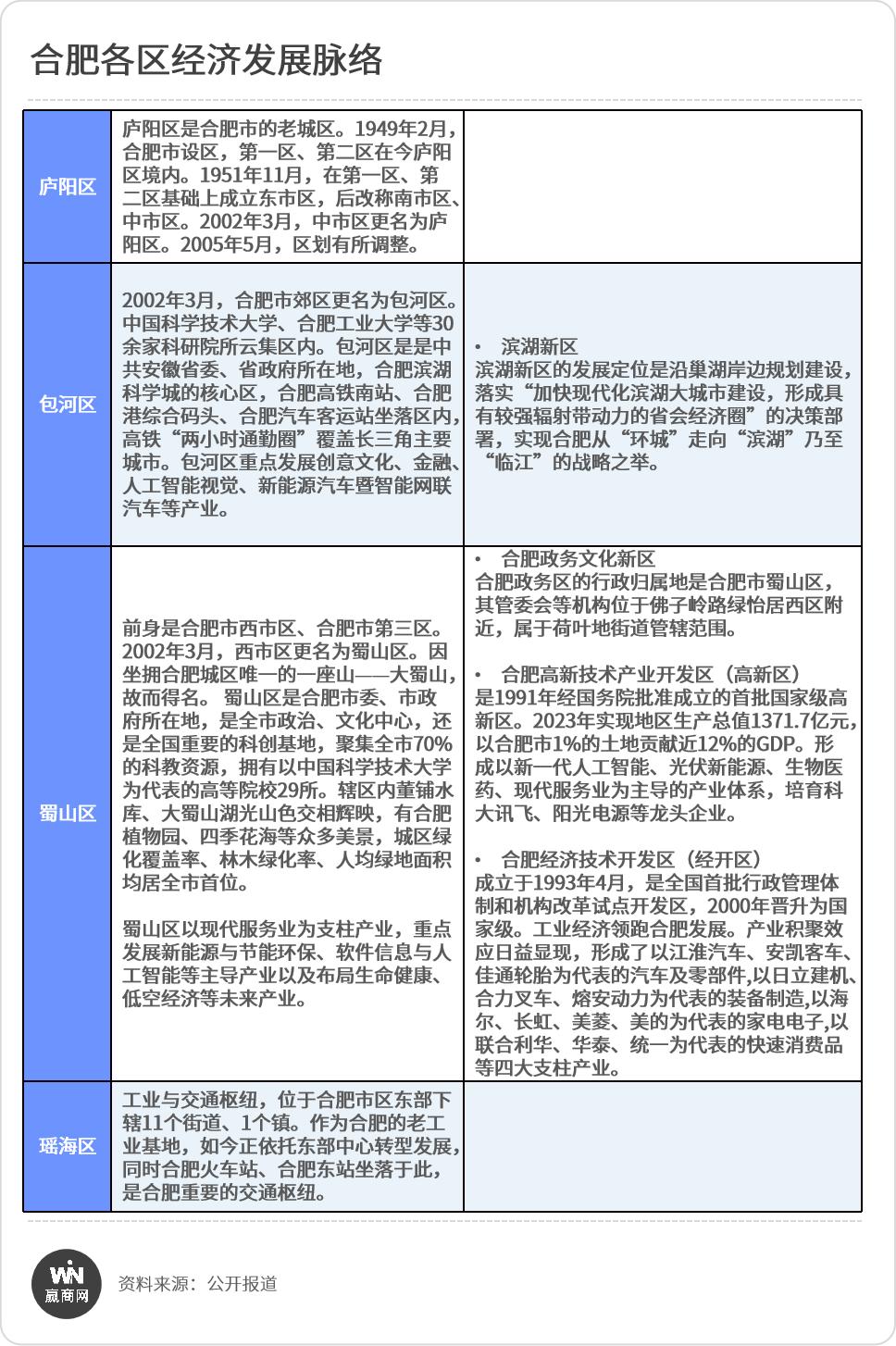
One is the Government Affairs and Cultural New District (abbreviated as the Government Affairs New District, located in Shushan District). In 2003, the south - west of Hefei was planned as the Government Affairs New District. The lotus - leaf ponds were excavated and connected, and renamed Swan Lake. In 2004, Swan Lake was officially opened to the public.
At the end of 2005, the Hefei Municipal Government officially moved south from the old urban area (Luyang District) to the Government Affairs and Cultural New District. This southward move was an important part of Hefei's implementation of the "141" urban spatial development strategy, aiming to expand the urban framework, guide the population and industries to gather in the southern new district, and relieve the traffic and environmental pressure in the old urban area.
From the southward move of the Hefei Municipal Government, to the excavation of Swan Lake, and then to the rise of skyscrapers such as the Anhui Radio and Television Center and Xindi Center, the Government Affairs District has completed a magnificent transformation from "suburban fields" to the "new political, economic, and cultural center of Anhui" in just over a decade.
Now, the commercial district around Swan Lake has grown into the second - largest municipal - level commercial district in Hefei outside the Sipailou Commercial District, and the consumption area with the highest density of "new middle - class" in Hefei. Leading operating enterprises are gathered here, and high - quality projects are clustered. It is home to benchmark shopping malls in Hefei such as Hefei Mixc.
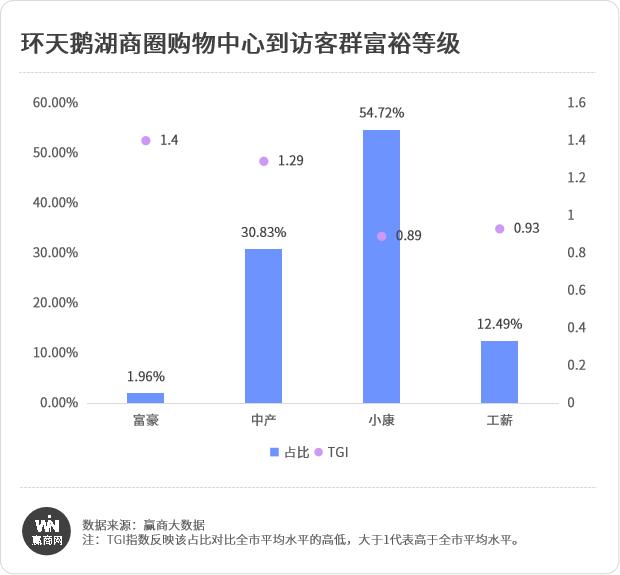
The other is the Binhu New District (located in Baohe District), which was officially launched on November 15, 2006.
The development orientation of the Binhu New District is to plan and construct along the shore of Chaohu Lake, implementing the decision - making and deployment of "accelerating the construction of a modern lakeside big city and forming a provincial - capital economic circle with strong radiation and driving force", and realizing Hefei's strategic move from "around the city" to "by the lake" and even "near the river". However, looking at the development context, it has not been smooth sailing.
On November 21, 2014, the Binhu New District Construction and Management Committee was officially established. In February 2016, Hefei officially applied for a national - level new district, and at the same time, the district strengthened the research on policies such as tax relief and land use. Starting from April 1, 2016, the organs of the Anhui Provincial Party Committee, the Standing Committee of the Provincial People's Congress, the Provincial People's Government, and the Provincial Political Consultative Conference moved to the Binhu New District.
The rapid growth of the population has injected strong impetus into the development of the commercial district. Currently, the Binhu Commercial District has become a leading regional commercial district, and it is also the commercial district in Hefei that covers the largest population, has the largest area, and the highest stock of commercial space. The daily average passenger flow ranks first among regional commercial districts, and regional benchmark shopping centers such as Hefei Fangyuanhui (Binhu Store) have emerged here. The Binhu Commercial District shows an obvious "weekend tide" feature. On weekdays, the passenger flow mainly consists of local residents and office workers in the Government Affairs District, while on weekends, it attracts a large number of cross - district family customers from Luyang and Yaohai.
2015: The dark - horse city that impressed the whole country
In 2015, Hefei's GDP was 566.03 billion yuan, ranking 26th in the country, the permanent population was 8.314 million, and the per - capita GDP was 68,000 yuan. From 2010 to 2015, Hefei was the city with the fastest progress in GDP ranking in the country, without a doubt.
At the industrial level, Hefei began to transform from the "Home Appliance Capital" to the "Chip - Screen - Automobile - Integration" model: BOE's 6th - generation and 8.5th - generation production lines were put into operation successively, and the display panel industry cluster took shape. In 2015, Changxin Memory was officially launched, and Hefei began to tackle DRAM chips - this was another key piece of the puzzle in the myth of the "most powerful venture - capital city" later. Most of the newly - arrived young people work in the industrial parks in the High - tech Zone, Economic Development Zone, and Xinzhan Zone. They are engineers, technicians, and product managers with relatively high incomes, but the places they can visit after work are still concentrated in a few shopping centers in the Government Affairs District and Luyang District.
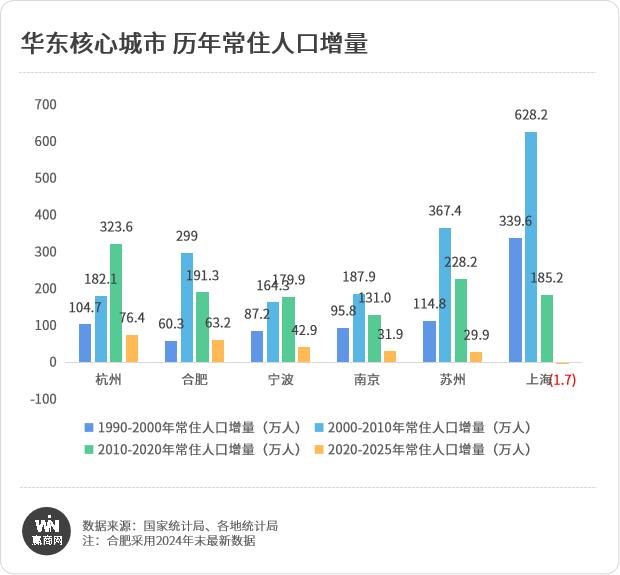
This group of "new Hefei people" who came around 2015 have no attachment to the old city and naturally identify with the Government Affairs New District and the Binhu New District. They have witnessed the whole process of Hefei's transformation from "unknown" to a "frequent guest on the hot search". Their high requirements for commerce are the greatest driving force for the upgrading of Hefei's commerce.
Although compared with the previous two time - slices, Hefei in 2015 for the first time made outsiders feel that "it is no worse than second - tier cities in the east" - the urban interface is clean and modern, there is a subway (Line 1 was opened in 2016), there is Mixc, and there is a light show at Swan Lake. But if you stay for a long time, you will also find that there are still too few high - end options, non - standard commerce is almost non - existent, and there are not many interesting places to go on weekends.
The real "upgrading moment" of Hefei's commerce started in 2015. In September of this year, Hefei Mixc opened in the Government Affairs District. This was the first large - scale complex in Hefei that was directly comparable to those in first - tier cities. A group of brands that entered Anhui for the first time allowed Hefei people to experience a "mid - to - high - end shopping center" without going to Nanjing or Shanghai.
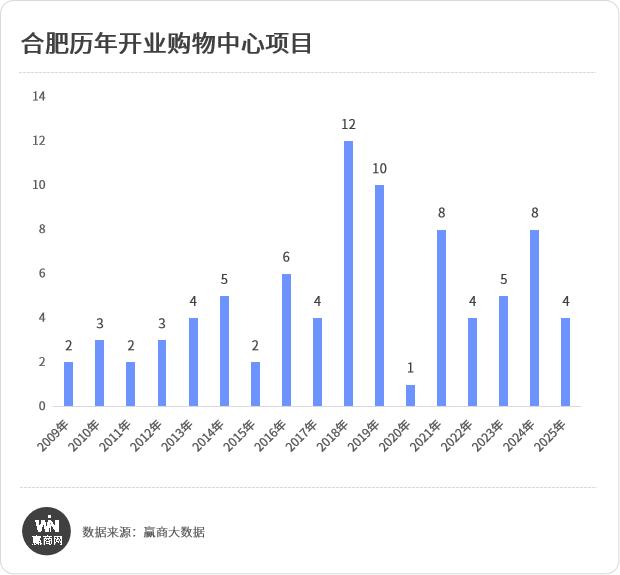
Only by going through these time sections can we truly understand Hefei's commerce. This is not a city where commerce has grown naturally, but a city where "the urban interface takes the lead, industries and population develop ahead, and commerce follows". From the perspective of administrative regions, we can more clearly grasp the spatial logic of Hefei's commerce. The four main urban districts show completely different consumption characteristics due to differences in development history, industrial structure, and population age.
02.
The evolution history of Hefei's commerce
What is its background?
In Anhui Province, Hefei's commercial primacy exceeds its economic primacy. In 2025, Hefei's GDP accounted for 26.8% of the province's total, and according to the monitoring of Winshang Big Data, currently 34% of the province's centralized commercial stock is concentrated in Hefei. This means that Hefei, with less than 30% of the economic weight, bears more than 30% of the commercial capacity.
According to the statistics of Winshang Big Data, currently there are 107 centralized commercial projects in Hefei, with a scale of 9.5197 million square meters. Compared horizontally with the provincial capitals in central China, Hefei ranks 3rd among the 6 cities in terms of commercial stock and increment, and it is a city with a relatively good commercial foundation in central China.
