Shut down, merge, restructure and transform: the state steps in, no longer keeping these 8 zombie automotive brands lingering on
Since the last wave of new car - making forces faced a crisis, many people have been paying close attention to the new round of knockout rounds in the automotive market.
However, the fact is that more than half of the competition in the auto market in 2026 has passed, and there are no obvious mainstream car - makers falling behind. Therefore, everyone is wondering why there has been no new crisis among new car - making forces despite the intensifying price war, the fierce competition among new forces, and the continuous breakthroughs of leading new - energy car - makers. In the past, it was generally predicted that the new new - energy brands under financial pressure and with difficulties in self - financing would be the ones to fall in this round of knockout rounds.
On the contrary, with the new - energy vehicle penetration rate reaching new highs, many car - makers specializing in the new - energy vehicle sector have achieved good development. This is true for both established car - makers like BYD and Geely, and new car - making forces like Leapmotor and NIO.
Moreover, while new - energy car - makers are developing, no one expected that a group of established car - makers that have accompanied Chinese people for decades would be the first to be officially "removed" and end their operations completely.
This exit was neither announced through an official delisting notice, nor a brand farewell event, nor a warm - hearted review by the public - relations team. Instead, the Ministry of Industry and Information Technology announced in the "Announcement of Road Motor Vehicle Manufacturers and Products" that eight established car - makers, including FAW Xiali, Brilliance Auto (self - owned brand), Zotye, Liebao, Lifan, Huatai, BAIC Yinxiang (HuanSu), and the old Haima, officially exited the list of car - makers, and their vehicle production qualifications were officially frozen and permanently invalidated.
Compared with the high - profile bankruptcy liquidation and media hype of new car - making forces, the demise of these established car - makers was quiet and painful. They once dominated half of the domestic fuel - vehicle market, were deeply rooted in the streets, and explored the sinking market. They were an indelible part of the automotive memories of two generations of Chinese people, but now they have quietly withdrawn.
All falls have traces to follow
In 2005, the third year of Zotye's establishment, it introduced a Toyota production line and launched its first model, the Zotye 2008. This model achieved good sales with a design similar to the Toyota Terios and a price that was half of it.
Subsequently, Zotye reorganized Jiangnan Automobile and resumed production of the Jiangnan Alto. It shouted the slogan "Just 18,000 yuan, and you can drive an Alto home" and continued to use the cost - effective strategy to open up the low - tier markets. By 2008, Zotye's annual sales had exceeded 30,000 units.
It took Zotye ten years to go from start - up to its peak.
From 2013 to 2016, Zotye launched models such as the T600, SR7, and SR9, continuing to focus on design and attracting a lot of attention. In particular, the SR9 had a booming order volume at the beginning of its launch, helping Zotye reach its sales peak in 2016 with annual sales exceeding 330,000 units. The nickname "Porsche - Zotye" also became well - known during this period. In the same year, the company achieved back - door listing through reorganization.
Like Zotye, Liebao, Lifan, and Huatai also had their own glorious moments.
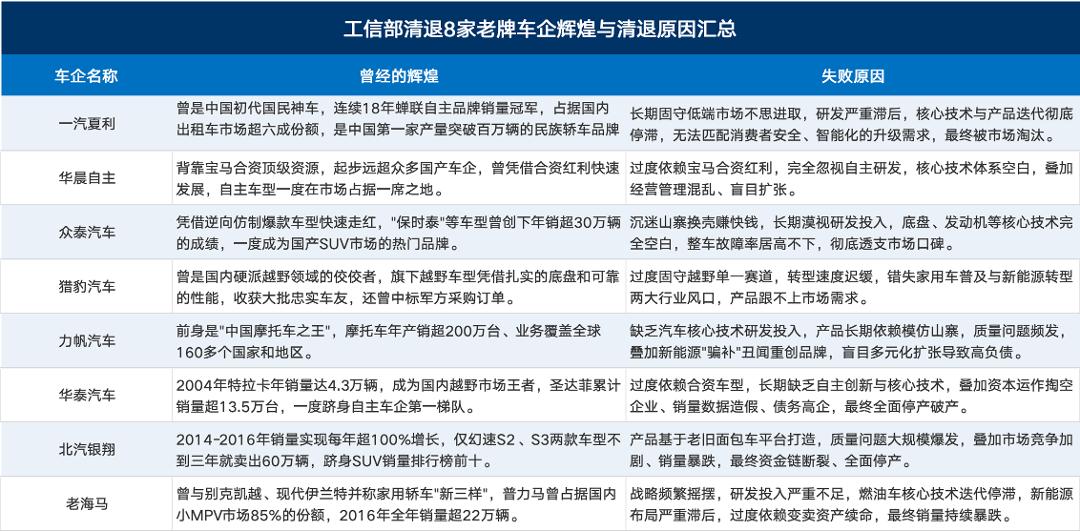
FAW Xiali was once called the "national god - car" and was a major player in the taxi market; Brilliance Auto (self - owned brand) once received a lot of attention relying on BMW's resources; Liebao Automobile was once a representative of hardcore off - road vehicles; BAIC Yinxiang once occupied the market with low - price SUVs... It can be said that these brands all made profits in the fuel - vehicle era through "copy - cat" or low - price strategies.
However, the market doesn't lie. The shortcuts you once relied on in car - making are exactly what will bring you down.
Financial reports show that in 2024, Zotye Automobile's R & D expenses were 5.7 million yuan, a year - on - year decline of 86.97%. Some industry insiders joked that its R & D expenses were not even enough to hold a press conference. Similarly, Haima Automobile and Brilliance China's R & D expenses only remained at just over 100 million yuan.
In contrast, in 2025, BYD led other car - makers with R & D expenses of 57.978 billion yuan. Followed by SAIC Group, Geely Automobile, and Chery Automobile, all of which had R & D expenses of over 10 billion yuan. Among new car - making forces, NIO, XPeng Group, and Li Auto had R & D expenses of about 10 billion yuan, accounting for about 12% of their respective revenues.
That is to say, the R & D expenses of Haima, Zotye, and Brilliance are about 500 times less than those of leading enterprises.
Obviously, this is not simply a matter of willingness to work hard. It reflects that in the context of rapid technological iteration and significant scale effects in the industry, the survival space of marginal enterprises has been sharply compressed, and they have long been squeezed out of the competition in core technologies.
When your R & D investment has been hovering around 2% or even lower for a long time, the lack of original core technologies and electric control software capabilities has become increasingly prominent. Especially when the wave of electrification and intelligentization came, they were even more unable to meet new standards such as 800V fast - charging and L2 - level intelligent driving.
In 2018, Zotye Automobile announced that its total R & D expenses were 712 million yuan and declared that it had rolled out its first L4 - level autonomous driving engineering prototype as early as 2016. However, the market has never seen this L4 - level vehicle drive out of the annual report and into the future.
In this context, some enterprises such as Lifan and Brilliance invested a large amount of car - making profits in real estate, financial speculation, or non - core business areas, resulting in the squeezing of the R & D budget for the main business and even the situation of being unable to pay employees' salaries. In addition, with the implementation of the National VI - b emission standard and the rigid assessment of the dual - credit policy, the old fuel - vehicle technology platforms were unable to produce compliant new vehicles, directly leading to having no cars to sell.
The knockout stage enters the deep - water area, and respect is the key to survival
It is worth noting that this clearance by the Ministry of Industry and Information Technology is an official determination, different from regular production halts, store closures, and debt reorganizations. This means that all eight car - makers mentioned above have stopped factory operations, sealed their production lines, and had their legal vehicle production qualifications directly revoked. At the legal and industrial production levels, these brands have been declared "dead".
Of course, in fact, the backlash from the market came earlier than the official announcement.
Previously, the media reported that second - hand car dealers across the country collectively refused to accept the models of these brands produced after 2021, resulting in the interruption of after - sales parts supply, the collapse of the vehicle's residual value, and the loss of market revitalization space for the brands. Among them, the old Haima is relatively special. It exited the domestic vehicle production list and then turned to the overseas export and commercial vehicle sectors, retaining the enterprise entity.
Of course, elimination does not mean the complete loss of resources. At present, the industry has completed the revitalization of many high - quality assets. For example, GAC Aion took over Liebao's Changsha production base and its core chassis tuning team, reusing production capacity and technical talents; idle production lines and patents have also been diverted and integrated by Geely and leading state - owned enterprises. The dross has been eliminated, and high - quality industry resources have completed a second - round distribution.
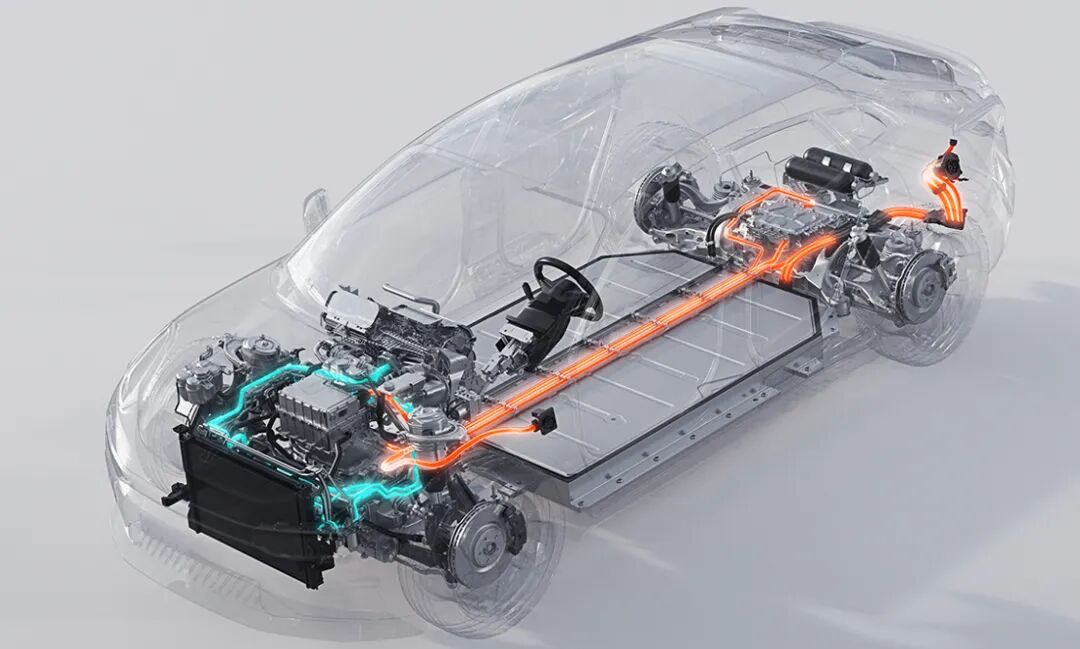
At the same time, we should know that the collective delisting of established car - makers is not an isolated case. It marks that the domestic auto - market knockout stage is entering the most brutal deep - water area. The era of relying on shortcuts to build cars has ended, and car - makers still seeking short - term profits and despising R & D will continue to be cleared from the industry.
After all, currently, the market share of domestic self - owned passenger vehicles has exceeded 60%, and self - owned brands have firmly become the market's main force. However, the average industry profit margin has been compressed to 4.1% or even lower. In the era when the incremental market has turned into a stock - game, there is no room for extensive car - making.
When you ignore intellectual property rights, indulge in reverse engineering and copy - catting, and abandon long - term R & D, you should take a look at those eliminated car - makers.
They once had a complete set of laboratory equipment and a large number of authorized patents, but they left the technological resources idle, failed to put scientific research results into mass production, let the patents gather dust, and instead regarded "copy - cat car - making" as the core of their business and low - price involution as a competitive advantage. Such operations may seem to save R & D funds and boost short - term profits, but in fact, they have hollowed out the enterprise's underlying vitality.
As for the future, redundant car - makers will continue to be cleared. Those with hollowed - out technologies, those only playing cross - border and capital games, and those assembly - type car - makers relying on externally - purchased parts will follow in the footsteps of these established car - makers.
In contrast, the leading players in the industry have long built moats with a long - term development strategy.
Mainstream car - makers such as BYD, SAIC, and Geely have a stable R & D investment ratio of over 3% or even 5%. They adhere to self - developed electric drives, batteries, and vehicle architectures, deeply explore core underlying technologies, and respect intellectual property rights and industrial laws. Rooted in the main business of vehicle manufacturing, they have completed a smooth transformation from fuel vehicles to new - energy vehicles, which is also the confidence for leading brands to survive market cycles.
This article is from the WeChat official account "Automobile Commune" (ID: iAUTO2010), written by Li Sijia, and is published by 36Kr with authorization.