2026 China Internet and AI Large Model Content Risk Control Industry Development Research Report
Based on the data from iResearch's UserTracker multi - platform monitoring database of internet users' behavior, in - depth interviews with experts, and desktop research, a comprehensive analysis was conducted on the new risk challenges in China's internet and large - model content risk control industry for AI in 2026. Content security solutions based on large - model technology have become the only future solution for the industry.
What is content risk control?
Content risk control refers to the process by which enterprises, in the digital business ecosystem, rely on technologies such as artificial intelligence and combine standardized management processes to monitor the entire lifecycle (from "generation, dissemination to storage") of user - generated content (UGC), professionally - generated content (PGC), and AI - generated content (AIGC) in all scenarios. It aims to accurately identify, assess, intercept, and handle risky content.
Its core mission is to ensure that, on the basis of strict compliance with laws, regulations, and regulatory requirements, enterprises can accurately intercept and handle risky content, thereby creating a secure, trustworthy, and sustainable platform content environment.

The AI wave and the explosion of digital content
The rapid popularization of AI applications has led to the democratization of content production. The proportion of AI - generated content in the total amount of online information is increasing rapidly. The scale and form of digital content have undergone profound changes.
According to data from the National Internet Information Office, as of February 2026, a total of 796 generative AI services had completed the filing process, and 481 generative AI applications or functions had completed the registration. The development of the AI industry has become more standardized and large - scale. The explosive growth of the user base of AI applications and the mature development of the industry have directly promoted the democratization and large - scale production of AIGC content.
The dual explosion of the quantity and form of digital content has significantly increased the complexity of risk control:
Exponential growth in content quantity: In 2025, the total annual data production volume in the country reached 52.26 zettabytes (ZB), a year - on - year increase of 27.3%. In the era of the data flood, the quantity of digital content has achieved exponential growth, posing higher requirements for the content review efficiency and risk identification ability of platforms.
Diversified expansion of content forms: Digital content carriers have expanded into diverse forms such as AIGC, interactive rich media, and virtual reality images. The content matrix has been further enriched, and the demand for diversified content risk control has also expanded accordingly.
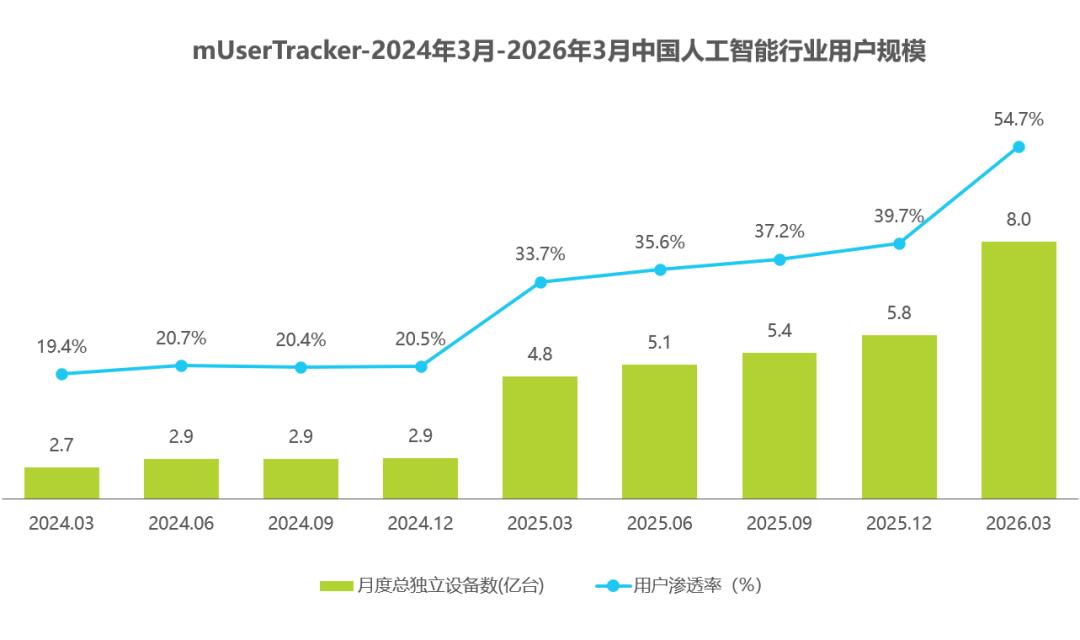
Source: UserTracker multi - platform monitoring database of internet users' behavior (intelligent terminals), National Internet Information Office, "National Data Resources Survey Report (2025)", independently researched and drawn by iResearch.
The prominent chaos of content risks
The internet is flooded with "AI swill" and false information. Problems such as deep fakes and AI - modified content are becoming increasingly prominent, posing a serious threat to social order, individual rights, and the online environment.

Continuous strengthening of supervision under improved legislation
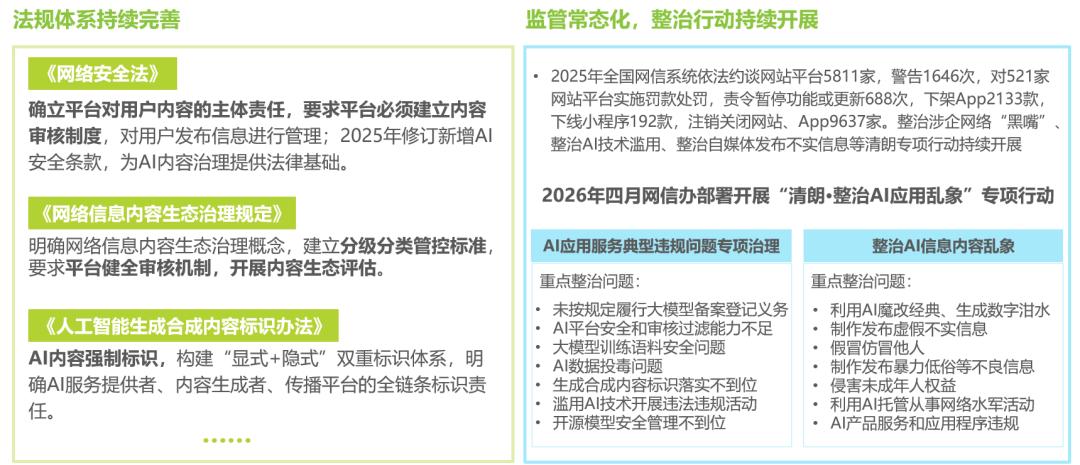
China has been continuously improving the legislation in the field of content security and has established a multi - level, full - process legal governance system for content risk control that covers new AI scenarios. Regulatory departments are strengthening the main responsibility of platforms and conducting regular supervision, continuously increasing the requirements for platforms' content risk control capabilities.
The necessity of enterprise content risk control
The bottom line for enterprise compliance survival: Rigid legal constraints stipulate that platform providers are the primary responsible parties for information content management. Allowing the spread of illegal information will result in high - value fines, suspension for rectification, and even criminal liability. Ensuring that the output content complies with laws, regulations, and industry norms is the bottom line for enterprise operation compliance, which can avoid significant losses caused by violations.
User experience and platform ecosystem construction: The content environment is the core factor for user retention and activity. The content risk control ability determines the atmosphere and lifecycle of the community/content ecosystem.
Corporate social responsibility: Internet platforms are the main channels for information dissemination. Enterprises have the responsibility to guide correct values through content risk control, prevent the public from being misled by bad content, and maintain social stability.
Protection of brand and business value: In the Internet era, information spreads extremely fast. The spread of bad content on platforms can easily trigger an "public opinion tsunami" and destroy the platform's brand image. Frequent chaos in content directly lowers the brand's tone and business value, affects advertisers' investment decisions, and reduces the confidence of the capital market.
Efficiency improvement: It can reduce the comprehensive operating costs and avoid hidden losses such as public relations crisis management and traffic loss during rectification. Risk control is a technology - driven efficiency tool. An excellent content risk control system has strong capabilities in dealing with new and hidden risky content, which can save costs such as human resources and computing power and improve enterprise efficiency.
Compliance for going global: Content risk control is a key bridge connecting an enterprise's local capabilities with the global market. By avoiding content red lines such as cultural taboos and political sensitivities in different overseas regions, it clears the restrictions for enterprises to expand overseas and steadily explore the international market.
A new era of content risk control
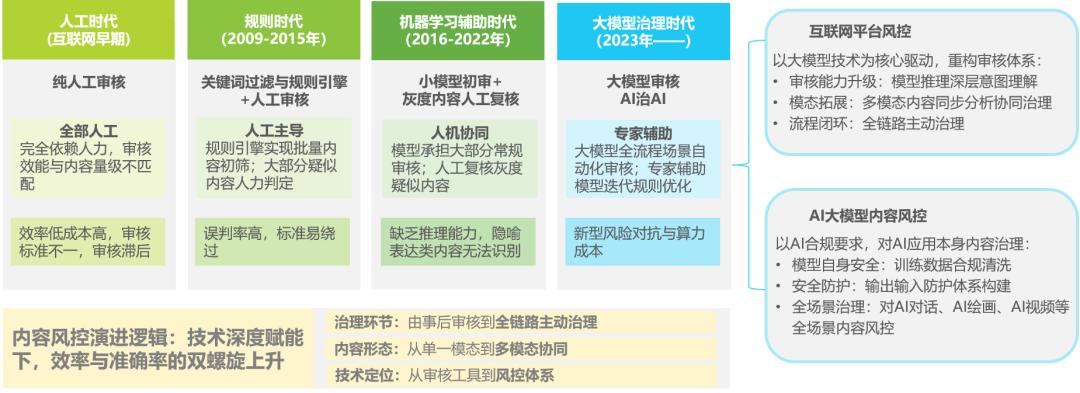
With the rapid iteration of generative AI and multimodal technologies, digital content presents new characteristics of "explosive growth, diversified forms, and hidden violations". While AI technology brings new risks and industry challenges, it also provides an efficient solution for content risk control: Manufacturers are reconstructing the basic foundation with large - model technology, completely breaking through the efficiency bottlenecks and coverage limitations of traditional risk control, and becoming the core driving force for industry development.
Market size forecast
Driven by both the substitution of the existing market and the creation of new market segments, the market size of third - party content risk control based on large - model technology will maintain a high - speed growth trend, with a predicted compound annual growth rate exceeding 30%.
Existing market: The structural replacement dividend of technological iteration. Currently, traditional review models such as manual review and traditional rule - based machine review still account for more than 50% of the market share, especially in long - tail content and specific vertical fields. These models have gradually failed to meet the requirements of business in terms of real - time performance, accuracy, and cost control. A new - generation intelligent risk control system is gradually replacing traditional review models, achieving cost - reduction, efficiency - improvement, and full coverage.
New market segments: The only solution under scenario fission and content surges. The expansion of application scenarios and the increase in content are the core engines for the growth of the content risk control industry. A new - generation intelligent content risk control system based on large - model technology has become the only solution. Expansion of application scenarios: The application of emerging technologies and the emergence of new interactive scenarios have infinitely extended the boundaries of risk control. Explosive growth of content quantity: The daily upload volume of short videos, live - streaming real - time streams, and the explosion of AIGC content have all led to an exponential growth in content volume.
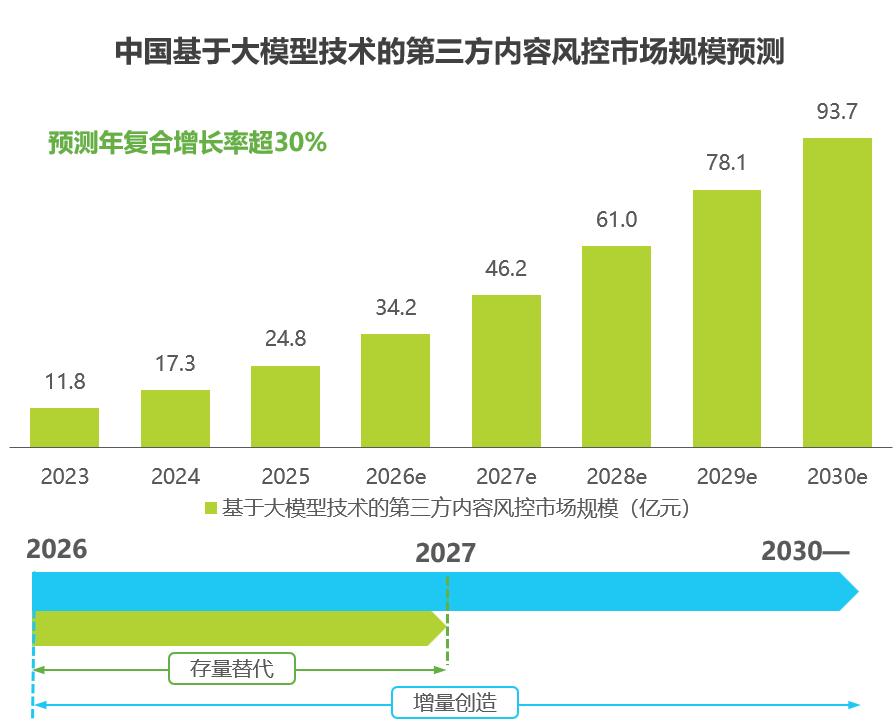
Source: Expert interviews, public information, independently researched and drawn by iResearch.
Market definition: The total market volume of third - party risk control service providers offering content risk control services based on large - model technology.
Logic for scale calculation: Dual - drive of "replacement of traditional existing market + creation of new market segments"
The market size of third - party content risk control = The traditional content review market * Penetration rate of intelligent content risk control + The new market (scenario expansion and content increase) * Coverage rate of intelligent content risk control
Industry ecosystem
The upstream of the industry provides basic infrastructure such as computing power and data resources. The core layer consists of professional risk control service providers and comprehensive cloud providers, which provide content risk control support for downstream internet content platforms and large - model applications.
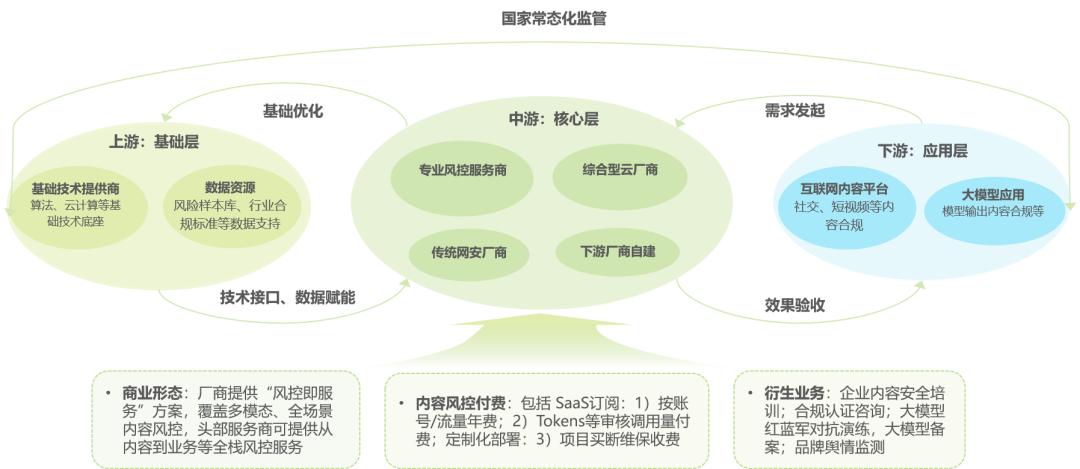
Industrial chain map
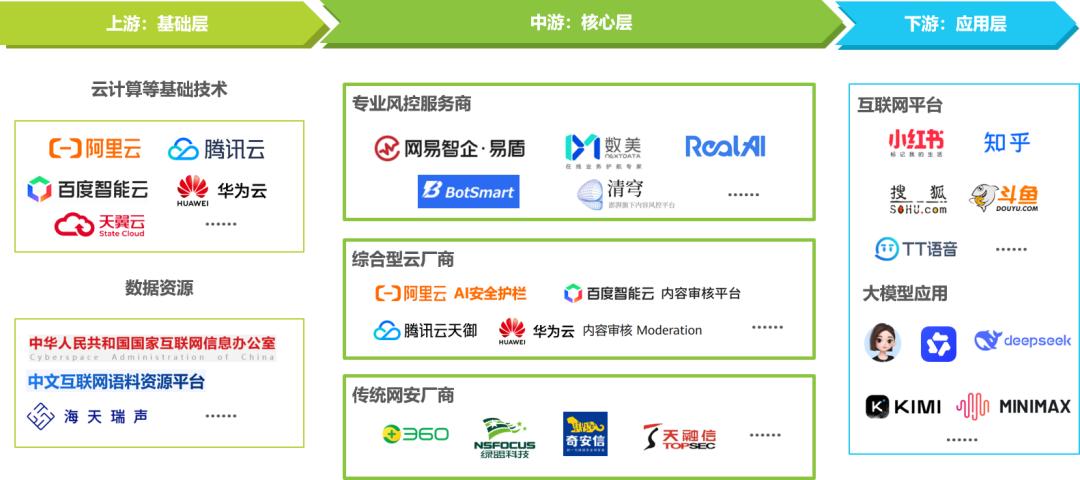
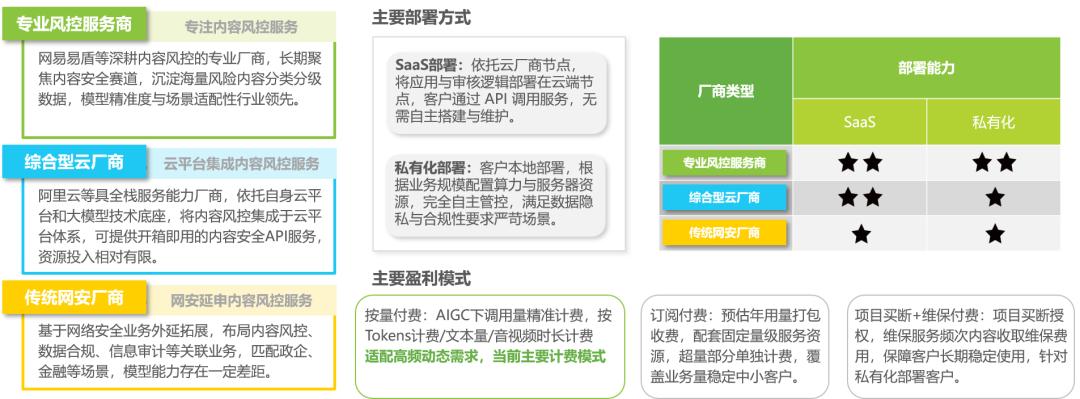
Types of service providers and service profit models
Professional risk control service providers lead with industry focus, comprehensive cloud providers enter the market with supporting services, and traditional network security providers extend their business from security services. The market uses the "SaaS deployment + pay - per - use" model as the core, accurately matching the dynamic needs of customers.
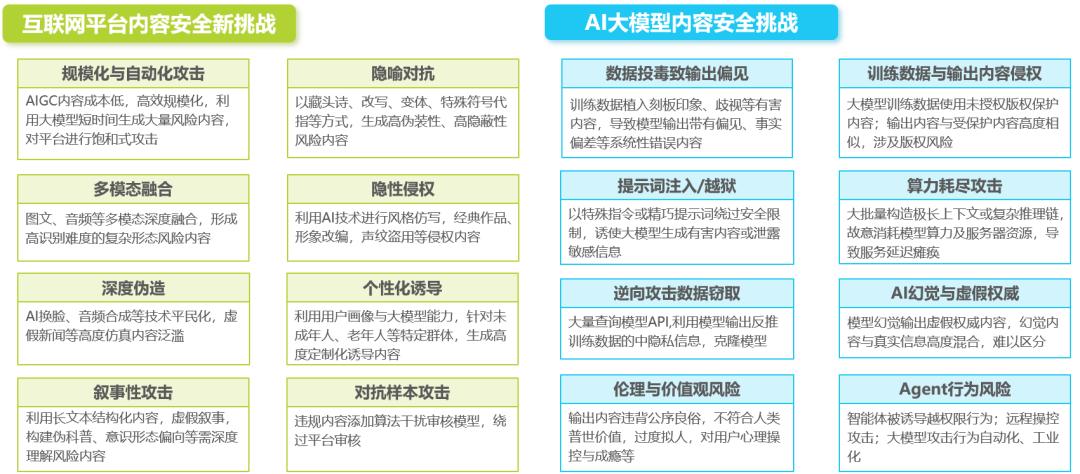
New challenges in the content risk control industry in the AI era
In the AI era, the complexity of risks and the diversity of attacks continue to escalate, and industry challenges are becoming increasingly severe. Traditional risk control methods are difficult to handle these issues, giving rise to a new - generation content risk control system.
Core requirements for risk control under AIGC
The new - generation content risk control system requires the construction of an intelligent defense line that can accurately identify, handle in real - time, operate stably, and control costs, in order to meet the challenges of accuracy and timeliness under complex risk attacks in the AI era.
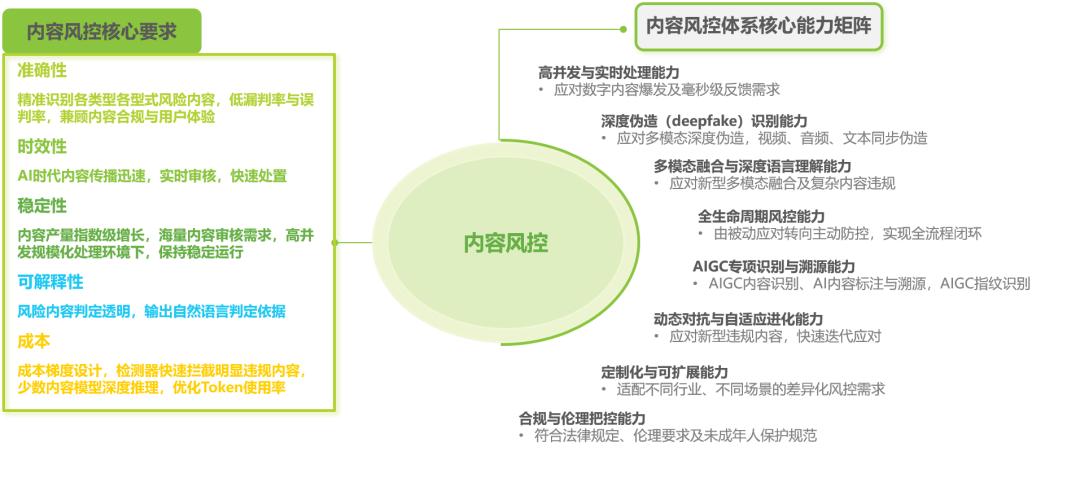
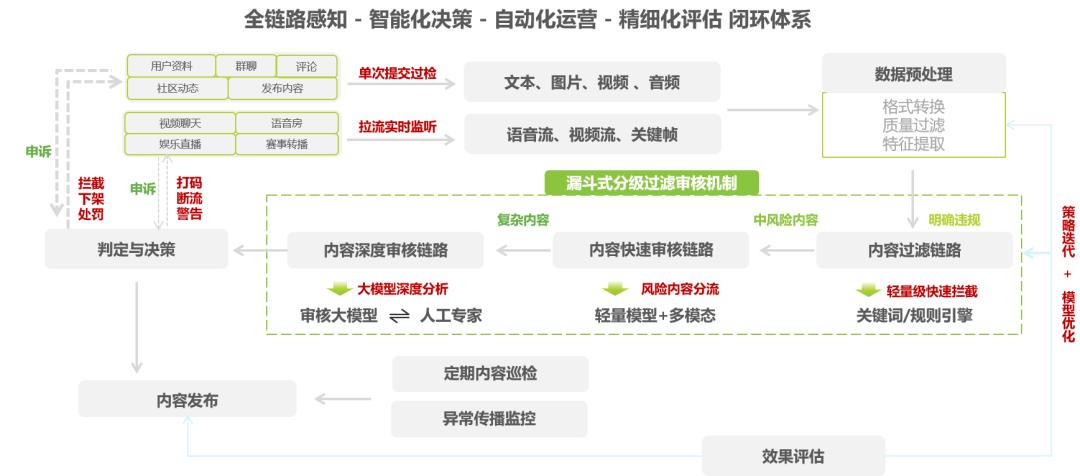
Content risk control for internet platforms
The industry uses a refined classification and grading system and relies on a funnel - type hierarchical filtering mechanism. This not only improves the risk response efficiency but also effectively reduces the resource utilization cost, achieving an accurate balance between risk control efficiency and resource input.
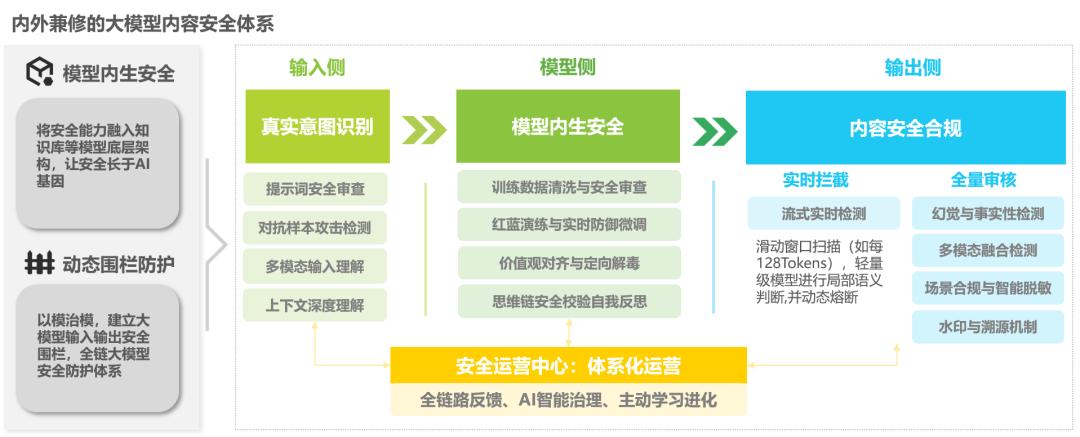
Content risk control for large - models
The industry combines the endogenous security of the model side with dynamic fence protection to build a large - model content security protection system covering the entire link from input, model, to output. Through full - link feedback and active evolution, it realizes all - around, dynamic, and systematic protection of large - model content security.
Competition landscape of the large - model content risk control industry
NetEase Smart Enterprise - YiDun ranks first among large - model content risk control service providers with a market share of approximately 43.7%. The practical scale of its benchmark -