A bag made from a Tyrannosaurus rex was priced at 4 million RMB. Can you guess who ended up buying it?
On June 11, 2026, at the Drouot Hotel Auction House in Paris, a turquoise small bag remained unsold.
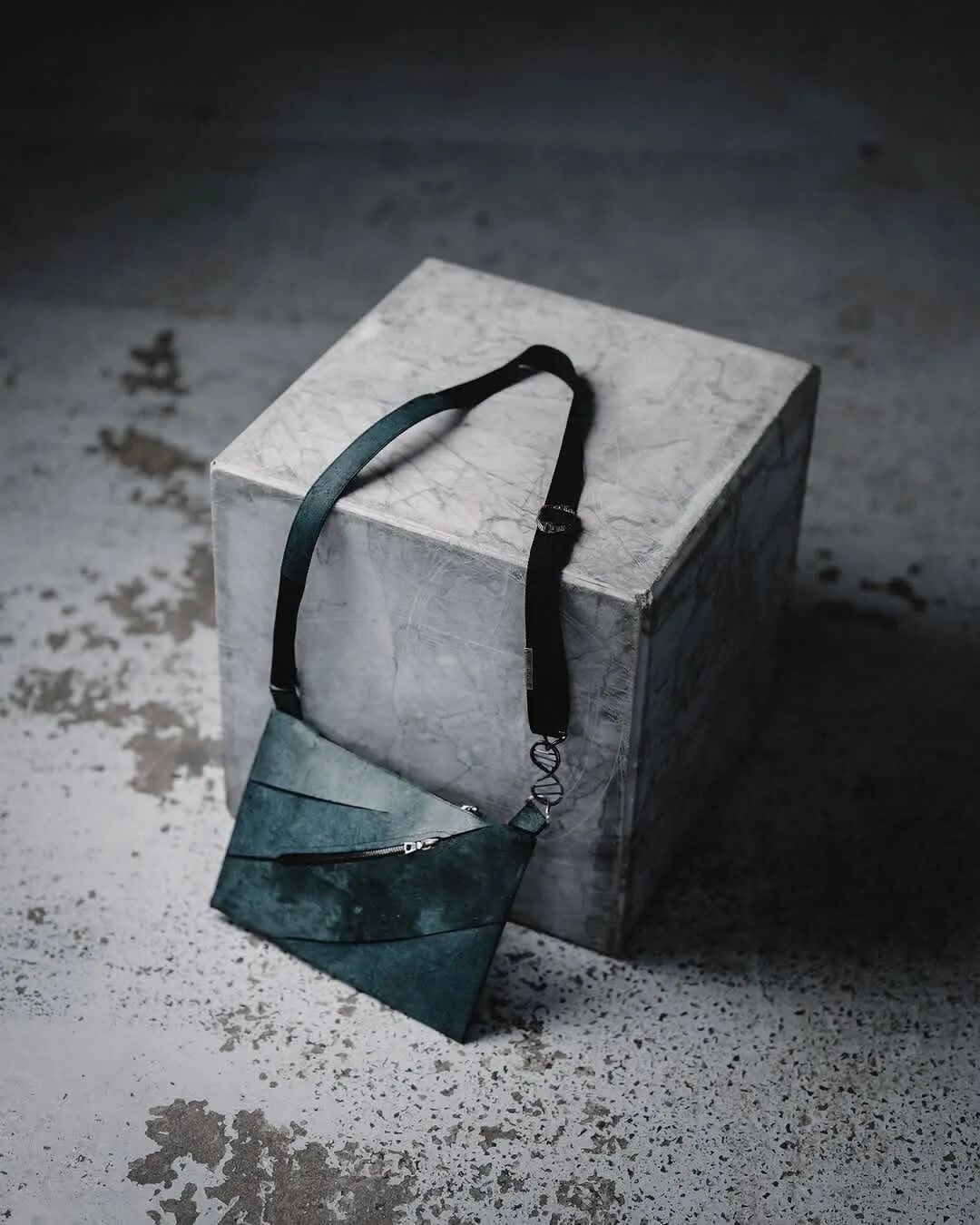
Image source: reddit
The auction house estimated the value of the bag to be between 300,000 and 500,000 euros, which is roughly equivalent to four million Chinese yuan. The reason was that it was the world's first bag made from Tyrannosaurus rex leather. The starting bid was 100,000 euros, and the highest bid stopped at 150,000 US dollars, which was just a fraction of the estimated value. As a result, the bag failed to be sold. A person from the auction house told the media that the bids were far lower than expected.
To clarify this matter, we have to go back 20 years.
Mary Schweitzer is a professor of paleontology at North Carolina State University.
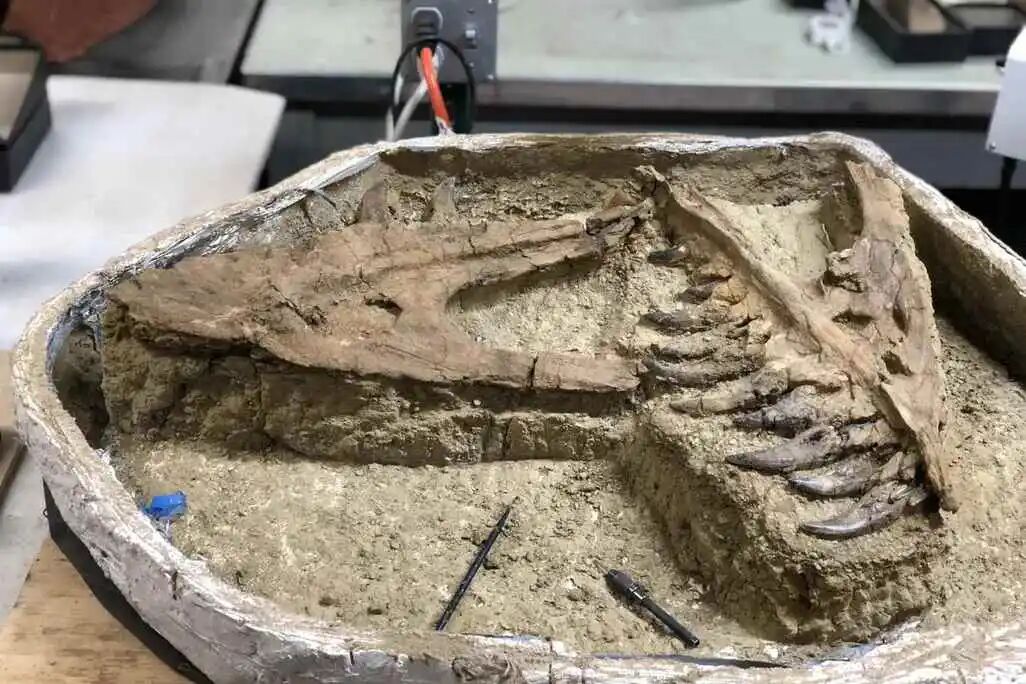
Image source: smithsoniamag
In 2005, when she and her team were processing a Tyrannosaurus rex femur from Montana, they used a weak acid to dissolve the outer mineralized bone. After the bone was dissolved, some transparent and elastic filamentous structures appeared inside. Under the microscope, they looked very much like blood vessels and could be gently stretched.
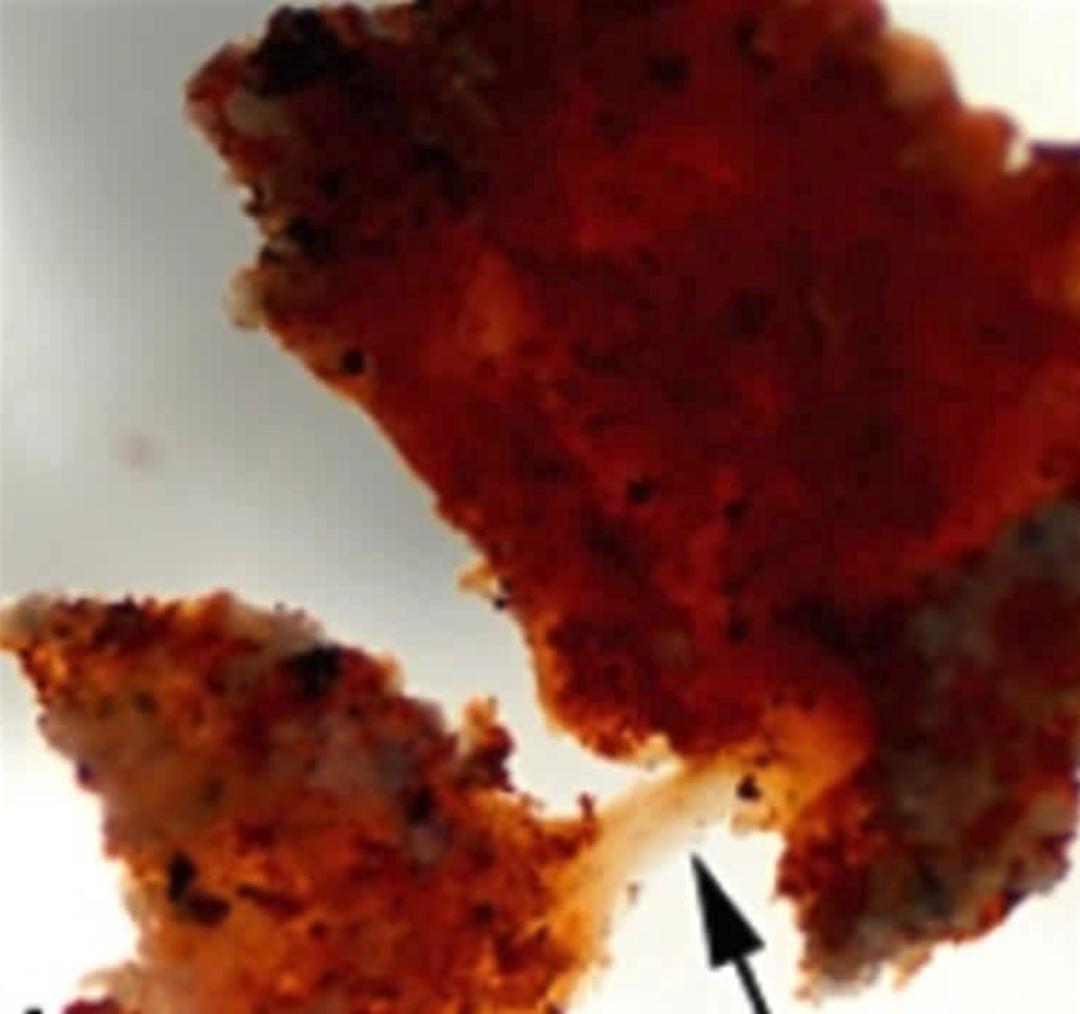
Microscopic image of Tyrannosaurus rex bone soft tissue published by Schweitzer's team. The reddish-brown filamentous structures. Image source: nbcnews
This event was published in the journal Science.
According to the understanding at that time, soft tissues could not be preserved during the petrification process, let alone for 68 million years. Criticism followed. Some people believed that these structures were not dinosaur soft tissues at all, but biofilms produced by later bacterial invasions, similar to mold growing in rock crevices and having nothing to do with the dinosaurs themselves.
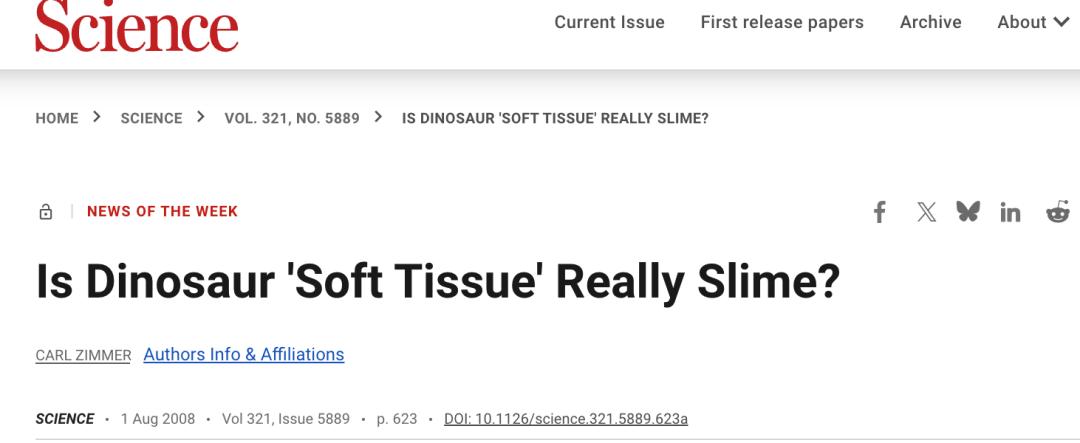
Image source: literature
The debate lasted for many years. In 2007, Schweitzer's team conducted further analysis and identified collagen fragments from them. They also found that the amino acid sequence was closest to that of bird collagen, which was consistent with the evolutionary relationship that "birds are descendants of theropod dinosaurs". But even to this day, there is still no conclusion in the scientific community as to whether these collagen fragments are really remnants of original dinosaur tissues.
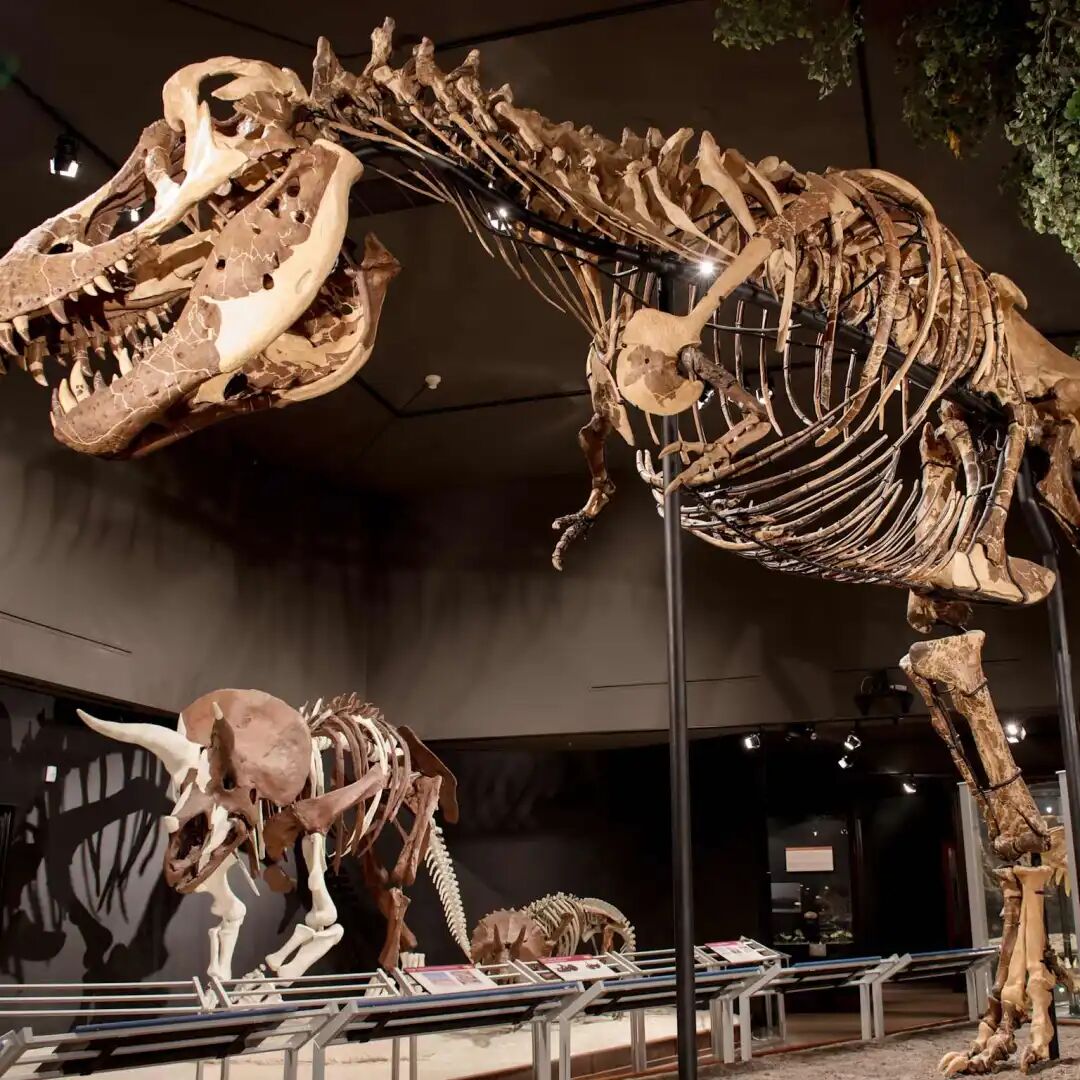
Image source: usatoday
In April 2025, the British biotech company Lab-Grown Leather announced that they would use the collagen extracted from this batch of Tyrannosaurus rex bones to make real leather. The partners included an organoid company specializing in genomic engineering and the creative agency VML.
The problem was that the collagen in the fossils was incomplete. After 66 million years of geological pressure and mineralization processes, a large number of amino acid sequences were missing, leaving only scattered fragments.
Their solution was to use AI to complete the sequence.
The specific approach was to use the existing Tyrannosaurus rex fragment sequences as anchor points, and then combine a large amount of protein data from closely related species. A computational model was used to "predict" the missing parts, and finally a complete collagen sequence was pieced together. Then this sequence was synthesized into DNA and inserted into the cells of a "carrier animal" (the company did not publicly disclose what the animal was), allowing the cells to express the target collagen.
The next step was the core technology of that biotech company, called "scaffold-free self-assembly". Traditional tissue engineering usually requires building a scaffold first, similar to a scaffolding, and then allowing the cells to grow on it. Their method was to do without a scaffold and let the cells secrete collagen on their own under culture conditions and self-assemble into a three-dimensional skin-like structure. Finally, a chrome-free tanning process was used to obtain the finished leather.
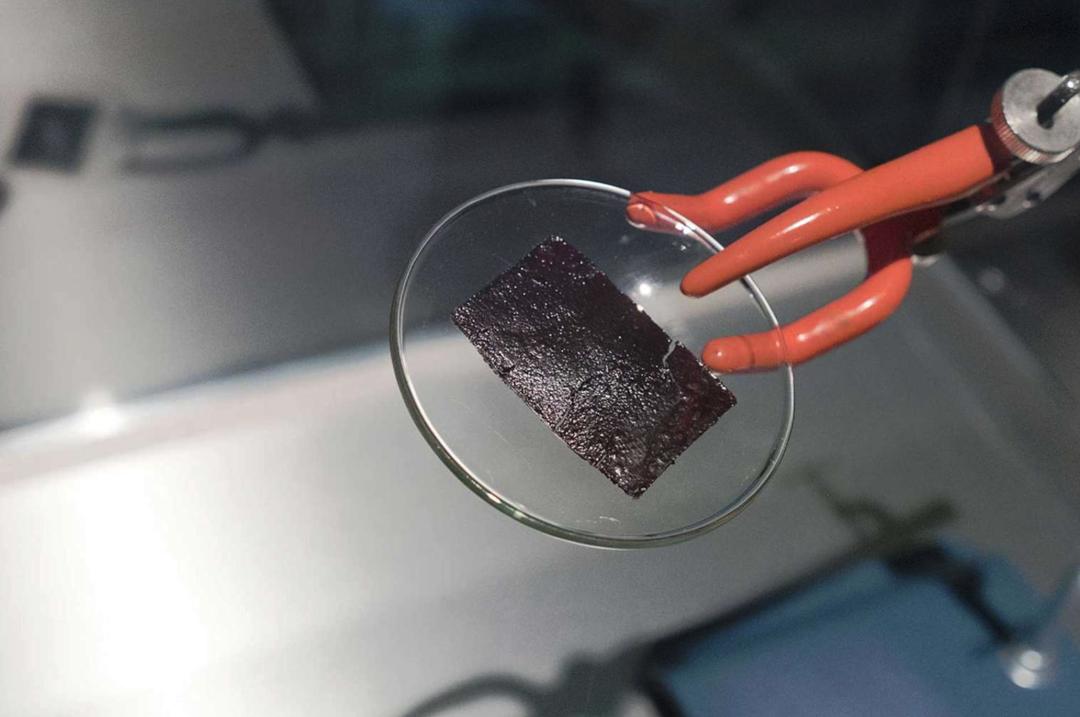
A sample of laboratory-grown leather taken from a petri dish. Image source: lampoonmagaz
The company registered a trademark for this product: T-Rex Leather™
The first question from scientists was: Whose collagen is this exactly?
Joep Dekker, a paleoproteomics expert from the Free University of Amsterdam in the Netherlands, was very direct in an interview with the media. He said that when the AI model filled in the sequence gaps, it mainly used chicken data for training.
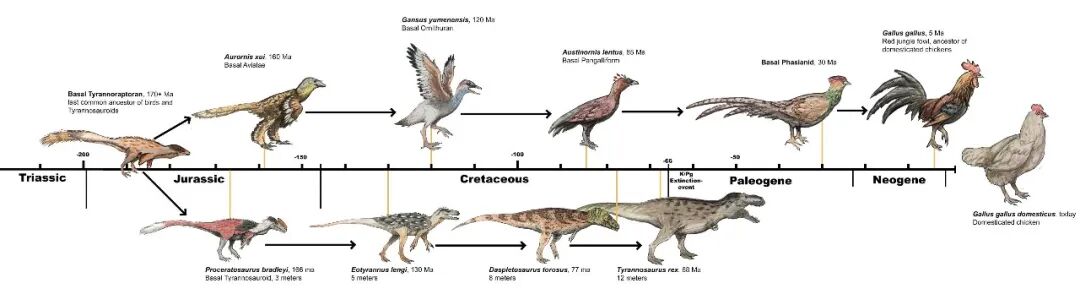
Image source: the Internet
After all, birds are the closest living relatives of Tyrannosaurus rex, with the highest sequence similarity. But this also meant that in the final collagen sequence, the part from Tyrannosaurus rex was negligible, and the chicken component far exceeded that of the dinosaur. This is not to say that the project was a fraud, but that its name was misleading.
Schweitzer herself also expressed similar doubts. She said that you can't make leather from collagen. The physical properties of leather come from the specific arrangement of collagen fibers in the dermis, and the collagen extracted from fossils comes from bones. The collagen fiber structures of bones and skin are completely different, and the two cannot be equated.
Image source: the Internet
This was the second question: Even if the collagen is real, the products made from collagen in bones and collagen in skin are different.
Thomas Holtz Jr., a paleontologist at the University of Maryland, was even more straightforward. He characterized this project as "misleading" and said that there is currently no preserved dinosaur DNA.
So, does this technology itself make sense?
Putting aside the word "Tyrannosaurus rex", there has been real progress in the underlying tissue engineering technology.
Lab-Grown Leather was already able to grow a skin-like tissue measuring 10×10 cm and over 2 mm thick in the laboratory in 2024. This size is still far from practical, but the company couldn't even achieve this a year ago. The core founder of this company is from Newcastle University. He initially developed this scaffold-free technology to repair human corneas and later turned to the leather direction.
Market forecasts in related fields show that the market size of laboratory-grown leather will reach approximately 686 million US dollars by 2036, with a compound annual growth rate of 22.1%. But large-scale production is currently an insurmountable hurdle for everyone. The gap between laboratory samples and the industrial supply chain cannot be quickly bridged by money.
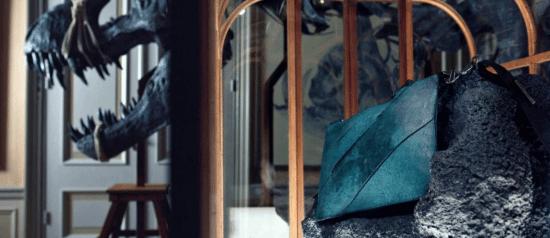
Image source: the Internet
So in the end, the bag was not sold, and scientists said it was more like chicken skin. As for the title of "the world's first Tyrannosaurus rex leather bag", no one has taken it for now.
References
https://lab-grown-leather.com/2026/01/12/from-fossil-to-fashion-lab-grown-leather-reaches-a-milestone-with-t-rex-leather/
https://www.science.org/doi/10.1126/science.321.5889.623a
https://phys.org/news/2011-06-evidence-dinosaur-soft-tissue.html
https://www.nbcnews.com/sciencemain/what-preserved-t-rex-tissue-mystery-explained-last-2d11662818
https://phys.org/news/2005-03-scientists-t-rex-dinosaur-soft-tissue.html
This article is from the WeChat official account "Bring Science Home" (ID: steamforkids) . The author is OF. It is published by 36Kr with authorization.